


Search results
Search for "orientation" in Full Text gives 646 result(s) in Beilstein Journal of Nanotechnology. Showing first 200.
Role of titanium and organic precursors in molecular layer deposition of “titanicone” hybrid materials
Beilstein J. Nanotechnol. 2022, 13, 1240–1255, doi:10.3762/bjnano.13.103
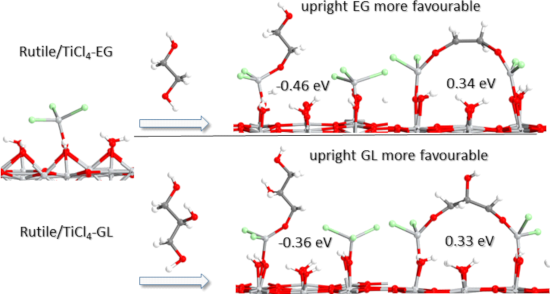
- the origin of the different thicknesses of EG–titanicone and GL–titanicone films observed in experimental work. We find that EG and GL coupled with TiCl4 can orient in a flat lying configuration on anatase while on rutile, the preferred orientation is upright. When combined with Ti(DMA)4, EG and GL
- orientation of GL when deposited on Si surfaces, DFT shows that the desired upright orientation of GL could be energetically favourable on a rutile TiO2 surface and this provides motivation to develop a lower temperature rutile TiO2/TiCl4–GL process where higher growth per cycle could be achieved. We note
- important role on the orientation of the organic species. The Ti–O distances to the EG and GL in the upright and flat lying configurations are presented in Table S3 (Supporting Information File 1). The computed distances show that the Ti–O bond to the molecules does not change significantly when EG and GL


A super-oscillatory step-zoom metalens for visible light
Beilstein J. Nanotechnol. 2022, 13, 1220–1227, doi:10.3762/bjnano.13.101
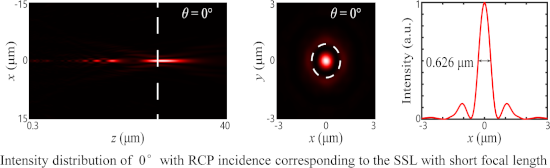
- designed a unit cell structure based on the geometric phase (i.e., Pancharatnam–Berry phase) principle [30][31]. Generally, metasurfaces based on geometric phases are easier to process, and the phase modulation in the whole 2π range can be achieved by simply changing the orientation of the unit cell. Also
- used as unit cells of the two metasurfaces. The fused silica glass is used as substrate in the SSL. Theoretically, for the metasurface based on the geometric phase principle, the phase modulation of the transmitted RCP light is exactly twice of the orientation of the unit cell under the LCP incidence
- , height H = 600 nm, and period P = 250 nm × 250 nm. It is demonstrated in Figure 3b that the transmittance varies only little for different orientation angles and the modulated phase changes almost linearly with a factor of two, which also proves the geometric phase principle and the excellent performance


Design of surface nanostructures for chirality sensing based on quartz crystal microbalance
Beilstein J. Nanotechnol. 2022, 13, 1201–1219, doi:10.3762/bjnano.13.100
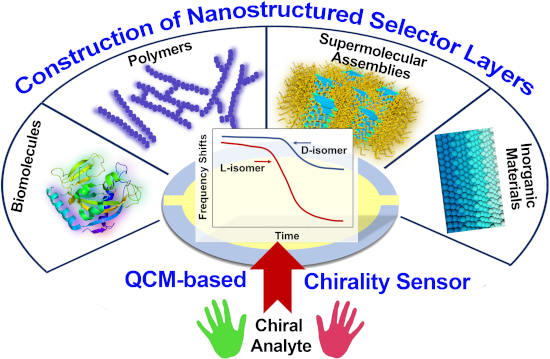
- significant difference in the binding with a certain group of CDs. For example, the hydroxy group of (+)-methyl ʟ-lactate interacts with the methoxy group of MP-β-CD through hydrogen bonding. However, (−)-methyl ʟ-lactate does not undergo similar interactions due to the orientation difference of the hydroxy
- odor molecules with 96% accuracy. Besides regulating the porous structure and functionalities of MOFs, it may also improve the chiral sensing performance by controlling the orientation growth of MOFs to the assembled composite films on the QCM surfaces. Wöll and Fischer et al. reported the construction
- substances [117]. Various metal or inorganic materials have been explored as chiral selectors in QCM systems based on different strategies and techniques. Sarkar et al. used tartaric acid as a chiral inducer to control the crystalline orientation of CuO films based on the electrodeposition method [118]. The


Influence of water contamination on the sputtering of silicon with low-energy argon ions investigated by molecular dynamics simulations
Beilstein J. Nanotechnol. 2022, 13, 986–1003, doi:10.3762/bjnano.13.86
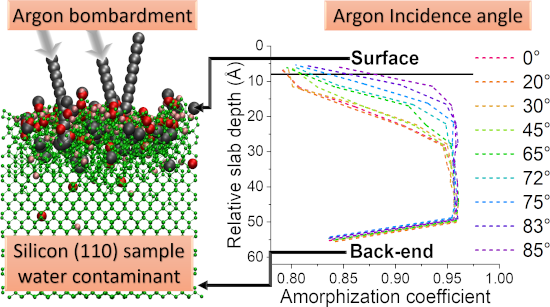
- sample. The water molecules were equilibrated using the ReaxFFOH(2017) [24] potential in a fully periodic space using the NPT ensemble. Since the adsorption of water molecules on a surface is a random process, the orientation of the molecules could freely evolve. Snapshots of water equilibration can be
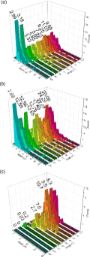
- , and this orientation is maintained for the energy transfer to the target atoms. Interestingly, the partial sputtering yields of hydrogen and oxygen atoms are the highest at incidence angles between 70 and 80° (i.e., above angles where the silicon sputtering yields are the highest), leading to the




Interaction between honeybee mandibles and propolis
Beilstein J. Nanotechnol. 2022, 13, 958–974, doi:10.3762/bjnano.13.84
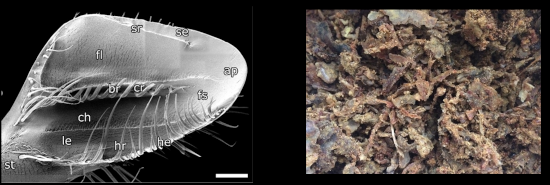
- proportions and orientation differed depending on the location on the mandible. The structures faded and eventually disappeared towards the apex and hairless edge of the mandible. It is possible that the scales in these areas are worn out by intensive use. However, it can be assumed that this is the normal


Bioselectivity of silk protein-based materials and their bio-inspired applications
Beilstein J. Nanotechnol. 2022, 13, 902–921, doi:10.3762/bjnano.13.81
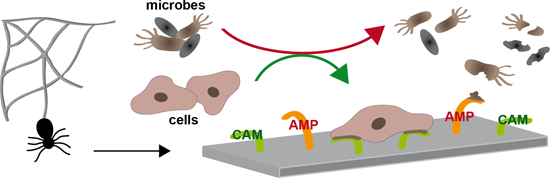
- fact that the proteins in the ECM (such as fibronectin, vitronectin, collagen, and laminin) are adsorbed in a denatured state, and their orientation becomes unsuitable for cell binding [66]. Cells (e.g., osteoblasts) are more likely to attach to more hydrophilic surfaces and exhibit the strongest


Self-assembly of C60 on a ZnTPP/Fe(001)–p(1 × 1)O substrate: observation of a quasi-freestanding C60 monolayer
Beilstein J. Nanotechnol. 2022, 13, 857–864, doi:10.3762/bjnano.13.76
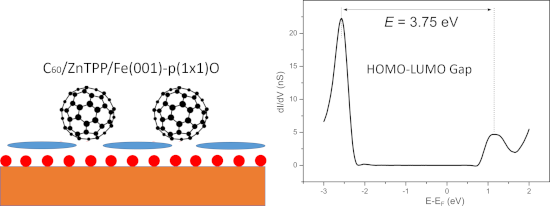
- transform (FFT) calculated from the image reported in Figure 2a. Four hexagonal domains can be identified, differing by their angular orientation with respect to the substrate. Interestingly, the domains do not possess a well-defined epitaxial relation with respect to the (5 × 5) lattice of ZnTPP


Temperature and chemical effects on the interfacial energy between a Ga–In–Sn eutectic liquid alloy and nanoscopic asperities
Beilstein J. Nanotechnol. 2022, 13, 817–827, doi:10.3762/bjnano.13.72
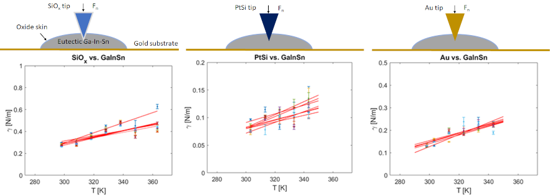
- . The surface energy of the eutectic Ga–In–Sn melt at the melting point has been reported to be 587 mN/m [21], while published values for SiOx, PtSi, and Au are = 53 mN/m [22], = 1150–1300 mN/m depending on its orientation [23], = 1710 mN/m [24]. These values lead to the following results for the
- ]. Depending on the surface orientation, a range of values between 0.6 N/m and 2.98 N/m has been reported. The values of and determined in this work are significantly lower than and Due to its chemical inertness, reactivity between PtSi and eutectic Ga–In–Sn melt can be ruled out. Also, reactions between



Recent advances in nanoarchitectures of monocrystalline coordination polymers through confined assembly
Beilstein J. Nanotechnol. 2022, 13, 763–777, doi:10.3762/bjnano.13.67
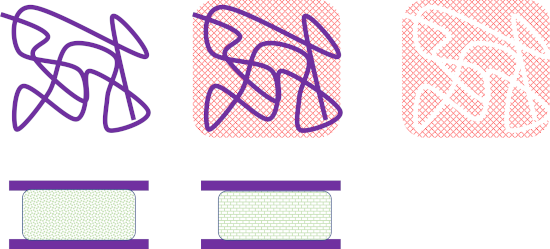
- structure or orientation of the monocrystalline coordination polymers are hardly affected. However, when solids have a similar lattice structure with the grown coordination polymers, epitaxy happens to guide the growth of the coordination polymers. The crystallographic orientation of the grown coordination
- find appropriate substrates with lattice similarity to the preferred crystallographic orientation of the targeted coordination polymer. Parallelly aligned Cu(OH)2 nanobelts were used to guide the epitaxial growth of Cu2(BDC)2 (BDC = benzenedicarboxylic acid). Centimeter-scale micropore alignment was




Modeling a multiple-chain emeraldine gas sensor for NH3 and NO2 detection
Beilstein J. Nanotechnol. 2022, 13, 721–729, doi:10.3762/bjnano.13.64
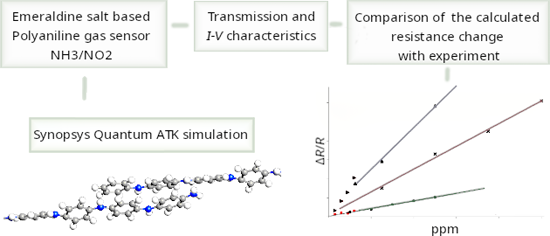
- several chains were modeled, between two chains (Figure 3 and Figure 4). Also, the orientation of the gas molecule was varied. Apart from these variations, one position and one orientation of the gas molecule was determined utilizing energy minimizing optimization. For all these situations, computation of
- chosen fixed positions of ammonia and nitrogen dioxide molecules. We have computed the local energy minima through molecular dynamics, which results in the optimized position and orientation of the gas molecule. The spatial orientation of the gas molecules was estimated by these optimizations. Next, one
- as well. The I–V characteristics were computed for several molecule positions near the doped and near the undoped nitrogen atoms, see above. The molecule orientation was estimated through molecular dynamics optimization. The resistance from the linear part of the I–V characteristics was used to


Design and selection of peptides to block the SARS-CoV-2 receptor binding domain by molecular docking
Beilstein J. Nanotechnol. 2022, 13, 699–711, doi:10.3762/bjnano.13.62
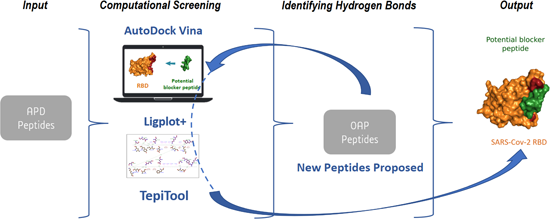
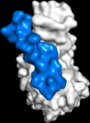
- range from −2 (red) over 0 (white) to +2 (blue). The orientation of the molecule is rotated by about 90° along the z-axis of image (a) to show the RBD surface that binds to the ACE2 cell receptor. Image modified from PDB 6VYB [3]. Peptide candidates (blue) docked to the SARS-CoV-2 RBD (white). (a) ACE2



Comparative molecular dynamics simulations of thermal conductivities of aqueous and hydrocarbon nanofluids
Beilstein J. Nanotechnol. 2022, 13, 620–628, doi:10.3762/bjnano.13.54
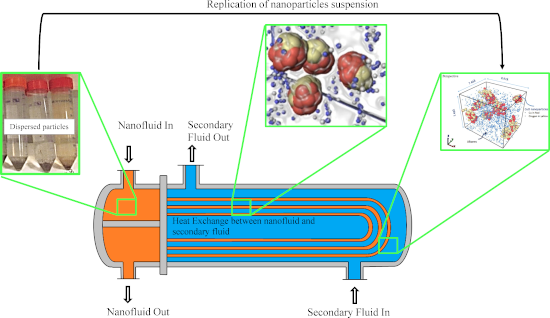
- orientations was tested [29]. Cooling properties of the CuO/water nanofluid were observed at each orientation. Moreover, efficient and accurate mathematical models were used to obtain readings that were precisely similar to experimental values. A maximum heat transfer rate was recorded in the right-oriented


Quantitative dynamic force microscopy with inclined tip oscillation
Beilstein J. Nanotechnol. 2022, 13, 610–619, doi:10.3762/bjnano.13.53
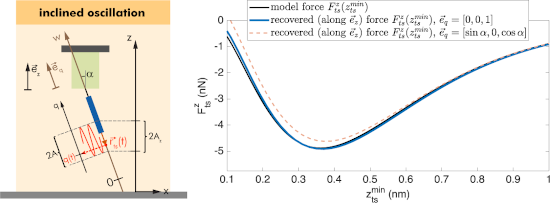
- , three AFM equations were found that represent the general case for a probe oscillating in an arbitrary direction. A probe orientation different from the surface normal and its oscillation in the vector force field above the surface has important consequences on the measured force response and
- orientation of and violates a fundamental assumption of the commonly used inversion algorithms [4][5]: The tip sampling path segments are not overlapping when moving the tip along the data recording path for an inclined oscillation. The resulting error in the force recovery is shown in Figure 4c, where the


![[Graphic 38]](/bjnano/content/inline/2190-4286-13-53-i79.svg?max-width=637&scale=1.18182) and the axis w....
and the axis w....


Sodium doping in brookite TiO2 enhances its photocatalytic activity
Beilstein J. Nanotechnol. 2022, 13, 599–609, doi:10.3762/bjnano.13.52
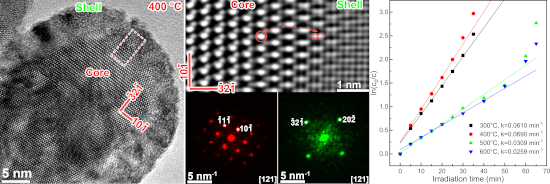
- , the brookite NaxTi1−xO2 transforms into Na2Ti6O13 by a twinning process with the orientation relationship of [1−2−3]Matrix//[1−23]Twins and (−2−10)Matrix//(1−1−1)Twins. The differences in the ionic radius and the electronegativity between Na and Ti destroy the local atomic arrangement of the brookite
- interplanar spacing values are 3.5092 and 3.4619 Å, respectively. Thus, the orientation relationship between the matrix and twins is // and // The twinning effect in the brookite structure may be the major driven force of the phase transformation from the brookite NaxTi1−xO2 to Na2Ti6O13. Such transformation


A new method for obtaining the magnetic shape anisotropy directly from electron tomography images
Beilstein J. Nanotechnol. 2022, 13, 590–598, doi:10.3762/bjnano.13.51
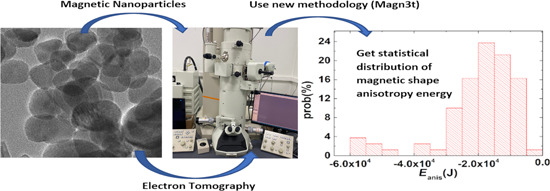
- maintaining the labeling at the contact between adjacent particles. Shape evaluation: The procedure consists of fitting each separated particle with an ellipsoid and recovering information about size, axis ratios, and orientation of the long axis from the fit. Both the direction and the magnitude of the semi
- rotation axes. This assumption is usually valid for the vast majority of MNPs used in practice. Output size, shape, and anisotropy distributions: A file containing MNP volume, position of its center of mass, magnitude and orientation of the three semi-axes under the ellipsoidal shape approximation for all
- software. Regarding this, a test data volume filled with ellipsoids has been generated (Figure 3). Again, size, shape, position, and orientation of the ellipsoids have a Gaussian distribution in space, this time without the constraint of no overlap. Experimentally obtained system A system of iron oxide


Revealing local structural properties of an atomically thin MoSe2 surface using optical microscopy
Beilstein J. Nanotechnol. 2022, 13, 572–581, doi:10.3762/bjnano.13.49
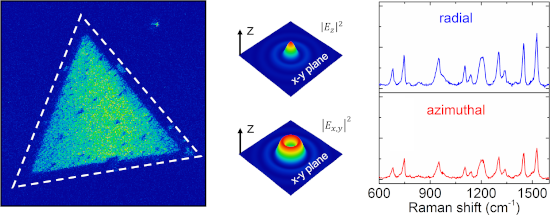
- the excitation energy, leading to a giant chemical enhancement on partially oxidized MoS2 [23]. It has been also reported that the energy levels and orientation of the Raman-active probe molecule on graphene could strongly influence the Raman enhancement. Benefiting from the face-on molecular
- orientation and molecular energy levels in the vicinity of the Fermi level of graphene, the charge-transfer effect can become more pronounced [24][25]. In summary, the structural irregularities in 2D materials and molecular probe both can impact the strength of molecule–substrate interactions and then modify
- triangular flakes on top of the underlying large flake, which appear dark in the SHG image in Figure 1d. The decreased SHG intensity at increasing layer thickness indicates a mirrored orientation of neighboring layers in the MoSe2 flake, which is typical for hexagonal 2H-phase MoSe2 [28][29]. Figure 1e shows


Investigation of electron-induced cross-linking of self-assembled monolayers by scanning tunneling microscopy
Beilstein J. Nanotechnol. 2022, 13, 462–471, doi:10.3762/bjnano.13.39
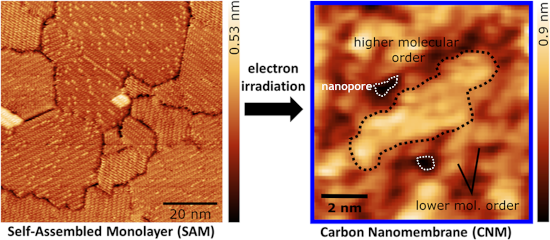
- of 7.6 ± 5.0° with respect to the β-phase domains. The appearance of the oval spots depends on the relative orientation between the fast scan direction and the domain orientation. Depending on the relative orientation, the oval spots divide into two spherical spots [64]. The structural models for the


Tunable superconducting neurons for networks based on radial basis functions
Beilstein J. Nanotechnol. 2022, 13, 444–454, doi:10.3762/bjnano.13.37
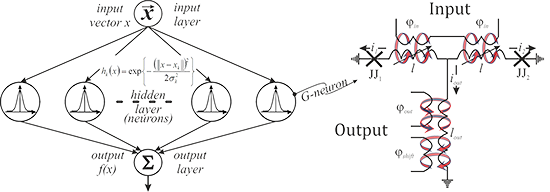
- proximity effect. The typical spin valve [55][56][57] is a hybrid structure containing at least a pair of ferromagnetic (FM) layers with different coercive forces. Variations in the relative orientation of their magnetizations change the spatial distribution of the superconducting order parameter. In the
- case of parallel magnetization of the FM layers the Cooper pairs are effectively depairing inside them (closed spin valve). For the antiparallel orientation, the effective exchange energy of the magnetic layers is averaged and suppression of the superconducting order parameter is weaker (open spin
- the AP orientation than for the P orientation. To enhance the effect, we propose to add an additional superconductor layer s1 (Figure 6b). In the case of the closed valve, the s1 layer is in the normal state, and the superconducting correlations in the N layer are negligible. If the valve is open, the


A non-enzymatic electrochemical hydrogen peroxide sensor based on copper oxide nanostructures
Beilstein J. Nanotechnol. 2022, 13, 424–436, doi:10.3762/bjnano.13.35
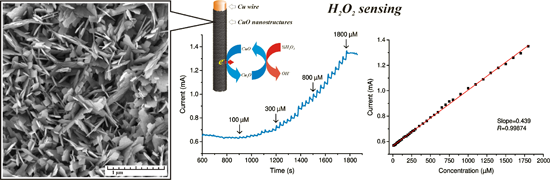
- amorphous background indicates a high degree of crystallinity of the obtained samples. The X-ray diffraction pattern shows a large number of crystallographic planes corresponding to the CuO (tenorite) lattice; however, the dominant orientation corresponds to the direction perpendicular to the (002) and (111




Micro- and nanotechnology in biomedical engineering for cartilage tissue regeneration in osteoarthritis
Beilstein J. Nanotechnol. 2022, 13, 363–389, doi:10.3762/bjnano.13.31
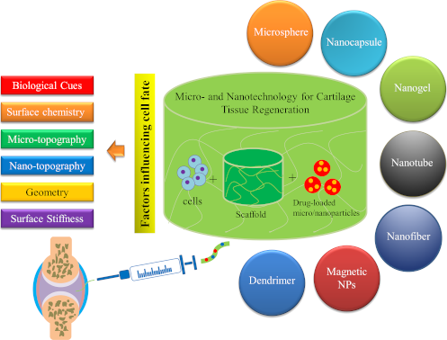
- tissue engineering. The results demonstrated that the incorporation of CNTs into PCL scaffolds improved the mechanical properties, such as failure stress, yield stress, and Young’s modulus, and had no adverse effects on MSC survival [136]. Due to the specific orientation of chondrocytes, tissue
- engineering faces a limitation to mimic the architecture of cartilage. Therefore, Janssen et al. used VA–MWCNT micropillars to induce an unidirectional orientation of chondrocytes [137]. The Young’s modulus of the VA–MWCNT micropillars was in the range of the natural ECM of articular cartilage. The
- proliferation of chondrocytes to achieve unidirectional orientation was controllable by optimizing the size and spacing of VA–MWCNT micropillars. Cell attachment, proliferation, and ECM production reportedly were enhanced by micropillars in comparison to the control groups [137]. Apart from carbon nanotubes for


Alcohol-perturbed self-assembly of the tobacco mosaic virus coat protein
Beilstein J. Nanotechnol. 2022, 13, 355–362, doi:10.3762/bjnano.13.30
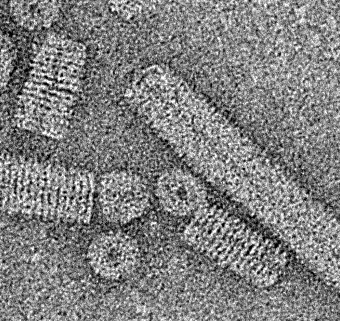
- between in TEM. The bilayer disk has been reported in two different polymorphs: a polar disk with both layers in the same orientation or a bipolar disk with the two layers related by C2 symmetry [18][19][20]. Under basic conditions and at high ionic strength, a four-layer disk aggregate is observed [21


Controllable two- and three-state magnetization switching in single-layer epitaxial Pd1−xFex films and an epitaxial Pd0.92Fe0.08/Ag/Pd0.96Fe0.04 heterostructure
Beilstein J. Nanotechnol. 2022, 13, 334–343, doi:10.3762/bjnano.13.28
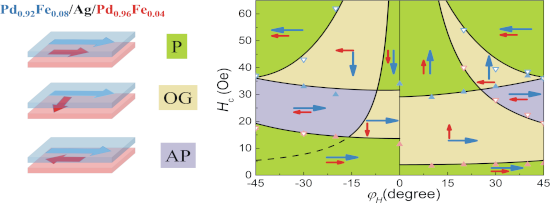
- film (and the substrate). The reference frame orientation with respect to the sample is shown in the insets in Figure 1. When measuring the magnetoresistance, the magnetic field was applied at different angles in three main planes as shown in Figure 1. At any orientation, on approaching zero field, the
- slope with temperature. Lines are drawn using the model of Equation 1. (b) Dependence of the resistance on the orientation of the magnetic field at T = 5 K. The contribution from the electron–magnon scattering is subtracted. Lines are drawn using the model of Equation 2. Dependences of the resistivity


Effects of drug concentration and PLGA addition on the properties of electrospun ampicillin trihydrate-loaded PLA nanofibers
Beilstein J. Nanotechnol. 2022, 13, 245–254, doi:10.3762/bjnano.13.19
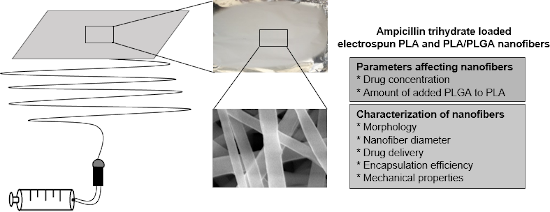
- composition, porosity, average size, distribution, individual nanofiber orientation, interaction between nanofibers, and arrangement and entanglement of the nanofibers [27][28][29]. When the mechanical properties of PLA nanofibers containing different amounts of drug were examined, the increase in the amount


Tin dioxide nanomaterial-based photocatalysts for nitrogen oxide oxidation: a review
Beilstein J. Nanotechnol. 2022, 13, 96–113, doi:10.3762/bjnano.13.7
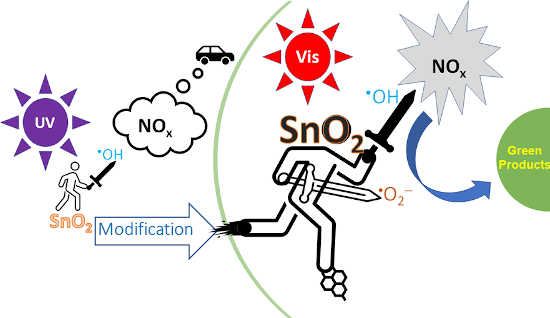
- that NO could be absorbed easily on various SnO2(110) surfaces, and it is preferentially adsorbed on the OV site through an N-down orientation. Figure 5 shows the calculation of the energy of NO conversion processes on SnO2(110), SnO2−x(110), and O2 + SnO2−x(110) surfaces. The oxidation of NO on other


Topographic signatures and manipulations of Fe atoms, CO molecules and NaCl islands on superconducting Pb(111)
Beilstein J. Nanotechnol. 2022, 13, 1–9, doi:10.3762/bjnano.13.1
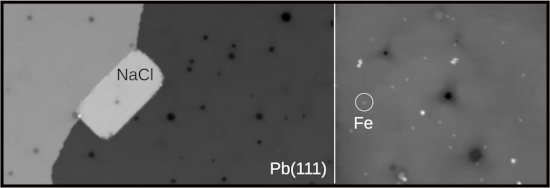
- , which might be related to a strong interaction with the Pb lattice. While the D features are all aligned in the same direction, the orientation of the T features differs slightly. Both features have an apparent height of ≈0.3 Å, as extracted from the profile of Figure 2b, displayed in Figure 2c. Overall





