


Search results
Search for "polymerization" in Full Text gives 224 result(s) in Beilstein Journal of Nanotechnology. Showing first 200.
Polydopamine-coated Au nanorods for targeted fluorescent cell imaging and photothermal therapy
Beilstein J. Nanotechnol. 2019, 10, 794–803, doi:10.3762/bjnano.10.79
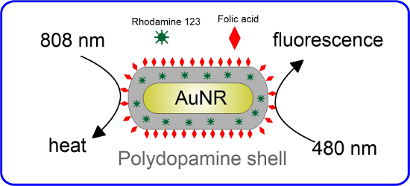
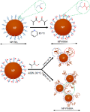
- by polymerization of dopamine in alkaline environment. The polymerization process results in the formation of a PDA shell around the AuNR core (Scheme 1). The thickness of the PDA shell can be controlled by the concentration of dopamine added to reaction mixture. In this study we mixed 10 mL of AuNRs


Outstanding chain-extension effect and high UV resistance of polybutylene succinate containing amino-acid-modified layered double hydroxides
Beilstein J. Nanotechnol. 2019, 10, 684–695, doi:10.3762/bjnano.10.68
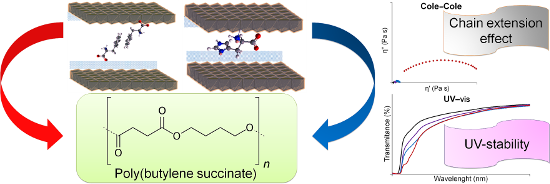
- PBS nanocomposites. Nano-hybrid fillers (based on Mg2Al or Zn2Al LDH cations and with different anions from carboxylic and dicarboxylic acids, ascorbic acid and amino acids) were incorporated to PBS polymer by both methods: in situ polymerization and melt extrusion. Depending on the type of organic
- molecules, chain extension or plasticizing effects were observed. In the case of in situ polymerization, an increase in the Newtonian zero-shear viscosity of nearly 20–28 times was observed when LDHs with embedded PBS oligomers were used, whereas the smaller molecules increased η0 from 40–50 Pa s for
- compared to the in situ polymerization approach. The best results were obtained for Zn2Al/TYR and Zn2Al/cinnamic LDHs (5 wt %), from 115 to 245 and 360 Pa s respectively, while in other cases the differences were smaller. Our present results are here spectacular, since an increase of 80 times for η0 is


Ceria/polymer nanocontainers for high-performance encapsulation of fluorophores
Beilstein J. Nanotechnol. 2019, 10, 522–530, doi:10.3762/bjnano.10.53
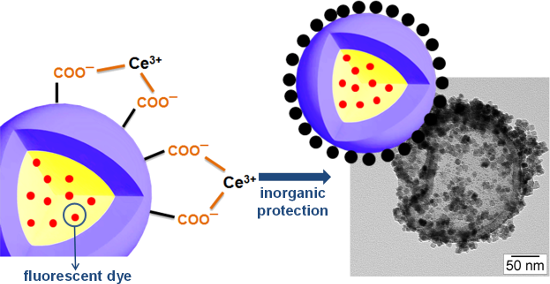
- an inorganic layer and a liquid core containing a fluorophore. The polymeric capsules are synthesized by free radical miniemulsion polymerization and contain covalently bound carboxylate surface functionalities that allow for the binding of metal ions through electrostatic interaction. A cerium(IV
- under argon atmosphere [sample NC(Ar)] by free-radical miniemulsion polymerization [46]. The continuous phase contains SDS (30 mg) and demineralized water (30 g). The disperse phase contains styrene (1.8 g) and acrylic acid (0.2 g) as monomers, hexadecane (4 g) with the fluorescent dye TDI and the
- initiator V59 (100 mg). The two phases were mixed and pre-emulsified by stirring at 1000 rpm for 1 h. The emulsion was prepared by ultrasonication (Branson Digital Sonifier 450-D; 1/2″ tip, 90% intensity, 2 min) while cooling in an ice-water bath to avoid polymerization due to heating. The polymerization


Widening of the electroactivity potential range by composite formation – capacitive properties of TiO2/BiVO4/PEDOT:PSS electrodes in contact with an aqueous electrolyte
Beilstein J. Nanotechnol. 2019, 10, 483–493, doi:10.3762/bjnano.10.49
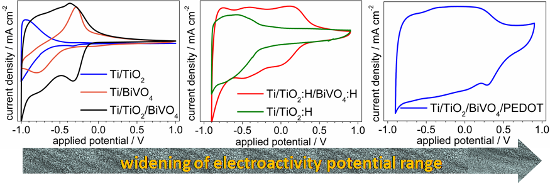
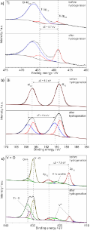
- vs Ag/AgCl (0.1 M KCl)). The charge consumed during polymerization was in the range from 0.01 to 0.1 mC·cm−2 per pulse, which is expected to deposit a conducting polymer film of 0.07 to 0.7 nm per pulse. An exemplary chronoamperometric curve (single pulse) is presented in Figure 1a. A Pt/PEDOT:PSS




Nanocomposite–parylene C thin films with high dielectric constant and low losses for future organic electronic devices
Beilstein J. Nanotechnol. 2019, 10, 428–441, doi:10.3762/bjnano.10.42
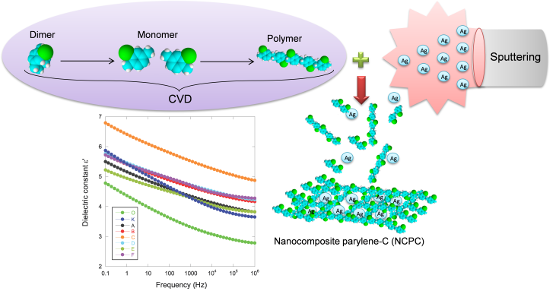
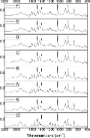
- chemical vapor deposition polymerization of parylene C combined with RF-sputtering of silver. It was demonstrated that the plasma itself induces changes in the density and semi-crystalline character of parylene C. A decrease in the density, an increase in the degree of crystallinity and an increase of




pH-mediated control over the mesostructure of ordered mesoporous materials templated by polyion complex micelles
Beilstein J. Nanotechnol. 2019, 10, 144–156, doi:10.3762/bjnano.10.14
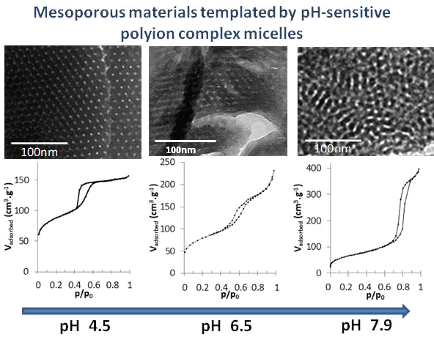
- transfer radical polymerization (ATRP) according to published procedures [29]. All reactions were carried out in the absence of air using standard Schlenk techniques and vacuum-line manipulation. All the chemicals used for the reaction (tert-butyl acrylate 98%, α-methoxy-ω-hydroxy-poly(ethylene oxide) with


Pull-off and friction forces of micropatterned elastomers on soft substrates: the effects of pattern length scale and stiffness
Beilstein J. Nanotechnol. 2019, 10, 79–94, doi:10.3762/bjnano.10.8
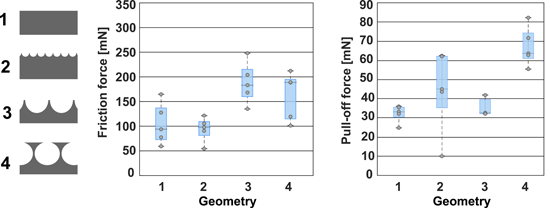
- -polymer (base) and crosslinker (curing agent) were purchased from Dow Corning, poly(vinyl alcohol) (PVA, Selvol PVOH 165; hydrolysis rate: 99.65% ± 0.35%; degree of polymerization: about 2000, as reported by the manufacturer) was purchased from Sekisui Chemical Group. N-methyl-2-pyrrolidone (NMP) was
- particles: Carboxylated polystyrene (PS) particles with a sub-microscale diameter were synthesized in a single-step surfactant-free emulsion polymerization, according to Appel et al. [42]. The particles were washed by centrifugation three times in ethanol and three times in water. The particles were





Zn/F-doped tin oxide nanoparticles synthesized by laser pyrolysis: structural and optical properties
Beilstein J. Nanotechnol. 2019, 10, 9–21, doi:10.3762/bjnano.10.2
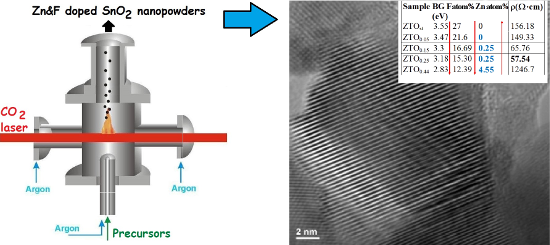
- as dimerization, dehydrogenation, polymerization, reticulation, aromatization and carbonization with the final formation of amorphous hydrogenated carbon. For the ZTO0.44 case, in spite of an apparent oxygen excess, the carbon is still formed (the EDX-extracted carbon atomic percent is the smallest



Colloidal chemistry with patchy silica nanoparticles
Beilstein J. Nanotechnol. 2018, 9, 2989–2998, doi:10.3762/bjnano.9.278
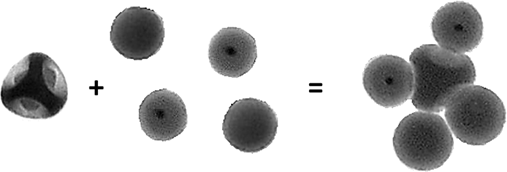
- Ravensteijn has also reported asymmetric dumbbell-like particles, i.e., with two nodules of different chemical compositions, obtained through a phase separation process during the styrene emulsion polymerization seeded with cross-linked polystyrene (PS) particles coated with a thin layer of poly(vinylbenzyl
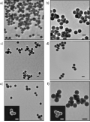
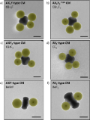
- of a central silica core and two or four PS nodules were prepared by the seeded-growth emulsion polymerization of styrene, according to an already published procedure [24]. The regrowth of the silica cores of the multipods, the subsequent dissolution of the PS nodules to create dimpled particles and
- by two or four PS satellite nodules, by seeded-growth emulsion polymerization of styrene, according to a procedure we published previously [24]. We used two batches of silica seeds with diameters of 48 and 53 nm, respectively, previously surface-modified with MMS or MPS (0.5 molecules per square


Cytotoxicity of doxorubicin-conjugated poly[N-(2-hydroxypropyl)methacrylamide]-modified γ-Fe2O3 nanoparticles towards human tumor cells
Beilstein J. Nanotechnol. 2018, 9, 2533–2545, doi:10.3762/bjnano.9.236
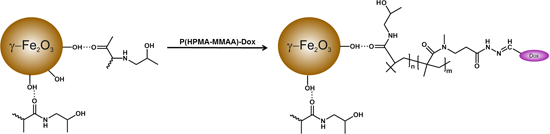
- added and the polymerization was started by heating at 60 °C for 16 h. Ethanol (5 mL) was removed on a rotary evaporator, the resulting poly[N-(2-hydroxypropyl)methacrylamide-co-2-(N-methylmethacrylamido)acetate] [P(HPMA-MMAA)] was precipitated in diethyl ether, separated by centrifugation, repeatedly
- γ-Fe2O3 with PHPMA and P(HPMA-MMAA)-Dox First, PHPMA was prepared by precipitation polymerization and used as a coating of γ-Fe2O3 nanoparticles. Briefly, in an 100 mL Erlenmeyer flask, HPMA (2 g) freshly crystalized from ethyl acetate and AIBN (10 mg) were dissolved in ethyl acetate (18 mL) under
- Ar atmosphere and the polymerization proceeded at 60 °C for 16 h. The resulting PHPMA was washed with ethyl acetate and separated by filtration yielding 1.92 g of the polymer (Mn = 177 kDa). Aqueous solution of PHPMA (2 mL; 0.1 g PHPMA/mL) was then added to the γ-Fe2O3 colloid (2 mL; 0.1 g of γ-Fe2O3


Non-agglomerated silicon–organic nanoparticles and their nanocomplexes with oligonucleotides: synthesis and properties
Beilstein J. Nanotechnol. 2018, 9, 2516–2525, doi:10.3762/bjnano.9.234
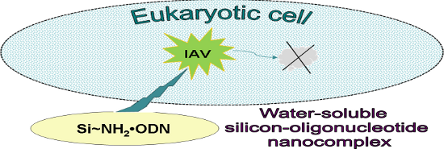
- particle size detected by AFM. Reasonable results on the diameter of the studied particles were obtained by dynamic light scattering (Table 1 and Table 2), which allows measurement of the particle size in solution (without effects of the drying process, which most likely leads to polymerization and


Nanocellulose: Recent advances and its prospects in environmental remediation
Beilstein J. Nanotechnol. 2018, 9, 2479–2498, doi:10.3762/bjnano.9.232
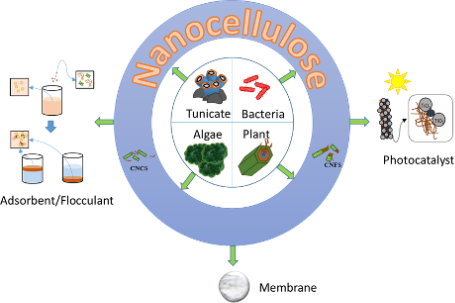
- organisms through enzymatic polymerization of organic substrates such as sugar and glycerol [11][31]. The main difference between BC and other plant-derived CNFs is the absence of certain functional groups (except alcohol) and polymers (lignin, hemicellulose, and pectin) in BC [32]. Therefore, BC is known
- multiple carboxy functional groups for the adsorption of uranium(VI) and cobalt(II). The co-polymerization of itaconic acid and methacrylic acid was able to introduce three carboxy functionalities which increased reactivity and hydrophilicity for effective removal of the metal ions from the aqueous


Block copolymers for designing nanostructured porous coatings
Beilstein J. Nanotechnol. 2018, 9, 2332–2344, doi:10.3762/bjnano.9.218
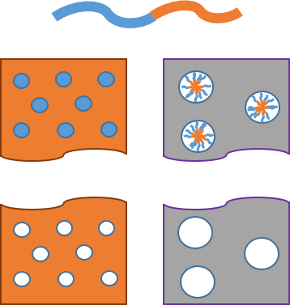
- . In the work of Glassner et al. [62], they reported the synthesis of PS-b-PEO copolymers by coupling the reversible addition fragmentation chain transfer (RAFT) polymerization and the hetero Diels–Alder cycloaddition followed by subsequent retro-hetero Diels–Alder mechanisms by a heating/washing
- peculiar characteristic can be coupled with sol–gel processes to produce well-ordered oxidic architectures [95][96]. The sol–gel process involves various chemical reactions such as hydrolysis, condensation, and consequently, polymerization involving the monomers (for inorganic systems, either metal
- linear AB diblock copolymers. Reprinted with permission from [42], copyright 2014 The Royal Society of Chemistry. f: volume fraction of one block; χ: Flory–Huggins interaction parameter; N: degree of polymerization; L: lamellae; H: hexagonally packed cylinders; Q230: double-gyroid phase; Q229: body


Electrospun one-dimensional nanostructures: a new horizon for gas sensing materials
Beilstein J. Nanotechnol. 2018, 9, 2128–2170, doi:10.3762/bjnano.9.202






Synthesis of rare-earth metal and rare-earth metal-fluoride nanoparticles in ionic liquids and propylene carbonate
Beilstein J. Nanotechnol. 2018, 9, 1881–1894, doi:10.3762/bjnano.9.180
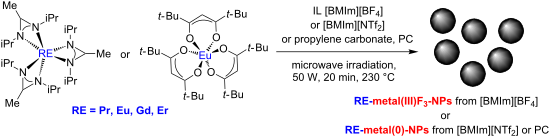
- the polymerization of olefins [15][16] and as precursors in chemical vapor (CVD) processes of rare-earth materials such as oxides and nitrides [17][18][19]. It is especially advantageous that the decomposition products from the amidinate ligand are gaseous so that product contamination is minimized


Uniform cobalt nanoparticles embedded in hexagonal mesoporous nanoplates as a magnetically separable, recyclable adsorbent
Beilstein J. Nanotechnol. 2018, 9, 1770–1781, doi:10.3762/bjnano.9.168
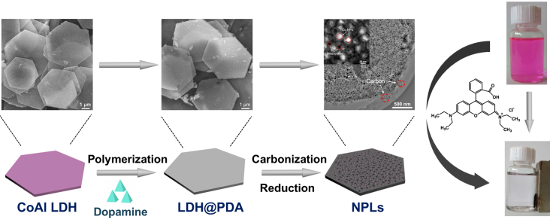
- (LDH). A uniform PDA coating initially covers the surface of LDH by dopamine self-polymerization under mild conditions. Well-dispersed Co nanoparticles are formed in the NPLs by the partial reduction of cobalt from Co2+ to Co0 with surface carbon during the heat treatment process. The surface
- used as an adsorbent for efficient removal of RhB dye from aqueous solutions. As illustrated in Scheme 1, firstly, CoAl LDH is synthesized with urea through a hydrothermal method. Subsequently, the LDH@PDA composite is obtained by coating CoAl LDH with PDA through self-polymerization of dopamine in
- ) solution. The pH of the above mixture was adjusted by 1 M HCl to 8.5, which resulted in the polymerization of dopamine. After vigorously stirring for 12 h, the dark precipitate (LDH@PDA) was carefully collected by centrifugation and washed with deionized water several times to remove unreacted dopamine


Preparation of micro/nanopatterned gelatins crosslinked with genipin for biocompatible dental implants
Beilstein J. Nanotechnol. 2018, 9, 1735–1754, doi:10.3762/bjnano.9.165
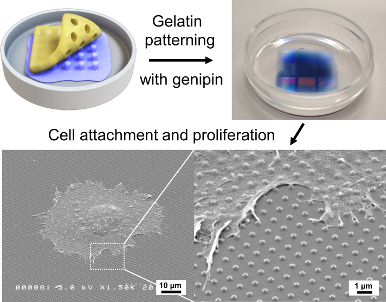
- topographical scaffolds [27][28][29]. Different patterns of coated collagen/gelatin have been used to control cell attachment and subsequent cellular function. Numerous methods have been used to control the patterning of collagen/gelatin surfaces. These include, polymerization of gelatin methacrylate (GelMA
- surface patterning material or crosslinking agent used can also subsequently influence cytotoxicity and cell behavior [32][33]. Rizwan et al. have reported that micro/nanopillars comprised of gelatin could be fabricated through a combination of molding and polymerization of the gelatin with methacrylate
- , 333 to 650 nm wide, have been successfully fabricated using crosslinking with carbodiimide [46]. Gelatin pillars with a diameter of 250 nm to 1 µm have also been patterned using polymerization with GelMA. The swelling ratio of these pillars could be successfully controlled by changing the GelMA








Nanocomposites comprised of homogeneously dispersed magnetic iron-oxide nanoparticles and poly(methyl methacrylate)
Beilstein J. Nanotechnol. 2018, 9, 1613–1622, doi:10.3762/bjnano.9.153
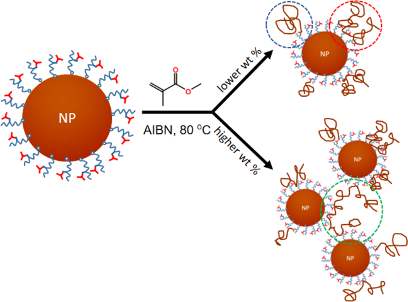
- analysis, a small amount of the nanoparticles were isolated from the suspension of NP-PMMA-3 immediately after the polymerization by centrifugation at 20,000g for 20 min. Any free polymer was washed from the sample by dispersing the sediment in acetone, centrifugation at 20,000g for 20 min and discarding
- the supernatant. The dispersion/centrifugation cycle was repeated four times. The isolated NP-PMMA-3 sample was oven dried at 60 °C. Pure PMMA (sPMMA) was prepared by polymerization of the MMA under identical conditions. The bonding of the MMA to RA (RA-MMA) and copolymerization of the RA-MMA with MMA
- probably the result of the depletion layer surrounding the nanoparticles, causing their flocculation to decrease the excluded volume of polymer chains [19][20][21][29]. To test if any of the added compounds stabilize the suspension of NPs in the PMMA polymer solution, the polymerization of MMA was


Optical near-field mapping of plasmonic nanostructures prepared by nanosphere lithography
Beilstein J. Nanotechnol. 2018, 9, 1536–1543, doi:10.3762/bjnano.9.144
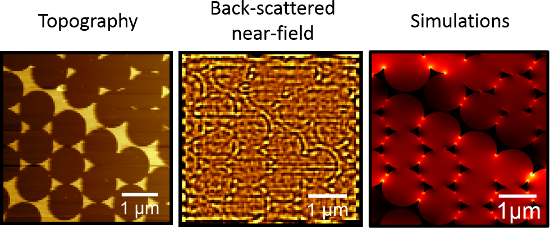
- with a femtosecond laser, thereby inducing polymerization at the hot spots. In another approach, based on confocal fluorescence microscopy, a dye solution is deposited on the samples, and the higher fluorescence magnitude originating from the hot spots is measured [19]. However, these last four




Heterostuctures of 4-(chloromethyl)phenyltrichlorosilane and 5,10,15,20-tetra(4-pyridyl)-21H,23H-porphine prepared on Si(111) using particle lithography: Nanoscale characterization of the main steps of nanopatterning
Beilstein J. Nanotechnol. 2018, 9, 1211–1219, doi:10.3762/bjnano.9.112
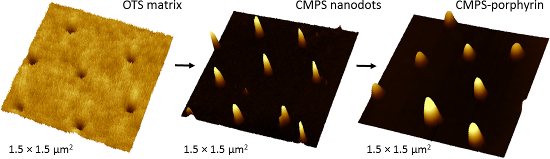
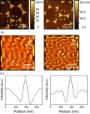
- matrix of OTS showed minimal areas of nonspecific adsorption. The AFM studies provide insight into the mechanism of the self-polymerization of CMPS as a platform for constructing porphyrin heterostructures. Keywords: atomic force microscopy (AFM); nanostructures; particle lithography; porphyrin; self
- subsequently grew to form multiple layers of CMPS through self-polymerization [37][39]. In a recent report, we have shown that changes in the parameters of temperature and solvent affect the growth of CMPS nanostructures prepared within a matrix film of organosilanes prepared with particle lithography [40]. In
- . The center-to-center spacing of each nanostructure measures 500 nm which matches to the diameter of the original surface mask of Si spheres. The areas with CMPS have self-polymerized to form multilayer nanostructures. The OTS resist confines the multilayer polymerization of CMPS to form within the


Perovskite-structured CaTiO3 coupled with g-C3N4 as a heterojunction photocatalyst for organic pollutant degradation
Beilstein J. Nanotechnol. 2018, 9, 671–685, doi:10.3762/bjnano.9.62
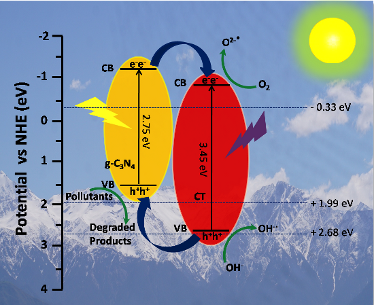
- polymerization reaction and was kept at 120 °C for 24 h in an oven to obtain a black mass. The obtained xerogel was grounded into a powder and calcinated at 700 °C for 8 h, finally yielding white-colored CT nanoflakes. Synthesis of g-C3N4 nanosheets The g-C3N4 nanosheets were synthesized by heating dicyandiamide


Single-step process to improve the mechanical properties of carbon nanotube yarn
Beilstein J. Nanotechnol. 2018, 9, 545–554, doi:10.3762/bjnano.9.52
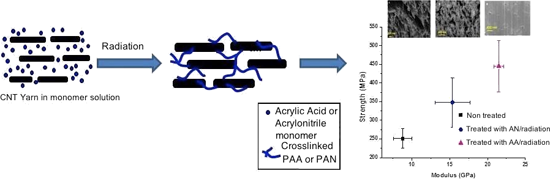
- polyacrylonitrile (PAN) from the literature (Figure 1c). This process relies on the fundamentals of radiation grafting polymerization. The advantage of the process is that an initiator is not required, avoiding the formation of free radicals on the substrate backbone/monomer, contamination and problems with local
- immobilized on the MWNT surface and this produces trapped radicals on the surface of the MWNTs. As a result, the trapped radicals on the MWNTs surface act as initiators for graft polymerization of AN on the MWNT surface. On the other hand, the unsaturated C=C from vinyl monomers degrades easily under the
- radiation process. An excess of inhibitor may lead to diffusion through the yarn and the Fe2+ ions may deactivate the free radicals trapped on the MWNT surface. At this point, it should be noted that, to date, there are some previous reports on the use of radiation grafting polymerization to functionalize




Photocatalytic and adsorption properties of TiO2-pillared montmorillonite obtained by hydrothermally activated intercalation of titanium polyhydroxo complexes
Beilstein J. Nanotechnol. 2018, 9, 364–378, doi:10.3762/bjnano.9.36
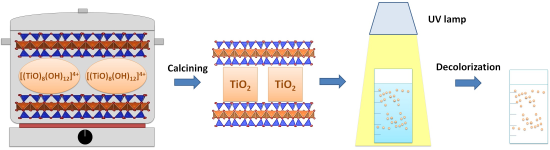
- hydrothermally treated samples is probably due to the processes of polymerization of the hydroxo complexes mentioned in [25][26] in the interlayer space of MM already at the stage of intercalation. It is interesting to note that the basal distance retains its value both in samples subjected to hydrothermal
- . Conclusion TiO2-pillared MM was obtained by hydrothermally intensified intercalation of titanium polyhydroxo complexes, i.e., products of TiCl4 controlled hydrolysis. The porous structure of the material is thermally stable due to polymerization of titanium polycations and aggregation of pillars in the






Review: Electrostatically actuated nanobeam-based nanoelectromechanical switches – materials solutions and operational conditions
Beilstein J. Nanotechnol. 2018, 9, 271–300, doi:10.3762/bjnano.9.29


Vapor-based polymers: from films to nanostructures
Beilstein J. Nanotechnol. 2017, 8, 2219–2220, doi:10.3762/bjnano.8.221

- poly(p-xylylenes) via the Gorham process, has been of industrial use in the fabrication of isolating or protective coatings in electronics and biomaterials for many years [1][2]. More recently, vapor deposition polymerization has been extended to a broad variety of reactive polymers [3], additionally
- using techniques such as plasma-, initiated-, or oxidative chemical vapor deposition polymerization [4][5]. The reason for the ongoing interest in this research field is that, analogue to the deposition of inorganic coatings by chemical vapor deposition, the deposition of polymer coatings from the vapor



