Search results
Search for "simulations" in Full Text gives 620 result(s) in Beilstein Journal of Nanotechnology. Showing first 200.
A wearable nanoscale heart sound sensor based on P(VDF-TrFE)/ZnO/GR and its application in cardiac disease detection
Beilstein J. Nanotechnol. 2023, 14, 819–833, doi:10.3762/bjnano.14.67
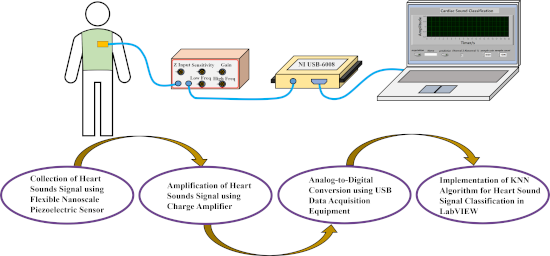
- . Acoustic-electric conversion performance In order to further validate theoretically the effectiveness of the experiment, we conducted simulations using COMSOL software to analyze the internal voltage distribution and stress distribution of the piezoelectric film. Figure 9a–f illustrates the results of the
- simulations. Specifically, Figure 9a–c shows the simulated voltage distribution within the P(VDF-TrFE)/ZnO/GR piezoelectric film under sound pressures of 65, 75, and 85 dB. Figure 9d–f presents the corresponding stress distribution in the piezoelectric film. It is evident that as the sound pressure increases


Cross-sectional Kelvin probe force microscopy on III–V epitaxial multilayer stacks: challenges and perspectives
Beilstein J. Nanotechnol. 2023, 14, 725–737, doi:10.3762/bjnano.14.59
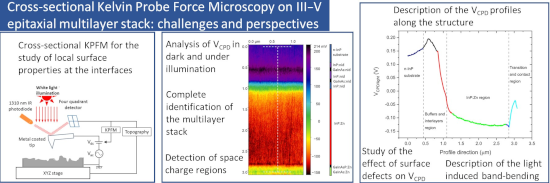
- , and the ϕtip value is set at 5.7 eV, that is, the value measured on our tip as reported above. Note that KELSCAN allows one to simulate VCPD measurements either under dark conditions or under illumination. In the case of “under illumination” simulations, the power density described in the above
- , which strongly impact the VCPD. In order to study the effects of surface defects on the VCPD, we have extended the energy band simulations to a non-ideal case in which constant distributions of acceptor-like and donor-like defects have been introduced at the surface, as described in the Experimental
- simulates our n-type substrate with a doping concentration of 5 × 1018 cm−3, and the second one is metal/InP:Zn/air, with InP:Zn having a p-type doping concentration of 1.5 × 1018 cm−3, similarly to the p-doped layer in our sample. In these simulations, the back metal/InP contact was assumed to be ohmic in


Current-induced mechanical torque in chiral molecular rotors
Beilstein J. Nanotechnol. 2023, 14, 711–721, doi:10.3762/bjnano.14.57
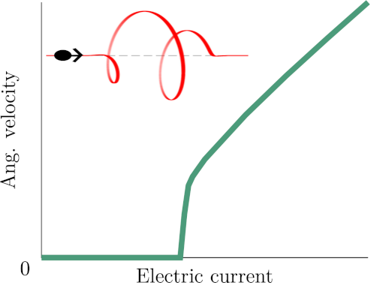
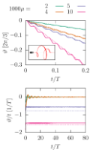
- the fraction on the right-hand side can be interpreted approximately as the outgoing angular momentum current, in view of the expansion in Equation 18. Numerical simulations confirm the threshold behavior, see Figure 5. Below the threshold, the path is bound to the potential minimum. Above the




![[Graphic 29]](/bjnano/content/inline/2190-4286-14-57-i54.svg?max-width=637&scale=1.18182)


Investigations on the optical forces from three mainstream optical resonances in all-dielectric nanostructure arrays
Beilstein J. Nanotechnol. 2023, 14, 674–682, doi:10.3762/bjnano.14.53
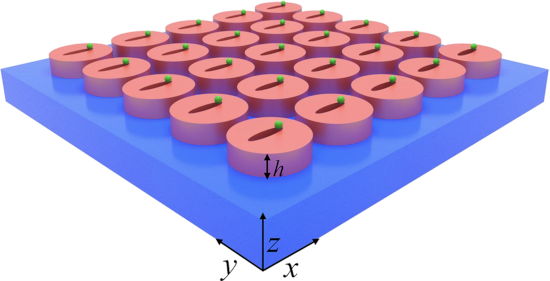
- object it encounters, and the resulting optical force can be used to manipulate particles at the micro- or nanoscale. In this work, we present a detailed comparison through numerical simulations of the optical forces that can be exerted on polystyrene spheres of the same diameter. The spheres are placed


Metal-organic framework-based nanomaterials as opto-electrochemical sensors for the detection of antibiotics and hormones: A review
Beilstein J. Nanotechnol. 2023, 14, 631–673, doi:10.3762/bjnano.14.52
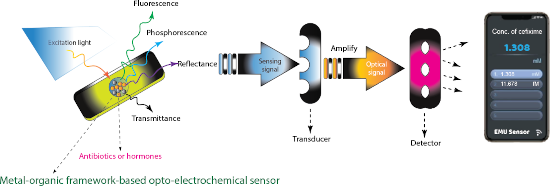
- simulations based on density functional theory with periodic boundary conditions. In comparison to the building units, they noticed that MOFs have a charge distribution that remains constant, and their electronic properties show a wide range of bandgap energies categorized as insulators or semiconductors. The


Suspension feeding in Copepoda (Crustacea) – a numerical model of setae acting in concert
Beilstein J. Nanotechnol. 2023, 14, 603–615, doi:10.3762/bjnano.14.50
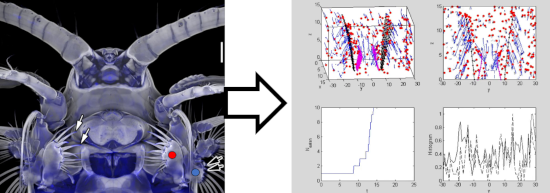
- during suspension feeding. In the past, numerical simulations were used to study the detection of prey, mates, or predators and the feeding current generation by limb motion [28][39][40][41]. However, mechanical property gradients and adhesion of setae were previously not addressed. As model organism we
- . Results and Discussion Numerical simulations In this study, we restricted ourselves to a few biologically important questions: Is there a difference in feeding performance between a system possessing only short setae near the mouth opening and a system with both types of setae, long and short ones? Which
- amplitude? To elucidate this, we performed a set of numerical simulations with different configurations of the setae, the segments’ elasticity, and the adhesion of the segments. The relationship between different variants of elasticity for a system composed of only short setae, as well as for a system


Thermal transport in kinked nanowires through simulation
Beilstein J. Nanotechnol. 2023, 14, 586–602, doi:10.3762/bjnano.14.49
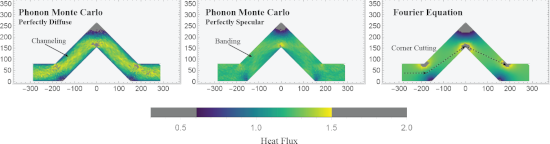
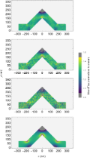
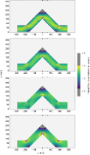
- completely understood. The behaviour of the conductance is examined as kinks of varying angular intensity are included into nanowires. The effects on thermal transport are evaluated through molecular dynamics simulations, phonon Monte Carlo simulations and classical solutions of the Fourier equation. A
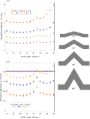
- system per unit time, P divided by temperature difference ΔT throughout the system: Molecular dynamics In Figure 2 we show the thermal conductance of kinked nanowires in MD simulations as they vary with kink angle. The cylindrical nanowires were simulated using a Lennard-Jones potential and built on an
- is known that nanoscale simulations can result in unexpected trends of thermal transport with system dimensions [35]. Since the variation in length and radius is over a small range, we do not see any anomalous trends in the thermal conductance. All the systems presented have broadly similar trends up





Transferability of interatomic potentials for silicene
Beilstein J. Nanotechnol. 2023, 14, 574–585, doi:10.3762/bjnano.14.48
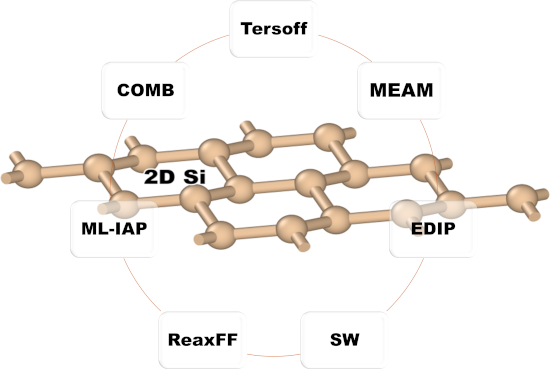
- potentials, a series of molecular dynamics (MD) simulations (200 atoms and 10000 timesteps, NVE ensemble) and LAMMPS’s built-in function timesteps/s were used. The results were then normalized relative to the longest run time. Interatomic potentials The parameterizations of the potentials listed below were
- the SO(3) smooth power spectrum potential (SO(3)) fitted to the ground-state of the crystalline silicon structure, strained structures, slabs, vacancy, and liquid configurations from DFT simulations ACE [45]: the machine-learning-based (ML-IAP) variant of the atomic cluster expansion potential (ACE
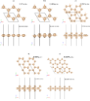
- , ReaxFF and MEAM2011, give the best quantitative performance measured by the total mean absolute percentage error (MAPE), see Table 6. Regarding the cost of calculations in terms of relative performance measured as normalized timesteps per second in molecular dynamics (MD) simulations, the EDIP and
![[Graphic 3]](/bjnano/content/inline/2190-4286-14-48-i7.svg?max-width=637&scale=1.18182)

Observation of multiple bulk bound states in the continuum modes in a photonic crystal cavity
Beilstein J. Nanotechnol. 2023, 14, 544–551, doi:10.3762/bjnano.14.45
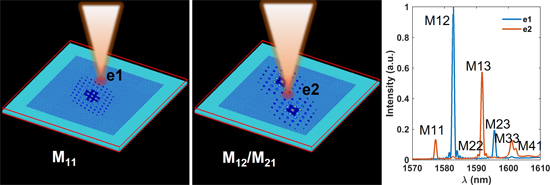
- simulations. Our findings have potential applications regarding the mode selectivity in BIC devices to manipulate the lasing mode in photonic-crystal surface-emitting lasers or the radiation pattern in nonlinear optics. Keywords: bound states in the continuum; bulk modes analysis; photonic crystal
- 1c at which is larger than 104. ANSYS simulations of the same device could yield more accurate Qr values of each mode, but only at computational cost that is too high for normal computers. The lower quality factor of the fabricated samples compared to the simulations in Figure 1c is due to the
- simulation, see Figure 5a. The waist radius of the Gaussian beam is 2 μm, which is similar to the focal spot in the experiment. The resonance spectra are extracted in the reflection monitor by applying an apodization window to cut the incident power. It could be observed in these simulations that the mode


Specific absorption rate of randomly oriented magnetic nanoparticles in a static magnetic field
Beilstein J. Nanotechnol. 2023, 14, 485–493, doi:10.3762/bjnano.14.39
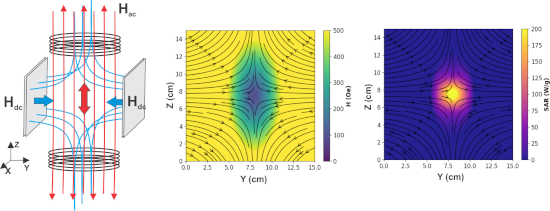
- simulations using the stochastic Landau–Lifshitz equation are performed to study magnetization dynamics of dilute assemblies of iron oxide nanoparticles exposed to an alternating (ac) magnetic field with an amplitude Hac = 200 Oe and a frequency f = 300 kHz and a static (dc) magnetic field in the range Hdc
- paper, numerical simulations of the stochastic Landau–Lifshitz equation are used to study the dynamics of magnetization in dilute, randomly oriented assemblies of iron oxide nanoparticles under the combined action of ac and dc magnetic fields. It is shown that for nanoparticles with a diameter D < 25 nm


A mid-infrared focusing grating coupler with a single circular arc element based on germanium on silicon
Beilstein J. Nanotechnol. 2023, 14, 478–484, doi:10.3762/bjnano.14.38
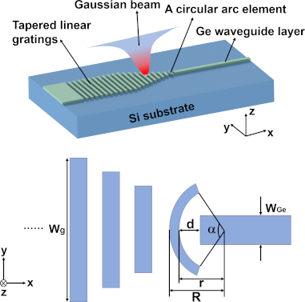
- depth. The incident angle is θ. In our work, the numerical simulations have been performed by using a commercial software of Lumerical FDTD solutions, which is based on the finite-difference time-domain method, and the light source we used for exciting the grating coupler is a Gaussian laser beam. The


Conjugated photothermal materials and structure design for solar steam generation
Beilstein J. Nanotechnol. 2023, 14, 454–466, doi:10.3762/bjnano.14.36
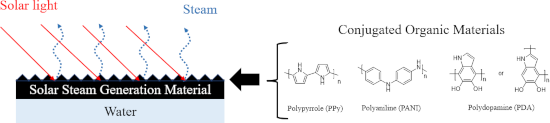
- constructing electron donor–acceptor pairs. Density functional theory (DFT) simulations indicated donor–acceptor interactions between arginine and PDA subunits, including the formation of 5,6-dihydroxyindole (DHI) and indole-5,6-quinone (IQ). Dopamine and arginine were copolymerized in an aqueous solution at


Plasmonic nanotechnology for photothermal applications – an evaluation
Beilstein J. Nanotechnol. 2023, 14, 380–419, doi:10.3762/bjnano.14.33
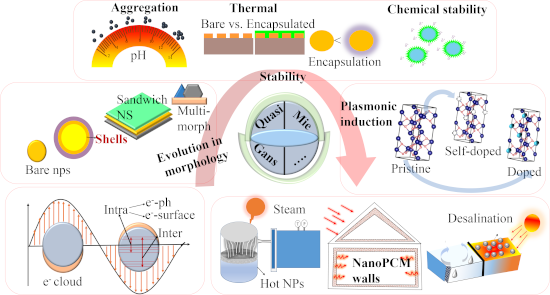
- theory, Gans theory, generic simulations on common plasmonic material morphologies, and the evaluation processes of PT performance. Further, a variety of nanomaterials and material classes that have potential for PPT conversion are elucidated, such as plasmonic metals, bimetals, and metal–metal oxide
- resulting from changes to shape, size, material, and dielectric can be effectively obtained from simulations. Such endeavours minimize the effort required for material optimization. Also, they allow for considerable flexibility in exploring unconventional morphologies and material combinations. With




Quasi-guided modes resulting from the band folding effect in a photonic crystal slab for enhanced interactions of matters with free-space radiations
Beilstein J. Nanotechnol. 2023, 14, 322–328, doi:10.3762/bjnano.14.27
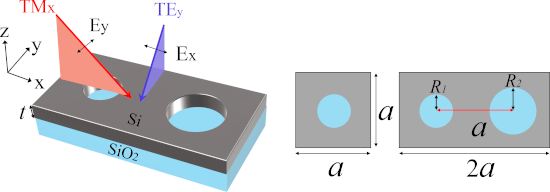
- a large bandwidth. The huge local field enhancement, even higher than that in plasmonic nanoantennas, has been demonstrated using numerical simulations. Although a PCS structure in the form of air holes in a silicon slab is used for demonstration, we note the same physics can be extended to other


A distributed active patch antenna model of a Josephson oscillator
Beilstein J. Nanotechnol. 2023, 14, 151–164, doi:10.3762/bjnano.14.16
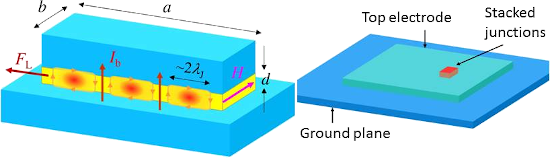
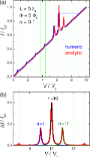
- Large-amplitude case The described above perturbative approach is valid only for small amplitudes. Simulations in Figure 2a are made for an underdamped JJ, α = 0.1. In this case the quality factor of high-order cavity modes is large, and |gn| is not small. Since ϕ appears within the sin η term in
- phase oscillations will not grow beyond |gn| = π. Instead, higher harmonic generation will occur. Full numerical simulations of the sine-Gordon equation (Equation 3), shown by blue symbols in Figure 2a, reveal that the amplitude of oscillations reach π at the end of the velocity-matching step. This
- for antennas [36] and is consistent with direct simulations for JJs with radiative boundary conditions [10]. Yet, the overall power efficiency is reduced by the “leakage” QP current in Equation 42, which just produces heat. For the I–V curves in Figure 2a, the ohmic QP current is more than twice ΔI at


Intermodal coupling spectroscopy of mechanical modes in microcantilevers
Beilstein J. Nanotechnol. 2023, 14, 123–132, doi:10.3762/bjnano.14.13
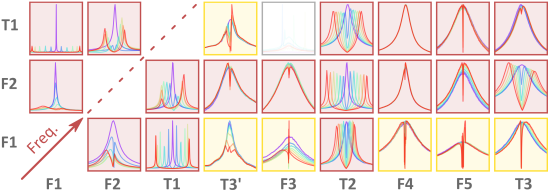
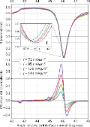
- the FEM simulations, has the nodal lines much closer to the added mass. The other orders were observed below the frequency of T3’, but they were much harder to excite with the piezoshaker used for the experiment and, therefore, excluded from the analysis. The existence of these modes can be explained


Characterisation of a micrometer-scale active plasmonic element by means of complementary computational and experimental methods
Beilstein J. Nanotechnol. 2023, 14, 110–122, doi:10.3762/bjnano.14.12
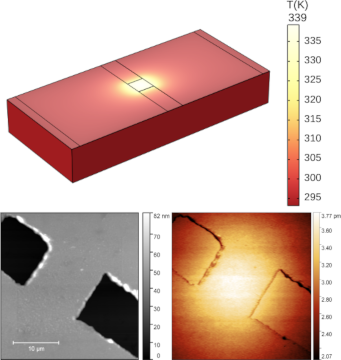
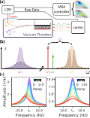
- optical and thermal data are used to inform detailed finite element method simulations for verification and to predict system responses allowing for enhanced design choices to maximise modulation depth and localisation. Keywords: active plasmonics; atomic force microscope; scanning Joule expansion
- imaging technologies and as modulators in optoelectronic couplers for photonic circuits. Finite element method (FEM) simulations are used to validate both experimental approaches, allowing for cross-verification of results and giving greater insight into the underlying physical phenomena. Surface plasmon
- temperature distribution surrounding the active element through SJEM mapping the thermal expansion of the metallic surface using an AFM. Both methods are further reinforced through the use of three-dimensional simulations. A description of the experimental methods of both investigations is detailed below as




The influence of structure and local structural defects on the magnetic properties of cobalt nanofilms
Beilstein J. Nanotechnol. 2023, 14, 23–33, doi:10.3762/bjnano.14.3
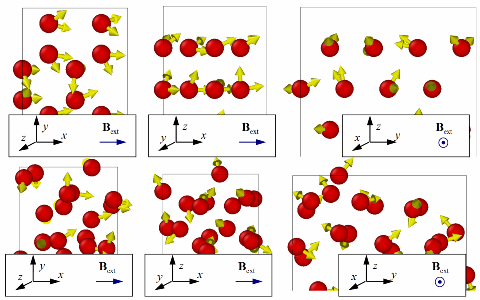
- , Academiei 3/3, Chisinau 2028, Moldova 10.3762/bjnano.14.3 Abstract The present paper considers a mathematical model describing the time evolution of spin states and magnetic properties of a nanomaterial. We present the results of two variants of nanosystem simulations. In the first variant, cobalt with a
- simulations, after pre-correction in the initial time stages, the value of spin temperature stabilized and tended to the average value. Also, the change in spin temperature occurred near the average value. The system with a real structure had a variable spin temperature compared to that of a system with an
- problem of obtaining clearly separated contact layers is highly relevant. Using simulations, it was demonstrated that optimization of the nanofilm interface can be obtained either by introducing additional intermediate thin layers neutral to the original composition, such as aluminum oxide, or by


Atmospheric water harvesting using functionalized carbon nanocones
Beilstein J. Nanotechnol. 2023, 14, 1–10, doi:10.3762/bjnano.14.1
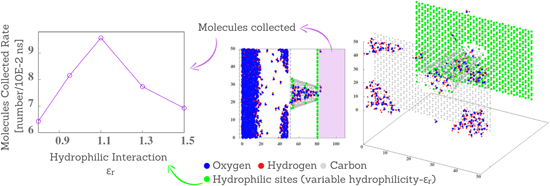
- occurs due to the presence of hydrophilic sites at the nanocone entrance. The functionalization, together with the high mobility of water inside nanostructures, leads to a fast water flow through the nanostructure. We show using molecular dynamics simulations that this device is able to collect water if
- addition to the hydrophobicity described above. The phenomena of density increasing with temperature at constant pressure and diffusion coefficients increasing with density at constant temperature were observed in experiments and simulations in bulk water [22][23][24]. Water presents both super flow and
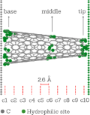
- molecular dynamics simulations the process of capturing and collecting water in a functionalized carbon nanocone. The process is analyzed in a system in which the larger diameter of the cone is in contact with a vapor reservoir and the smaller diameter is in contact with an initially empty reservoir. The




Observation of collective excitation of surface plasmon resonances in large Josephson junction arrays
Beilstein J. Nanotechnol. 2022, 13, 1578–1588, doi:10.3762/bjnano.13.132
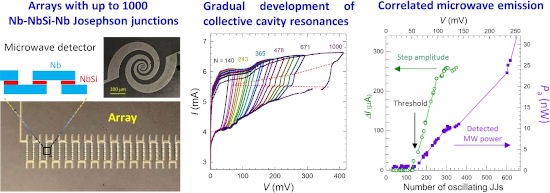
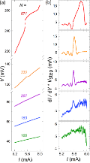
- non-quadratic. Indeed, the nonlinear IMW(N) dependence often appears in corresponding numerical simulations [33]. Furthermore, the simple analysis above assumes a perfect phase-locking of the array to a single cavity mode, which is not always the case. During the experiments we observed switching




Structural studies and selected physical investigations of LiCoO2 obtained by combustion synthesis
Beilstein J. Nanotechnol. 2022, 13, 1473–1482, doi:10.3762/bjnano.13.121
- (Oxford Instruments, England). The concentration of paramagnetic ions was obtained using the procedure described elsewhere [61]. Spectral simulations were performed by applying the EasySpin software (version 5.2.27) [62]. Electrical properties The electrical properties of the investigated LiCoO2 doped




Coherent amplification of radiation from two phase-locked Josephson junction arrays
Beilstein J. Nanotechnol. 2022, 13, 1445–1457, doi:10.3762/bjnano.13.119
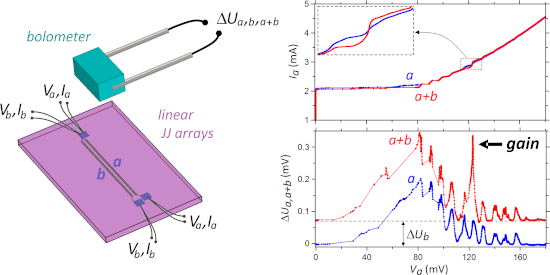
- synchronization inside each array. The latter effect removes the limit of two for the gain factor. Finally, for better understanding, we performed numerical simulations of the inner dynamics for two interacting arrays. Our simulations confirm that two arrays can be phase-locked by a common EM field. They also
- corresponding dependence of the radiation power Pb(Vb) for an inactive array-a. The power P is calculated by integration of the radiation pattern at the specific frequencies where the maximum in the spectrum of the ac current averaged over the JJs is observed [22]. This and subsequent simulations are performed
- radiation power. It can be seen that, similar to the experimental observations (Figure 3a,c, Figure 4a, and Figure 5c), the step in the IVC becomes more pronounced compared to the previous simulations in Figure 6b. The amplitude has doubled, ΔI = 0.17 mA, and the differential resistance decreased by nearly


Density of states in the presence of spin-dependent scattering in SF bilayers: a numerical and analytical approach
Beilstein J. Nanotechnol. 2022, 13, 1418–1431, doi:10.3762/bjnano.13.117
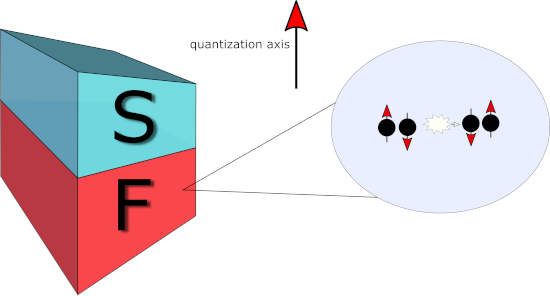
- = 0, there is no suppression of the order parameter because there is no inverse proximity effect. In all numerical simulations, we assume that γ ≪ 1, that is, there is almost no superconductivity suppression in the superconductor. The transparency parameter γB is proportional to the interface


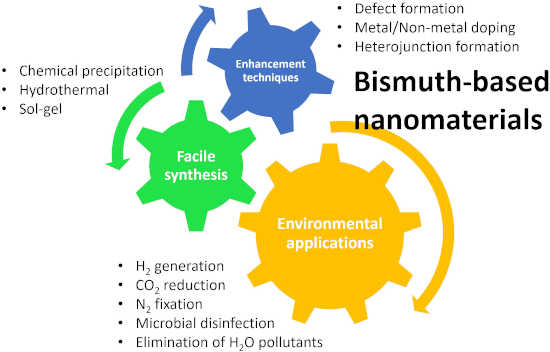
Recent trends in Bi-based nanomaterials: challenges, fabrication, enhancement techniques, and environmental applications
Beilstein J. Nanotechnol. 2022, 13, 1316–1336, doi:10.3762/bjnano.13.109




Bending and punching characteristics of aluminum sheets using the quasi-continuum method
Beilstein J. Nanotechnol. 2022, 13, 1303–1315, doi:10.3762/bjnano.13.108
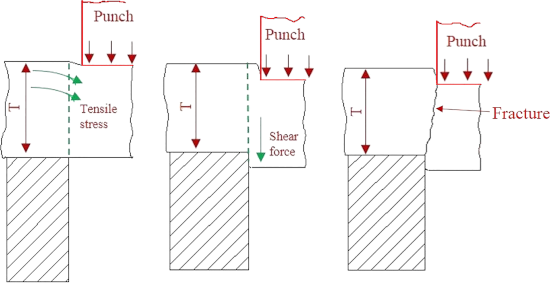
- the MD simulation can be effectively applied to simulations at the nanoscale, it still has limitations [14]. Therefore, in recent years, the multiscale simulation approach, which combines atomistic and continuum simulations, has received more and more attention [24][25][26][27][28][29][30][31][32
- nanoscale simulations. In the present study, the QC method was performed to simulate nano-punching processes. Since the QC method has the benefits of simulating large-scale models and reducing simulation operation time to enhance the simulation efficiency, it accurately captures the atomistic physics while