


Search results
Search for "thin film" in Full Text gives 521 result(s) in Beilstein Journal of Nanotechnology. Showing first 200.
Progress and innovation of nanostructured sulfur cathodes and metal-free anodes for room-temperature Na–S batteries
Beilstein J. Nanotechnol. 2021, 12, 995–1020, doi:10.3762/bjnano.12.75
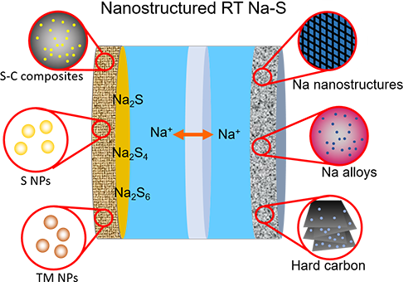
- . reported on the wet impregnation of carbon fiber cloth with sulfur dissolved in CS2 [56]. The process leads to sulfur deposition within the hollow lumen of the carbon fibers as well as on the external surface as thin film. A battery assembled with a metal Na anode had a capacity of 120 mAh·g−1 after 300


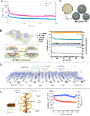


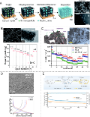
In situ transport characterization of magnetic states in Nb/Co superconductor/ferromagnet heterostructures
Beilstein J. Nanotechnol. 2021, 12, 913–923, doi:10.3762/bjnano.12.68
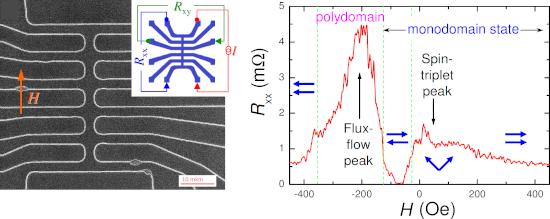
- states in complex thin-film multilayers. In this work, we study experimentally in-plane transport properties of microstructured Nb/Co multilayers. We apply various transport characterization techniques, including magnetoresistance, Hall effect, and the first-order-reversal-curves (FORC) analysis. We


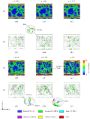
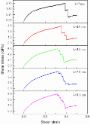
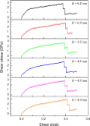
Effects of temperature and repeat layer spacing on mechanical properties of graphene/polycrystalline copper nanolaminated composites under shear loading
Beilstein J. Nanotechnol. 2021, 12, 863–877, doi:10.3762/bjnano.12.65
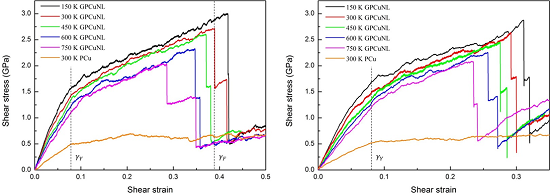
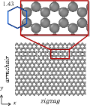
- . Keywords: dislocation; graphene/Cu; molecular dynamics; shear; self-healing; Introduction Graphene is a monolayered hexagonal thin film composed of sp2-bonded carbon atoms and has extraordinary properties for applications in nanoelectronics [1][2][3][4][5][6]. However, because of the two-dimensional












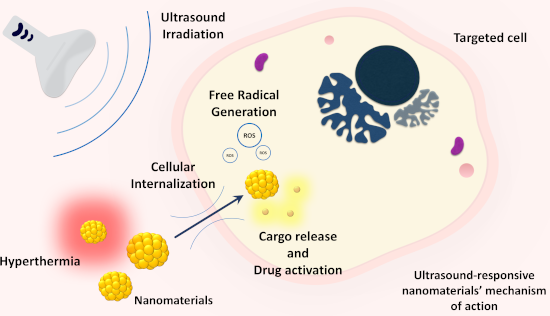
Comprehensive review on ultrasound-responsive theranostic nanomaterials: mechanisms, structures and medical applications
Beilstein J. Nanotechnol. 2021, 12, 808–862, doi:10.3762/bjnano.12.64


9.1% efficient zinc oxide/silicon solar cells on a 50 μm thick Si absorber
Beilstein J. Nanotechnol. 2021, 12, 766–774, doi:10.3762/bjnano.12.60
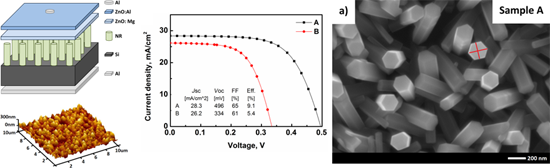
- elsewhere [15]. Zn1−xMgxO and Zn1−xAlxO grown by ALD Sample A, covered by ZnONR, and sample B were placed in the growth chamber of the ALD reactor. Before the growth process, the ALD reactor chamber was heated to 250 °C. The samples stayed in the chamber at this temperature for 2 h. A thin film of MZO was


Physical constraints lead to parallel evolution of micro- and nanostructures of animal adhesive pads: a review
Beilstein J. Nanotechnol. 2021, 12, 725–743, doi:10.3762/bjnano.12.57

- shape of the pad. An important structural feature of both types of attachment pads is the presence of a micro- or even nanoscopic superficial thin film contributing to the compliance of hairy and smooth attachment devices. In smooth systems the epicuticle covers the fibrous material of the pad and
- microscale roughness. (B) Soft smooth pad requires additional load to form an adhesive contact (B, upper image), whereas the adhesion interaction pulls the elastic thin film of the spatula into a complete contact with the rough substrate surface (Figure 6A and 6B are from [241] and were adapted by permission


Prediction of Co and Ru nanocluster morphology on 2D MoS2 from interaction energies
Beilstein J. Nanotechnol. 2021, 12, 704–724, doi:10.3762/bjnano.12.56
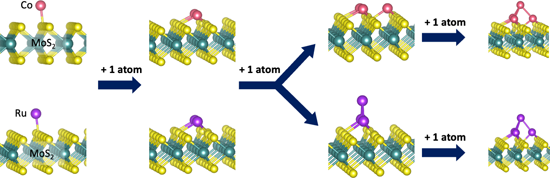
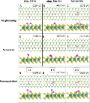
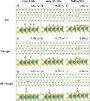
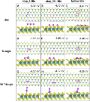
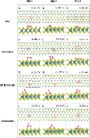
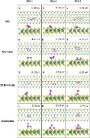
- gap in understanding thin film nucleation on 2D materials. In this paper, we present a density functional theory (DFT) study of the adsorption of small Co and Ru structures, with up to four atoms, on a monolayer of MoS2. We explore how the metal–substrate and metal–metal interactions contribute to the
- stability of metal clusters on MoS2, and how these interactions change in the presence of a sulfur vacancy, to develop insight to allow for a prediction of thin film morphology. The strength of interaction between the metals and MoS2 is in the order Co > Ru. The competition between metal–substrate and metal
- . Based on this understanding, we propose Co on MoS2 as a suitable candidate for advanced interconnects, while Ru on MoS2 is more suited to catalysis applications. Keywords: cobalt (Co); 2D materials; molybdenum disulfide (MoS2); ruthenium (Ru); thin film nucleation; Introduction Layered materials that




Electromigration-induced formation of percolating adsorbate islands during condensation from the gaseous phase: a computational study
Beilstein J. Nanotechnol. 2021, 12, 694–703, doi:10.3762/bjnano.12.55
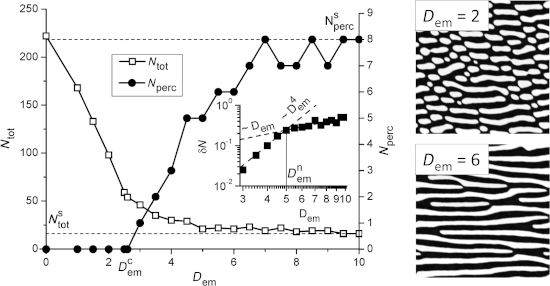
- computational study of a change in the morphology of a growing thin film during condensation caused by electromigration effects. It will be shown, that separated circular adsorbate islands, realized in an isotropic system, become elongated in the direction of the applied electrical field. We discuss the
- dynamics of the evolution of surface morphology at elevated temperatures. This effect can lead to a change in the morphology of the surface compared to the isotropic case of deposition without the presence of an external field. Mathematical and numerical modeling of nanostructured thin film growth
- with specified physical and chemical properties. In this article we perform a computational study of a change in the morphology of a growing thin film during condensation induced by electromigration effects and show that separated circular adsorbate islands realized in the isotropic system become


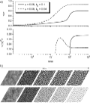


![[Graphic 29]](/bjnano/content/inline/2190-4286-12-55-i36.svg?max-width=637&scale=1.18182) on the adsorption coefficient α ...
on the adsorption coefficient α ...

A review of defect engineering, ion implantation, and nanofabrication using the helium ion microscope
Beilstein J. Nanotechnol. 2021, 12, 633–664, doi:10.3762/bjnano.12.52
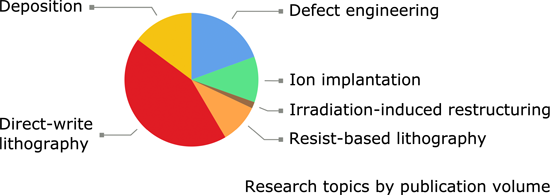
- material are all dials to turn. The properties engineered span electronic, magnetic, optical, chemical, and thermal properties. In the case of 2D and thin-film materials supported on a substrate, defects induced by backscattered ions and sputtered atoms also need to be considered. A recent computational
- function [30]. In several of these works, high-resolution scanning TEM (STEM) imaging has been performed to enable the analysis of the defects created on the atomic scale [26][29][30] (see, e.g., Figure 2c). Apart from 2D materials, thin-film samples have also been the subject of electronic property tuning
- by localized helium ion irradiation. For example, using a helium ion dose of 5 × 10¹⁴ ions/cm2, permanent local tuning of the charge density in an amorphous thin film of the semiconductor indium gallium zinc oxide (film thickness 50 nm) has been demonstrated, thereby enabling activation of the


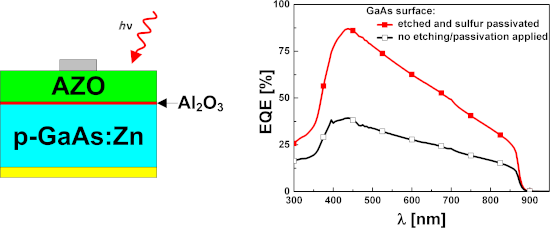
Impact of GaAs(100) surface preparation on EQE of AZO/Al2O3/p-GaAs photovoltaic structures
Beilstein J. Nanotechnol. 2021, 12, 578–592, doi:10.3762/bjnano.12.48
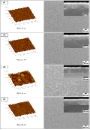
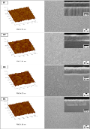
- B series, respectively. From the AFM results shown in Figure 3 and Figure 4, one can see that A1, A2, A4, B1, and B4 samples exhibit uniform surfaces by the means of polycrystalline thin film topography. By taking into consideration the roughness of the surfaces (RMS was measured for an area of 4
- , in which the SA10 passivation step (stage 4) was intentionally skipped. The samples prepared using the HCl solution bath (A3, B3) exhibit a predisposition to form crystallized oxide islands at the beginning of the stage of the ALD thin film covering GaAs. Additionally, they show a very rugged surface




Structural and optical characteristics determined by the sputtering deposition conditions of oxide thin films
Beilstein J. Nanotechnol. 2021, 12, 354–365, doi:10.3762/bjnano.12.29
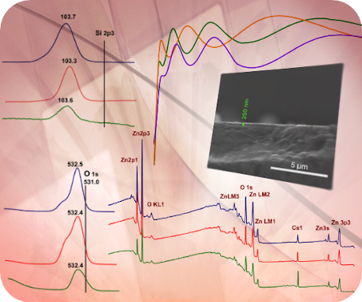
- films with thickness values ranging from 200 to 300 nm. Thus, we analyzed the beneficial effect of increasing film thickness on the composition, morphology, structure, and spectral characteristics of the studied samples. This way of analyzing oxide thin film thickness dependence on the optical and
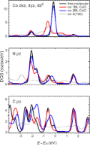
- structures. XRD patterns of ZnO thin film samples with different thickness, namely: 200, 250, and 300 nm. XPS patterns of SiO2 thin films: general spectra. High-resolution XPS spectra acquired from SiO2 samples: (a) Si 2p3 and (b) O 1s. XPS survey spectra acquired from ZnO films. High-resolution (a) Zn 2p3


Scanning transmission helium ion microscopy on carbon nanomembranes
Beilstein J. Nanotechnol. 2021, 12, 222–231, doi:10.3762/bjnano.12.18
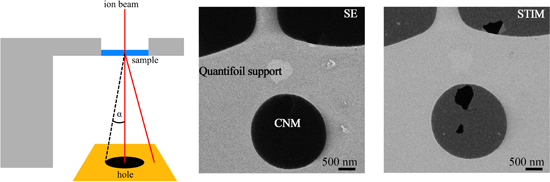
- originate from a molecular thin film, they can be as thin as 1 nm. The conductivity of such membranes is low, which poses a challenge to SE imaging with charged-particle microscopes such as SEM or HIM [24]. This work demonstrates that the holder is easily optimized for such difficult samples. It is possible


Paper-based triboelectric nanogenerators and their applications: a review
Beilstein J. Nanotechnol. 2021, 12, 151–171, doi:10.3762/bjnano.12.12
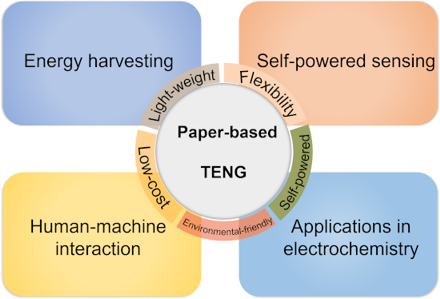
- microfluidic paper-based analytical devices (µPADs) [57][58][59][60] and thin-film transistors (TFTs) [61][62][63][64][65] have been widely investigated. Recently, they have also been applied in various energy-related devices [66][67][68]. Although paper is intrinsically insulating, conductive materials (e.g






Scanning transmission imaging in the helium ion microscope using a microchannel plate with a delay line detector
Beilstein J. Nanotechnol. 2020, 11, 1854–1864, doi:10.3762/bjnano.11.167
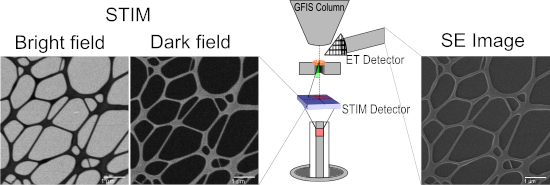
- . Considering that a thin film of a light material would show in the SE signal but would not increase significantly the scattering and, hence, would not appear in the BF STIM mode, we assume that there is a film of approximately 10 nm over the crystallites. As expected, most of the smaller crystallites that


Molecular dynamics modeling of the influence forming process parameters on the structure and morphology of a superconducting spin valve
Beilstein J. Nanotechnol. 2020, 11, 1776–1788, doi:10.3762/bjnano.11.160
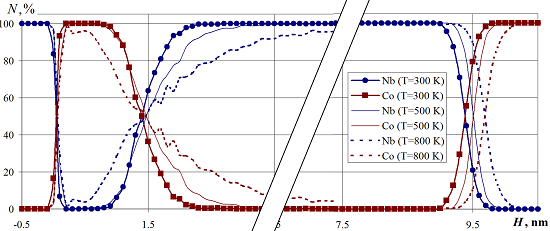
- ), the transparency parameter is TF ≈ 2 and is the highest of all possible metal pairs. It is possible that high transparency is facilitated not only in the mixing layer at the interface between extremely thin film materials, but also by a good matching of the band structures of two metals (see the study


Absorption and photoconductivity spectra of amorphous multilayer structures
Beilstein J. Nanotechnol. 2020, 11, 1757–1763, doi:10.3762/bjnano.11.158
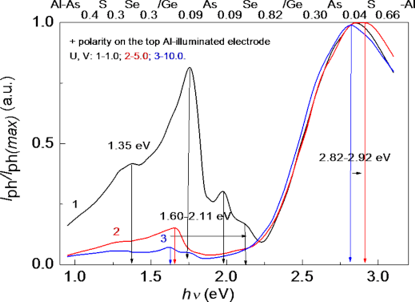
- mono- and bimolecular and that the transport is controlled through multiple trapping processes with exponential distribution of the localized states in the bandgap. Regarding the physics and applications of chalcogenide materials, multilayered amorphous thin-film structures are especially interesting
- measurements; other samples were prepared as granules of small dimensions for vacuum evaporation. For optical and photoelectric measurements, thin film samples of each amorphous material, with thickness values of d = 1000 nm for As0.40S0.30Se0.30, d = 500 nm for Ge0.09As0.09Se0.82, and d = 200 nm for
- ), Ge0.09As0.09Se0.82 (2), As0.40S0.30Se0.30 (3), and the HS As0.40S0.30Se0.30/Ge0.09As0.09Se0.82/Ge0.30As0.04S0.66 (4). The thin film layer Ge0.30As0.04S0.66 with the largest bandgap energy, Eg ≈ 3.0 eV [11], which was placed on the top of the multilayer structure, has a thickness of d ≈ 200 nm and was transparent to


Out-of-plane surface patterning by subsurface processing of polymer substrates with focused ion beams
Beilstein J. Nanotechnol. 2020, 11, 1693–1703, doi:10.3762/bjnano.11.151
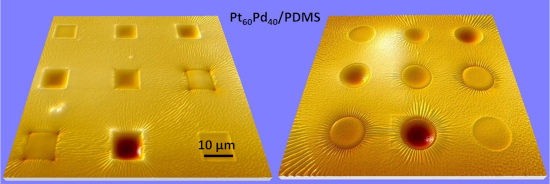
- polymer bulk [7]. In fact, the method utilizes ion energy losses to manipulate the surface morphology by means of radiation damage generated in the substrate bulk and minimizes the surface damage resulting from sputtering. This leaves the thin films and the prefabricated thin-film nanostructures on the
- PMMA surface essentially intact and provides a new route to their out-of-plane patterning, which is interesting for a range of thin film applications. In the current work, we extend our study to the effects of the ion mass by irradiating PMMA substrates with He+, Ne+, and Ga+ ions, and to the role of
- features. The irradiation of the Au-coated samples results in delamination of the Au thin film followed by its bulging and perforation, which points to the important role of available pathways for the desorption of gases resulting from radiolysis. The irradiation with Ne+ or Ga+ ion beams destroys the


PTCDA adsorption on CaF2 thin films
Beilstein J. Nanotechnol. 2020, 11, 1615–1622, doi:10.3762/bjnano.11.144
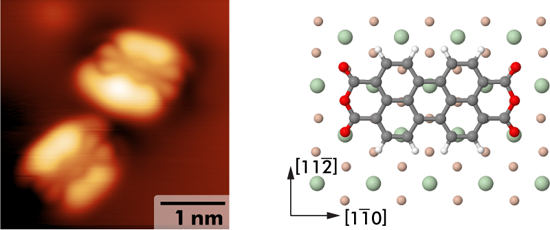
- on CaF2(111) of nearly flat-lying PTCDA molecules with two oxygen atoms displaced towards calcium surface ions. This geometry is in agreement with the experimental observations. Keywords: calcium difluoride; decoupling; insulating thin film; 3,4,9,10-perylene tetracarboxylic dianhydride (PTCDA
- ); scanning tunnelling microscopy; Introduction The study of molecular adsorption on thin insulating films is motivated by the possibility to investigate and utilise molecular properties in their largely undisturbed state [1]. Molecule–thin film insulator interfaces are additionally of central importance in
- modern applications, for example as a critical component in organic thin-film transistors [2]. However, and despite the success of using thin insulating NaCl films for molecular decoupling [3], it is now understood that ultrathin layers are often not sufficient to truly insulate a molecular assembly. To


High-responsivity hybrid α-Ag2S/Si photodetector prepared by pulsed laser ablation in liquid
Beilstein J. Nanotechnol. 2020, 11, 1596–1607, doi:10.3762/bjnano.11.142
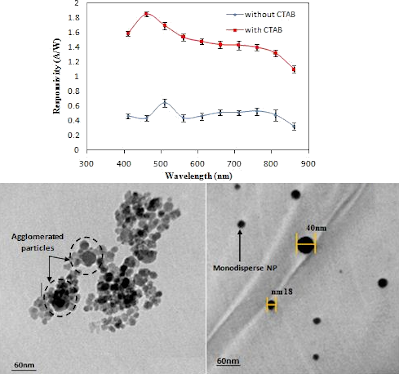
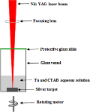
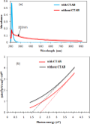
- , a SiO2 thin film was grown on the silicon substrate before Ag2S deposition through rapid thermal oxidation (RTO) at a temperature of 950 °C for 25 s, and then HF etchant was used to open a Si window on SiO2. The experimental details regarding the RTO process are presented elsewhere [20]. To




Optically and electrically driven nanoantennas
Beilstein J. Nanotechnol. 2020, 11, 1542–1545, doi:10.3762/bjnano.11.136

- top-down approaches such as thin film deposition and nanopatterning, as well as bottom-up approaches such as chemical synthesis and self-assembly [38]. Gap sizes may range from a few tens of nanometers down to sub-nanometer tunnel junctions, where the classical description of the plasmonic behavior
Design of V-shaped cantilevers for enhanced multifrequency AFM measurements
Beilstein J. Nanotechnol. 2020, 11, 1525–1541, doi:10.3762/bjnano.11.135
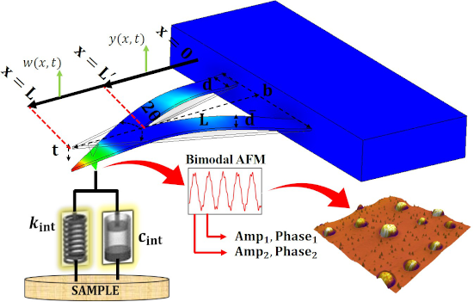
- experiments done. Firstly, a PS polymer solution (molecular weight of 35000 dissolved in tetrahydrofuran (THF)) was spin-coated at 3500 rpm for 60 s on a cleaned Au substrate. All items were purchased from Sigma-Aldrich. After drying the sample, a portion of the PS thin film was scratched to expose the Au


![[Graphic 4]](/bjnano/content/inline/2190-4286-11-135-i26.svg?max-width=637&scale=1.18182) = 15 µm, bref = 8...
= 15 µm, bref = 8...


![[Graphic 17]](/bjnano/content/inline/2190-4286-11-135-i39.svg?max-width=637&scale=1.18182) ) of V-shaped cantilevers for...
) of V-shaped cantilevers for...


Adsorption and self-assembly of porphyrins on ultrathin CoO films on Ir(100)
Beilstein J. Nanotechnol. 2020, 11, 1516–1524, doi:10.3762/bjnano.11.134
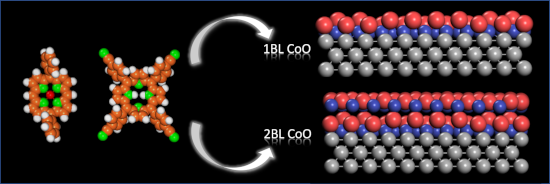
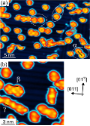
- , it is also an anti-ferromagnet due to electron correlation effects and it shows catalytic activity [14][15][16][17]. As a thin film grown on Ir(100), the oxide is of extremely high quality [18][19][20] avoiding the complexity that arises from atomic-scale defects in bulk materials [5][6][7][8]. The




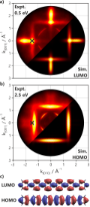
Controlling the electronic and physical coupling on dielectric thin films
Beilstein J. Nanotechnol. 2020, 11, 1492–1503, doi:10.3762/bjnano.11.132
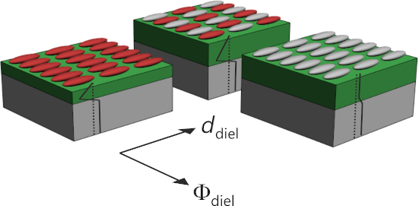
- constant of the thin film, and dcs is the distance between the charge in the molecule and its image charge in the metal (i.e., the charge separation distance). In this report, we demonstrate the robustness of the conclusions drawn from the 5A study by considering para-sexiphenyl (6P, C36H26). In contrast




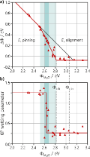
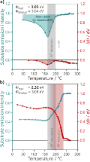
Antimicrobial metal-based nanoparticles: a review on their synthesis, types and antimicrobial action
Beilstein J. Nanotechnol. 2020, 11, 1450–1469, doi:10.3762/bjnano.11.129

- nm were synthesized [42]. The chemical vapor deposition method is a technique in which the substrate is exposed to one or more volatile precursors, which react to and/or decompose on the substrate surface to produce the desired thin film deposit. For example, Zhao et al. [44] obtained graphene


Wafer-level integration of self-aligned high aspect ratio silicon 3D structures using the MACE method with Au, Pd, Pt, Cu, and Ir
Beilstein J. Nanotechnol. 2020, 11, 1439–1449, doi:10.3762/bjnano.11.128
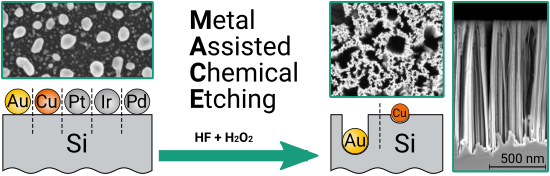
- appropriate noble metal. Experimental Here, a wafer-level integration scheme for the fabrication of high aspect ratio silicon templates is discussed. The whole process has been done on 150 mm p-doped (5–20 Ω·cm) silicon (100) wafers. The wafers have been coated with a 5 nm noble metal thin film using standard





