


Search results
Search for "LED" in Full Text gives 775 result(s) in Beilstein Journal of Nanotechnology. Showing first 200.
TEM sample preparation of lithographically patterned permalloy nanostructures on silicon nitride membranes
Beilstein J. Nanotechnol. 2024, 15, 1–12, doi:10.3762/bjnano.15.1
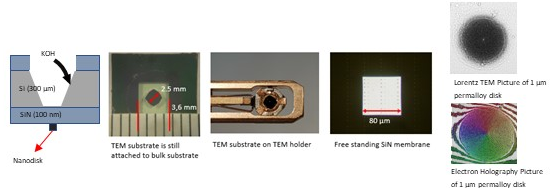
- KOH solution resulted in a faster etch rate but led to much stronger bubbling and roughening of the Si surface with the creation of micropyramidal hillocks [31]. The surface alignment of the Si substrates is parallel to the {100} crystallographic plane of Si, and the anisotropic KOH etching results in


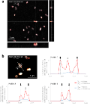
Fluorescent bioinspired albumin/polydopamine nanoparticles and their interactions with Escherichia coli cells
Beilstein J. Nanotechnol. 2023, 14, 1208–1224, doi:10.3762/bjnano.14.100
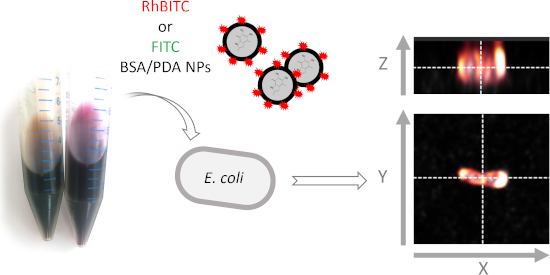
- and RhBITC-BSA/PDA NPs penetrated and accumulated in both cell wall and inner compartments of Escherichia coli (E. coli) cells. The fluorescence signals were diffuse or displayed aggregate-like patterns with both labelled NPs and free dyes. RhBITC-BSA/PDA NPs led to the most intense fluorescence in
- concentration might have led to an increase in the Stern layer thickness, resulting in a larger hydrodynamic diameter measured by DLS. The size of BSA/PDA NPs remained stable as a function of pH at acidic pH, but increased moderately under alkaline conditions (Figure 3e). Chen et al. reported that PDA NPs
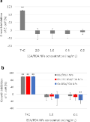
- ketones with only a few remaining of hydroxy groups (Supporting Information File 1, Figure S2a). In addition, labelling of pristine BSA/PDA NPs with FITC and RhBITC dyes led to an obvious change in color of the suspension, from brown (Supporting Information File 1, Figure S3a) to yellow and red



A combined gas-phase dissociative ionization, dissociative electron attachment and deposition study on the potential FEBID precursor [Au(CH3)2Cl]2
Beilstein J. Nanotechnol. 2023, 14, 1178–1199, doi:10.3762/bjnano.14.98
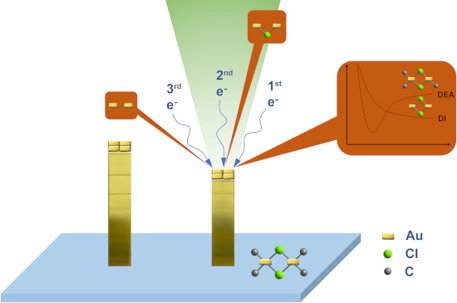
- purification of FEBID deposits, where carbon removal led to ≈18% height reduction of the respective nanoparticles [42]. Notwithstanding, changes in the deposition time and in the associated different volume of the deposited material may also contribute to the observed particle size reduction. AFM of FEBID on
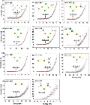
- that the initial decomposition, up to an electron dose of approx. 1016 e−/cm2 was characterized by a rapid CO loss, leaving a deposit of approx. 1:2 Pt/Cl ratio. However, a prolonged exposure up to doses around 1019 e−/cm2, which is the order of magnitude applied here, led to an almost complete removal



Hierarchically patterned polyurethane microgrooves featuring nanopillars or nanoholes for neurite elongation and alignment
Beilstein J. Nanotechnol. 2023, 14, 1157–1168, doi:10.3762/bjnano.14.96
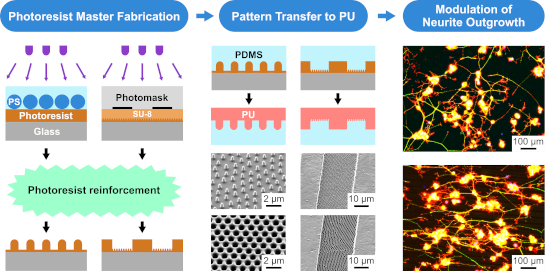
- approaches are quite limited. In this work, we show that nanopillars and nanoholes, and their combination with microgrooves, can be patterned on polyurethane (PU) films using a low-cost, reusable photoresist master mold prepared via nanosphere lens lithography and UV-LED photolithography, with specific
- ]. Therefore, there is still a need to develop simple and cost-effective fabrication methods applicable to a wide range of nano- and micropatterns and biomaterials. In our previous studies, we have shown how nanosphere lens lithography (NLL) can be used with a low-cost ultraviolet light-emitting diode (UV-LED
- polyether-based PU (Tecothane®) to determine whether they have positive effects on PC12 neurite outgrowth. The fabrication process involves first creating the reusable photoresist master molds using NLL with a custom-made UV-LED exposure system [15][16]. This allows for the direct fabrication of a


Curcumin-loaded albumin submicron particles with potential as a cancer therapy: an in vitro study
Beilstein J. Nanotechnol. 2023, 14, 1127–1140, doi:10.3762/bjnano.14.93
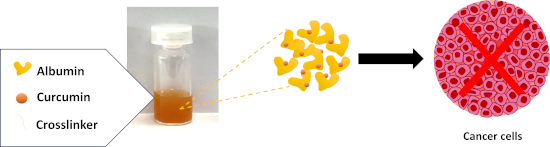
- constant. When the CUR concentration reached the maximum of 2 mg/mL, CUR started to precipitate and form aggregates after centrifugation. This led to a miscalculation of the EE% and the absolute amount of entrapped CUR (Figure 4B). Release study of CUR from CUR-HSA-MPs CUR-HSA-MPs yielded a sustained




Sulfur nanocomposites with insecticidal effect for the control of Bactericera cockerelli
Beilstein J. Nanotechnol. 2023, 14, 1106–1115, doi:10.3762/bjnano.14.91
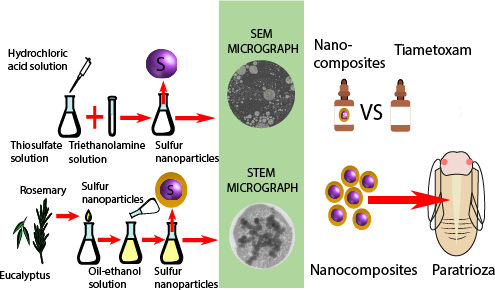
- , carbamates, and pyrethroids, that are used to combat this pest [9]. The insect pest has developed resistance through high fecundity and short doubling time [10]. Also, persistence, bioaccumulation, toxicity, misuse, and overuse of synthetic insecticides have led to deterioration of soil, air pollution


Density functional theory study of Au-fcc/Ge and Au-hcp/Ge interfaces
Beilstein J. Nanotechnol. 2023, 14, 1093–1105, doi:10.3762/bjnano.14.90
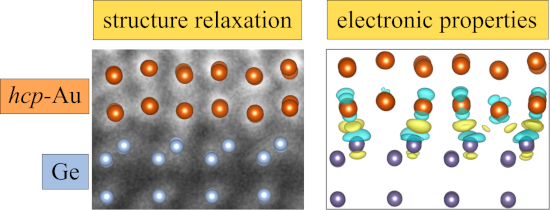
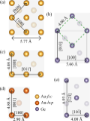
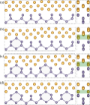
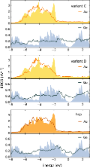
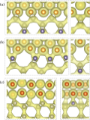
- images. Refined experimental data indicating that variant D (with slightly higher interface energy) is realized led us to search for possible defects in the interface layer that might lower the energy cost of this junction. The optimized supercell is characterized by both a low interfacial energy and a





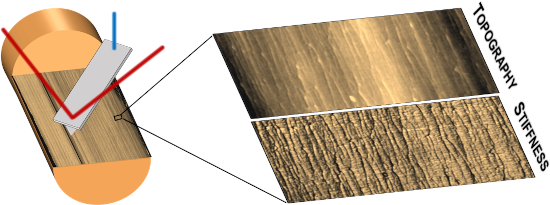
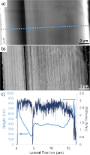
Exploring internal structures and properties of terpolymer fibers via real-space characterizations
Beilstein J. Nanotechnol. 2023, 14, 1004–1017, doi:10.3762/bjnano.14.83
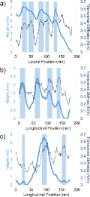
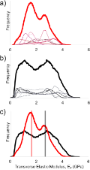
- frequent readings near 2.6 GPa, ET centered around 1.5–1.6 GPa in most scans. Taken together, this led to a total distribution with a mean of 2.00 GPa and a mode (i.e., highest peak) of 1.53 GPa. In contrast, K29 individual distributions (Figure 8b) appeared as plateaus ranging from 0.5 to 3.5 GPa. When






Nanoarchitectonics of photothermal materials to enhance the sensitivity of lateral flow assays
Beilstein J. Nanotechnol. 2023, 14, 988–1003, doi:10.3762/bjnano.14.82
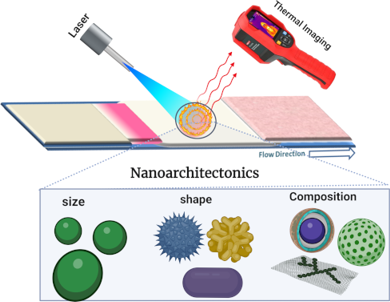
- nanoparticles through the nitrocellulose membrane pores and led to nonspecific binding of analytes and unwanted background signals (Figure 7B). In comparison to the visual method, the photothermal signal amplification technique allowed for the quantitative analysis of analytes with a sensitivity increased by a


Biomimetics on the micro- and nanoscale – The 25th anniversary of the lotus effect
Beilstein J. Nanotechnol. 2023, 14, 850–856, doi:10.3762/bjnano.14.69

- “Purity of the sacred lotus” [1] in which they described the superhydrophobic surfaces and the self-cleaning ability of some plants (the so-called “lotus effect”, see Figure 1). This paper led to a paradigm shift in surface sciences. It generated a lot of interest at the time and continues today to
- unexplored [3]. Uncovering this water repellence mechanism led to a revolution in the development of such surfaces, which promise huge potential for inspiration for technical innovations and applications. In 2022, we celebrated the 25th anniversary of this significant botanical publication, which was an
- processes by the authors. They looked to a seemingly unrelated archetype, the xylem system of trees, which uses pits instead of extrusions to create its surface properties. This led the team to a new approach and eventually to a successful product. The authors present the case study as a reminder that the


Silver-based SERS substrates fabricated using a 3D printed microfluidic device
Beilstein J. Nanotechnol. 2023, 14, 793–803, doi:10.3762/bjnano.14.65
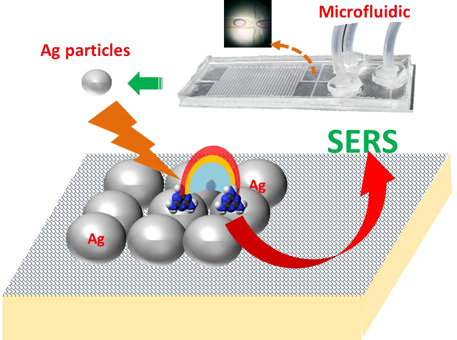
- fabrication, resulting in a low aspect ratio of the achieved features. Because 3D printing enables the creation and testing of objects in short periods of time, it provides a new tool for constructing microfluidic devices. This has led to fast and dynamic developments in chemical synthesis and analytical



Silver nanoparticles loaded on lactose/alginate: in situ synthesis, catalytic degradation, and pH-dependent antibacterial activity
Beilstein J. Nanotechnol. 2023, 14, 781–792, doi:10.3762/bjnano.14.64
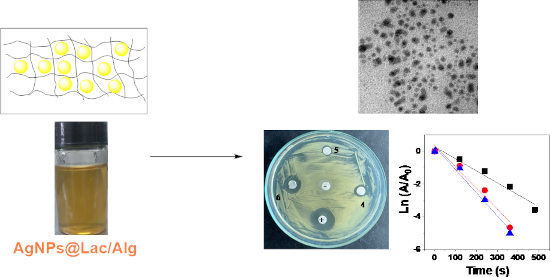
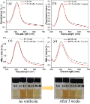
- . Thus, AgNPs@Lac/Alg-0.7 was selected for assessment of its catalytic and antibacterial properties in this study. Catalytic degradation of contaminants Toxic organic dyes pose a serious threat to the environment, and their non-biodegradability in aqueous media has led to the consideration of various


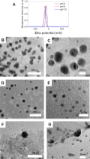
Carboxylic acids and light interact to affect nanoceria stability and dissolution in acidic aqueous environments
Beilstein J. Nanotechnol. 2023, 14, 762–780, doi:10.3762/bjnano.14.63
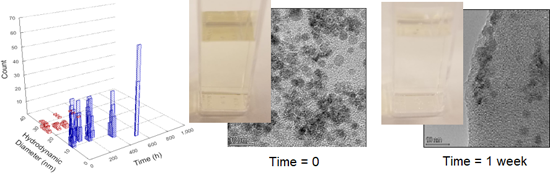
- resulted in loss or overcoating of the surface citrate, and, in some cases, agglomeration [10]. Exposure to vitamin C and glutathione led to dissolution-accompanied aggregation of mesoporous silica CeO2 nanoparticles [35]. The shortening of ceria nanorods from 25 to 8 nm after 14 days at 200 °C was
- (tartronic and dihydroxymalonic acid) led to immediate agglomeration upon exposure. This result indicates that while the carboxylic acid group geminal to a hydroxy group may be important, other functional groups may also play a role in stabilizing citrate-coated nanoceria. For instance, citric, malic, and
Control of morphology and crystallinity of CNTs in flame synthesis with one-dimensional reaction zone
Beilstein J. Nanotechnol. 2023, 14, 741–750, doi:10.3762/bjnano.14.61
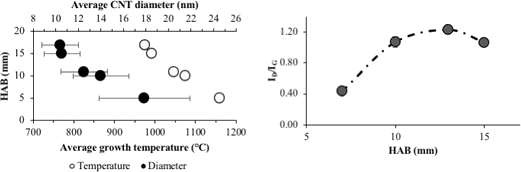
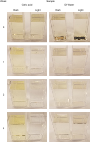
- radial directions but significantly different in the vertical direction. 17.3% variation in temperature in the axial direction successfully led to 44% and 66% variation in CNT diameter and crystallinity, respectively. The morphology control capability demonstrated in the present study is important for


Nanomaterials for photocatalysis and applications in environmental remediation and renewable energy
Beilstein J. Nanotechnol. 2023, 14, 722–724, doi:10.3762/bjnano.14.58
- development of advanced materials based on semiconductors (i.e., carbon-modified hexagonal boron nitride (MBN), MgO@g-C3N4, and TiO2@MWCNTs) have indicated a highly efficient photocatalytic performance for phenol removal using a low-power visible LED light source. For NO degradation, a visible light source

A graphene quantum dots–glassy carbon electrode-based electrochemical sensor for monitoring malathion
Beilstein J. Nanotechnol. 2023, 14, 701–710, doi:10.3762/bjnano.14.56
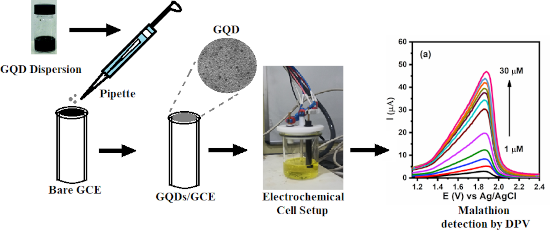
- cyclic voltammetry results of the GQDs/GCE electrode to study the interfacial kinetics from 20 mV·s−1 scan rate to 400 mV·s−1 scan rate. The increase in the square root of scan rates led to a linear increase in peak current for anodic and cathodic reactions, as shown in Figure 7c. For scan rates of 20 to


Suspension feeding in Copepoda (Crustacea) – a numerical model of setae acting in concert
Beilstein J. Nanotechnol. 2023, 14, 603–615, doi:10.3762/bjnano.14.50
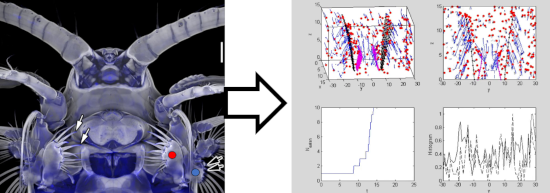
- and without high adhesion at the tips, line 4 represents hard setae without high adhesion at the tips, and line 5 represents hard setae with soft tips and high adhesion at the tips. The latter configuration led to the consumption of the highest number of particles. These variants were numbered
- bold line in Figure 2) as a reference curve (number 1) in Figure 3. For the long setae we have chosen a setup without adhesion at their tips. We simulated the following scenarios for long setae: Line 2 represents hard setae (this configuration led to the consumption of most particles), line 3


Nanoarchitectonics to entrap living cells in silica-based systems: encapsulations with yolk–shell and sepiolite nanomaterials
Beilstein J. Nanotechnol. 2023, 14, 522–534, doi:10.3762/bjnano.14.43
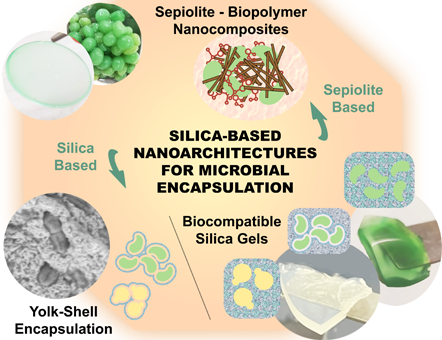
- has been studied, the poor performance in terms of desired features for a biophotocatalytic application (poor transparency and reduced long-term biological or physical stability) has led us to discard them from a more intensive study. Ethanol production of encapsulated yeast The biological production
- . Following the method described in the Experimental section, we have evaluated the ethanol production of encapsulated cells and compared it to the production in a standard suspension culture. The high variability in the densitometric quantification of the ethanol concentration led us to consider these


Mixed oxides with corundum-type structure obtained from recycling can seals as paint pigments: color stability
Beilstein J. Nanotechnol. 2023, 14, 467–477, doi:10.3762/bjnano.14.37
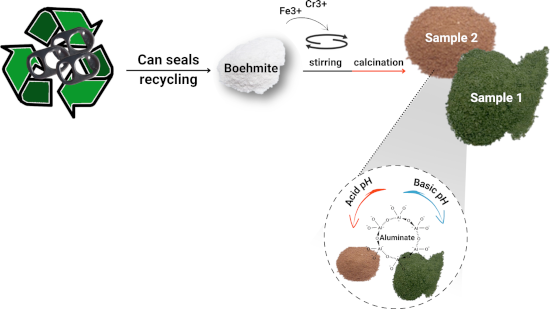
- environments. In the case of mixed chromium/aluminium oxide, the highest concentration of coloring ions provided the highest color stability (Table S2, Supporting Information File 1). Similar behavior was observed for samples with Fe. In general, 20 wt % of coloring ions led to better color stability in




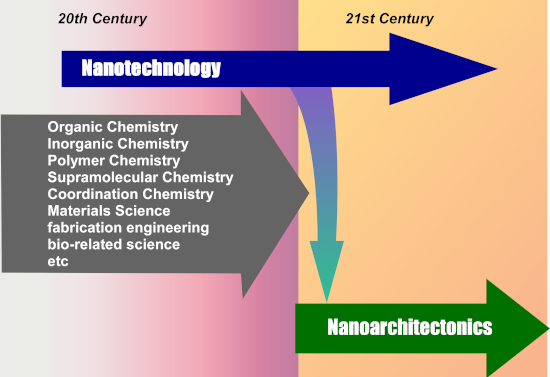
Molecular nanoarchitectonics: unification of nanotechnology and molecular/materials science
Beilstein J. Nanotechnol. 2023, 14, 434–453, doi:10.3762/bjnano.14.35
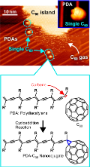
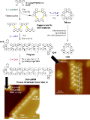
- molecular structures. Kawai et al. reported that local probe chemistry on an ultrathin NaCl film formed on a Cu(111) surface at 4.3 K led to the conversion of 6,13-dibromopentaleno[1,2-b:4,5-b′]dinaphthalene to a single Sondheimer–Wong diyne (Figure 3) [114]. The structures of the precursor, two





Evaluation of electrosynthesized reduced graphene oxide–Ni/Fe/Co-based (oxy)hydroxide catalysts towards the oxygen evolution reaction
Beilstein J. Nanotechnol. 2023, 14, 420–433, doi:10.3762/bjnano.14.34
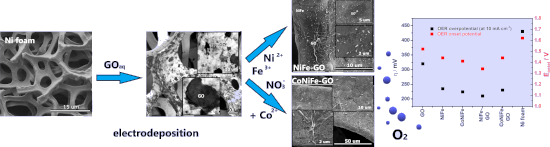
- indicates that the same OER catalytic mechanism was in action. The addition of GO to NiFe resulted in a slight increase of the slope from 41 to 46 mV·dec−1, while the presence of GO in CoNiFe led to a decrease in Tafel slope down to 33 mV·dec−1. Figure 5d and Figure 5e present a linear approximation of the
- CoNiFe with GO resulted in a significant change of structure, morphology, and OER activity. The changes differed depending on the presence of cobalt in the catalysts’ structure. The combination of GO with NiFe led to the formation of a uniformly deposited catalyst characterized by GO microflakes and NiFe




Plasmonic nanotechnology for photothermal applications – an evaluation
Beilstein J. Nanotechnol. 2023, 14, 380–419, doi:10.3762/bjnano.14.33
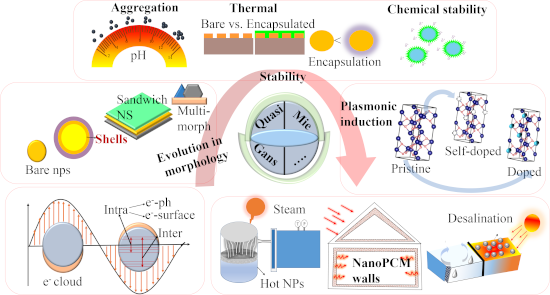
- absorbed light to heat by these particles, has led to thriving research regarding the utilization of plasmonic nanoparticles for a myriad of applications. The design of conventional nanomaterials for PT conversion has focussed predominantly on the manipulation of photon absorption through bandgap
- [83]. Plasmonic nanobubbles (formed when the irradiation fluence exceeded a threshold value), although being excellent tunable scatterers themselves, did not result in thermal phenomena such as heating and only led to mechanical phenomena such as cavitation effects. Explosive boiling is of explicit




Quercetin- and caffeic acid-functionalized chitosan-capped colloidal silver nanoparticles: one-pot synthesis, characterization, and anticancer and antibacterial activities
Beilstein J. Nanotechnol. 2023, 14, 362–376, doi:10.3762/bjnano.14.31
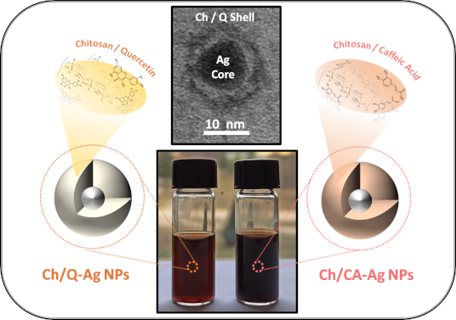
- unique properties, low cost, and low cytotoxicity [37][38][39]. Hybrid structures containing silver played an important role in the development of strong antibacterial agents and do not cause drug resistance problems due to their broad-spectrum antibacterial action [40]. These features led to a wide


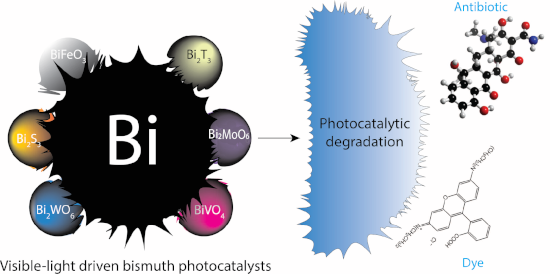
Bismuth-based nanostructured photocatalysts for the remediation of antibiotics and organic dyes
Beilstein J. Nanotechnol. 2023, 14, 291–321, doi:10.3762/bjnano.14.26


Structural, optical, and bioimaging characterization of carbon quantum dots solvothermally synthesized from o-phenylenediamine
Beilstein J. Nanotechnol. 2023, 14, 165–174, doi:10.3762/bjnano.14.17
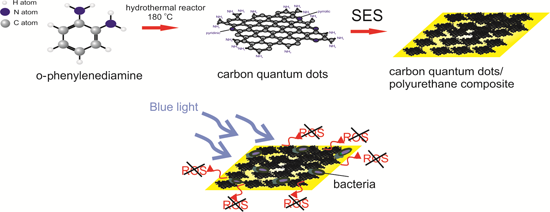
- CQDs/PU samples were dipped in a solution of TEMP in ethanol at a concentration of 30 mM and irradiated with a 3 W blue LED for 12 h. Time-resolved near-infrared luminescence of O2 (1Δg) at 1270 nm after excitation by Quantel Q-smart 450 Nd YAG laser (wavelength of 355 nm, pulse length of ca. 5 ns) was





