Search results
Search for "XPS" in Full Text gives 399 result(s) in Beilstein Journal of Nanotechnology. Showing first 200.
Evolution of Ag nanostructures created from thin films: UV–vis absorption and its theoretical predictions
Beilstein J. Nanotechnol. 2020, 11, 494–507, doi:10.3762/bjnano.11.40
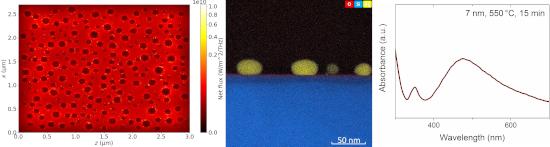
- transmission electron microscopy (HR-TEM) and X-ray photoelectron spectroscopy (XPS). SEM images show that the formation of nanostructures is influenced by the initial layer thickness as well as the temperature and the time of annealing. The Ag 3d and Ag 4d XPS spectra are characteristic of nanostructures. The
- Evolution 220 spectrophotometer in transmission mode, in a range of 200–1100 nm. For these measurements films were deposited on glass substrates. The quality of the obtained nanostructures and the valence states of Ag were measured using X-ray photoelectron spectroscopy (XPS, Omicron NanoTechnology
- spectrometer with 128-channel collector). XPS measurements were performed at room temperature in ultra-high vacuum (ca. 10−9 mbar). The photoelectrons were excited by an Mg Kα X-ray source. The X-ray anode was operated at 15 keV and 300 W. An Omicron Argus hemispherical electron analyzer with a round aperture




Electrochemically derived functionalized graphene for bulk production of hydrogen peroxide
Beilstein J. Nanotechnol. 2020, 11, 432–442, doi:10.3762/bjnano.11.34
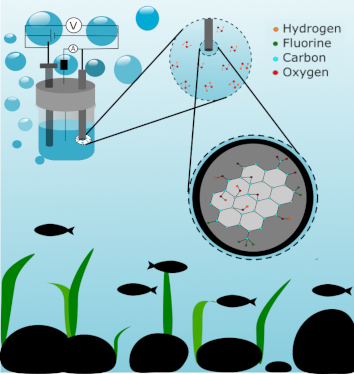
- previously, the surface oxygen functional groups are crucial for the reduction of molecular oxygen to H2O2 and hence high-resolution O 1s X-ray photoelectron spectroscopy (XPS) was carried out. The O 1s peaks of different EEG samples are shown in Figure 1a. It can be seen that the intensity of the O 1s peak
- ≈21 to ≈10 atom % from G-M1 to G-M4 (as inferred from the XPS survey spectrum as well as the high-resolution C 1s and O 1s XPS spectra (Supporting Information File 1, Figure S1a)) [43]. The O 1s spectrum can be deconvoluted into two distinct peaks (as shown in Figure S2) centered at 532.2 eV and 533.4
- ]: Interestingly, the intensity of the peak increases with the degree of functionalization, which further supports the assumption that the redox peak at 0.5 V is due to functionalization. These results are in good agreement with XPS data, as discussed previously. These redox peaks are not observed (only broad


Synthesis and enhanced photocatalytic performance of 0D/2D CuO/tourmaline composite photocatalysts
Beilstein J. Nanotechnol. 2020, 11, 407–416, doi:10.3762/bjnano.11.31
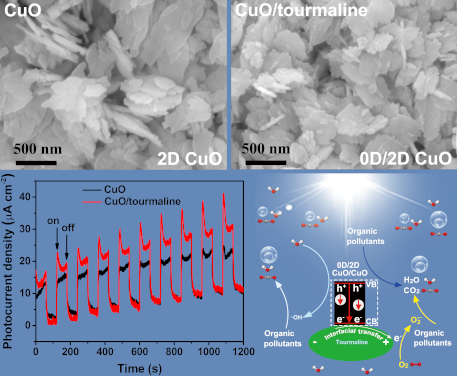
- using step scan mode performed with a DX-2700 diffractometer (Dandong Haoyuan Instrument Co. Ltd., China) with Ni-filtered Cu Kα radiation (λ = 0.1.541 Å), 10–80° 2θ scan. X-ray photoelectron spectra (XPS) were recorded using a K-ALPHA instrument (ThermoFisher Scientific, USA). A MIRA3 field emission
- state of the as-synthesized photocatalysts were investigated with XPS (Figure 1b). Two XPS peaks with binding energy of 932.93 eV and 952.79 eV correspond to Cu 2p3/2 and Cu 2p1/2, respectively. The satellite peaks with higher binding energy of 941.78 eV and 961.45 eV were observed [26]. In comparison
- for the oxidation of organic pollutants. (a) XRD spectra of the CuO, tourmaline, and CuO/tourmaline composite. (b) High-resolution Cu 2p XPS spectra of the CuO and CuO/tourmaline composite. FTIR spectra of the CuO, tourmaline, and CuO/tourmaline composite. SEM images of (a) tourmaline, (b) CuO, and (c


High-performance asymmetric supercapacitor made of NiMoO4 nanorods@Co3O4 on a cellulose-based carbon aerogel
Beilstein J. Nanotechnol. 2020, 11, 240–251, doi:10.3762/bjnano.11.18
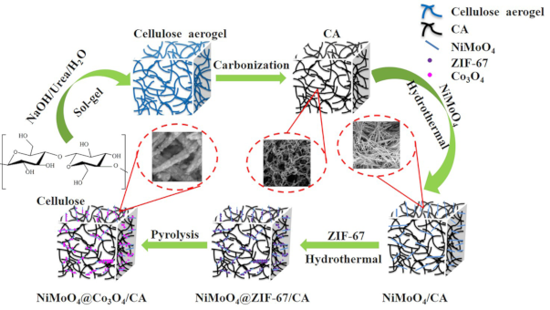
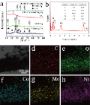
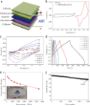
- , which agrees well with the XRD results. To investigate the chemical composition and the valence states of the NiMoO4@Co3O4/CA nanocomposite, X-ray photoelectron spectroscopy (XPS) was performed and the results are shown in Figure 4. According to Figure 4a, the elements Co, Ni, Mo, O and C can be clearly
- [40]. The XPS results further indicate that the NiMoO4@Co3O4/CA sample contains C, Co, Ni, Mo and O atoms. The N2 adsorption/desorption isotherms and the pore size distribution curves of the CA, NiMoO4/CA and NiMoO4@Co3O4/CA samples are shown in Figure 5. Both the CA and the NiMoO4/CA samples exhibit
- structure of the prepared samples was characterized by XRD (D8 Advance, Bruker) using Cu Kα radiation (λ = 0.15406 nm) over a scan range of 5–80°. XPS (Thermo escalab 250Xi, Thermo fisher) measurements were performed using the monochromatized Al Kα radiation at 1486.6 eV. The surface morphology of the




Rational design of block copolymer self-assemblies in photodynamic therapy
Beilstein J. Nanotechnol. 2020, 11, 180–212, doi:10.3762/bjnano.11.15






Size effects of graphene nanoplatelets on the properties of high-density polyethylene nanocomposites: morphological, thermal, electrical, and mechanical characterization
Beilstein J. Nanotechnol. 2020, 11, 167–179, doi:10.3762/bjnano.11.14
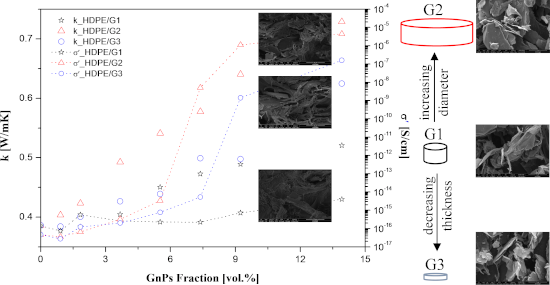
- values. Additionally, G3 was seen to have better dispersion when compared to G1 containing the HDPE nanocomposites. XPS sample analysis gave more information on the GnPs’ chemical composition. The XPS results of GnPs are shown in Figure 2 and Table 1. The GnPs generally showed a strong signal for carbon
- to the existence of delocalized π electrons (conduction electrons) available for shake-up events following core electron photoemission (Thermo Fisher Scientific Avantage Data System 5.9904; Thermo Fisher XPS: Knowledge Base). In Table 1, the deconvolution fit for the C 1s and O 1s signals is also
- molding. The size effects of the GnPs on the morphological, thermal, electrical, and mechanical properties of the composites was studied. The small differences in the GnPs’ surfaces’ chemical composition were detected by XPS, and the highest amount of oxygen that was found was 2.6 atom % for G1. FTIR and



Fabrication of Ag-modified hollow titania spheres via controlled silver diffusion in Ag–TiO2 core–shell nanostructures
Beilstein J. Nanotechnol. 2020, 11, 141–146, doi:10.3762/bjnano.11.12
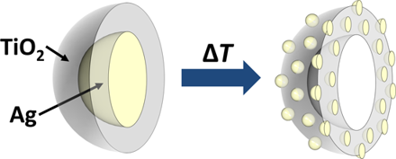
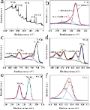
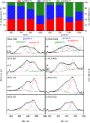
- microscopy was used to visualize changes occurring in the morphology of the nanostructures. XPS spectroscopy was used to provide information regarding the chemical composition of Ag-modified TiO2 HSs. Figure 1 shows a schematic illustration of the formation of Ag-modified TiO2 HSs from Ag@TiO2 CSNs together
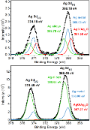
- molecules are supported by the fact that when freshly prepared Ag@TiO2 CSNs are placed in the XPS spectrometer and annealed under vacuum, without the presence of oxygen, no silver diffusion is observed. The analysis of the Ag 3d band shows that silver is present in Ag-modified TiO2 HSs in at least three
- h (C), 3 h (D), and 12 h (E). XPS Ag 3d1/2 and Ag 3d5/2 spectra of freshly prepared Ag–TiO2 core–shell structures (top) and after annealing at 150 °C for 12 h (bottom). UV–vis spectra and images of aqueous suspensions of freshly prepared Ag–TiO2 core–shell nanostructures (A) and after annealing in



Synthesis of amorphous and graphitized porous nitrogen-doped carbon spheres as oxygen reduction reaction catalysts
Beilstein J. Nanotechnol. 2020, 11, 1–15, doi:10.3762/bjnano.11.1
- particles are observed for the graphitized samples via energy dispersive X-ray spectroscopy (EDX) and X-ray photoelectron spectroscopy (XPS). However, we cannot fully exclude small amounts of residual iron in the graphitized catalysts below the detection limit of XPS (about 0.2 atom %) and EDX (about 0.1 wt
- (HRTEM) images of the resulting particles showed that the graphite layers are arranged along the longitudinal axis of the fibers [37]. After the acidic washing process, neither XPS nor EDX showed, for g-NCS-850 and g-NCS-1000, Fe or Fe3C particles within the spheres, which are commonly found for the Fe
- g-NCSs, determined by CHN analyses (supported by EDX measurements, e.g., absence of Fe), as well as the elemental surface composition and N bonding configurations, determined by XPS measurements, are given in Table 1 and Table 2. As expected the samples are made up of a carbon matrix including O




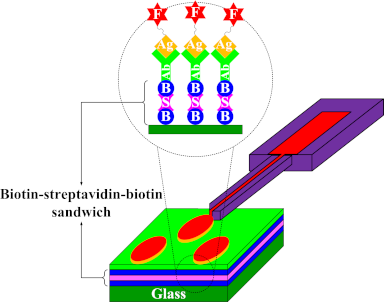
Evaluation of click chemistry microarrays for immunosensing of alpha-fetoprotein (AFP)
Beilstein J. Nanotechnol. 2019, 10, 2505–2515, doi:10.3762/bjnano.10.241
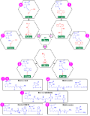
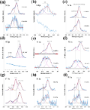
- successful implementation and a thorough comparison of their properties. Characterization of the surfaces by XPS and AFM All steps of the immobilization reactions were monitored by X-ray photoelectron spectroscopy (XPS) to validate the expected chemical reactions taking place (Figure 2). The
- bare and functionalized glasses was characterized using surface-sensitive techniques, including atomic force microscopy (AFM) and X-ray photoelectron spectroscopy (XPS). To map the surface roughness, AFM in tapping mode was conducted with a Dimension Icon (Bruker, Germany) device with HQ:NSC15/Al BS
- system onboard software (NanoScope 8.10, Bruker, Germany). The XPS analysis was performed using a K-Alpha+ XPS spectrometer (ThermoFisher Scientific, East Grinstead, UK) using the Thermo Avantage software as previously described [47]. Sample analysis was performed as reported in [25]. Fluorescence


Multiwalled carbon nanotube based aromatic volatile organic compound sensor: sensitivity enhancement through 1-hexadecanethiol functionalisation
Beilstein J. Nanotechnol. 2019, 10, 2364–2373, doi:10.3762/bjnano.10.227
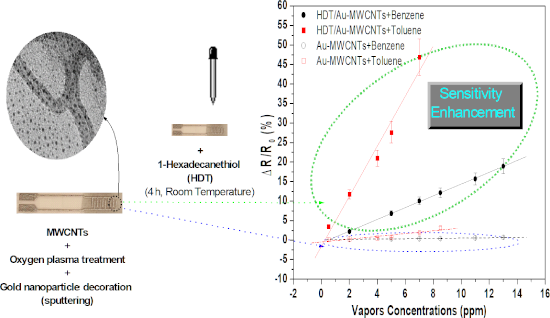
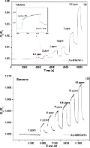
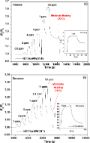
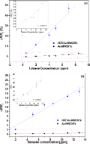
- spectroscopy, X-ray photoelectron spectroscopy (XPS) and contact angle measurements. In summary, the obtained FTIR results confirm the covalent functionalisation of Au-decorated MWCNTs with HDT. Sensing results Au-MWCNT sensing of aromatic VOCs Figure 4 shows the response of the Au-MWCNT sensor to benzene and





Design and facile synthesis of defect-rich C-MoS2/rGO nanosheets for enhanced lithium–sulfur battery performance
Beilstein J. Nanotechnol. 2019, 10, 2251–2260, doi:10.3762/bjnano.10.217
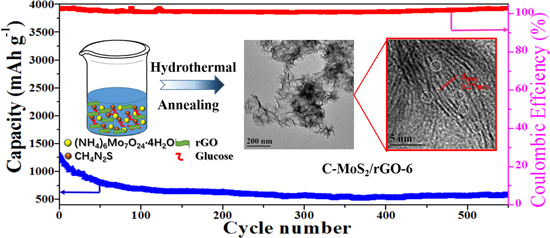
- Libra 200). Powder X-ray diffraction (XRD) measurements were conducted to determine the phase of the as-synthesized composites with Cu Kα radiation operated at 40 kV and 30 mA. X-ray photoelectron spectroscopy (XPS) analysis was performed on a Kratos AXIS Ultra DLD instrument using monochromated Al Kα X
- (G-band) resulting from in-plane vibrations and defect-induced vibrations of sp2-hybridized carbon atoms in amorphous carbon and rGO [30]. The surface elements of the composites are analyzed by XPS. The survey spectrum confirms that the expected elements in the composites are C, Mo, O, and S (Figure
- pristine MoS2 and (i, j) HRTEM images of C-MoS2/rGO. Morphological images of the annealed C-MoS2/rGO-6 composite: (a) SEM; (b) TEM; (c, d) HRTEM; (e) SEM image of C-MoS2/rGO-6-S; (f) TG analysis curve; (g–j) element mapping images of Mo, S, and C. (a) XRD patterns, (b) Raman spectra, (c) full scan XPS


Ultrathin Ni1−xCoxS2 nanoflakes as high energy density electrode materials for asymmetric supercapacitors
Beilstein J. Nanotechnol. 2019, 10, 2207–2216, doi:10.3762/bjnano.10.213
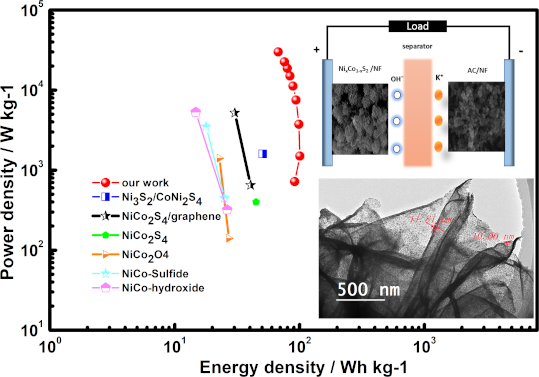
- analysed using X-ray photoelectron spectroscopy (XPS, Kratos AXIS Supra photoelectron spectrometer, Al Kα excitation (1486.6 eV)). Crystalline structure and composition of the samples were characterized by powder X-ray diffraction analysis (XRD, PANaytical MPD) using a Cu Kα (8047.8 eV) radiation source
- supported by aluminium SEM sample stages. Chemical composition and valence states of each element in the material are further confirmed by using XPS. The high-resolution XPS spectra confirm the existence of nickel, cobalt, and sulfur. After fitting the XPS with the Gaussian method, the HRXPS spectrum of Ni
- ; (b) FESEM images and (c) enlarged FESEM images of Ni1−xCoxS2 nanoparticles; (d–g) TEM, HRTEM and SAED pattern (inset) of the Ni1−xCoxS2 nanoflakes; (i–m) EDS elements maps of S, Ni, Co, O and C from the image (h). (a) EDS pattern of Ni1−xCoxS2 and high-resolution XPS spectra of (b) Ni 2p, (c) Co 2p


Improved adsorption and degradation performance by S-doping of (001)-TiO2
Beilstein J. Nanotechnol. 2019, 10, 2116–2127, doi:10.3762/bjnano.10.206
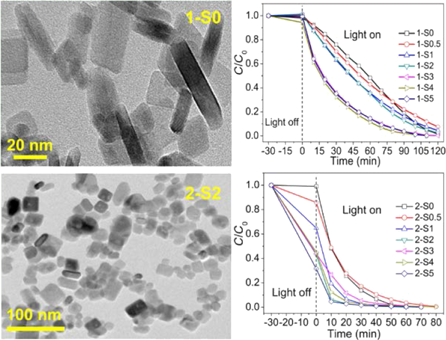
- spectra (UV–vis DRS) of the samples were measured on a Shimadazu U-4100 spectrometer (U-4100, Shimadazu Corporation, Tokyo, Japan). X-ray photoelectron spectroscopy (XPS) was performed using a Thermo Scientific ESCALAB 250Xi (Thermo Scientific Inc., USA). The chemical bonds of the photocatalysts were
- the variation of c/a with RS/Ti will be discussed in detail in section below along with the XPS results. Figure 2 shows the TEM and HRTEM images of the 1-S0 (a, d), 2-S0 (b, e), and 2-S2 (c, f) samples. Obviously, the undoped 1-S0 sample synthesized at 180 °C is composed of square sheet-like particles
- : (1) the Ti–S vibration is stronger, (2) a new vibrational mode appears, i.e., the Ti–O–S vibration at 1160 cm−1 [21] caused by S6+ replacing Ti4+ (this was also confirmed by the XPS results given below), (3) the S=O vibration in the range of 1380–1400 cm−1 results from a sulfate complex formed by




Ion mobility and material transport on KBr in air as a function of the relative humidity
Beilstein J. Nanotechnol. 2019, 10, 2084–2093, doi:10.3762/bjnano.10.203
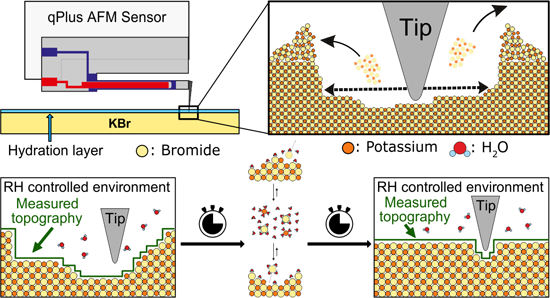
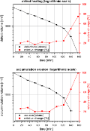
- time of exposure to the humid air. The layer thickness ranges from partial coverage at very low humidities (RH < 10%) up to several nanometers near saturation. Arima et al. performed XPS measurements on potassium bromide (KBr) thin films under UHV conditions (4·10−10 mbar) in order to determine the


Optimization and performance of nitrogen-doped carbon dots as a color conversion layer for white-LED applications
Beilstein J. Nanotechnol. 2019, 10, 2004–2013, doi:10.3762/bjnano.10.197
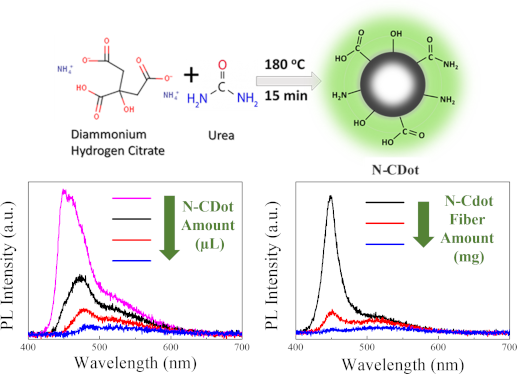
- :Eu2+, was purchased from Zhuhai Hanbo (HB-640, Guangdong, China). High-resolution transmission electron microscopy (HRTEM; JEOL 2100F, operated at 200 kV) was employed to examine the morphology of the N-CDots. X-ray photoelectron spectroscopy (XPS) studies were performed using a Thermo Scientific K
- -Alpha XPS spectrometer. Fourier-transform infrared spectroscopy (FTIR; Spectrum 100, PerkinElmer, Shelton, CT, USA) was used to characterize the kinetic behavior of the chemical bonds. Photoluminescence (PL) and absorbance were measured using an integrating sphere (ISP-50-80-R, Ocean Optics Inc
- (002) plane. Further information on the characterization of the CDots together with an extended discussion of the XPS results (Figure S1), the results of the FTIR study (Figure S2a) and absorption and PL spectra (Figure S2b) can be found in Supporting Information File 1 (Section I). White-light


The influence of porosity on nanoparticle formation in hierarchical aluminophosphates
Beilstein J. Nanotechnol. 2019, 10, 1952–1957, doi:10.3762/bjnano.10.191
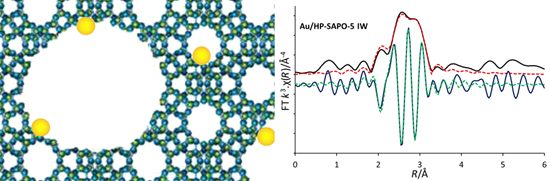
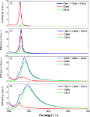
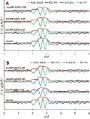
- the influence of synthesis protocols on active site design. X-ray photoelectron spectroscopy (XPS) data (Figure 4) was in good agreement with the XAS data, as Au/HP-SAPO-5 IW and Au/HP-SAPO-5 AE systems were exclusively fit with Au0 features (Figure 4B). However, the corresponding microporous systems
- required additional Au1 features to be accurately fit, in agreement with the Auδ+ species observed from XANES (Figure 4A). As XPS has a limited penetration depth, it will accentuate surface species, which are more likely to contain Au1 species, over the bulk [22]. In both cases the weak signal from the low
- the k3-weighted Fourier transform for the XAS data of the Au-deposited microporous MP-SAPO-5 (A) and hierarchical HP-SAPO-5 (B) compared to the Au foil. Associated scattering paths, with a single Au–Au feature are included. Stacked XPS data for Au-doped microporous MP-SAPO-5 (A) and hierarchical HP
Facile synthesis of carbon nanotube-supported NiO//Fe2O3 for all-solid-state supercapacitors
Beilstein J. Nanotechnol. 2019, 10, 1923–1932, doi:10.3762/bjnano.10.188
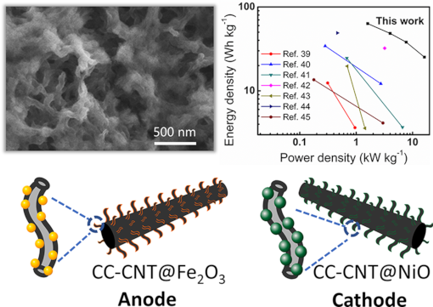
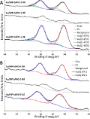
- both XRD pattern and Raman spectra indicate that Fe2O3 is not well crystallized since it was formed at 70 °C in the drying oven without further annealing. The XPS spectrum in Figure S5a (Supporting Information File 1) shows the existence of Fe, O, and C elements in CC-CNT@Fe2O3. The Fe 2p spectrum
- 530.13 eV, corresponding to C–O, Fe–O–C, and Fe–O, respectively [30]. The XPS results strongly support the XRD and Raman results and confirm Fe2O3 on the CC-CNT. A three-electrode system was used to examine the electrochemical characteristics of the CC-CNT@Fe2O3 with Pt foil as a counter electrode, SCE
- 490 cm−1 of CC-CNT@NiO, when compared to the pure CC-CNT substrate, verifying successful synthesis of NiO on the CC-CNT substrate (Figure 6b) [35]. The XPS spectrum in Figure S5b (Supporting Information File 1) also demonstrates the existence of Ni, O, and C in CC-CNT@NiO. The spectrum of Ni 2p


Synthesis of nickel/gallium nanoalloys using a dual-source approach in 1-alkyl-3-methylimidazole ionic liquids
Beilstein J. Nanotechnol. 2019, 10, 1754–1767, doi:10.3762/bjnano.10.171
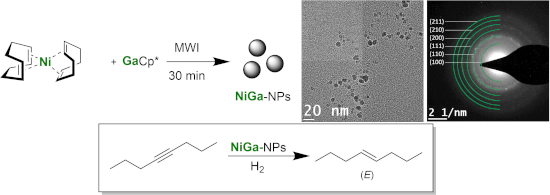
- (HAADF-STEM) and supported by energy-dispersive X-ray spectrometry (EDX), selected-area energy diffraction (SAED) and X-ray photoelectron spectroscopy (XPS). NiGa@[BMIm][NTf2] catalyze the semihydrogenation of 4-octyne to 4-octene with 100% selectivity towards (E)-4-octene over five runs, but with poor
- ESCALAB 200X XP-spectrometer, operating at 70–80 °C, a pressure of 7.0 × 10⁻⁹ bar and a sample angle of 33°. Spectra were recorded using polychromatic Al Kα excitation (11 kV, 20 mA) and an emission angle of 0°. Calibration of the XPS was carried out by recording spectra with Al Kα X-rays from clean




Remarkable electronic and optical anisotropy of layered 1T’-WTe2 2D materials
Beilstein J. Nanotechnol. 2019, 10, 1745–1753, doi:10.3762/bjnano.10.170
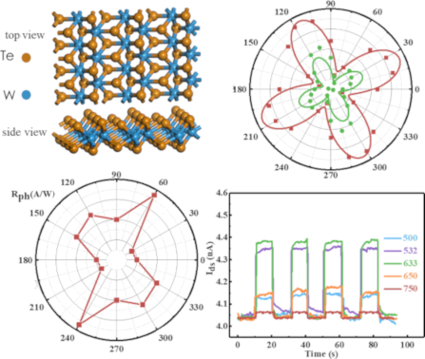
- of 1T’-WTe2. The tungsten atoms deviate from the ideal octahedral sites in the octahedron due to the very strong chemical bonding, forming the distorted octahedral structure. Consequently, the Te atom layers become buckled in the distorted octahedral structure. X-ray photoelectron spectroscopy (XPS
- photodetectors. Conclusion In summary, with the combination of XPS spectroscopy, HR-TEM, Raman spectroscopy, ADRDM and angle-resolved electrical measurements, we successfully revealed the in-plane optical and electrical anisotropy of 2D layered 1T’-WTe2. Furthermore, we presented the highly anisotropic
- covered with 285 nm of SiO2 for Raman spectroscopy, ADRDM and electrical characterization. The substrate had pre-patterned alignment grids and 12 electrodes (20 nm Gr/180 nm Au). XPS analysis was performed on a VG Scientific ESCALAB 250 device. The TEM images and SAED patterns were performed with on a FEI


TiO2/GO-coated functional separator to suppress polysulfide migration in lithium–sulfur batteries
Beilstein J. Nanotechnol. 2019, 10, 1726–1736, doi:10.3762/bjnano.10.168
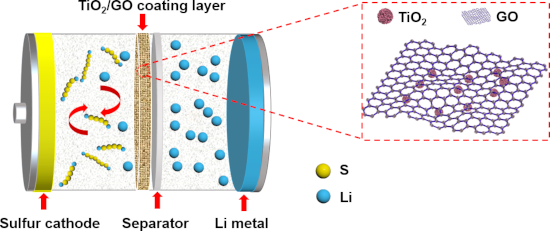
- ]. To further investigate the interaction between TiO2 and the polysulfides during the charge/discharge process, the XPS spectra of the Li/S batteries with the TiO2/GO-coated separator were recorded before and after 100 cycles, as shown in Figure 11. A broadened Ti 2p1/2 peak at ≈464 eV after cycling
- analysis (SDTQ600) was taken under air flow (RT to 800 °C, 10 °C min−1). The N2 adsorption/desorption tests were analyzed using Brunauer–Emmett–Teller (BET) theory on a Micromeritics ASAP 2020 device. The surface composition was analyzed by XPS (VG ESCALAB MK II USA). The binding energies of all the
- ) after cycling. Optical images of the diffusion process of the polysulfides through the (a) pristine separator and the (b) TiO2/GO-coated separator. (a) Raman and (b) FTIR spectra of the Li2S6-treated TiO2/GO composite. XPS spectra (Ti 2p) of the battery with a TiO2/GO-coated separator before and after


Tuning the performance of vanadium redox flow batteries by modifying the structural defects of the carbon felt electrode
Beilstein J. Nanotechnol. 2019, 10, 1698–1706, doi:10.3762/bjnano.10.165
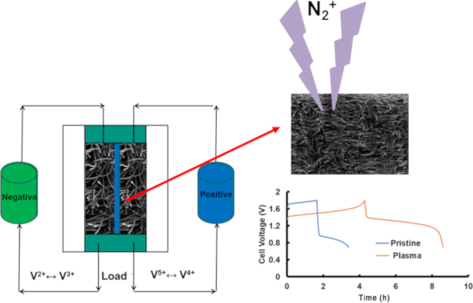
- 2690 cm−1 a symmetric second order D-band (2D) is visible for both samples. Careful analysis reveals that the 2D peak intensity is lower for the plasma-treated sample, indicating possible doping [17]. In order to investigate the N-doping in a plasma-treated felt, X-ray photoelectron spectroscopy (XPS
- ) analysis of the samples was carried out. The N2-plasma-treated sample was characterized by a N 1s peak with maxima around 399 eV. The N 1s peak could be deconvoluted into pyridinic and pyrrolic N contributions, with maxima at 398.3 and 399.8 eV, respectively. The XPS results, as well as the quantification
- of various groups on the surface of the felt are shown in Figure 2. Thus, from these results, it can be concluded that N2 plasma treatment can be applied to induce N-doping defects. Both pyrrolic as well as pyridinic N observed in the XPS spectra are incorporated into the graphene layer [19][20]. The


Materials nanoarchitectonics at two-dimensional liquid interfaces
Beilstein J. Nanotechnol. 2019, 10, 1559–1587, doi:10.3762/bjnano.10.153
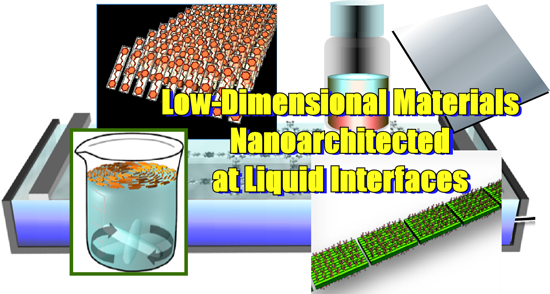
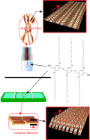
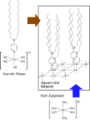
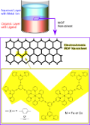
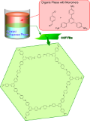
- water phase, yielding a monolayer sheet of the two-dimensional nickel–iron cyanide grid network. Characterizations of the extended network by X-ray photoelectron spectroscopy (XPS), FTIR spectroscopy, SQUID magnetometry, X-ray absorption fine structure (XAFS), and grazing incidence synchrotron X-ray







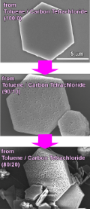

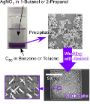
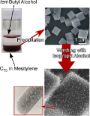


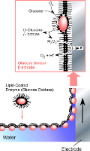



High-temperature resistive gas sensors based on ZnO/SiC nanocomposites
Beilstein J. Nanotechnol. 2019, 10, 1537–1547, doi:10.3762/bjnano.10.151
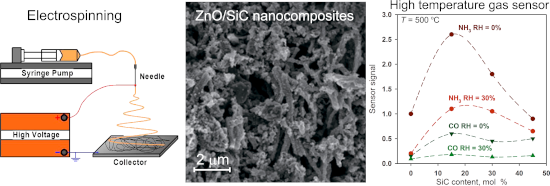
- (XPS). The electrophysical and gas sensing properties of the materials were investigated by in situ conductivity measurements in the presence of the reducing gases CO and NH3 (20 ppm), in dry conditions (relative humidity at 25 °C RH25 = 0) and in humid air (RH25 = 30%) in the temperature range 400–550
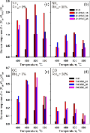
- the SiC peaks naturally increases with increasing silicon carbide content in the nanocomposites. The study of the surface composition of the synthesized materials was carried out using FTIR and XPS methods. Figure 4 shows the IR absorption spectra of ZnO, SiC, and ZnO/SiC nanocomposites. The spectrum
- photoelectron spectroscopy (XPS). Figure 5 and Figure 6 show the XPS spectra of ZnO, SiC and the ZnO/SiC_15 nanocomposite in the Zn 2p, O 1s, Si 2p, and C 1s binding energy regions. The survey spectra are provided in Supporting Information File 1 (Figure S1). For the SiC sample, it was found that the Si 2p



Rapid thermal annealing for high-quality ITO thin films deposited by radio-frequency magnetron sputtering
Beilstein J. Nanotechnol. 2019, 10, 1511–1522, doi:10.3762/bjnano.10.149
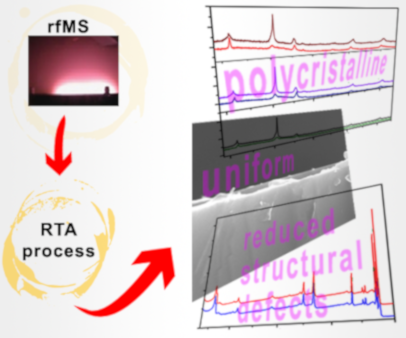
- spectroscopy (XPS) method. A SPECS spectrometer with a PHOIBOS RX 150 analyzer and a Specs XR–50 M source was operated with a monochromatic Al anode (hν = 1486.61 eV) at 300 W. The charging effect of the sample deposited onto the quartz substrate is compensated for with a Specs FG15/40 flood gun. The chemical
- composition values of the component elements were determined from the XPS spectra using the Avantage software (version 5.978). The crystalline structure of the ITO thin films on amorphous quartz substrates was investigated by grazing incidence X-ray diffraction (XRD, Bruker AXS D8 Discover diffractometer
- the increase in the crystallite size (Table 2) and the reduction of structural defects. To evaluate the chemical composition of the surface for the as-deposited and RTA-processed films, the XPS spectra were recorded, as shown in Figure 3a–c. The spectra were recorded over a wide range of binding


Synthesis of P- and N-doped carbon catalysts for the oxygen reduction reaction via controlled phosphoric acid treatment of folic acid
Beilstein J. Nanotechnol. 2019, 10, 1497–1510, doi:10.3762/bjnano.10.148
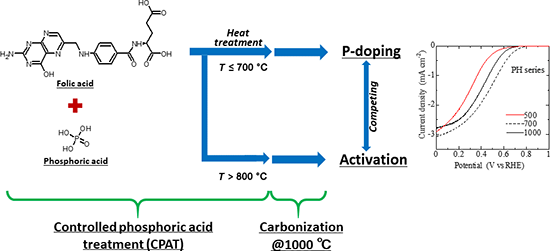
- . The results of X-ray photoelectron spectroscopy (XPS) analysis demonstrated that when pretreatment was performed in the absence of PA, the N content of the carbon materials decreased with increasing temperature. On the other hand, in the presence of PA, the N/C atomic ratio initially increased with
- will be discussed in the “Discussion” section. The chemical states of N in P-series precursors were studied by XPS (Figure 3a,b), which revealed that the shapes of N 1s spectra depended on the pretreatment temperature and the presence/absence of PA. H-series precursors featured N 1s spectra with two
- pronounced in the case of P-series precursors, e.g., the intensity of this peak was higher for H-1000 than for P-1000. The P 2p XPS spectra of the P-series precursors are presented in Figure 3c. The peak shifted from 134.2 to 133.0 eV with the increase of the CPAT temperature. The figure also includes the