Search results
Search for "absorption spectra" in Full Text gives 290 result(s) in Beilstein Journal of Nanotechnology. Showing first 200.
Reduced graphene oxide supported C3N4 nanoflakes and quantum dots as metal-free catalysts for visible light assisted CO2 reduction
Beilstein J. Nanotechnol. 2019, 10, 448–458, doi:10.3762/bjnano.10.44
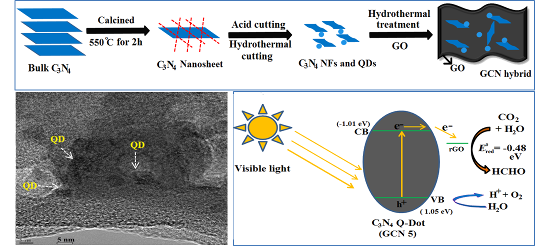
- File 1, Figure S6). The UV–visible absorption spectra of the product used for the determination of HCHO in the presence of different GCN hybrids are shown in Figure 10. It is observed from the UV spectra that with increasing irradiation time, the peak of the DDL complex also increased due to effective
- ) after acid treatment of g-C3N4, c) CN-5 quantum dots, d) CN-10 nanoflakes, e) CN-20 nanoflakes and f) the GCN-5 material. High-resolution transmission electron microscopy images of the GCN-5 quantum dots. UV–vis absorption spectra of the photogenerated HCHO with Nash reagent (a–c), and (d) production






Surface plasmon resonance enhancement of photoluminescence intensity and bioimaging application of gold nanorod@CdSe/ZnS quantum dots
Beilstein J. Nanotechnol. 2019, 10, 22–31, doi:10.3762/bjnano.10.3
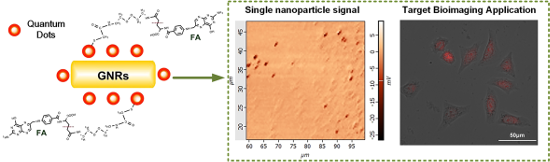
- . Characterization The PL emission spectrum of the QDs was measured with a Cary Eclipse fluorescence spectrophotometer (Agilent, CA, USA) at an excitation wavelength of 430 nm. UV–visible absorption spectra were collected using a Cary 5000 spectrophotometer (Agilent, CA, USA). The lifetime of the nanoparticles was


Zn/F-doped tin oxide nanoparticles synthesized by laser pyrolysis: structural and optical properties
Beilstein J. Nanotechnol. 2019, 10, 9–21, doi:10.3762/bjnano.10.2
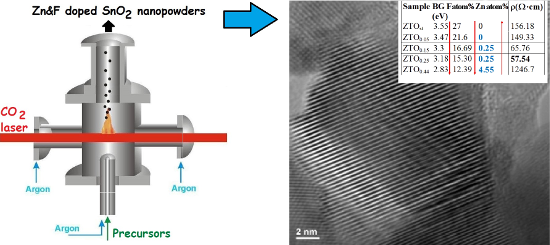
- give information on the elemental analysis (excluding hydrogen) on the samples. The analysis of absorbance (A) data obtained by UV–vis–NIR spectrophotometry was performed on 0.01 g nanopowder sample suspended in 20 mL ethanol. The absorption spectra were registered using the computer-aided double-beam
- (bottom) samples. a) The Raman spectra of the as-prepared samples; b) The dependence from the Raman and XPS analysis. a) Optical absorption spectra of the nanoparticles, b) Tauc’s plot for Zn/F-doped and undoped SnO2 nanoparticles (αhν)2 versus (hν). Electrical resistivity measurements. Evaluation of the



The nanoscaled metal-organic framework ICR-2 as a carrier of porphyrins for photodynamic therapy
Beilstein J. Nanotechnol. 2018, 9, 2960–2967, doi:10.3762/bjnano.9.275
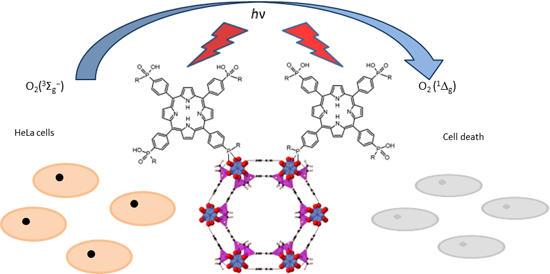
- corresponding spectra of the free porphyrins. The absorption spectra show characteristic absorption bands of metal-free porphyrins: the Soret band at 415 nm and four Q-bands in the region between 500 and 650 nm. The comparison of the absorption spectra of free TPPPi(Ph) and corresponding nanoICR-2/TPPPi(Ph
- ]. UV–vis absorption spectra of the dispersions were recorded on a Perkin Elmer Lambda 35 spectrometer. High-resolution transmission electron microscopy (TEM) was carried out on a JEOL JEM 3010 microscope operated at 300 kV (LaB6 cathode, point resolution 1.7 Å) with an Oxford Instruments Energy


Controlling surface morphology and sensitivity of granular and porous silver films for surface-enhanced Raman scattering, SERS
Beilstein J. Nanotechnol. 2018, 9, 2813–2831, doi:10.3762/bjnano.9.263
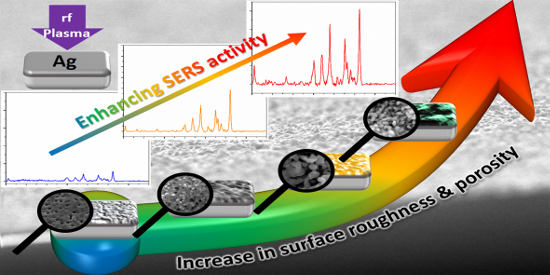
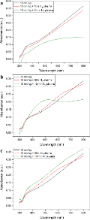
- plasma treated silver films Figure 9a shows the UV–vis absorption spectra obtained after two different hydrogen rf plasma treatment times in comparison to the silver film before plasma treatment. With increasing hydrogen plasma treatment time, the absorption decreases over the entire spectrum while the
- decrease is more prominent for longer wavelengths as can be seen for the 2 min hydrogen plasma treatment. This decrease in absorption in the hydrogen plasma treated films might be due to the etching of the silver film. For nitrogen plasma treatment the absorption spectra do not show an overall decrease in






Comparative biological effects of spherical noble metal nanoparticles (Rh, Pd, Ag, Pt, Au) with 4–8 nm diameter
Beilstein J. Nanotechnol. 2018, 9, 2763–2774, doi:10.3762/bjnano.9.258
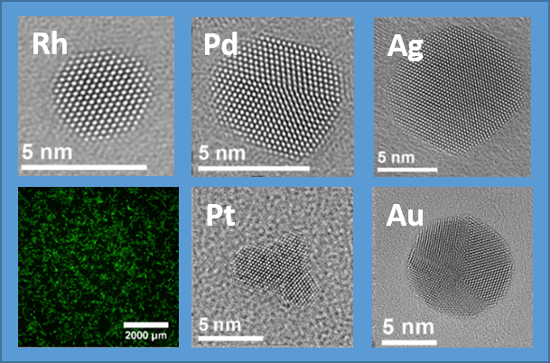
- -normal distribution fit to determine the number-weighted diameter. UV–vis absorption spectra of PVP-stabilized noble metal nanoparticles (Rh, Pd, Pt, Ag, Au). Effects of nanoparticles on the viability and the morphology of human mesenchymal stem cells (hMSCs). hMSCs in 24-well cell culture plates were


Oriented zinc oxide nanorods: A novel saturable absorber for lasers in the near-infrared
Beilstein J. Nanotechnol. 2018, 9, 2730–2740, doi:10.3762/bjnano.9.255
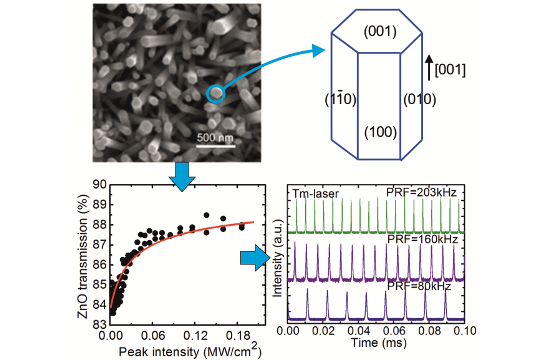
- spectroscopy The results on the optical absorption and luminescence of the ZnO NRs are summarized in Figure 3. The small-signal (internal) absorption spectra of the ZnO NRs grown for 5–15 h are shown in Figure 3a. The spectra were corrected for the Fresnel losses arising from the substrate, T(ZnO NRs) = T(ZnO
- possible source for the near-IR absorption. For longer NRs, one can expect more VZn−1 vacancies and stronger near-IR absorption, in agreement with Figure 3a. In Figure 3c, we compare the small-signal absorption spectra of ZnO NRs grown for 10 h and several well-known nanostructured “fast” SAs, namely a
- 2 cm−1). An integration time of 30 s was used. The absorption spectra were measured using a CARY 5000 spectrophotometer (Varian). The absorption saturation of the ZnO NRs was studied by the open-aperture Z-scan method. As an excitation source, a mode-locked 1.064 µm Nd laser was used with the



SERS active Ag–SiO2 nanoparticles obtained by laser ablation of silver in colloidal silica
Beilstein J. Nanotechnol. 2018, 9, 2396–2404, doi:10.3762/bjnano.9.224
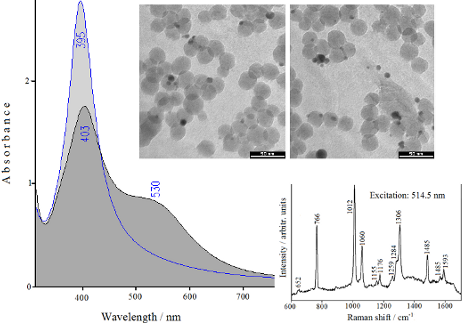
- irradiation time of the silver target was about 10 min. TEM samples were obtained by dropping a small amount of colloid onto carbon-coated copper grids and allowing it to evaporate. The images were recorded with a Philips CM12 at 120 kV. UV–visible absorption spectra of the colloidal suspensions were obtained
- polycyclic aromatic hydrocarbons, polychlorinated biphenyls, organochlorine pesticides, dioxins, nitroaromatic derivatives, and many others. These molecules, which normally do not interact with silver, could be effectively adsorbed on silica nanoparticles. UV–visible absorption spectra of colloidal silica (A


The role of adatoms in chloride-activated colloidal silver nanoparticles for surface-enhanced Raman scattering enhancement
Beilstein J. Nanotechnol. 2018, 9, 2236–2247, doi:10.3762/bjnano.9.208
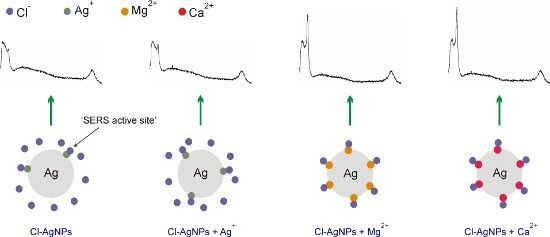
- transmission electron microscope (STEM), equipped with a cold field emission gun, working at an acceleration voltage of 200 kV. The absorption spectra were recorded with a Jasco V-630 UV–vis spectrometer at 1 nm spectral resolution. Raman and SERS spectra were obtained with a Renishaw InVia Raman microscope



Lead-free hybrid perovskites for photovoltaics
Beilstein J. Nanotechnol. 2018, 9, 2209–2235, doi:10.3762/bjnano.9.207


Spin-coated planar Sb2S3 hybrid solar cells approaching 5% efficiency
Beilstein J. Nanotechnol. 2018, 9, 2114–2124, doi:10.3762/bjnano.9.200
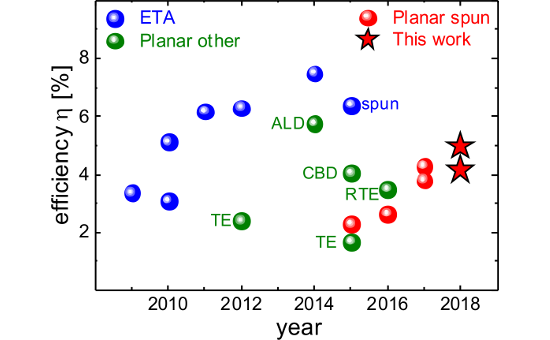
- Sb2S3 cells by the polymer is to a large extent parasitic [27]. The applied polymers differ in band gap as can be seen from the measured absorption spectra in Figure 4c and the position of the highest occupied molecular orbital (HOMO). The HOMO of Sb2S3 obtained from ultraviolet photon spectroscopy (UPS
- between the Sb2S3/P3HT and Sb2S3/KP115 cells for wavelengths above 500 nm. This can be explained by the different absorption spectra which are plotted together with the EQE data. P3HT has a larger band gap than KP115 so that P3HT does not absorb above approximately 650 nm. The incident light is instead
- investigation. Another reason could be that the Sb2S3/HTM interface is limiting for the Sb-TU process, whereas the bulk of Sb2S3 becomes limiting for the thicker absorber layers from the Sb-BDC. The EQE spectra and corresponding Jsc values are clearly influenced by the absorption spectra of the applied polymer


Nanoconjugates of a calixresorcinarene derivative with methoxy poly(ethylene glycol) fragments for drug encapsulation
Beilstein J. Nanotechnol. 2018, 9, 2057–2070, doi:10.3762/bjnano.9.195
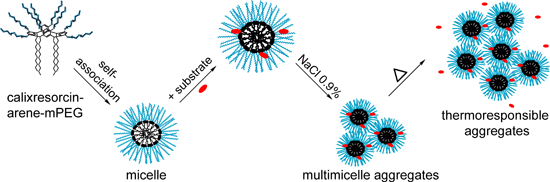
- of 0.9% NaCl; (d, e) TEM images of 3 particles in the (d) absence and (e) the presence of 0.9% NaCl; scale bars: 50 nm, c3 = 10 mg/mL); (f) proposed scheme of self-association of macrocycle 3. (a, b) Absorption spectra of Orange OT (a) and QC (b) in aqueous solutions of 3 and mPEG-550 (solubilisation


Metal-free catalysis based on nitrogen-doped carbon nanomaterials: a photoelectron spectroscopy point of view
Beilstein J. Nanotechnol. 2018, 9, 2015–2031, doi:10.3762/bjnano.9.191
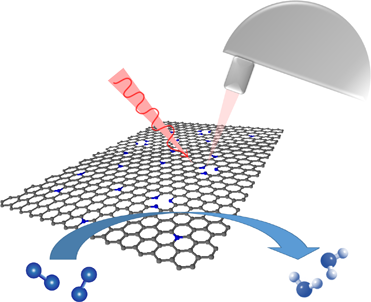
- agreement with previous reports that correlate XAS and XPS [108][109]. By correlating XAS and RRDE measurements, they assumed that the π* profile observed in the absorption spectra can be used to identify the nitrogen configuration, being therefore an indicator of the ORR activity. Nagaiah and co-workers




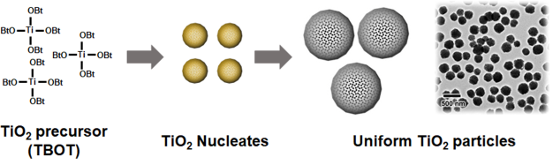
Controllable one-pot synthesis of uniform colloidal TiO2 particles in a mixed solvent solution for photocatalysis
Beilstein J. Nanotechnol. 2018, 9, 1715–1727, doi:10.3762/bjnano.9.163
- 6a shows the typical absorption spectra change for an aqueous RhB solution after UV–vis light irradiation for constant time intervals using TiO2 particles (TiO2-500) calcined at 500 °C. The strong absorption peak at 553 nm continuously decreased and finally disappeared after 60 minutes. This
- (≈400–800 °C). (a) UV–vis absorption spectra indicating degradation of rhodamine B (RhB) using the TiO2-500 sample, (b) photocatalytic degradation of RhB under UV–vis light irradiation and (c) semilogarithmic plot versus time for the different TiO2 samples: Blank Test (no catalyst) (■), TiO2-350


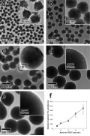


Sulfur-, nitrogen- and platinum-doped titania thin films with high catalytic efficiency under visible-light illumination
Beilstein J. Nanotechnol. 2018, 9, 1629–1640, doi:10.3762/bjnano.9.155
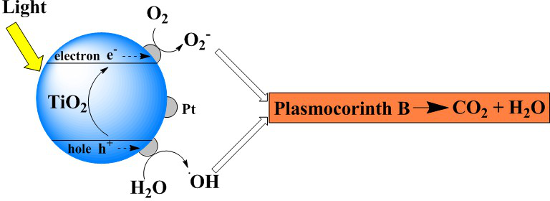
- ). The BE shifts were corrected by assigning a value of 284.8 eV to the C 1s line of adventitious carbon [51]. UV–vis absorption spectra were collected using an Agilent Cary 60 UV–vis spectrophotometer in the wavelength range λ = 400–800 nm. The morphology of thin films was examined using a field
- with an average area of 96 cm2 were immersed into a batch reactor, which was filled with 70 mL of dye solution and was purged with oxygen (flow rate 100 mL/min). The activity of the thin films was determined by measuring the absorption spectra of PB (absorption maximum at ≈527 nm) after different


Photoluminescence of CdSe/ZnS quantum dots in nematic liquid crystals in electric fields
Beilstein J. Nanotechnol. 2018, 9, 1544–1549, doi:10.3762/bjnano.9.145
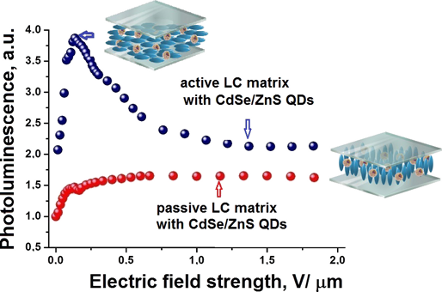
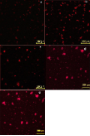
- , respectively. The orientation of the LC after filling the cells was checked using an optical polarization microscope. To obtain the absorption spectra we have used a UV-3600 spectrophotometer (Shimadzu, Japan). To study the QD luminescence a confocal laser scanning microscope LSM 710 (Cаrl Zeiss, Germany) with

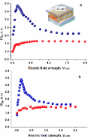

Colorimetric detection of Cu2+ based on the formation of peptide–copper complexes on silver nanoparticle surfaces
Beilstein J. Nanotechnol. 2018, 9, 1414–1422, doi:10.3762/bjnano.9.134
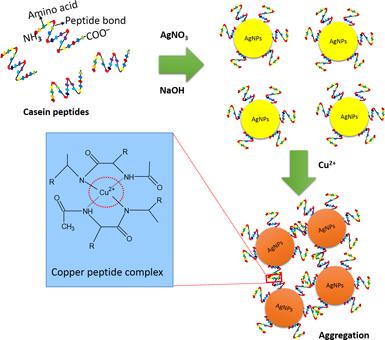
- +-spiked water samples (0.96 µM) caused large red-shift in the absorption spectra and dramatic change in visual appearance of yellow to red suggests possibilities in implementing both colorimetric and spectrophotometric measurements (Figure 7). Levels of Cu2+ in Cu2+-spiked tap water (2.9 μM) and pond
- . Real-time UV–vis response of AgNPs toward Cu2+ The AgNPs solution (200 µL) was incubated with 0.64, 0.96 and 1.28 µM Cu2+ in distilled water. At different reaction times, the stability behavior of the coordination product was studied by measuring the absorption spectra of the reaction solutions


Computational exploration of two-dimensional silicon diarsenide and germanium arsenide for photovoltaic applications
Beilstein J. Nanotechnol. 2018, 9, 1247–1253, doi:10.3762/bjnano.9.116
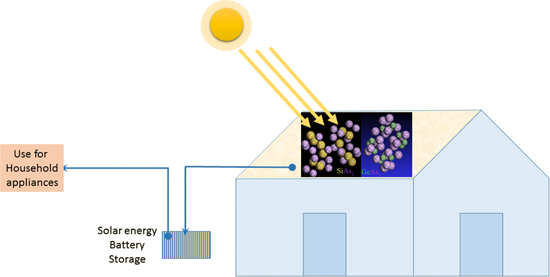
- obtained by using the HSE-Wannier method (1.91 and 1.64 eV for SiAs2 and GeAs2, respectively) with similar and negligible variation amongst the two methods. The corresponding first absorption peaks in the absorption spectra are the optical band gaps at 2.01 and 1.72 eV, respectively. Thus the calculated
- ) GW-band structures and (b,d) BSE-optical absorption spectra of SiAs2 and GeAs2, respectively. Calculated structural parameters of SiAs2 and GeAs2 compared with the experimental values. Calculated band gaps of SiAs2 and GeAs2 for bulk, bilayers and monolayers. Supporting Information Supporting


Electrostatic force spectroscopy revealing the degree of reduction of individual graphene oxide sheets
Beilstein J. Nanotechnol. 2018, 9, 1146–1155, doi:10.3762/bjnano.9.106
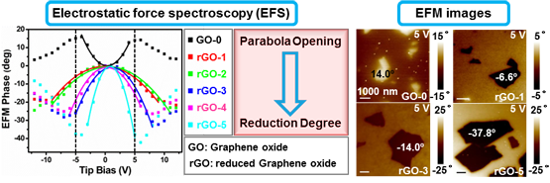
- methods, such as X-ray photoelectron spectroscopy (XPS) [8][9], Raman spectroscopy [10], and UV–vis absorption spectra [11][12], reflect the average information of rGO materials. However, they cannot characterize an isolated rGO sheet at the nanoscale. Optical observation [13] and transmission electron
- reduced GO sheets for examples, we aim to evaluate the degree of reduction of individual rGO sheets at the nanoscale using EFS. Results and Discussion The thermal or chemical reduction of GO sheets was verified with XPS, UV–vis absorption spectra, and SPFM, as shown in Figure 1. The sample labels and the
- [20] from 1.1:1 to 6.3:1 (Figure 1a). However, the degree of reduction of samples 1–5 cannot be characterized from the almost coincident XPS spectrum in Figure 1b. In the normalized UV–vis absorption spectra (Figure 1c), the red-shift of the main absorbance peak from 226 nm to 264 nm the absorption


P3HT:PCBM blend films phase diagram on the base of variable-temperature spectroscopic ellipsometry
Beilstein J. Nanotechnol. 2018, 9, 1108–1115, doi:10.3762/bjnano.9.102
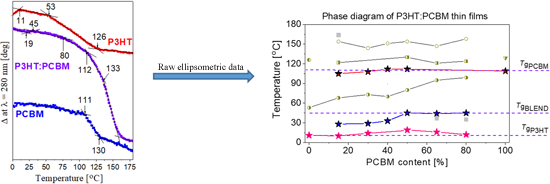
- on the absorption spectra we determined the beginning of the spectral transparency region of our samples at λ = 750 nm. This allowed us to apply the Cauchy optical model to ellipsometric data analysis in the transparency region and determine the samples thickness d as a function of temperature T. The


Optical orientation of nematic liquid crystal droplets via photoisomerization of an azodendrimer dopant
Beilstein J. Nanotechnol. 2018, 9, 870–879, doi:10.3762/bjnano.9.81
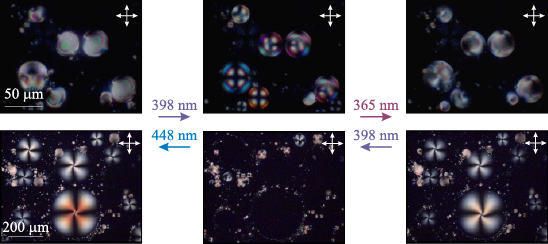
- of the G5 dendrimer and also of the azobenzene monomer (M), which is similar to the G5 terminal moieties, incorporated into the nematic matrix. To this end, we used the spectroscopic method that is described in the Experimental section. The polarized absorption spectra of planar cells with NLC doped
- = 60 s) and light intensity (I = 3–6 mW/cm2) were sufficiently large to achieve a saturation of isomer concentration, i.e., the absorption spectra do not change at a further increase of τexp and I. It should be noted that the LED irradiation does not cause any orientational effects in the NLC films
- . The effects of light-induced director reorientation in the films of NLCs doped with M or G5 occur at light intensities which are three or even four orders of magnitude higher [45]. The polarized absorption spectra were recorded with the help of an MC-122 spectrometer (Proscan Special Instruments). The


Surface-plasmon-enhanced ultraviolet emission of Au-decorated ZnO structures for gas sensing and photocatalytic devices
Beilstein J. Nanotechnol. 2018, 9, 771–779, doi:10.3762/bjnano.9.70
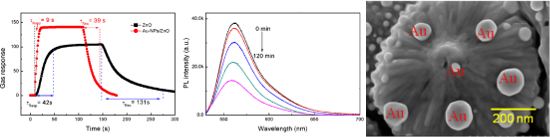
- and Au nanoparticle/ZnO structures using the chemical bath deposition approach (b and c). (a) TEM images and (b) EDS spectrum of Au nanoparticle/ZnO structures. (a) Absorption spectra; (b) Kubelka–Munk transformed spectra; (c) photoluminescence spectra at room temperature; and (d) time-resolved
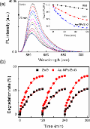
- with rough surface morphology could provide an advantage for enhancing the plasmonic effect when incorporated with Au NPs, which showed great performance in gas sensing and photocatalytic decomposition of organic pollution substances [14][15][16][22][23][24][25]. Figure 3a shows the UV–vis absorption
- spectra of ZnO and Au NP/ZnO films. A typical absorption peak in the UV region around 365 nm is observed on the pure ZnO as well as on the Au NP/ZnO sample, which originates from the band edge absorption of ZnO. However, the Au NP/ZnO sample exhibits an extra peak centered at 517 nm, corresponding to the




Perovskite-structured CaTiO3 coupled with g-C3N4 as a heterojunction photocatalyst for organic pollutant degradation
Beilstein J. Nanotechnol. 2018, 9, 671–685, doi:10.3762/bjnano.9.62
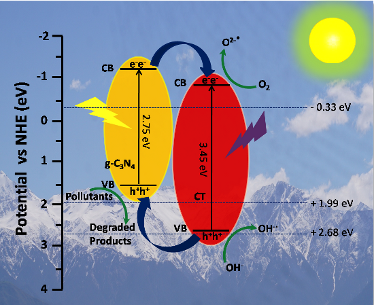
- quantify the amount of dye degraded. The time-dependent absorption spectra of RhB solutions degraded by the CTCN heterojunction photocatalyst under different light sources are depicted in Figure 9a–c and those for bare g-C3N4 and CT, including the control experiments performed without catalyst, are
- heterojunction. Photoluminescence spectra of g-C3N4, CT and CTCN heterojunction. Nitrogen adsorption–desorption curves for (a) g-C3N4 (b) CT and (c) CTCN heterojunction; BET surface area plots for (d) g-C3N4 (e) CT and (f) CTCN heterojunction. Time-dependent absorption spectra of RhB degradation with the CTCN
- , f) the modified Freundlich model for RhB degradation with different photocatalysts under (a, d) UV light, (b, e) visible light and (c, f) sunlight irradiation. Time-dependent absorption spectra of BPA degradation under sunlight irradiation (a) pure BPA (without catalyst) and (b) using CTCN


Facile phase transfer of gold nanorods and nanospheres stabilized with block copolymers
Beilstein J. Nanotechnol. 2018, 9, 616–627, doi:10.3762/bjnano.9.58
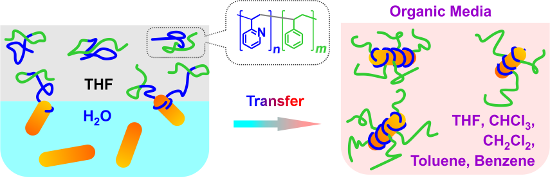
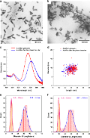
- would be close to the experimental absorption spectrum, as one can see from Figure 2c. In any case, we can conclude that Au nanorods in benzene are not coated with a continuous layer of CTAB. Nanorod behavior in organic solvents The absorption spectra taken (in tetrahydrofuran) during the phase transfer
- Experimental). As a result, decanethiol- and polymer-coated nanoparticle sols are characterized by qualitatively similar absorption spectra in toluene (Figure 7), whereas polymer-coated nanoparticles reveal considerably higher thermostability. Indeed, Figure 8 demonstrates that at 150 °C, decanethiol
- (JEOL, Japan). Optical analysis Absorption spectra of nanoparticle sols in the visible light range were recorded on an optical absorbance USB 2000 spectrometer (Ocean Optics, USA) equipped with a LS-1 halogen light source and a cuvette holder. The spectral data were processed using a SpectraSuite


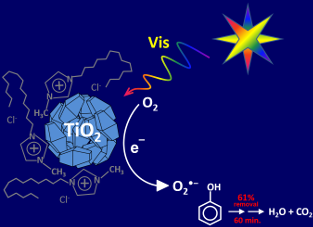
Fabrication and photoactivity of ionic liquid–TiO2 structures for efficient visible-light-induced photocatalytic decomposition of organic pollutants in aqueous phase
Beilstein J. Nanotechnol. 2018, 9, 580–590, doi:10.3762/bjnano.9.54
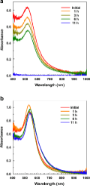
- * transition of the imidazolium ring. On the other hand, the long tail of the absorption spectra could be due to (i) the energy structure of the cation as well as the spatial arrangement of the anion and (ii) the presence of an impurity resulting from the IL synthesis [42][43][44]. Considering the above