


Search results
Search for "attachment" in Full Text gives 339 result(s) in Beilstein Journal of Nanotechnology. Showing first 200.
Molecular attachment to a microscope tip: inelastic tunneling, Kondo screening, and thermopower
Beilstein J. Nanotechnol. 2019, 10, 1243–1250, doi:10.3762/bjnano.10.124
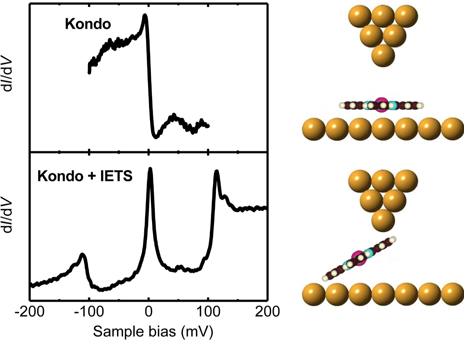
- microsope (STM) and a surface are investigated by combining the local manipulation capabilities of the STM with inelastic electron tunneling spectroscopy. By attachment of the molecule to the probe tip, the intrinsic physical properties similar to those exhibited by a free standing molecule become
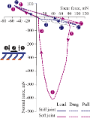
- the tip above the center of the molecule only leads to a rotation of the molecule around its center whereas the molecule stays on the surface. No current trace was recorded as a function of the tip height, but the tip retraction after molecule attachment is estimated to be about 2 Å. At this stage
- . After attachment of a single MnPc molecule to the tip apex, an STM image of the Au(111) is first taken with this tip (Figure 2d). This image shows a characteristic signature of the presence of MnPc in the STM gap, namely a fuzzy vertical stripe, about 1.5 nm wide, on the left-hand side of the STM image


Photoactive nanoarchitectures based on clays incorporating TiO2 and ZnO nanoparticles
Beilstein J. Nanotechnol. 2019, 10, 1140–1156, doi:10.3762/bjnano.10.114
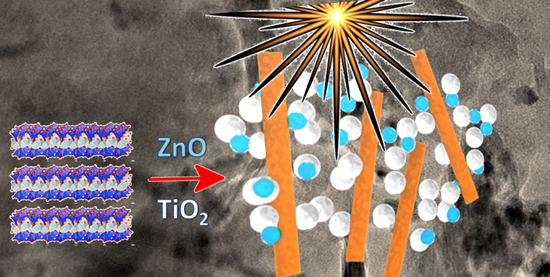
- clay surface from precursors dispersed with surfactants [116] or without [129][130], as well as the direct attachment of already formed particles to the clay [118][122]. The characteristics of the resulting materials are strongly influenced by the preparation conditions as the generated NPs show



Scavenging of reactive oxygen species by phenolic compound-modified maghemite nanoparticles
Beilstein J. Nanotechnol. 2019, 10, 1073–1088, doi:10.3762/bjnano.10.108
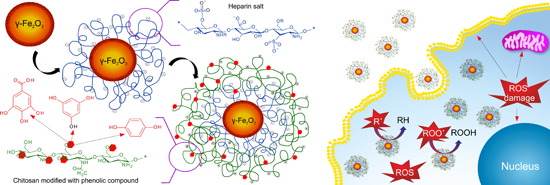
- reactive sites accessible for the attachment of phenolic compounds. In free-radical grafting, the key role is played by hydroxyl radicals (·OH) that are generated through ascorbate radicals as a result of H2O2-induced oxidation of AA (Scheme 1). As the reaction proceeds at RT and no toxic byproducts are
- phenolic compounds and allow for the attachment of the cationic polymer (chitosan). Heparin is a polysaccharide, containing glycosaminoglycan with densely repeated O-(α-L-iodopyranosyluric acid 2-sulfate)-(1→4)-2-sulfoamino-2-deoxy-D-glucose 6-sulfate sequences obtained from the mucosal tissue of animals





Serum type and concentration both affect the protein-corona composition of PLGA nanoparticles
Beilstein J. Nanotechnol. 2019, 10, 1002–1015, doi:10.3762/bjnano.10.101
- attracted to NPs composed of hydrophobic core materials [30][31] resulting in a prolonged circulation time in blood [18]. Moreover, covalent attachment of apolipoprotein A–I and apolipoprotein E to the NP surface enables drug transport across the blood–brain barrier [32]. Here, both proteins were identified



Tungsten disulfide-based nanocomposites for photothermal therapy
Beilstein J. Nanotechnol. 2019, 10, 811–822, doi:10.3762/bjnano.10.81
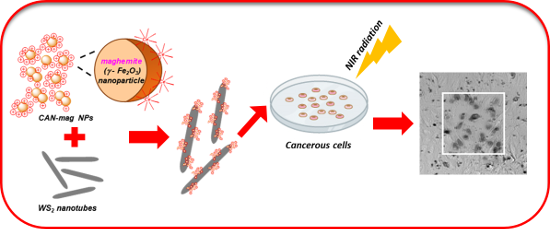
- chemical inertness of the outer chalcogen layer makes TMDC nanostructures very hard to disperse in many solvents, especially in water. This is a significant limitation when attempting to use these nanostructures for biological applications. Functionalization, especially the attachment of organic moieties
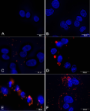
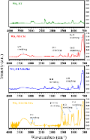
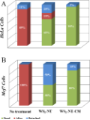
- ) nanocomposite. The composite is magnetic and forms a stable dispersion in water. It was characterized to verify the CAN-mag attachment to the nanotubes, and tested for PTT. Preliminary in-vitro PTT tests show that the WS2-CAN-mag nanocomposite successfully eliminated two types of cancerous cells: HeLa cells
- conjugation of CAN-mag nanoparticles, and later on, of the polymers. At the same time, attachment of CAN-mag to the nanotubes is clearly visible (Figure 2d–f). Rather than conformally coating the nanotubes, CAN-mag nanoparticles seem to attach to the surface of the nanotubes in small clusters, appearing dark






On the transformation of “zincone”-like into porous ZnO thin films from sub-saturated plasma enhanced atomic layer deposition
Beilstein J. Nanotechnol. 2019, 10, 746–759, doi:10.3762/bjnano.10.74
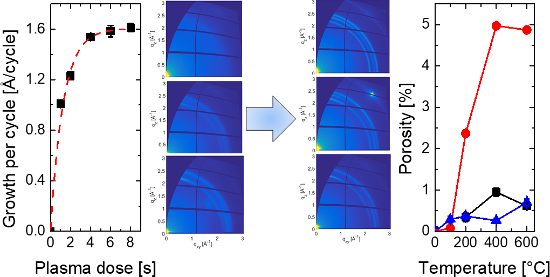
- DHS900 heating stage attachment (Anton-Paar, Austria), using a heating rate of 30 °C/min up to 600 °C. During the ramp, samples were kept at 200, 300, 400 and 600 °C for 30 min each. The integration time was set to 3 min per measurement [52]. All data were recorded using the same setup and are


Commercial polycarbonate track-etched membranes as substrates for low-cost optical sensors
Beilstein J. Nanotechnol. 2019, 10, 677–683, doi:10.3762/bjnano.10.67
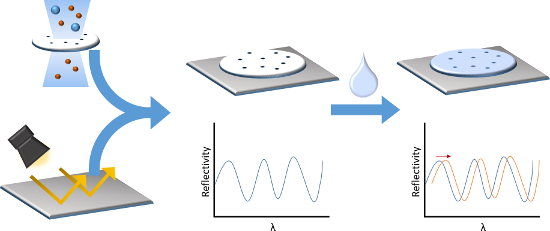
- 9.88 (see Figure 2c). Finally, we studied the effect of the APTES-mediated covalent attachment of the PCTE membrane to the silicon substrate on the reflectivity spectrum. What we could conclude is that the APTES attachment preserves and even improves the reflectivity spectra of the PCTE membranes in
- it was demonstrated that the spectral response of the PCTE membranes is as expected (i.e., that for a FP interferometer) and that the covalent attachment to a silicon substrate improves the reflectivity spectrum and offers a mechanical support, our aim was to demonstrate their suitability for use in


Biological and biomimetic surfaces: adhesion, friction and wetting phenomena
Beilstein J. Nanotechnol. 2019, 10, 481–482, doi:10.3762/bjnano.10.48

- are devoted to surface-related effects in animal and plant surfaces, such as sandfish scales, wings of a ladybird beetle, tarsi of burying beetles, attachment devices of a sea star and a sea urchin, elytra of a backswimmer, leaves of an ice plant, and the wax layer of sacred lotus leaves. Seven of the
Biocompatible organic–inorganic hybrid materials based on nucleobases and titanium developed by molecular layer deposition
Beilstein J. Nanotechnol. 2019, 10, 399–411, doi:10.3762/bjnano.10.39
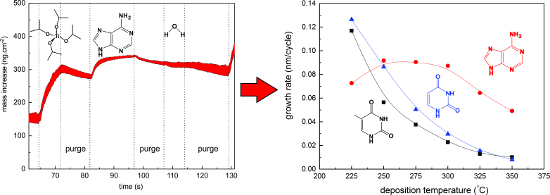
- of the same samples was measured after each period of water treatment. The three hour and four day time periods are the durations in which cells were cultured on these substrates for cell attachment and cell proliferation assays, respectively, in our previous study [23]. Unlike for the Ti-amino acids




Sub-wavelength waveguide properties of 1D and surface-functionalized SnO2 nanostructures of various morphologies
Beilstein J. Nanotechnol. 2019, 10, 379–388, doi:10.3762/bjnano.10.37
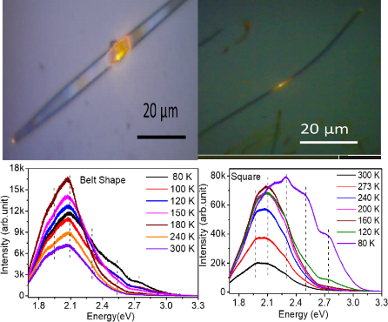
- the tapered tip of an optical fiber as a probe for endoscopy, which additionally showed no toxicity. In this context, the development of tapered NWs is considered to be an important step, eliminating the difficult attachment exercise and reducing the fear of device decoupling and subsequent loss of


Targeting strategies for improving the efficacy of nanomedicine in oncology
Beilstein J. Nanotechnol. 2019, 10, 168–181, doi:10.3762/bjnano.10.16
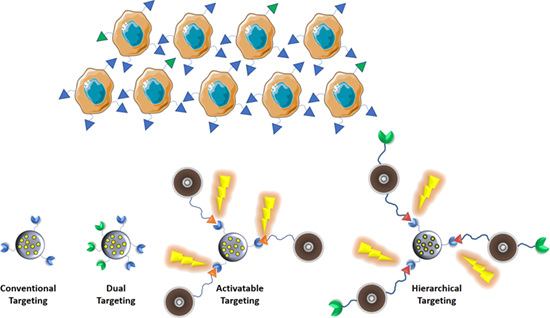
- antibody attachment with a high precision level [29]. Another interesting strategy is the attachment of protein A on the nanoparticle surface prior to the incorporation of the antibody [30]. Protein A is a membrane protein produced by Staphylococcus aureus in order to complex the immunoglobulins by the


A comparison of tarsal morphology and traction force in the two burying beetles Nicrophorus nepalensis and Nicrophorus vespilloides (Coleoptera, Silphidae)
Beilstein J. Nanotechnol. 2019, 10, 47–61, doi:10.3762/bjnano.10.5
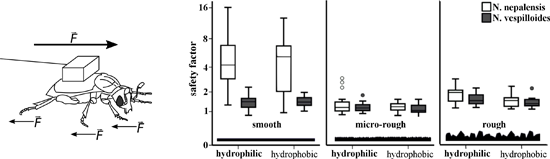
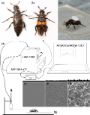
- , Hauptstr.1, 79104 Freiburg, Germany 10.3762/bjnano.10.5 Abstract Our aim was to compare friction and traction forces between two burying beetle species of the genus Nicrophorus exhibiting different attachment abilities during climbing. Specifically, the interaction of adhesive hairs and claws during
- attachment with respect to various surface properties was investigated by using a 2 × 3 experimental design. Traction force was measured for two different surface energies (hydrophilic vs hydrophobic) varying in roughness from smooth to micro-rough to rough. Nanotribometric tests on single legs were also
- performed. The external morphology of the attachment devices investigated by scanning electron microscopy suggested higher intra-specific (intersexual) than inter-specific differences. Whereas differences between the two species in traction force were high on smooth surfaces, no differences could be



Zn/F-doped tin oxide nanoparticles synthesized by laser pyrolysis: structural and optical properties
Beilstein J. Nanotechnol. 2019, 10, 9–21, doi:10.3762/bjnano.10.2
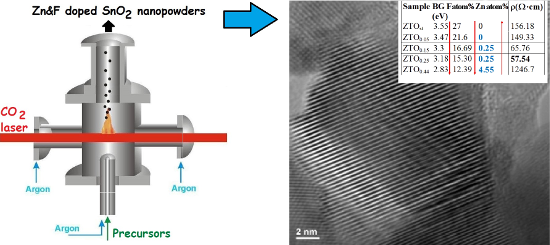
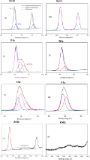
- (Figure 4b) a direct dependence of the mode frequency with XPS Zn content detected on the nanoparticle surface. This shifting correlated with the B2g Raman mode area increase indicates nanoparticle surface disorder induced by F attachment. S1 and S2 bands appear as a disorder activation consequence [25



Contact splitting in dry adhesion and friction: reducing the influence of roughness
Beilstein J. Nanotechnol. 2019, 10, 1–8, doi:10.3762/bjnano.10.1
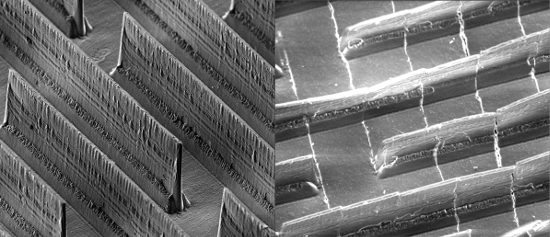
- , stronger adhesion, and a more uniform stress distribution with higher tolerance to defects. However, while it is widely believed that contact splitting helps to mitigate the negative effects of roughness on adhesion- and friction-based attachment, no decisive experimental validation of this hypothesis has
- attachment of the wall-shaped microstructure degrades, regardless of the surface waviness, when the surface roughness increases. Second, splitting the wall-shaped microstructure indeed helps to mitigate the negative effect of the increasing surface unevenness by allowing the split microstructure to adapt
- adhesion; surfaces; tribology; Introduction Biological attachment systems based on thin-film adhesion have drawn significant interest during the last two decades because of their ability to operate on nearly any surface, their efficient control of detachment and their high resistance to contamination [1


Characterization and influence of hydroxyapatite nanopowders on living cells
Beilstein J. Nanotechnol. 2018, 9, 3079–3094, doi:10.3762/bjnano.9.286
- induction of stress inside the cell and the activation of the tumour-suppressor gene p53 [73][74], which promotes the downstream gene expression finally leading to an apoptosis. Gene p53 is also activated by phosphorylation, that is, the attachment of the phosphate group (PO43−) to the protein chain [75][76

![[Graphic 1]](/bjnano/content/inline/2190-4286-9-286-i2.svg?max-width=637&scale=1.18182) .
.



Colloidal chemistry with patchy silica nanoparticles
Beilstein J. Nanotechnol. 2018, 9, 2989–2998, doi:10.3762/bjnano.9.278
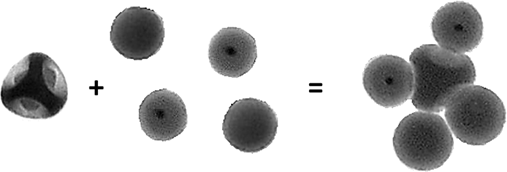
- atoms (CAs), respectively. We take benefit of the site-specific amination of PS residues remaining at the bottom of the dimples to form a variety of CMs through their covalent attachment with complementary spheres bearing activated carboxylic acid groups. By varying the relative amounts of both types of
- without modifying the valence of the dimpled particles. By doing so, we were sure to attach only one satellite per dimple, whatever its nature. Using much smaller satellites could induce the attachment of more than one satellite per dimple. In contrast, the dimples of the patchy particles must be big
- fluoride (BeF2) were obtained from sp-like CAs in a 2/1/1 and in a 2/0/2 ratio, with a yield of 49% and 54%, respectively (Figure 4e,f). Conclusion In conclusion, colloidal molecules, which mimic the symmetry of molecular structures, have been synthesized through the covalent attachment of spherical


The effect of flexible joint-like elements on the adhesive performance of nature-inspired bent mushroom-like fibers
Beilstein J. Nanotechnol. 2018, 9, 2893–2905, doi:10.3762/bjnano.9.268
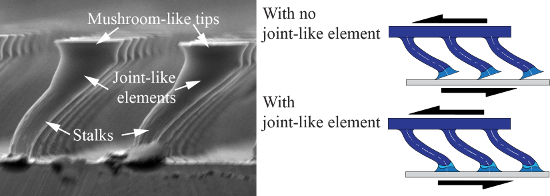
- compliance. In composite fibers, tip articulation could be critical for performance. In some biological attachment systems, such as the male ladybird beetle (Coccinella septempunctata), a joint of soft material between the setal stalk and the tip of an individual fiber has been discovered [31]. This feature
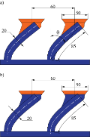
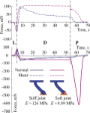
- tips. Scale bars: 100 µm. Elastic modulus (MPa) for the tip, joint and stalk for each of the studied samples. Acknowledgements The authors would like to thank Dr. Lars Heepe for his insightful discussions about the biological attachment system of male ladybird beetle, information that inspired the






Biomimetic surface structures in steel fabricated with femtosecond laser pulses: influence of laser rescanning on morphology and wettability
Beilstein J. Nanotechnol. 2018, 9, 2802–2812, doi:10.3762/bjnano.9.262
- from an initial superhydrophilic state to a (super-) hydrophobic state within approximately 10 days, due to the progressive attachment of carbon and its compounds to the surface [46]. After this time, the surface has stabilized chemically and also in terms of its wetting behavior. As explained in the



Near-infrared light harvesting of upconverting NaYF4:Yb3+/Er3+-based amorphous silicon solar cells investigated by an optical filter
Beilstein J. Nanotechnol. 2018, 9, 2788–2793, doi:10.3762/bjnano.9.260
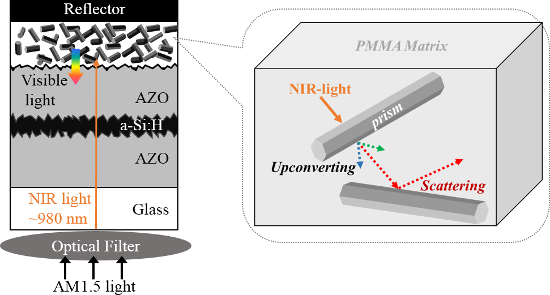
- measurements was 60 mW. Optical spectra were recorded using a UV–vis–NIR spectrophotometer (Lambda 750S, PerkinElmer) with an integrating sphere (60 mm) attachment. Current–voltage curves were measured by using a solar simulator under standard test conditions (AM1.5, 100 mW/cm2 and 25 °C). EQE curves were


Cytotoxicity of doxorubicin-conjugated poly[N-(2-hydroxypropyl)methacrylamide]-modified γ-Fe2O3 nanoparticles towards human tumor cells
Beilstein J. Nanotechnol. 2018, 9, 2533–2545, doi:10.3762/bjnano.9.236
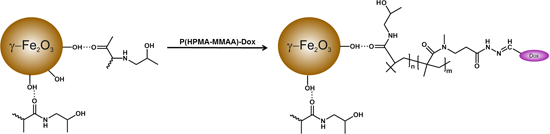
- chemical attachment of target biomolecules, reduces cytotoxicity, and controls particle uptake by the cells [10]. Coatings can be either of low molecular weight, such are carbohydrates and organic acids (ethylenediaminetetraacetic acid, tartaric acid, citric acid, succinic acid, bisphosphonic acid), or of


Enhanced antineoplastic/therapeutic efficacy using 5-fluorouracil-loaded calcium phosphate nanoparticles
Beilstein J. Nanotechnol. 2018, 9, 2499–2515, doi:10.3762/bjnano.9.233
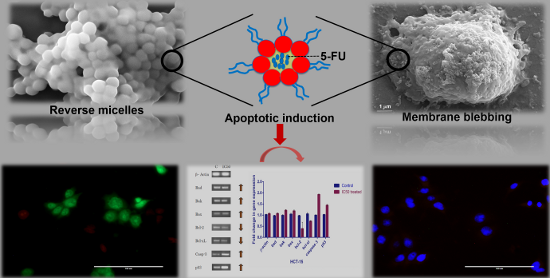
- -myosin cytoskeleton to the plasma membrane, eventually leads to cell contraction and bleb formation on the cell membrane [43]. In our study, a well-structured cytoskeleton was visualised in an untreated control of both A549 and HCT-15 (Figure 6) cells, showing healthy cells. The active attachment on the
- characteristic of apoptosis was determined upon CaP@5-FU NP treatment on both cancer cell lines (A549 and HCT-15) using FE-SEM. Both A549 and HCT-15 cells were seeded over an autoclaved glass coverslip in a 35 mm dish at a density of 3 × 10⁵. The seeded cells were grown overnight for proper attachment. This was


Thickness-dependent photoelectrochemical properties of a semitransparent Co3O4 photocathode
Beilstein J. Nanotechnol. 2018, 9, 2432–2442, doi:10.3762/bjnano.9.228
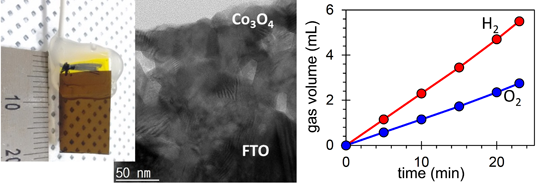
- focused ion beam system (FIB, FEI, Quanta 3D FEG). The elemental compositions in the cross sections of the Co3O4 layers in the working electrode were determined as line profiles by an energy dispersive spectroscopy (EDS) attachment to the FETEM. Thickness and average surface roughness of the deposited



Dumbbell gold nanoparticle dimer antennas with advanced optical properties
Beilstein J. Nanotechnol. 2018, 9, 2188–2197, doi:10.3762/bjnano.9.205
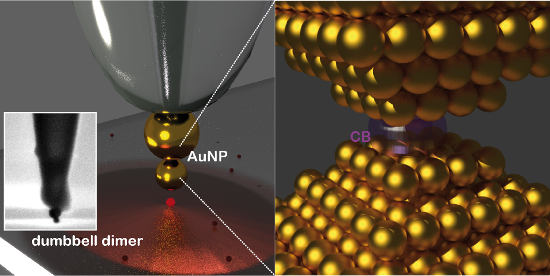
- -nanometer precision in space. Briefly, the fabrication of tip-supported nanoparticle antennas includes at first the attachment of a single spherical AuNP to the pointed end of a glass tip. For this, the glass surface is functionalized with 3-aminopropoyl-trimethoxy silane (APTMS) by means of vapor
- deposition. Controlled interaction of the glass tip with loosely adhered Au nanoparticles on a glass surface leads to an attachment of the AuNP at the pointed end. This tip-supported AuNP is sequentially functionalized with the corresponding linker molecule, i.e., by dipping the tip-supported AuNP into an
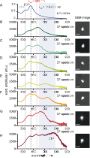
- investigated dimers. Both, the size and the shape of the dimer-forming AuNPs appear relatively homogeneous from the additionally displayed SEM images (Figure 4). Furthermore, strong size variations can be also excluded for the tip-supported dimers based on the height information collected during the attachment




The structural and chemical basis of temporary adhesion in the sea star Asterina gibbosa
Beilstein J. Nanotechnol. 2018, 9, 2071–2086, doi:10.3762/bjnano.9.196
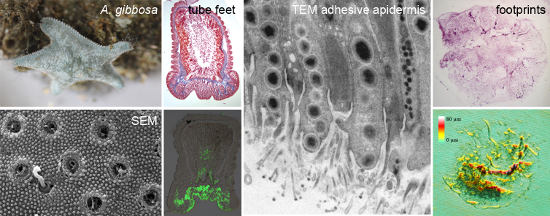
- ][15][16][17][18]. The measured tenacity ranged from 0.2 MPa in the sea star Asterias rubens [15], up to 0.54 MPa in the sea urchin Colobocentrotus atratus [19], indicating a strong attachment to the substrate. Moreover, when well-attached sea stars and sea urchins are forcefully pulled from the
- reversible attachment achieved through the hundreds of tube feet arranged in double rows on the oral surface of each arm (Figure 1B). Morphology and ultrastructure of the tube feet External morphology. The folded stem and the flattened adhesive disc were clearly distinguishable in SEM images (Figure 1C). For
- depths (Figure 3A). In the basal area of the disc, the connective tissue (CT) formed branched septa, enclosing bundles of secretory gland cells (Figure 3B). The connective tissue consisted mainly of collagen fibres, which are bearing the force during attachment (Figure 3C). The collagen fibres were


Nanoconjugates of a calixresorcinarene derivative with methoxy poly(ethylene glycol) fragments for drug encapsulation
Beilstein J. Nanotechnol. 2018, 9, 2057–2070, doi:10.3762/bjnano.9.195
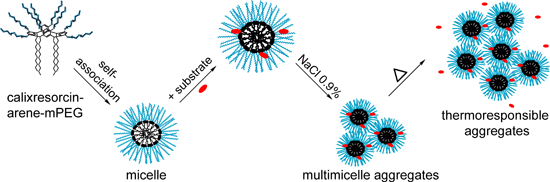
- a strong broadening of signals of aromatic groups is observed in 13С NMR spectra (Figure S1, Supporting Information File 1). Thus, the attachment of polymeric groups to the calixresorcinarene platform leads to a significant slowdown of the rate of the conformational boat–cone–boat interconversion in





