


Search results
Search for "bilayer" in Full Text gives 190 result(s) in Beilstein Journal of Nanotechnology.
Evaluating the toxicity of TiO2-based nanoparticles to Chinese hamster ovary cells and Escherichia coli: a complementary experimental and computational approach
Beilstein J. Nanotechnol. 2017, 8, 2171–2180, doi:10.3762/bjnano.8.216
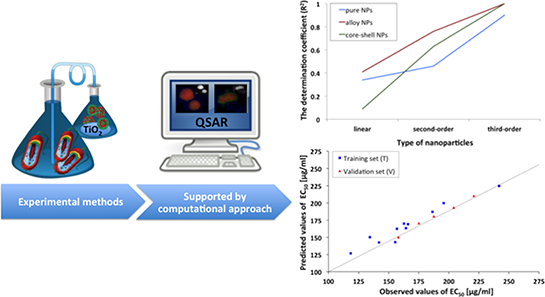
- (Fe/N-co-doped) TiO2 nanocomposite particles were detectably cytotoxic [22]. More complex nanostructures of TiO2 bilayer nanosheets doped with bismuth tungstate (Bi2WO6) nanoclusters demonstrated enhanced antimicrobial activity towards E. coli: the bacteria population continuously decreased with the


Ta2N3 nanocrystals grown in Al2O3 thin layers
Beilstein J. Nanotechnol. 2017, 8, 2162–2170, doi:10.3762/bjnano.8.215
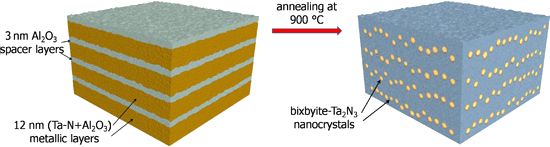
- of Ta within this sample, we examine the in-depth XPS spectra for different Ar+ sputtering times. The results are shown in Figure 6, displaying the change of the fraction of Ta–N and Ta–O bonds with depth over one bilayer. Again, the periodic variation of the Ta–N concentration is consistent with the


Intercalation of Si between MoS2 layers
Beilstein J. Nanotechnol. 2017, 8, 1952–1960, doi:10.3762/bjnano.8.196
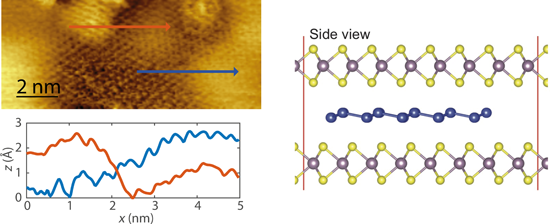
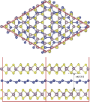
- structure of the MoS2–silicene–MoS2 hetero-trilayer. The calculated interlayer distance in a pristine MoS2 bilayer is found to be 3.00 Å. Insertion of a silicene monolayer enlarges the interlayer separation between MoS2 layers from 3 Å to 6.52 Å, corresponding to an increase of the interlayer separation of
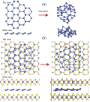
- 3.52 Å. In order to study the possible formation of silicene between the MoS2 monolayers, we consider a buckled 2D silicon cluster (Si37) consisting of six-membered silicon rings. We used a 7 × 7 super-cell structure for the MoS2 bilayer. Initial and equilibrium geometries for both a free-standing as
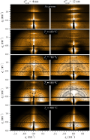
- resultant fitted spectra. Top and side views of silicene intercalated in bilayer MoS2. Initial (left) and equilibrium (right) structure of (a) a free standing and (b) an intercalated silicon cluster (Si37). Supporting Information Supporting Information File 92: Additional experimental data


Coexistence of strongly buckled germanene phases on Al(111)
Beilstein J. Nanotechnol. 2017, 8, 1946–1951, doi:10.3762/bjnano.8.195
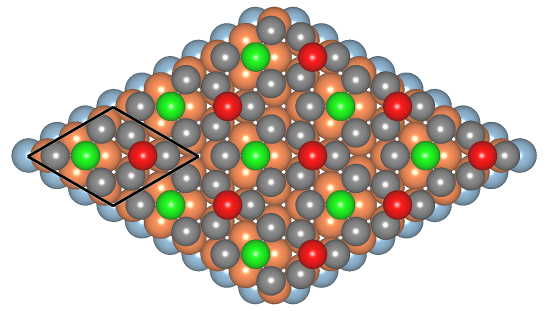
- bilayer germanene on Cu(111) at room temperature. Scanning tunneling spectroscopy showed a “V” shaped density of states, which was also observed by Zhang et al. [12], who synthesized germanene on MoS2 at room temperature. Al(111) was chosen as a substrate to deposit germanene by Derivaz et al. [13] with


Adsorption and diffusion characteristics of lithium on hydrogenated α- and β-silicene
Beilstein J. Nanotechnol. 2017, 8, 1742–1748, doi:10.3762/bjnano.8.175
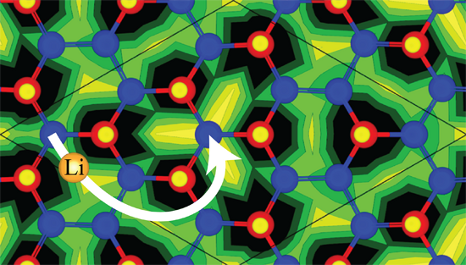
- -hydrogenated silicene exhibits ferromagnetic semiconducting behavior with a band gap of 0.95 eV [27]. Hydrogenation leads indirect-to-direct gap transitions in bilayer silicene [28]. In the experimental study of Qiu et al., the ordered and reversible hydrogenation of silicene was performed [29]. Moreover


Parylene C as a versatile dielectric material for organic field-effect transistors
Beilstein J. Nanotechnol. 2017, 8, 1532–1545, doi:10.3762/bjnano.8.155
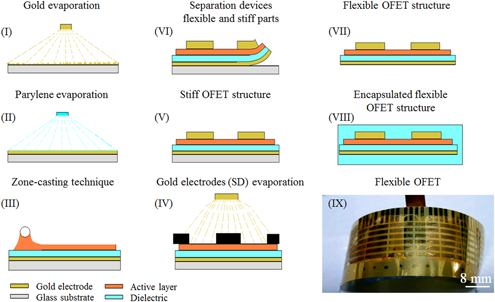
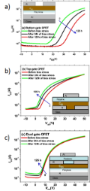
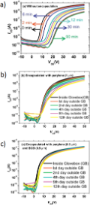
- degradation of IDS, measured in the OFET encapsulated with Parylene C (1 μm) may be attributed to the slow penetration of water vapor and oxygen through the encapsulation layer. The decrease in the permeability of water vapor and oxygen through the bilayer encapsulation film has been attributed to the sealing
- of grain boundaries by the smoothness of the BCB layer. However, it only works when Parylene C/BCB bilayer system is used. By applying a bilayer encapsulation system, the defects in the Parylene C film underneath are blocked by the BCB layer. The permeation path for water vapor and oxygen becomes




Adsorption and electronic properties of pentacene on thin dielectric decoupling layers
Beilstein J. Nanotechnol. 2017, 8, 1388–1395, doi:10.3762/bjnano.8.140
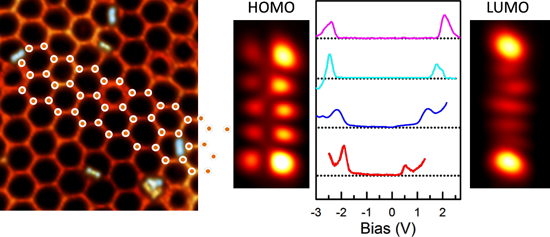
- case of Au(111) and Cu(111), KCl grows as a bilayer, whereas on Cu(110), a monolayer growth was observed. The right graph indicates the deviation of the HOMO–LUMO gap of pentacene on the respective surfaces (Egap) from its unperturbed gas-phase gap (Egap,0). Experimentally determined energies for Ea


Vapor-phase-synthesized fluoroacrylate polymer thin films: thermal stability and structural properties
Beilstein J. Nanotechnol. 2017, 8, 933–942, doi:10.3762/bjnano.8.95
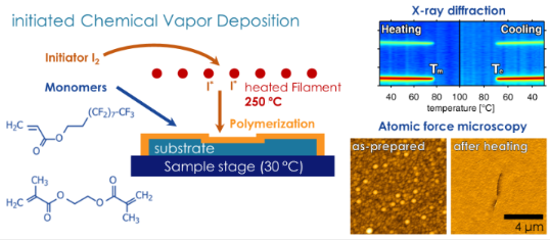
- packing of the fluorinated pendant chains into a bilayer structure of distance d = 3.18 ± 0.02 nm (corresponding to a scattering vector qz = 1.98 nm−1) [4]. Thus, the Bragg peak in Figure 5a is identified as the 002 reflection of this lamellar packing (data depicting the 001 reflection is provided in
- -prepared sample. Upon recrystallization under cooling, the Bragg peaks are slightly shifted towards higher q-values (see Figure 5a,b); the bilayer distance is reduced with respect to the as-prepared state and minor relaxation has occurred in the p-PFDA unit cell. While this difference diminishes in
- ; atomic force micrographs depicting larger scales; X-ray reflectivity scan evidencing the bilayer structure of p-PFDA. Acknowledgements The work was funded by the Austrian Science Fund (FWF) [Grant P26993]. The authors gratefully acknowledge Roland Resel for interesting and helpful scientific discussions


Synthesis of graphene–transition metal oxide hybrid nanoparticles and their application in various fields
Beilstein J. Nanotechnol. 2017, 8, 688–714, doi:10.3762/bjnano.8.74
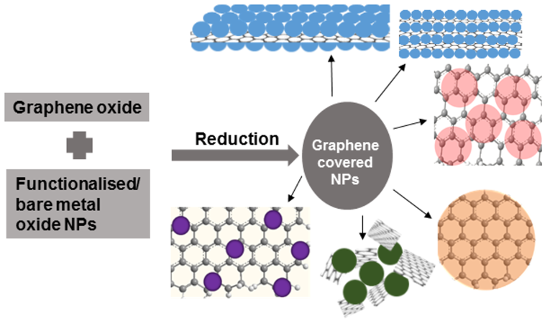
- electrical characteristics of CuO–graphene bilayer structure has been modified largely due to the electronic interaction at the hybrid interface. The O2 intake capacity of the multilayer graphene results in reversible bipolar resistive switching properties [217]. Zhou et al. prepared graphene-wrapped CuO






Comparison of four methods for the biofunctionalization of gold nanorods by the introduction of sulfhydryl groups to antibodies
Beilstein J. Nanotechnol. 2017, 8, 372–380, doi:10.3762/bjnano.8.39
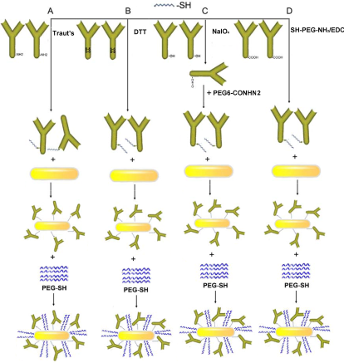
- solution and the CTAB bilayer density [15]. The common ligand exchange is the replacement of the CTAB of GNR with thiol-terminated ligands, such as thiolated poly(ethylene glycol) and mercaptoundecanoic acid [10][11]. These agents can link the amino groups of biomolecules with the carboxylic group from
- cationic surfactant bilayer [17][24], because of the replacement of CTAB by thiolated anti-IgG [17][25]. Anti-IgG were detected in thiolation and nanoconjugates with GNRs, but not in free GNRs, by gel electrophoresis followed by Coomassie brilliant blue staining (Figure S1, Supporting Information File 1


Impact of contact resistance on the electrical properties of MoS2 transistors at practical operating temperatures
Beilstein J. Nanotechnol. 2017, 8, 254–263, doi:10.3762/bjnano.8.28
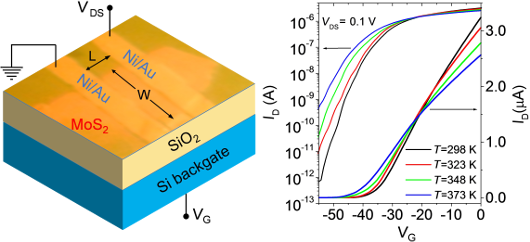
- to transfer the exfoliated MoS2 flakes onto the SiO2 surface that was previously cleaned using solvents and a soft O2 plasma treatment. Finally, source and drain contacts were obtained by deposition and lift-off of a Ni(50 nm)/Au(100 nm) bilayer. The temperature-dependent electrical characterization


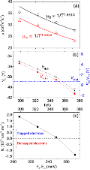


Tunable plasmons in regular planar arrays of graphene nanoribbons with armchair and zigzag-shaped edges
Beilstein J. Nanotechnol. 2017, 8, 172–182, doi:10.3762/bjnano.8.18
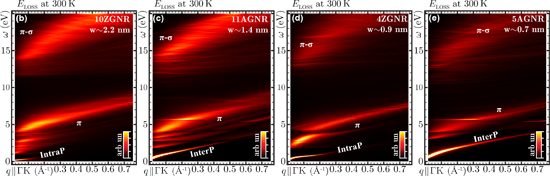
- above about 2 eV. These excitations, shown in Figure 2b–e, are analogous to the well-known π and π–σ plasmons of graphene [51][52], as displayed in Figure 2a. Similar features occur in bilayer graphene [51], multilayer graphene [52], graphene–metal interfaces [53][54][55][56][57][58][59] and graphite


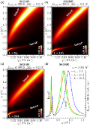
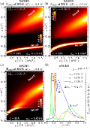
![[Graphic 8]](/bjnano/content/inline/2190-4286-8-18-i16.png?max-width=637&scale=1.18182) , Equation 6) and EL function (ELOSS, Equation 8) at room temperature for the GNR arrays of Figure 1 ...
, Equation 6) and EL function (ELOSS, Equation 8) at room temperature for the GNR arrays of Figure 1 ...

Nitrogen-doped twisted graphene grown on copper by atmospheric pressure CVD from a decane precursor
Beilstein J. Nanotechnol. 2017, 8, 145–158, doi:10.3762/bjnano.8.15
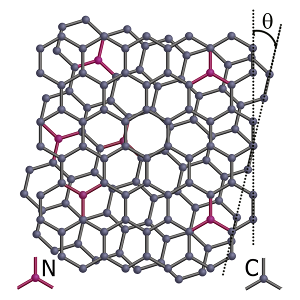
- are formed due to the overlap of the Dirac cones in the k-space. The controlled injection of defects, which cause strain, is an extra degree of freedom in addition to the number of layers. This may account for the unique properties of TG. In particular, it was shown that the strained TG bilayer could


Surface-enhanced Raman scattering of self-assembled thiol monolayers and supported lipid membranes on thin anodic porous alumina
Beilstein J. Nanotechnol. 2017, 8, 74–81, doi:10.3762/bjnano.8.8
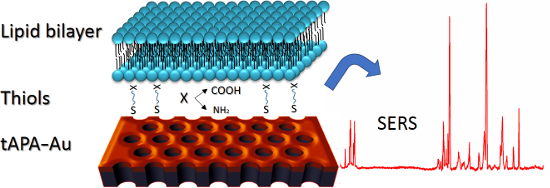
- ), and then with phospholipid vesicles of different composition to form a supported lipid bilayer (SLB). At each step, the SERS substrate functionality was assessed, demonstrating acceptable enhancement (≥100×). The chemisorption of thiols during the first step and the formation of SLB from the vesicles
- the physisorption of coating layers of functional materials [20][21]. The main component of the biological membrane that separates and protects the interior of all living cells from the outside environment is a phospholipid bilayer. For this reason, as well as for the complexity of real samples of
- resemble the plasma membrane composition both for charge and acyl chain length and unsaturation grade. However, the reason for the choice of DOTAP is technical, associated with the fabrication of artificial bilayer membranes [29][30]. The lipids are larger molecules than the thiols and present richer



Annealing-induced recovery of indents in thin Au(Fe) bilayer films
Beilstein J. Nanotechnol. 2016, 7, 2088–2099, doi:10.3762/bjnano.7.199
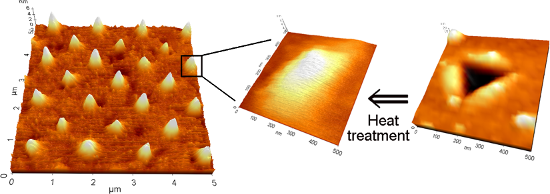
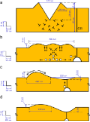
- strain in thin films. Here, we present the results of a study investigating the recovery of indentation-induced defects in Au(Fe) bilayer films. The motivation for our work is two-fold: (i) to explore the concept of thermo-mechanical treatment of thin films by combining localized plastic strain
- by Iijima and Yamazaki [17]. At the temperature of 700 °C employed in the present study, the full intermixing of a 50 nm thick bilayer takes less than 1 s, and, therefore, in what follows we will refer to the Au(Fe) bilayers as a single-phase face-centered cubic dilute solid solution of Fe in Au, or





Intercalation and structural aspects of macroRAFT agents into MgAl layered double hydroxides
Beilstein J. Nanotechnol. 2016, 7, 2000–2012, doi:10.3762/bjnano.7.191
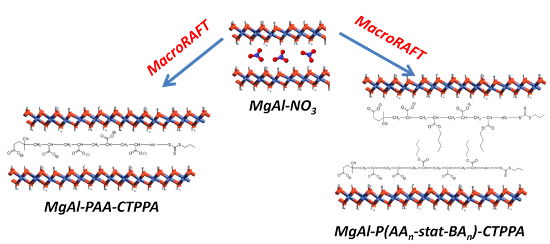
- compared to pristine MgAl-NO3 LDH from 1.36 nm to 2.33 nm. Depending on the nature of the units involved into the macroRAFT copolymer (only AA or AA and BA), the intercalation led to monolayer or bilayer arrangements within the interlayer space. The macroRAFT intercalation and the molecular structure of
- with a bilayer arrangement of the copolymers. The two most intense peaks are due to the hydroxide layers containing Mg/Al cations. The carboxylate groups from the AA units and the end group of CTPPA would cause maxima at the outer parts of the interlayer space at a distance of ≈0.39 nm from the center
- monolayer in the interlamellar domain whereas the presence of BA units into the chain induced a bilayer arrangement whatever the chain length. Contrarily to what may be expected, based on NMR experiments, the negatively-charged AA units did not appear to interact sizeably more strongly with the LDH host


Electric field induced structural colour tuning of a silver/titanium dioxide nanoparticle one-dimensional photonic crystal
Beilstein J. Nanotechnol. 2016, 7, 1404–1410, doi:10.3762/bjnano.7.131
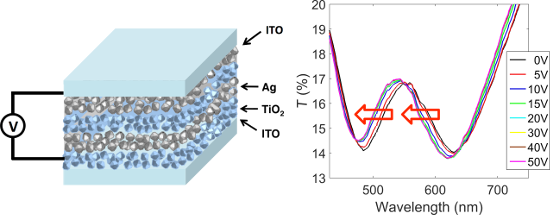
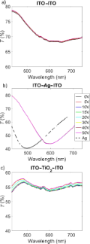
- force microscopy (AFM) images of a Ag layer, a TiO2 layer and the top surface of a five bilayer Ag/TiO2 photonic crystal, all deposited on glass/ITO substrates, are presented in the Supporting Information File 1 (Figure S1) and show that the silver nanoparticle layer has the highest surface roughness
- among the different samples. This is due to the large size of the silver nanoparticles and the formation of large aggregates. Notably, the lowest surface roughness was found for the top TiO2 surface layer of the five bilayer photonic crystal (Figure S1c of Supporting Information File 1). The formation
- nm. This value is lower than the sum of five single Ag and TiO2 layers deposited directly on the substrate (60 nm and 120 nm, respectively), confirming the conclusions of the AFM analysis. Nevertheless, we consider that this intermixing is confined to the interface region and that a bilayer structure




On the pathway of cellular uptake: new insight into the interaction between the cell membrane and very small nanoparticles
Beilstein J. Nanotechnol. 2016, 7, 1296–1311, doi:10.3762/bjnano.7.121
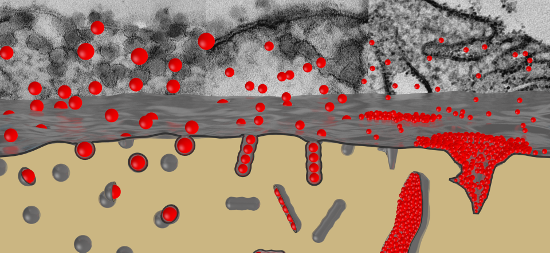
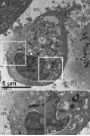
- is approximately 4 nm (Figure 5A,D). This roughly is the thickness of two lipid tails in a phospholipid membrane. The distinct contrast in the STEM micrograph is attributed to the existence of C–C double bonds in the bilayer structure, which are stained by OsO4. Furthermore, micrographs show
- assume that this large area coverage hinders the final vesicle pinch-off from the cell membrane. The additional silica layer on the cell membrane prevents the intimate membrane–membrane contact necessary for the coalescence of the membrane lipid bilayer at the point of pinch-off. Furthermore, the
- higher compared to the cell membrane. Nonetheless, it is remarkable that quite a little difference in NP size results in completely different uptake morphologies. From molecular dynamics simulations of two curvature imprinting particles on a lipid bilayer membrane we learn, that the membrane mediates




Thickness dependence of the triplet spin-valve effect in superconductor–ferromagnet–ferromagnet heterostructures
Beilstein J. Nanotechnol. 2016, 7, 957–969, doi:10.3762/bjnano.7.88
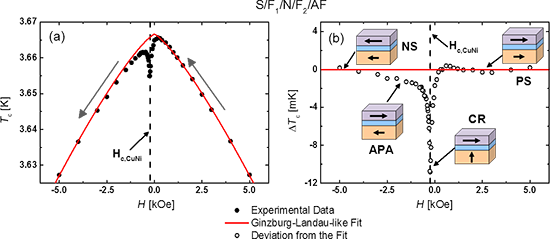
- (PWF), which decays exponentially and oscillates as a function of space [5][6][7]. As a consequence, interference effects occur, if the PWF is reflected at the outer border of the F-layer of a S/F bilayer, yielding an oscillating superconducting transition temperature as a function of the F-layer
- discussion of the decay length see also [52]). However, only the singlet component enters the self-consistency equation for the superconducting gap and is, thus, the only component directly affecting Tc [14][15]. For uniform magnetization of the F-layer in a S/F bilayer and collinear magnetizations in F/S/F
- solubility of Nb in Cu is extremely small under ambient conditions, the Nb–Ni phase diagram shows a certain solubility of Nb in Ni and vice versa [69]. In this case the bilayer with the thinnest Cu41Ni59 layer would show the largest reduction of mat. However, the opposite is observed. There may be several





Reconstitution of the membrane protein OmpF into biomimetic block copolymer–phospholipid hybrid membranes
Beilstein J. Nanotechnol. 2016, 7, 881–892, doi:10.3762/bjnano.7.80
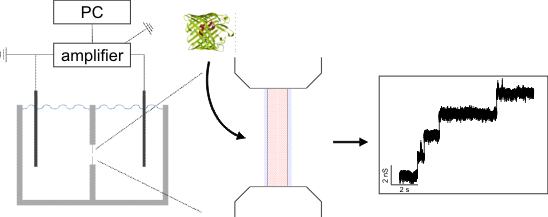
- more and more interest, as the properties of such assemblies can be steadily varied between the characteristics of a lipid bilayer and that of synthetic polymer membranes. By simply mixing lipids and amphiphilic polymers, a plethora of possible chemical and mechanical characteristics of polymeric
- a circular aperture with a diameter of 400 µm in the partitioning wall of a custom-built black lipid bilayer Teflon chamber. The volume of each compartment, separated by the partionining wall, was 5 mL [67]. PIPEO/DPhPC in chloroform (10 µL) was applied around the aperture of the chamber and allowed
- (Axon CV203 BU) connected to the bilayer chambers by a pair of custom-made Ag/AgCl electrodes. Current signals were filtered at 2 kHz and digitally sampled at 10 kHz with an Axon Digidata 1322A digitizer controlled by the Clampex 10.2 software (Molecular Devices, Sunnyvale, USA). Synthesis of PIPEO



Highly compact refractive index sensor based on stripe waveguides for lab-on-a-chip sensing applications
Beilstein J. Nanotechnol. 2016, 7, 751–757, doi:10.3762/bjnano.7.66
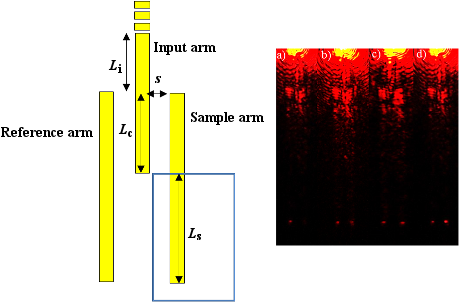
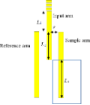
- . First, the RI sensor designs and alignment marks were patterned on a 300 nm bilayer PMMA resist (950 k A4 / 495 k A4 PMMA resist from Microchem GmbH) using electron beam lithography (JEOL-7800 FE-SEM with Raith Quantum Elphy) with a beam current of ≈75 pA and 20 kV acceleration voltage under optimal
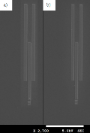
- dose of 280 μC/cm2. The patterned PMMA bilayer was then developed for 30 seconds in MIBK/IPA 1:3 solution. 30 nm Ag was evaporated on the developed sample using the PVD 75 e-beam evaporator under a slow rate of 0.1 angstrom per second. A scanning electron microscope image was obtained (Figure 3) which
- shows the successfully survived sensor designs after lift-off in acetone bath. Second, a 300 nm bilayer PMMA resist was spincoated on top of the structures to pattern the sample window on top of the sample arm. Then, the sample windows were patterned in the second EBL step. Finally, the patterned



Gold nanoparticles covalently assembled onto vesicle structures as possible biosensing platform
Beilstein J. Nanotechnol. 2016, 7, 655–663, doi:10.3762/bjnano.7.58
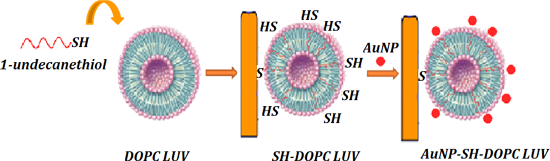
- (SH). After, the AuNPs photochemically synthesized in pure glycerol were mixed and anchored onto SH–DOPC vesicles. The data provided by voltammetry, spectrometry and microscopy techniques indicated that the AuNPs were successfully covalently anchored onto the vesicle bilayer and decorated vesicles
- hydrophobic bilayer as well as water-soluble substances. These structures are the best mimetic agents of biological membranes and represent the environment in which many proteins and enzymes show activity [1][2]. The advantages that the vesicles have over synthetic materials are: lack of toxicity
- of the AuNPs synthesis (irradiation time, HAuCl4 concentration), these AuNPs were covalently immobilized onto large unilamellar vesicles (LUVs) composed by the phospholipid DOPC (1,2-dioleoyl-sn-glycero-3-phosphocholine). For this purpose 1-undecanethiol (SH) was incorporated into the bilayer in


Cantilever bending based on humidity-actuated mesoporous silica/silicon bilayers
Beilstein J. Nanotechnol. 2016, 7, 637–644, doi:10.3762/bjnano.7.56
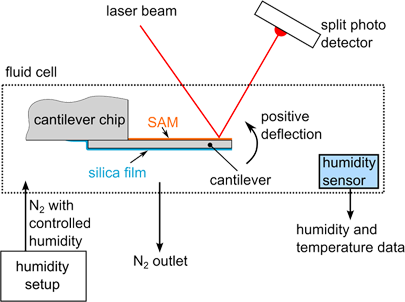
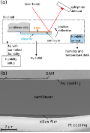
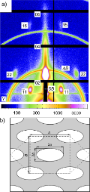
- cylindrical pores with elliptical cross-section on an ordered pore lattice. The film is deposited on silicon-based commercial atomic force microscope (AFM) cantilevers using dip coating. This bilayer cantilever is mounted in a humidity controlled AFM, and its deflection is measured as a function of relative
- layer is related to the cantilever deflection using simple bilayer bending theory. We also develop a simple quantitative model for cantilever deflection which only requires cantilever geometry and nanostructural parameters of the porous layer as input parameters. Keywords: AFM cantilever; bilayer
- is to increase the number of adsorbed molecules by increasing the total interaction area of molecules with the surface. This leads to the concept of using bilayer structures, with one of the layers having a large accessible (internal) surface area. In the natural world of plants for instance


First-principles study of the structure of water layers on flat and stepped Pb electrodes
Beilstein J. Nanotechnol. 2016, 7, 533–543, doi:10.3762/bjnano.7.47
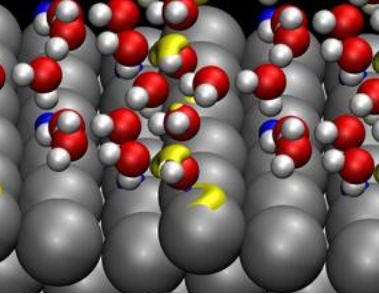
- dissolve within the run time of 8 ps at 140 K. Figure 5a shows that there is no longer a flat water layer, but a kind of bilayer with the distance between the O atom of the upper water molecules and the Pb surface being 5.2 Å, which is 2.4 Å larger than for the lower water molecules. The plotted


Determination of the compositions of the DIGM zone in nanocrystalline Ag/Au and Ag/Pd thin films by secondary neutral mass spectrometry
Beilstein J. Nanotechnol. 2016, 7, 474–483, doi:10.3762/bjnano.7.41
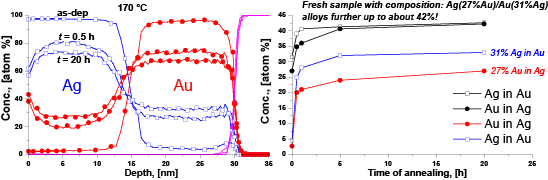
- the Pd(30 nm)/Ag(30 nm)/substrate film system at different temperatures. Figure 5 shows the average compositions inside the Ag and Pd layers as a function of the annealing time at different temperatures for the Ag(15 nm)/Pd(15 nm)/substrate bilayer (Figure 5a) at 150 °C and for the Pd(30 nm/Ag(30 nm
- homogenization in bilayer films is possible on both sides, and the compositions in the DIGM zones can be followed by SNMS depth profiling. Let us check whether the relations in Equation 1 and Equation 2 give a quantitative explanation for our experimental results or not. It can be seen that the above relations
- annealing times until full homogenization is reached. That is, the formation of a solid solution corresponding to the original element ratio in the bilayer. However, we did not observe such a two- or multi-step homogenization process (see Figure 2 and Figure 5). Even prolonged heat treatments did not result





