Search results
Search for "clusters" in Full Text gives 469 result(s) in Beilstein Journal of Nanotechnology. Showing first 200.
Bio-imaging with the helium-ion microscope: A review
Beilstein J. Nanotechnol. 2021, 12, 1–23, doi:10.3762/bjnano.12.1
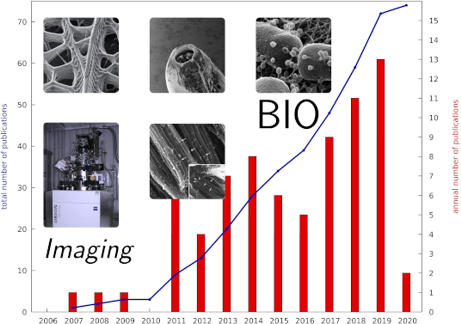
- clusters in microbes [47] or mitochondria [48] by HIM-SIMS. Nevertheless, the current mass resolution of the spectrometers allows for several interesting applications in biology, which comprise biomineralisation, microbial corrosion, and interactions between nanoparticles and cells or tissues. Alternative


Nanocasting synthesis of BiFeO3 nanoparticles with enhanced visible-light photocatalytic activity
Beilstein J. Nanotechnol. 2020, 11, 1822–1833, doi:10.3762/bjnano.11.164
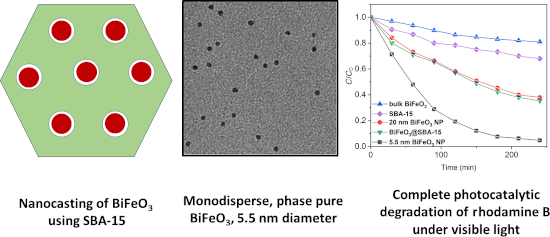
- heating. In addition, the presence of Bi3+ in acidic aqueous solutions leads to the formation of polynuclear cationic species. Once a thermal treatment at 500 °C is applied, those clusters decompose into α- and β-Bi2O3 by-products, which are not observed when an intermediate heating step is carried out




Molecular dynamics modeling of the influence forming process parameters on the structure and morphology of a superconducting spin valve
Beilstein J. Nanotechnol. 2020, 11, 1776–1788, doi:10.3762/bjnano.11.160
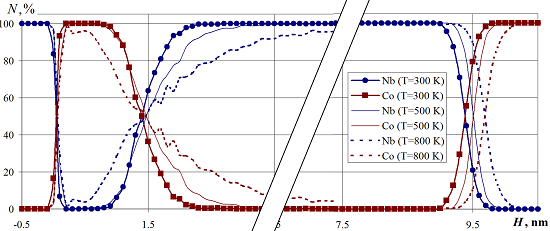
- size of the deposited clusters and does not always have time to rebuild upon direct contact with the surface. Due to the effects that arise, inhomogeneity, dislocations, and voids can occur in the material. The deviations in the constructed composition in the upper layers of the nanocomposite were due


The influence of an interfacial hBN layer on the fluorescence of an organic molecule
Beilstein J. Nanotechnol. 2020, 11, 1663–1684, doi:10.3762/bjnano.11.149
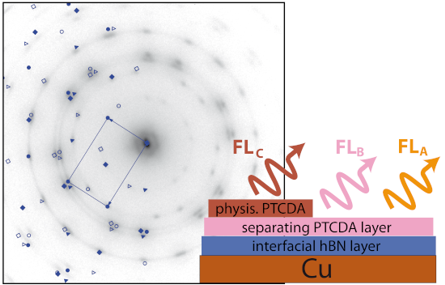
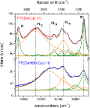
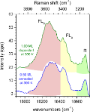
- 14,750 cm−1, respectively, while FLA and FLC were still present (not shown). The Y line was assigned to the 0–0 transition of the PTCDA bulk phase [67]. Thus, the co-existence of the Y line and FLA and FLC is consistent with the formation of bulk-like clusters at a coverage of 4.60 ML. Likewise, on hBN





Oxidation of Au/Ag films by oxygen plasma: phase separation and generation of nanoporosity
Beilstein J. Nanotechnol. 2020, 11, 1608–1614, doi:10.3762/bjnano.11.143
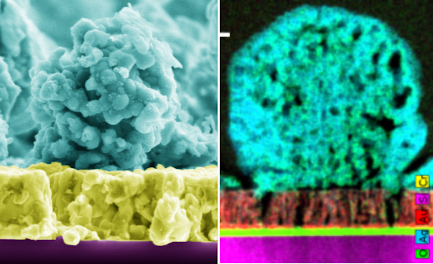
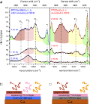
- 8). In the early stages of oxidation, silver diffuses toward the surface where it nucleates and forms clusters (Figure 8a). When Ag reaches the film surface the diffusion is expected to become limited due to two factors: (1) the presence of oxygen which traps Ag during the oxidation process
- , resulting in a mobility decrease at the surface; and (2) the high porosity of the film which serves as a support for the surface diffusion of silver. The clusters formed during the early stages of the process serve as nucleation sites which grow into larger spheres as the oxidation process evolves. The


Optically and electrically driven nanoantennas
Beilstein J. Nanotechnol. 2020, 11, 1542–1545, doi:10.3762/bjnano.11.136

- deposition [41], or on dense silver island films created by pulsed laser deposition [42] or physical vapor deposition [43]. In [44], individual plasmonic nanotags are prepared by coating gold nanoparticle clusters with Raman reporters. This work explores the minimum number of tags required for obtaining a
Wafer-level integration of self-aligned high aspect ratio silicon 3D structures using the MACE method with Au, Pd, Pt, Cu, and Ir
Beilstein J. Nanotechnol. 2020, 11, 1439–1449, doi:10.3762/bjnano.11.128
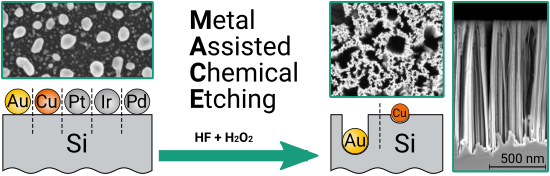
- between the connected Ir clusters. The SEM cross-section measurements show that the film has an average thickness of approx. 12 nm (see inset of Figure 2). The fabricated nanoparticles show a good compromise between process complexity and surface coverage with nanoparticles. With this bottom-up approach


Analysis of catalyst surface wetting: the early stage of epitaxial germanium nanowire growth
Beilstein J. Nanotechnol. 2020, 11, 1371–1380, doi:10.3762/bjnano.11.121
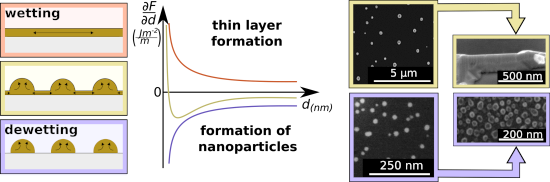
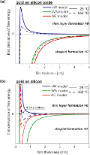
- are fully understood yet, especially regarding metallic fluids, it is clear that the formation of nanometre-sized particles, droplets, and clusters as well as their movement are strongly linked to their wetting behaviour. For this reason, the thermodynamic stability of thin metal layers (0.1–100 nm
- dewetting process, since the name of the resulting structures are nanoparticles or clusters but rarely droplets. Nevertheless, the origin of these structures from fluid-like states offers the opportunity for novel bottom-up techniques to produce precursor materials for functional materials, such as
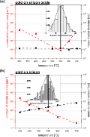
- electron microscopy (TEM) images of gold particles formed on a silicon substrate at room temperature. Small gold clusters (<10 nm) are also seen between the droplets. Growth of germanium nanowires Figure 4 shows images of the resulting gold droplets on various substrates and the results after deposition of


Atomic defect classification of the H–Si(100) surface through multi-mode scanning probe microscopy
Beilstein J. Nanotechnol. 2020, 11, 1346–1360, doi:10.3762/bjnano.11.119
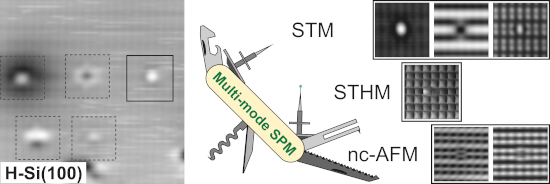
- observed in raised Si clusters of various sizes as discussed with Supporting Information File 1, Figure S9. The raised nature of the silyl group has implications for all the performed constant height analysis; in constant height STM (Figure 2i-3) it dominates the current as it is closer to the tip, in STHM



Growth of a self-assembled monolayer decoupled from the substrate: nucleation on-command using buffer layers
Beilstein J. Nanotechnol. 2020, 11, 1291–1302, doi:10.3762/bjnano.11.113
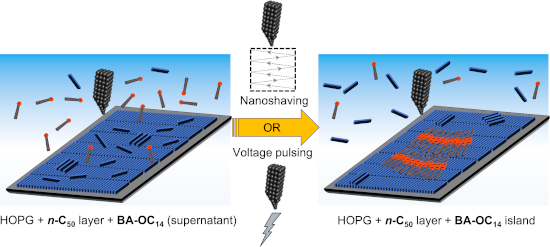
- symmetry of the underlying alkane layer [27]. Buffer layers of tetratriacontane [25] and tridecylamine [31] were used to template the self-assembly of copper phthalocyanine. Room temperature STM measurements revealed that the adsorption as well as the diffusion of clusters of CuPc molecules was strongly


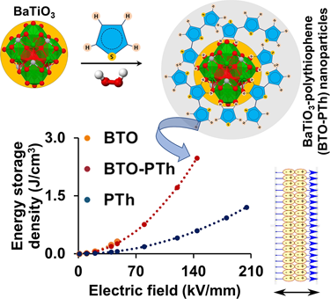
High permittivity, breakdown strength, and energy storage density of polythiophene-encapsulated BaTiO3 nanoparticles
Beilstein J. Nanotechnol. 2020, 11, 1190–1197, doi:10.3762/bjnano.11.103
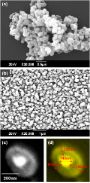
- of as-prepared BTO nanoparticles. Clusters or agglomerates of nanoparticles can be seen with easily identifiable individual BTO nanoparticles. The size of BTO nanoparticles is in the range of 70–150 nm. In contrast, the core–shell BTO-PTh nanoparticles exhibit uniform surface morphology, as shown in
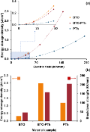
- studied using atomic force microscopy, after depositing the samples on quartz wafers. Figure 5 shows the 2D- and 3D-AFM images of BTO, BTO-PTh, and PTh samples along with their surface profiles. The micrographs of BTO nanoparticles show the presence of clusters on the surface. This is in agreement with
- exhibit irregular surface profile, which confirms the occurrence of sub-micrometer clusters and nanoscale particles on the surface. The permittivity or dielectric constant (ε′), loss tangent (tan δ), dielectric loss (ε″), and ac conductivity (σac) of the synthesized materials are measured as a function of




Hybridization vs decoupling: influence of an h-BN interlayer on the physical properties of a lander-type molecule on Ni(111)
Beilstein J. Nanotechnol. 2020, 11, 1168–1177, doi:10.3762/bjnano.11.101
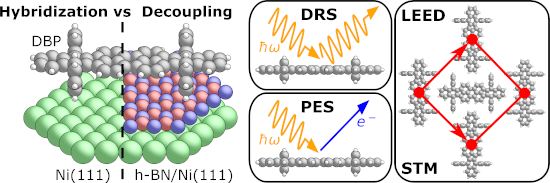
- rubrene on highly oriented pyrolytic graphite (HOPG) [29]. Our interpretation of the optical spectra is further supported by LT-STM measurements (see Supporting Information File 1, Figure S2) which show a completely filled monolayer as well as molecular clusters on top of the first layer. Lateral
- as clusters of molecules on top of the first DBP layer. The fast Fourier transform (FFT) of that STM image resembles the LEED simulation of the molecular lattice (considering eight symmetry equivalent domains only), which supports our structural model. Valence band structure and work function change
- large-area STM images (Supporting Information File 1, Figure S2), which confirm a close-packed DBP wetting layer as well as DBP clusters on top for a nominal film thickness of about 1.6 MLE. Hence, there is little discrepancy between 1 MLE, defined via DRS, and a fully covered substrate surface


Scanning tunneling microscopy and spectroscopy of rubrene on clean and graphene-covered metal surfaces
Beilstein J. Nanotechnol. 2020, 11, 1157–1167, doi:10.3762/bjnano.11.100
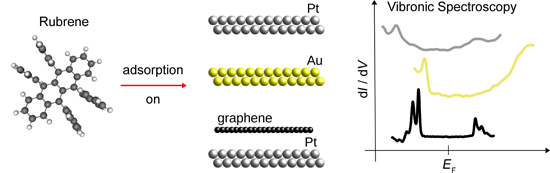
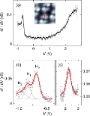
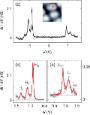
- vibronic properties of C42H28 consistently reflect the progressive reduction of the molecule–substrate hybridization. Separate C42H28 clusters are observed on Pt(111) as well as broad molecular resonances. On Au(111) and graphene-covered Pt(111) compact molecular islands with similar unit cells of the
- expected to be well decoupled from the metal substrate. After adsorption of C42H28 on Pt(111) scanning tunneling microscopy (STM) images reveal the occurrence of separate molecular clusters and very broad molecular resonances in STS data, which is attributed to an elevated C42H28–Pt interaction. On Au(111
- clusters of molecules can be discerned on the terrace without evidence for island formation or decoration of substrate step edges. These observations are indicative of an effectively reduced surface diffusion after adsorption, which lowers the mobility of adsorbed molecules and, thus, the formation of



Straightforward synthesis of gold nanoparticles by adding water to an engineered small dendrimer
Beilstein J. Nanotechnol. 2020, 11, 1110–1118, doi:10.3762/bjnano.11.95
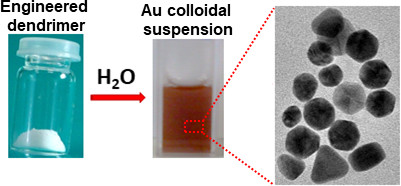
- ], platinum [31], ruthenium (in the presence of a reducer) [32], titanium oxo-clusters [33][34] and even from crystals of Au55 gold clusters [35][36]. In most cases, the oxidation state of the metal precursor was either zero (Pd0, Pt0, Au0) or four (TiIVO2 clusters) and no change in the oxidation state


Applications of superparamagnetic iron oxide nanoparticles in drug and therapeutic delivery, and biotechnological advancements
Beilstein J. Nanotechnol. 2020, 11, 1092–1109, doi:10.3762/bjnano.11.94
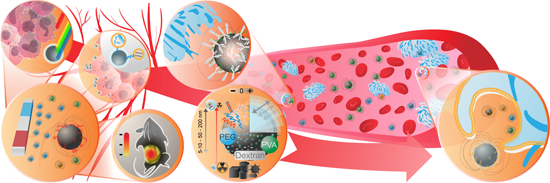
- of iron oxides in the form of magnetite (Fe3O4) or maghemite (Fe2O3) and are easy to produce through a few well-documented synthesis methods yielding different forms and structures (e.g., round, cubic, hexagonal, clusters, core–shell with gold, silica, polymers, or surfactants). A lot of research is
- hydrophobic surfaces that induce aggregation and/or the formation of large clusters. When in contact with biological structures, this mechanism provokes capillary clotting and reduces tissue and cellular absorption. To prevent this, nanoparticles are coated with stabilizers, which are added during preparation
- ]. Recently, SPIONs were observed to be good candidates for photothermal and photodynamic therapy, using near-infrared (700–2000 nm) laser excitation of the nanomaterial. For these therapies, SPIONs are theoretically preferred in larger clusters, although studies have shown that they can yield up to 12 °C


Wet-spinning of magneto-responsive helical chitosan microfibers
Beilstein J. Nanotechnol. 2020, 11, 991–999, doi:10.3762/bjnano.11.83
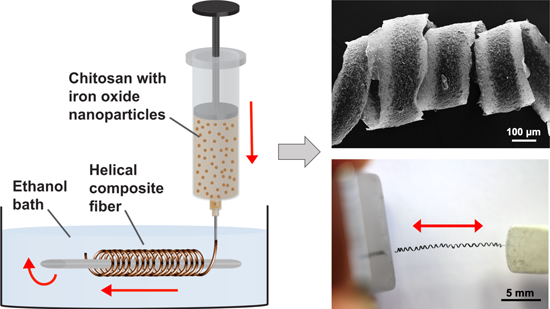
- nanoparticles agglomerated into clusters inside the fiber matrix. The helical constructs exhibited a diameter of approximately 500 µm with one to two windings per millimeter. Due to their ferromagnetic properties they are easily attracted to a permanent magnet. The results from the tensile testing show that the
- components into the final product. By subsequent winding we produced helical-shaped fibers with a diameter of approximately 500 µm with one to two windings per millimeter. SEM analysis of wet-spun helical fibers revealed that the IOPs were distributed inside the fiber matrix in larger clusters of 100 nm


Band tail state related photoluminescence and photoresponse of ZnMgO solid solution nanostructured films
Beilstein J. Nanotechnol. 2020, 11, 899–910, doi:10.3762/bjnano.11.75
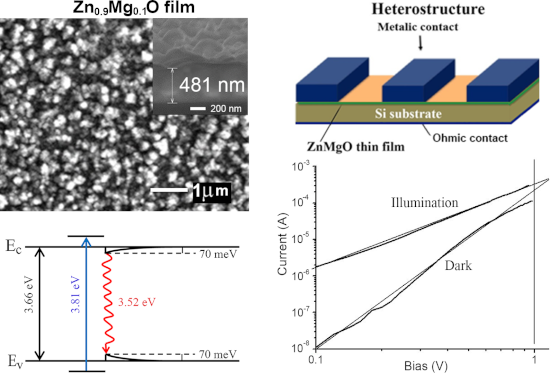
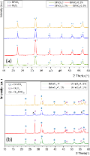
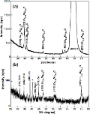
- to some Zn clusters [43]. A peak at 40.5° marked with an asterisk in Figure 6b was previously found in ZnO nanopowders prepared by the sol–gel method with zinc acetate dihydrate as a precursor [44]. In contrast to this, only peaks related to the Zn0.8Mg0.2O phase are observed in the film annealed at

Simulations of the 2D self-assembly of tripod-shaped building blocks
Beilstein J. Nanotechnol. 2020, 11, 884–890, doi:10.3762/bjnano.11.73
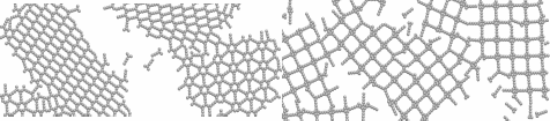
- patterns in the experimental results. The results of our analysis can be found in Figure 3. One can see in Figure 3a that the ordering starts at relatively high temperatures (cf. Figure 2), around T* = 0.62–0.64. Nevertheless, by cooling down the systems we can obtain larger clusters, which is a well-known
- diffraction pattern, which means that there are a lot of differently oriented clusters in the system. We have very recently shown that this issue can lead to the wrong interpretation of results [39]. One of the possible solutions to that is to take a fragment of the configuration and to the compute


Nickel nanoparticles supported on a covalent triazine framework as electrocatalyst for oxygen evolution reaction and oxygen reduction reactions
Beilstein J. Nanotechnol. 2020, 11, 770–781, doi:10.3762/bjnano.11.62
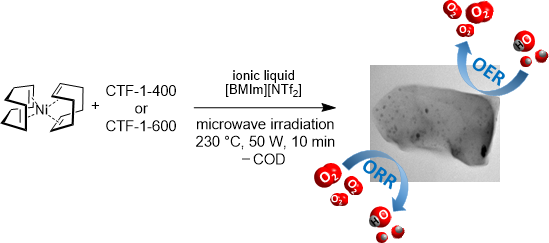
- a lower but still measurable Ni count on the seemingly bare CTF shards (point 2). Thus, we conclude that nickel atoms are both found accumulated as larger NP agglomerates on the surface and as smaller nickel clusters. The smaller clusters can either reside on the surface or be included in the CTF


Electromigration-induced directional steps towards the formation of single atomic Ag contacts
Beilstein J. Nanotechnol. 2020, 11, 680–687, doi:10.3762/bjnano.11.55
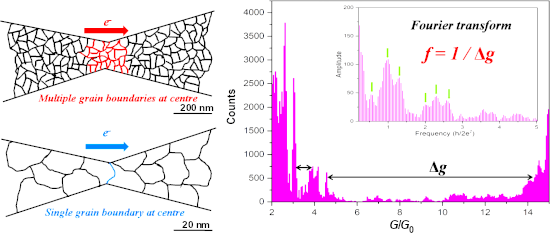
- various types of clusters, and their attachment to the environment to one-dimensional (1D) properties of atomic chains and contacts have been treated in many different studies [1][2][3][4]. However, this topic is not only of pure scientific interest, it is also relevant in the context of the reliable
- wide Ag contact results in clear unidirectional material transport, as seen by the large clusters preferentially formed on the right-hand side of Figure 1b, appearing as white spots. However, a filamentous structure is always formed on the left-hand side, which neither allows one to identify the exact


Silver-decorated gel-shell nanobeads: physicochemical characterization and evaluation of antibacterial properties
Beilstein J. Nanotechnol. 2020, 11, 620–630, doi:10.3762/bjnano.11.49
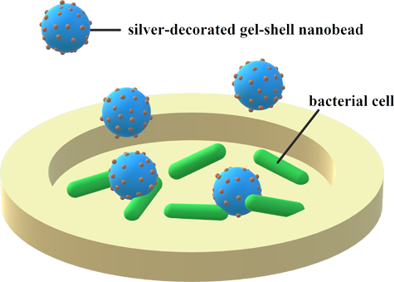
- antimicrobial activity of the nanobeads for both strains. One can also notice that for the S. aureus biofilm only small clusters of dead cells, close to the spaces and interruptions in the biofilm, structure are seen. These changes in the structure of the biofilm were not present in the control sample


Luminescent gold nanoclusters for bioimaging applications
Beilstein J. Nanotechnol. 2020, 11, 533–546, doi:10.3762/bjnano.11.42

- complexes and SCQD-based nanomaterials. To improve the quantum yield and PL, various approaches have been developed including ligand engineering, selective doping to create alloy clusters, aggregation-induced emission, selective etching and self-assembly [48][49][50][51][52][53][54][55][56][57][58]. Ligands
- the cytoplasm as well as in the nucleus. Muhammed et al. reported brightly NIR-emitting Au23 and Au25 NCs using single-phase and biphasic etching of [Au25(SG)18] (Figure 4B) [87]. The Au23 clusters were selectively conjugated with streptavidin for a specific labeling of cells. Here the strong binding


DFT calculations of the structure and stability of copper clusters on MoS2
Beilstein J. Nanotechnol. 2020, 11, 391–406, doi:10.3762/bjnano.11.30
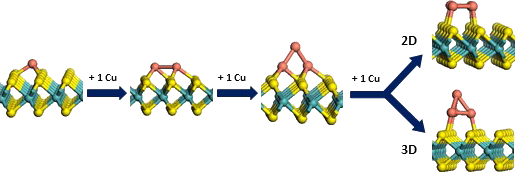
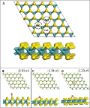
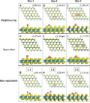
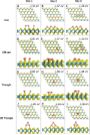
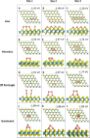
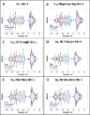
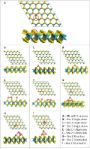
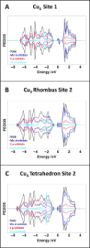
- vacancy on the adsorption energy and geometry of single Cu adatoms and the Cu4 clusters. The results of this investigation show that the stability of small Cun clusters on a MoS2 ML is driven mainly by Cu–Cu interactions and not dependent on whether the cluster is 2D or 3D. Further, the density-of-states
- , compared to the various 2D structures. While site 1 continued to be less favourable than sites 2 and 3 for the 2D configurations, for the 3D adsorption mode this difference disappears, with similar binding energies for all sites, suggesting that once 3D clusters begin to form on MoS2 the binding energy is
- (2D) and two configurations are 3D nanoclusters. For the flat adsorption structures, the four Cu atoms are adsorbed in a linear configuration, with Cu–Cu distances of around 3.2 Å, depending on the adsorption site, or in a 4-membered flat structure. In the 3D clusters, one configuration is a rhombus
Formation of nanoripples on ZnO flat substrates and nanorods by gas cluster ion bombardment
Beilstein J. Nanotechnol. 2020, 11, 383–390, doi:10.3762/bjnano.11.29
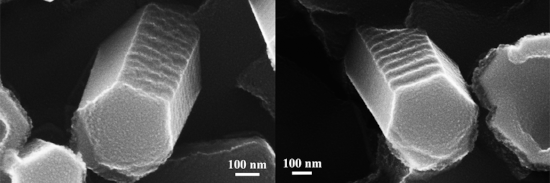
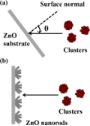
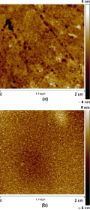
- and ion fluence were 10 kV and 4 × 10¹⁶ clusters/cm2, respectively. Scratches and pits of 50–100 nm in size and 5 nm in depth are visible on the substrate surface before irradiation (Figure 2a and Figure 3a). After irradiation at θ = 0° the scratches and pits disappeared and features ca. 10 nm in size
- homogeneously dispersed all over the surface formed (Figure 2b and Figure 3b). These surface features can exhibit overlapped craters formed after collisions of the accelerated clusters with the surface. The surface roughness after normal cluster irradiation slightly decreases from initial 0.8 nm to 0.6 nm
- developed and wavelength and height of the ripples calculated from the bottom drift line surface increase (Figure 4b and Table 1). This behavior is in agreement with data obtained for SiO2 films and gold surfaces bombarded with Ar clusters [19][22]. The process of ripple formation is triggered by the



Implementation of data-cube pump–probe KPFM on organic solar cells
Beilstein J. Nanotechnol. 2020, 11, 323–337, doi:10.3762/bjnano.11.24
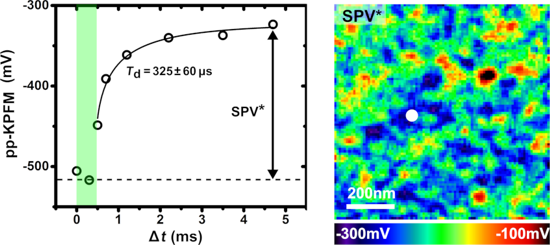
- compositional and/or morphological heterogeneities generating the dark-state SP and SPV contrast play also a key role in the photocarrier trapping process. A reasonable (yet to be definitely confirmed) scenario could invoke the existence of non-percolating PC71BM clusters acting as trapping centers. Such an