Search results
Search for "confinement" in Full Text gives 261 result(s) in Beilstein Journal of Nanotechnology. Showing first 200.
Nitrogen-doped carbon nanotubes coated with zinc oxide nanoparticles as sulfur encapsulator for high-performance lithium/sulfur batteries
Beilstein J. Nanotechnol. 2018, 9, 1677–1685, doi:10.3762/bjnano.9.159
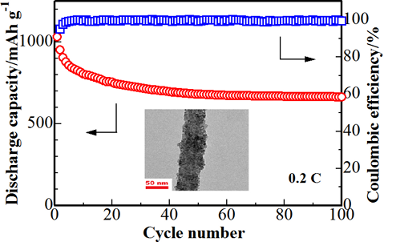
- precise control of its morphology, these carbon materials can also play an active role in S confinement [4]. For example, it has been reported that the functional nitrogen groups in N-doped graphene (NG) sheets have a good binding capability for lithium polysulfides, which can greatly enhance the life of
- to 822 mAh·g−1. This indicates that the as-prepared S/ZnO@NCNT composite is very stable and can tolerate the abusive condition of high-rate Li ion insertion and deletion. In addition to a strong S “confinement” effect of the active ZnO surface, this might also be attributed to the NCNT network and


Optical near-field mapping of plasmonic nanostructures prepared by nanosphere lithography
Beilstein J. Nanotechnol. 2018, 9, 1536–1543, doi:10.3762/bjnano.9.144
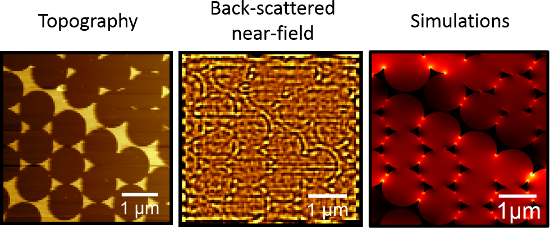
- (gold or silver) nanotriangles deposited on a glass or Si substrate, are of high interest to study plasmonics, and more specifically localised surface plasmon resonance (LSPR) [23][24]. Indeed, their geometry and their metallic nature result in the spatial confinement of the electric field at their




Absence of free carriers in silicon nanocrystals grown from phosphorus- and boron-doped silicon-rich oxide and oxynitride
Beilstein J. Nanotechnol. 2018, 9, 1501–1511, doi:10.3762/bjnano.9.141
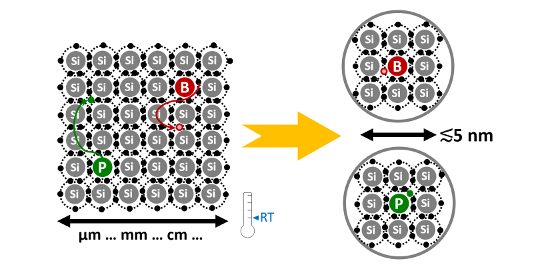
- Si, typical dopant ionization energies are in the range of ≈50 meV. If the size of the Si crystal approaches the exciton Bohr-radius, strong quantum confinement sets in and the valence- and conduction band ground state energies shift to lower and higher energies, respectively. As a consequence, the
- dielectric occurs. Irrespective of quantum confinement, this so-called dielectric confinement increased the dopant ionization energy even further [2]. At the nanoscale, the incorporation of an impurity on a lattice site is also subject to an increased formation energy as compared to the bulk, so that despite
- Due to quantum confinement effects the ground state energy of Si NCs increases and the k-space overlap of electron and hole wave functions are significantly enhanced (Heisenberg’s uncertainty principle). Therefore, excitons formed in Si NCs are subject to significantly higher radiative recombination


Disorder-induced suppression of the zero-bias conductance peak splitting in topological superconducting nanowires
Beilstein J. Nanotechnol. 2018, 9, 1358–1369, doi:10.3762/bjnano.9.128
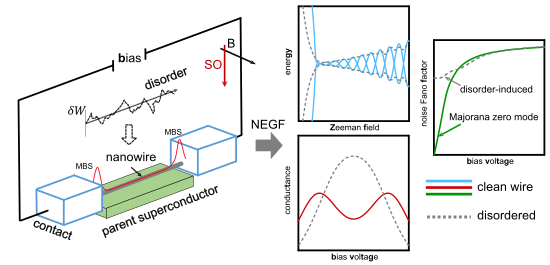
- ][24][25][26][27][28]. However, it is suggested that such zero-bias features could also be induced by non-topological physics such as Kondo effect [31], smooth confinement [32], or strong disorder [33][34][35]. In one-dimensional case, the hybridization of the pair of MBSs localized at the wire ends


![[Graphic 20]](/bjnano/content/inline/2190-4286-9-128-i39.svg?max-width=637&scale=1.18182) (das...
(das...


Computational exploration of two-dimensional silicon diarsenide and germanium arsenide for photovoltaic applications
Beilstein J. Nanotechnol. 2018, 9, 1247–1253, doi:10.3762/bjnano.9.116
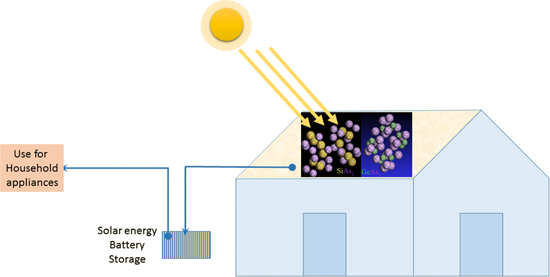
- in the thickness of both SiAs2 and GeAs2 leads to a quantum confinement effect [36] and thus the band gap is increased significantly from the bulk to the monolayer structures in both materials. In addition, the experimentally reported indirect band gap of 1.06 eV by Rau et al. for single crystal


Surface characterization of nanoparticles using near-field light scattering
Beilstein J. Nanotechnol. 2018, 9, 1228–1238, doi:10.3762/bjnano.9.114
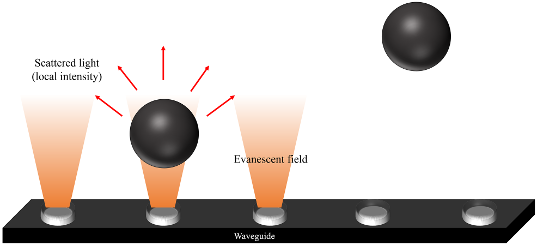
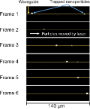
- iron oxide nanoparticles (IPC-SPIOs). Nanophotonic force microscopy pushes particles against a waveguide surface, optically trapping the particles by light confinement [10][19][20]. The evanescent fields are created by the waveguide, and there are four forces operating on the field: the gradient force




Heterostuctures of 4-(chloromethyl)phenyltrichlorosilane and 5,10,15,20-tetra(4-pyridyl)-21H,23H-porphine prepared on Si(111) using particle lithography: Nanoscale characterization of the main steps of nanopatterning
Beilstein J. Nanotechnol. 2018, 9, 1211–1219, doi:10.3762/bjnano.9.112
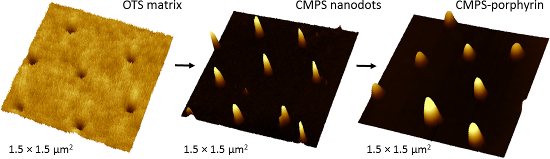
- the uncovered sites of Si(111) to enable spatial confinement of the surface reaction. Silica spheres with a diameter of 500 nm were used as a surface mask to prepare nanoscopic holes within the OTS matrix film. Next, the samples were immersed in solutions of CMPS dissolved in toluene or bicyclohexane
- exposed nanoholes of Si(111). Spatial confinement facilitated the growth of CMPS layers in the vertical direction, which was produced by cross-linking to form intramolecular siloxane bonds. Spatial selectivity for the preparation of heterostructures of CMPS and H2TPyP Heterostructures of CMPS-porphyrin


Understanding the performance and mechanism of Mg-containing oxides as support catalysts in the thermal dry reforming of methane
Beilstein J. Nanotechnol. 2018, 9, 1162–1183, doi:10.3762/bjnano.9.108
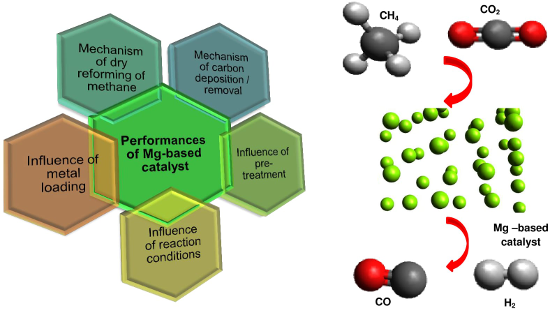
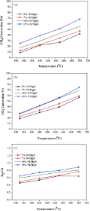
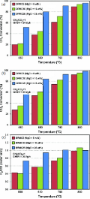
- supported catalyst showed that the confinement of pore walls inhibited the Ni particle aggregation. Meanwhile, the MgO coating showed a higher dispersion of Ni metal and highly basic sites than the MgO impregnated method. It was also found that this structure improved stability and could inhibit the






Field-controlled ultrafast magnetization dynamics in two-dimensional nanoscale ferromagnetic antidot arrays
Beilstein J. Nanotechnol. 2018, 9, 1123–1134, doi:10.3762/bjnano.9.104
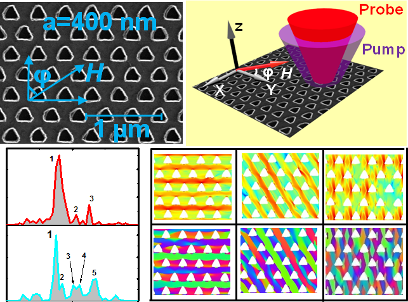
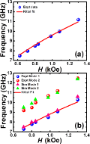
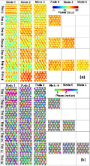
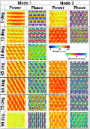
- ], spin-wave filters [14], spin-logic [15] and reprogrammable magnonic devices [16]. The edges of the antidots lead to quantization of SW modes due to lateral confinement as well as the generation of a periodically modulated internal magnetic field due to the demagnetization effect. A number of parameters
- of shape, size and density of antidots [17][18]. Extensive research on the dynamics of standing and propagating SWs in antidot lattices has shown pattern induced splitting [19], confinement, localization and propagation of SWs, depending upon the lattice and antidot geometry, base material and



A simple extension of the commonly used fitting equation for oscillatory structural forces in case of silica nanoparticle suspensions
Beilstein J. Nanotechnol. 2018, 9, 1095–1107, doi:10.3762/bjnano.9.101
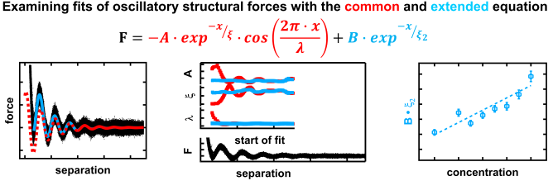
- fitting parameters in the system studied here. Keywords: confinement; depletion; fitting; silica nanoparticles; structural forces; Introduction Oscillatory structural forces are a genuine feature observed for simple and complex fluids in the vicinity of smooth surfaces [1][2]. Due to the ubiquitous
- approaching two surfaces the resulting density within the confinement will depend on the exact wall-to-wall distance. The oscillating density between the walls compared to the bulk leads to a changing, measurable pressure or force acting on the confining walls [1][2]. It can be measured using a variety of
- interpreted as the distance between the particles within the confinement, is solely dependent on the particle number density and is equal to λ = c−1/3 [35]. This dependence seems fundamental as it is very robust against multiple parameters such as salt concentration, particle size [36], surface elasticity


Theoretical study of strain-dependent optical absorption in a doped self-assembled InAs/InGaAs/GaAs/AlGaAs quantum dot
Beilstein J. Nanotechnol. 2018, 9, 1075–1084, doi:10.3762/bjnano.9.99
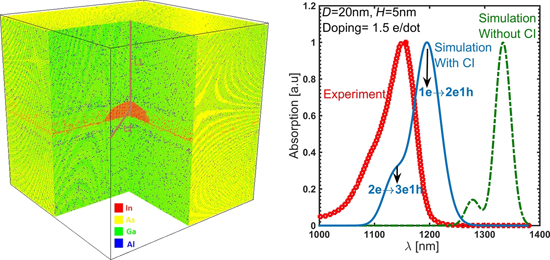
- electrons and holes. It is worth noting that the hole ground state has an s-orbital-like shape. QDs have a complicated band profile since multiple effects such as geometric confinement, strain and alloy disorder, can cause major changes in the band edges of the bulk material. It is important to know where
- . The effects of changing dimensions on the energy transition ΔE between the hole and electron ground states can be understood with a simple analytical model. This transition has two contributions: strain and confinement. The strain shifts the band edges and affects the energy gap Eg, while the
- confinement increases the minimum allowed energy of electron Eelec and hole Ehole with respect to the band edges. Let Ebox = Eelec + Ehole, then the transition energy E is Due to the sign of the deformation potential and strain, the valence band edge inside the quantum dot is of a heavy hole, from Equation 4




Single-crystalline FeCo nanoparticle-filled carbon nanotubes: synthesis, structural characterization and magnetic properties
Beilstein J. Nanotechnol. 2018, 9, 1024–1034, doi:10.3762/bjnano.9.95
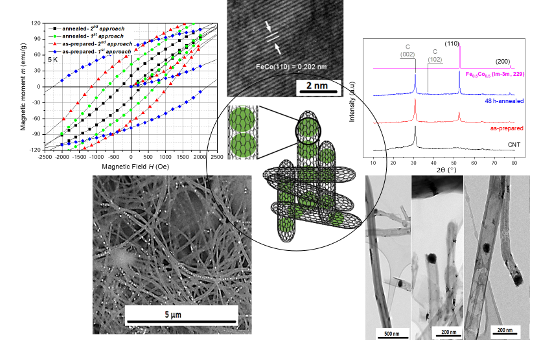
- the filling material due to the confinement of the material within the hollow tubular cavity. Chemical vapor deposition (CVD) is a technique used to fill MNPs into CNTs via in situ filling, in which metallocene precursors are used as a carbon source and MNPs [22][30][37] or hydrocarbons (such as
- dTEM = 16 ± 5 nm (Figure 4a), whereas the annealed samples have a mean diameter of dTEM = 58 ± 20 nm (Figure 4b). Comparing these values with the mean diameter of the hollow cavity of the CNTs (dCNT = 53 ± 20 nm), one can conclude that confinement of the magnetic nanoparticles to the inner diameter of


An implementation of spin–orbit coupling for band structure calculations with Gaussian basis sets: Two-dimensional topological crystals of Sb and Bi
Beilstein J. Nanotechnol. 2018, 9, 1015–1023, doi:10.3762/bjnano.9.94
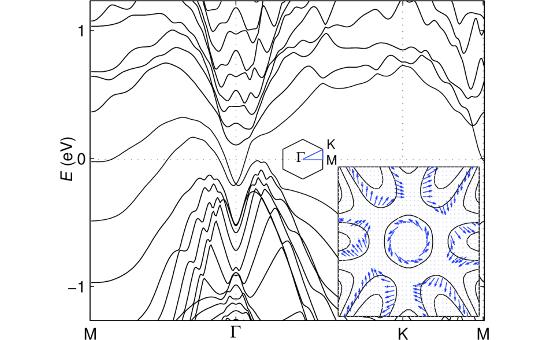
- topological surface states (TSS), although coexisting with bulk bands at the Fermi energy [51][52][53][54]. Sb(111) in thin film form could become, in principle, a 3D (TI) if quantum confinement opened a gap in the bulk bands. However, for sufficiently thin films, the TSS situated on opposite surfaces can get


Scanning speed phenomenon in contact-resonance atomic force microscopy
Beilstein J. Nanotechnol. 2018, 9, 945–952, doi:10.3762/bjnano.9.87
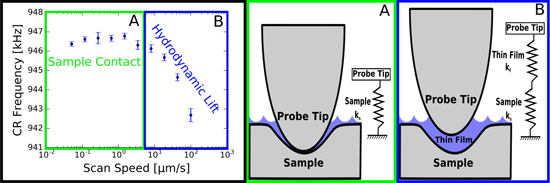
- al. [28] found that when a fluid is highly confined, a manifestation of elastic behavior is produced, and Li et al. [27] found that the viscosity of nanoconfined water increases with increasing confinement. All of these findings suggest that the dynamic properties of the thin film are affected by


Perfusion double-channel micropipette probes for oxygen flux mapping with single-cell resolution
Beilstein J. Nanotechnol. 2018, 9, 850–860, doi:10.3762/bjnano.9.79
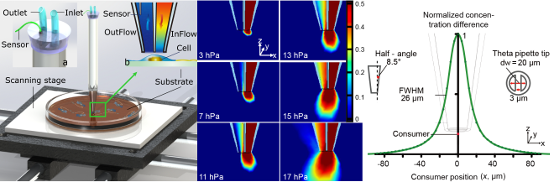
- as individual cells at subcellular resolution. Keywords: double-barrel pipette; hydrodynamic confinement; perfusion; oxygen flux; single-cell metabolic analysis; Introduction Transport, production and consumption of gasses, ions, and organic molecules are fluxes that sustain life. Relatively few
- and investigate a scanning flux measurement system for individual cells that offers high sensitivity and high spatial resolution. The main concept of the developed scanning probe is the confinement of the flux being measured by use of flow perfusion through double-channel micropipettes. We
- studied below using a finite element model (FEM) of the double-barrel pipette with perfusion. To validate this model, we first compare hydrodynamic confinement obtained from the model with experiments using a fluorescent dye. Later in the paper, we also show that FEM results agree qualitatively with a


Facile synthesis of a ZnO–BiOI p–n nano-heterojunction with excellent visible-light photocatalytic activity
Beilstein J. Nanotechnol. 2018, 9, 789–800, doi:10.3762/bjnano.9.72
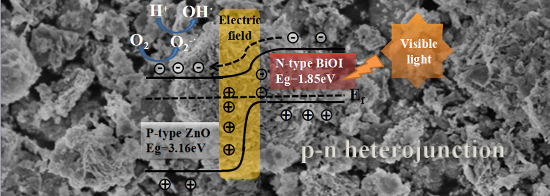
- , probably a result of the quantum confinement effect in the nanometer-sized ZnO particles. Photocatalytic degradation To test the as-synthesized samples’ ability to remove organic pollutants from waste water, the photodegradation of RhB was carried out under illumination by visible light from a 300 W Xe


Valley-selective directional emission from a transition-metal dichalcogenide monolayer mediated by a plasmonic nanoantenna
Beilstein J. Nanotechnol. 2018, 9, 780–788, doi:10.3762/bjnano.9.71
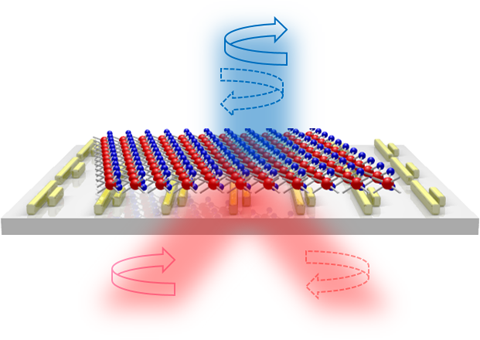
- polarization; Introduction The inversion-symmetry breaking and quantum confinement in monolayer TMDCs offer unprecedented opportunities to explore valley-based physics and applications [1][2][3]. The valley pseudospin is associated with the degenerate energy extrema in momentum space [3]. In monolayer TMDCs


Sugarcane juice derived carbon dot–graphitic carbon nitride composites for bisphenol A degradation under sunlight irradiation
Beilstein J. Nanotechnol. 2018, 9, 353–363, doi:10.3762/bjnano.9.35
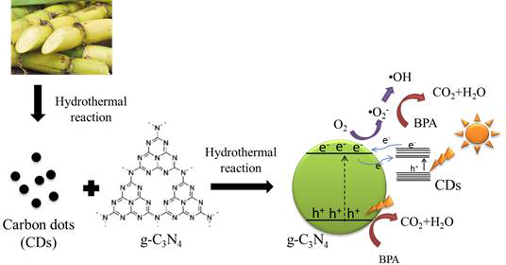
- to the quantum confinement effect induced by the CDs [65]. This result suggests that CD/g-C3N4 composites possess greater potential than that of pure g-C3N4 to drive photocatalysis under the irradiation of the entire solar spectrum. In contrary to our earlier work that reported blue-shifted


The nanofluidic confinement apparatus: studying confinement-dependent nanoparticle behavior and diffusion
Beilstein J. Nanotechnol. 2018, 9, 301–310, doi:10.3762/bjnano.9.30
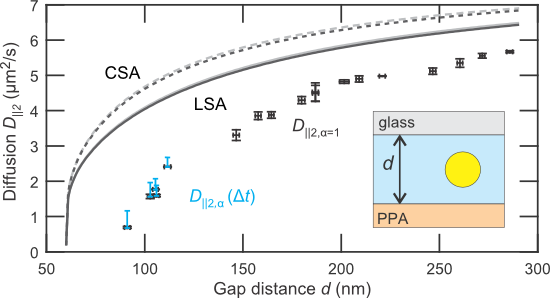
- Abstract The behavior of nanoparticles under nanofluidic confinement depends strongly on their distance to the confining walls; however, a measurement in which the gap distance is varied is challenging. Here, we present a versatile setup for investigating the behavior of nanoparticles as a function of the
- (termed height) and the lateral diffusion of 60 nm, charged, Au nanospheres as a function of confinement between a glass surface and a polymer surface. Interferometric scattering detection provides an effective particle illumination time of less than 30 μs, which results in lateral and vertical position
- . This result cannot be explained by hydrodynamic effects, including the asymmetric vertical position of the particles in the gap. Instead we attribute it to an electroviscous effect. For strong confinement of less than 120 nm gap distance, we detect the onset of subdiffusion, which can be correlated to



Anchoring of a dye precursor on NiO(001) studied by non-contact atomic force microscopy
Beilstein J. Nanotechnol. 2018, 9, 242–249, doi:10.3762/bjnano.9.26
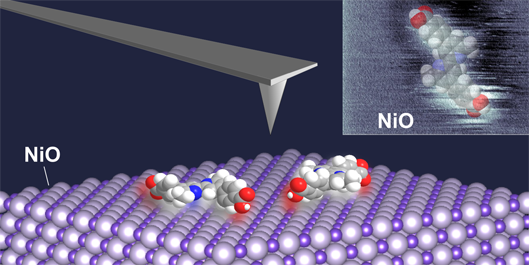
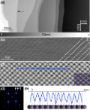
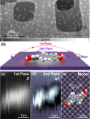
- evidence of flat-lying molecules on the substrate with trans-conformation could be demonstrated. Furthermore, DCPDMbpy exhibits a chiral character upon confinement on a surface leading to the appearance of two different surface enantiomers. Upon increasing the coverage, molecular islands with two symmetric



Dopant-stimulated growth of GaN nanotube-like nanostructures on Si(111) by molecular beam epitaxy
Beilstein J. Nanotechnol. 2018, 9, 146–154, doi:10.3762/bjnano.9.17
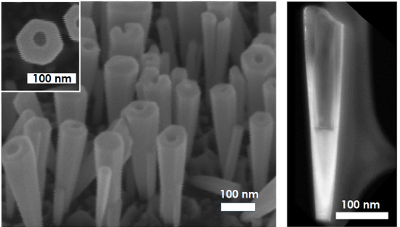
- offer a new degree of freedom due to possible confinement effects. It has been previously demonstrated that GaN NTs may be synthesized using the following methods: 1) chemical vapor deposition of nitrogen precursor with gallium precursor in the presence of catalysts such as Ni, In or Au [11][12][13]; 2


Nematic topological defects positionally controlled by geometry and external fields
Beilstein J. Nanotechnol. 2018, 9, 109–118, doi:10.3762/bjnano.9.13
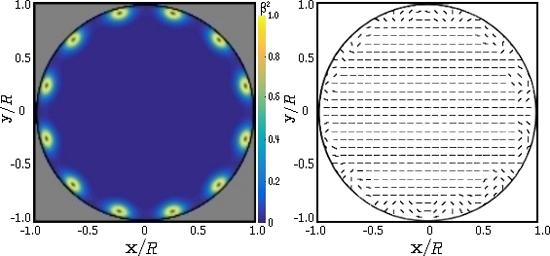
- of Physics, Faculty of Natural Sciences and Mathematics, University of Maribor, Koroska cesta 160, 2000 Maribor, Slovenia Jozef Stefan Institute, Jamova 39, 1000 Ljubljana, Slovenia 10.3762/bjnano.9.13 Abstract Using a Landau–de Gennes approach, we study the impact of confinement topology, geometry
- and external fields on the spatial positioning of nematic topological defects (TDs). In quasi two-dimensional systems we demonstrate that a confinement-enforced total topological charge of m > 1/2 decays into elementary TDs bearing a charge of m = 1/2. These assemble close to the bounding substrate to
- enable essentially bulk-like uniform nematic ordering in the central part of a system. This effect is reminiscent of the Faraday cavity phenomenon in electrostatics. We observe that in certain confinement geometries, varying the correlation length size of the order parameter could trigger a global


![[Graphic 25]](/bjnano/content/inline/2190-4286-9-13-i36.svg?max-width=637&scale=1.18182) with the largest positive eigenvalue, corresponding to the 2D biaxi...
with the largest positive eigenvalue, corresponding to the 2D biaxi...


Design of photonic microcavities in hexagonal boron nitride
Beilstein J. Nanotechnol. 2018, 9, 102–108, doi:10.3762/bjnano.9.12
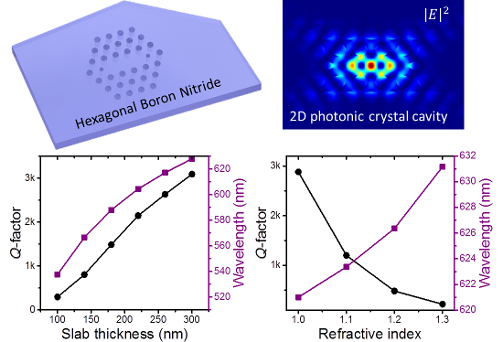
- effect of the thickness of the 2D photonic crystal slab as is shown in Figure 2b. The simulated slab thickness is varied up to 300 nm since that is a realistic thickness of typical hBN flakes prepared by the scotch tape exfoliation method. Thicker slabs exhibit stronger light confinement, which results


PTFE-based microreactor system for the continuous synthesis of full-visible-spectrum emitting cesium lead halide perovskite nanocrystals
Beilstein J. Nanotechnol. 2017, 8, 2521–2529, doi:10.3762/bjnano.8.252
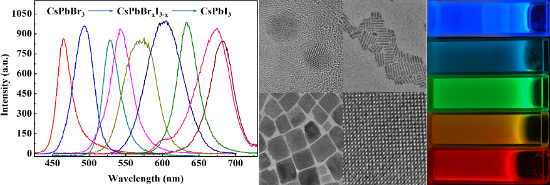
- increasing iodine content causes the shifts of 0.8°, 1.5° and 2° at the diffraction peak at 2θ = 30° for the yellow, orange, and red QDs, respectively, indicating the doping of iodine into the crystal structure. There is no diffraction peak at 2θ = 15° for the blue and orange QDs due to the confinement of


Fabrication of CeO2–MOx (M = Cu, Co, Ni) composite yolk–shell nanospheres with enhanced catalytic properties for CO oxidation
Beilstein J. Nanotechnol. 2017, 8, 2425–2437, doi:10.3762/bjnano.8.241
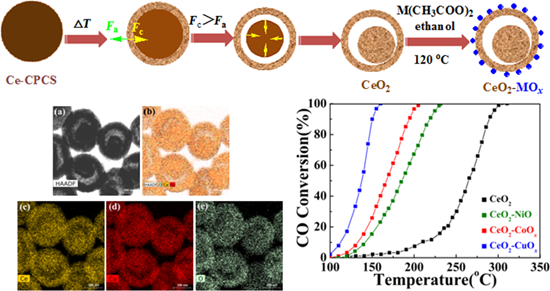
- on various parameters, including the crystal defects, oxygen vacancies, phonon confinement, and inhomogeneous strain related to the reduced ceria [31][32]. Herein, the shift can be related to the interaction between the MOx species and CeO2 surface, which leads to lengthening and weakening of the M–O