Search results
Search for "dielectric constant" in Full Text gives 186 result(s) in Beilstein Journal of Nanotechnology.
A dioxaborine cyanine dye as a photoluminescence probe for sensing carbon nanotubes
Beilstein J. Nanotechnol. 2016, 7, 1991–1999, doi:10.3762/bjnano.7.190
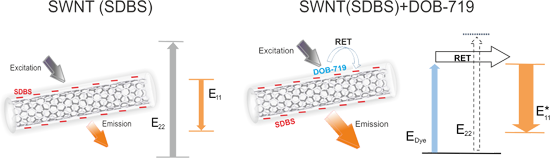
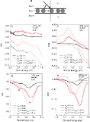
- red-shifted in comparison to neat SWNTs (Table 2, Figure 3b). However, the E11 peaks of the mixtures practically do not change due to the aging (Figure 3b, curves 3 and 4). The Eii optical transition energies of the SWNTs strongly depend on the dielectric constant of both the nanotubes and the


Low temperature co-fired ceramic packaging of CMOS capacitive sensor chip towards cell viability monitoring
Beilstein J. Nanotechnol. 2016, 7, 1871–1877, doi:10.3762/bjnano.7.179
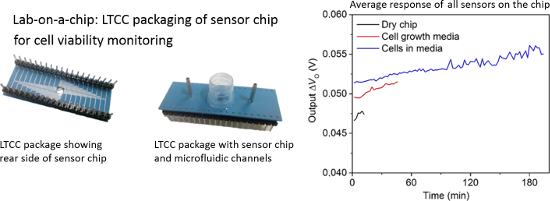
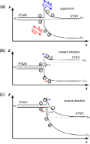
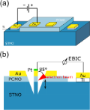
- frames/min. The CMOS chip continued to function upon the addition of the fluid, confirming the robustness of the package. The important thing to note is that the signal increased upon the addition of DMEM (Figure 6). This was expected because the dielectric constant of water is higher than that of air


Fingerprints of a size-dependent crossover in the dimensionality of electronic conduction in Au-seeded Ge nanowires
Beilstein J. Nanotechnol. 2016, 7, 1574–1578, doi:10.3762/bjnano.7.151
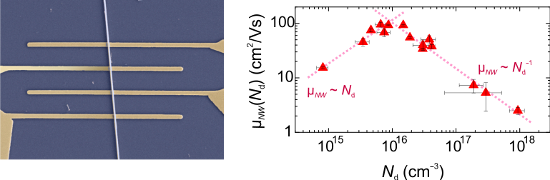
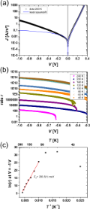
- (screening) length, , which is defined as [27]: where εNW = 16 is the dielectric constant of the NW material (assumed the same as for bulk Ge [28]), ε0 the vacuum permittivity, kB the Boltzmann constant, T the temperature and q the electron charge. In Figure 4, is plotted together with R as a function of Nd
- description of the charge carriers is not a reasonable approach, the 1D screening length λ(1D) is better suited [29]. For our NWs, we can write where εox ≈ 7.44 [27] is the dielectric constant of the native oxide, tox ≈ 3 nm (cf. Figure 1b) its thickness, and R(Nd) is the inverted Nd(R) ~ R−α (see above


![[Graphic 7]](/bjnano/content/inline/2190-4286-7-151-i9.png?max-width=637&scale=1.18182) and 1D screening length λ(1D) as function of carr...
and 1D screening length λ(1D) as function of carr...
Graphene-enhanced plasmonic nanohole arrays for environmental sensing in aqueous samples
Beilstein J. Nanotechnol. 2016, 7, 1564–1573, doi:10.3762/bjnano.7.150
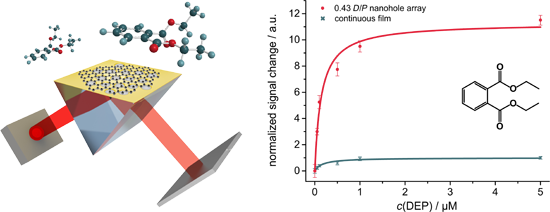
- enhanced to achieve low detection limits. To address this issue nanomaterials ranging from metallic nanoparticles, carbon-based structures to liposomes were used [10][11][12]. Plasmonic transducers are sensitive to changes of optical properties such as the dielectric constant and hence the refractive index




Electric field induced structural colour tuning of a silver/titanium dioxide nanoparticle one-dimensional photonic crystal
Beilstein J. Nanotechnol. 2016, 7, 1404–1410, doi:10.3762/bjnano.7.131
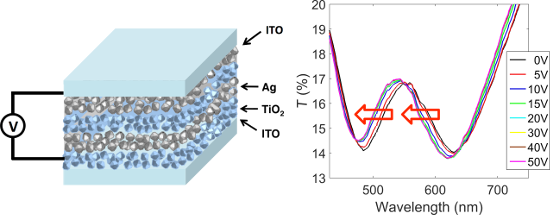
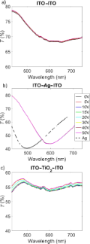
- for silver as where N is the carrier density, e is the electron charge, m* is the effective mass and ε0 is the dielectric constant of the vacuum. Qualitatively, we can state that the polarization charges that accumulate at the silver/titanium dioxide interface, because of the electric field
- dielectric function of the silver nanoparticle film (a network of necked silver nanoparticles with air pores) can be described by the Maxwell–Garnett effective medium approximation [21][22][23], which is given by where εAir is the dielectric constant of air, and δAg accounts for the volume fraction occupied
- charges in an ITO film by applying a constant voltage demonstrated that besides an increase in carrier density, other Drude parameters such as the damping constant and the high frequency dielectric constant are altered through the introduction of additional carriers [30]. Thus, a deeper study of the




Diameter-driven crossover in resistive behaviour of heavily doped self-seeded germanium nanowires
Beilstein J. Nanotechnol. 2016, 7, 1284–1288, doi:10.3762/bjnano.7.119
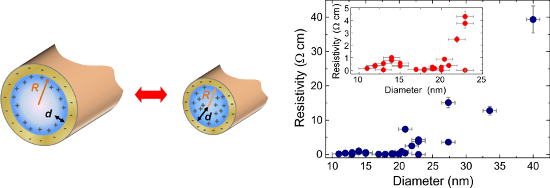
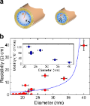
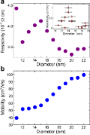
- coordinates [20][21] and for simplicity assuming a constant free-hole concentration nh. One finds the expression [22] where Φ0 is the electrostatic potential at the core/shell interface, ε0 is the vacuum permittivity, εr the dielectric constant of germanium, and e the elementary charge. The confinement of

Manufacturing and investigation of physical properties of polyacrylonitrile nanofibre composites with SiO2, TiO2 and Bi2O3 nanoparticles
Beilstein J. Nanotechnol. 2016, 7, 1141–1155, doi:10.3762/bjnano.7.106
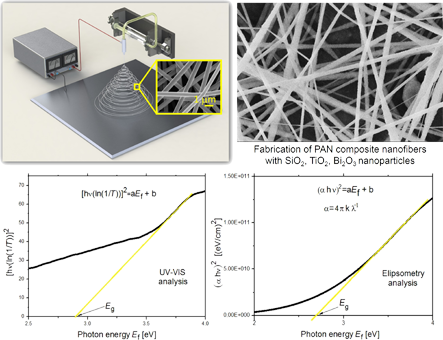
- then examined. The morphology of the fibres and the dispersion of nanoparticles in their volume were examined using scanning electron microscopy (SEM). All of the physical properties, which included the band gap width, dielectric constant and refractive index, were tested and plotted against the
- determine the dielectric constant, refractive index and the thickness of the obtained fibrous mats. Keywords: ceramic nanoparticles; electrospinning methods; polyacrylonitrile; polymer composite nanofibres; spectroscopic ellipsometry; Introduction Over the last decade, there has been a noticeable
- . This significantly influenced the quality of the measurements of the refractive index n, the extinction coefficient k, and the real and the imaginary part of the dielectric constant ε. Ellipsometry measurements were carried out using a Sentech SE 850 E ellipsometer in the wavelength range of 240–2500



Role of solvents in the electronic transport properties of single-molecule junctions
Beilstein J. Nanotechnol. 2016, 7, 1055–1067, doi:10.3762/bjnano.7.99
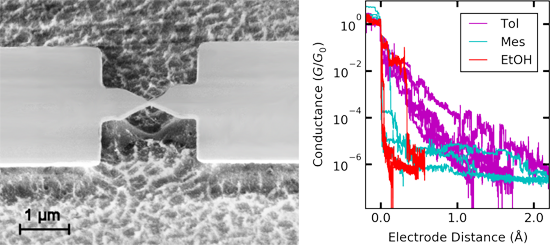
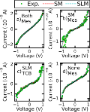
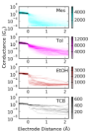
- parameters, i.e., the dielectric constant εr and the bulk conductivity σ of the solvent, have to be considered, see Table 2. Furthermore, capacitive effects cannot explain the finite offset (I(V = 0)) that is bigger than the opening of the loop (current difference between up- and down-sweep) observed in EtOH
- properties of the respective solvents are: µ the dipole moment, εr the low frequency dielectric constant, and σ the DC conductivity. Data taken form the Reaxys® data base and references therein. Acknowledgements We thank A. Fischer for technical assistance, and D. Schmid, J. Artois, L. Stoppel, S. Tibus, M





Dielectrophoresis of gold nanoparticles conjugated to DNA origami structures
Beilstein J. Nanotechnol. 2016, 7, 948–956, doi:10.3762/bjnano.7.87
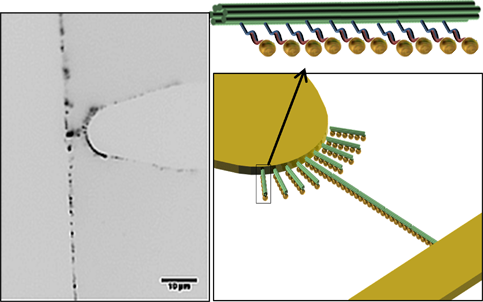
- conductivity, σ, and the dielectric constant, ε, respectively [31]. It applies that for pDEP has to be larger than . Since the ε of water is approximately 8-fold larger than that of DNA, we expect pDEP only to occur in the σ-dominated range at σp >> σm. In order to ensure this condition, the as-prepared 6HB
- of a negatively charged DNA molecule is proposed to be due to a combination of its surrounding and mobile counter ions [32]. A physical measure of the polarizability is the dielectric constant, ε. Experimental data show that DNA molecules with ε = 8.5 are a less polarizable material than gold
- nanoparticles influence on the electrical field the software package FEMM4.2 (http://www.femm.info/wiki/HomePage) was used. For the simulation, a dielectric constant of 8.5 and 78 was used for DNA and the surrounding medium, respectively. Six-helix bundle. The (a) front and (b) side view of the six-helix bundle


Reorientation of single-wall carbon nanotubes in negative anisotropy liquid crystals by an electric field
Beilstein J. Nanotechnol. 2016, 7, 825–833, doi:10.3762/bjnano.7.74
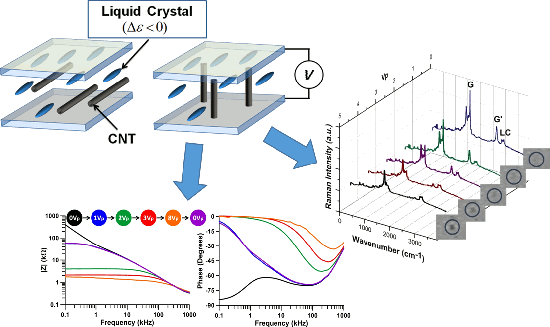
- along the long axis (which roughly matches the director orientation) or perpendicular to the long axis. They are customarily classified as positive and negative LCs according to their dielectric anisotropy [6]. In a positive LC material, the dielectric constant along the director is larger than the
- degenerate dielectric constant perpendicular to the director. Consequently, the molecules tend to align with an applied electrical field. In a negative LC material the opposite is the case. Thus, a homogenously aligned, positive LC sandwiched between two electrodes will reorient when a sufficiently large
- LC), it may be described in impedance terms as a capacitor, where capacitance depends on the dielectric constant of the LC. The presence of SWCNTs (being conductive nanoparticles) in the LC media may change the impedance of the system. Their reorientation from planar to the substrate (i.e., the


Antibacterial activity of silver nanoparticles obtained by pulsed laser ablation in pure water and in chloride solution
Beilstein J. Nanotechnol. 2016, 7, 465–473, doi:10.3762/bjnano.7.40
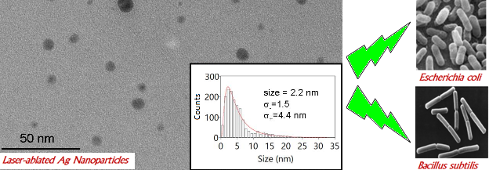
- (blue line). In the latter case, the plasmon resonance appears blue-shifted in both ps and ns samples. Such a shift could be attributed either to a change in the dielectric constant of the liquid environment or, more reasonably, to the different oxidation grade of the NP surfaces, where the NPs obtained


Mismatch detection in DNA monolayers by atomic force microscopy and electrochemical impedance spectroscopy
Beilstein J. Nanotechnol. 2016, 7, 220–227, doi:10.3762/bjnano.7.20
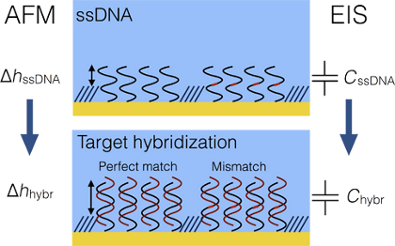
- ), where A is the area of the electrode, d the thickness of the ssDNA layer, and ε0 and ε are the dielectric constant of vacuum and ssDNA layer, respectively. When we insert a complementary strand in the electrochemical cell, the molecular recognition between the two strands will cause a change in the


Dependence of lattice strain relaxation, absorbance, and sheet resistance on thickness in textured ZnO@B transparent conductive oxide for thin-film solar cell applications
Beilstein J. Nanotechnol. 2016, 7, 75–80, doi:10.3762/bjnano.7.9
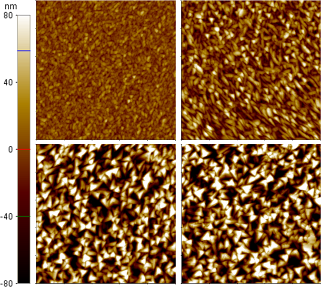
- oxide; textured ZnO; Introduction Thin-film solar cells require a transparent conductive oxide (TCO) to allow light to reach the absorber layers and create the electrical current. Due to its superior characteristics, including a wide band gap, high dielectric constant, high exciton binding energy (60



Charge injection and transport properties of an organic light-emitting diode
Beilstein J. Nanotechnol. 2016, 7, 47–52, doi:10.3762/bjnano.7.5
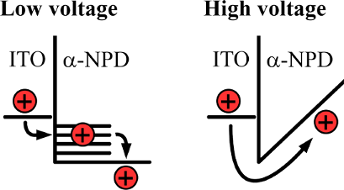
- trapping mechanism. At voltages higher than 3 V the rise of current density slows down to J V3 and follows two-carrier space-charge limited conditions (2C-SCLC), where ε is the dielectric constant of the organic film, μe and μh are electron and hole mobilities, respectively, and τ is carrier lifetime [13


Effects of electronic coupling and electrostatic potential on charge transport in carbon-based molecular electronic junctions
Beilstein J. Nanotechnol. 2016, 7, 32–46, doi:10.3762/bjnano.7.4
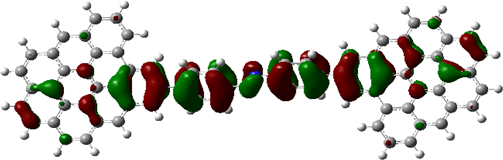
- structures should include such electrostatic effects, including local dipoles and Mulliken charges. As an indication of the magnitude of the effect, Guerrero et al. have provided an expression for predicting the vacuum level shift, Δ, from the charge transferred, Q, the dielectric constant, ε, and an


Effects of spin–orbit coupling and many-body correlations in STM transport through copper phthalocyanine
Beilstein J. Nanotechnol. 2015, 6, 2452–2462, doi:10.3762/bjnano.6.254
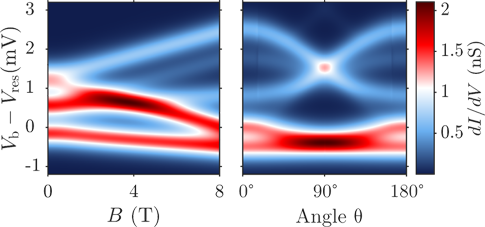
- dielectric constant εr = 2.2 in order to account for screening by frozen orbitals [12]. A table with the numerically evaluated interaction constants is found in Supporting Information File 2. Spin–orbit interaction (SOI) in the frontier orbitals basis A perturbative contribution to the bare one-body
- . Transport characteristics In this work, a tip–molecule distance of 5 Å was used and simulations were done at the temperature T = 1 K. We assumed a renormalization of the single particle energies δi = δ =1.83 eV (cf. Equation 3), an image-charge renormalization δic = 0.32 eV and a dielectric constant εr



Self-organization of gold nanoparticles on silanated surfaces
Beilstein J. Nanotechnol. 2015, 6, 2345–2353, doi:10.3762/bjnano.6.242
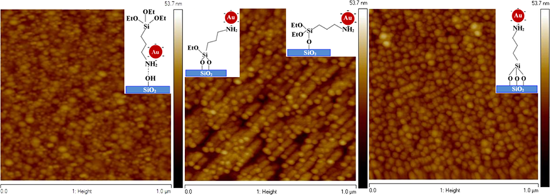
- physical properties such as enthalpy, mechanical modulus, dielectric constant and specific volume [31]. The migration of AuNPs observed here was due to the changes in its physical properties. Upon annealing under vacuum, sample substrates reached to transition temperature, though due to the absence of


Electroviscous effect on fluid drag in a microchannel with large zeta potential
Beilstein J. Nanotechnol. 2015, 6, 2207–2216, doi:10.3762/bjnano.6.226
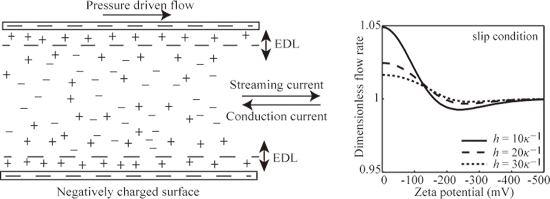
- is the characteristic thickness of EDL, and is given by [5], where ε is the dielectric constant of the electrolyte, ε0 is the vacuum permittivity, kB is the Boltzmann constant, T is the absolute temperature, n0 is the bulk ionic concentration of the symmetric electrolyte, z is the valence of the ions


Kelvin probe force microscopy for local characterisation of active nanoelectronic devices
Beilstein J. Nanotechnol. 2015, 6, 2193–2206, doi:10.3762/bjnano.6.225
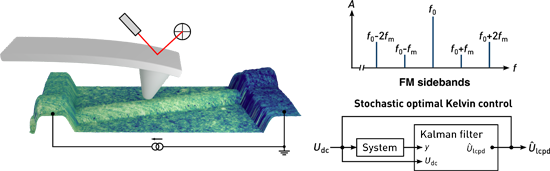
- devices, such as gate oxides, not only the local dielectric constant changes, but because of their thickness also a limit is put on the minimum approachable distance in Figure 1. As a result, deliberately slow feedback settings to ensure stable operation are common practice. In this paper, we describe a


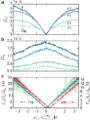
![[Graphic 33]](/bjnano/content/inline/2190-4286-6-225-i48.png?max-width=637&scale=1.18182) for different modulation amplitu...
for different modulation amplitu...




Nonlinear optical properties of near-infrared region Ag2S quantum dots pumped by nanosecond laser pulses
Beilstein J. Nanotechnol. 2015, 6, 1781–1787, doi:10.3762/bjnano.6.182
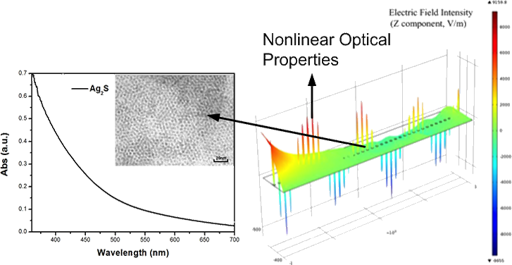
- produced the lowest absorption intensity. Ag2S exhibited stronger absorption compared with CHCl3 as the pump energy increased. This can be explained by the fact that there are many impurities and electron–hole pairs in QDs. Also, when the laser interacts with QDs the dielectric constant of the medium



Radiation losses in the microwave Ku band in magneto-electric nanocomposites
Beilstein J. Nanotechnol. 2015, 6, 1700–1707, doi:10.3762/bjnano.6.173
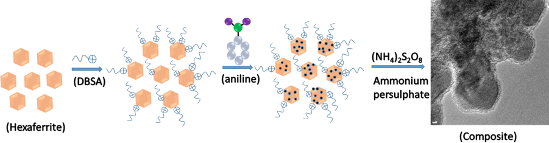
- ″) and to the dielectric constant (ε′). The unsaturated coordination on the surface, nano-sized hexaferrite, the dangling bond atoms, and the enhanced surface area lead to multiple scattering resulting in the loss of radiation. Quantum size effects generate a separation among energy levels. Upon


Current–voltage characteristics of manganite–titanite perovskite junctions
Beilstein J. Nanotechnol. 2015, 6, 1467–1484, doi:10.3762/bjnano.6.152
- binding energy can be high due to the low dielectric constant of the organic semiconductors and can exceed 1 eV. Charge separation is typically hindered by a high exciton binding energy, however, it can be facilitated at a heterojunction due to formation of a more loosely bound exciton–polaron pair, which
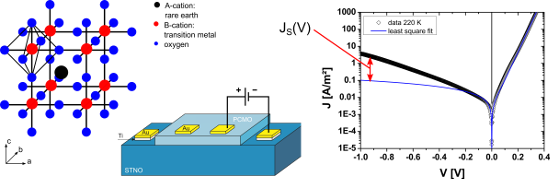
- pairs, which are separated in the SCR. The voltage dependence of the polaron pair generation as well as the bias dependent drop of EB can both give rise to a rate r > 1. For PCMO, exciton binding energies can be neglected because of the high dielectric constant of ε = 30 [63]. By lowering the





Influence of size, shape and core–shell interface on surface plasmon resonance in Ag and Ag@MgO nanoparticle films deposited on Si/SiOx
Beilstein J. Nanotechnol. 2015, 6, 404–413, doi:10.3762/bjnano.6.40
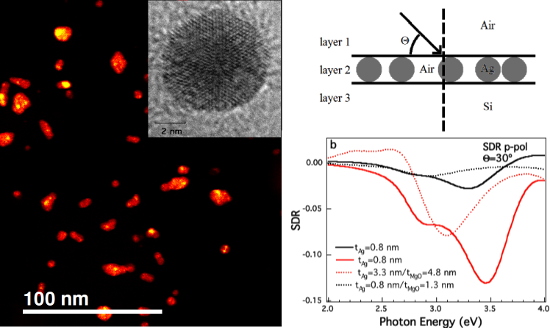
- presented in Supporting Information File 1, which reveals very similar shapes of the SDR curves. Therefore, the choice of this embedding medium dielectric constant, provided it is in the reasonable range of 1 to 1.77, is not decisive to reproduce the experimental trends (see Supporting Information File 1
- custom-written Fortran code. The optical properties of the involved media were inferred by employing either dispersive, dissipative dielectric functions () or dielectric constant (ε). In particular, the dielectric function of the substrate () and of the MgO covering layer () were obtained by a cubic
- nanometers, we additionally corrected the fit with a mean free path correction used for spheres [40]. The medium in contact with the incident radiation is assumed to be vacuum (ε1 = 1), whereas, over the range of frequencies in the selected calculations, the dielectric constant for water εH2O = 1.77 is taken



Tunable white light emission by variation of composition and defects of electrospun Al2O3–SiO2 nanofibers
Beilstein J. Nanotechnol. 2015, 6, 313–320, doi:10.3762/bjnano.6.29
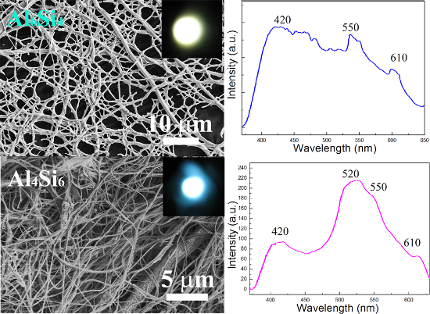
- elements [5][6][7][8][9]. Among those materials, Al2O3 is one of the most important materials in the history of ceramics, and has been extensively applied in catalysts, coatings, microelectronics and various devices, due to its excellent physical and chemical stability, high dielectric constant, wide band


Tunable light filtering by a Bragg mirror/heavily doped semiconducting nanocrystal composite
Beilstein J. Nanotechnol. 2015, 6, 193–200, doi:10.3762/bjnano.6.18
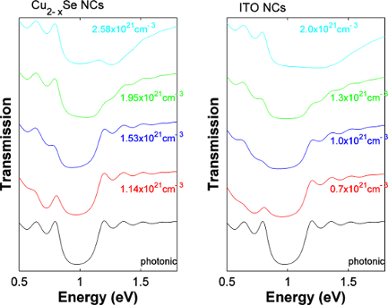
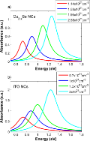
- : where ε(ω) is the bulk dielectric function at the optical frequency ω and εm is the dielectric constant of the surrounding medium. The optical extinction of ultra-small particles is dominated by absorption, but a first order correction to the quasi-static approximation should be included to account for
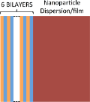
- composite material and to average the medium dielectric function according to the multiple values of the constituents of the composite material. The effective dielectric function (εeff) of a film of ITO NCs can be described by the MG-EMA as follows: where εm is the medium dielectric constant, εi is the