Search results
Search for "energy storage" in Full Text gives 174 result(s) in Beilstein Journal of Nanotechnology.
Diffusion of dilute gas in arrays of randomly distributed, vertically aligned, high-aspect-ratio cylinders
Beilstein J. Nanotechnol. 2017, 8, 64–73, doi:10.3762/bjnano.8.7
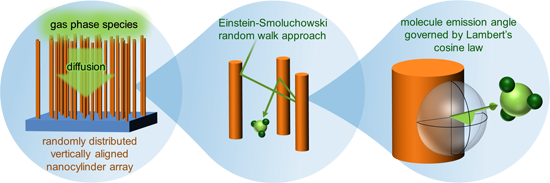
- nanocylinder arrays in solar cells and energy storage applications. Furthermore, gas sensing devices with high-aspect-ratio nanocylinder arrays and the growth of vertically aligned carbon nanotubes need the fundamental understanding and precise modelling of gas transport to optimise such processes. Keywords


Fundamental properties of high-quality carbon nanofoam: from low to high density
Beilstein J. Nanotechnol. 2016, 7, 2065–2073, doi:10.3762/bjnano.7.197
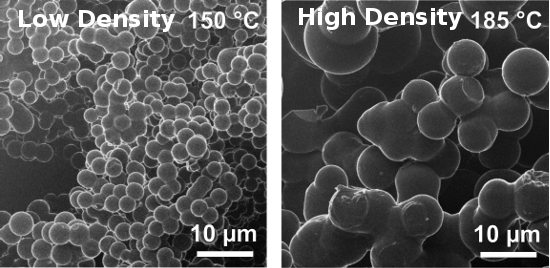
- of aligned layered carbon nanotube structures infiltrated with pyrolytic carbon is considered useful in water treatment and oil spill cleanup [21]. Carbon nanofoam paper [22] is proposed for energy storage applications. Carbon nanofoam composites may be used for electrochemical capacitor electrodes


Microwave synthesis of high-quality and uniform 4 nm ZnFe2O4 nanocrystals for application in energy storage and nanomagnetics
Beilstein J. Nanotechnol. 2016, 7, 1350–1360, doi:10.3762/bjnano.7.126
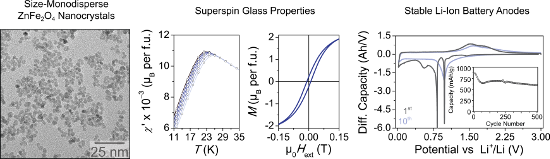
- narrow size distribution hold promise for many applications in different areas ranging from biomedicine to electronics and energy storage. Herein, the microwave-assisted sol–gel synthesis and thorough characterization of size-monodisperse zinc ferrite nanoparticles of spherical shape is reported. X-ray


Fabrication and characterization of branched carbon nanostructures
Beilstein J. Nanotechnol. 2016, 7, 1260–1266, doi:10.3762/bjnano.7.116
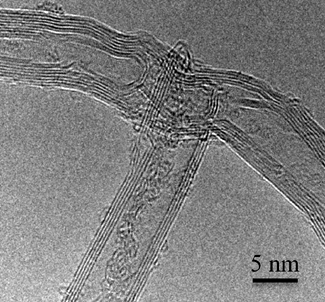
- offer benefits for applications such as transport, energy storage/conversion and bone/tooth replacement. Hence, the mechanical properties of CNTs are utilized in reinforcing polymer composites [1][2][3][4], and their electrical conductivity is utilized for conducting polymers [4][5][6]. Under tensile


Functional diversity of resilin in Arthropoda
Beilstein J. Nanotechnol. 2016, 7, 1241–1259, doi:10.3762/bjnano.7.115

- responsible for releasing elastic energy from specific energy storage devices (see below). In Auchenorrhyncha and Sternorrhyncha, the jumps are performed by metathoracic muscles that are directly connected to the trochanter of the hind leg and responsible for the movements of both trochanter and coxa [16][74
- recent estimations indicate that resilin alone often can provide only a rather small proportion of the energy that is necessary to fulfil the large power demands of fast leg movements involved in actions such as jumping [17]. Energy storage devices used for jumping in froghoppers (Hemiptera, Cercopidae
- risk of fractures occurring within the stiffer material and by contributing to a rapid and complete return of the distorted energy storage devices to their original shapes [17][18][20]. It is conceivable that a large proportion of the energy storage devices existing in insects with fast leg movements


Mesoporous hollow carbon spheres for lithium–sulfur batteries: distribution of sulfur and electrochemical performance
Beilstein J. Nanotechnol. 2016, 7, 1229–1240, doi:10.3762/bjnano.7.114
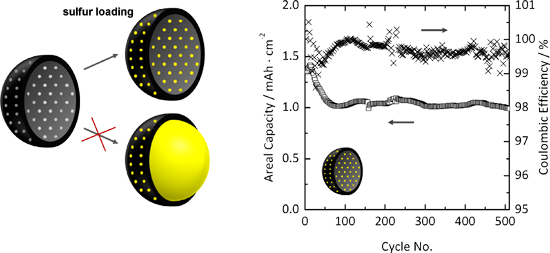
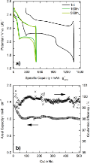
- mass of sulfur over 500 cycles. Keywords: carbon/sulfur composites; cycling stability; distribution of sulfur in pores; hollow carbon spheres; lithium–sulfur batteries; Introduction In the past 20 years, rechargeable lithium–ion batteries have proven to be superior energy storage devices and have


In situ characterization of hydrogen absorption in nanoporous palladium produced by dealloying
Beilstein J. Nanotechnol. 2016, 7, 1197–1201, doi:10.3762/bjnano.7.110
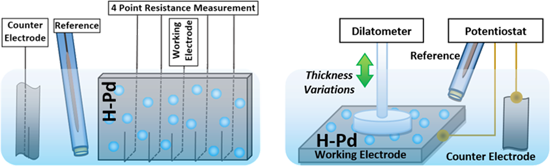
- , it is a frequently used model system. During the past few decades particular interest was placed on nanostructured Pd, which exhibits superior absorption properties due to a high surface-to-volume ratio, and its application potential in important fields of technology such as energy storage, sensing


Fast diffusion of silver in TiO2 nanotube arrays
Beilstein J. Nanotechnol. 2016, 7, 1129–1140, doi:10.3762/bjnano.7.105
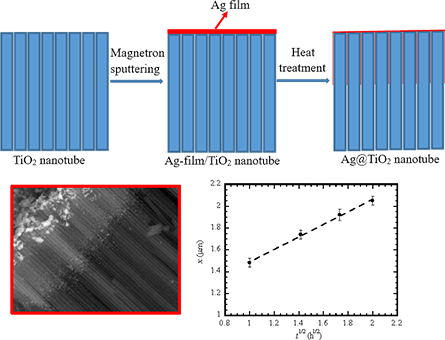
- for various applications, such as energy storage [1][2][3][4][5][6][7][8] and photo-assisted reactions [9][10][11][12][13][14], due to its inherent semiconducting characteristics, chemical stability, high photo-conversion efficiency, non-toxicity and low cost [15][16]. TiO2 of low-dimensional
- structures, TiO2 nanotubes (TNT) seem to be an ideal candidate for the applications in energy storage and photovoltaics. The intrinsic poor electric conductivity and large bandgaps (approx. 3.4 eV for anatase TiO2 [18] and approx. 3.0 eV for rutile TiO2 [19][20]) have limited the applications of TiO2 of low
- migration of atoms (dopants), which determine the functionality of TiO2-based materials. Although recent success in improving the photocatalytic activity and energy storage of Li ions in TiO2-based materials has been reported [26][27][28][29], the understanding of the migration of atoms (dopants) in TiO2


The hydraulic mechanism in the hind wing veins of Cybister japonicus Sharp (order: Coleoptera)
Beilstein J. Nanotechnol. 2016, 7, 904–913, doi:10.3762/bjnano.7.82

- ]. Folding requires the synergistic action of abdominal and thoracic muscle forces [15][16]; resilin in some mobile joints, together with data on wing unfolding and flight kinematics that may result in elastic energy storage in the wing [17]; or leveraging the rigid wing membrane involved in the folding




Reorientation of single-wall carbon nanotubes in negative anisotropy liquid crystals by an electric field
Beilstein J. Nanotechnol. 2016, 7, 825–833, doi:10.3762/bjnano.7.74
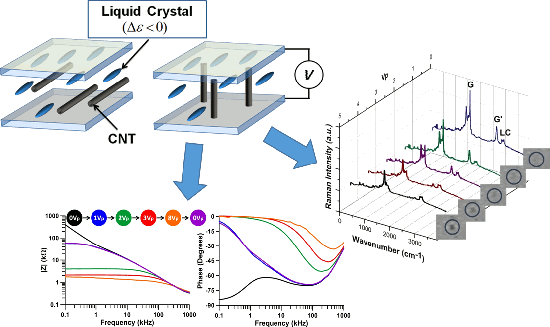
- energy storage system (i.e., a capacitor with an impedance phase value of approximately −90°) or as a conductor (phase value around 0°) with a specific resistivity value (related with the impedance magnitude). As a LC cell is formed by two parallel electrodes with a dielectric material between them (the


Facile synthesis of water-soluble carbon nano-onions under alkaline conditions
Beilstein J. Nanotechnol. 2016, 7, 758–766, doi:10.3762/bjnano.7.67
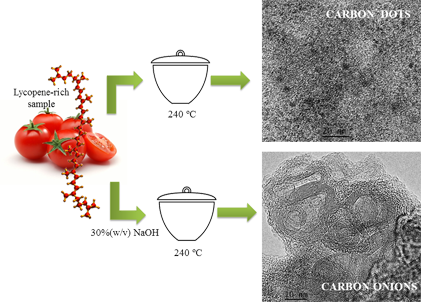
- carbonization; Introduction In the last twenty years, carbon based nanomaterials have received much research attention not only from a basic perspective but also from a practical point of view due to their use in a range of applications such as energy storage, tribology, electronics, medicine, catalysis and


Bacteriorhodopsin–ZnO hybrid as a potential sensing element for low-temperature detection of ethanol vapour
Beilstein J. Nanotechnol. 2016, 7, 501–510, doi:10.3762/bjnano.7.44
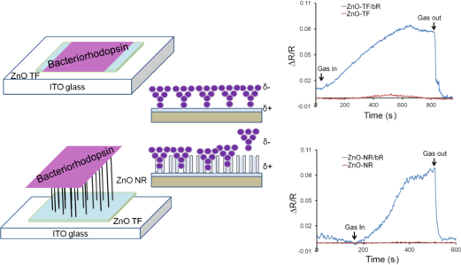
- , SiO2) and polymers (e.g., PVA, gelatine) have been explored for photo–energy conversion, energy storage devices and gas sensing based on photo-conductive activity [12][14][20][21][22]. In parallel, ZnO and its hybrids have evolved as promising structures for sensing and semiconductor applications [23


Synthesis and applications of carbon nanomaterials for energy generation and storage
Beilstein J. Nanotechnol. 2016, 7, 149–196, doi:10.3762/bjnano.7.17

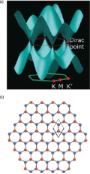
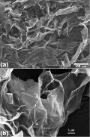
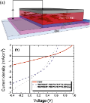
- their remarkable properties can enhance the efficiency of solar cells and energy storage in supercapacitors. Fullerenes, carbon nanotubes and graphene have all been included in solar cells with interesting results, although a number of problems are still to be overcome in order to achieve high
- challenge over the next few years will not just be to produce electricity in a safe and clean way but also how to store the energy produced using technologies more efficient and more environmentally friendly than chemical batteries [13]. Creating small-scale energy storage technologies combined with smart

















Paramagnetism of cobalt-doped ZnO nanoparticles obtained by microwave solvothermal synthesis
Beilstein J. Nanotechnol. 2015, 6, 1957–1969, doi:10.3762/bjnano.6.200
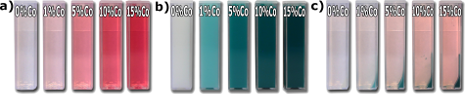
- ][13][14], solar cells [10], catalysts [15], energy storage (battery) materials [16], fast data storage [17], light-emitting diodes (LEDs) [18], gas sensors [10], thermoelectric devices [19], varistors [20][21], window materials for displays [21], laser technology [10], surface acoustic wave devices




Nanostructures for sensors, electronics, energy and environment II
Beilstein J. Nanotechnol. 2015, 6, 1937–1938, doi:10.3762/bjnano.6.197

- development of energy storage systems is necessary in order to allow photovoltaic-based power generation to be independent from the grid. Carbon, one of the most abundant materials found on earth, is the key atomic species in the compounds responsible for greenhouse gas emission and pollution. However, it can
Metal hydrides: an innovative and challenging conversion reaction anode for lithium-ion batteries
Beilstein J. Nanotechnol. 2015, 6, 1821–1839, doi:10.3762/bjnano.6.186
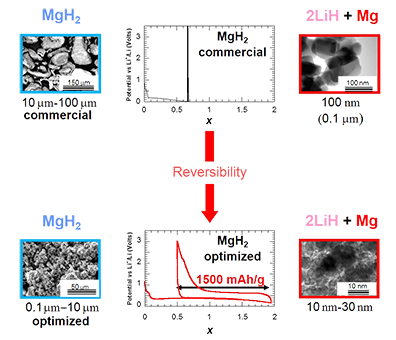
- friendly renewable power sources with enhanced electrical energy conversion efficiency at moderate costs. However, these energy sources, such as windmill or solar cells, are intrinsically intermittent and, consequently, need to be associated with efficient energy storage devices in order to provide
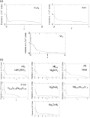
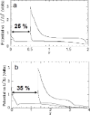
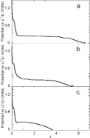
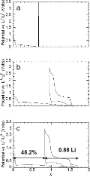
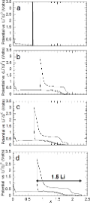
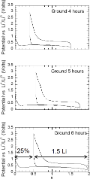
- Mg2MHx with lithium After studying the reaction of titanium hydride with lithium, during which a reaction path involving the formation of the metastable fco δ-TiH phase occurs, the complex hydrides Mg2FeH6, Mg2CoH5, Mg2NiH4 were chosen as models system for a conversion process with high energy storage
- this will require significant technological improvements to become economically viable for large scale material production. Chemical methods, such as encapsulation or confinement strategies used in the design of energy storage and conversion materials, also constitute new synthetic routes that have











Atomic scale interface design and characterisation
Beilstein J. Nanotechnol. 2015, 6, 1708–1711, doi:10.3762/bjnano.6.174
- chemical properties and processes occurring at the surface on a nanoscale are of crucial concern. Nanostructured materials show a great application potential in the areas of nanoelectronics, catalysis, and light harvesting/energy storage, an excellent example being the capability of titanate nanoribbons to
Structural and magnetic properties of iron nanowires and iron nanoparticles fabricated through a reduction reaction
Beilstein J. Nanotechnol. 2015, 6, 1652–1660, doi:10.3762/bjnano.6.167
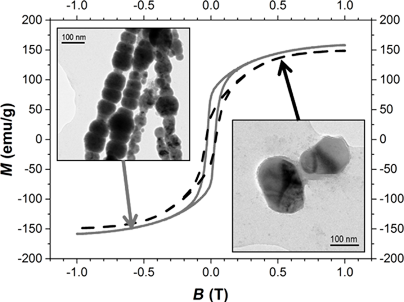
- treatment [3] as well as labelling and separation of biological materials [4]. Besides the biomedical exploitation, iron-based nanostructures can be used in the fields of data storage [5], catalysis [6], energy storage [7] and environmental remediation [8]. However, different properties are required for




Materials for sustainable energy production, storage, and conversion
Beilstein J. Nanotechnol. 2015, 6, 1601–1602, doi:10.3762/bjnano.6.163
- density. At the same time, any long term option for energy storage must be based on sustainable materials involving abundant elements in the Earth’s crust. For the reconversion of hydrogen or organic liquids (energy carriers), efficient fuel cells are needed as converters, preferably those based on non
- elevated temperatures (HT-PEMFC) below 200 °C are discussed by Roswitha Zeis [3]. The field of electrochemical energy storage is particularly challenging. Current Li-ion batteries are not only expensive and have a relatively short lifetime, they are also considered to not have enough energy content to meet
Thermal energy storage – overview and specific insight into nitrate salts for sensible and latent heat storage
Beilstein J. Nanotechnol. 2015, 6, 1487–1497, doi:10.3762/bjnano.6.154
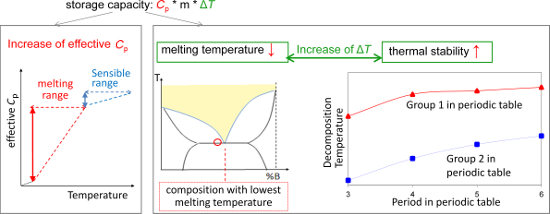
- Nicole Pfleger Thomas Bauer Claudia Martin Markus Eck Antje Worner German Aerospace Center (DLR), Pfaffenwaldring 38–40, 70569 Stuttgart, Germany German Aerospace Center (DLR), Linder Höhe, 51147 Köln, Germany 10.3762/bjnano.6.154 Abstract Thermal energy storage (TES) is capable to reduce the
- demand of conventional energy sources for two reasons: First, they prevent the mismatch between the energy supply and the power demand when generating electricity from renewable energy sources. Second, utilization of waste heat in industrial processes by thermal energy storage reduces the final energy
- ; Review Introduction Thermal energy storage (TES) is achieved by different techniques (Figure 1): sensible heat storage, latent heat storage and chemical heat storage. The term “sensible heat” indicates that the storage process can be sensed by a change of the temperature. The relation of the change in


The Kirkendall effect and nanoscience: hollow nanospheres and nanotubes
Beilstein J. Nanotechnol. 2015, 6, 1348–1361, doi:10.3762/bjnano.6.139

- applications in various modern technological areas including energy storage devices, catalyst, optics and sensors. The last years have witnessed increasing interest in the Kirkendall effect as a versatile route to fabricate hollow nanostructures with different shapes, compositions and functionalities. Although



From lithium to sodium: cell chemistry of room temperature sodium–air and sodium–sulfur batteries
Beilstein J. Nanotechnol. 2015, 6, 1016–1055, doi:10.3762/bjnano.6.105
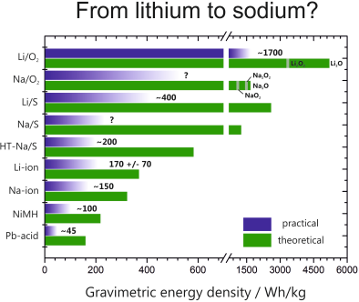
- these differences will benefit a more reversible cell chemistry is still an open question, but some of the first reports on room temperature Na/S8 and Na/O2 cells already show some exciting differences as compared to the established Li/S8 and Li/O2 systems. Keywords: energy storage; lithium–oxygen
- battery; lithium–sulfur battery; sodium–oxygen battery; sodium–sulfur battery; Review 1 Introduction Rechargeable lithium-ion batteries (LIBs) have rapidly become the most important form of energy storage for all mobile applications since their commercialization in the early 1990s. This is mainly due to
- stationary energy storage has become an additional challenge, which also triggers research on alternative batteries. Major efforts are directed towards continuous improvements of the different Li-ion technologies by more efficient packaging, processing, better electrolytes and optimized electrode materials


Electrocatalysis on the nm scale
Beilstein J. Nanotechnol. 2015, 6, 1008–1009, doi:10.3762/bjnano.6.103
- electrocatalysis. This is on the one hand stimulated by applications in energy conversion and energy storage, where highly efficient electrochemical/electrocatalytic processes are considered to be an indispensable part of modern energy concepts based on the use of renewable energy sources. However, it is also
Multiscale modeling of lithium ion batteries: thermal aspects
Beilstein J. Nanotechnol. 2015, 6, 987–1007, doi:10.3762/bjnano.6.102
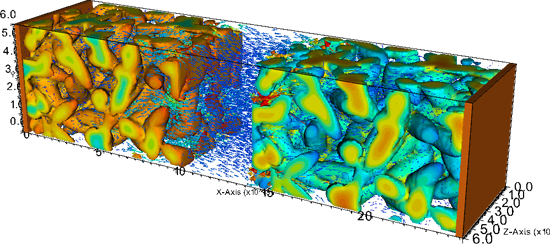
- Arnulf Latz Jochen Zausch German Aerospace Center (DLR), Stuttgart, Germany Helmholtz Institute for Electrochemical Energy Storage, Ulm, Germany University of Ulm, School of Chemistry, Ulm, Germany Fraunhofer Institute for Industrial Mathematics (ITWM), Kaiserslautern, Germany 10.3762/bjnano
- dependency on composition or atomistic structure is the starting point for a rational design of energy storage materials [3]. Density functional theory with all its approximations [4][5] if combined with statistical mechanics methods is in this context the most successful method to simulate material


Simulation tool for assessing the release and environmental distribution of nanomaterials
Beilstein J. Nanotechnol. 2015, 6, 938–951, doi:10.3762/bjnano.6.97
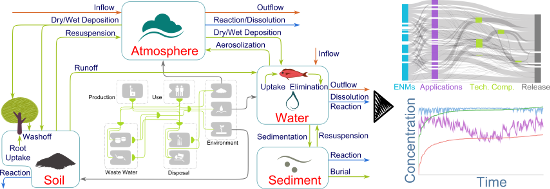
- associated with cosmetic applications, which represent the largest fraction at ≈53%, while those associated with coatings, paints, pigments represent ≈44%, with remainder due to energy applications (e.g., photovoltaics, energy storage [7]), environmental (e.g., remediation [7]), and plastic applications