Search results
Search for "gap" in Full Text gives 760 result(s) in Beilstein Journal of Nanotechnology. Showing first 200.
Upper critical magnetic field in NbRe and NbReN micrometric strips
Beilstein J. Nanotechnol. 2023, 14, 45–51, doi:10.3762/bjnano.14.5
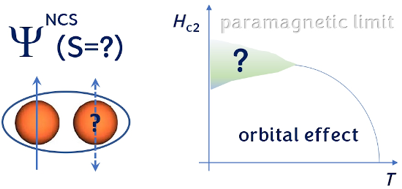
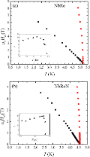
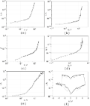
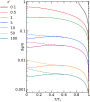
- candidates for the realization of fast superconducting nanowire single-photon detectors (SNSPDs) [1][2][3][4]. Apart from the reduced values of the superconducting gap and short quasi-particle relaxation times [5], the property that makes these materials appropriate to be used as SNSPDs is the high value of
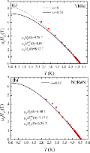
- . Accordingly, paramagnetic pair-breaking effects are absent in spin-triplet superconductors. The Pauli limiting field is given by , where Δ(0) is the superconducting energy gap at zero temperature and μB is the Bohr magneton [15]. For weakly coupled BCS superconductors it is Hp(0) [T] ≈ 1.84Tc [K]. In the

Gap-directed chemical lift-off lithographic nanoarchitectonics for arbitrary sub-micrometer patterning
Beilstein J. Nanotechnol. 2023, 14, 34–44, doi:10.3762/bjnano.14.4
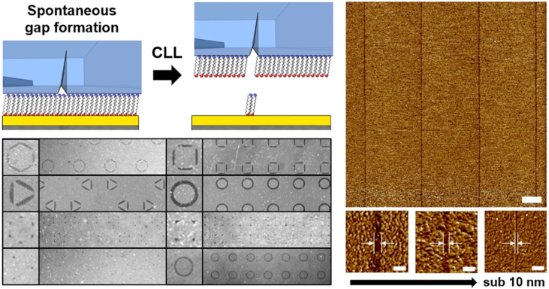
- biorecognition arrays or be transferred to the underneath Au layer for metallic structure creation. By combining CLL process with this gap phenomenon, soft material properties that are previously thought as demerits can be used to achieve sub-10 nm features in a straightforward sketch. Keywords: chemical lift
- -off lithography; gap; self-assembled monolayer; sub-micrometer; surface patterning; Introduction The development of lithographic techniques is crucial to the advancement of the electronics and semiconductor industry, the backbones of modern technology. Advances in photolithography have pushed the
- placed in the gap between the supporting substrate and a capping layer [43][44][45]. On the other hand, capillary force can induce the formation of nanochannel gaps when a structural top layer is brought into contact with the bottom surface [43]. Through these techniques, structures that are at the


Induced electric conductivity in organic polymers
Beilstein J. Nanotechnol. 2022, 13, 1551–1557, doi:10.3762/bjnano.13.128
- conditions, PDP is a wide-gap dielectric material and is characterized by the following parameters: band gap ≈4.3 eV, electronic work function ≈4.2 eV, electron affinity ≈2 eV, first ionization potential ≈6.2 eV. Experimental evaluations of the electronic parameters of PDP have been made earlier by various
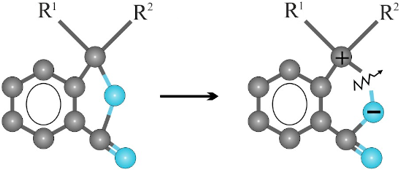
- characterized by non-zero density of electronic states within the energy gap. The depth of such states increases if the system accepts an extra electron (Figure 1b), thus indirectly enabling electric conductivity along the polymer chain [11]. Later the validity of this model was supported experimentally and



Non-stoichiometric magnetite as catalyst for the photocatalytic degradation of phenol and 2,6-dibromo-4-methylphenol – a new approach in water treatment
Beilstein J. Nanotechnol. 2022, 13, 1531–1540, doi:10.3762/bjnano.13.126
- igneous and metamorphic rocks [12]. It is also found in sediments and soils. Magnetite has the smallest energy gap, the highest conductivity, and one of the lowest reduction potentials among natural minerals. It is an important reducer of heavy metals and organic pollutants in aquatic environments. Due to
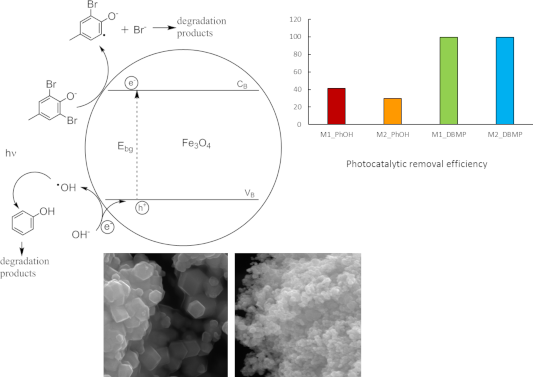
- previous publication of ours [19]. The absorption spectra of the catalysts showed noticeable differences (Figure 1b). Using the absorption spectra, the electron gap energies for M1 and M2 were determined to be 0.11 V and 1.75 V, respectively (Table 1) [20]. Phase identification of the magnetite structure


A TiO2@MWCNTs nanocomposite photoanode for solar-driven water splitting
Beilstein J. Nanotechnol. 2022, 13, 1520–1530, doi:10.3762/bjnano.13.125
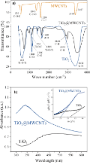
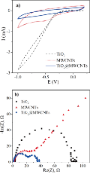
- spectra of the prepared catalysts are shown in Figure 6b. The optical absorption of TiO2 is in the UV region, while the light absorption edge of TiO2@MWCNTs redshifts to the visible-light region. As seen from the Tauc plots (inset of Figure 6b), the optical band gap of TiO2 and TiO2@MWCNTs catalysts are
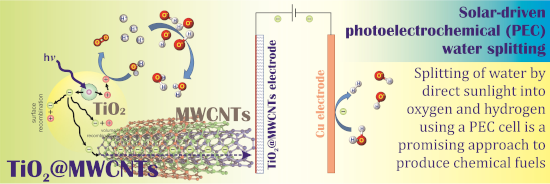
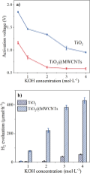
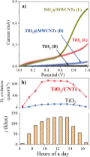
- exhibits poor hydrogen production under sunlight irradiation. It could be explained by the 3.14 eV optical band gap of TiO2, which absorbs only UV light. In addition, the fast recombination of the photogenerated (h+/e−) pairs contributes to the poor photochemical catalysis activity of the TiO2 electrode



Coherent amplification of radiation from two phase-locked Josephson junction arrays
Beilstein J. Nanotechnol. 2022, 13, 1445–1457, doi:10.3762/bjnano.13.119
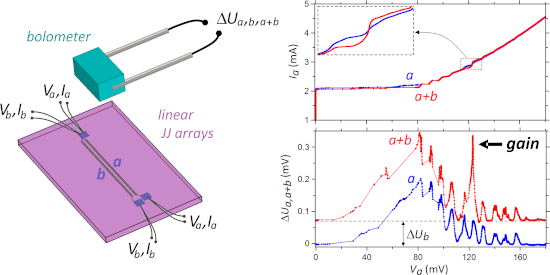
- transform an applied constant voltage V into electromagnetic (EM) oscillations. The fundamental Josephson frequency, fJ, is connected to V via the ac-Josephson relation, hfJ = 2eV, where h is the Planck constant and e is the elementary charge. Josephson generation occurs up to the superconducting gap
- voltage. Therefore, fJ can be up to about 1 THz for low-Tc JJs [1] and can reach tens of terahertz for high-Tc JJs [2][3]. Thus, a JJ has the potential to be the basis of compact, continuous-wave and tunable terahertz generators, which would facilitate solving the problem of so-called “THz gap” [4]. A
- of the opposite long side. All lumped elements are connected by ideal conductors located at the edges of mesh. The gap between two arrays is 0.1 mm. The JJs are described by the RSJ model [20]. The corresponding equations of junction dynamics are solved self-consistently with Maxwell equations, which


Density of states in the presence of spin-dependent scattering in SF bilayers: a numerical and analytical approach
Beilstein J. Nanotechnol. 2022, 13, 1418–1431, doi:10.3762/bjnano.13.117
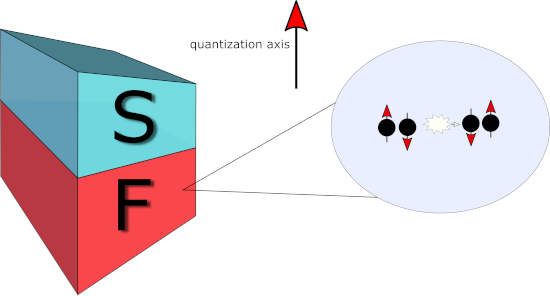
- is well-known [1][2][3][79]. It has a so-called mini-gap at the subgap energies E < Δ (where Δ is the superconducting gap), whose magnitude depends on the NS interface parameters and the thickness of the N layer [79][80]. Replacing the N layer with a ferromagnetic metal F results in a more
- particular, we can see the evolution of the DOS peaks. For h = 0, that is, for the case of an SN bilayer, we see the well-known DOS structure with the characteristic mini-gap at energies E < Δ (Figure 2a, black dotted line) [79]. This proximity-induced mini-gap originates from the effective backscattering of
- the quasiparticles at the SN interface due to a finite interface resistance [99]. As h increases, the DOS splits for the spin-up and spin-down electrons, which results in the mini-gap peak splitting. For a certain value of h, the mini-gap closes, resulting in the DOS enhancement at zero energy as seen


Straight roads into nowhere – obvious and not-so-obvious biological models for ferrophobic surfaces
Beilstein J. Nanotechnol. 2022, 13, 1345–1360, doi:10.3762/bjnano.13.111
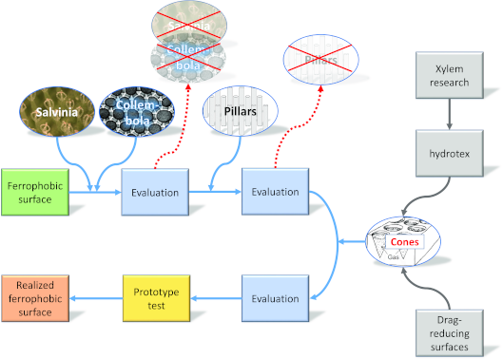
- , which attempts to bridge the gap between biology and engineering (or applied sciences in general). This gap is quite profound: Whereas biologists are interested in organisms, engineers are interested in designing successful technical constructions. Naturally, the aim of an applied science project (a


Recent trends in Bi-based nanomaterials: challenges, fabrication, enhancement techniques, and environmental applications
Beilstein J. Nanotechnol. 2022, 13, 1316–1336, doi:10.3762/bjnano.13.109
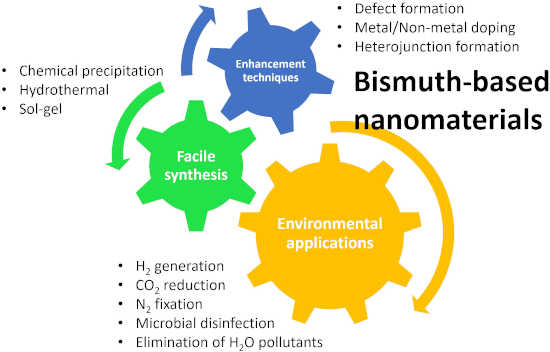
- . This gap is essential for improving the material’s light-harvesting capabilities [78][79]. Consequently, in an attempt to improve the photocatalytic efficiency for water purification and other environmental applications, a variety of techniques, such as defect formation, metal/non-metal doping
- , Cl), Br (I). Dong et al. [88] reported the fabrication of boron-doped Bi3O4Cl ultrathin nanosheets via a solvothermal technique, which were found to have enhanced solar absorption and efficient electron–hole separation. The B atoms enhance the photocatalytic performance via (1) producing mid-gap
- shown in Figure 5a may be used to classify the heterojunctions between semiconductors as either a straddling gap (type I), an uneven gap (type II), or a broken gap (type III). Type-II heterojunctions have garnered the most interest because of the improved photogenerated electron–hole separation they




Roll-to-roll fabrication of superhydrophobic pads covered with nanofur for the efficient clean-up of oil spills
Beilstein J. Nanotechnol. 2022, 13, 1228–1239, doi:10.3762/bjnano.13.102
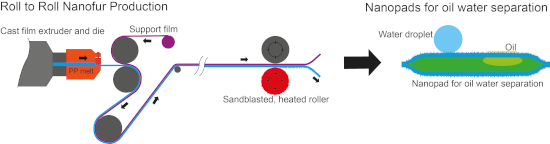
- slightly above the melting point of the respective PP type (170 °C in our case). For this temperature the viscosity of the polymer melt was sufficient to enable the hot-pulling process. The second roller of the calender was unheated and had a smooth surface. The gap between the rollers was adjusted to be
- uniformity over the whole film area. The most important parameter for high-quality nanofur is the gap size between the upper and lower roller. It should be set to a few tens of micrometers below the nominal material thickness; the contact angle is highest if the roller just touches the surface without
- applying high embossing forces. In this case it was set to 350 µm (the nominal thickness of the PP/COC laminate was 400 µm). Since the polymer laminate has small variations in thickness, a tradeoff must be made between setting the gap at the optimal thickness for maximum contact angle and setting it below




A cantilever-based, ultrahigh-vacuum, low-temperature scanning probe instrument for multidimensional scanning force microscopy
Beilstein J. Nanotechnol. 2022, 13, 1120–1140, doi:10.3762/bjnano.13.95
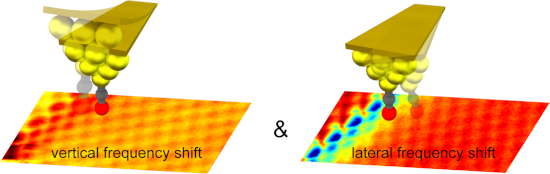
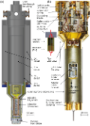
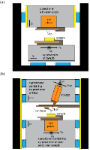
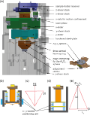
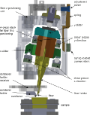
- cantilever-based AFM offers experimental flexibility by permitting multimodal or multifrequency operations with superior force derivative sensitivities and bandwidths. Our instrument has a sub-picometer gap stability and can simultaneously map not only vertical and lateral forces with atomic-scale resolution
- noise and measurement bandwidths”, and “STM noise spectrum and tip–sample gap stability measurements”. Finally, various atomic-scale STM and AFM results described in section “Results and Discussion” structured into various subsections demonstrate the performance of our new AFM for such work. The last
- suspension springs that reach through cylindrical tubes running through the LHe tank and are mounted on top of the tank. Together with the Eddy current damping system mounted at the bottom of the cryostat, this provides excellent vibration isolation such that a tip–sample gap stability better than 1 pm can





Recent advances in green carbon dots (2015–2022): synthesis, metal ion sensing, and biological applications
Beilstein J. Nanotechnol. 2022, 13, 1068–1107, doi:10.3762/bjnano.13.93
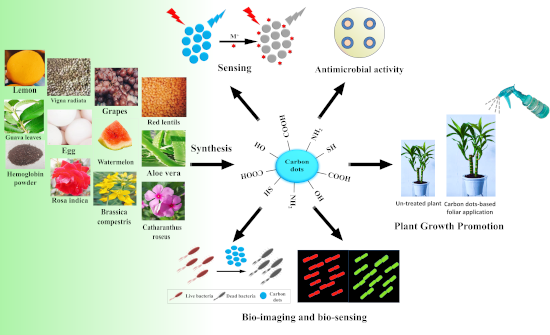
- structure for endogenous nitrogen-doping in a green synthesis of CD-based room-temperature phosphorescent (RTP) materials. The materials had lifetimes of up to 271.2 ms with a lower energy gap and 350 nm of excitation (0.32 eV). Furthermore, when iron ions (Fe3+) were introduced, they displayed appropriate
- though they have the same chemical surface groups and particle size distribution, they both have varying levels of surface oxidation. The emission wavelength moved from 518 to 543 nm as the degree of surface oxidation increased, which gives an indication about the reduction of band gap between LUMO and




Spindle-like MIL101(Fe) decorated with Bi2O3 nanoparticles for enhanced degradation of chlortetracycline under visible-light irradiation
Beilstein J. Nanotechnol. 2022, 13, 1038–1050, doi:10.3762/bjnano.13.91
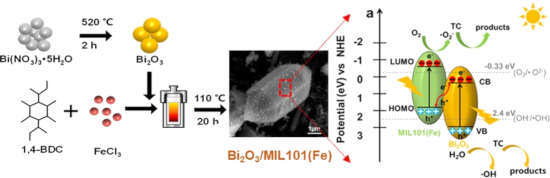
- use carbon nanotubes or carbon quantum dots to modify MIL101(Fe) to enhance its conductivity and broaden its visible-light response [37][38]. Another strategy is to construct MIL101-based heterostructures with the aid of narrow-gap semiconductors to promote the separation and transfer of


Analytical and numerical design of a hybrid Fabry–Perot plano-concave microcavity for hexagonal boron nitride
Beilstein J. Nanotechnol. 2022, 13, 1030–1037, doi:10.3762/bjnano.13.90
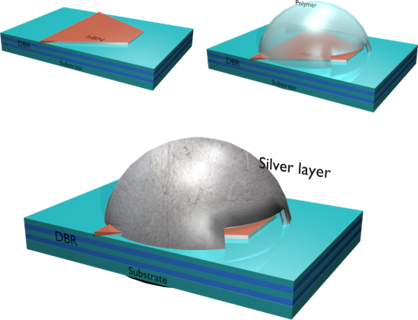
- parameters of the plano-concave microcavity When a polymer layer is added inside a bare microcavity, as in our case, two fundamental Gaussian beams are formed inside the air gap and polymer layer, respectively (Figure 3) [16]. The spotsize W02 (Figure 3) of the fundamental Gaussian mode (TEM00 ) inside the
- known as the q-parameters for the Gaussian beams, where z2 = L2 − Lp, z1 = L1 and zR,1,2 is the Rayleigh length for each beam. For a Gaussian beam passing through a plane dielectric interface, we have A = B = C = 0, and D = n2/n1, where n1 = 1 is the refractive index of the air gap, therefore, by


Numerical study on all-optical modulation characteristics of quantum cascade lasers
Beilstein J. Nanotechnol. 2022, 13, 1011–1019, doi:10.3762/bjnano.13.88
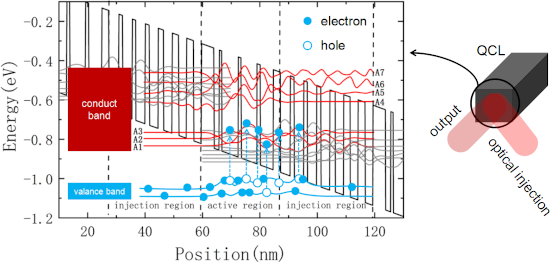
- noting that, when the wavelength of the modulating light is close to the band gap of the active region of the QCL, most of the injected light energy excites the electrons in the valence band to transition to the conduction band and then to the upper laser subband, thereby increasing the power of the
- modulating light. However, with a decrease in the modulated laser wavelength, its energy becomes greater than the band gap between the valence band and the lower laser subband of the conduction band of the QCL active region, with the excess energy exciting the electrons to a higher energy level or high


Comparing the performance of single and multifrequency Kelvin probe force microscopy techniques in air and water
Beilstein J. Nanotechnol. 2022, 13, 922–943, doi:10.3762/bjnano.13.82
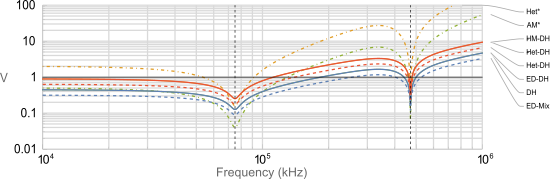
- performance gap narrows significantly, and the technique choice will likely be based on ease of implementation and spatial resolution requirements of the experiment. For operation in liquid environments, ED-based modes offer very low VAC requirements, optimal CPD detection, and high SNR. This mode is a clear
Efficiency of electron cooling in cold-electron bolometers with traps
Beilstein J. Nanotechnol. 2022, 13, 896–901, doi:10.3762/bjnano.13.80
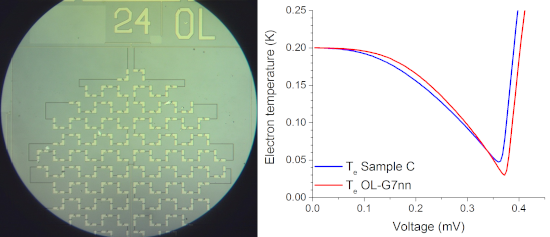
- is the NIS junction voltage, Te and Ts are the electron temperatures in the normal metal and the superconductor, is the density of states in the superconductor, Δ is the superconducting gap, and kB is the Boltzmann constant. Using the integral of the tunneling current through the NIS junction


Self-assembly of C60 on a ZnTPP/Fe(001)–p(1 × 1)O substrate: observation of a quasi-freestanding C60 monolayer
Beilstein J. Nanotechnol. 2022, 13, 857–864, doi:10.3762/bjnano.13.76
- metallic substrates. Here, the hybridization between the molecular orbitals and the electronic states of the substrate generally modifies the intrinsic properties of the molecules, inducing the broadening of the molecular resonances, the narrowing of the band gap, and the development of interface states
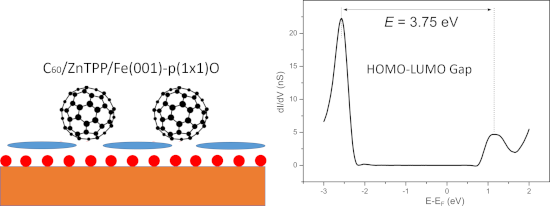
- to C 2p electrons [56]. Therefore, it is present with only slight modifications both in ZnTPP/Fe(001)–p(1 × 1)O and C60/ZnTPP/Fe(001)–p(1 × 1)O samples. In order to determine the HOMO–LUMO gap of the C60 film, STS measurements have been acquired for both negative and positive bias to investigate the
- electronic gap equal to 3.75 eV. Finally, work function measurements have been performed to evaluate the charge transfer between the different layers constituting the heterostructure. Generally, electron transfer from the substrate (overlayer) to the overlayer (substrate) induces an increase (decrease) of


Modeling a multiple-chain emeraldine gas sensor for NH3 and NO2 detection
Beilstein J. Nanotechnol. 2022, 13, 721–729, doi:10.3762/bjnano.13.64
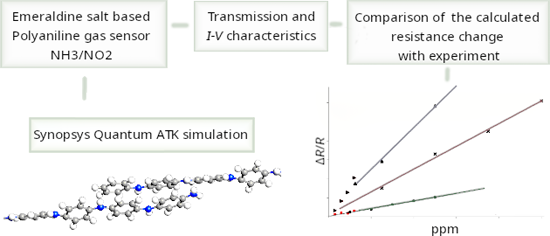
- central benzene region (0D+0U+1C), see Figure 4, and (v) their combinations were modeled. The relative resistance was estimated in the same way as for one chain with ammonia and nitrogen dioxide described above. As a first step, the effect of a discontinued polyaniline chain was studied. The gap between
- in position “u” (undoped), also denominated 2D+2U. Two PANI chains overlapping in the middle with a gap of 3 Å. The position (c) is for ammonia or nitrogen dioxide molecules. Further positions are doped (d) and undoped (u), shown here with an ammonia molecule. Two PANI chains overlapping in the
- middle with a gap of 3 Å top view. Between the chains one ammonia molecule is located. The relative resistance change of emeraldine salt, one molecule chain was taken into account, by the presence of several ammonia gas molecules near the chain, in the positions as described above. The relative


Experimental and theoretical study of field-dependent spin splitting at ferromagnetic insulator–superconductor interfaces
Beilstein J. Nanotechnol. 2022, 13, 682–688, doi:10.3762/bjnano.13.60
- gap edge. Such shifts and following possibility to create of Shiba bands [33][34] have been investigated theoretically also recently in related systems [35][36]. Spin-active scattering in FI–S bilayers has been discussed, for example , in [29] in the clean and in [37] in the dirty limit. Here, we
- effects. On one hand, the initial peaks at the T = 0 superconductor gap Δ0 are spin-split into two separated peaks, each positioned depending on δφ and Δ. On the other hand, Δ self-consistently also depends on the spin mixing angle. In Figure 3, we plot the density of states for T ≪ Tc with self
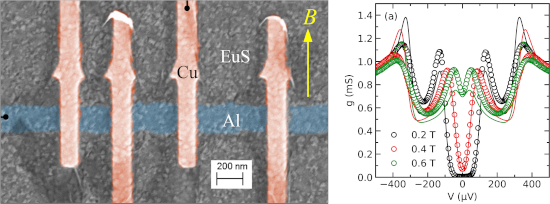
- fabrication, magnetic properties, and experimental procedures can be found in [42][43]. Examples of the conductance spectra measured for different applied fields in one of the junctions are shown in Figure 5a. At small fields, the spectra exhibit a well-defined gap with negligible subgap conductance



A superconducting adiabatic neuron in a quantum regime
Beilstein J. Nanotechnol. 2022, 13, 653–665, doi:10.3762/bjnano.13.57
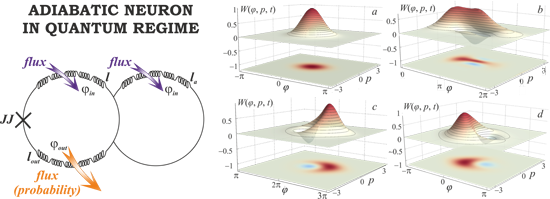
- preservation of the interlevel distance is observed during the rise/fall periods of the signal. A different behavior is observed for l > l* where during the rise/fall periods of the signal, a double-well potential appears (Figure 2d). Here, the two lowest close energy levels are separated by an energy gap from


Fabrication and testing of polymer microneedles for transdermal drug delivery
Beilstein J. Nanotechnol. 2022, 13, 629–640, doi:10.3762/bjnano.13.55
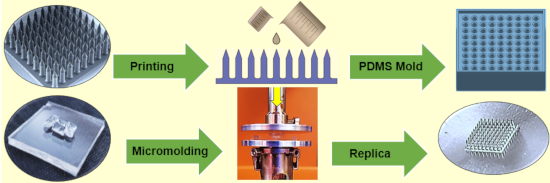
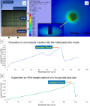
- master MN arrays (9 × 9) were fabricated using two-photon polymerization (TPP). A previous gap in the detailed characterization of the embossing process was investigated, showing an average of 4.99 ± 0.35% longitudinal shrinkage and 2.15 ± 0.96% lateral enlargement in the molded MN replicas. The effects



Approaching microwave photon sensitivity with Al Josephson junctions
Beilstein J. Nanotechnol. 2022, 13, 582–589, doi:10.3762/bjnano.13.50
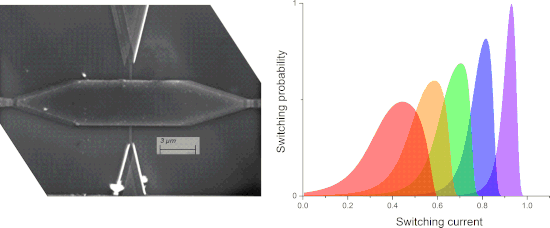
- understood from Figure 2b. The superconducting gap decreases by a few percent due to the temperature increase from 265 to 500 mK according to the BCS model. It leads to a minor decrease in the JJ critical current. Thus, the qualitative picture remains the same for 265 and 500 mK: The height of the potential


Revealing local structural properties of an atomically thin MoSe2 surface using optical microscopy
Beilstein J. Nanotechnol. 2022, 13, 572–581, doi:10.3762/bjnano.13.49
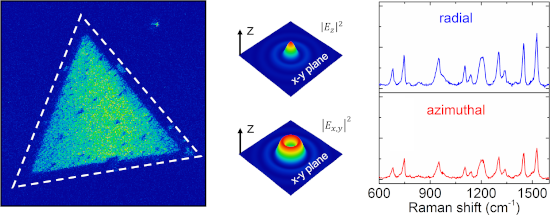
- effects strongly influence the optical and electronic properties of 2D-TMDC materials. Optical second harmonic generation (SHG) spectroscopy has been recently used to study the presence of mid-gap states in the electronic band structure of WS2 flakes, which are induced by sulfur vacancies [14]. In


Effects of substrate stiffness on the viscoelasticity and migration of prostate cancer cells examined by atomic force microscopy
Beilstein J. Nanotechnol. 2022, 13, 560–569, doi:10.3762/bjnano.13.47
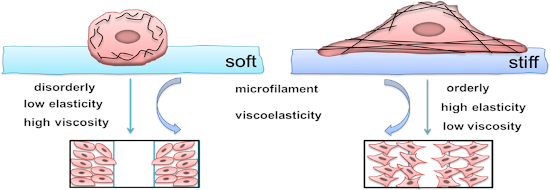
- stiffness dependent. As the stiffness of the substrate increased, the cell migration rate also increased. Specifically, compared to HPV-PZ-7 cells on stiff substrates (35 kPa), PC-3 cells moved in a sheet-like fashion and nearly closed the gap. Cells on intermediate substrates (19 kPa) had the next lowest
- cell migration, cells were cultured on PAA gels with different stiffness for 48 h, removed by trypsinization, and seeded at a density of 2 × 10⁶ cells/mL in six-well plates to a confluent monolayer. A 10 µL pipet tip was used to scrape the cell monolayer in a straight line to create an empty gap. The