Search results
Search for "graphene" in Full Text gives 563 result(s) in Beilstein Journal of Nanotechnology. Showing first 200.
DNA aptamer selection and construction of an aptasensor based on graphene FETs for Zika virus NS1 protein detection
Beilstein J. Nanotechnol. 2022, 13, 873–881, doi:10.3762/bjnano.13.78
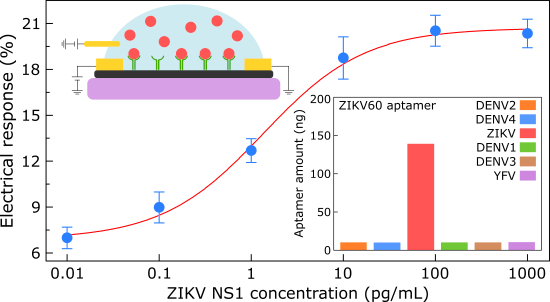
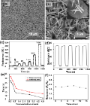
- ZIKV NS1 compared to NS1 of DENV and YFV. Furthermore, graphene field-effect transistor devices functionalized with ZIKV60 exhibit an evident identification of NS1 protein diluted in human serum. These results point to the applicability of biosensors based on the ZIKV60 aptamer for the differential
- diagnosis of the Zika virus. Keywords: aptamer; biosensor; graphene; NS1 protein; Zika virus; Introduction The genus Flavivirus comprises 53 virus species that are transmitted by mosquitoes, and the majority of these have the potential to infect humans. Mosquito-transmitted viruses are a significant
- number BR1020210252790), exhibits high binding affinity to NS1 with a Kd value in the nanomolar range. Also, this ligand showed a higher specificity for ZIKV than for DENV and YFV. Furthermore, we functionalized multiple graphene field-effect transistors with ZIKV60 to demonstrate, by electrical



Self-assembly of C60 on a ZnTPP/Fe(001)–p(1 × 1)O substrate: observation of a quasi-freestanding C60 monolayer
Beilstein J. Nanotechnol. 2022, 13, 857–864, doi:10.3762/bjnano.13.76
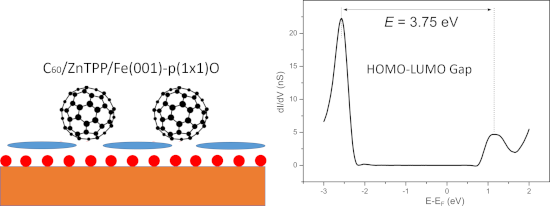
- layer of 2D material, such as graphene [27][28], hexagonal boron nitride [29][30][31] and MoS2 [32][33]. Moreover, an organic layer inserted between the substrate and the overlayer has been shown to be effective in improving the order of the molecular film [34][35] or restoring its original electronic


Optimizing PMMA solutions to suppress contamination in the transfer of CVD graphene for batch production
Beilstein J. Nanotechnol. 2022, 13, 796–806, doi:10.3762/bjnano.13.70
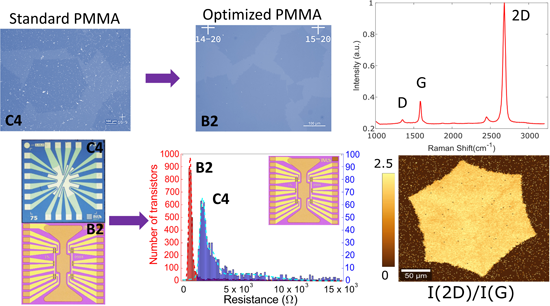
- 4710-057, Portugal 10.3762/bjnano.13.70 Abstract Mass production and commercial adoption of graphene-based devices are held back by a few crucial technical challenges related to quality control. In the case of graphene produced by chemical vapor deposition, the transfer process represents a delicate
- step that can compromise device performance and reliability, thus hindering industrial production. In this context, the impact of poly(methyl methacrylate) (PMMA), the most common support material for transferring graphene from the Cu substrate to any target surface, can be decisive in obtaining
- reproducible sample batches. Although effective in mechanically supporting graphene during the transfer, PMMA solutions needs to be efficiently designed, deposited, and post-treated to serve their purpose while minimizing potential contaminations. Here, we prepared and tested PMMA solutions with different




Efficient liquid exfoliation of KP15 nanowires aided by Hansen's empirical theory
Beilstein J. Nanotechnol. 2022, 13, 788–795, doi:10.3762/bjnano.13.69
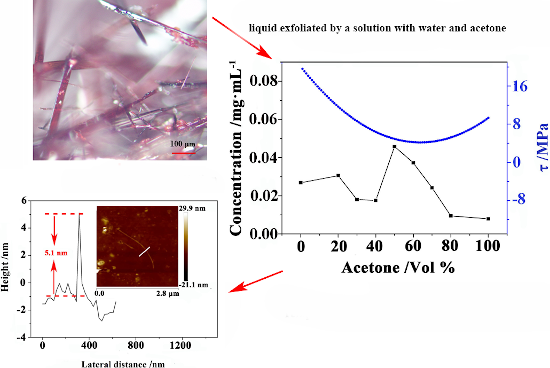
- properties have been obtained by the synthesis of different materials, but also low-dimensional materials with different properties than those of bulk materials have been synthesized by physical and chemical methods. For instance, Bingjun Yang used one-dimensional graphene nanoscroll-wrapped MnO
- improved by adjusting the composition and type of solutions used in the liquid-phase exfoliation [15][16][17]. This theory has been successfully used for improving the exfoliation efficiency in several low-dimensional materials, such as carbon, graphene, metal oxides, and fibrous phosphorus. [18]. In a


Recent advances in nanoarchitectures of monocrystalline coordination polymers through confined assembly
Beilstein J. Nanotechnol. 2022, 13, 763–777, doi:10.3762/bjnano.13.67
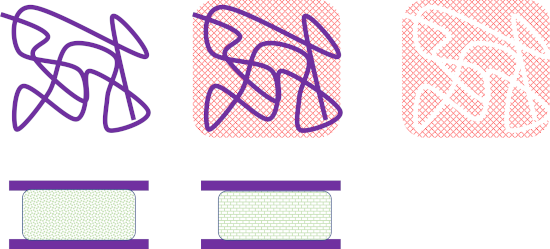
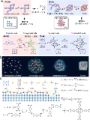
- graphene oxide networks, (c) carbon nanotubes, and (d) boron nitride networks. Figure 4 was reprinted with permission from [111], Copyright 2021 American Chemical Society. This content is not subject to CC BY 4.0. (a) Schematic illustration of synthesis of SOM-ZIF-8. SOM stands for single-crystal ordered




A nonenzymatic reduced graphene oxide-based nanosensor for parathion
Beilstein J. Nanotechnol. 2022, 13, 730–744, doi:10.3762/bjnano.13.65
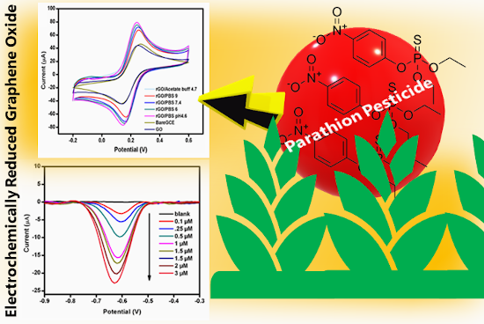
- the fabrication of a robust, nonenzymatic electrochemical-sensing electrode modified with electrochemically reduced graphene oxide (ERGO) to detect PT residues in environmental samples (e.g., soil, water) as well as in vegetables and cereals. The ERGO sensor shows a significantly affected
- ; graphene oxide; nonenzymatic approach; parathion; pesticides; square-wave voltammetry; Introduction Crop production is constantly increasing to fulfil the demands of the growing population. The protection of crops against insects is a big challenge for our society. Pesticides have indiscriminately been
- activities at the electrode surface, potentially leading to the fabrication of nonenzymatic electrochemical nanosensors for detecting specific OPs on the electroactive surface [2][11][17][18][19]. For example, electrochemical sensing platforms modified with zirconia-embedded PEDOT membrane, graphene


Modeling a multiple-chain emeraldine gas sensor for NH3 and NO2 detection
Beilstein J. Nanotechnol. 2022, 13, 721–729, doi:10.3762/bjnano.13.64
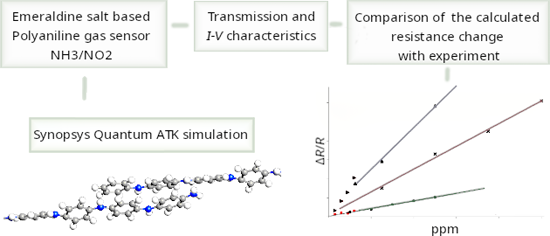
- gradient approximated (GGA) Perdew–Burke–Ernzerhof (PBE) exchange–correlation functional was used. Guo et al. [5] investigated the graphene/polyaniline adsorption energy of NH3, CO, NO, and H2 using DFT and molecular dynamics computations. From this, graphene/PANI is highly sensitive to NH3 in comparison


Tunable high-quality-factor absorption in a graphene monolayer based on quasi-bound states in the continuum
Beilstein J. Nanotechnol. 2022, 13, 675–681, doi:10.3762/bjnano.13.59
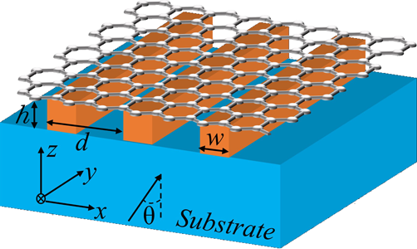
- /bjnano.13.59 Abstract A tunable graphene absorber, composed of a graphene monolayer and a substrate spaced by a subwavelength dielectric grating, is proposed and investigated. Strong light absorption in the graphene monolayer is achieved due to the formation of embedded optical quasi-bound states in the
- , which can also be utilized as a thermal emitter. Besides, the spectral position of the absorption peak can not only be adjusted by changing the geometrical parameters of dielectric grating, but it is also tunable by a small change in the Fermi level of the graphene sheet. This novel scheme to tune the
- absorption of graphene may find potential applications for the realization of ultrasensitive biosensors, photodetectors, and narrow-band filters. Keywords: bound states in the continuum; graphene; gratings; selective absorption; Introduction Absorbers possess a wide range of applications, including radar


Reliable fabrication of transparent conducting films by cascade centrifugation and Langmuir–Blodgett deposition of electrochemically exfoliated graphene
Beilstein J. Nanotechnol. 2022, 13, 666–674, doi:10.3762/bjnano.13.58
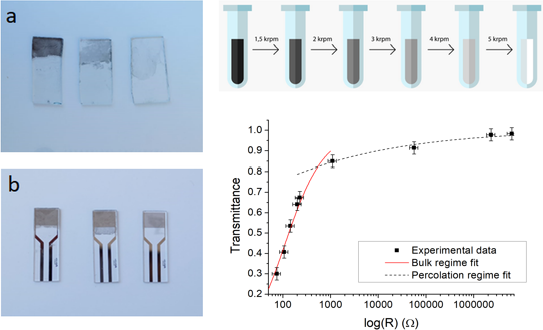
- Physics, University of Belgrade, Mike Petrovića Alasa 12–14, 11351 Belgrade, Serbia 10.3762/bjnano.13.58 Abstract Electrochemical exfoliation is an efficient and scalable method to obtain liquid-phase graphene. Graphene in solution, obtained through electrochemical exfoliation or other methods, is
- typically polydisperse, containing particles of various sizes, which is not optimal for applications. We employed cascade centrifugation to select specific particle sizes in solution and prepared thin films from those graphene particles using the Langmuir–Blodgett assembly. Employing centrifugation speeds
- quantitatively compared to results found in literature that are obtained using other, more complex graphene film fabrication methods, and is found to occur with a percolation exponent and percolative figure of merit that are of the same order as results in literature. A maximum optical transparency of 82.4% at a


Antibacterial activity of a berberine nanoformulation
Beilstein J. Nanotechnol. 2022, 13, 641–652, doi:10.3762/bjnano.13.56
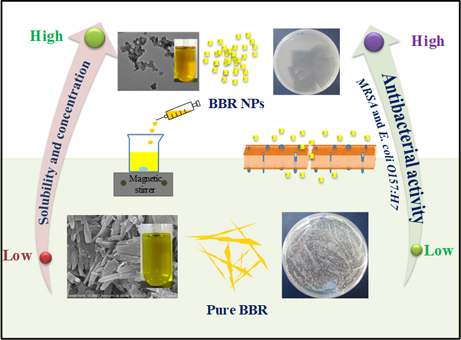
- types of nanoformulations, such as polymer-, lipid-, dendrimer-, graphene-, gold-, or silver-based nanoparticles, have been used for the delivery of BBR [29][30][31]. Yu et al. [29] prepared poly(ethylene glycol)–lipid–poly(lactic-co-glycolic acid) nanoparticles loaded with BBR to improve the oral



Comparative molecular dynamics simulations of thermal conductivities of aqueous and hydrocarbon nanofluids
Beilstein J. Nanotechnol. 2022, 13, 620–628, doi:10.3762/bjnano.13.54
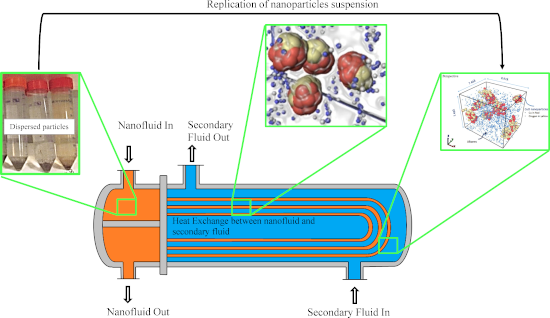
- the extended theoretical observation of thermal conductivity and its correlation with different percentages of mass fraction of graphene nanosheets loaded into ethylene glycol (EG). An increasing trend of the thermal conductivity of the nanofluid was observed (i.e., from 0.246 to 0.251 W·m−1·K−1 at
- investigate thermal properties of different hybrid nanofluids, Singh et al. [35] used theoretical and experimental results of GO–CuO/DW (graphene oxide and copper oxide nanoparticles dispersed in distilled water) and compared those with mononanofluids (i.e., GO/DW and CuO/DW) at different temperatures. The


Revealing local structural properties of an atomically thin MoSe2 surface using optical microscopy
Beilstein J. Nanotechnol. 2022, 13, 572–581, doi:10.3762/bjnano.13.49
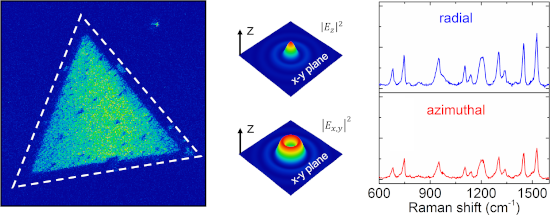
- , including graphene and 2D-TMDC materials, are unique platforms for SERS investigations based on the chemical mechanism [21]. Recently, enhanced Raman signals of rhodamine 6G (R6G) molecules on an oxygen plasma-treated MoS2 flake were reported, because the symmetry of the R6G molecule can be modified through
- the excitation energy, leading to a giant chemical enhancement on partially oxidized MoS2 [23]. It has been also reported that the energy levels and orientation of the Raman-active probe molecule on graphene could strongly influence the Raman enhancement. Benefiting from the face-on molecular
- orientation and molecular energy levels in the vicinity of the Fermi level of graphene, the charge-transfer effect can become more pronounced [24][25]. In summary, the structural irregularities in 2D materials and molecular probe both can impact the strength of molecule–substrate interactions and then modify


Influence of thickness and morphology of MoS2 on the performance of counter electrodes in dye-sensitized solar cells
Beilstein J. Nanotechnol. 2022, 13, 528–537, doi:10.3762/bjnano.13.44
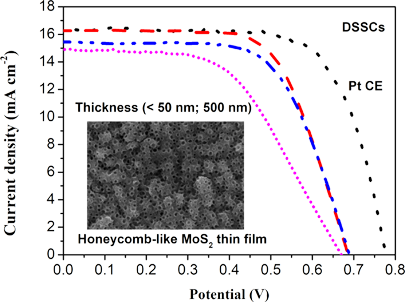
- catalytic activity. Li et al. reported the synthesis of MoS2/graphene composite films on FTO, which were directly used as CE for DSSCs without further thermal treatment. The power conversion efficiency (PCE) of the DSSCs was 8.01%, which was comparable to that of a Pt CE (8.21%) [21]. Quy et al. prepared
- to a uniform thin layer when changing the ED technique from potentiostatic (PS) mode to potential-reversal (PR) mode. This resulted in an improvement in PCE from 6.89% to 8.77% [24]. In general, above studies still have limits such as depositing MoS2 on graphene or carbon dots, instead of directly


A non-enzymatic electrochemical hydrogen peroxide sensor based on copper oxide nanostructures
Beilstein J. Nanotechnol. 2022, 13, 424–436, doi:10.3762/bjnano.13.35
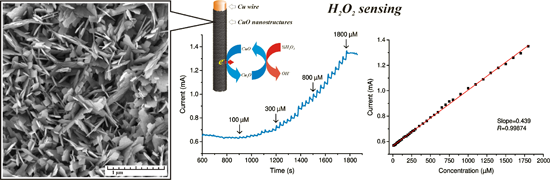
- ]. Nanostructured materials are widely used as the working surface of the electrode [47][48][49]. The most common are transition metal nanoparticles [33][37][50][51][52][53][54], carbon nanotubes [8], metal oxides [55][56][57][58][59][60][61][62][63][64], graphene [32][33], and ordered mesoporous carbon [38][65][66




Electrostatic pull-in application in flexible devices: A review
Beilstein J. Nanotechnol. 2022, 13, 390–403, doi:10.3762/bjnano.13.32
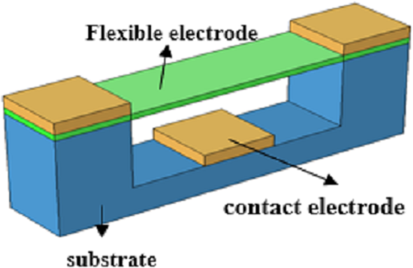
- structure of the flexible devices. Nanoelectromechanical (NEM) switches made of carbon nanotubes (CNTs) [2][3][4], graphene (GR) [5][6][7], nanowires (NWs) [8][9][10], and other flexible materials are the most basic devices for a variety of component and system level applications, such as low-loss switches
- quickly realize positioning and alignment of CNTs in 10–60 s. GR-NEM switches Based on the large-scale fabrication of graphene (GR) using CVD and oxygen plasma etching, GR-NEM switches have attracted the attention of researchers. Table 2 summarizes GR-NEM switch structures described in the literature. Two
- common electrode materials are GR-Au and GR-GR. By adjusting the size of the graphene sheets, the number of layers and the gap, different pull-in voltages can be obtained. GR-Au: A typical GR-Au structure is shown in Figure 3a. As the structure requires a sacrificial layer to keep GR suspended and avoid


Relationship between corrosion and nanoscale friction on a metallic glass
Beilstein J. Nanotechnol. 2022, 13, 236–244, doi:10.3762/bjnano.13.18
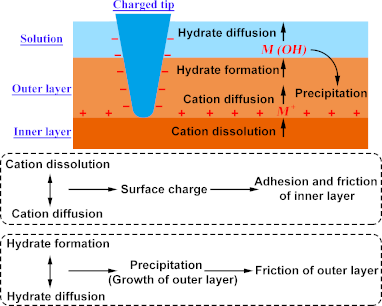
- layer was removed. Friction, however, is higher in the surrounding area, where the tip is still plowing the outer layer. Zhao et al. [33] reported a friction decay with repeated scanning on a graphene-coated Cu substrate, caused by the hardening of the underlying Cu substrate. For the oxidized metallic
- influence of plastic deformation of the MG substrate. Decreasing friction force with repetitive scans was observed before in friction measurements on a graphene-coated Cu substrate [33]. In this work, when the applied load was increased stepwise, the friction force exhibited a sudden increase followed by a


Engineered titania nanomaterials in advanced clinical applications
Beilstein J. Nanotechnol. 2022, 13, 201–218, doi:10.3762/bjnano.13.15
- copper, graphene, silver, silver and nitrogen, sulfur and cadmium sulfide, or transition metals was found to be effective for bringing the excitation wavelength near to the biological window (650 ≤ λ ≤ 950 nm and 1000 ≤ λ ≤ 1350 nm) by providing secondary energy levels close to TiO2 conduction band


A comprehensive review on electrospun nanohybrid membranes for wastewater treatment
Beilstein J. Nanotechnol. 2022, 13, 137–159, doi:10.3762/bjnano.13.10
- alone [12]. In addition, ENHs have been utilized in energy applications as well. Zhang et al. developed a graphene oxide (GO)-based nanohybrid Nafion nanofiber as a proton-exchange membrane (PEM) for fuel cells to overcome low proton conductivity, high fuel permeability, and poor stability of




Tin dioxide nanomaterial-based photocatalysts for nitrogen oxide oxidation: a review
Beilstein J. Nanotechnol. 2022, 13, 96–113, doi:10.3762/bjnano.13.7
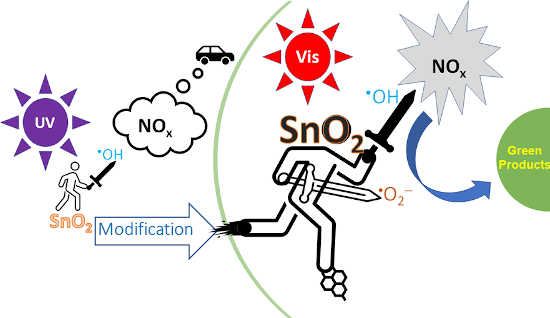
- band structure, which remains critical for studying charge separation [29]. In another study, a SnO2–Zn2SnO4 Z-scheme photocatalyst system was prepared with a graphene modification to create surface vacancy sites in the composite, which contributed to an enhanced photoactivity in the oxidation of NO
- and acetone [75]. The presence of graphene induces the formation of SnO2 and introduces Sn vacancies, which supports the electron transfer from the CB of Zn2SnO4 to oxygen under visible light irradiation (Figure 12). The authors only used a visible light LED with low power (3 W) and obtained a high
- narrowing the bandgap of SnO2, such as modifying SnO2 by noble metal, graphene, or doping, including self-doping SnO2 (Sn2+-doped SnO2 or SnO2−x). In general, doping SnO2 will reduce the bandgap, which enhances the photoactivity in the visible light region for SnO2. The narrowing of the bandgap by


Theranostic potential of self-luminescent branched polyethyleneimine-coated superparamagnetic iron oxide nanoparticles
Beilstein J. Nanotechnol. 2022, 13, 82–95, doi:10.3762/bjnano.13.6
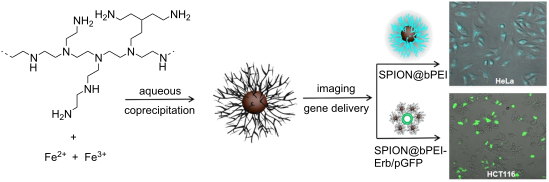
- when attached to the iron oxide surface since SPIONs have strong absorption in the UV and visible range of the spectrum [33]. Alternatively, PEI-bound luminescent nanoparticles, such as quantum dots or graphene nanoparticles, are also being studied to combine optical imaging and gene transfection




Nanoscale friction and wear of a polymer coated with graphene
Beilstein J. Nanotechnol. 2022, 13, 63–73, doi:10.3762/bjnano.13.4
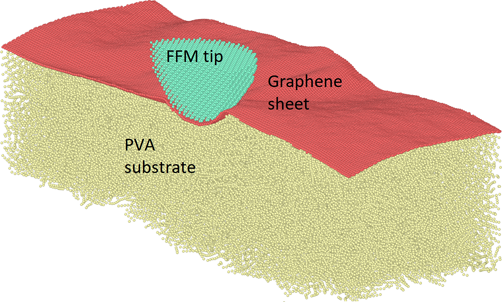
- challenging problem due to the complex viscoelastic properties and structure. Using molecular dynamics simulations, we investigate how a graphene sheet on top of the semicrystalline polymer polyvinyl alcohol affects the friction and wear. Our setup is meant to resemble an AFM experiment with a silicon tip. We
- have used two different graphene sheets, namely an unstrained, flat sheet, and one that has been crumpled before being deposited on the polymer. The graphene protects the top layer of the polymer from wear and reduces the friction. The unstrained flat graphene is stiffer, and we find that it constrains
- the polymer chains and reduces the indentation depth. Keywords: friction; graphene; molecular dynamics; polymer; Introduction Graphene is a two dimensional material that has remarkable properties, both electronic [1][2] and mechanical [3][4]. Even before anything was known about graphene, the


Sputtering onto liquids: a critical review
Beilstein J. Nanotechnol. 2022, 13, 10–53, doi:10.3762/bjnano.13.2







Enhancement of the piezoelectric coefficient in PVDF-TrFe/CoFe2O4 nanocomposites through DC magnetic poling
Beilstein J. Nanotechnol. 2021, 12, 1262–1270, doi:10.3762/bjnano.12.93
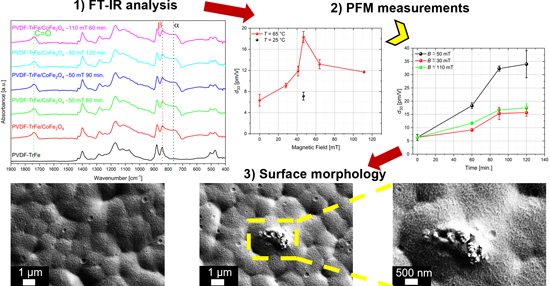
- . These included mechanical stretching [19][20], spin coating [21], quenching [22], a combination of the latter two techniques [2], and the addition of external additives to the PVDF matrix, such as metal nanocomposites [14][23], ceramic filler [24], and graphene nanoplatelets (GNPs) and their combination


A review on slip boundary conditions at the nanoscale: recent development and applications
Beilstein J. Nanotechnol. 2021, 12, 1237–1251, doi:10.3762/bjnano.12.91
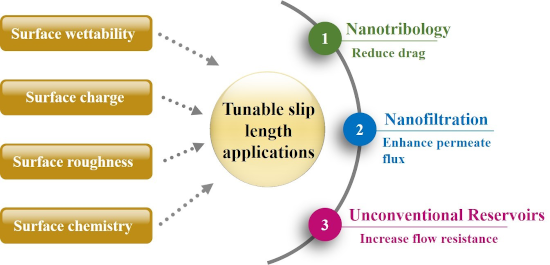
- limited, thus leading to the reduction of water slippage. Figure 3 shows that although water shows similar wetting properties on surfaces of boron nitride and graphene, the friction coefficient (or slip length) of water on boron nitride is much larger (or lower) than that on graphene due to a more
- 1d was redrawn from [50]. Variation of slip length with static contact angle for water flow on different types of smooth surfaces. The graph depicted in Figure 2 was redrawn from data in [62][63][64][65]. Comparison between the friction coefficients of water on graphene and boron nitride surfaces


Morphology-driven gas sensing by fabricated fractals: A review
Beilstein J. Nanotechnol. 2021, 12, 1187–1208, doi:10.3762/bjnano.12.88
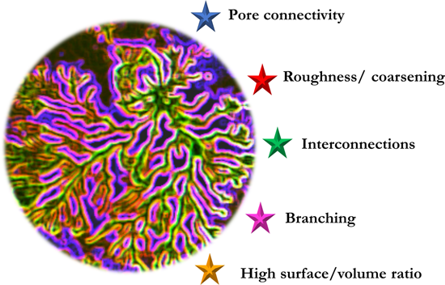
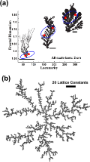
- fractal dimension of 1.79. Tungsten oxide-based fractals A very recent study on the sensing of NO2, acetone, and carbon monoxide was reported by Simon and co-workers. They used Ni nanoparticles to decorate a reduced graphene oxide/WO3 nanocomposite [78]. The WO3 sample annealed at 600 °C shows the
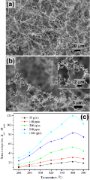
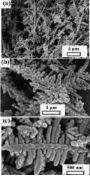
- hydrothermal method to synthesize reduced graphene oxide and pine dendritic BiVO4 composite with an average length of 1–1.5 μm and about 0.6 μm width [82]. In the hybrid composite rGO nanosheets were draped with a pine dendritic morphology. Figure 20 shows the SEM images of GO (Figure 20a), rGO (Figure 20b