Search results
Search for "humidity" in Full Text gives 297 result(s) in Beilstein Journal of Nanotechnology. Showing first 200.
Electrostatic force microscopy for the accurate characterization of interphases in nanocomposites
Beilstein J. Nanotechnol. 2018, 9, 2999–3012, doi:10.3762/bjnano.9.279
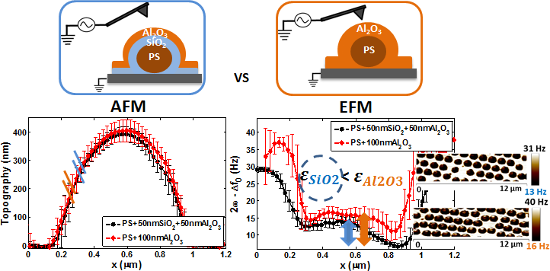
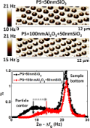
- readily than Al2O3, as observed in Figure 8, and as confirmed by measurements performed in a highly humid environment [38]. Indeed, in the presence of high humidity, only scanning over alumina-covered samples was possible. All used probes were fixed to the surface and were consequently crushed or became




Graphene-enhanced metal oxide gas sensors at room temperature: a review
Beilstein J. Nanotechnol. 2018, 9, 2832–2844, doi:10.3762/bjnano.9.264
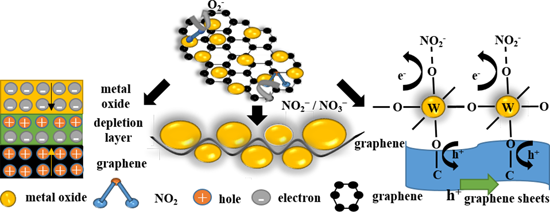
- concentrations of NH3 and responded dramatically, which could be ascribed to the p–n heterojunctions formed between ZnO and rGO. However, the influence of humidity on the sensor response was not negligible due to the residual oxygen (high hydrophilicity) on rGO and the active sites (oxygen vacancies) on ZnO
- affected the sensor at low humidity levels. However, the response of the composite sensor increased with increasing humidity at high humidity levels. At low humidity levels, ammonia and water molecules competed for adsorption, which reduces the sensing performance of NH3. As humidity levels increased
- , ammonia adsorbed on the surface of sensor by dissolving into water, leading to the higher response. This is quite different from the usual opinion that sensitivity will decrease at high humidity levels. Zhang et al. [47] synthesized CuO nanoflowers via hydrothermal method, then CuO and rGO were deposited



Biomimetic surface structures in steel fabricated with femtosecond laser pulses: influence of laser rescanning on morphology and wettability
Beilstein J. Nanotechnol. 2018, 9, 2802–2812, doi:10.3762/bjnano.9.262
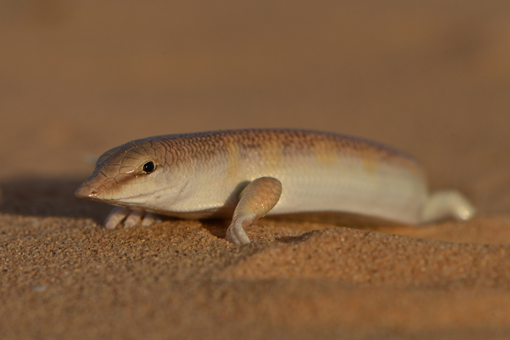
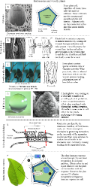
- related to water transport, although in this case not for camouflage but hydration purposes, which is vital considering the natural habitat of this lizard is the desert. The humidity in the air or moisture at the surface of rocks on which the lizard is standing can condense at the skin tiles, flowing
- surfaces were polished obtaining mirror-like quality with an average roughness Ra < 2 nm measured by an atomic force microscope (AFM, Agilent 5100 AFM/SPM in tapping mode). In order to avoid environmental oxidation by humidity, the samples were stored in a desiccator at 30% relative humidity. Before and



Characterization of the microscopic tribological properties of sandfish (Scincus scincus) scales by atomic force microscopy
Beilstein J. Nanotechnol. 2018, 9, 2618–2627, doi:10.3762/bjnano.9.243
- controlled temperature (21–23 °C) and humidity (50–70%). All AFM experiments were conducted with a Dimension Icon AFM (Veeco Inc., USA). The topography of the samples was measured in tapping mode while adhesion force, friction, and wear analysis were conducted in contact mode. No extra treatment was applied
- (National Instruments, Austin, USA) code. The tests were conducted at room temperature and in air with 50% relative humidity. Sample preparation for the non-biological samples relied on grinding with SiC papers of #800 down to #4000 grid. Mechanical polishing was carried out with a 3 µm diamond suspension


Friction reduction through biologically inspired scale-like laser surface textures
Beilstein J. Nanotechnol. 2018, 9, 2561–2572, doi:10.3762/bjnano.9.238
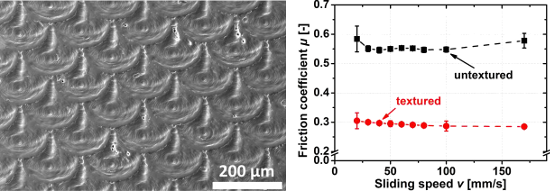
- experiments [16][23]. All tests were conducted at room temperature (25 °C) and at a relative humidity of approximately 45%. All tested pellets and discs were sonicated in isopropanol for 15 minutes before each tribological experiment in order to ensure a reproducible surface chemistry and clean samples


Non-agglomerated silicon–organic nanoparticles and their nanocomplexes with oligonucleotides: synthesis and properties
Beilstein J. Nanotechnol. 2018, 9, 2516–2525, doi:10.3762/bjnano.9.234
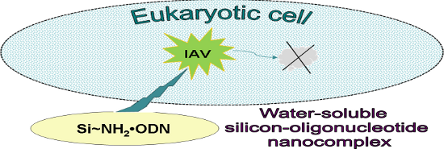
- -1640 medium without trypsin (100 μL/well) at a concentration of 0.014 mM for Si and 0.1 μM for ODN were applied to the infected MDCK cells, followed by incubation for 4 h at 37 °C, 5% CO2, and 100% humidity. After incubation for 4 h at room temperature, the medium containing the sample was removed, the


Nanocellulose: Recent advances and its prospects in environmental remediation
Beilstein J. Nanotechnol. 2018, 9, 2479–2498, doi:10.3762/bjnano.9.232


Effect of electrospinning process variables on the size of polymer fibers and bead-on-string structures established with a 23 factorial design
Beilstein J. Nanotechnol. 2018, 9, 2466–2478, doi:10.3762/bjnano.9.231
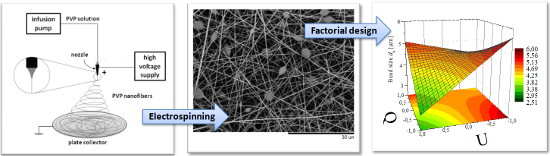
- tip [13], distance between the nozzle tip and the collector, solution flow rate [13], humidity [9][14][15], temperature [15], shape and type of the collector [5], etc.). What should be emphasized is that electrospinning is a complex process with a considerable number of factors that may influence the
- uniform fibrous mats were obtained. Finally, the effect of humidity was also examined: the higher the humidity, the less homogeneous mats were obtained (during electrospinning the solvent evaporates completely and the fibers become glued together). Another interesting work on the impact of process
- collect the same polymer solution volume in each study (0.06 mL of solution was used to make one sample). The experiments were carried out at room temperature (about 25 °C), the humidity did not exceed 40%. The diagram of the self-made electrospinning setup is shown in Figure 1. Characterization


Block copolymers for designing nanostructured porous coatings
Beilstein J. Nanotechnol. 2018, 9, 2332–2344, doi:10.3762/bjnano.9.218
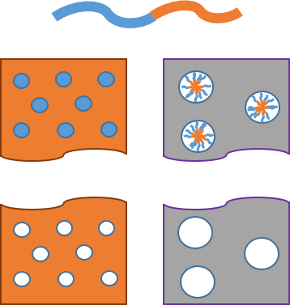
- -organic bond. The aqueous environment favored the extraction of the freely accessible, soluble PEO and Ru-PEO moieties, leaving both PS and Ru-PS moieties to form the nanoporous polymeric matrix. It has been demonstrated that by controlling the annealing procedure and the humidity, it is possible to
- control the orientation of the PEO cylindrical domains within the PS thin film [89][90]. In particular, at high humidity conditions, it has been found that PEO cylindrical domains are vertically (perpendicular) oriented with respect to the thin film surface, whereas at low humidity conditions, the PEO


Lead-free hybrid perovskites for photovoltaics
Beilstein J. Nanotechnol. 2018, 9, 2209–2235, doi:10.3762/bjnano.9.207
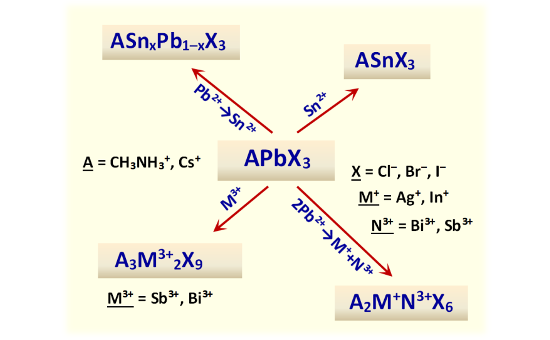
- preferable to sub-micrometer HP domains. Typically, the MABI-based solar cells demonstrate a high resistivity to air oxidation and ambient humidity [85][155][156][157][160][168]. Similar high stability to the degradation under ambient atmosphere was reported for highly luminescent Cs3Bi2X9 (X = Cl, Br, I
- stability, the cells retaining their characteristics after 30 days of exposure to ambient conditions (relative humidity of 50–60%) [160]. The structure and characteristics of (MA)2KBiCl6 perovskite [166] are very similar to MAPbCl3, however, the high bandgap of this material (3.04 eV) is more suitable for


Filling nanopipettes with apertures smaller than 50 nm: dynamic microdistillation
Beilstein J. Nanotechnol. 2018, 9, 2181–2187, doi:10.3762/bjnano.9.204
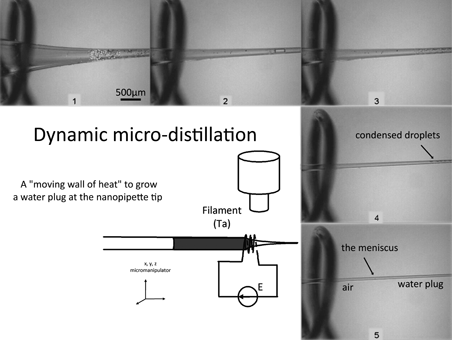
- filled nanopipettes were open and exhibited electrical characteristics related to their shape. The process works despite surrounding atmospheric pollution and humidity, which usually impede complete filling. Using a programmable piezo-electric actuator, the process could be automated and certainly


Electrospun one-dimensional nanostructures: a new horizon for gas sensing materials
Beilstein J. Nanotechnol. 2018, 9, 2128–2170, doi:10.3762/bjnano.9.202
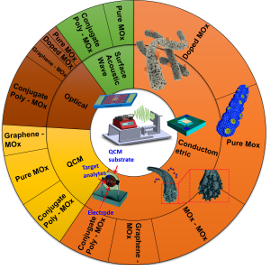
- functionalized MOx NFs with superior sensitivity and fast response in a high humidity environment (95% relative humidity (RH)). WO3 NFs functionalized by RuO2 [189] and Rh2O3 [106] NPs show improved response toward acetone at 350 °C. The fibers have an average diameter in the range 250–300 nm with no significant






Know your full potential: Quantitative Kelvin probe force microscopy on nanoscale electrical devices
Beilstein J. Nanotechnol. 2018, 9, 1809–1819, doi:10.3762/bjnano.9.172
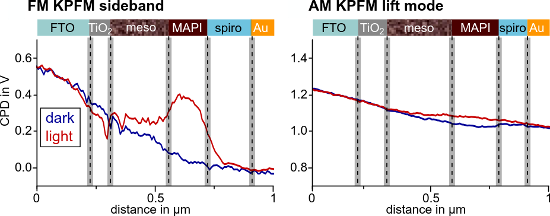
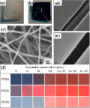
- Asylum research MFP3D SFM in a nitrogen glovebox (level of humidity below 1%) for all experiments. The typical resonance frequency of the cantilevers (Bruker Model:SCM-PIT-V2) was ≈75 kHz, spring constant of 3 N/m, a tip radius of 25 nm and a tip height of 10 to 15 μm. The typical length of the


Direct AFM-based nanoscale mapping and tomography of open-circuit voltages for photovoltaics
Beilstein J. Nanotechnol. 2018, 9, 1802–1808, doi:10.3762/bjnano.9.171
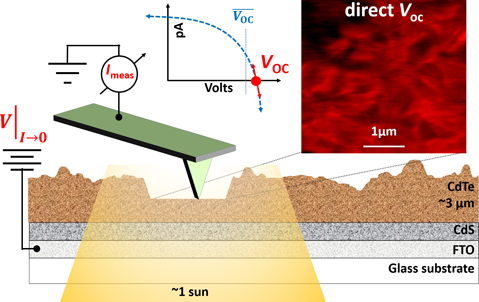
- property mapping is especially beneficial for specimens sensitive to their environment, as is common for many photovoltaics in the presence of oxygen or humidity [19]. Along these lines, direct measurements of VOC* during exposure to acetic acid are ongoing for Si solar cells to correlate any changes in


Preparation of micro/nanopatterned gelatins crosslinked with genipin for biocompatible dental implants
Beilstein J. Nanotechnol. 2018, 9, 1735–1754, doi:10.3762/bjnano.9.165
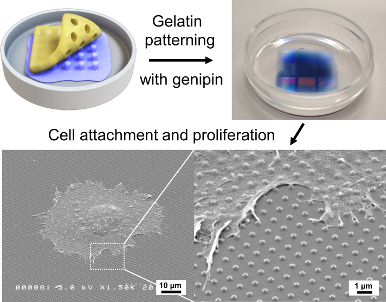
- , but not as a main focus [38][39][51][52]. The crosslinking reaction of gelatin is controlled by the reaction time, the temperature, and humidity. In this study, we used 20 wt % gelatin as an optimal concentration for the gelatin solution, because a concentration of 30 wt % gelatin produced a solution
- an atmosphere with 100% humidity to avoid drying out and incubated for 3 days at 37 °C. The molds were then dried for 3 days at normal humidity at 37 °C. The molds were then stored at −18 °C to harden the gelatin prior to demolding. Demolding was achieved by carefully peeling off the PDMS mold from
- was gently pressed onto the gelatin/genipin mixture. We found that it was important that the viscosity of the solution not be too high, as excessive cross-linking can occur (Figure 11a). In order for continuous crosslinking to occur, the mixture was incubated at 100% humidity in order to avoid drying








Nanoscale electrochemical response of lithium-ion cathodes: a combined study using C-AFM and SIMS
Beilstein J. Nanotechnol. 2018, 9, 1623–1628, doi:10.3762/bjnano.9.154
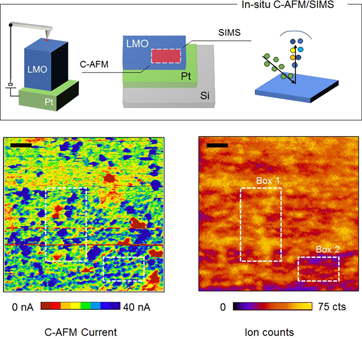
- the reproducibility and quantitative interpretation of C-AFM [17]. At the same time, we do not expect the high-vacuum environment to be completely free from humidity. Therefore, in these measurements the formation of any Li composites such as Li2O and Li2CO3 cannot be excluded as also considered by


Evaluation of replicas manufactured in a 3D-printed nanoimprint unit
Beilstein J. Nanotechnol. 2018, 9, 1573–1581, doi:10.3762/bjnano.9.149
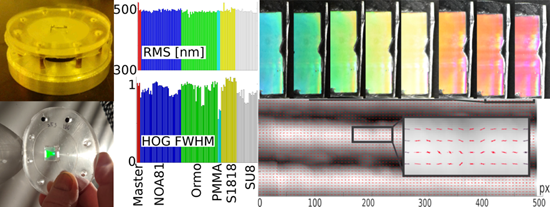
- procedure was the same, some variables such as room temperature or humidity were not controlled. As a result, some variability between batches was observed, frequently larger than the variability within a single batch. Occasionally, this issue leads to apparently biased measurements, e.g., the back angle of


Tailoring polarization and magnetization of absorbing terahertz metamaterials using a cut-wire sandwich structure
Beilstein J. Nanotechnol. 2018, 9, 1437–1447, doi:10.3762/bjnano.9.136
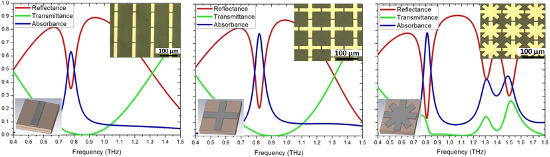
- measurements were conducted in a nitrogen environment (humidity less than 1%) at 25 °C. We first recorded the waveform reflected from an opaque gold film as reference for the reflection. For the transmission reference, we recorded the waveform transmitted without any sample. Figure 8a–c presents the measured






Electrostatic force spectroscopy revealing the degree of reduction of individual graphene oxide sheets
Beilstein J. Nanotechnol. 2018, 9, 1146–1155, doi:10.3762/bjnano.9.106
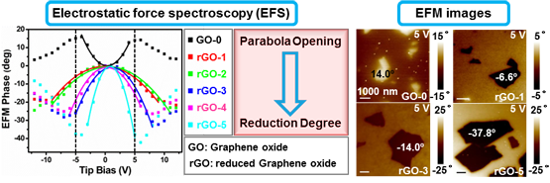
- ambient temperature, and uses a compressor and a humidifier to control the humidity of the environment. In order to eliminate the influence of noise from the system, the temperature and humidity generator are physically separated from the AFM. The humidity generator and the AFM are connected with
- adiabatic hoses, forming the gas transmission loop. The temperature fluctuations were below 0.2 °C and the error of humidity control was about 2% relative humidity (RH). To avoid influences on EFM or SPFM imaging from the dielectric constant change of the mica substrate, all the SPM-based operations were
- carried out under room temperature at 23 °C and at a relative humidity of 15% in order to ensure constant substrate surface properties (especially regarding the dielectric constant of the mica surface) [20]. In all the SPM operations, the NSC18/Ti-Pt (MikroMasch Co.) tip was used, which employed a silicon


Imaging of viscoelastic soft matter with small indentation using higher eigenmodes in single-eigenmode amplitude-modulation atomic force microscopy
Beilstein J. Nanotechnol. 2018, 9, 1116–1122, doi:10.3762/bjnano.9.103
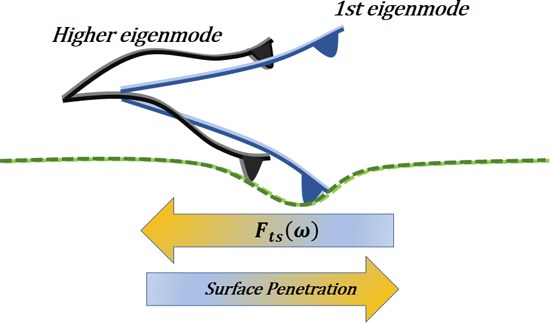
- deformational timescale in our studies (previous studies have quantified the dependence of characteristic times on the molecular weight for polystyrene [30]). In order to ensure a homogenous surface, the relative humidity was controlled to be approximately 30% during the spin-coating process. A portion of the


Scanning speed phenomenon in contact-resonance atomic force microscopy
Beilstein J. Nanotechnol. 2018, 9, 945–952, doi:10.3762/bjnano.9.87
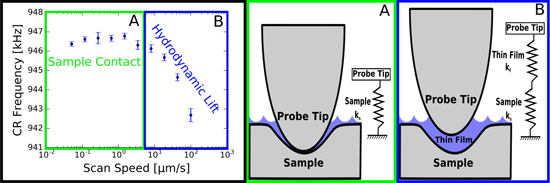
- cyanoacrylate. A razor blade was then used to cleave the sample, leaving behind a pristine sample surface. The sample was placed in a closed AFM flow-cell with an integrated relative humidity sensor. A cantilever with spring constant kL = 1.7 ± 0.2 N/m and first free resonance = 61.85 ± 0.1 kHz was mounted to
- eigenmode placed further constraints on the selection of the cantilever. A gas mixing apparatus was used to mix streams of dry and saturated N2 to achieve various levels of relative humidity in the cell. The cantilever was brought into contact with the sample at 100 nN and 300 nN. The NIST SPRITE circuit
- indented into a mica surface with a force of 100 nN in an environment with a relative humidity (RH) of 41% and scanned in a direction orthogonal to the long axis of the cantilever (scan angle of 90°). The resulting in-contact natural frequencies of the cantilever are measured while the tip is moved across


Bioinspired self-healing materials: lessons from nature
Beilstein J. Nanotechnol. 2018, 9, 907–935, doi:10.3762/bjnano.9.85








Nanoscale mapping of dielectric properties based on surface adhesion force measurements
Beilstein J. Nanotechnol. 2018, 9, 900–906, doi:10.3762/bjnano.9.84
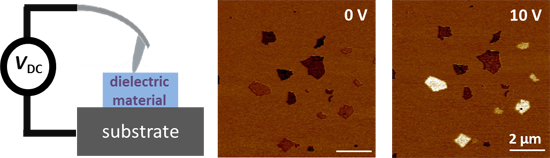
- conventional AFM modes, which is attributed to the larger tip–sample distance [30]. Moreover, in ambient electrical AFM scanning, relative humidity usually has a strong impact on image resolution and contrast [31][32]. We propose that fast mapping of the local dielectric distribution on a sample surface can be
- 18–25 °C, and relative humidity (RH) 35–60%) (Figure 2a,c). However, the contrast of the corresponding adhesion images increases significantly (Figure 2b,d). When the tip bias was lowered back to 0 V, both height and adhesion images returned to the original state before the dc voltage was applied
- at 150 nm, the Z-piezo oscillation frequency at 2.0 kHz, and the scan rate at 1 Hz. Voltage to the tip was applied using the scan parameter “tip bias”. All AFM experiments were conducted under ambient conditions at a room temperature of 18–25 °C and relative humidity of 35–60%. AFM images of the


Effect of annealing treatments on CeO2 grown on TiN and Si substrates by atomic layer deposition
Beilstein J. Nanotechnol. 2018, 9, 890–899, doi:10.3762/bjnano.9.83
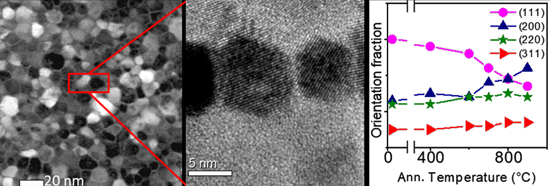
- annealed at 300 °C we found out that this mild annealing does not induce any significant change in the film thickness, roughness and density of CeO2. However, it is effective in the removal of the humidity absorbed at the surface, detected in the as-deposited samples only [8]. On the other side, when


Comparative study of antibacterial properties of polystyrene films with TiOx and Cu nanoparticles fabricated using cluster beam technique
Beilstein J. Nanotechnol. 2018, 9, 861–869, doi:10.3762/bjnano.9.80
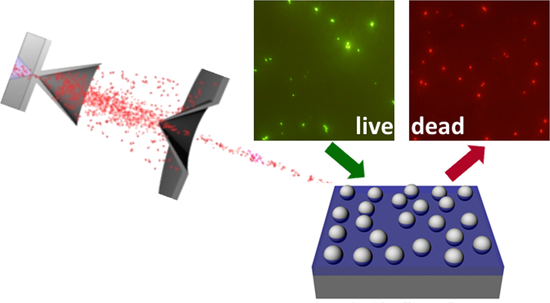
- sequential cycles and every type of sample are shown in Table 1. It can be seen that the ratio is stable within approximately ±15% from cycle to cycle. The deviations can be related to small changes in the experimental conditions, for example, variations of temperature and humidity, which are difficult to