Search results
Search for "hybridization" in Full Text gives 174 result(s) in Beilstein Journal of Nanotechnology.
High photocatalytic activity of V-doped SrTiO3 porous nanofibers produced from a combined electrospinning and thermal diffusion process
Beilstein J. Nanotechnol. 2015, 6, 1281–1286, doi:10.3762/bjnano.6.132
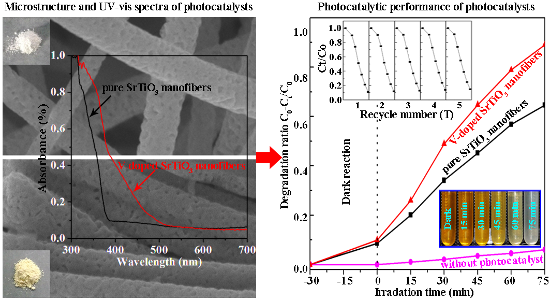
- of SrTiO3. Previous works showed that doping with 3d (V, Fe, Ni) and 4f (Nd, Sm, Er) ions can significantly decrease the band gap through the hybridization of the Ti-3d and dopant-d states [16][17]. Additionally, the doped SrTiO3 also has an improved conductivity. Several groups have reported the


Can molecular projected density of states (PDOS) be systematically used in electronic conductance analysis?
Beilstein J. Nanotechnol. 2015, 6, 1247–1259, doi:10.3762/bjnano.6.128
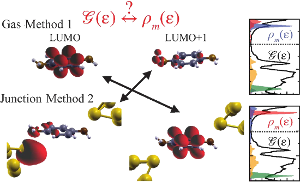
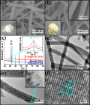
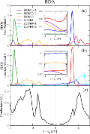
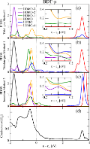
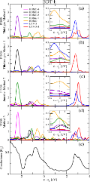
- because the metal–molecule charge transfer is not the only, or the main, parameter affecting the electronic structure of BDT-p. This might be due to a possibly higher metal–molecule coupling and hybridization. In conclusion, Method 3 provides encouraging partially satisfactory results, in particular in
- reconciling the two traditional methods as in BDT-h. However, this is not the case in general, and not all problems are solved. The metal–molecule charge transfer is not the only mechanism at play. One should probably also take into account the metal–molecule hybridization. This is not an easy task if the
- questionable. We should first provide an answer to the following fundamental questions: Which set of MOs physically represent the molecule in the junction? Given the lead–molecule hybridization, are the MOs obtained from an isolated molecule (i.e., from Methods 1 or 3) meaningful for analysis of a metal





Applications of three-dimensional carbon nanotube networks
Beilstein J. Nanotechnol. 2015, 6, 792–798, doi:10.3762/bjnano.6.82

- studies described in [13]. SEM micrographs obtained at higher magnification evidence the presence of interconnected and curled CNTs as shown in Figure 2b. The electron energy loss spectroscopy analysis performed in reflection mode further supports the predominance of C-sp2 hybridization in the nanotubes


Chains of carbon atoms: A vision or a new nanomaterial?
Beilstein J. Nanotechnol. 2015, 6, 559–569, doi:10.3762/bjnano.6.58
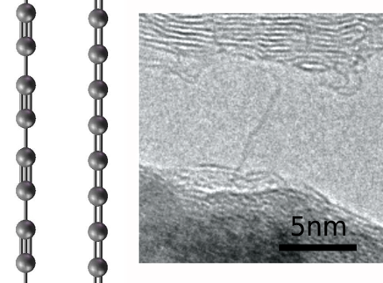
- . Keywords: atom chains; carbon; carbyne; one-dimensional solids; sp1 hybridization; Introduction Carbon is a unique element due to its ability to form bonds in three different hybridizations. The hybridizations, sp1, sp2, and sp3, correspond to bonding geometries in one-, two-, and three-dimensional space
- of states in the contacting material at low energy is small. Another aspect is the local hybridization of the carbon atoms at the contact. A sp3-hybridized carbon atom (e.g., when the chain is connected to the middle of a graphenic sheet or the wall of a carbon nanotube as shown in Figure 5) leads to
- of 0.6 eV. In the lowest energy configuration the chains would have cross-links every 2.2 nm (17 atoms) [19]. The formation of such cross-links, where local sp2 hybridization occurs, is considered as the mechanism of degradation of carbyne [62]. An important question is whether isolated chains have a


Silica micro/nanospheres for theranostics: from bimodal MRI and fluorescent imaging probes to cancer therapy
Beilstein J. Nanotechnol. 2015, 6, 546–558, doi:10.3762/bjnano.6.57
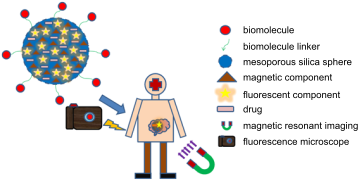
- tremendous attention among the researchers in the field of rare-earth-doped NPs for multicolor phosphor applications. The extraordinary enhancement in the luminescent property (ca. 5–6 times of the initial value) of these nanoscale materials was associated with the hybridization of the electronic structure


Raman spectroscopy as a tool to investigate the structure and electronic properties of carbon-atom wires
Beilstein J. Nanotechnol. 2015, 6, 480–491, doi:10.3762/bjnano.6.49
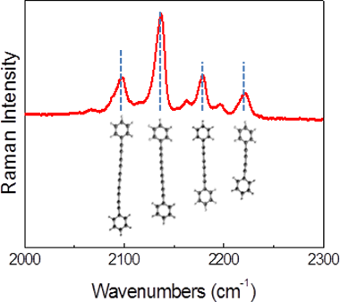
- based on sp2 hybridization of carbon atoms, sp-hybridized carbon-atom wires (CAWs) are intriguing systems with structure-, length- and termination-dependent properties [5]. Similar to graphene (which today is considered the ultimate 2D system (1-atom-thick)), CAWs represent a true 1D system (1-atom
- information on their structure, hybridization state, defects, presence of functionalization and/or doping, and can even quantify the nanotube chirality, the number of layers and the edge structure in graphene [22][23]. In this review we discuss how Raman spectroscopy can be utilized to obtain a wealth of
- Peierls distortion effects [73]. Examples of the extreme sensitivity of Raman spectroscopy to the carbon hybridization state, electronic structure and local order, are shown in Figure 3, where different carbon systems are characterized by well-defined Raman scattering features. In contrast to the other


Overview about the localization of nanoparticles in tissue and cellular context by different imaging techniques
Beilstein J. Nanotechnol. 2015, 6, 263–280, doi:10.3762/bjnano.6.25
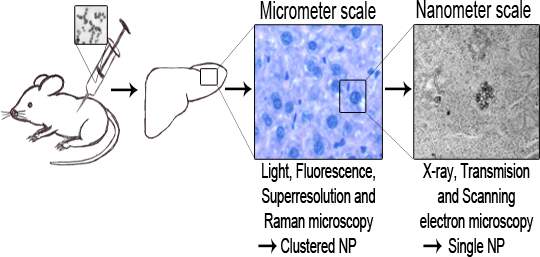
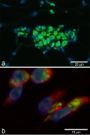
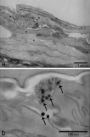
- microscope (0.2 µm) and the grain size of the emulsion [69]. This technique has previously been used, for example, for the localization of specific nucleic acid sequence, e.g., chromosomes or viral infections, by in situ hybridization employing radiolabeled nucleic acid probes [70]. We reasoned that this



X-ray photoelectron spectroscopy of graphitic carbon nanomaterials doped with heteroatoms
Beilstein J. Nanotechnol. 2015, 6, 177–192, doi:10.3762/bjnano.6.17
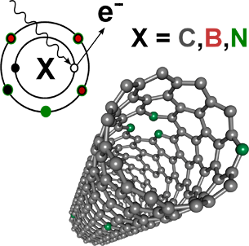
- unique nature of sp2 hybridization [9], strong σ bonds are formed between carbon atoms in fullerenes, nanotubes and graphene (Figure 1), along with delocalized π orbitals [10]. These materials each have superb intrinsic properties. Fullerenes are very stable nanocontainers [11], exhibiting interesting
- expected for different systems, and values reported for graphene often tend to be in the higher end of the range. This may be due to the influence of hybridization between the valence orbitals of N with the underlying substrate [32], which reduces core hole screening and thus raises the binding energy, or


Exploring plasmonic coupling in hole-cap arrays
Beilstein J. Nanotechnol. 2015, 6, 1–10, doi:10.3762/bjnano.6.1
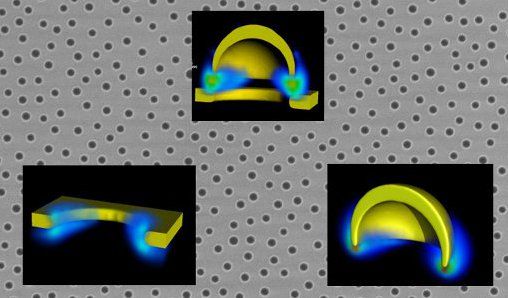
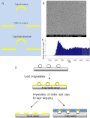
- . The interesting and complex coupling between caps and hole arrays reveals the details of the field distribution for these simple to fabricate structures. Keywords: caps; colloidal lithography; hybridization; localized surface plasmon resonance; near field; SRO hole arrays; Introduction The
- explained by the hybridization model which describes the complex plasmonic interactions as a combination of elementary plasmon modes [17]. Good examples of this are seen in the cases of nanorice [4], nanostars [18], semishells [8] and nanoparticle dimers [19][20]. Such hybridized systems have shown promise
- the optical properties of short range ordered arrays of nanocap-holes coupled structures and interpret them in terms of hybridization of their more elementary components. We fabricate these structures utilizing colloidal monolayer masks as a template and compare experimental extinction data to finite




Spectroscopic mapping and selective electronic tuning of molecular orbitals in phosphorescent organometallic complexes – a new strategy for OLED materials
Beilstein J. Nanotechnol. 2014, 5, 2248–2258, doi:10.3762/bjnano.5.234
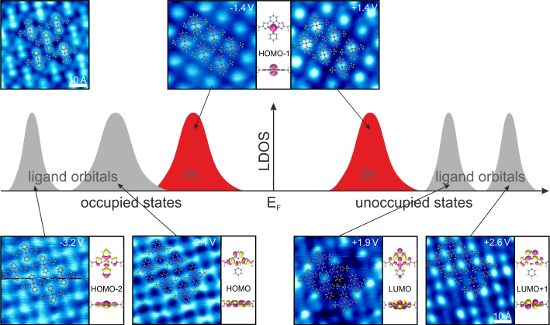
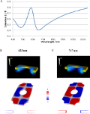
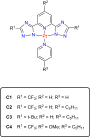
- orbitals of Pt(II) complexes adsorbed on Au(111). The analysis showed that the molecules exhibit a peculiar localized strong hybridization that leads to partial depopulation of a dz² orbital, while the ligand orbitals are almost unchanged. We further found that substitution of functional groups at well
- transfer; density-functional theory; frontier orbitals; hybridization; OLED; Pt(II) complex; scanning tunneling microscopy; scanning tunneling spectroscopy; triplet emitters; Introduction Organic light emitting diodes (OLEDs) based on phosphorescent Ir(III) or Pt(II) complexes (also referred to as triplet
- (e.g., host–guest interactions, hybridization at surfaces and interfaces, interaction in aggregates) can significantly change the energetic position and order of molecular orbitals, but CV cannot always provide information on such effects whenever the local environment is not well known. Moreover, CV



Two-dimensional and tubular structures of misfit compounds: Structural and electronic properties
Beilstein J. Nanotechnol. 2014, 5, 2171–2178, doi:10.3762/bjnano.5.226

- structures and Si–O–Si bond angles of 140°. In this system, a real covalent bond between the two subsystems can be observed, which partly changes the hybridization of the carbon atoms from sp2 to sp3. Conclusion In this review, the structures of misfit layer compounds were discussed. As was illustrated, MLCs


Effect of channel length on the electrical response of carbon nanotube field-effect transistors to deoxyribonucleic acid hybridization
Beilstein J. Nanotechnol. 2014, 5, 2081–2091, doi:10.3762/bjnano.5.217
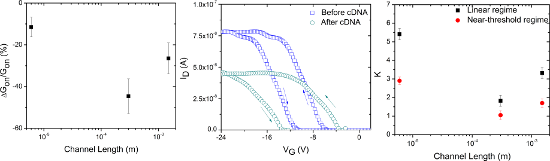
- .5.217 Abstract A single-walled carbon nanotube (SWCNT) in a field-effect transistor (FET) configuration provides an ideal electronic path for label-free detection of nucleic acid hybridization. The simultaneous influence of more than one response mechanism in hybridization detection causes a variation
- in electrical parameters such as conductance, transconductance, threshold voltage and hysteresis gap. The channel length (L) dependence of each of these parameters necessitates the need to include them when interpreting the effect of L on the response to hybridization. Using the definitions of
- intrinsic effective mobility (µe) and device field-effect mobility (µf), two new parameters were defined to interpret the effect of L on the FET response to hybridization. Our results indicate that FETs with ≈300 µm long SWCNT exhibited the most appreciable response to hybridization, which complied with the


Patterning a hydrogen-bonded molecular monolayer with a hand-controlled scanning probe microscope
Beilstein J. Nanotechnol. 2014, 5, 1926–1932, doi:10.3762/bjnano.5.203
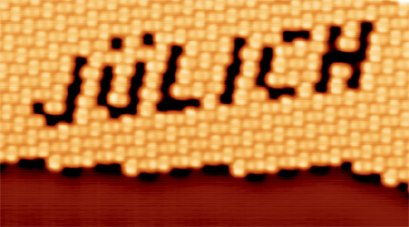
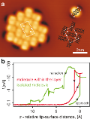
- through the tip–PTCDA–Ag(111) junction with the effects of de-population and de-hybridization of the LUMO of PTCDA, which occur upon the gradual breaking of the PTCDA–Ag(111) bonds [12][20][21]. Finally, to illustrate the reliability of the HCM, we present a structure “stencilled” into PTCDA/Ag(111) by


Cathode lens spectromicroscopy: methodology and applications
Beilstein J. Nanotechnol. 2014, 5, 1873–1886, doi:10.3762/bjnano.5.198

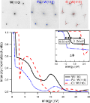
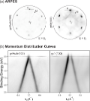
- phase shows a negligible DOS at the K point of the π-band. These results point to the disruption of the Dirac cones and the formation of a metal-like DOS. Surprisingly, the hybridization of the π-band with Ir states is due to the chemisorption of just 11% of the C atoms in the unit cell of the buckled
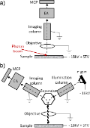



Silicon and germanium nanocrystals: properties and characterization
Beilstein J. Nanotechnol. 2014, 5, 1787–1794, doi:10.3762/bjnano.5.189
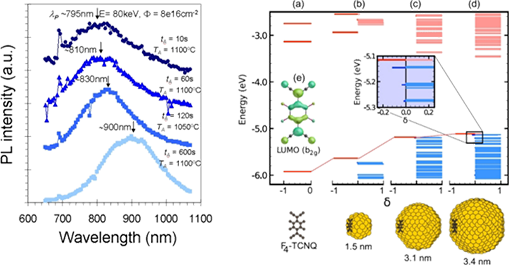
- adjustments of the measurement settings, the thermal emission of electrons from the NCs is detected by DLTS (for more explanations on DLTS analysis see [24][36][37][38]). Hybridization between F4-TCNQ and Si NC one-electron states. (a) Isosurface plot of the F4-TCNQ lowest unoccupied state (b2g symmetry), and


Controlling the dispersion of supported polyoxometalate heterogeneous catalysts: impact of hybridization and the role of hydrophilicity–hydrophobicity balance and supramolecularity
Beilstein J. Nanotechnol. 2014, 5, 1749–1759, doi:10.3762/bjnano.5.185
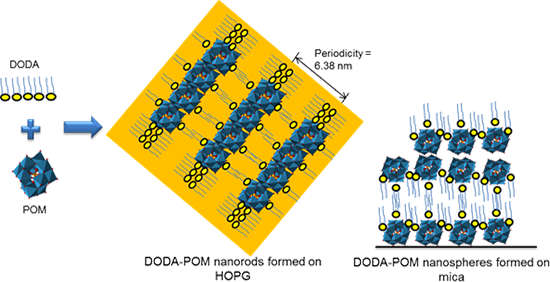
- 5819 SPRAM (CEA/CNRS/UJF-Grenoble 1), Laboratoire d’Electronique Moléculaire, Organique et Hybride, 17 rue des Martyrs, 38054 Grenoble cedex 9, France 10.3762/bjnano.5.185 Abstract The hybridization of polyoxometalates (POMs) through an organic–inorganic association offers several processing
- hybrid material is deposited on freshly cleaved mica. Finally, a UV–ozone treatment of the hybrid material allows one to obtain highly dispersed isolated POM entities on both hydrophilic and hydrophobic surfaces. The hybridization strategy to prevent the clustering of POMs on various supports would
- medicine [3], magnetism [4][5][6], electronics [7], electro- and photochromic systems [8][9], and catalysis [10][11][12][13][14]. The hybridization of POM anions in an organic matrix offers several practical advantages. In catalysis, for example, hybridization offers a means to synthesize heterogeneous POM


Numerical investigation of the effect of substrate surface roughness on the performance of zigzag graphene nanoribbon field effect transistors symmetrically doped with BN
Beilstein J. Nanotechnol. 2014, 5, 1569–1574, doi:10.3762/bjnano.5.168
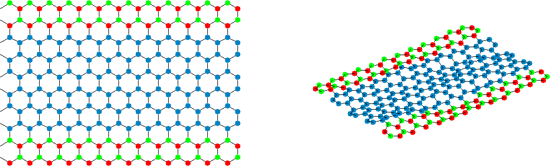
- tight-binding Hamiltonian. Because of the statistical nature of SR an ensemble average is taken over a large number of devices to obtain averaged device characteristics. Model and Methods The sp2 hybridization of carbon atoms in the GNR lattice is preserved in the presence of B or N dopants [34


Synthesis of hydrophobic photoluminescent carbon nanodots by using L-tyrosine and citric acid through a thermal oxidation route
Beilstein J. Nanotechnol. 2014, 5, 1513–1522, doi:10.3762/bjnano.5.164
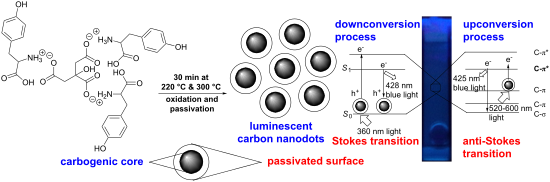
- : composite materials; fluorescence quenching; hydrophobic; luminescence; upconversion; Introduction The synthesis of fluorescent functional materials raised significant interest in order to understand biological processes such as DNA sequencing, detection of DNA-hybridization, protein sensing, single






Effects of palladium on the optical and hydrogen sensing characteristics of Pd-doped ZnO nanoparticles
Beilstein J. Nanotechnol. 2014, 5, 1261–1267, doi:10.3762/bjnano.5.140
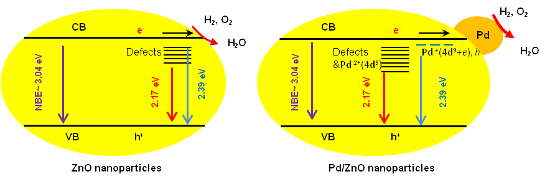
- excited state of PdZn originates from a hole bound to 4d10 shells or an intermediately bound exciton to a neutral d9 configuration due to the hybridization of the Pd4d states with the Zn4s states at the bottom of the conduction band. The electron capture takes place at the neutral PdZn center (i.e., [Pd2


An insight into the mechanism of charge-transfer of hybrid polymer:ternary/quaternary chalcopyrite colloidal nanocrystals
Beilstein J. Nanotechnol. 2014, 5, 1235–1244, doi:10.3762/bjnano.5.137
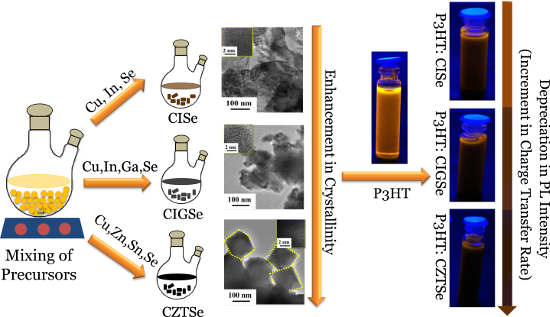
- atoms in a tetrahedral fashion and, in turn, the Se atom is tetrahedrally coordinated to two Cu atoms and two In and Ga atoms. This tetrahedral coordination refers to the covalent bonding between group I, III and VI elements, which results in a sp3 hybridization. However, along with the covalent nature


Nanocavity crossbar arrays for parallel electrochemical sensing on a chip
Beilstein J. Nanotechnol. 2014, 5, 1137–1143, doi:10.3762/bjnano.5.124
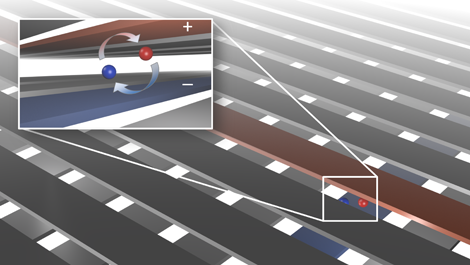
- featuring interdigitated electrodes at the intersections [20]. Reported applications include gene-function analysis [18], electroluminescence detection [21], mapping of cell topographies [22], detection of cellular enzyme secretion [19][23], detection of DNA hybridization [24], and evaluation of embryoid


Molecular biology approaches in bioadhesion research
Beilstein J. Nanotechnol. 2014, 5, 983–993, doi:10.3762/bjnano.5.112
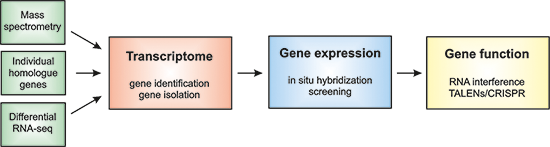
- hybridization screen, and (4) functional analyses of selected genes by using RNA interference knock-down. Furthermore, latest developments in genome-editing are presented as new tools to study gene function. By using this iterative multi-technologies approach, the identification, isolation, expression and
- expression; in situ hybridization; RNA interference; transcriptome; Introduction The capability of an organism to attach to a surface, either temporarily or permanently, is referred to as “bioadhesion”. Bioadhesion occurs in many living organisms that have designed ways to adhere to a range of surfaces [1
- assembled hypothetical complementary DNA originating from isolated messenger RNA) expressed in the region of the animal containing adhesive-producing cells; secondly, in situ hybridization (ISH) screening provides the (temporal and) spatial expression of target transcripts; thirdly, RNA interference (RNAi


Enhancement of photocatalytic H2 evolution of eosin Y-sensitized reduced graphene oxide through a simple photoreaction
Beilstein J. Nanotechnol. 2014, 5, 801–811, doi:10.3762/bjnano.5.92
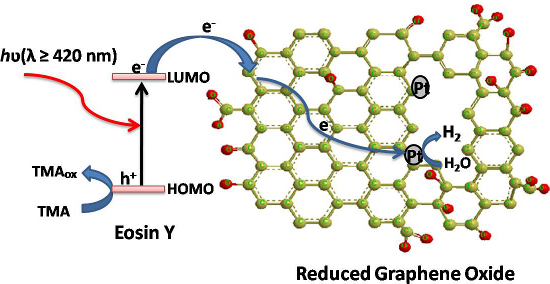
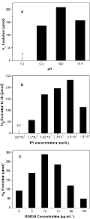
- -hybridization in the GO layer. As a result, the conductivity of GO decreases greatly compared with that of graphene. Amongst various methods for the reduction of GO to form RGO, photoreaction (photoreduction) is “green” without any toxic chemical reagents. Moreover, it is easy to control the degree of reduction





Nanostructure sensitization of transition metal oxides for visible-light photocatalysis
Beilstein J. Nanotechnol. 2014, 5, 696–710, doi:10.3762/bjnano.5.82
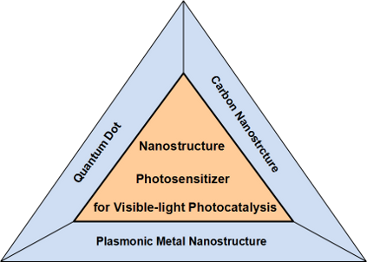
- dots [33]. Such superior photocatalytic properties could be attributable to a combination of a few factors including the depression of electron–hole recombination, bandgap narrowing, and increased surface area upon hybridization. Due to the rapid development of nanotechnology, a variety of quantum dots
- solution for the photosensitizers to anchor. The hybridization of exfoliated nanosheets with nanosized photosensitizers often shows a tunable electronic structure and new physicochemical properties. All these features attribute to a promising future of nanostructure sensitization in the ion-exchangeable




Hole-mask colloidal nanolithography combined with tilted-angle-rotation evaporation: A versatile method for fabrication of low-cost and large-area complex plasmonic nanostructures and metamaterials
Beilstein J. Nanotechnol. 2014, 5, 577–586, doi:10.3762/bjnano.5.68
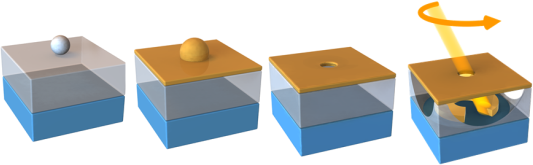
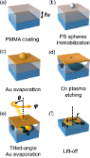
- hybridization, and the interaction of bright and dark modes, which leads to plasmonic Fano resonances, were discussed [4][5][6][7][8]. The structure geometries went from simple planar dot-like structures to complex, hybrid 3-dimensional (3D) systems. First applications in the area of sensing in the visible and
- mode around 780 nm as well as a small peak at 580 nm for a polarization of 0°, which is along the dimer axis (black curve), and a shorter wavelength mode around 710 nm for perpendicular polarization (red curve). Possible explanations include the hybridization between the two particle plasmons in
- . The smallest disk features the shortest resonance wavelength and oscillator strength, which is present only as a shoulder at 680 nm. Hybridization effects might also influence the spectrum, as can be inferred from simulations (not shown here). At a large spacer thickness of 70 nm, strong phase