


Search results
Search for "light absorption" in Full Text gives 168 result(s) in Beilstein Journal of Nanotechnology.
Photothermal effect of gold nanostar patterns inkjet-printed on coated paper substrates with different permeability
Beilstein J. Nanotechnol. 2016, 7, 1480–1485, doi:10.3762/bjnano.7.140
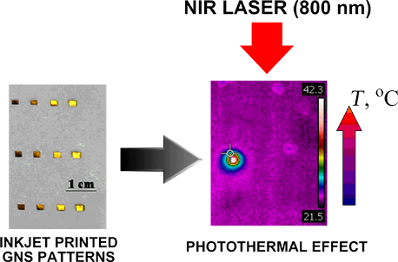
- substrates and for a wide range of drop density. After an initial linear temperature increase, a saturation effect sets in at about Iexc = 0.5 W/cm2. This behaviour can be rationalized in terms of a model that accounts for the localized light absorption by the printed pattern, its energy conversion to heat


High performance Ce-doped ZnO nanorods for sunlight-driven photocatalysis
Beilstein J. Nanotechnol. 2016, 7, 1338–1349, doi:10.3762/bjnano.7.125
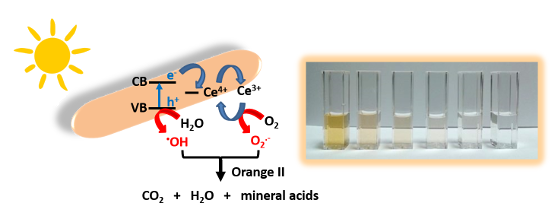
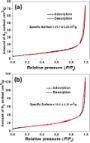
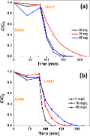
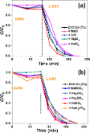
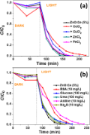
- substantially enhanced light absorption in the visible region, to the high surface area of ZnO:Ce rods and to the effective electron–hole pair separation originating from Ce doping. The influence of various experimental parameters like the pH, the presence of salts and of organic compounds was investigated and







Understanding interferometry for micro-cantilever displacement detection
Beilstein J. Nanotechnol. 2016, 7, 841–851, doi:10.3762/bjnano.7.76
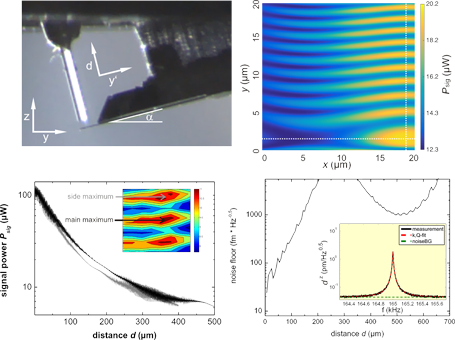
- . Because light absorption at the fiber end can also be neglected, it is straightforward to determine floss = 0.44 ± 0.02 for the experiments reported here. The high loss is presumably occurring in the tightly wound reserve coil inside the vacuum, containing about 3 m of fiber for cleaving new fiber ends


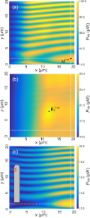


![[Graphic 27]](/bjnano/content/inline/2190-4286-7-76-i36.png?max-width=637&scale=1.18182) of the noise floor of the interferometer signal as a function of the...
of the noise floor of the interferometer signal as a function of the...
Influence of wide band gap oxide substrates on the photoelectrochemical properties and structural disorder of CdS nanoparticles grown by the successive ionic layer adsorption and reaction (SILAR) method
Beilstein J. Nanotechnol. 2015, 6, 2252–2262, doi:10.3762/bjnano.6.231
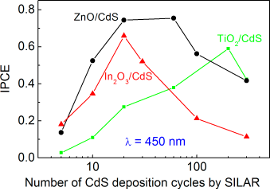
- significantly smaller in comparison with the ZnO and In2O3 films. Therefore, the light absorption in sulfide is the main factor limiting the photocurrent for the TiO2/CdS films, thus the increase in the amount of sulfide determines the IPCE growth over a wide range of N. At the same time, as will be shown later


Nonlinear optical properties of near-infrared region Ag2S quantum dots pumped by nanosecond laser pulses
Beilstein J. Nanotechnol. 2015, 6, 1781–1787, doi:10.3762/bjnano.6.182
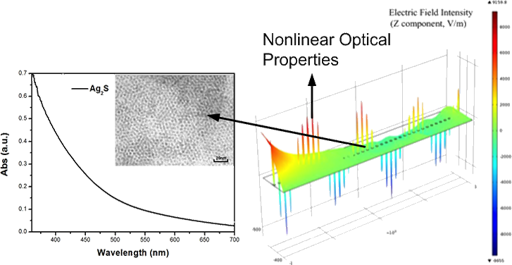
- properties of semiconductor nanocrystals [20][21][22]. Ag2S QDs have a wide range of applications in optical and other research fields. The development of their synthesis method may facilitate their application in optoelectronic devices for light absorption, photoconductor cells, IR detectors and so on [21



Atomic scale interface design and characterisation
Beilstein J. Nanotechnol. 2015, 6, 1708–1711, doi:10.3762/bjnano.6.174

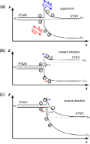
- barrier at the metal–nanostructure contact, thus investigation of the metal–nanostructure interaction aiming at understanding the physics and chemistry of this interface is critical for the design of optimal devices [1][2][3]. Potential applications of nanostructures such as spintronics, or light
- absorption and emission devices require doping [4][5]. In this context, conventional bulk doping techniques must be adapted, given the large surface to volume ratio of nanostructures, surface segregation of dopant atoms is a severe drawback. Therefore detailed knowledge and control of the physical and
Current–voltage characteristics of manganite–titanite perovskite junctions
Beilstein J. Nanotechnol. 2015, 6, 1467–1484, doi:10.3762/bjnano.6.152
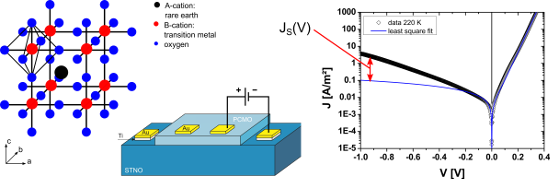
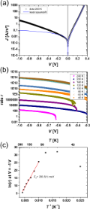
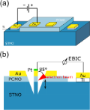
- photovoltaic energy conversion [22]: the possibility of light absorption by intraband excitations of charge carriers and the harvesting hot carriers due to the rather long-lived excited states [21][23]. Hence, such materials are suitable to study the pathways of photovoltaic energy conversion beyond the





High photocatalytic activity of V-doped SrTiO3 porous nanofibers produced from a combined electrospinning and thermal diffusion process
Beilstein J. Nanotechnol. 2015, 6, 1281–1286, doi:10.3762/bjnano.6.132
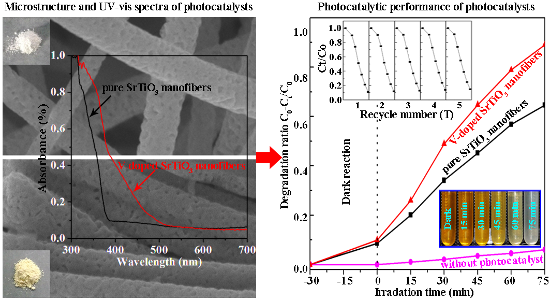
- light. This means that V5+ ion doping improves the impurity level and narrows the band gap of SrTiO3, leading to the enhanced light absorption. Additionally, based on earlier research regarding 3d ion doping for SrTiO3, V5+ doping may also improve the conductivity of SrTiO3. Hence, the higher


Improved optical limiting performance of laser-ablation-generated metal nanoparticles due to silica-microsphere-induced local field enhancement
Beilstein J. Nanotechnol. 2015, 6, 1199–1204, doi:10.3762/bjnano.6.122
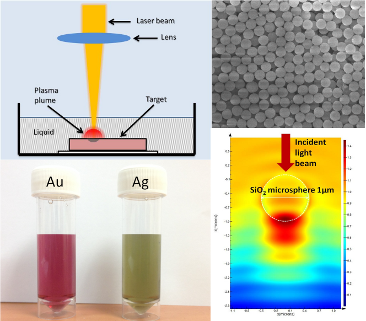
- nanoparticles exhibit localized surface plasmon resonance (LSPR), which is another possible way for local field enhancement to influence the light absorption and scattering [25]. Conclusion In this paper, we have studied that LAL is a promising technique to generate nanoparticles for various target materials


Experimental determination of the light-trapping-induced absorption enhancement factor in DSSC photoanodes
Beilstein J. Nanotechnol. 2015, 6, 886–892, doi:10.3762/bjnano.6.91
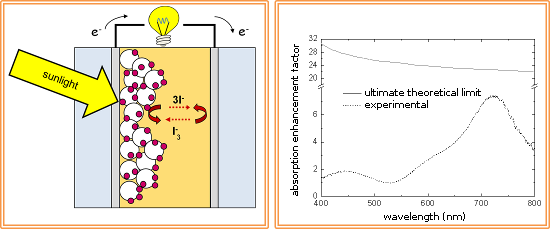
- produced by the concurrent phenomena of light absorption by dye molecules and light trapping in the mesoporous, titania photoanode structure. The decoupling of these two phenomena is important for device characterization and the design of novel photoelectrode geometries with increased optical performance
- (LT) phenomenon occurs in the active layer of the cell, resulting in enhanced light absorption and hence the overall improved cell efficiency. The beneficial influence of light scattering in DSSCs was first theoretically analyzed by Usami [4][5] and Ferber [6]. Rothemberger et al. [7] also proposed a
- ) AM1.5 illumination, provided by a class A solar simulator (Wacom). Modelling In the zero-order approximation, the only optical phenomenon occurring in the sensitized titania layer is the light absorption by the dye molecules. In this case, for a given dye composition of known molar absorptivity, the


Graphene quantum interference photodetector
Beilstein J. Nanotechnol. 2015, 6, 726–735, doi:10.3762/bjnano.6.74
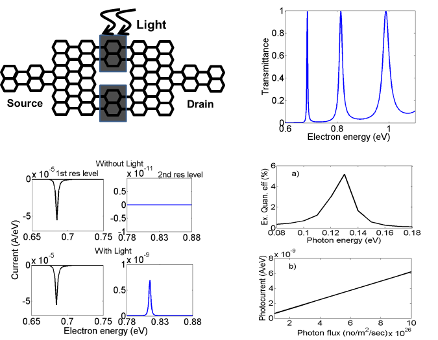
- as high electrical mobility, high thermal conductivity, high mechanical strength, linear energy dispersion around the Dirac point and strong light absorption from near-infrared to visible wavelengths [1][2][3]. Graphene also exhibits ballistic electron transport over unusually long lengths [4][5][6




Morphological and structural characterization of single-crystal ZnO nanorod arrays on flexible and non-flexible substrates
Beilstein J. Nanotechnol. 2015, 6, 720–725, doi:10.3762/bjnano.6.73
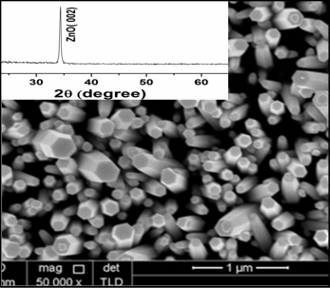
- distribution ensure a desired light absorption and propagation characteristics as well as percolation pathways for charge transfer. Experimental ZnO nanorod arrays were grown on three different substrates (glass, PET and Si) by the chemical bath deposition (CBD) technique. The substrates (2 × 2 cm) were


Simple approach for the fabrication of PEDOT-coated Si nanowires
Beilstein J. Nanotechnol. 2015, 6, 640–650, doi:10.3762/bjnano.6.65
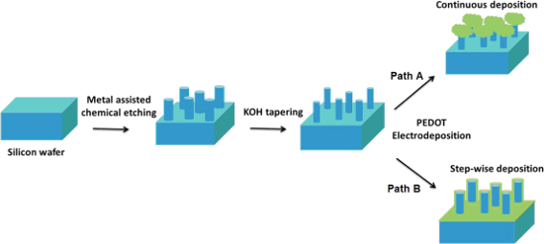
- the transport path along the radial direction of photogenerated carriers to be greatly shortened without sacrificing light absorption [9]. However, the high aspect ratio of SiNWs makes it difficult to realize a radial p–n junction, where each individual Si wire in the array would need to be
- increases from b to d. Clearly, by increasing the tapering duration, the space between wires is increased, the density of wires is reduced, and their top becomes sharper. Spectrophotometric measurements were performed on these samples to determine their light absorption properties (Figure 3). Due to the




Palladium nanoparticles anchored to anatase TiO2 for enhanced surface plasmon resonance-stimulated, visible-light-driven photocatalytic activity
Beilstein J. Nanotechnol. 2015, 6, 428–437, doi:10.3762/bjnano.6.43
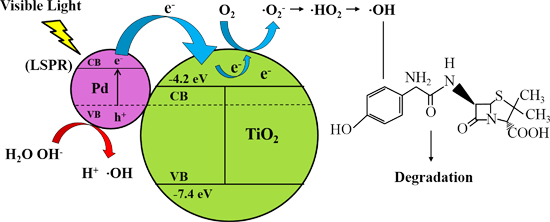
- with different amounts of palladium clearly shows the contribution of metallic Pd NPs. Although a small amount of Pd NPs enhanced the visible light absorption, a further increase of the Pd loading leads to an excessive absorption. This induced light scattering phenomena that resulted in deprived
- anchoring of Pd NPs onto the surface of TiO2, and the large size of the Pd NPs contributed to the visible-light absorption. Localized surface plasmon resonance (LSPR) and the formation of a Schottky barrier at the TiO2 interface also occured. The prepared heterogeneous photocatalysts exhibited superior


Tunable white light emission by variation of composition and defects of electrospun Al2O3–SiO2 nanofibers
Beilstein J. Nanotechnol. 2015, 6, 313–320, doi:10.3762/bjnano.6.29
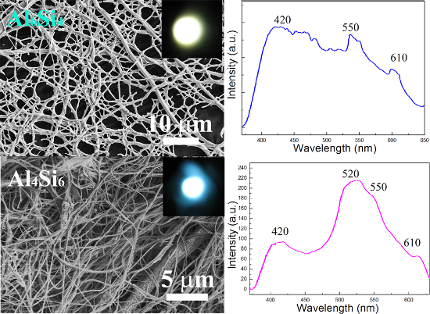
- . The inset optical photos in (a) and (c) are the corresponding light emission spot of Al6Si4 and Al4Si6 samples, respectively. (d) Energy transfer diagram indicating the mechanism for Al2O3–SiO2 nanocomposite emission. The dashed lines represent light absorption, the solid lines radiative transitions


Tunable light filtering by a Bragg mirror/heavily doped semiconducting nanocrystal composite
Beilstein J. Nanotechnol. 2015, 6, 193–200, doi:10.3762/bjnano.6.18
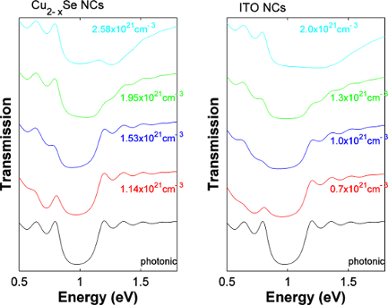
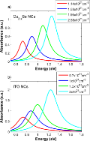
- reversibly tuned by electrochemical post-treatment leading to a switching of the plasma frequency throughout the NIR spectral region [33][36][37]. Taken altogether, the proposed theoretical framework is appropriate to describe the tuning of light absorption with doped semiconductor NCs in a dispersion or in
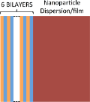
- carrier density in the heavily doped semiconductor NC component through chemical and electrochemical treatments, ultimately leading to tunable plasmonic light absorption. Illustration of the tunable optical properties of a) a Cu2−xSe NC dispersion and b) an ITO NC film as a function of carrier density NC


Localized surface plasmon resonances in nanostructures to enhance nonlinear vibrational spectroscopies: towards an astonishing molecular sensitivity
Beilstein J. Nanotechnol. 2014, 5, 2275–2292, doi:10.3762/bjnano.5.237
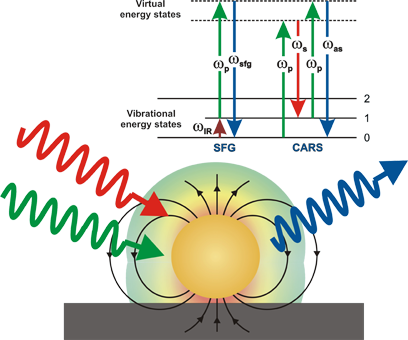
- frequencies matching the energy gap between vibrational states (Figure 1). Physically, it corresponds to oscillators presenting a variation of the dipole moment. In fine, the transmitted or reflected beam intensity is reduced because of the light absorption. In spontaneous Raman spectroscopy, a monochromatic




Photodetectors based on carbon nanotubes deposited by using a spray technique on semi-insulating gallium arsenide
Beilstein J. Nanotechnol. 2014, 5, 1999–2006, doi:10.3762/bjnano.5.208
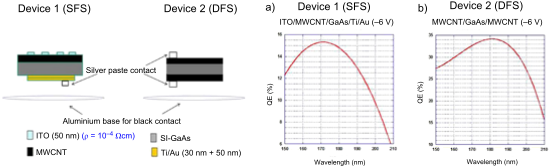
- reported for SFS and DFS in Figure 5 and Figure 6 for the visible and the UV range, respectively. The higher QE of SFS with respect to DFS at lower wavelengths in the visible light range (Figure 5) can be attributed to the contribution to the photo-generated charges from the near-band-gap light absorption


Enhanced photocatalytic hydrogen evolution by combining water soluble graphene with cobalt salts
Beilstein J. Nanotechnol. 2014, 5, 1167–1174, doi:10.3762/bjnano.5.128
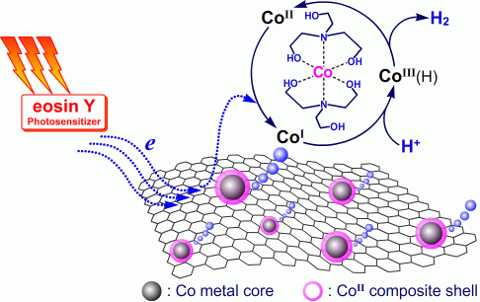
- electron-donating ability and less Co(TEOA)22+ catalyst is formed. In a basic solution, the graphene dispersion was more stable and the light absorption of EY is stronger but the concentration of protons is too low. To optimize the hydrogen evolution system, four sets of experiments were carried out


DFT study of binding and electron transfer from colorless aromatic pollutants to a TiO2 nanocluster: Application to photocatalytic degradation under visible light irradiation
Beilstein J. Nanotechnol. 2014, 5, 1016–1030, doi:10.3762/bjnano.5.115
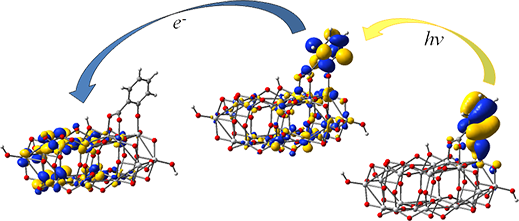
- irradiation decreases in the sequence SA > Ph > pHBA > BA. Thus, analyzing the pollutants against some requirements for efficient photocatalytic degradation, we found that BA has no absorption in the visible range even bound to the catalyst. Ph has best light absorption but weakest anchoring, pHBA has very



Functionalized nanostructures for enhanced photocatalytic performance under solar light
Beilstein J. Nanotechnol. 2014, 5, 994–1004, doi:10.3762/bjnano.5.113
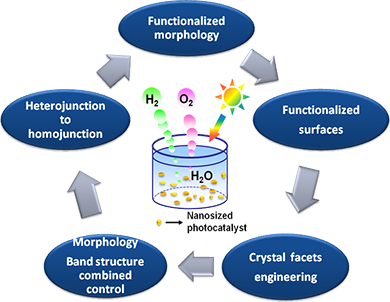
- should be pointed out that TiO2 can only respond to UV light, even metal ion doping can hardly enhance its visible light activity. Sensitization with dyes or nanocrystals is one possible approach to extend the light absorption of TiO2. Sreethawong et al. found that eosin Y-sensitized mesoporous-assembled
- as Cr or/and Ti incorporation in MCM-41. Active visible light absorption sites could be generated in MCM-41 due to transitional metal doping. It was found that the highly dispersed Cr ions within MCM 41 could be easily excited by visible light irradiation due to the electron transfer from O2− to Cr6
- microclusters with exposed {001} facets via a facile and surfactant-free hydrothermal reaction. The light absorption, charge separation and surface reaction were simultaneously optimized through the unique structure assembled from nanosheets, leading to the greatly enhanced photocatalytic activity [49]. Micro


Growth and characterization of CNT–TiO2 heterostructures
Beilstein J. Nanotechnol. 2014, 5, 946–955, doi:10.3762/bjnano.5.108
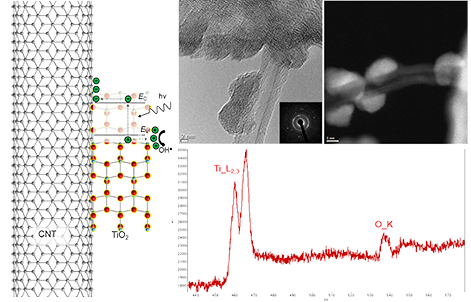
- discovery that with the addition of CNTs, the light absorption of TiO2 can be extended to the visible-light region [8][9][10][11][12][13][14]. This can significantly increase the photocatalytic efficiency. In literature several photocatalysis enhancement mechanisms based on TiO2–CNT have been proposed, as


Optical modeling-assisted characterization of dye-sensitized solar cells using TiO2 nanotube arrays as photoanodes
Beilstein J. Nanotechnol. 2014, 5, 895–902, doi:10.3762/bjnano.5.102
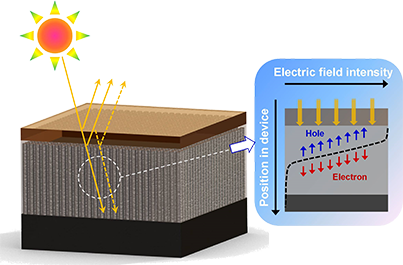
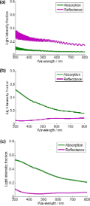
- 3.3 μm long TNT array was around 23% in this wavelength range. The increase in tube lengths to 11.5 and 20.6 μm led to the enhancement of the IPCE values to 57% and 63%, respectively. Below 500 nm the IPCE values were rapidly decreasing due to the reduced light absorption by the reflection effect of
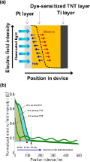
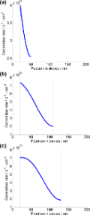
- transfer matrix method (GTMM) has been applied to calculate and analyze the interference effect by multi-layers in solar cells [15]. The optical modeling using GTMM provides reliable information about the spatial distribution of the electric field intensity and the internal light absorption efficiency of
- light has a wavelength of 550 nm, which is a primary light absorption peak of N719 dye, corresponding to the IPCE result in Figure 3. Under the same illumination of 550 nm wavelength, the magnitude of the electric field intensity increased with the increase in the lengths of the TNT. The magnitude of


Enhancement of photocatalytic H2 evolution of eosin Y-sensitized reduced graphene oxide through a simple photoreaction
Beilstein J. Nanotechnol. 2014, 5, 801–811, doi:10.3762/bjnano.5.92
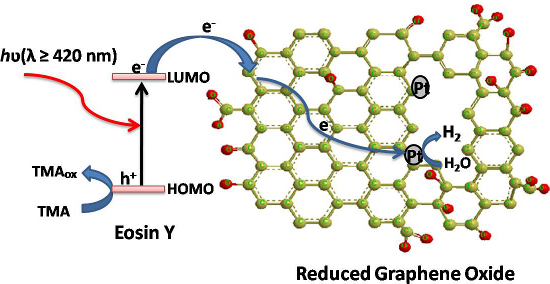
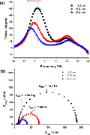
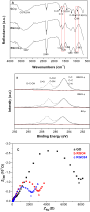
- interaction between EY and GO/RGOx, the fluorescence spectra of the mixture of EY and GO or RGOx were measured, as shown in Figure 4. The inset of Figure 4 displays a strong fluorescence peak of EY (about 6.8 × 10³ a.u.) at 542 nm. This can be attributed to the large visible light absorption by its conjugated
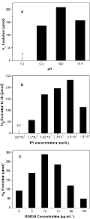
- 0.7 μmol. This may be due to the deceleration of the light absorption of EY by RGO24, which results in the formation of few photo-excited electrons at low concentrations of dye. When the EY concentration increases to 5.0 × 10⁻⁴ mol L−1, more and more EY molecules adsorb at RGO24, which can effectively
- to RGO. Moreover, excess EY in solution may not only screen the light absorption of EY-RGO but also produce self-quenching, which greatly decreases the utilization efficiency of the incident light [20][50]. Thus, the photocatalytic activity decreases at 1.0 × 10⁻³ mol L−1 EY. Figure 7C shows the





Visible light photooxidative performance of a high-nuclearity molecular bismuth vanadium oxide cluster
Beilstein J. Nanotechnol. 2014, 5, 711–716, doi:10.3762/bjnano.5.83

- photocatalysts is a well-established method which gives access to materials for which light absorption, catalytic activity and selectivity can be tuned by structural and chemical modifications [1][2][3][4][5][6]. Prime examples for this approach are molecular metal oxides, so-called polyoxometalates (POMs) [7][8
- nm, making the cluster attractive for visible light absorption. When compared with a prototype pure vanadium oxide cluster such as [H3V10O28]3−, the increase in extinction coefficient and the higher visible light absorption are obvious, see Figure 1. Photooxidative decomposition of the model
- compound features a near-visible LMCT absorption band with ε335 = 15940 M−1 cm−1. In contrast, the pure vanadium oxide cluster [H3V10O28]3− features significantly reduced visible-light absorption (black line). Photooxidative performance of 1 under anaerobic (blue triangles) and aerobic (red circles





