


Search results
Search for "mechanics" in Full Text gives 176 result(s) in Beilstein Journal of Nanotechnology.
Production, detection, storage and release of spin currents
Beilstein J. Nanotechnol. 2015, 6, 736–743, doi:10.3762/bjnano.6.75
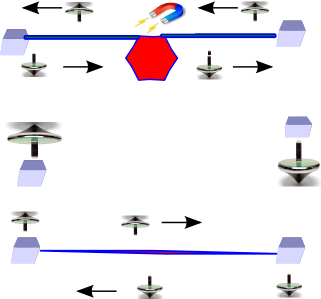
- and transport properties of materials [2]. On the other hand, other promising themes of research on spin currents remain largely to be explored. One is the spin version of quantum pumping – something that is not possible classically. A seminal paper by Thouless [3] pointed out that quantum mechanics
- just charge. In principle, quantum mechanics allows us to build a device to achieve that in more than one way. One can also build a ring device that can produce a pure spin current, that is, a magnetic current without any charge current associated to it [12]. In the present paper, I concentrate on the
- substituting the quantum current in the classical formula [25]. The basic reason is that any measurement of the magnetic moment of the ring requires the measurement of a force exerted on the ring by a probe flux, which according to quantum mechanics has an influence on the current. Actually, rephrasing the



A versatile strategy towards non-covalent functionalization of graphene by surface-confined supramolecular self-assembly of Janus tectons
Beilstein J. Nanotechnol. 2015, 6, 632–639, doi:10.3762/bjnano.6.64
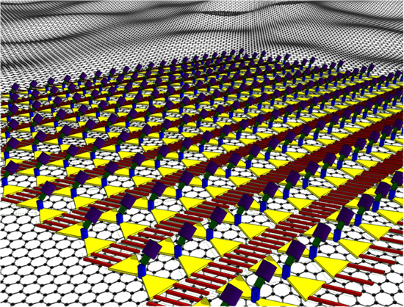
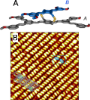
- molecular mechanics calculations [25]. Both the experimental and theoretical lattice values of JA evidenced that the presence of relatively large entities on the upper level which did not perturb the self-assembly. In addition, they further confirmed that the self-assembly is stabilized by adsorption of




Entropy effects in the collective dynamic behavior of alkyl monolayers tethered to Si(111)
Beilstein J. Nanotechnol. 2015, 6, 583–594, doi:10.3762/bjnano.6.60
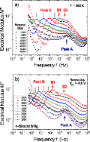
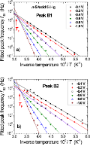
- 0.3–1.3 eV) and log(fB0) (in the range from 1010 to 1024 Hz). The latter apparent prefactor values exceed typical phonon frequencies (1013 Hz) by more than ten decades. This "compensation law" observed for solid-state phenomena with a large activation energy in many areas (physics, mechanics
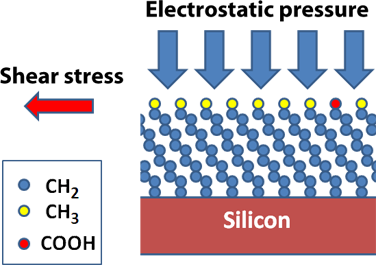
- point" temperature TF should decrease with increasing n-alkane length. OML mechanics: compressive and shear forces In this section, the molecular layer is considered as a continuous medium submitted to a compressive electrostatic pressure, proportional to VI2, where VI is the potential drop across the




Dynamic force microscopy simulator (dForce): A tool for planning and understanding tapping and bimodal AFM experiments
Beilstein J. Nanotechnol. 2015, 6, 369–379, doi:10.3762/bjnano.6.36
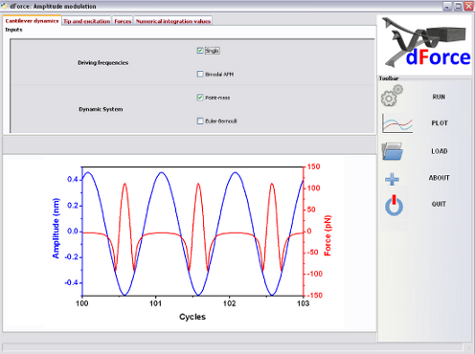
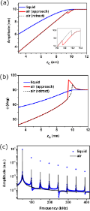
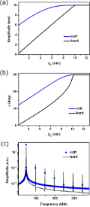
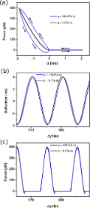
- instantaneous deflection and tip–surface force, velocity, virial, dissipated energy, sample deformation and peak force as a function of time or distance. The simulator includes a variety of interactions and contact mechanics models to describe AFM experiments including: van der Waals, Hertz, DMT, JKR, bottom
- tip–surface charge density and σs is the sample surface charge density. Hertz contact mechanics The elastic contact between the tip and sample is usually modelled with the Hertz model [46] whereby for a spherical tip and a half-space sample the force is given by where δ is the indentation and Eeff is
- the effective Young modulus of the interface defined by where Et and Es are the Young’s modulus of the tip and sample, respectively, and υt and υs are the Poisson coefficients of the tip and sample, respectively. Derjaguin–Mueller–Toporov contact mechanics (DMT) The DMT model is valid for describing




The effect of surface charge on nonspecific uptake and cytotoxicity of CdSe/ZnS core/shell quantum dots
Beilstein J. Nanotechnol. 2015, 6, 281–292, doi:10.3762/bjnano.6.26
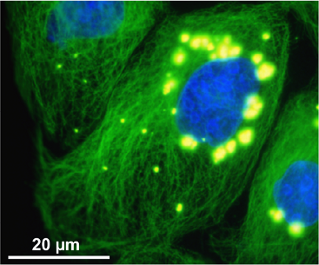
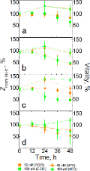
- ). Thus, even though the MTS assay indicated that the cells were still healthy and retained their initial level of vitality within 24 h of exposure to QDs, the particles affected the dynamics and mechanics of MDCKII cell division and changed the properties of the plasma membrane. In Figure 2a, impedance



Mechanical properties of MDCK II cells exposed to gold nanorods
Beilstein J. Nanotechnol. 2015, 6, 223–231, doi:10.3762/bjnano.6.21
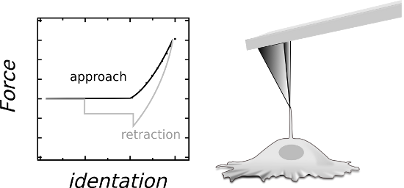
- of cells mirror the environment such as substrate properties including topography and stiffness [16][17][18]. Besides, also chemical cues can produce substantial changes in membrane or cytoskeletal mechanics and dynamics providing an excellent means to assess the impact of external stimuli such as
- the elasticity of the epithelial cell line MDCK II probed by AFM and QCM. The combination of these two techniques allows to monitor the influence of nanoparticles on the elastic properties of MDCK II cells both from the apical and basal side. The data permits to compare mechanics of cells exposed to
- nanoparticles impact cell mechanics. Results and Discussion Figure 1 shows microscopy (AFM and fluorescence microscopy) images of a confluent MDCK II monolayer treated with CTAB-coated gold nanorods. CTAB is necessary to keep the particles in solution preventing precipitation due to aggregation. The AFM images


Multifunctional layered magnetic composites
Beilstein J. Nanotechnol. 2015, 6, 134–148, doi:10.3762/bjnano.6.13
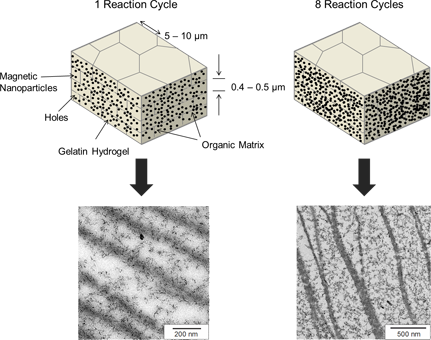
- ][55] and films [56][57][58][59]. However, due to the morphological and structural inhomogeneity of our samples it is currently difficult to make a quantitative evaluation of the data. Continuum mechanics models typically require homogeneous and isotropic materials. For pure gelatin we can successfully





Aquatic versus terrestrial attachment: Water makes a difference
Beilstein J. Nanotechnol. 2014, 5, 2424–2439, doi:10.3762/bjnano.5.252
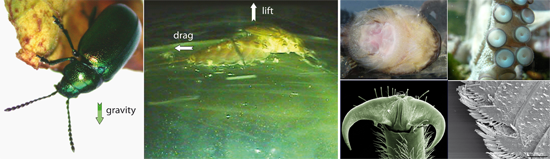
- be a monolayer of water on the surface of the leaf, or there might be a patch of standing water on the leaf after rainfall. Even in this terrestrial example, there is the possibility of submerged mechanics applying at some size scale. Similarly, there are cases in the fully submerged environment
- where terrestrial mechanics might apply. For example, when spiders bring with them a ball of air as they dive beneath the surface, or when two superhydrophobic surfaces interact underwater. Therefore, the first task that we face is to make clear what we mean as we try to distinguish between these two


Nanometer-resolved mechanical properties around GaN crystal surface steps
Beilstein J. Nanotechnol. 2014, 5, 2164–2170, doi:10.3762/bjnano.5.225
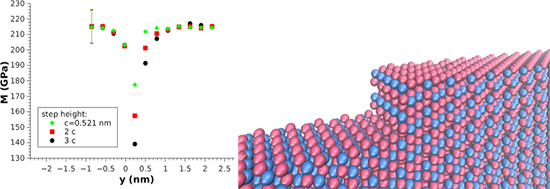
- paper can be generalized, due to the fact that they are based on a general formalism introducing surface stresses in continuum mechanics and since many other materials ranging from ionic crystals [11] to metals [12] are known to form such steps. Theoretical considerations A step can be described by the


![[Graphic 3]](/bjnano/content/inline/2190-4286-5-225-i13.png?max-width=637&scale=1.18182) along the y-axis of the upper Ga atom...
along the y-axis of the upper Ga atom...


Modeling viscoelasticity through spring–dashpot models in intermittent-contact atomic force microscopy
Beilstein J. Nanotechnol. 2014, 5, 2149–2163, doi:10.3762/bjnano.5.224
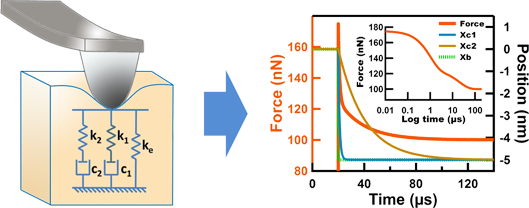
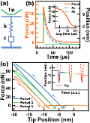
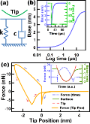
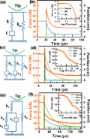
- contact mechanics to incorporate the contact area and sample deformation [7]. The dissipative part of this model, originally introduced by García and coworkers [34] has the following form: where η is the viscosity, R is the tip radius and δ is the sample deformation (tip–sample indentation). In this model
- SLS is the simplest model that is able to describe stress relaxation and creep, and the DMT is a widely used model in contact mechanics that is typically used in the context of AFM. We include both DMT contact forces and long-range van der Waals forces [6][32]. where H is the Hammaker constant, R is
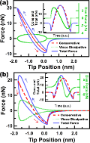
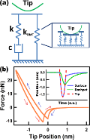
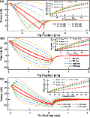


Modification of a single-molecule AFM probe with highly defined surface functionality
Beilstein J. Nanotechnol. 2014, 5, 2122–2128, doi:10.3762/bjnano.5.221
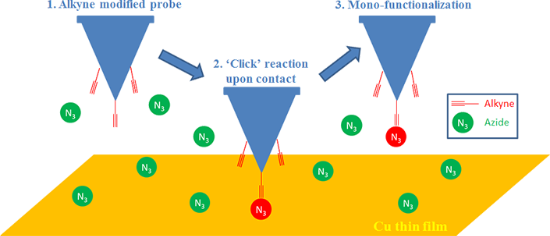
- Fei Long Bin Cao Ashok Khanal Shiyue Fang Reza Shahbazian-Yassar Department of Mechanical Engineering-Engineering Mechanics, Michigan Technological University, 1400 Townsend Drive, Houghton, Michigan, USA Department of Chemistry, Michigan Technological University, 1400 Townsend Drive, Houghton


Nanomanipulation and environmental nanotechnology
Beilstein J. Nanotechnol. 2014, 5, 2079–2080, doi:10.3762/bjnano.5.216

- processes. For example, the photocatalytic degradation of pollutants can be interpreted using density functional theory. On a different scale, AFM measurements in liquid environments can be supported by advanced contact mechanics models including the squeeze-out of wetting fluids. Adhesion of fluorite
Patterning a hydrogen-bonded molecular monolayer with a hand-controlled scanning probe microscope
Beilstein J. Nanotechnol. 2014, 5, 1926–1932, doi:10.3762/bjnano.5.203

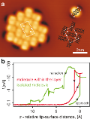
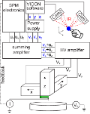
- adsorption mechanics of PTCDA on Ag(111) is well understood: a PTCDA molecule binds to the metal surface through an extended bond that involves charge transfer into its LUMO and also locally with its four carboxylic oxygen atoms [10][11] (marked by white circles in Figure 1a). The same atoms enable SPM


Spin annihilations of and spin sifters for transverse electric and transverse magnetic waves in co- and counter-rotations
Beilstein J. Nanotechnol. 2014, 5, 1887–1898, doi:10.3762/bjnano.5.199
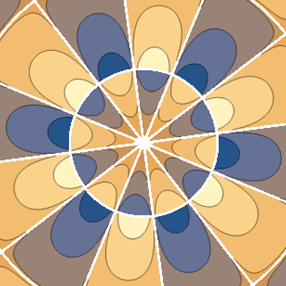
- ] but also to the vector potential leading to the Landau levels in quantum mechanics [19]. Let us refer again to the schematic Figure 1a in both Cartesian and cylindrical coordinates, where a cylinder located at r = R divides the interior from exterior. Figure 1b displays the TE and TM waves, each being
- the kinetic momentum in the Hamiltonian, in which the light-matter interactions lead to the quantized Landau levels in quantum mechanics [19]. See Section S7 of Supporting Information File 1 for details. As with , in the interior for the counter-rotational case, as seen from the vanishing denominator


![[Graphic 44]](/bjnano/content/inline/2190-4286-5-199-i70.png?max-width=637&scale=1.18182) . (b) The scaled coefficient
. (b) The scaled coefficient ![[Graphic 45]](/bjnano/content/inline/2190-4286-5-199-i71.png?max-width=637&scale=1.18182) of the optical chirality C for the counter-rotatio...
of the optical chirality C for the counter-rotatio...


![[Graphic 104]](/bjnano/content/inline/2190-4286-5-199-i130.png?max-width=637&scale=1.18182) in the (kx,ky)-plane. (a) The co-rotational case. (b) The counter-rotational case ...
in the (kx,ky)-plane. (a) The co-rotational case. (b) The counter-rotational case ...


![[Graphic 125]](/bjnano/content/inline/2190-4286-5-199-i151.png?max-width=637&scale=1.18182) for the counter-rotational case plotted over 0 ≤ ρ ≡ kr ≤ 4 for m = 3, Rρ ≡ kR = 1...
for the counter-rotational case plotted over 0 ≤ ρ ≡ kr ≤ 4 for m = 3, Rρ ≡ kR = 1...

Mechanical properties of sol–gel derived SiO2 nanotubes
Beilstein J. Nanotechnol. 2014, 5, 1808–1814, doi:10.3762/bjnano.5.191
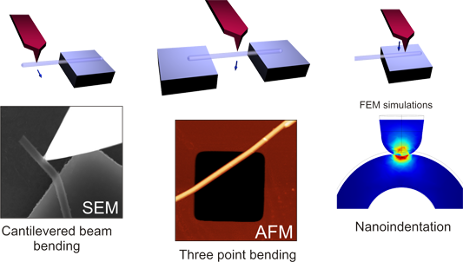
- indentation is limited to the thin-shell or membrane case [27]. Therefore, for the case of thick shells studied in this work, we employed finite element method (FEM, COMSOL Multiphysics) models instead, where all geometric parameters can be taken into account. The Solid Mechanics module was used, where the


Equilibrium states and stability of pre-tensioned adhesive tapes
Beilstein J. Nanotechnol. 2014, 5, 1725–1731, doi:10.3762/bjnano.5.182
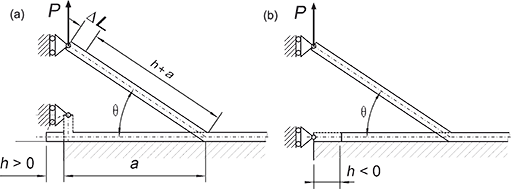
- theoretical investigations about rough contact mechanics [25][26][27][28][29], the role of roughness in this kind of systems is not yet well understood. Furthermore, viscoelasticity, which entails prominent effects in terms of friction and contact anisotropy [30][31], has not yet been included in analytical

![[Graphic 5]](/bjnano/content/inline/2190-4286-5-182-i14.png?max-width=637&scale=1.18182) as a function of the peeling angle θeq at equilibrium (a); the tot...
as a function of the peeling angle θeq at equilibrium (a); the tot...


![[Graphic 11]](/bjnano/content/inline/2190-4286-5-182-i20.png?max-width=637&scale=1.18182) as a function of the peeling angle θeq at equilibrium, for differen...
as a function of the peeling angle θeq at equilibrium, for differen...
Hydrophobic interaction governs unspecific adhesion of staphylococci: a single cell force spectroscopy study
Beilstein J. Nanotechnol. 2014, 5, 1501–1512, doi:10.3762/bjnano.5.163
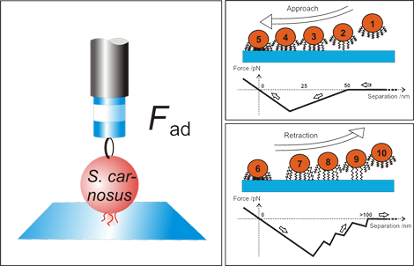
- bacterium/surface contact. Since the exact contact formation and mechanics between the bacterial surface and the solid substrate is unclear, it is hard to make predictions on the shape of the force/distance curve. Upon retraction, the force/distance curve exhibits first the same steep slope as upon approach


From sticky to slippery: Biological and biologically-inspired adhesion and friction
Beilstein J. Nanotechnol. 2014, 5, 1450–1451, doi:10.3762/bjnano.5.157
- theoretical studies which range from insect adhesion, bacterial adhesion and skin friction to artificial biomimetic systems, e.g., snake-skin inspired polymer patterns or gecko tape. The Thematic Series does not attempt to give a comprehensive overview of the emerging field of biological contact mechanics

Surface topography and contact mechanics of dry and wet human skin
Beilstein J. Nanotechnol. 2014, 5, 1341–1348, doi:10.3762/bjnano.5.147
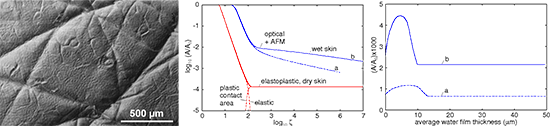
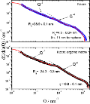
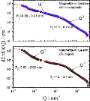
- topography of the human wrist skin is studied by using optical and atomic force microscopy (AFM) methods. By using these techniques the surface roughness power spectrum is obtained. The Persson contact mechanics theory is used to calculate the contact area for different magnifications, for the dry and wet
- defined only when a combination of both AFM and optical methods is used for power spectrum calculation. Keywords: contact mechanics; interface fluid; roughness power spectrum; skin tribology; Introduction The tribology of human skin is of great importance in sports, medicine, and cosmetics [1][2]. It is
- ]. In a first approximation, a two layers model, with a thin stiff layer on top of a thick soft layer, is sufficient for a satisfactory description of the contact mechanics between the skin and the indentor. The change of skin morphology and elastic modulus in the wet state contributes to the high


Physical principles of fluid-mediated insect attachment - Shouldn’t insects slip?
Beilstein J. Nanotechnol. 2014, 5, 1160–1166, doi:10.3762/bjnano.5.127
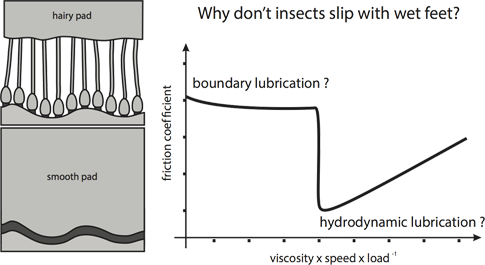
- increases the capillary force. This extended capillary model might add an explanation why some insects (and tree frogs) have soft toe pads [51]. It should also be noted that in particular in the context of insect adhesion the mechanics described by the third viscous forces, or “Stefan adhesion” term, are a


Trade-offs in sensitivity and sampling depth in bimodal atomic force microscopy and comparison to the trimodal case
Beilstein J. Nanotechnol. 2014, 5, 1144–1151, doi:10.3762/bjnano.5.125
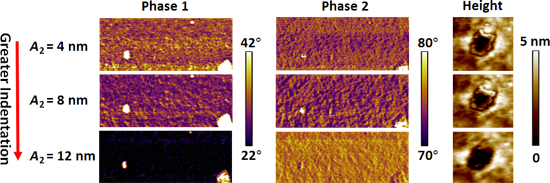
- , feature sizes, shapes and patterns, which have been previously attributed by others to the competing effects of membrane functionality and contact mechanics on the cantilever response [19]. In cases in which the mechanics of the subsurface are of interest, it is necessary to operate the AFM in a way that


Molecular biology approaches in bioadhesion research
Beilstein J. Nanotechnol. 2014, 5, 983–993, doi:10.3762/bjnano.5.112
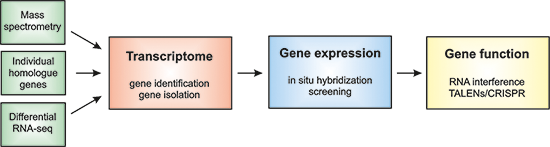
- techniques that are of particular interest to researchers working on bioadhesion of organisms where no reference genome exists. Important prerequisites of bioadhesion research are based on techniques such as histology, biochemistry and mechanics [1][3] but gradually certain model systems are entering


Growth and characterization of CNT–TiO2 heterostructures
Beilstein J. Nanotechnol. 2014, 5, 946–955, doi:10.3762/bjnano.5.108
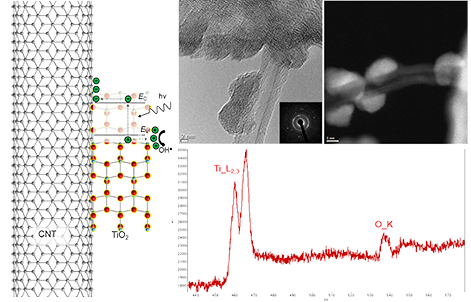
- Yucheng Zhang Ivo Utke Johann Michler Gabriele Ilari Marta D. Rossell Rolf Erni Electron Microscopy Center, EMPA, Swiss Federal Laboratories for Materials Science and Technology, Überlandstrasse 129, CH-8600 Dübendorf, Switzerland Laboratory of Mechanics of Materials and Nanostructure, EMPA, Swiss


Direct observation of microcavitation in underwater adhesion of mushroom-shaped adhesive microstructure
Beilstein J. Nanotechnol. 2014, 5, 903–909, doi:10.3762/bjnano.5.103
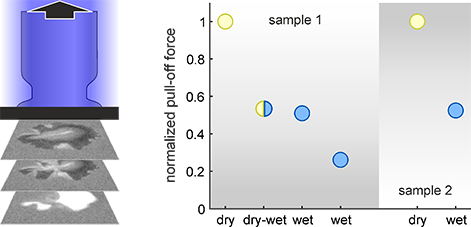
- in predominantly liquid environments. Keywords: bio-inspired; biomimetic; cavitation; contact mechanics; gecko; interface; negative pressure; pull-off; surface; tribology; Introduction During the past two decades, bio-inspired microstructured adhesives became a new class of adhesive materials with


Fibrillar adhesion with no clusterisation: Functional significance of material gradient along adhesive setae of insects
Beilstein J. Nanotechnol. 2014, 5, 837–845, doi:10.3762/bjnano.5.95
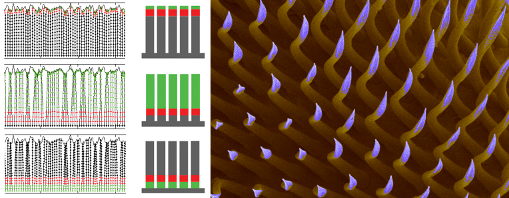
- gradients of material properties in real beetle setae was used in the numerical model presented below. Numerical model In principle, to model mechanics of the setae a classical beam theory can be applied. However, for long array of the beams it needs in extremely time consuming numerical calculation. To





