Search results
Search for "metals" in Full Text gives 652 result(s) in Beilstein Journal of Nanotechnology. Showing first 200.
Rapid and sensitive detection of box turtles using an electrochemical DNA biosensor based on a gold/graphene nanocomposite
Beilstein J. Nanotechnol. 2022, 13, 1458–1472, doi:10.3762/bjnano.13.120
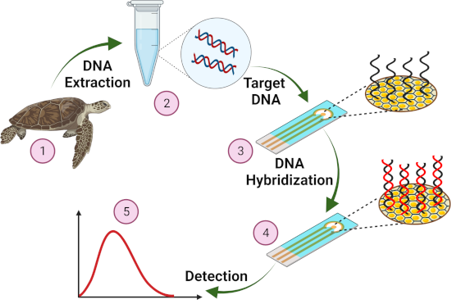
- microbes and sources of heavy metals/toxins [6][7], and are prohibited from consumption by Muslims [5]. Therefore, turtle materials in food chains and medicines pose both health and social risks. Aside from that, a rising demand encourages the illicit trafficking of BT [8]. Illegal turtle meat and species



Recent trends in Bi-based nanomaterials: challenges, fabrication, enhancement techniques, and environmental applications
Beilstein J. Nanotechnol. 2022, 13, 1316–1336, doi:10.3762/bjnano.13.109
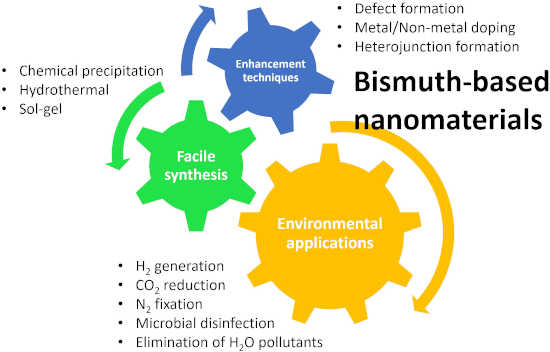
- and deposition and doping of metals and non-metallic elements are the most common doping methods. Metal ions modify the crystal structure of the Bi-based semiconductor photocatalysts or induce defects. Also, the photocatalytic properties may be altered by doping or deposition of metallic components
- photocatalyst is complex, which is why a h+-capturing substance is frequently added to the system to promote the production of H2 [112]. Pt, Pd, Au, and other precious metals, as well as photocatalysts containing Cd, Pb, and other elements (such as CdS), are some of the costliest and environmentally hazardous





Bending and punching characteristics of aluminum sheets using the quasi-continuum method
Beilstein J. Nanotechnol. 2022, 13, 1303–1315, doi:10.3762/bjnano.13.108
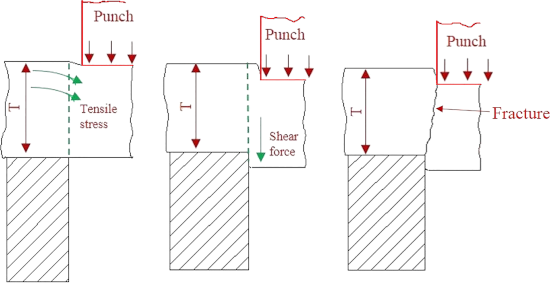
- friction behaviors of different models [52]. Moreover, the QC method based on the embedded-atom method (EAM) potential was adopted to observe the fatigue crack growth and expansion characteristics of single-crystal metals under cyclic loading processes. The results showed that after compressive or shear







Laser-processed antiadhesive bionic combs for handling nanofibers inspired by nanostructures on the legs of cribellate spiders
Beilstein J. Nanotechnol. 2022, 13, 1268–1283, doi:10.3762/bjnano.13.105
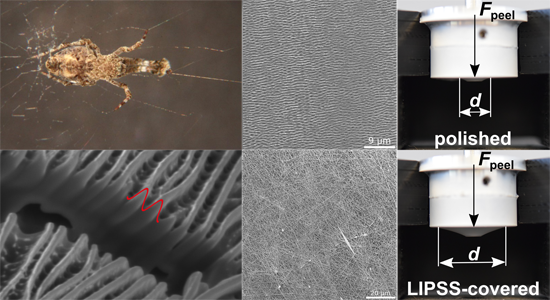
- fiber is assumed is still valid in this case. The modulation depth that typically can be achieved for LIPSS (LSFL type [33]) on metals is up to 400 nm. Thus, an antiadhesive effect can be assumed. The peel-off force, that is, the force per unit length of the peeling edge necessary to separate the
- -covered steel samples and, thus, significant lower than for the corresponding polished surfaces (7.69 N/m for Ti alloy and 8.87 N/m for steel). Thus, for both metals (Ti alloy and steel), the LIPSS reduce the adhesion forces by approximately 70–75% compared to the polished surfaces. For the aluminium
- cribellate spiders, we were able to define an upscaled surface nanostructure with reduced adhesion force towards technical electrospun fibers. The biomimetic surface can be produced on metals by means of ultrashort pulse laser processing of self-organized laser-induced periodic surface structures, so-called








Studies of probe tip materials by atomic force microscopy: a review
Beilstein J. Nanotechnol. 2022, 13, 1256–1267, doi:10.3762/bjnano.13.104
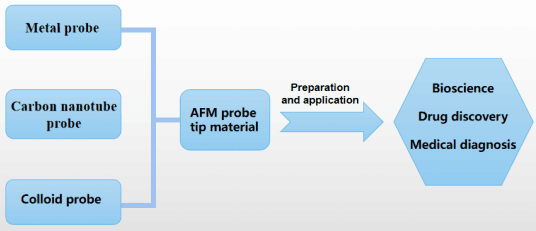
- attractive platform, offering more possibilities for sharpening tips in a controlled manner. These metal clusters can be easily generated with various metals (e.g., Ir, Au, Ni, Co, Pb, or Sn), allowing the generation of nano-tips with different functionalities. The good point is that these clusters were
- broad particle size distribution, which was observed to be in the range of 2–80 μm. The polydispersity due to evaporation in the spark helps to select particles of suitable diameter size. The evaporation of sparks is a universal process that can be applied to basically all metals suitable as electrodes
- , such as copper, silver, platinum, etc. Thus, it is also possible to prepare electrochemical colloidal probes (eCPs) with other metals. eCPs under electrochemical control of colloidal probes have potential in various research areas such as adhesion science, tribology or long-range interactions. eCPs
Design of surface nanostructures for chirality sensing based on quartz crystal microbalance
Beilstein J. Nanotechnol. 2022, 13, 1201–1219, doi:10.3762/bjnano.13.100
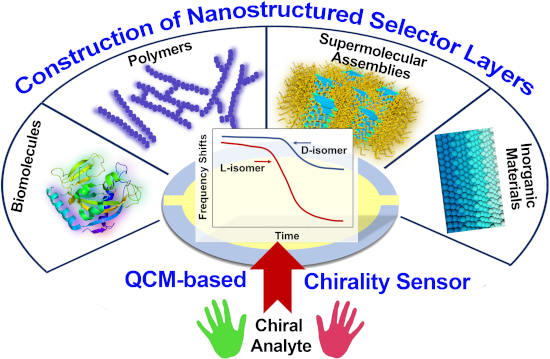
- sensing layers from inorganic nanostructures In contrast to the abundance of chiral organic molecules, chirality in inorganic materials seems rare. Unlike the well-established theory of chirality for organic molecules, the notion of chirality for metals, semiconductors, and other inorganic nanostructures
- considered to be the most promising platform for enantiospecific sensing and may also be explored for chiral separation and catalysis [111]. Induced chiral metal or inorganic oxides Based on the template strategy, metals or inorganic oxides with chiral channels could be fabricated by using chiral templates
- generated by polypyrrole (PPy) and Trp [127]. Intrinsic chiral metal crystals Until relatively recently, metals were ignored as potential substrates for asymmetric surface chemistry since metals always show highly symmetric and achiral bulk structures with unexposed chiral surfaces [128][129]. Sykes and co


Microneedle-based ocular drug delivery systems – recent advances and challenges
Beilstein J. Nanotechnol. 2022, 13, 1167–1184, doi:10.3762/bjnano.13.98
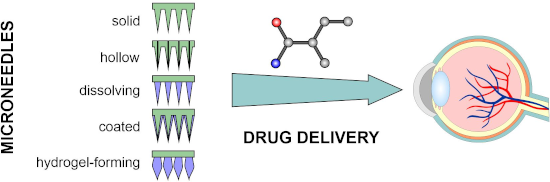
- if the needles break and are deposited in the tissue [117][118]. Other non-degradable materials utilized to fabricate microneedles, include metals such as stainless steel [119] and titanium [120], ceramics, such as aluminum oxide [121], or synthetic polymers comprising polyvinylpyrrolidone (PVP) [122
- of the microneedle system and the material from which it is to be made. In addition, the technique must be adapted to the properties of the drug. The most common materials used in the production of microneedles are silicon, ceramics, and metals, such as stainless steel and titanium. Also
- cutting technique can be used to produce microneedles from metals or polymers. The main part of the process is cutting microneedles out of a plate with a laser and then bending them. The alignment of the tips can be achieved by electropolishing [149]. A similar technique is laser ablation. In this case


Biomimetic chitosan with biocomposite nanomaterials for bone tissue repair and regeneration
Beilstein J. Nanotechnol. 2022, 13, 1051–1067, doi:10.3762/bjnano.13.92
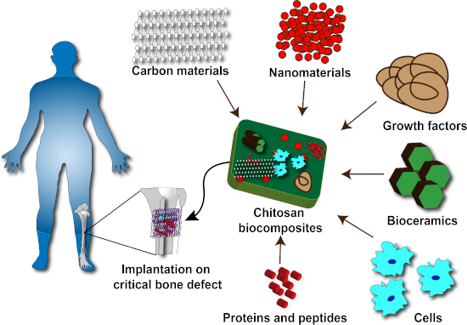
- wettability and protein adsorption which can facilitate osteogenesis [129]. Biomaterials such as chitosan and its composites containing bioactive metals draw much attention in tissue engineering and regenerative applications. Chitosan-based composites are now being studied in wound healing, bone and cartilage
- mechanical characteristics. Nanocomposites formed by chitosan and metals, such as silver, gold, copper, titanium oxide, and zinc oxide were studied in the treatment of bone tissue defects and have proven to be effective in bone tissue repairing processes. Also, chitosan combined with carbon nanomaterials
Electrocatalytic oxygen reduction activity of AgCoCu oxides on reduced graphene oxide in alkaline media
Beilstein J. Nanotechnol. 2022, 13, 1020–1029, doi:10.3762/bjnano.13.89
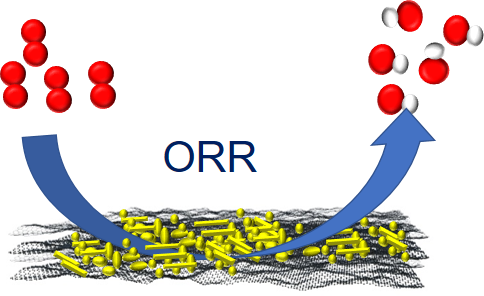
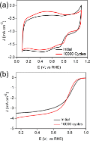
- . Electrocatalytic enhancement of the Ag nanoarchitectonics can be obtained via support structures and amalgamating Ag with one or two additional metals. The work presented here deals with a facile microwave-assisted synthesis to produce bimetallic Ag-Cu and Ag-Co (1:1) oxide nanoparticles (NPs) and trimetallic
- electrocatalysts [14][18][19]. Oxophilicity, agglomeration, and poor chemical stability of Ag require the amalgamation of Ag with other metals for a better optical and catalytic activity [20]. Chen et al. synthesised Ag nanoscale alloys containing metals such as copper, cobalt, iron, and indium via pulse film


Effects of focused electron beam irradiation parameters on direct nanostructure formation on Ag surfaces
Beilstein J. Nanotechnol. 2022, 13, 1004–1010, doi:10.3762/bjnano.13.87
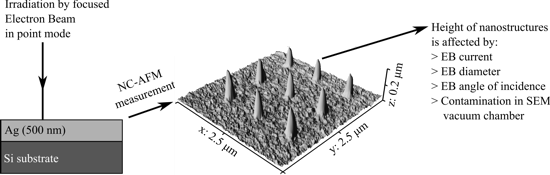
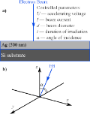
- on the growth rate of the nanodots was observed. Metals with lower melting points (implying lower interatomic bond energy) produced higher nanodots at similar irradiation parameters. Conversely, metals with higher volume magnetic susceptibility produced much wider nanodots with a higher volume. A





Theoretical investigations of oxygen vacancy effects in nickel-doped zirconia from ab initio XANES spectroscopy at the oxygen K-edge
Beilstein J. Nanotechnol. 2022, 13, 975–985, doi:10.3762/bjnano.13.85
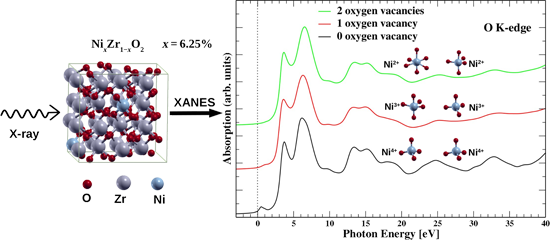
- large set of DMO. It is thus important to investigate other types of dopants in DMO or other types of oxide matrices doped with transition metals. Oxygen vacancies play a fundamental role in the aforementioned microscopic mechanisms since an excess or lack of oxygen vacancies with respect to their
- stoichiometric concentration required to ensure overall charge neutrality can modify the presence of defect states in the electron bandgap [4][26][27]. In diluted magnetic semiconductors (DMS), magnetic impurities such as the transition metals (TM) Fe or Ni are introduced to produce a magnetic ground state. The
- , the covalency of the metal–ligand bonds, and the change in the metal oxidation state. The latter may lead to distinct changes in the spectral shape and incident energy [30][31]. For high-spin transition metals, for instance, it has been established that the L2,3-edge spectrum shifts to higher energies



Ultrafast signatures of magnetic inhomogeneity in Pd1−xFex (x ≤ 0.08) epitaxial thin films
Beilstein J. Nanotechnol. 2022, 13, 836–844, doi:10.3762/bjnano.13.74
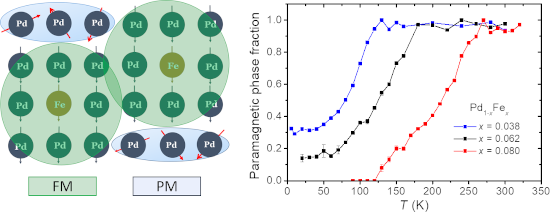
- ferromagnetic metals was a subject of interest in magnetic nanostructures [50][51][52] and had a value of about 3 × 10⁵ m/s. Being stronger localized in the narrower 4d bands [44], the itinerant 4d electrons must have a lower velocity, say 105 m/s. Then, with the transport time τ ≈ 10−14 s and the electron-spin


Temperature and chemical effects on the interfacial energy between a Ga–In–Sn eutectic liquid alloy and nanoscopic asperities
Beilstein J. Nanotechnol. 2022, 13, 817–827, doi:10.3762/bjnano.13.72
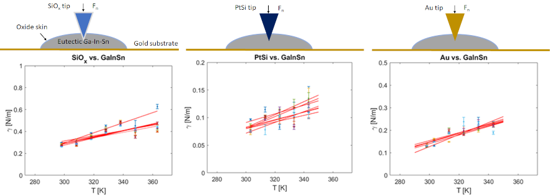
- liquid metals strongly depend on their surface and interfacial properties. The surface tension of room-temperature-liquid Ga-based alloys has been reported to be lowered by a thin surface oxide layer [8]. In [9], the authors electrochemically controlled the growth and removal of gallium oxide to tune the
- surface tension of liquid gallium. Oxygen is a surface-active substance whose effect on surface tension has been investigated for various liquid metals [10]. In metallic alloys, surface segregation has also been observed, where an element with a higher oxygen affinity enriches at the surface to form an




Hierarchical Bi2WO6/TiO2-nanotube composites derived from natural cellulose for visible-light photocatalytic treatment of pollutants
Beilstein J. Nanotechnol. 2022, 13, 745–762, doi:10.3762/bjnano.13.66
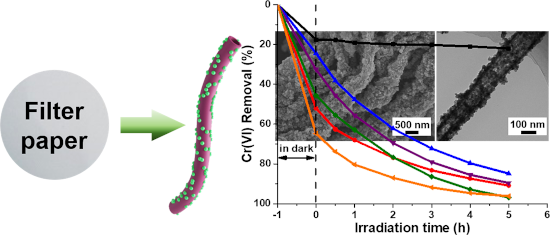
- pollutants including dyes, organic matter, and heavy metals has caused disastrous consequences to the ecosystem [1]. Cr(VI) is one of the unmanageable pollutants in industrial effluents. It is highly toxic, carcinogenic, and harmful to the lungs, liver, and other organs [2][3]. Photocatalysis is a promising


Zinc oxide nanostructures for fluorescence and Raman signal enhancement: a review
Beilstein J. Nanotechnol. 2022, 13, 472–490, doi:10.3762/bjnano.13.40
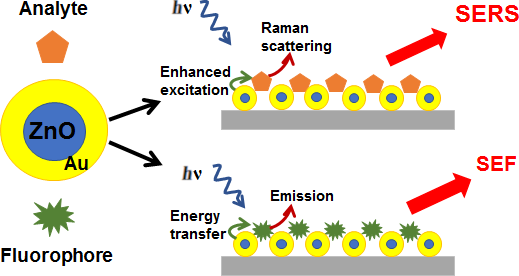
- , enhanced Raman scattering for periodic ZnO-elevated Au dimer nanostructures [12] and enhanced fluorescence emission signals from Al-doped ZnO films [13] were obtained. The development of hybrid nanocomposites based on ZnO and noble metals for fluorescence and Raman signal enhancement has recently attracted
- nanostructures, however, are significantly inferior to those on noble metals since the LSPR is centred in the near-infrared in the case of the conduction band (CB) and in the UV region in the case of the valence band (VB) [14]. Therefore, concrete solutions have been proposed to improve the EM enhancement in ZnO
- as SEF, SERS [16][17], infrared absorption, and even second harmonic generation [18], which can improve the performance of optical sensors and optoelectronic devices. ZnO alone and in combination with noble metals has been recently used for the development of SERS substrates [15][19] due to several





Electrostatic pull-in application in flexible devices: A review
Beilstein J. Nanotechnol. 2022, 13, 390–403, doi:10.3762/bjnano.13.32
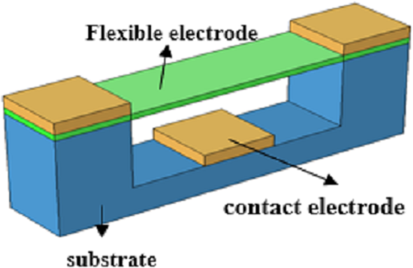
- nonvolatile storage memory. However, vertically aligned switches require a pull-in voltage of more than 20 V, higher than the usual horizontally distributed switches. CNT-NEM switches have great potential in nonvolatile memory devices. In addition, CNTs used with metals in composite electrodes, as a bottom


Micro- and nanotechnology in biomedical engineering for cartilage tissue regeneration in osteoarthritis
Beilstein J. Nanotechnol. 2022, 13, 363–389, doi:10.3762/bjnano.13.31
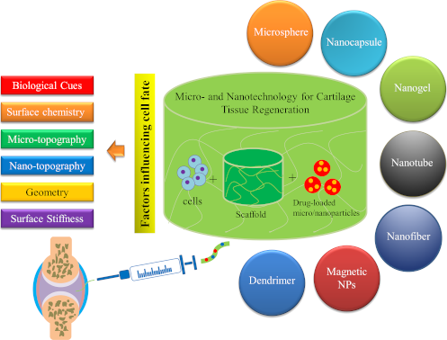
- . Nanomaterials are defined by the National Nanotechnology Initiative as manufactured or natural materials that have at least one dimension between 1 and 100 nm [33][34][35][36][37][38][39][40][41][42][43][44][45][46]. Nanomaterials are classified as metals, polymers, or ceramics according to their structure and


Relationship between corrosion and nanoscale friction on a metallic glass
Beilstein J. Nanotechnol. 2022, 13, 236–244, doi:10.3762/bjnano.13.18
- ]. Tao et al. [3] found that Zr-based MGs present a much smaller friction coefficient than other metals under dry-sliding conditions. W-based MGs were developed whose wear resistance was demonstrated to be comparable to classical tribological ceramics [6]. Hofmann et al. [7] reported that the wear
- nanoscale is crucially important. Microscale bearings made of Ni-based MGs lasted four times longer than those machined from sintered alloy [12]. Corrosive degradation, as one of the major failure mechanisms of metals and alloys, is an important issue in engineering applications of MGs. Protective oxide
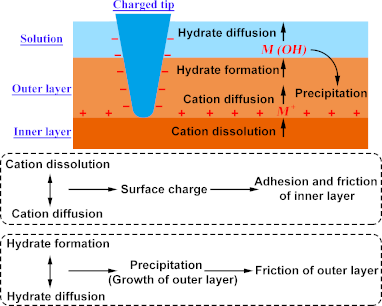
- electrochemical methods, often combined with surface analytical techniques [13][14][15]. Wang et al. [13] reported that the passive oxide films are grown as a double layer structure on MGs with a corrosion product layer underlying an inner barrier layer in NaCl and Na2SO4 solutions. Since most metals and alloys


Surfactant-free syntheses and pair distribution function analysis of osmium nanoparticles
Beilstein J. Nanotechnol. 2022, 13, 230–235, doi:10.3762/bjnano.13.17
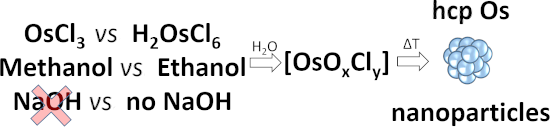
- ] complexes. Keywords: metal nanoparticles; osmium; pair distribution function; surfactant-free synthesis; Findings Precious metals are limited resources, yet fundamental for a range of applications, such as in medicine or catalysis [1][2][3]. There are relatively few reports on osmium (Os) compared to
- other precious metals [4][5], see Figure S1 in Supporting Information File 1, partly due to Os scarcity and because a highly toxic OsO4 compound can be easily formed. However, Os and Os-based complexes and nanomaterials have been reported [6][7][8][9] and studied for their catalytic, optical, and
- extent of features in the PDFs, it can be concluded that the NPs are all smaller than 2 nm with an average crystallite size between 1 and 2 nm, which is in agreement with TEM and SAXS characterisation. On the nanoscale, metallic NPs can have different structures than those of bulk metals, and icosahedral


Engineered titania nanomaterials in advanced clinical applications
Beilstein J. Nanotechnol. 2022, 13, 201–218, doi:10.3762/bjnano.13.15
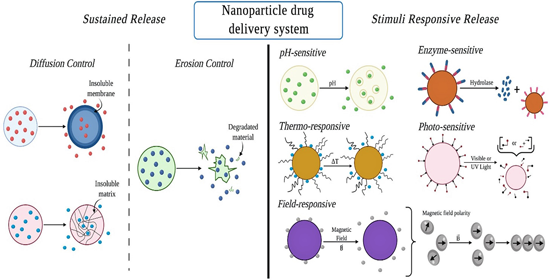
- copper, graphene, silver, silver and nitrogen, sulfur and cadmium sulfide, or transition metals was found to be effective for bringing the excitation wavelength near to the biological window (650 ≤ λ ≤ 950 nm and 1000 ≤ λ ≤ 1350 nm) by providing secondary energy levels close to TiO2 conduction band


Low-energy electron interaction and focused electron beam-induced deposition of molybdenum hexacarbonyl (Mo(CO)6)
Beilstein J. Nanotechnol. 2022, 13, 182–191, doi:10.3762/bjnano.13.13
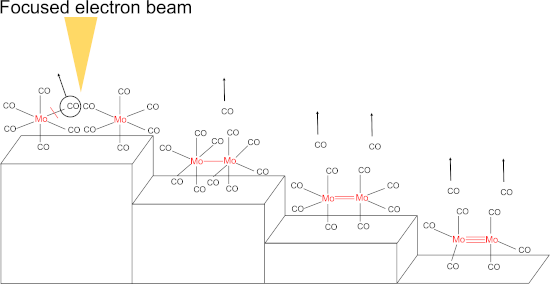
- these are commercially available, have comparatively high vapor pressure and are fairly stable and easy to handle. Correspondingly metal carbonyl complexes, including the mononuclear Ni(CO)4, Cr(CO)6, Fe(CO)5, W(CO)6 and Mo(CO)6, have been used as precursors to deposit metals on surfaces through FEBID



A comprehensive review on electrospun nanohybrid membranes for wastewater treatment
Beilstein J. Nanotechnol. 2022, 13, 137–159, doi:10.3762/bjnano.13.10
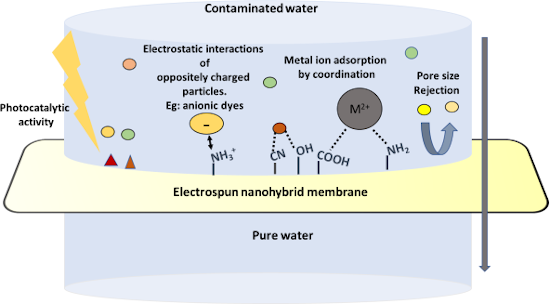
- electrospinning [17]. Similarly, a wide range of ENH membranes are being used to remove particles, heavy metals, other metal cations, organic chemicals, dyes, and microorganisms from water and will be discussed in detail in this review article. Water is one of the most critical natural resources and is non
- heavy metals, cations, oils, dyes, and other organic and inorganic chemicals. In recent years, electrospun nanohybrid membranes have been developed and modified for the removal of these pollutants from synthetic/waste water. Heavy metals and other metal cations, such as Cd2+, Pb2+, Cu2+, Ni2+, Hg2+, As3
- +/5+, and radioactive metals, such as Th4+, U6+, are being released to environmental water with the growing industrialization and through agricultural run-offs. Bioaccumulation of these metals causes serious harm to biodiversity and has also become a severe health issue [58]. To remove these heavy





Tin dioxide nanomaterial-based photocatalysts for nitrogen oxide oxidation: a review
Beilstein J. Nanotechnol. 2022, 13, 96–113, doi:10.3762/bjnano.13.7
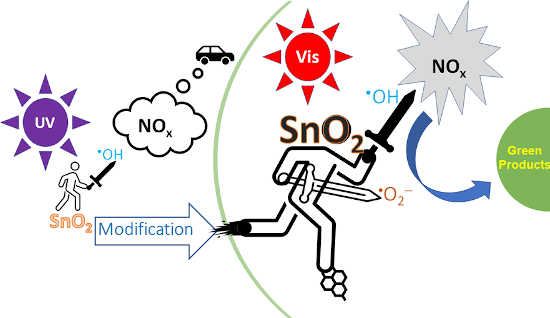
- photocatalysts and a cost-effective, environmentally benign way through heat treatment in different atmospheres [39]. Combining noble metals with SnO2, such as in Au/SnO2 [78] or Pd/SnO2 [79], is an advanced approach yielding an effective performance for gas sensing. However, There is only one report by Bui et


Nanoscale friction and wear of a polymer coated with graphene
Beilstein J. Nanotechnol. 2022, 13, 63–73, doi:10.3762/bjnano.13.4
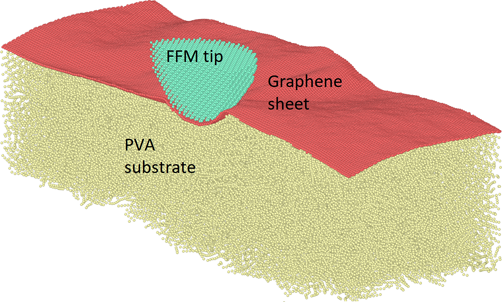
- [5][9][10][11][12][13][14][15][16][17][18][19]. The effect of graphene coatings and their ability to protect against wear depend on the substrate underneath. So far, they have been studied almost exclusively on metals [20][21]. The tribological properties of polymers coated with graphene have barely


Sputtering onto liquids: a critical review
Beilstein J. Nanotechnol. 2022, 13, 10–53, doi:10.3762/bjnano.13.2

- (Figure 1). In 1974, Yatsuya et al. used a liquid as a substrate during a physical vapor deposition (PVD) experiment. They thermally evaporated metals in vacuum onto silicon oil for NP production [9]. After the pioneering experiments of Yatsuya et al., depositions onto liquids were not mentioned in
- various metals onto low vapor pressure liquid substrates [13][14]. Careful analysis of the literature data has shown that about 132 research papers were published on the SoL topic since 1996 (Figure 1). It should be noted that, since the SoL field of research still does not have a well-established
- properties to fit the targeted application in fields such as mechanics, optics, electronics, and biomaterials. Various types of coatings can be produced, from pure metals to metal oxides, nitrides, carbides, oxynitrides to metal alloys, or chemically more complex combinations such as high-entropy alloys [24