


Search results
Search for "mobility" in Full Text gives 473 result(s) in Beilstein Journal of Nanotechnology. Showing first 200.
The role of gold atom concentration in the formation of Cu–Au nanoparticles from the gas phase
Beilstein J. Nanotechnol. 2021, 12, 72–81, doi:10.3762/bjnano.12.6
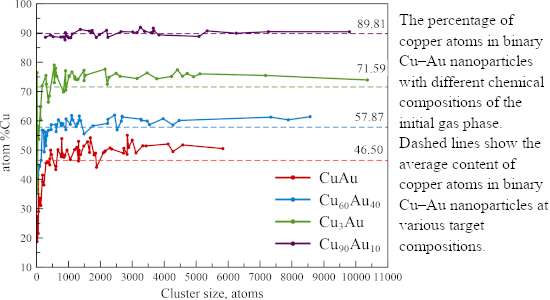
- . In [27], we suggested and verified the assumption that a lower density of a nanoscale compact material, in comparison with ordinary bulk samples, leads to an increase in the probability of formation of an atomic structure with a five-particle symmetry due to the greater diffusion mobility of the


Piezotronic effect in AlGaN/AlN/GaN heterojunction nanowires used as a flexible strain sensor
Beilstein J. Nanotechnol. 2020, 11, 1847–1853, doi:10.3762/bjnano.11.166
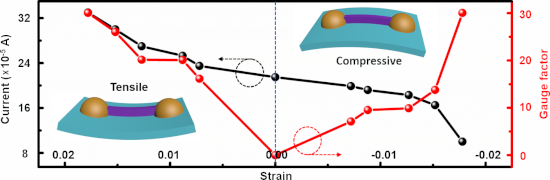
- introduced during the epitaxial growth process [1][2][3]. Furthermore, the analysis of the internal polarization of the AlGaN/AlN/GaN heterojunction showed the existence of a 2D electron gas (2DEG), which effectively suppresses the degradation of the carrier mobility caused by the scattering at charge
- impurity centers [4]. This is a widely discussed topic in the field of high electron mobility transistor (HEMT) research [5][6]. In order to further improve the physical properties of a 2DEG and optimize the performance of AlGaN/AlN/GaN-based HEMT devices, piezotronic effects are introduced to adjust the
- the study of the piezotronic effect than nanofilms or bulk materials since the smaller physical size and larger surface-to-volume ratio of 1D NWs yields superior mechanical properties [4][10]. In addition, 1D semiconductor NWs can increase the electron mobility and achieve the confinement of light


Absorption and photoconductivity spectra of amorphous multilayer structures
Beilstein J. Nanotechnol. 2020, 11, 1757–1763, doi:10.3762/bjnano.11.158
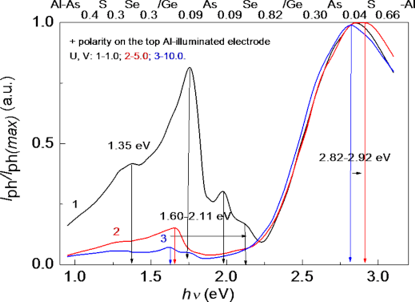
- Sn impurities on stationary and transient photoconductivity was demonstrated for amorphous As2Se3Snx thin films [5]. The introduction of Sn in the host material increases the drift mobility and the photosensitivity of the amorphous material. According to 119Sn Mössbauer spectroscopy studies of the
- , Nt is the concentration of traps, e is the electron charge, µ is the drift mobility, ε is the dielectric constant, t = Δ/(kBT) (Δ is the parameter of the trap distribution, kB is the Boltzmann constant, T is the absolute temperature), V is the applied voltage, and d is the sample thickness. The


Direct observation of the Si(110)-(16×2) surface reconstruction by atomic force microscopy
Beilstein J. Nanotechnol. 2020, 11, 1750–1756, doi:10.3762/bjnano.11.157
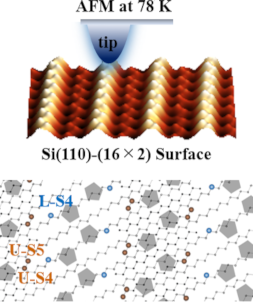
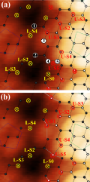
- high-performance metal–oxide–semiconductor field-effect transistors (p-MOSFETs) [1][2] because the hole mobility of Si(110) is twice that of the other Si planes [3]. For surface science research, Si(110) has been used as a template substrate for self-assembled nanowires [4][5][6], nanomeshes [7], and



PEG/PEI-functionalized single-walled carbon nanotubes as delivery carriers for doxorubicin: synthesis, characterization, and in vitro evaluation
Beilstein J. Nanotechnol. 2020, 11, 1728–1741, doi:10.3762/bjnano.11.155
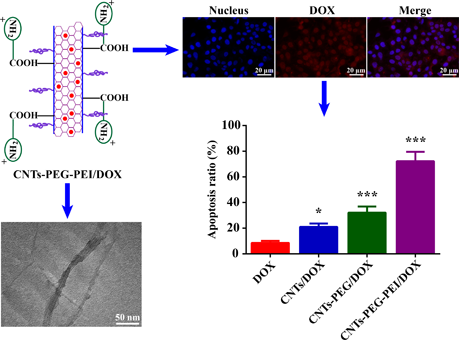
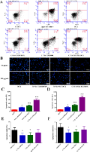
- molecules enter cells only by mobility or diffusion, while the individually dispersed nanotubes are more easily internalized by cells via direct penetration and endocytosis [38][43]. This can explain the above results. The fluorescence intensity of CNTs-PEG/DOX and CNTs-PEG-PEI/DOX increases further (Figure




Application of contact-resonance AFM methods to polymer samples
Beilstein J. Nanotechnol. 2020, 11, 1714–1727, doi:10.3762/bjnano.11.154
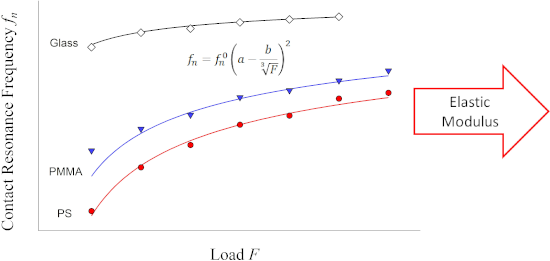
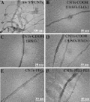
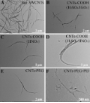
- of the tip. Figure 6 also shows the CR frequencies acquired on bulk PnBMA. The curve cannot be fitted with Equation 16. This is due to the low elastic modulus and the higher chain mobility of PnBMA. As a consequence, PnBMA is very compliant and can be deformed plastically even with small loads. Hence
- with high chain mobility, that is, with a glass transition temperature near room temperature. This is the case for PnBMA. Considering the CR frequencies (Figure 6), PnBMA behaves like PS and PMMA at small forces and like glass at large forces. In our measurements, γ does indeed depend on the sample
- fitted directly. Yet, such experiments show also that quantitative measurements on polymer samples with elastic moduli smaller than ca. 1 GPa or with a glass transition temperature close to or lower than room temperature (i.e., with very high chain mobility) are affected by serious artefacts and do not


The influence of an interfacial hBN layer on the fluorescence of an organic molecule
Beilstein J. Nanotechnol. 2020, 11, 1663–1684, doi:10.3762/bjnano.11.149
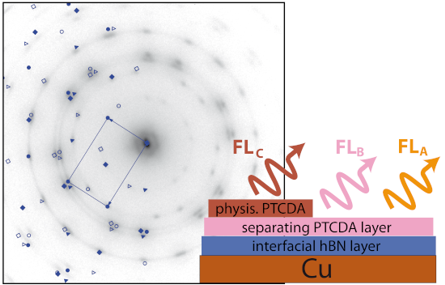
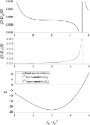
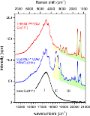
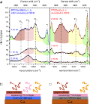
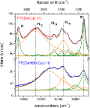
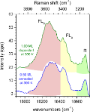
- at these sites where the SERS effect occurs. On hBN/Cu(111), the significantly smaller interaction between PTCDA and the hBN surface compared to Cu(111) and a consequently smaller corrugation of the bonding potential lead to a much higher mobility, which allows for a diffusion to the hot spots even





Oxidation of Au/Ag films by oxygen plasma: phase separation and generation of nanoporosity
Beilstein J. Nanotechnol. 2020, 11, 1608–1614, doi:10.3762/bjnano.11.143
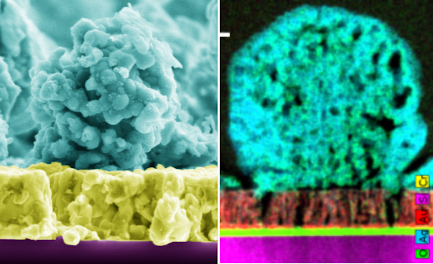
- , resulting in a mobility decrease at the surface; and (2) the high porosity of the film which serves as a support for the surface diffusion of silver. The clusters formed during the early stages of the process serve as nucleation sites which grow into larger spheres as the oxidation process evolves. The
- surface, which serves as a substrate for the formation of the oxide phase. The presence of such a high porosity is expected to significantly reduce the silver mobility at the surface, posing difficulties to the formation of a continuous silver oxide layer. The formation of nanoporosity within the alloy


Detecting stable adsorbates of (1S)-camphor on Cu(111) with Bayesian optimization
Beilstein J. Nanotechnol. 2020, 11, 1577–1589, doi:10.3762/bjnano.11.140
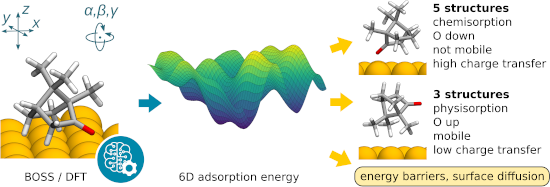
- structures by computing the potential energy surface (PES). We can identify stable structures in the minima of the PES and evaluate their mobility via the associated energy barriers. The most stable structure, that is the most probable structure in nature, corresponds to the global minimum of the PES. For
- estimate the mobility of the adsorbates from the energy barriers extracted from the surrogate PES and analyze the electronic structure of each adsorbate. Our results provide insight into the adsorption of complex organic molecules on metallic substrates and pave the way to more complex studies of hybrid
- and mobility via the energy barriers on the PES, and investigate their electronic properties with DFT. Bayesian Optimization Structure Search With the atomic structures and their corresponding energies, BOSS constructs a surrogate model of the PES. We define the atomic structures using chemical


Electrokinetic characterization of synthetic protein nanoparticles
Beilstein J. Nanotechnol. 2020, 11, 1556–1567, doi:10.3762/bjnano.11.138
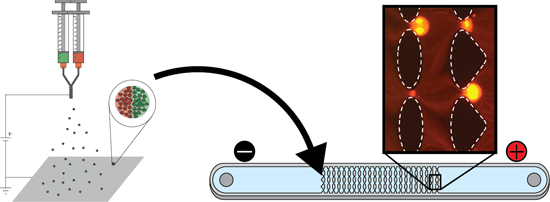
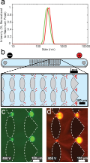
- homogeneous SPNPs require a much lower trapping voltage than 50:50 anisotropic SPNPs. All eight particle samples were characterized in terms of their linear and their nonlinear electrophoretic mobility, and in terms of their EEEC. These measurements expand the possibilities to use EEEC to characterize
- mobility was obtained by employing Equation 9 with eEEEC values, since both µEO and were experimentally obtained a priori through particle image velocimetry and current monitoring measurements [59]. Equation 9 and its detailed derivation is included in the Theoretical approach section. The linear and the
- nonlinear EP mobility components are essential for the design of EK particle separation experiments. The present report is a pioneer study that considers nonlinear behavior of PNPs. This is still an evolving theory and, as such, more research regarding this topic is required as stated in three recent review



Controlling the electronic and physical coupling on dielectric thin films
Beilstein J. Nanotechnol. 2020, 11, 1492–1503, doi:10.3762/bjnano.11.132
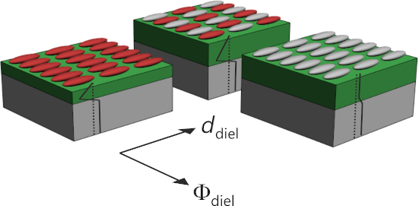
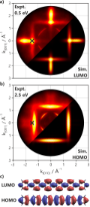
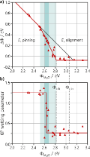
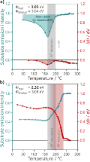
- critical factor for this phase transition is the density of charged molecules present on the surface. The planarization and electrostatic interaction of the charged molecules with the substrate can be expected to reduce the mobility of the charged molecules. These charged molecules will in turn restrict
- molecules hinders the mobility of the twisted neutral molecules [38]; therefore, when approximately 30% of the molecules are charged, a transition occurs and the neutral molecules also wet the surface. The conformational change induced by charge transfer leads to the final pinning work function being higher




A wideband cryogenic microwave low-noise amplifier
Beilstein J. Nanotechnol. 2020, 11, 1484–1491, doi:10.3762/bjnano.11.131
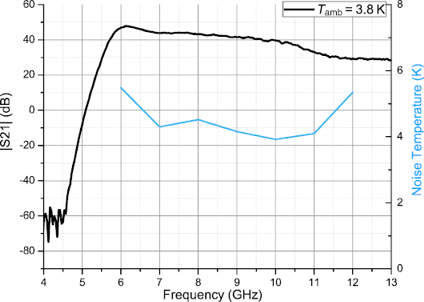
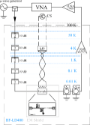
- str. 5, Moscow, 105005, Russia Dukhov Automatics Research Institute, (VNIIA), 22 ul. Sushchevskaya, Moscow, Russia, 127055 Leibniz Institute of Photonic Technology, PO Box 100239, D-07702 Jena, Germany 10.3762/bjnano.11.131 Abstract A broadband low-noise four-stage high-electron-mobility transistor
- -electron-mobility transistor (HEMT); HEMT amplifier; microwave cryogenic amplifier; microwave superconducting circuit readout; superconducting qubit readout; Introduction Quantum microwave devices are widely used for different applications ranging from radio astronomy [1][2][3] to quantum information
- of liquid helium [11][12][13][14][15][16] and are, usually, placed at the 4 K stage of dilution refrigerators. These amplifiers can be implemented using two modern semiconductor transistor technologies, that is, high-electron-mobility transistor (HEMT) technology, including GaAs and InP, and SiGe




Effect of localized helium ion irradiation on the performance of synthetic monolayer MoS2 field-effect transistors
Beilstein J. Nanotechnol. 2020, 11, 1329–1335, doi:10.3762/bjnano.11.117
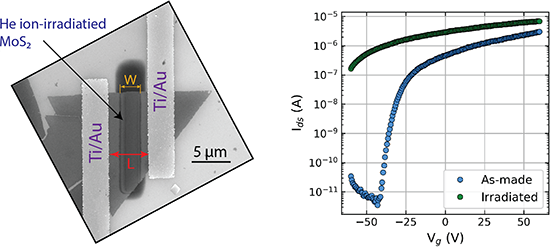
- Technology, Universität der Bundeswehr München, Werner-Heisenberg-Weg 39, 85577 Neubiberg, Germany 10.3762/bjnano.11.117 Abstract Helium ion irradiation is a known method of tuning the electrical conductivity and charge carrier mobility of novel two-dimensional semiconductors. Here, we report a systematic
- improvement of both the carrier mobility in the transistor channel and the electrical conductance of the MoS2, due to doping with ion beam-created sulfur vacancies. Larger areal irradiations introduce a higher concentration of scattering centers, hampering the electrical performance of the device. In addition
- negative gate biases [20][21]. These complex states may also improve the carrier mobility across a given gate bias range by forming stable impurity bands near the conduction band [22]. Some theoretical studies suggest, however, that individual SVs ought to act as electron acceptors in MoS2 [23][24]. As the


Structural and electronic properties of SnO2 doped with non-metal elements
Beilstein J. Nanotechnol. 2020, 11, 1321–1328, doi:10.3762/bjnano.11.116
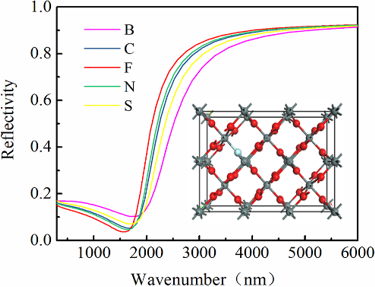
- successfully prepared from N-doped SnO2 films. Through Al/N co-doping, a p-type SnO2 semiconductor thin film with excellent electrical properties was prepared. The resistivity, hole concentration and hole mobility were 7.1 × 10⁻³ Ω·cm, 6.24 × 1019 cm−3 and 14.1 cm2·V−1·s−1, respectively [8]. Doping SnO2 with F



Cryogenic low-noise amplifiers for measurements with superconducting detectors
Beilstein J. Nanotechnol. 2020, 11, 1316–1320, doi:10.3762/bjnano.11.115
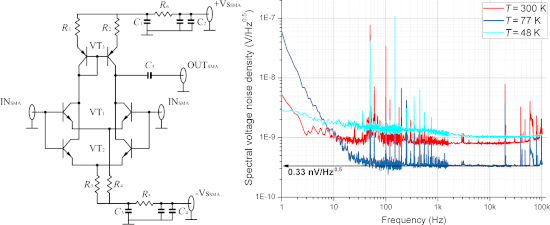
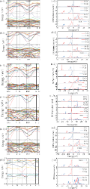
- mobility transistor (HEMT) technology and SiGe bipolar heterojunction technology (HBT). Low-frequency amplifiers are usually applied as first stage of SQUID readout electronics [11][12] or as the readout of cryogenic bolometers [13]. In both cases the amplifiers have a working temperature of 300 K. Modern


Growth of a self-assembled monolayer decoupled from the substrate: nucleation on-command using buffer layers
Beilstein J. Nanotechnol. 2020, 11, 1291–1302, doi:10.3762/bjnano.11.113
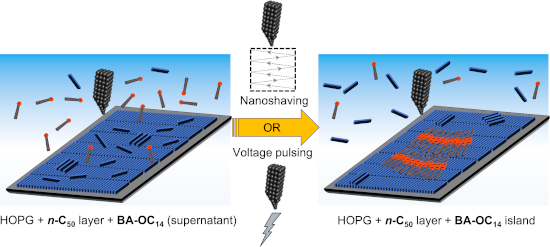
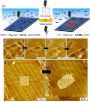
- anticipated, the mobility of BA-OC14 on the buffer layers was significantly higher than that at the 1-phenyloctane–HOPG interface. It was possible to observe the nucleation, the growth as well as the desorption of molecular domains (see Figure S7 in the Supporting Information File 1) which was otherwise not


Structure and electrochemical performance of electrospun-ordered porous carbon/graphene composite nanofibers
Beilstein J. Nanotechnol. 2020, 11, 1280–1290, doi:10.3762/bjnano.11.112
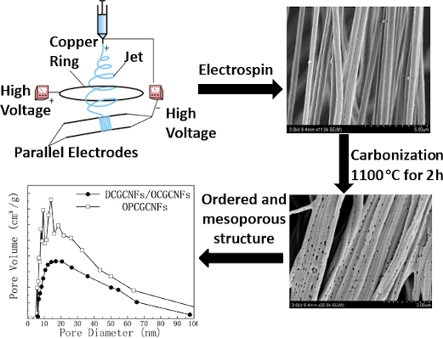
- electrochemical properties of the original carbon matrix can be significantly improved [27]. The perfect crystalline graphene has an ideal two-dimensional crystal structure composed of a stable regular hexagonal lattice, which has an excellent theoretical specific surface area, increased electron mobility, high


Gas sorption porosimetry for the evaluation of hard carbons as anodes for Li- and Na-ion batteries
Beilstein J. Nanotechnol. 2020, 11, 1217–1229, doi:10.3762/bjnano.11.106
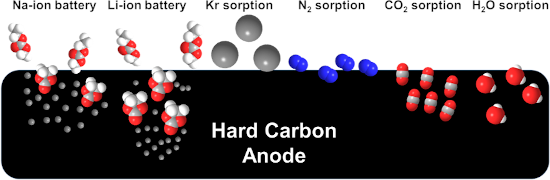
- precursors is by one order of magnitude less expensive [7]. LIBs and SIBs have different applications. While LIBs are used as traction batteries in BEVs, in which volumetric energy density is crucial for a long mobility range, SIBs are mainly used for grid energy storage applications due to their lower cost
- only allows for a limited mobility range, therefore, HCs are investigated regarding the potential for higher energy densities. The seasonal and daytime-dependent character of solar and wind energy requires stationary electricity storage for times of light and wind shortage, with a focus on low cost. To


Nonadiabatic superconductivity in a Li-intercalated hexagonal boron nitride bilayer
Beilstein J. Nanotechnol. 2020, 11, 1178–1189, doi:10.3762/bjnano.11.102
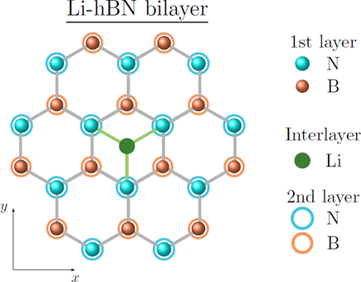
- ][17][18][19], Ru [20][21], Pt [22][23], SiC [24][25][26], and SiO2 [27][28][29]. Unfortunately, the obtained experimental data showed that the incompatible crystalline structure of the above materials leads to significant suppression of the carrier mobility of graphene [13][30]. It is now assumed that
- nontoxic. It is worth noting that graphene on a hBN substrate was used to fabricate transistor devices with high mobility [35], with the help of which the quantum Hall effect was observed. A heterojunction with two graphene layers [30] and superlattice structures [36][37][38] were also constructed. The


![[Graphic 34]](/bjnano/content/inline/2190-4286-11-102-i54.svg?max-width=637&scale=1.18182) for Li-hBN. The results were obta...
for Li-hBN. The results were obta...
Hybridization vs decoupling: influence of an h-BN interlayer on the physical properties of a lander-type molecule on Ni(111)
Beilstein J. Nanotechnol. 2020, 11, 1168–1177, doi:10.3762/bjnano.11.101
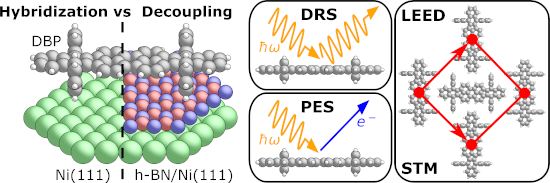
- DBP with Ni(111), presumably via the localized d bands, causes a drastic decrease of the mobility of the molecules hindering the highly ordered assembly of the molecules due to a hit-and-stick adsorption. Such a behavior was also observed for one monolayer of pentacene on Ni(111) [30]. In contrast
- mobility. This additional diffusion barrier thus hampers the molecular self-assembly and can be overcome by a higher substrate temperature during the film growth, which agrees with our structural findings above. Conclusion To summarize, we investigated the influence of an h-BN interlayer on the optical


Scanning tunneling microscopy and spectroscopy of rubrene on clean and graphene-covered metal surfaces
Beilstein J. Nanotechnol. 2020, 11, 1157–1167, doi:10.3762/bjnano.11.100
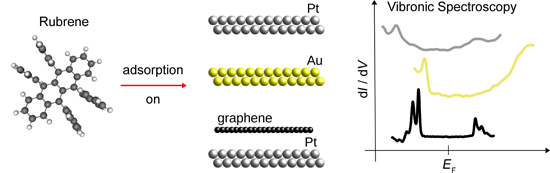
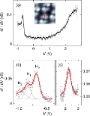
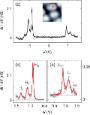
- clusters of molecules can be discerned on the terrace without evidence for island formation or decoration of substrate step edges. These observations are indicative of an effectively reduced surface diffusion after adsorption, which lowers the mobility of adsorbed molecules and, thus, the formation of
- (inset to Figure 4a). These topographic data univocally hint at an enhanced C42H28 mobility after adsorption compared to the situation on Pt(111) (vide supra). The STM data presented in Figure 4a reveal an additional periodic modulation of the apparent height along the discommensuration lines, which will
- (111) consistently show the progressive reduction of the molecule–substrate interaction. The hit-and-stick adsorption of C42H28 on Pt(111) indicates a strong suppression of the C42H28 mobility after adsorption. Molecular orbitals leave weak and broad signatures in dI/dV spectra. Using the same



A new photodetector structure based on graphene nanomeshes: an ab initio study
Beilstein J. Nanotechnol. 2020, 11, 1036–1044, doi:10.3762/bjnano.11.88
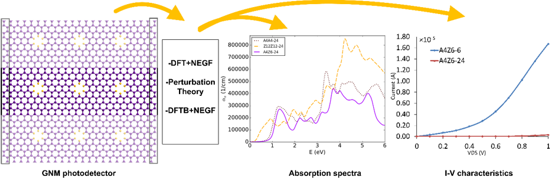
- among experimental and theoretical researchers. Electrical properties such as a charge mobility in the range of 105 cm2·V−1·s−1, a minimum conductivity at the Dirac point of 4e2/πh (at low temperature), and remarkable optical properties such as linear dispersion of the Dirac electrons make broadband


Highly sensitive detection of estradiol by a SERS sensor based on TiO2 covered with gold nanoparticles
Beilstein J. Nanotechnol. 2020, 11, 1026–1035, doi:10.3762/bjnano.11.87
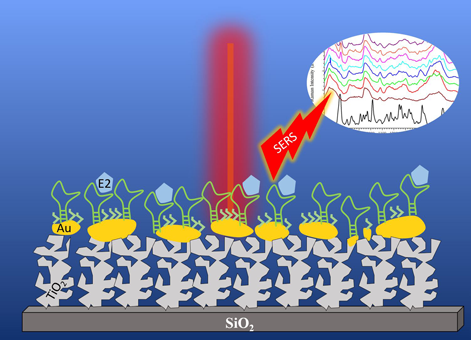
- authors want to thank the FARB project of the Dept. of Energy, Politecnico di Milano and IFMAN acknowledges the Scottish Research Partnership In Engineering (SRPe) for funding the travel grant under PECRE Award 2017/18 and the University of Glasgow (Graduate School Mobility Scholarship).



Gas-sensing features of nanostructured tellurium thin films
Beilstein J. Nanotechnol. 2020, 11, 1010–1018, doi:10.3762/bjnano.11.85
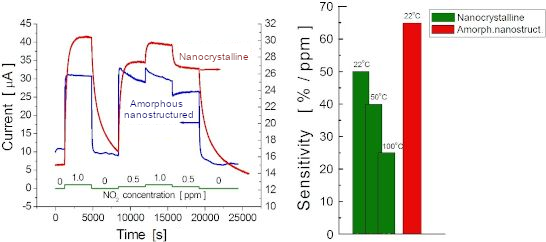
- during the adsorption process but not in the mobility of these holes. However, the changes in the electrical properties induced by these gases were very small and irreversible and were, later on, confirmed and explained in a systematic, relevant work [5]. In the early 2000s, Tsiulyanu and coworkers [6


Adsorption behavior of tin phthalocyanine onto the (110) face of rutile TiO2
Beilstein J. Nanotechnol. 2020, 11, 821–828, doi:10.3762/bjnano.11.67
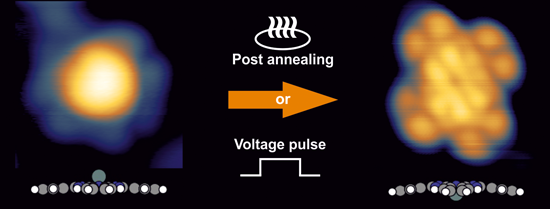
- are highly mobile on TiO2(110) at room temperature. Their mobility is revealed on STM maps by the observation of streaky lines and disappearing shapes (Figure S1, Supporting Information File 1). The features are blurred even when probed using currents with a magnitude of a few picoamperes. With
- with bright central protrusions, while Sn-down Pc molecules exhibited a depression in the center of the macrocycle. To reduce the mobility of isolated molecules and to precisely determine their adsorption positions, STM measurements at low coverage (approx. 0.3 ML) were carried out under cryogenic
- surface in a flat-lying position, but their mobility renders imaging impossible. With increasing coverage, increasingly more molecules appear to be stable due to either the influence of surface defects or steric interactions. However, SnPcs do not form a well-defined, regular structure, which suggests





