Search results
Search for "nanotubes" in Full Text gives 490 result(s) in Beilstein Journal of Nanotechnology. Showing first 200.
Gas-sensing features of nanostructured tellurium thin films
Beilstein J. Nanotechnol. 2020, 11, 1010–1018, doi:10.3762/bjnano.11.85
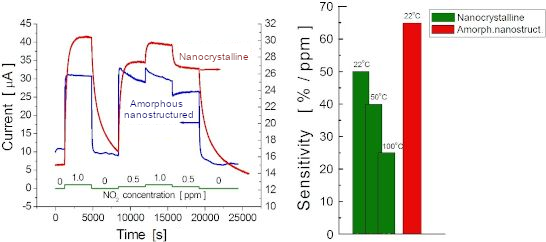
- grow Te nanoflakes. In order to synthesize Te nanowires, Liang and collaborators [13] performed chemical reactions of Na2TeO3, in aqueous solution, via hydrothermal treatment, whereas Ma and colleagues [14] used a solvothermal approach on glass substrates. To synthesize Te nanotubes, techniques such as
- sensing parameters did not differ much from the similar parameters obtained earlier for microcrystalline Te films. Further investigations have been extended to Te nanotubes grown on quartz or Si(111) substrates through a catalyst-free growing process in a furnace filled with argon [21]. Another study used
- the high-vacuum deposition technique in order to grow Te nanotubes on silicon substrates containing previously deposited nanoparticles of silver or gold [22]. In both cases, 50 nm diameter Te nanotubes were obtained. When exposed to low concentrations of different toxic gases, including NO2, the Te


Wet-spinning of magneto-responsive helical chitosan microfibers
Beilstein J. Nanotechnol. 2020, 11, 991–999, doi:10.3762/bjnano.11.83
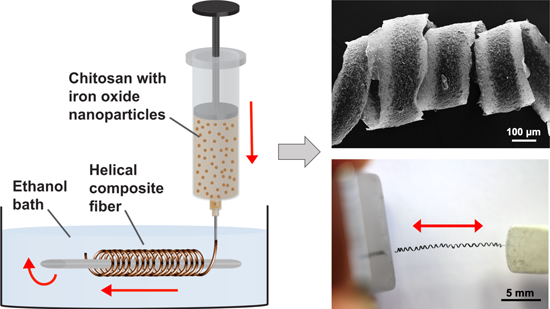
- organic templates are examples of alternative ways to synthesize helical nano- or microfibers from various materials like carbon nanotubes (CNTs), ZnO or different polymers [8][48][49]. Here, we present a simple method for synthesizing helical chitosan microfibers with embedded magnetic nanoparticles


Electrochemical nanostructuring of (111) oriented GaAs crystals: from porous structures to nanowires
Beilstein J. Nanotechnol. 2020, 11, 966–975, doi:10.3762/bjnano.11.81
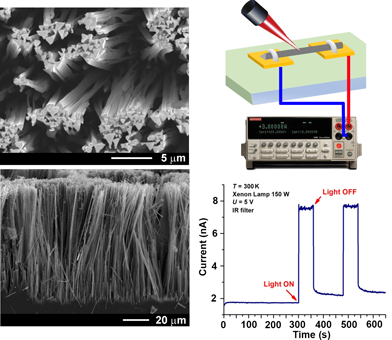
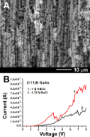
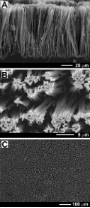
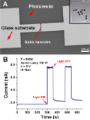
- electrochemically filling the pores with metallic nanostructures such as nanowires or nanotubes, resulting in the production of 2D metallo-semiconductor interpenetrating networks, which are promising for various nanoelectronic, optoelectronic, plasmonic, and nanophotonic applications [4][5][6]. While the growth of





Nickel nanoparticles supported on a covalent triazine framework as electrocatalyst for oxygen evolution reaction and oxygen reduction reactions
Beilstein J. Nanotechnol. 2020, 11, 770–781, doi:10.3762/bjnano.11.62
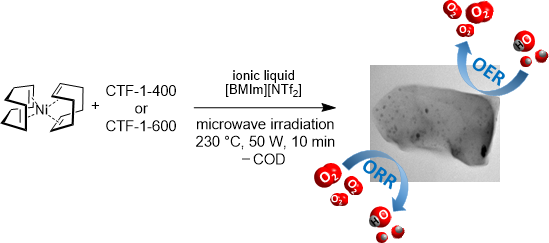
- ][11][12][13]. The performance of the nickel catalysts could be further enhanced via modifications, such as the usage of carbon supports including N-doped graphene [14], active carbon [15], graphene oxide [16][17], carbon nanotubes [12][18] and covalent triazine frameworks (CTFs) [19][20]. CTFs are
- layers (25.2 wt %), Ni encapsulated within single-layer graphene (32.8 wt %), but higher than that of nickel nanoparticles encapsulated in N-doped carbon nanotubes (14.5 wt %), and much lower than those of with N-doped carbon shells coated face-centered cubic (fcc) or hexagonal closed packed (hcp) nickel
- formation of pyridinic N and graphitic or quaternary N have been demonstrated to improve the activity of N-modified carbon-based materials such as N-doped ordered porous carbon and N-doped carbon nanotubes [49][50]. According to our evaluation of the XPS data, 8 atom % N is involved in bonding to Ni for Ni


Hexagonal boron nitride: a review of the emerging material platform for single-photon sources and the spin–photon interface
Beilstein J. Nanotechnol. 2020, 11, 740–769, doi:10.3762/bjnano.11.61
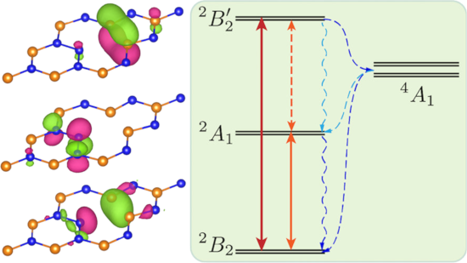
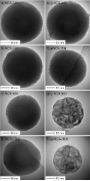
- in h-BN [115]. Nanotubes and nanococoons Another class of 1D and 0D h-BN nanomaterials, such as nanotubes (BNNTs) and nanococoons, were found to exhibit SPE. BNNT can be associated with 2D h-BN hexagonal sheets rolled into a closed nanotube structure, making them a type of 1D material up to 200 µm




Effect of Ag loading position on the photocatalytic performance of TiO2 nanocolumn arrays
Beilstein J. Nanotechnol. 2020, 11, 717–728, doi:10.3762/bjnano.11.59
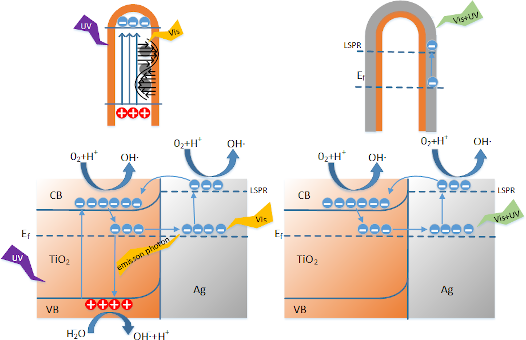
- , and Ag particles were loaded on the inside and the outside of the nanotubes by chemical deposition. The catalysis of this composite was carried out at a concentration of 1100 mM in AgNO3 solution. It was found that the loading position of precious metal particles in the TiO2 structure could not be


A novel dry-blending method to reduce the coefficient of thermal expansion of polymer templates for OTFT electrodes
Beilstein J. Nanotechnol. 2020, 11, 671–677, doi:10.3762/bjnano.11.53
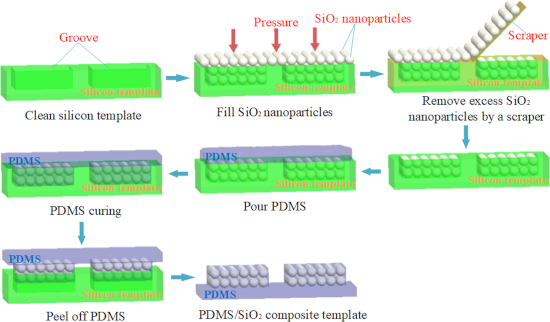
- in a polymer to obtain a composite. Shokrieh et al. [10] carried out a systematic theoretical study to investigate the influence of carbon nanotubes (CNTs) on the CTE of CNT/epoxy, and the results indicate that the addition of 1 wt % CNT causes a significant decrease of the CTE of the matrix


Adsorptive removal of bulky dye molecules from water with mesoporous polyaniline-derived carbon
Beilstein J. Nanotechnol. 2020, 11, 597–605, doi:10.3762/bjnano.11.47
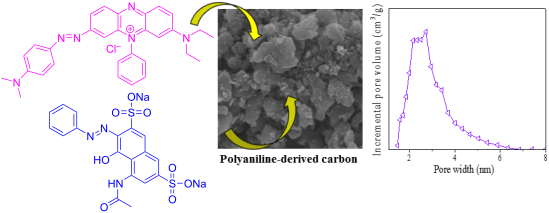
- regarded to be very effective and attractive because of its operation under mild conditions and no need of oxidant, active catalyst, and irradiation [8][9]. Therefore, adsorption with carbon nanotubes, activated carbon (AC), biomass, and metallic–organic frameworks (MOFs) has been actively studied for the
- because of functional carbon materials (graphene [16] or porous carbon [17]), mesoporous materials [18] and MOFs [19][20][21][22]. For example, MOFs [23][24][25], carbonaceous materials (such as carbon nanotubes, graphene, biochar and activated carbon) [26] and clay [27] have been applied in adsorptive


Identification of physicochemical properties that modulate nanoparticle aggregation in blood
Beilstein J. Nanotechnol. 2020, 11, 550–567, doi:10.3762/bjnano.11.44
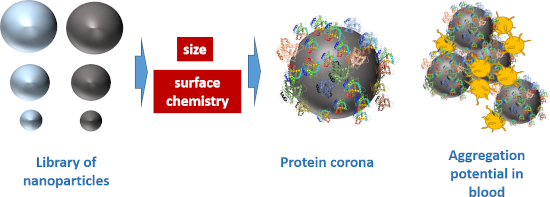
- (SWCNTs) and multiwalled carbon nanotubes (MWCNTs) can induce platelet activation by inducing depletion of intracellular Ca2+ [10][11], an effect that was hypothesised to be caused by the interaction of CNTs with plasma and dense tubular system membranes likely related to the fibrous shape [12]. On the




Multilayer capsules made of weak polyelectrolytes: a review on the preparation, functionalization and applications in drug delivery
Beilstein J. Nanotechnol. 2020, 11, 508–532, doi:10.3762/bjnano.11.41
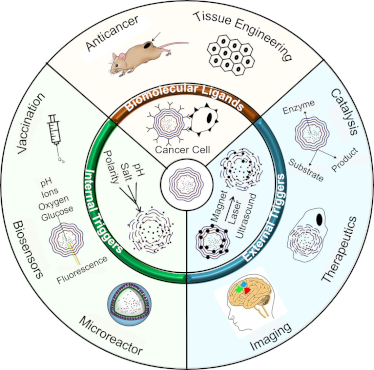
- in the shell are also used to carry out the release of the encapsulated payload in a controlled manner. The incorporation of functionalities such as organic molecules, NPs, fluorescent dyes, polymers, nanotubes and other biomolecules into the PE multilayers during the fabrication makes it easy to
- mechanical properties, carbon-based materials were also reported for the functionalization of hollow capsules. When the microcapsules were embedded with carbon nanotubes (CNTs) in the shell, the rigidity of the shell was improved upon drying and resulted in freestanding structures. The capsules modified with



Evolution of Ag nanostructures created from thin films: UV–vis absorption and its theoretical predictions
Beilstein J. Nanotechnol. 2020, 11, 494–507, doi:10.3762/bjnano.11.40
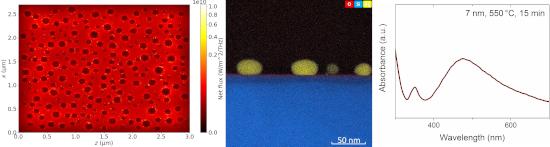
- be observed, corresponding to the illumination in a direction parallel or perpendicular to its major axis [23]. In recent years, many scientific papers have also been devoted to triangular or tetrahedral nanoparticles, or nanorods/nanotubes with complex cross sections [23][24][25]. Plasmon resonance




Nanoarchitectonics: bottom-up creation of functional materials and systems
Beilstein J. Nanotechnol. 2020, 11, 450–452, doi:10.3762/bjnano.11.36

- spectroscopy [37], bio-nanocomposites with clay nanoarchitectures for electrochemical devices [38], a biomimetic nanofluidic diode with polymeric carbon nitride nanotubes [39], and a unique Janus-micromotor applied as a luminescence sensor for sensitive TNT detection [40]. The variety of nanoarchitectonics

Electrochemically derived functionalized graphene for bulk production of hydrogen peroxide
Beilstein J. Nanotechnol. 2020, 11, 432–442, doi:10.3762/bjnano.11.34
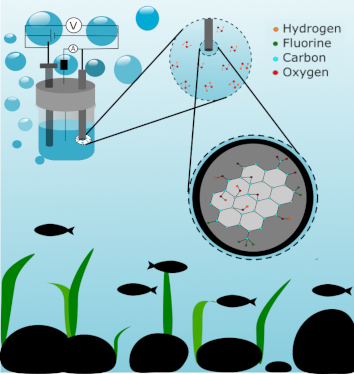
- metal-based technologies [28][29]. For example, carbon nanotubes (CNTs) have been well studied for their catalytic activity, although conflicting reports exist due to the presence of unavoidable metallic impurities present [30][31][32][33]. With the emergence of graphene, heteroatom doping in sp2


Poly(1-vinylimidazole) polyplexes as novel therapeutic gene carriers for lung cancer therapy
Beilstein J. Nanotechnol. 2020, 11, 354–369, doi:10.3762/bjnano.11.26
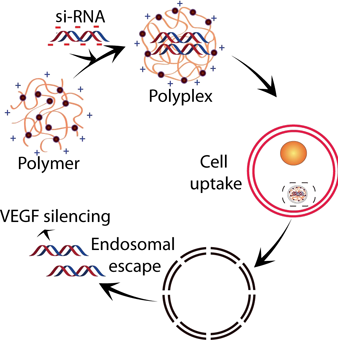
- to the proton-donating nature of the imidazole moiety have been demonstrated in [9]. Imidazole-based hydrogel films demonstrated excellent anti-microbial effects [10]. A copolymer of poly(acrylamide) and poly(vinylimidazole) was used as a hydrophilic matrix to disperse multiwalled carbon nanotubes


Rational design of block copolymer self-assemblies in photodynamic therapy
Beilstein J. Nanotechnol. 2020, 11, 180–212, doi:10.3762/bjnano.11.15






Nonclassical dynamic modeling of nano/microparticles during nanomanipulation processes
Beilstein J. Nanotechnol. 2020, 11, 147–166, doi:10.3762/bjnano.11.13
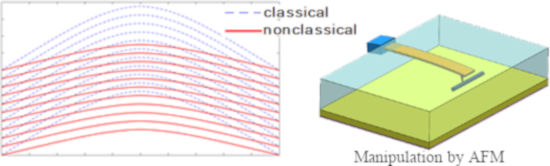
- . They used the single-walled carbon nanotubes as a probe and performed a series of simulations for studying the effects of various conditions on the success of the nanomanipulation process. They also studied two different strategies for protein manipulation [23]. In another study, using molecular







Molecular architectonics of DNA for functional nanoarchitectures
Beilstein J. Nanotechnol. 2020, 11, 124–140, doi:10.3762/bjnano.11.11
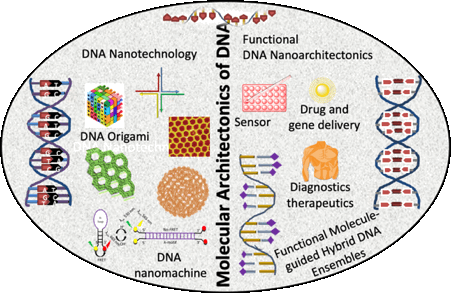
- of detergent-resistant 0.8 µm-long liquid crystalline DNA nanotubes organized from a 7.3 kb scaffold strand and >170 short oligonucleotide-long staple strands. The liquid crystalline matrices of six helix DNA origami bundles induced a weak alignment of proteins within the plasma membrane. The


Synthesis of amorphous and graphitized porous nitrogen-doped carbon spheres as oxygen reduction reaction catalysts
Beilstein J. Nanotechnol. 2020, 11, 1–15, doi:10.3762/bjnano.11.1
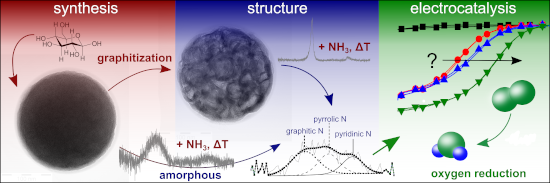
- they can result in further advantages such as an improved tolerance towards impurities compared to Pt-based catalysts [1]. A wide variety of N-doped carbon materials is known from the literature, reaching from N-doped graphene and graphite, N-doped carbon nanotubes, carbon cages, carbon cups and carbon
- fibers [7][8][9][10], N-doped 3D ordered (meso)porous carbon materials [11], N-doped carbon composites (e.g., carbon nanotubes/graphene) [12], and N-doped carbon spheres [13][14] to graphitic-C3N4 carbon nitride composites [15]. In the present work we report results of a systematic study on the synthesis
- are chemical vapor deposition (CVD) and arc discharge methods for N-doped graphene, graphite, and carbon nanotubes [9]. Most commonly, the post-synthetic approach is carried out by thermal treatment of carbon in ammonia atmosphere, typically leading to surface N-doping. A variety of N bonding





pH-Controlled fluorescence switching in water-dispersed polymer brushes grafted to modified boron nitride nanotubes for cellular imaging
Beilstein J. Nanotechnol. 2019, 10, 2428–2439, doi:10.3762/bjnano.10.233
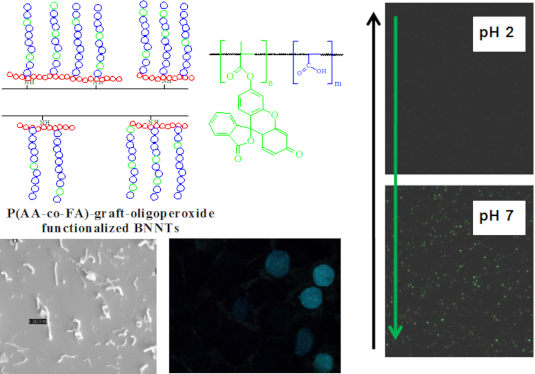
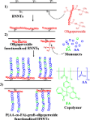
- Lviv, Ukraine 10.3762/bjnano.10.233 Abstract pH-Switchable, fluorescent, hybrid, water-dispersible nanomaterials based on boron nitride nanotubes (BNNTs) and grafted copolymer brushes (poly(acrylic acid-co-fluorescein acrylate) – P(AA-co-FA)) were successfully fabricated in a two-step process. The
- (DU145) and are suitable for further evaluation in cellular imaging applications. Keywords: boron nitride nanotubes; cellular imaging; fluorescence; pH switching; polymer brushes; surface modification; Introduction In recent years, considerable effort has been devoted to the development of hybrid
- nanomaterials [1][2][3][4][5] to generate novel structures with tunable properties through external stimuli such as pH, temperature, light, and magnetic field [6][7][8][9][10]. Among other nanomaterials, significant research effort has been dedicated to the use of nanotubes [1][2][3][4][6][7][11][12][13][14][15


Multiwalled carbon nanotube based aromatic volatile organic compound sensor: sensitivity enhancement through 1-hexadecanethiol functionalisation
Beilstein J. Nanotechnol. 2019, 10, 2364–2373, doi:10.3762/bjnano.10.227
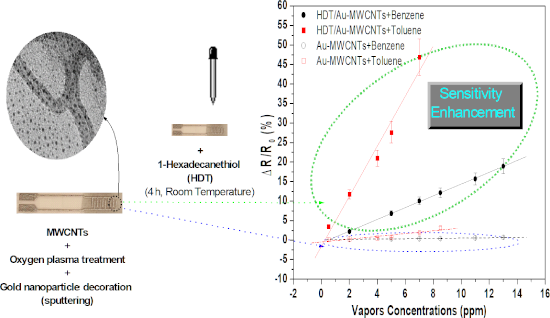
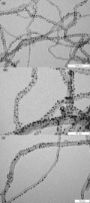
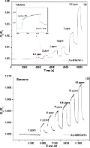
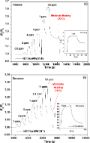
- temperature toluene and benzene sensor based on multiwall carbon nanotubes (MWCNTs) decorated with gold nanoparticles and functionalised with a long-chain thiol self-assembled monolayer, 1-hexadecanethiol (HDT). High-resolution transmission electron microscopy (HRTEM) and Fourier transform infrared
- sensitivity (up to 17 times), selectivity and improves the response dynamics of the sensors. Keywords: gold-decorated MWCNTs; multiwall carbon nanotubes (MWCNTs); self-assembled monolayers (SAMs); sensitivity; selectivity; vapour sensor; Introduction Aromatic volatile organic compounds (VOCs) such as
- correlated to the active sensing film/material used. Various nanomaterial-based gas sensors have been investigated to monitor the presence of aromatic VOCs. The ones mainly studied are based on metal oxides, carbon nanotubes, graphene and hybrid materials [5][6]. Carbon nanotube based gas sensors (e.g




A novel all-fiber-based LiFePO4/Li4Ti5O12 battery with self-standing nanofiber membrane electrodes
Beilstein J. Nanotechnol. 2019, 10, 2229–2237, doi:10.3762/bjnano.10.215
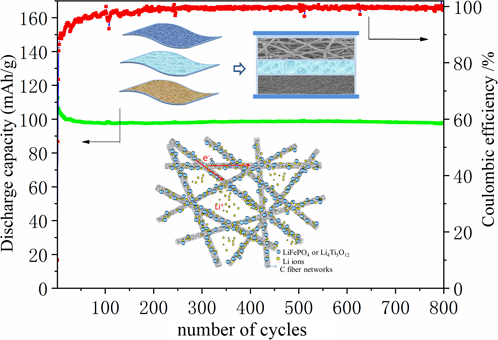
- . Nanostructures of various shapes such as nanofibers [27][28], nanoparticles [29], nanotubes [30], nanowires [31], and nanosheets [32] can greatly shorten the conduction path of Li+, thus improving the Li+ conductivity. In addition, coating or blending with conductive carbon can significantly increase the


Ultrathin Ni1−xCoxS2 nanoflakes as high energy density electrode materials for asymmetric supercapacitors
Beilstein J. Nanotechnol. 2019, 10, 2207–2216, doi:10.3762/bjnano.10.213
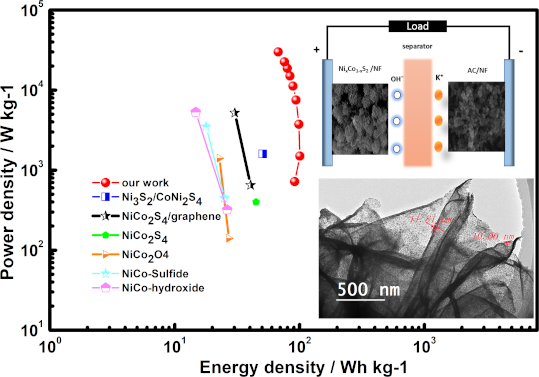
- graphene, graphene oxide (GO) or carbon nanotubes (CNTs) in order to improve the charge–discharge process stability [11][12][13]. There are limited reports regarding a comparison of the intrinsic performance between these Ni–Co chalcogenides materials. Even pure Ni–Co chalcogenide nanomaterials have been
- NiCo2S4 nanotubes synthesised via sacrificial template method, which reached a capacitance of 930 F·g−1 at 1 A·g−1 [15]. Chen et al. reported on one-step electrodeposited nickel–cobalt sulfide nanosheet arrays that reached 1420 F·g−1 at 5 A·g−1 [16]. Similarly, NiCo2O4 nanorods with a capacitance of 905


Review of advanced sensor devices employing nanoarchitectonics concepts
Beilstein J. Nanotechnol. 2019, 10, 2014–2030, doi:10.3762/bjnano.10.198
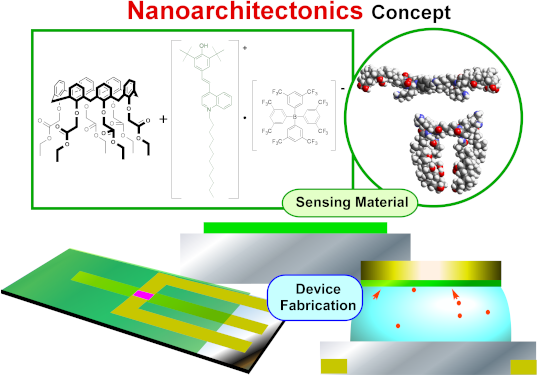
- , require consideration of bending and deformation according to typical human motions. Someya and co-workers developed transparent bending-insensitive pressure sensors [96]. They nanoengineered pressure sensor materials from composites of carbon nanotubes and graphene with a fluorinated copolymer
- important targets in biosensor technology. Someya and co-workers developed a highly flexible organic amplifier to detect weak biosignals [107]. A highly conductive biocompatible gel composite made from multiwalled carbon nanotubes and aqueous hydrogel was integrated into a two-dimensional organic amplifier


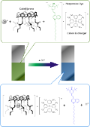

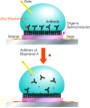


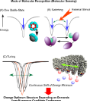
Facile synthesis of carbon nanotube-supported NiO//Fe2O3 for all-solid-state supercapacitors
Beilstein J. Nanotechnol. 2019, 10, 1923–1932, doi:10.3762/bjnano.10.188
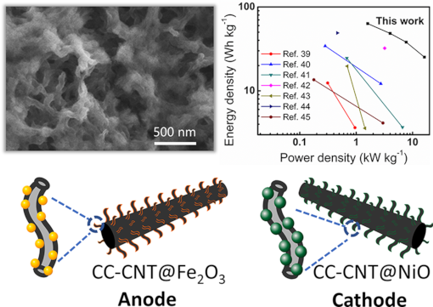
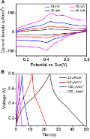
- Education, School of Physical Science and Technology, Lanzhou University, Lanzhou 730000, China 10.3762/bjnano.10.188 Abstract We have successfully prepared iron oxide and nickel oxide on carbon nanotubes on carbon cloth for the use in supercapacitors via a simple aqueous reduction method. The obtained
- carbon cloth–carbon nanotube@metal oxide (CC-CNT@MO) three-dimensional structures combine the high specific capacitance and rich redox sites of metal oxides with the large specific area and high electrical conductivity of carbon nanotubes. The prepared CC-CNT@Fe2O3 anode reaches a high capacity of 226
- supercapacitors. Keywords: aqueous reduction; carbon nanotubes; iron oxide; nickel oxide; supercapacitors; Introduction Supercapacitors offer long cycling life, superior charge–recharge ability, high power density, and wide operating temperature [1][2][3]. However, the low energy density limits their


High-tolerance crystalline hydrogels formed from self-assembling cyclic dipeptide
Beilstein J. Nanotechnol. 2019, 10, 1894–1901, doi:10.3762/bjnano.10.184
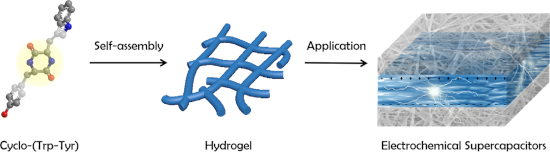
- -assembly. In the previous example, the feasibility of C-WY peptide nanotubes as carriers of caspase 3 to silence shRNA delivery was verified. Based on these excellent characteristics of C-WY, it was selected as a hydrogelator for the formation of supramolecular hydrogels. The self-assembly of C-WY forms a