


Search results
Search for "phenomenon" in Full Text gives 615 result(s) in Beilstein Journal of Nanotechnology. Showing first 200.
Overview of mechanism and consequences of endothelial leakiness caused by metal and polymeric nanoparticles
Beilstein J. Nanotechnol. 2023, 14, 329–338, doi:10.3762/bjnano.14.28
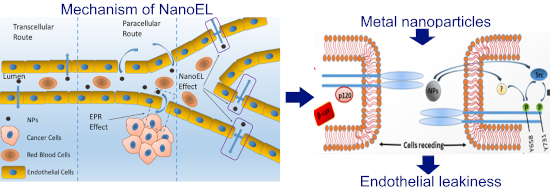
- phenomenon that is especially characteristic of mature tumors. As the tumor grows, its demand for oxygen and nutrients increases, which causes intensive formation of an abnormal vascular framework (i.e., the angiogenesis process), in which the vessels lose their typical organization and become permeable to
- molecules of a certain size. This phenomenon is known as the enhanced permeability and retention (EPR) effect [13][14][16]. The tumor vasculature is characterized by a usually incomplete endothelial lining, resulting in relatively large pores (0.1–3 μm in diameter). Such large pores allow for a much higher
- aspect is the EPR effect, which is a phenomenon characteristic of mature solid tumors. The vascular permeability factors (e.g., VEGF) produced in higher concentrations by cancer cells stimulate the formation of an abnormal vascular structure, which can be used in the passive targeting of nanodrugs


Concentration-dependent photothermal conversion efficiency of gold nanoparticles under near-infrared laser and broadband irradiation
Beilstein J. Nanotechnol. 2023, 14, 205–217, doi:10.3762/bjnano.14.20
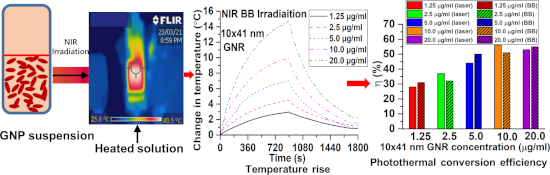
- cancerous cells [32]. The discussed results may be useful for the selection of nanoparticle concentrations as well as irradiation sources and irradiation power for a variety of applications involving the plasmonic photothermal phenomenon. Further, the variation in plasmonic wavelengths of gold nanomaterials




High–low Kelvin probe force spectroscopy for measuring the interface state density
Beilstein J. Nanotechnol. 2023, 14, 175–189, doi:10.3762/bjnano.14.18
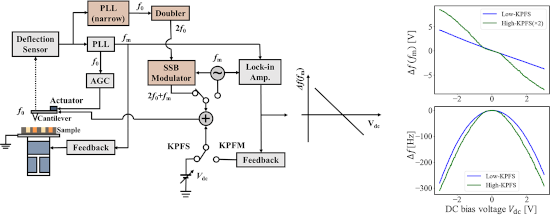
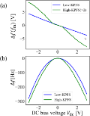
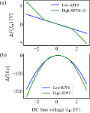
- first observation of the phenomenon in which the Δf(fm)–Vdc and Δf–Vdc curves are highly dependent on the frequency of the applied AC bias voltage. These results experimentally show that carrier transport between the bulk and interface states of a semiconductor sample is strongly affected by the



A distributed active patch antenna model of a Josephson oscillator
Beilstein J. Nanotechnol. 2023, 14, 151–164, doi:10.3762/bjnano.14.16
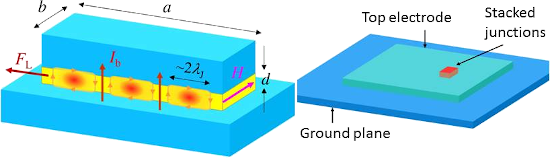
- and the flux-flow phenomenon. Therefore, a JJ can be considered as an actively pumped patch antenna with a distributed feed-in current. In this work, I present a distributed, active patch antenna model of a Josephson oscillator. It expands the TL model of a patch antenna [36], taking into account the
- and the flux-flow phenomenon. (iii) The slow propagation speed of EMWs inside the JJ, c0 ≪ c. This is caused by a large kinetic inductance of superconducting electrodes. For Nb-based JJs, c/c0 ≈ 40 (see the estimation in section Discussion). For atomic-scale intrinsic JJs in layered cuprates, c0 can
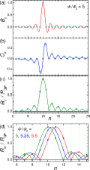
- distributed dc current, and the oscillating voltage is generated internally by a combination of the ac-Josephson effect and the flux-flow phenomenon. (b) Clarification of spatial and angular coordinates. (c) An equivalent circuit of the Josephson junction. The ac-Josephson effect provides a source of the high


Intermodal coupling spectroscopy of mechanical modes in microcantilevers
Beilstein J. Nanotechnol. 2023, 14, 123–132, doi:10.3762/bjnano.14.13
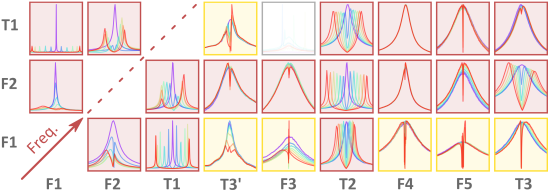
- resonator. As the stress field of one mode stiffens the vibrational motion of another, an energy exchange is established between them. This phenomenon is referred to as intermodal coupling [26]. It allows to replace the optical cavity from optomechanics with a mechanical eigenmode. So far, intermodal
- coupling. Most of the intermodal coupling data points support a symmetric coupling Hamiltonian similar to the one used in optomechanical systems. This will inevitable lead to engineered microresonators taking full advantage of this phenomenon. Mapping these couplings allows one to activate multiple


Characterisation of a micrometer-scale active plasmonic element by means of complementary computational and experimental methods
Beilstein J. Nanotechnol. 2023, 14, 110–122, doi:10.3762/bjnano.14.12
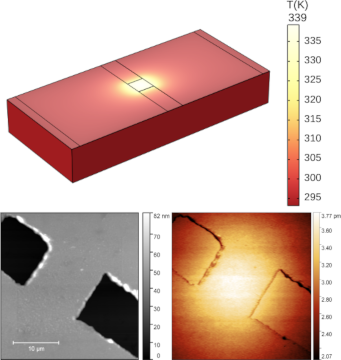
- polaritons (SPPs) are mixed states of photons and electron density waves propagating along the interface between a conductor and a dielectric. As a result of this phenomenon, an electric field strongly confined in the z-direction is produced at the interface. As direct excitation of a smooth metallic surface


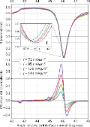


Frontiers of nanoelectronics: intrinsic Josephson effect and prospects of superconducting spintronics
Beilstein J. Nanotechnol. 2023, 14, 79–82, doi:10.3762/bjnano.14.9

- sum of the power values from two individually biased arrays. The detected phenomenon is attributed to the phase locking of Josephson junctions in different arrays via a common electromagnetic field [20]. Modeling of a multi-frequency receiving system based on an array of dipole antennas with cold
Cooper pair splitting controlled by a temperature gradient
Beilstein J. Nanotechnol. 2023, 14, 61–67, doi:10.3762/bjnano.14.7
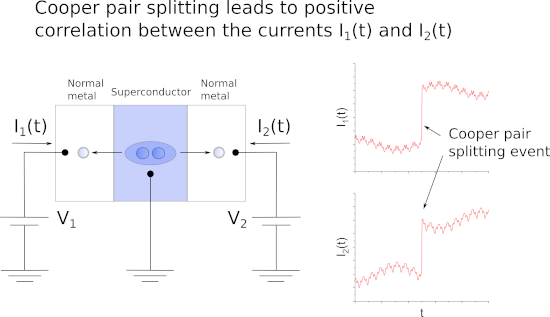
- Moscow, Russia 10.3762/bjnano.14.7 Abstract Electrons in two different normal metallic electrodes attached to a sufficiently thin superconducting island may become entangled due to the effect of Cooper pair splitting. This phenomenon is of fundamental importance and may also have serious implications
- -correlated non-local shot noise in the presence of a temperature gradient. We suggest that applying a temperature gradient may serve as an extra tool to control the phenomenon of Cooper pair splitting. Keywords: Cooper pair splitting; entanglement; quantum shot noise; superconducting hybrid nanostructures
- reflection (CAR): A Cooper pair may split into two electrons [2] (see Figure 1a), thereby generating pairs of entangled electrons in different metallic electrodes [3]. This phenomenon and its effect on electron transport in normal metal–superconductor–normal metal (NSN) hybrid structures were intensively


Upper critical magnetic field in NbRe and NbReN micrometric strips
Beilstein J. Nanotechnol. 2023, 14, 45–51, doi:10.3762/bjnano.14.5
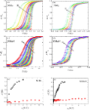
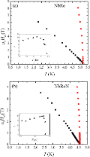
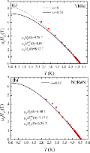
- the paraconductivity phenomenon, whose nature has been analyzed in detail in the case of unstructured NbReN films of different thickness [4]. In Figure 2, the resistive curves of NbRe are shown for various values of H with the microstrip placed perpendicularly (Figure 2a) or parallely (Figure 2b) to

Gap-directed chemical lift-off lithographic nanoarchitectonics for arbitrary sub-micrometer patterning
Beilstein J. Nanotechnol. 2023, 14, 34–44, doi:10.3762/bjnano.14.4
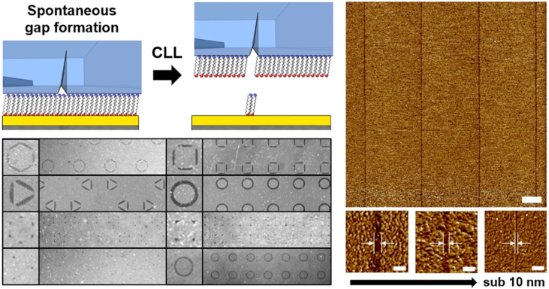
- biorecognition arrays or be transferred to the underneath Au layer for metallic structure creation. By combining CLL process with this gap phenomenon, soft material properties that are previously thought as demerits can be used to achieve sub-10 nm features in a straightforward sketch. Keywords: chemical lift
- process provides a unique artificial defect-rich surface, which supports the creation of homogeneously distributed molecular environments for functional substrates, e.g., surface wettability control [23] and enhanced biorecognition phenomenon [24][25][26]. The versatility of CLL can also be expanded by
- the tiny gaps generated through soft material structure collapsing onto a flat substrate are located in between the original contact area and a later collapsing region. This newly formed space dimension should be much smaller than the feature size rendered on the original stamp, and this phenomenon


The influence of structure and local structural defects on the magnetic properties of cobalt nanofilms
Beilstein J. Nanotechnol. 2023, 14, 23–33, doi:10.3762/bjnano.14.3
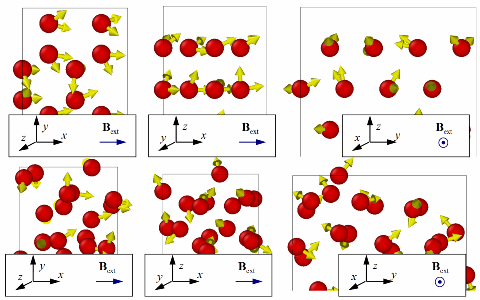
- temperature for pure metal equal to 9.25 K. In superconductors, including niobium, due to the Meissner effect, the phenomenon of complete or partial ejection of the magnetic field from the material volume occurs [48][49]. In the superconductivity mode, which is the mode of greatest interest for the magnetic


Observation of collective excitation of surface plasmon resonances in large Josephson junction arrays
Beilstein J. Nanotechnol. 2022, 13, 1578–1588, doi:10.3762/bjnano.13.132
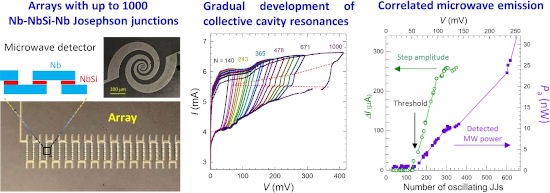
- collectively by a phase-locked array of oscillators). This is still a coherent phenomenon, but the emission occurs from a single source, namely the antenna formed by the electrode. (III) The synchronization: the overlap-type JJs in the studied arrays are separated by 12 μm, which is much larger than the London




Induced electric conductivity in organic polymers
Beilstein J. Nanotechnol. 2022, 13, 1551–1557, doi:10.3762/bjnano.13.128
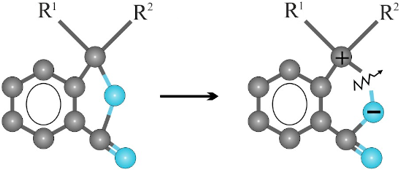
- further elaborated [12][13][14]. The purpose of this work was to study this interesting phenomenon in a wide temperature range: from 4.2 K to room temperature. Experimental Layered Pb–PDP–Pb heterostructures were fabricated in a glove box in nitrogen atmosphere with minimum moisture and oxygen content
- electric circuit; (f) demonstrates the switching phenomenon of the thin PDP film from insulating to metal state. Thickness of Pb electrodes is about 200 nm. Sandwich structure Pb–PDP–Pb–0.4-GLASS, thickness of polymer is about 350 nm, both Pb electrodes are ≈200 nm thick. (a) Resistance vs temperature R(T



In search of cytotoxic selectivity on cancer cells with biogenically synthesized Ag/AgCl nanoparticles
Beilstein J. Nanotechnol. 2022, 13, 1505–1519, doi:10.3762/bjnano.13.124
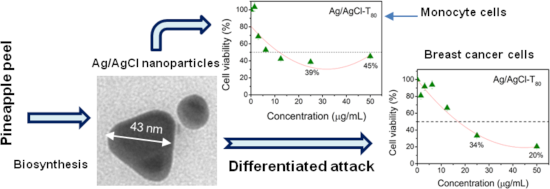
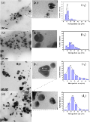
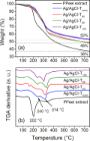
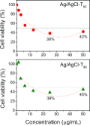
- temperature [22][23][24]. In this way, the ability of secondary metabolites of plant extracts to reduce precursor metal salts to particles with zero charge, and at the same time stabilize nanoparticles already formed, has been demonstrated. Despite this, the phenomenon of interaction of the chemical species





Coherent amplification of radiation from two phase-locked Josephson junction arrays
Beilstein J. Nanotechnol. 2022, 13, 1445–1457, doi:10.3762/bjnano.13.119
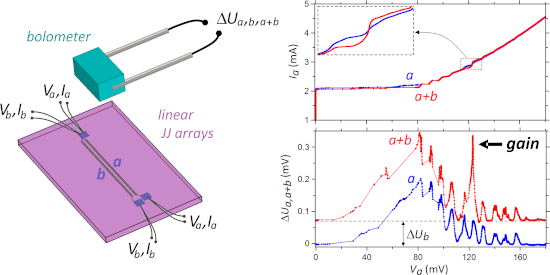
- coherent gain, up to a factor of three, of emitted power from two simultaneously biased arrays, compared to the sum of powers from two individually biased arrays. The phenomenon is attributed to the phase locking of junctions in different arrays via a common electromagnetic field. Remarkably, the gain can
- smaller than those for sample-1, indicating that the inter-array coupling is not a short-range phenomenon. Off-chip synchronization The third series of measurements was performed using arrays at two different substrates. The substrates were stacked on top of each other, as sketched in Figure 5a. To
- a complex phenomenon, which cannot be reduced to a simple constructive interference of two independent sources. For a better understanding of the phase locking dynamics, we perform numerical modelling. Figure 6a demonstrates the general view of the considered model for on-chip synchronization. It


Facile preparation of Au- and BODIPY-grafted lipid nanoparticles for synergized photothermal therapy
Beilstein J. Nanotechnol. 2022, 13, 1432–1444, doi:10.3762/bjnano.13.118
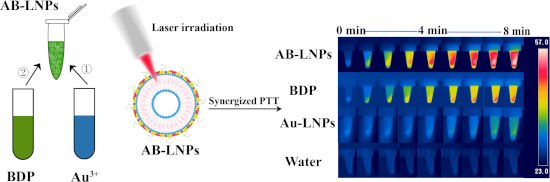
- specificity and minimal invasiveness, it has attracted a great deal of attention as complementary modality for conventional cancer therapy options [1]. Gold nanoparticles (AuNPs) can absorb light and generate heat from light absorption because of the surface plasmon resonance (SPR) phenomenon and the tunable




Double-layer symmetric gratings with bound states in the continuum for dual-band high-Q optical sensing
Beilstein J. Nanotechnol. 2022, 13, 1408–1417, doi:10.3762/bjnano.13.116
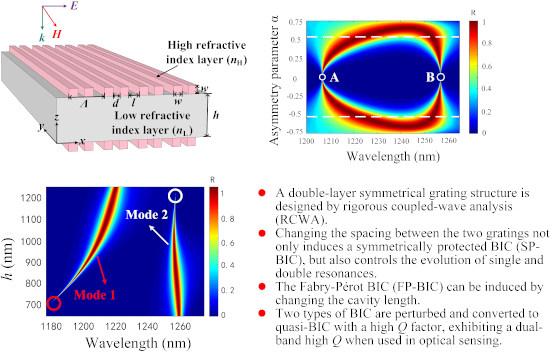
- to find the artificial BIC by the Brillouin band folding phenomenon resulting from changing the spacing of the grating. Interestingly, the FP-BIC is obtained by varying the cavity length of the DLSG to satisfy the transverse resonance principle. Results and Discussion As an example, the high
- and a decrease in the Q-factor. By physically varying the spacing of the RDG, the modes at the edge of the first Brillouin zone now lie at the gamma point (the center of the first Brillouin zone), thus resulting in an artificial BIC caused by the Brillouin folding phenomenon [45]. Such BIC is


Supramolecular assembly of pentamidine and polymeric cyclodextrin bimetallic core–shell nanoarchitectures
Beilstein J. Nanotechnol. 2022, 13, 1361–1369, doi:10.3762/bjnano.13.112
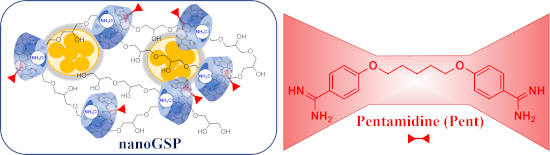
- classifying them in plasmonic NPs (size > 5 nm) and nanoclusters (size < 5 nm). When dimensions exceed 5 nm, NPs exhibit a unique optical phenomenon called localized surface plasmon resonance (LSPR) which represents the collective oscillation of conduction band electrons after interaction between NPs and an
- electromagnetic field [4]. However, for <5 nm sized NPs, the LSPR phenomenon disappears, and they exhibit a tunable intrinsic photoluminescence with high Stokes shift and excellent photostability [5]. Plasmonic NPs can be produced in monometallic (MNPs) or bimetallic (BMNPs) forms and, in the latter, the internal


Bending and punching characteristics of aluminum sheets using the quasi-continuum method
Beilstein J. Nanotechnol. 2022, 13, 1303–1315, doi:10.3762/bjnano.13.108
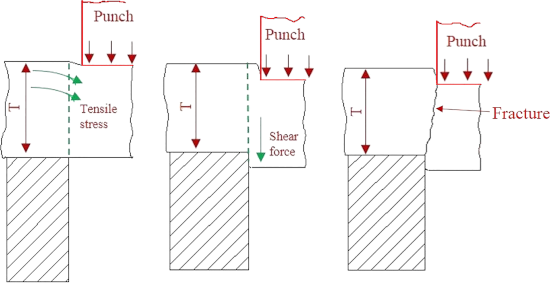
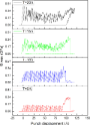
- oscillation exists in the curve from the punch contacts with the workpiece to the workpiece fracture. This oscillation expresses the stick–slip phenomenon, which commonly occurs in the atomic-scale friction [14][61][62]. The stick phenomenon is caused by the accumulation of atoms in front of the punch, and
- the adhesion force increases with an increase of the contact area between the punch and the workpiece. However, when the debris crumple, the slip phenomenon appears [61]. Besides, comparing the three crystal orientation curves, O1 shows a more stable curve during the loading process, while the O2 and
- and O3 is at an inclined angle with the punching direction, which is mostly consistent with the atomic displacement vectors mentioned in Figure 4. Besides, it can be more clearly observed from Figure 5 that the cutting surfaces of O1 are relatively smooth. There is no inclined phenomenon or residual





Laser-processed antiadhesive bionic combs for handling nanofibers inspired by nanostructures on the legs of cribellate spiders
Beilstein J. Nanotechnol. 2022, 13, 1268–1283, doi:10.3762/bjnano.13.105
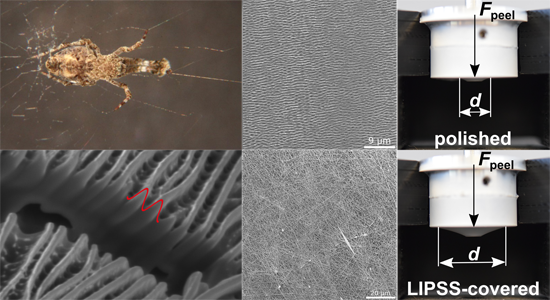
- different fiber radii R (in nm). Another interesting phenomenon that can be described with this theory is that the total energy Etot initially decreases with increasing amplitude a with regard to a flat surface. With increasing λ the effect becomes stronger. This means, that if the aspect ratio between







Role of titanium and organic precursors in molecular layer deposition of “titanicone” hybrid materials
Beilstein J. Nanotechnol. 2022, 13, 1240–1255, doi:10.3762/bjnano.13.103
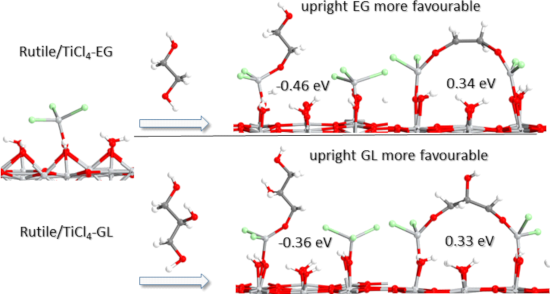
- the double reaction phenomenon, which for EG removes both the reactive OH groups required to couple with the Ti precursor, while even with a double reaction, GL has a third OH group available to couple to the Ti(DMA)4 precursor in the next cycle [33]. Ti(DMA)4 inorganic precursor is well known and
- the two terminal OH groups, and this phenomenon reduces the number of active sites and terminates the surface growth [39]. However, DFT results also show that this scheme depends on the metal precursor and the surface as the same aliphatic precursors behave differently when combined with Mg(Cp)2; EG
- addition to the surface models that result from the adsorption of a single TiCl4 molecule, in order to investigate the double reaction phenomenon of EG and GL, we have also built models in which two TiCl4 molecules are adsorbed on the anatase TiO2 and rutile TiO2 surfaces. Calculated energies for the


A super-oscillatory step-zoom metalens for visible light
Beilstein J. Nanotechnol. 2022, 13, 1220–1227, doi:10.3762/bjnano.13.101
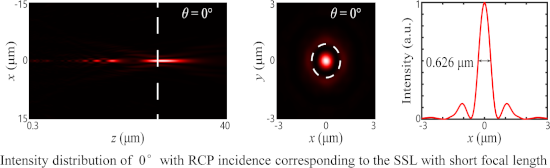
- high optical loss and are not suitable for far-field imaging. As a result, it is still a huge challenge to achieve unlabeled far-field imaging without image post processing. Optical super-oscillation is a unique optical phenomenon in which an optical signal can oscillate faster locally than its maximum
- than of the long focal length, which corresponds well with the traditional geometric optical theory. It should be noted that the low focusing efficiency of the SSL arises from the redistribution of the optical field energy. This is a typical feature of the optical super-oscillation phenomenon in which
- is achieved by the metasurface. Nonetheless, due to the shadowing effect and coupling phenomenon among unit cells, the transmittance of the unit cells is affected by the incident angle and the orientation of unit cells. Third, the residual co-polarization component could lead to noticeable stray


Design of surface nanostructures for chirality sensing based on quartz crystal microbalance
Beilstein J. Nanotechnol. 2022, 13, 1201–1219, doi:10.3762/bjnano.13.100
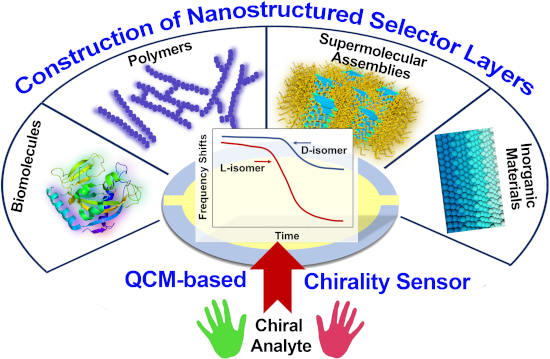
- ; chiral surface; chirality recognition; quartz crystal microbalance (QCM); sensing applications; surface architecture; Introduction Chirality is a prevalent phenomenon in nature. Many common biological macromolecules such as proteins, ribose, and cellulose are inherently chiral. Chiral molecules have two
- forms (enantiomers) that are mirror images of each other. It is a mysterious phenomenon that almost all chiral molecules in living organisms are found in one form, such as right-handed sugars, left-handed amino acids, and right-handed DNA coils. Scientists coined the term “homochirality” to describe


Application of nanoarchitectonics in moist-electric generation
Beilstein J. Nanotechnol. 2022, 13, 1185–1200, doi:10.3762/bjnano.13.99
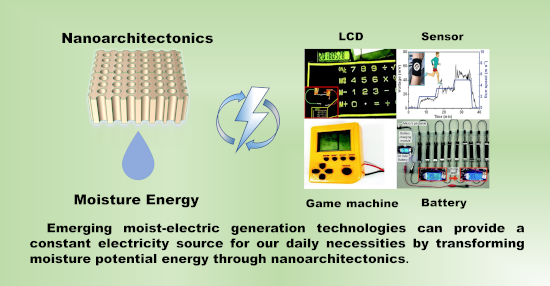
- ]. This viewpoint was confirmed by many experiments later, such as the electrical signal generated by the flow of water through single-walled carbon nanotubes [7], carbon nanosheets [8], and nanoparticles [9]. Regarding the principle of this phenomenon, the common explanation is that charge transfer


Nonlinear features of the superconductor–ferromagnet–superconductor φ0 Josephson junction in the ferromagnetic resonance region
Beilstein J. Nanotechnol. 2022, 13, 1155–1166, doi:10.3762/bjnano.13.97
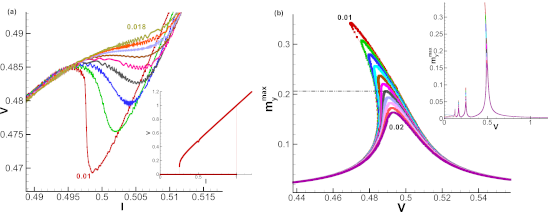
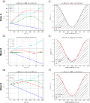
- arrows in the figure. Another model parameter that affects the phenomenon discussed in the present paper is the ratio G between Josephson energy and magnetic energy. Figure 4b demonstrates the results of numerical simulations of the dependence on α at different values of G. Similar to the effect of r


![[Graphic 14]](/bjnano/content/inline/2190-4286-13-97-i38.svg?max-width=637&scale=1.18182) at differ...
at differ...


![[Graphic 18]](/bjnano/content/inline/2190-4286-13-97-i42.svg?max-width=637&scale=1.18182) (V) on α in the damping parameter interval [0.001–0.12]....
(V) on α in the damping parameter interval [0.001–0.12]....




