


Search results
Search for "plasmon" in Full Text gives 316 result(s) in Beilstein Journal of Nanotechnology. Showing first 200.
Interaction of Te and Se interlayers with Ag or Au nanofilms in sandwich structures
Beilstein J. Nanotechnol. 2019, 10, 238–246, doi:10.3762/bjnano.10.22
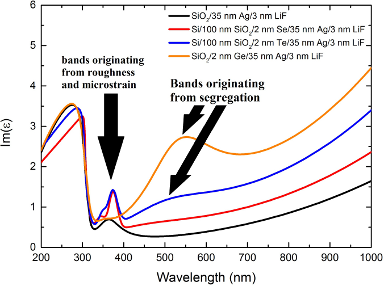
- semiconductor atoms essentially act as nanoparticles which absorb light due to localized plasmon excitation [25][26]. If that is the case, such additional bands should be observable in the permittivity of any plasmonic metal thin layer film in which a semiconductor segregates. Of the semiconductors, only Ge and
- their energy, which is what we observe. It is also worth noting that the band at 325–400 nm clearly consists of two components, which confirms that this band has two origins: interband transitions at the L-point and surface plasmon excitations [26]. For the measurements performed four weeks after


Surface plasmon resonance enhancement of photoluminescence intensity and bioimaging application of gold nanorod@CdSe/ZnS quantum dots
Beilstein J. Nanotechnol. 2019, 10, 22–31, doi:10.3762/bjnano.10.3
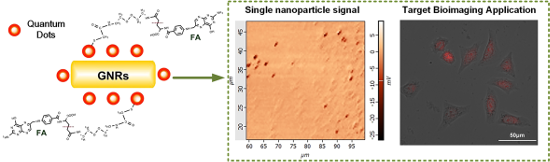
- stability and biocompatibility of GNRs has been reported by several researchers, and they are being investigated as a probe for photothermal therapy in nanomedicine. The presence of longitudinal surface plasmon resonance (LSPR) provides GNRs with richer optical properties, which lead to local field, Raman
- used the GNRs to enhance the PL intensity of the CdSe/ZnS QDs. The PL from GNR@CdSe/ZnS nanoparticles is approximately four times more than that from CdSe/ZnS QDs. Finite difference time domain (FDTD) simulations were also conducted to understand the plasmon coupling effect on PL enhancement
- /ZnS were acquired at room temperature as they were prepared, and the spectrum of water was measured as a reference. Figure 4a shows the absorption spectrum of CdSe/ZnS GNRs and GNR@CdSe/ZnS, where it can be seen that there are two peaks in the GNR absorption spectrum: the transverse surface plasmon


Hybrid Au@alendronate nanoparticles as dual chemo-photothermal agent for combined cancer treatment
Beilstein J. Nanotechnol. 2018, 9, 2947–2952, doi:10.3762/bjnano.9.273
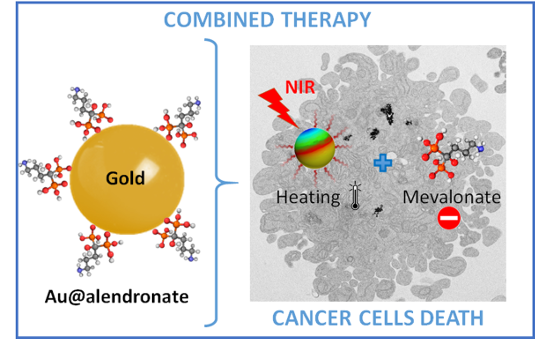
- Supporting Information File 1). The excess of reactive species is eliminated by ultrafiltration. We thus obtained spherical NPs (Figure 1a, left) with an average diameter of 30.5 ± 3.0 nm (Figure 1a, right) and a plasmon band at 528 nm (Figure 1b). Under similar synthesis conditions, gold NPs obtained with


Site-controlled formation of single Si nanocrystals in a buried SiO2 matrix using ion beam mixing
Beilstein J. Nanotechnol. 2018, 9, 2883–2892, doi:10.3762/bjnano.9.267
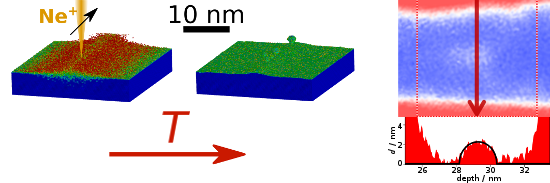
- electron microscopy (TEM) lamella preparation. In all cases, the local distribution and size of the NCs are mapped using energy-filtered transmission electron microscopy (EFTEM). Results and Discussion In Figure 1, a comparison of cross-sectional Si plasmon-loss-filtered TEM images obtained from two Si
- combination with the nominal width of the line, this results in an effective irradiated line width of approximately 3–9 nm. In Figure 6a a cross-sectional Si plasmon-loss filtered TEM image after 1D line irradiation and subsequent RTA is shown. The fluence in the line-pattern is 3000 Ne+/nm2 with a nominal
- surface of the top Si layer (red). In order to quantify the number of observed Si NCs, a line profile of the Si plasmon-loss intensity is obtained across the layer. This line section is converted into a projected thickness of Si and presented in Figure 6c. Using the intensity of the initial electron beam


Controlling surface morphology and sensitivity of granular and porous silver films for surface-enhanced Raman scattering, SERS
Beilstein J. Nanotechnol. 2018, 9, 2813–2831, doi:10.3762/bjnano.9.263
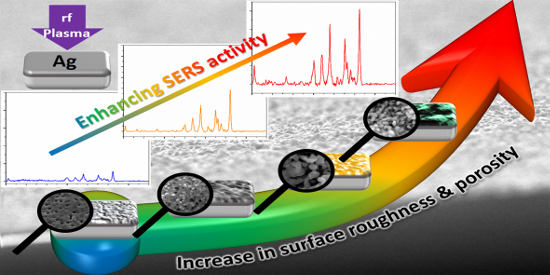
- the last decades [1]. This phenomenon, called surface-enhanced Raman scattering [2][3], depends on the fact that incident light leads to the excitation of surface plasmon resonances, which in turn lead to a concentration of the incident electromagnetic field thus enhancing the Raman scattering effect
- . This effect is even further enhanced by the presence of so called hot spots, which are sub-10 nm gaps where the electromagnetic field is further magnified due to constructive interference of the plasmon resonances [4]. Electromagnetic enhancement is the main reason for the observed Raman enhancement
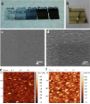
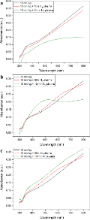
- prominent for 10 min nitrogen plasma treatment at about 500 nm. This indicates a restructuring of the film surface leading to the formation of particulate structures on the surface as has been proven by SEM. This restructuring might result in the emergence of localized surface plasmon resonances as they are






Biomimetic surface structures in steel fabricated with femtosecond laser pulses: influence of laser rescanning on morphology and wettability
Beilstein J. Nanotechnol. 2018, 9, 2802–2812, doi:10.3762/bjnano.9.262
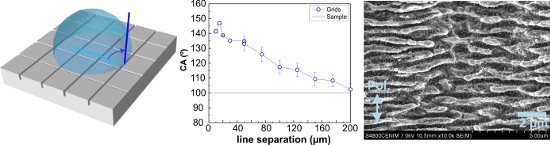
- pulse [15]. The other mechanism involves the formation of a surface plasmon polariton coupled to the sample–air interface, which interferes with the incoming pulse [16]. For both mechanisms, interference leads to a spatial modulation of the intensity distribution that is finally imprinted in the
- many cases, ordered structures (namely ripples, grooves or spikes). The presence of these structures greatly influences the spatial distribution of the scattered light [26][28] and the coupling efficiency and propagation of surface plasmon polaritons. As a consequence, the spatial intensity



Comparative biological effects of spherical noble metal nanoparticles (Rh, Pd, Ag, Pt, Au) with 4–8 nm diameter
Beilstein J. Nanotechnol. 2018, 9, 2763–2774, doi:10.3762/bjnano.9.258
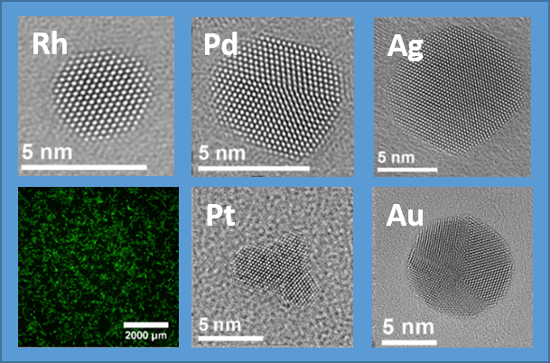
- , and nanomedicine [1][2][3]. Noble metal nanoparticles are of particular importance due to their diverse properties such as surface plasmon resonance, chemical inertness, and antibacterial action (silver) [4][5][6][7][8][9]. However, concerns have been raised with respect to their biological effect
- properties of nanoparticles, e.g., surface plasmon resonance (SPR) effects (Figure 5). While the dispersions of platinum group nanoparticles (Rh, Pd, Pt) were all brown-black and had no distinct absorption in the visible range, silver and gold showed the typical surface plasmon resonance (SPR) absorption


Low cost tips for tip-enhanced Raman spectroscopy fabricated by two-step electrochemical etching of 125 µm diameter gold wires
Beilstein J. Nanotechnol. 2018, 9, 2718–2729, doi:10.3762/bjnano.9.254
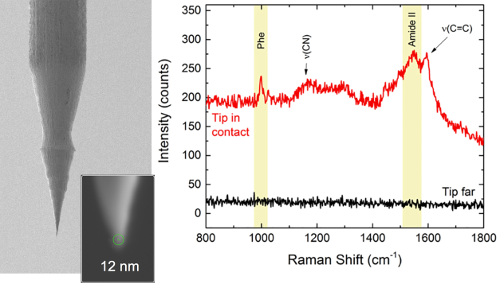
- between the dark-field scattering peak, attributed to plasmon excitations, and the position of the maximum integrated SERS background of the tip, confirming that the background is enhanced by the localized plasmon resonance in the apical region. On sharp Au tips, the same authors report an almost flat


Silencing the second harmonic generation from plasmonic nanodimers: A comprehensive discussion
Beilstein J. Nanotechnol. 2018, 9, 2674–2683, doi:10.3762/bjnano.9.250
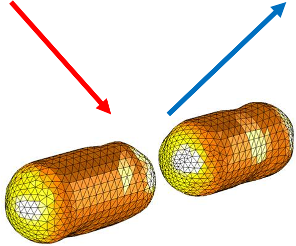
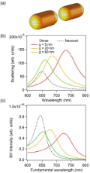
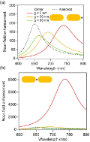
- concentrate light into subwavelength regions [1][2]. The collective oscillations of these electrons in a given plasmonic nanostructure are called localized surface plasmon resonances (LSPRs) [3][4][5]. The high electric field enhancement associated with the optical excitation of such a resonance has been
- surfaces result in higher charge interaction in the nanogap, and then in a larger LSPR shift. For the same gap variation, i.e., from 5 nm to 60 nm, the shift of the LSPR for the rectangular arms is twice that observed for cylindrical nanorods. Apart from the plasmon shift amplitudes, the near-field


Polarization-dependent strong coupling between silver nanorods and photochromic molecules
Beilstein J. Nanotechnol. 2018, 9, 2657–2664, doi:10.3762/bjnano.9.247
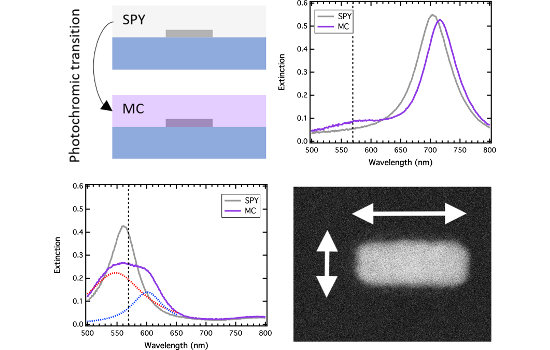
- Abstract Active plasmonics is a key focus for the development of advanced plasmonic applications. By selectively exciting the localized surface plasmon resonance sustained by the short or the long axis of silver nanorods, we demonstrate a polarization-dependent strong coupling between the plasmonic
- resonance and the excited state of photochromic molecules. By varying the width and the length of the nanorods independently, a clear Rabi splitting appears in the dispersion curves of both resonators. Keywords: active plasmonics; photochromic molecules; plasmon; Rabi splitting; strong coupling
- ; Introduction For decades, plasmonic systems have been extensively studied for their potential applications in many research fields. Due to their localized surface plasmon resonance (LSPR), metallic nanoparticles have been used to enhance the sensitivity of bio- or chemo-sensors [1], enhance and direct the



Nanoantenna structures for the detection of phonons in nanocrystals
Beilstein J. Nanotechnol. 2018, 9, 2646–2656, doi:10.3762/bjnano.9.246
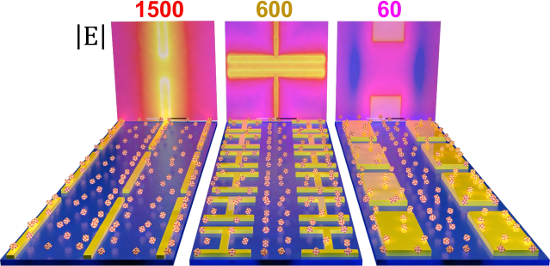
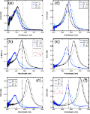
- Semiconductor Physics, Technische Universitaet Chemnitz, 09126, Chemnitz, Germany 10.3762/bjnano.9.246 Abstract We report a study of the infrared response by localized surface plasmon resonance (LSPR) modes in gold micro- and nanoantenna arrays with various morphologies and surface-enhanced infrared absorption
- transverse optical phonons are activated in the infrared spectra. Keywords: localized surface plasmon resonance; metal nanoclusters; nanoantenna; phonons; semiconductor nanocrystals; surface-enhanced infrared absorption; Introduction Surface-enhanced infrared absorption (SEIRA) by organic species placed on
- (Ag, Au, Cu, etc.) [5][6][7]. The origin of the IR signal enhancement is the localized electromagnetic field of plasmons excited near metallic surfaces. In the case of flat metal films, the IR response from an organic molecule in the plasmon field can be increased by a factor of 103 [8]. For island


Enhancement of X-ray emission from nanocolloidal gold suspensions under double-pulse excitation
Beilstein J. Nanotechnol. 2018, 9, 2609–2617, doi:10.3762/bjnano.9.242
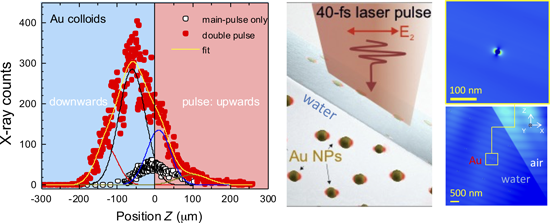
- selectivity based on surface plasmon resonance [15]. An increase of the laser-absorption efficiency can be expected in plasmonic nanoparticles, which results in the efficient generation of highly ionized charge states [13][14]. It is expected that this characteristic interaction between intense femtosecond
- . The plasmon resonance excitation for these NPs is expected to be near 520 nm. This provides a moderate enhancement of the optical near-fields as shown further by numerical simulations. The incident fluence of the main pulse used in the present study significantly exceeds both the ablation threshold
- that the appropriate size for the highest X-ray intensity is 40–50 nm. For ultrasound generation under fs-laser excitation [34][49], gold nanorod particles with more efficient surface plasmon resonance effects [50] were also used. Further enhancements of X-ray intensities are expected under double


Au–Si plasmonic platforms: synthesis, structure and FDTD simulations
Beilstein J. Nanotechnol. 2018, 9, 2599–2608, doi:10.3762/bjnano.9.241
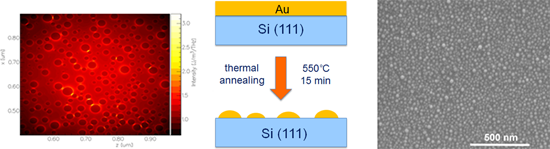
- efficient diffusion barrier against metal atoms [24], so Au–Si monoatomic layer could be present on the surface of the support. Exemplary absorbance spectra recorded for the 2.8 nm Au film after annealing at 550 °C for 15 min is presented in Figure 10. A strong maximum corresponding to plasmon resonance is
- , because of the intensity profile of the incident light. As a consequence, the surface plasmon resonance was also stronger in that region. In Figure 14, the amplitudes of particular components of the electromagnetic field are presented as a result of FDTD simulations. Here the amplitudes of the field



SERS active Ag–SiO2 nanoparticles obtained by laser ablation of silver in colloidal silica
Beilstein J. Nanotechnol. 2018, 9, 2396–2404, doi:10.3762/bjnano.9.224
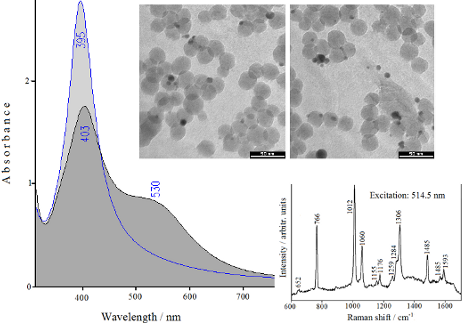
- unchanged at the same wavelength and with the same bandwidth. Ten minutes of laser ablation are sufficient to obtain a plasmon absorbance more than 2.5 in a 10 mm cuvette. However, a much larger silver content could be obtained with longer ablation times without compromising the colloidal stability. We have
- at 514.5 nm with the secondary plasmon band with maximum around 530 nm. The SERS spectrum of bpy in Ag–SiO2 colloid was found to be comparable with that obtained in pure silver colloid, in terms of frequency and intensity. This demonstrates that the interaction between silver and silica does not


Directional light beams by design from electrically driven elliptical slit antennas
Beilstein J. Nanotechnol. 2018, 9, 2361–2371, doi:10.3762/bjnano.9.221
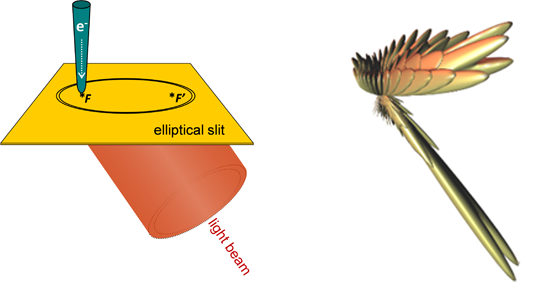
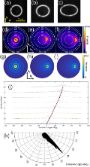
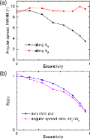
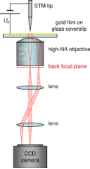
- emission direction of the beam is determined by the microstructure eccentricity. A very simple, broadband, optical antenna design is used, which consists of a single elliptical slit etched into a gold film. The light beam source is driven by an electrical nanosource of surface plasmon polaritons (SPP) that
- ; surface plasmon polariton; Introduction With the ever-growing demand for higher information capacity and the diversification of applications, the integration of nanophotonics with nanoelectronics in microdevices has never been more relevant than now [1][2][3][4][5][6][7][8][9]. In this context
- , bull’s-eye, nanoparticle dimer, or wire antennas), coupled in the near field (or incorporating in their design) an electrically driven nanosource of surface plasmon polaritons (SPPs, light waves coupled to electron density oscillations at a metal–dielectric interface). In particular, the electrical SPP





Hierarchical heterostructures of Bi2MoO6 microflowers decorated with Ag2CO3 nanoparticles for efficient visible-light-driven photocatalytic removal of toxic pollutants
Beilstein J. Nanotechnol. 2018, 9, 2297–2305, doi:10.3762/bjnano.9.214
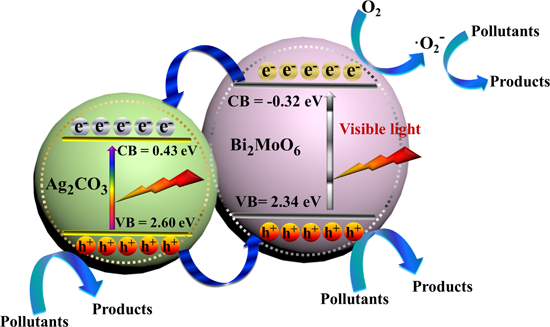
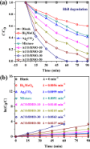
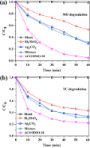
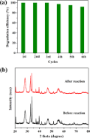
- excited to generate electrons, reacting with O2 to form •O2− radicals due to the plasmon resonance (SPR) effect [32]. Based on above analysis, the rational design and construction of Bi2MoO6-based heterostructures is favorable for the separation of charges, leading to a superior activity in pollutant




The role of adatoms in chloride-activated colloidal silver nanoparticles for surface-enhanced Raman scattering enhancement
Beilstein J. Nanotechnol. 2018, 9, 2236–2247, doi:10.3762/bjnano.9.208
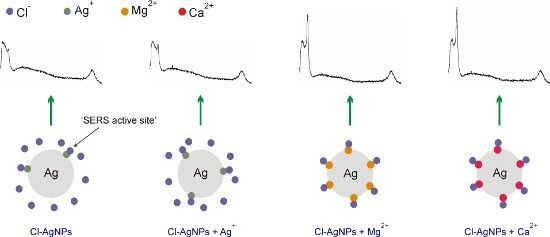
- nanoparticles (also called surface plasmon resonances) [8]. Although this model does not require a chemical contact, the magnitude of the electromagnetic field outside the particle decreases with the third power of radial distance [9]. This means that the field enhancement of Raman scattering decreases strongly
- , indicating a high polydispersity of the formed silver nanostructures. Simultaneously, a decrease in the intensity of the AgCl absorption band at 254 nm is observed, whereby the intensity of the AgCl band is then comparable to that of the plasmonic band. However, after 5 min of light exposure, the plasmon



Dumbbell gold nanoparticle dimer antennas with advanced optical properties
Beilstein J. Nanotechnol. 2018, 9, 2188–2197, doi:10.3762/bjnano.9.205
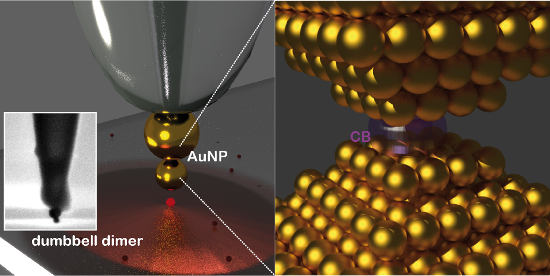
- .9.205 Abstract Plasmonic nanoantennas have found broad applications in the fields of photovoltaics, electroluminescence, non-linear optics and for plasmon enhanced spectroscopy and microscopy. Of particular interest are fundamental limitations beyond the dipolar approximation limit. We introduce
- plasmon resonances and the electromagnetic field distribution in these structures, is much more versatile for asymmetric (dumbbell) antennas [33][34][35][36][37]. Introducing a defined asymmetry for these gap structures, e.g., converts dark anti-symmetric modes into bright modes [38] and also influences
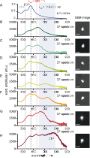
- and the end point [40]. Decreasing the interparticle gap size, therefore, leads to stronger electromagnetic fields at the gap and the end point locations. However, one has to keep in mind, that the reduction of the gap size also is accompanied by a shift of the plasmon resonance and the strongest




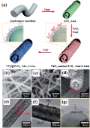
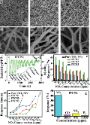
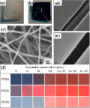
Electrospun one-dimensional nanostructures: a new horizon for gas sensing materials
Beilstein J. Nanotechnol. 2018, 9, 2128–2170, doi:10.3762/bjnano.9.202







High-throughput synthesis of modified Fresnel zone plate arrays via ion beam lithography
Beilstein J. Nanotechnol. 2018, 9, 2049–2056, doi:10.3762/bjnano.9.194
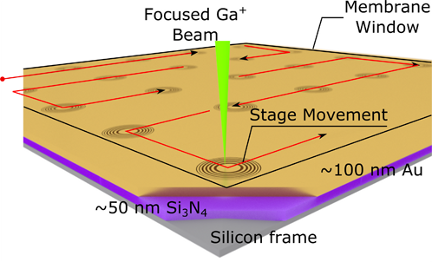
- . This can be attributed to the shifting plasmon resonances of the gold nanowires that make up the zones of the FZPs. A scanning transmission electron microscope (STEM) dark-field overview image of the completed array is shown in Figure 4b. The FZPs mostly exhibited high quality with zones free from
- shifting plasmon resonances of the zones made out of gold. d) A STEM-DF image of the fabricated 8 × 8 array of 64 FZPs. e) A STEM-DF image of FZP of row 6 and column 6. Overview of the FZP and ion beam lithography process parameters.a Supporting Information Additional SEM images of inner and outermost


Fabrication of photothermally active poly(vinyl alcohol) films with gold nanostars for antibacterial applications
Beilstein J. Nanotechnol. 2018, 9, 2040–2048, doi:10.3762/bjnano.9.193
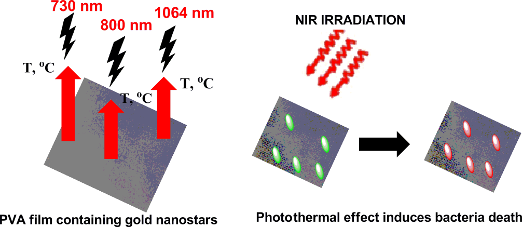
- antibacterial films and coatings. Keywords: antibacterial properties; gold nanostars; photothermal effect; poly(vinyl alcohol) films; Introduction The photothermal properties of non-spherical gold nanoparticles possessing localized surface plasmon resonance (LSPR) located in NIR range has already been


Self-assembled quasi-hexagonal arrays of gold nanoparticles with small gaps for surface-enhanced Raman spectroscopy
Beilstein J. Nanotechnol. 2018, 9, 1977–1985, doi:10.3762/bjnano.9.188
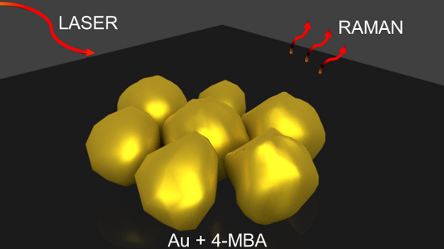
- lithography; optical antenna; self-assembly; SERS; Introduction Over the last decades self-assembled layers of gold nanoparticles have taken an important role in emerging nanotechnologies. Noble metal nanoparticles show localized surface plasmon polariton resonances (LSPRs) in the visible and infrared
- spectral overlap with the plasmon resonances (maxima in the scattering intensity) of the larger gold particles, and is thus expected to excite strong hotspots in the gaps. The intensity of the characteristic Raman bands for 4-MBA at 1085 cm−1 and 1590 cm−1 were evaluated [28]. The background-corrected peak



Electromigrated electrical optical antennas for transducing electrons and photons at the nanoscale
Beilstein J. Nanotechnol. 2018, 9, 1964–1976, doi:10.3762/bjnano.9.187
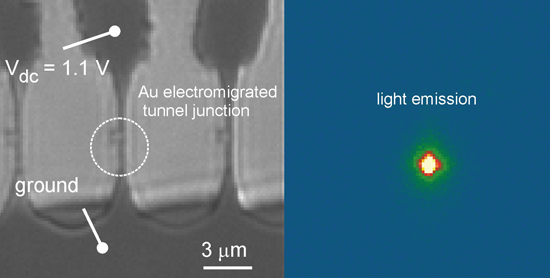
- emitted from tunnel junctions has been heavily investigated since the pionner work of Lambe and McCarthy [53] and is generally attributed to inelastic scattering of tunneling electrons into radiative surface plasmon modes. Generally, spectra detected from electrically-driven on-chip optical antennas are


![[Graphic 32]](/bjnano/content/inline/2190-4286-9-187-i38.svg?max-width=637&scale=1.18182) and
and ![[Graphic 33]](/bjnano/content/inline/2190-4286-9-187-i39.svg?max-width=637&scale=1.18182) are...
are...


A visible-light-controlled platform for prolonged drug release based on Ag-doped TiO2 nanotubes with a hydrophobic layer
Beilstein J. Nanotechnol. 2018, 9, 1793–1801, doi:10.3762/bjnano.9.170
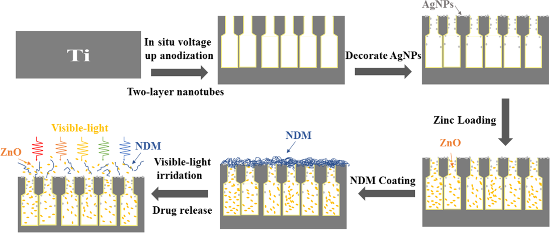
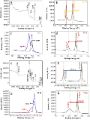
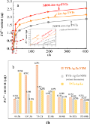
- -TNTs and NDM-Zn-Ag-TNTs samples, respectively. Obviously, the absorbance of TNTs decorated with Ag is higher than bare TNTs within the visible light range (450–800 nm). The loading of AgNPs promotes surface plasmon resonance (SPR) scattering into the TNT layer, which further increases the nearby





Light extraction efficiency enhancement of flip-chip blue light-emitting diodes by anodic aluminum oxide
Beilstein J. Nanotechnol. 2018, 9, 1602–1612, doi:10.3762/bjnano.9.152
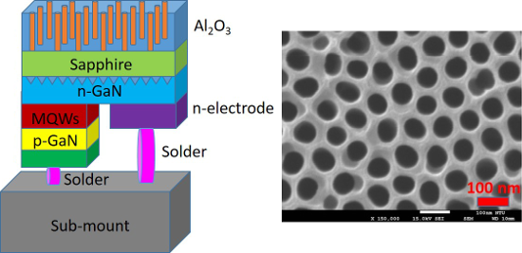
- emitter into a surface plasmon mode produced by AAO. Keywords: anodic aluminum oxide; critical angle of total reflection; efficiency enhancement; flip-chip blue light-emitting diode; Introduction Light-emitting diodes (LEDs) are widely used in various fields, such as optical communication and automobile
- LEE [12][16][35][36]. Whether the nanostructure, which possesses special metallic features, is influenced by the surface plasmon wave and enhances LEE has also been studied [37][38][39][40]. Results and Discussion Scanning electron microscopy and atomic force microscopy measurements The scanning
- the contribution of this phenomenon. Second, the AAO process introduces the surface-plasmon-induced blue shift of LED emission between Al and the sapphire substrate [37][41][42][43][44][45]. Figure 6b shows that the luminous angle for the test block in AAO70 is the largest. The inadequate pore





