Search results
Search for "protein" in Full Text gives 402 result(s) in Beilstein Journal of Nanotechnology. Showing first 200.
Bacterial safety study of the production process of hemoglobin-based oxygen carriers
Beilstein J. Nanotechnol. 2022, 13, 114–126, doi:10.3762/bjnano.13.8
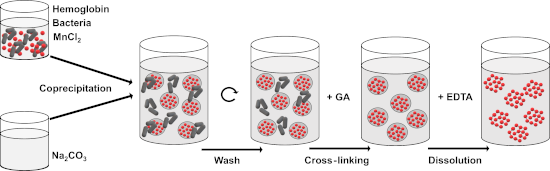
- /bjnano.13.8 Abstract Hemoglobin microparticles (HbMP) produced with a three-step procedure, including coprecipitation of hemoglobin with manganese carbonate, protein cross-linking, and dissolution of the carbonate template were shown to be suitable for application as artificial oxygen carriers. First
- the HbMP fabrication process to dissolve the manganese carbonate template to produce pure protein particles. EDTA is widely utilized in medical and biological applications. Because of its chelating properties, it is used as an anticoagulant in blood samples [27]. It has also long been used to
- inhibit DNA synthesis in bacteria, and similar effects are also seen on RNA and protein syntheses [44][45]. In addition, glutaraldehyde particularly acts on the outer layers of E. coli and cross-links lipoproteins and proteins there as well. This fixation of bacteria prevents the bacterial cells from


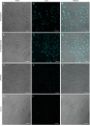
Theranostic potential of self-luminescent branched polyethyleneimine-coated superparamagnetic iron oxide nanoparticles
Beilstein J. Nanotechnol. 2022, 13, 82–95, doi:10.3762/bjnano.13.6
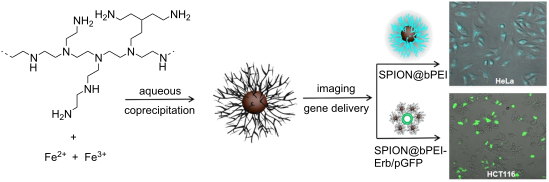
- was recorded using a UV–vis spectrophotometer (Shimadzu UV-3600 UV–vis–NIR spectrophotometer). A calibration curve was prepared with bovine serum albumin (BSA) at concentration values of 0, 1, 2, 4, 6, 8, and 10 µg/mL in PBS to enable a correlation between the measured absorbance and protein
- to the outer cell surface (without activation of caspase 3) and also leakage of cytosolic lactate dehydrogenase (LDH) from the cells [55][56]. It has also been known that unmodified polyplexes can switch on the intrinsic apoptotic pathway by activating the box protein and therefore releasing the




Biocompatibility and cytotoxicity in vitro of surface-functionalized drug-loaded spinel ferrite nanoparticles
Beilstein J. Nanotechnol. 2021, 12, 1339–1364, doi:10.3762/bjnano.12.99
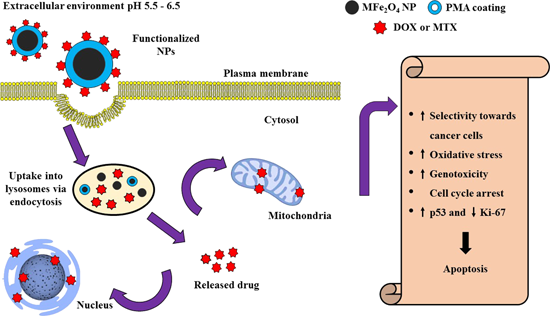
- potential values is the interaction between NPs and serum proteins present in DMEM [30]. In cell culture media, NPs agglomerate with serum proteins and are therefore recruited in cells via the protein corona effect, which increases the bioavailability of NPs by many folds [31]. PMA-coated samples have a
- p53 is a tumor suppressor protein also known as the “guardian of the genome”. It is involved in downstream regulation of genes involved in apoptosis, DNA repair, and cell cycle arrest. Overexpression of p53 is triggered by stress stimuli, such as hypoxia, ROS, ionizing radiations, and carcinogens
- efflux chemotherapeutic drugs, a phenomenon known as MDR. P-glycoprotein belongs to the ABCB1 family of ABC proteins and is involved in the efflux of doxorubicin, paclitaxel, vincristine, rhodamine, and etoposide [63]. Conversely, multidrug resistance-associated protein 1 (MRP1) is a member of the ABCC1





Self-assembly of amino acids toward functional biomaterials
Beilstein J. Nanotechnol. 2021, 12, 1140–1150, doi:10.3762/bjnano.12.85
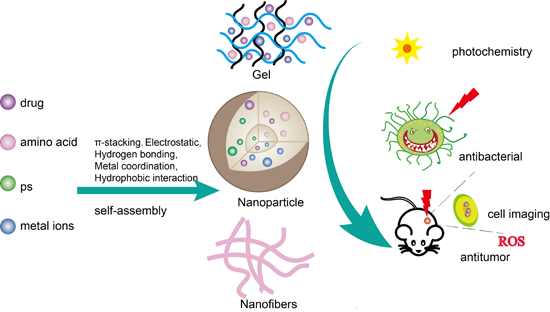
- function due to the collective behavior of aggregates [24]. However, protein and peptide assemblies exhibit disadvantages, such as difficulty in obtaining high quantities of materials, corresponding high costs, and in some cases polydispersity and purification limitations. When using proteins and peptides
- as functional materials it can be difficult to arrange assembled nanostructures at both microscopic and macroscopic scales [10]. Also, fine manipulation of noncovalent interactions and corresponding peptide and protein nanostructures remains a huge challenge [24]. Amino acids are the major components
- . However, using these simple building blocks to design attractive materials remains a challenge due to the simplicity of the amino acids [26]. Most articles about self-assembly focus on peptide and protein self-assembly [15][29]. Therefore, it is of great significance to systematically summarize the latest

Use of nanosystems to improve the anticancer effects of curcumin
Beilstein J. Nanotechnol. 2021, 12, 1047–1062, doi:10.3762/bjnano.12.78
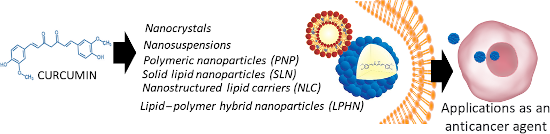
- -cell lung cancer through the regulation of metastasis-associated protein 1 (MTA1), which is linked to tumor aggressiveness and metastasis, while its modulating effect is related to the suppression of the Wnt/β-catenin pathway. Curcumin also blocks pancreatic cancer metastases through PI3K/Akt/NF-ĸB


An overview of microneedle applications, materials, and fabrication methods
Beilstein J. Nanotechnol. 2021, 12, 1034–1046, doi:10.3762/bjnano.12.77
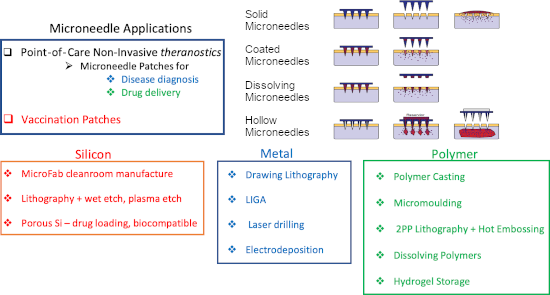
- from cancer research (25% enhanced absorption of the protein cancer drug AvastinTM compared with conventional hypodermic delivery) [14]. Incorporation of drug-loaded nanoparticles in dissolving microneedles also shows promise for dose concentration, for example using the antimicrobial carvacrol (CAR


The role of convolutional neural networks in scanning probe microscopy: a review
Beilstein J. Nanotechnol. 2021, 12, 878–901, doi:10.3762/bjnano.12.66
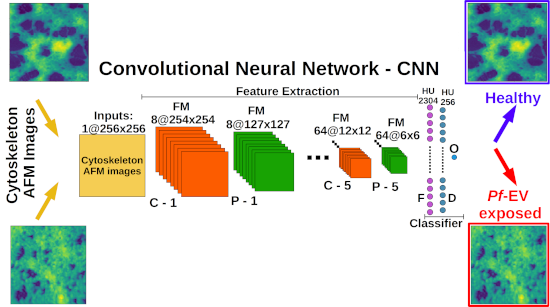
- (segmentation) is used as a good reference for image analysis approaches, that is, cell counting or tracking, and protein localization [12]. The segmentation can be performed as a “semantic segmentation”, which classifies image pixels into specific categories, while “instance segmentation” additionally segments







Comprehensive review on ultrasound-responsive theranostic nanomaterials: mechanisms, structures and medical applications
Beilstein J. Nanotechnol. 2021, 12, 808–862, doi:10.3762/bjnano.12.64
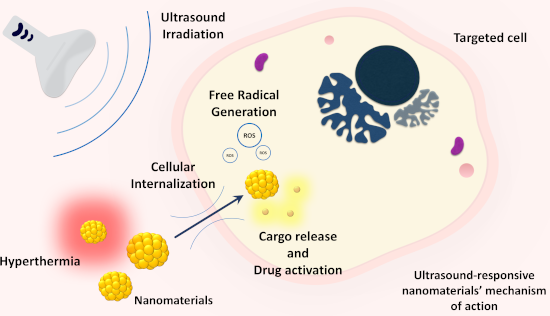
- ) gas-filled structures that are stabilized by a lipid, surfactant, protein, or polymer shell, whose stiffness or rigidity can affect the final outcome of the MBs upon exposure to US [71][72][73]. During the cavitation event, backscattered energy leads to the expanding and shrinking of the MBs, which


Silver nanoparticles induce the cardiomyogenic differentiation of bone marrow derived mesenchymal stem cells via telomere length extension
Beilstein J. Nanotechnol. 2021, 12, 786–797, doi:10.3762/bjnano.12.62
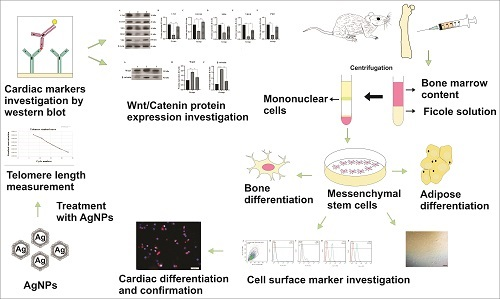
- absolute telomere length (TL) measurement, and gene and protein assessment of the cells, respectively. It was found that 2.5 µg/mL Ag-NPs caused elongation of the telomeres and altered VEGF, C-TnI, VWF, SMA, GATA-4, TERT, and cyclin D protein and gene expression in the cardiomyogenically differentiated BM
- -MSCs. Also, there was a significant increase in the protein and gene expression of Wnt3 and β-catenin as main components of pathways. We concluded that Ag-NPs could change the in vitro expression of cardiac markers of BM-MSCs via the Wnt3/β-catenin signaling pathway. Keywords: bone marrow-derived MSCs
- that Ag-NPs induced mESCs cell cycle arrest at the G1 and S phases through inhibition of the hyperphosphorylation of Retinoblastoma protein [12]. Kalishwaralal et al. reported that Ag-NPs could inhibit cell proliferation, cell viability, and cell migration through activating caspase-3 and suppressing


Recent progress in magnetic applications for micro- and nanorobots
Beilstein J. Nanotechnol. 2021, 12, 744–755, doi:10.3762/bjnano.12.58
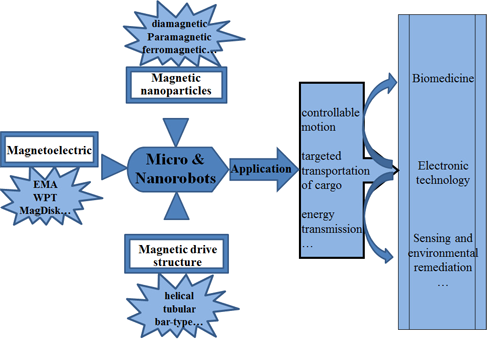
- -assisted gene transfection. Magnetic MNRs containing nucleic acids were delivered to target cells by magnetic fields. This method could change gene function or protein expression, which is of great significance for future research on gene transfer and gene therapy. Table 1 summarizes the relevant


Fate and transformation of silver nanoparticles in different biological conditions
Beilstein J. Nanotechnol. 2021, 12, 665–679, doi:10.3762/bjnano.12.53
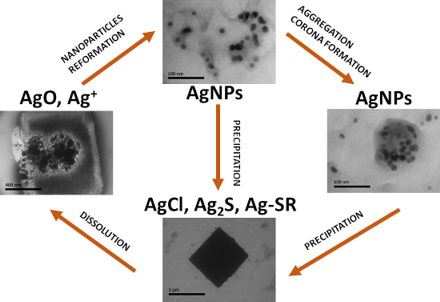
- significantly affect AgNPs and determine their colloidal stability and cellular interactions as evidenced earlier [27][31][32][33]. In the acidic medium of the stomach, AgNPs both agglomerate and dissolve [15][26][34]. The transformation will likely be incomplete due to protein corona formation and short
- behaviour can be attributed to the loss of electrostatic repulsion between particles due to the complexation with counter ions present in media with high ionic strength [8][47]. The presence of proteins prevented AgNP agglomeration in m(CCM+BSA), m(CYS+BSA), m(GSH+BSA) due to the formation of protein corona
- AgNPs enter the body where they gain a protein corona, aggregate, and dissolve to Ag+. Ionic silver may precipitate in the anion-rich environment of different tissues, where Ag binds to S, resulting in nanocrystals. Aggregation and corona–NP destabilisation can also lead to precipitation. Whole blood




The preparation temperature influences the physicochemical nature and activity of nanoceria
Beilstein J. Nanotechnol. 2021, 12, 525–540, doi:10.3762/bjnano.12.43
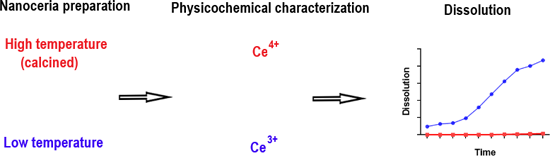
- from partial nanoceria dissolution led to less cellular protein carbonyl formation, attributed to an increased amount of surface Ce3+ species. Surface reactivity was greater for the solvothermally synthesized nanoceria, which had more Ce3+ species at the surface. The results show that temperature
- of nanoceria dissolution on its biological identity was assessed as the protein carbonyl level in response to partially dissolved nanoceria. The catalytic potential was assessed using a reactivity assay. Experimental Materials NM-211 and NM-212 were obtained from the European Commission Joint
- the presence of protease inhibitors (4 µg/mL leupeptin, 4 µg/mL pepstatin A, and 5 µg/mL aprotinin). Protein was measured using the bicinchoninic acid method. Protein carbonyls were determined as described in [45]. Briefly, samples were derivatized with 10 mM 2,4-dinitrophenylhydrazine solution in 12




A review on nanostructured silver as a basic ingredient in medicine: physicochemical parameters and characterization
Beilstein J. Nanotechnol. 2021, 12, 440–461, doi:10.3762/bjnano.12.36
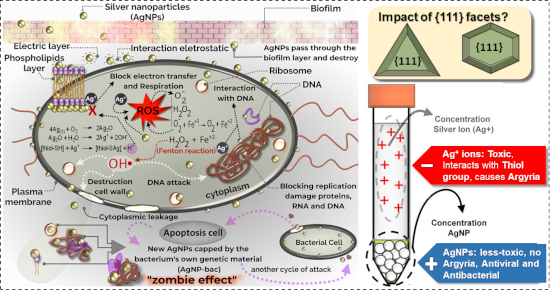
- human serum albumin (HSA), fibrinogen and immunoglobulin (IgG), metallothionein (MT), and ceruloplasmin (CP), forming a protein corona (PC) during silver homeostasis [121][122]. The PC is a highly dynamic system and its composition dynamically changes over time, undergoing various transformations until
- ceruloplasmin (CP), both involved in metal homeostasis. They concluded that protein diversity stabilizes and controls the dissolution and transport of AgNPs. Understanding the interaction between AgNPs and corona proteins is essential to establish new in vivo studies with AgNPs [122]. The human immune system
- aminotransferases and also in the hematological parameters were observed between the control and groups with burn wounds and between groups treated with AgNPs and groups with burn wounds. In addition, there were no significant differences in lipid peroxidation, carbonyl and reduced glutathione (GSH) protein levels


The impact of molecular tumor profiling on the design strategies for targeting myeloid leukemia and EGFR/CD44-positive solid tumors
Beilstein J. Nanotechnol. 2021, 12, 375–401, doi:10.3762/bjnano.12.31
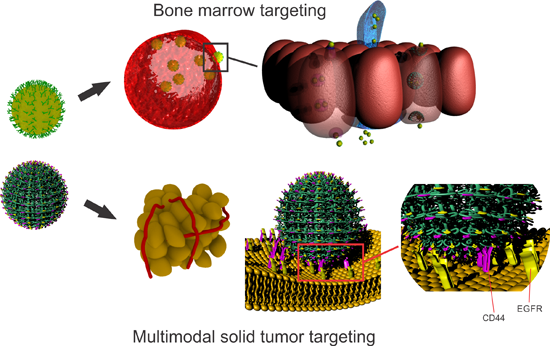
- introduced the possibility of employing similar strategies for passive targeting as for solid tumors, but these tumors also have much in common regarding the expression of specific molecules as viable targets for therapy and/or homing of NDDSs. For example, overexpression of the EGFR gene or protein kinase
- %, from 50% in the pre-imatinib era [7]. However, imatinib and related TKIs (the second-generation TKIs dasatinib, bosutinib, nilotinib, and the third-generation ponatinib) are not exclusively specific for the BCR-ABL fusion protein, and may also affect normal c-ABL and other kinases such as c-KIT. This
- oncogene or mutational events [16]. The clinically relevant mutations arise in the kinase domain of BCR-ABL1 and lead to impaired TKI activity, mainly by preventing the fusion protein from adopting the correct conformation required for specific binding. More than 40 different point mutations have been


Characterization, bio-uptake and toxicity of polymer-coated silver nanoparticles and their interaction with human peripheral blood mononuclear cells
Beilstein J. Nanotechnol. 2021, 12, 282–294, doi:10.3762/bjnano.12.23
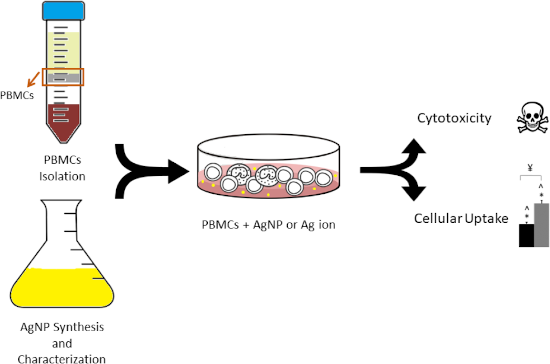
- that aggregation played a large role in NP transformations, except at high concentrations, due to protection by the PVP, and at later times because of possible protein interactions in the RPMI medium [38][39]. This result is in agreement with previous studies that found that aggregation/agglomeration
- ., passivation, or as separate particles) or are bound to proteins. These leads to the formation of secondary NPs, chloro complexes and protein interactions in the RPMI medium yielding a Ag compounds that have a molecular mass above the nominal value of the 3 kDa filter membrane, which affects filter permeation



Differences in surface chemistry of iron oxide nanoparticles result in different routes of internalization
Beilstein J. Nanotechnol. 2021, 12, 270–281, doi:10.3762/bjnano.12.22
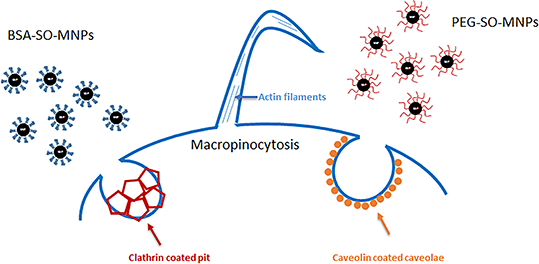
- functionalization to increase their accumulation in the tumor mass [3]. Numerous coating moieties have been employed to modify the surface properties of MNPs [16]. Among them, polyethylene glycol (PEG), a non-degradable polyether of the monomer ethylene glycol, and bovine serum albumin (BSA), a versatile protein
- through CavME or lipid rafts. Co-localization studies confirmed the entrapment of fluorescently labeled RITC-BSA-SO-MNPs in clathrin-coated vesicles in A549 cells stably expressing green fluorescent protein (GFP)-clathrin. The results indicate that tuning of the MNP surface chemistry can potentially
- cellular uptake of nanoparticles. Therefore, initial experiments were focused on the expression of clathrin heavy chain (CLHC), dynamin (Dyn), caveolin-1 (Cav1), and its phosphorylated form (pCav1) in A549 cells. The expression of CLHC and Cav1 was determined at the protein (Supporting Information File 1



The nanomorphology of cell surfaces of adhered osteoblasts
Beilstein J. Nanotechnol. 2021, 12, 242–256, doi:10.3762/bjnano.12.20
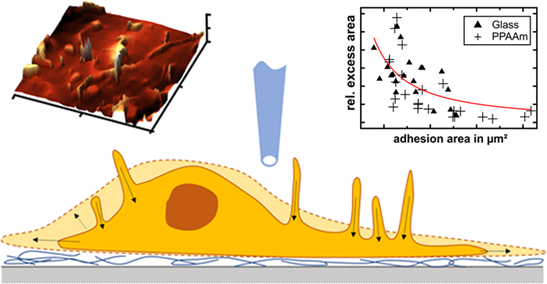
- current sensing and motion termination results in a larger error signal on hard materials than on soft materials. Thus, the comparison between ion current error images of living and fixed cells can provide insight into the protein content in the ruffle volume, because fixation leads to crosslinking of
- stiffness of the ruffle structure, even when a harder (fixed) protein content is present. Note that for living cells such contrast is absent as can be seen in Figure 3c and Figure 3d. Figure 4a shows an example of a peripheral ruffle. Peripheral ruffles sometimes are attributed to loosened lamellipodia
- membrane would correspond to 20 nm. Values in this regime are in line with protein-aided cellular membrane curvatures. For example, intracellular membrane tubes exhibit diameters of a few tens of nanometers, a maximum curvature is assumed to be generated via the Bin/ampiphysin/Rvs (BAR) protein and


A review on the biological effects of nanomaterials on silkworm (Bombyx mori)
Beilstein J. Nanotechnol. 2021, 12, 190–202, doi:10.3762/bjnano.12.15
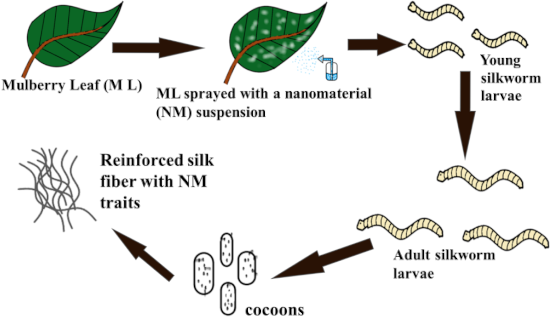
- studying cellular toxicity, response to new drugs [78] and environmental pollution. Silkworm (Bombyx mori) is an invertebrate insect widely used as a model organism in life sciences [79] since it has diverse mutant strains, a complete genome sequenced, and a protein database available [80][81]. There are
- suppressed the activity of the enzyme SOD and of the protein HSP 1. This, in turn, activated the oxidative stress pathway and the production of ROS, which have toxic effects on the silkworm digestive system. Effects of nanomaterial exposure on silkworm tissues and organs The application of nanotechnology in
- the silk fibers, enhancing their mechanical properties and promoting silk protein crystallization. This is in line with the research report by Wu et al. [168], who stated that silkworm silk containing Cu exhibited a good tensile strength of 360 MPa and a strain of 38%, which is 89% and 36% higher than


Imaging of SARS-CoV-2 infected Vero E6 cells by helium ion microscopy
Beilstein J. Nanotechnol. 2021, 12, 172–179, doi:10.3762/bjnano.12.13
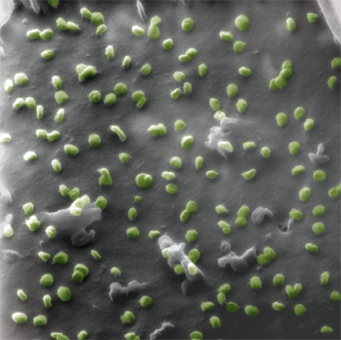
- of micrometers, which demonstrates the high depth of field of HIM compared to SEM [37]. In image 3a3, at the surface of the cell, a cluster of virus particles seems to be bound to the cell membrane (arrow). We suggest that this resembles the particle clustering by host defense protein BST-2 as it was


A review on the green and sustainable synthesis of silver nanoparticles and one-dimensional silver nanostructures
Beilstein J. Nanotechnol. 2021, 12, 102–136, doi:10.3762/bjnano.12.9
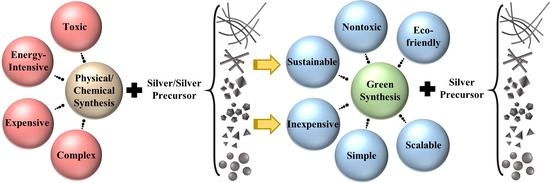
- respect to reaction conditions. FTIR results show that similar to bacteria, carbonyl, amide, and hydroxy groups corresponding to the cellular protein are responsible for the synthesis and stabilization of AgNPs [178][179]. The less non-pathogenic behavior of fungi and their faster synthesis rate suggest


Fusion of purple membranes triggered by immobilization on carbon nanomembranes
Beilstein J. Nanotechnol. 2021, 12, 93–101, doi:10.3762/bjnano.12.8
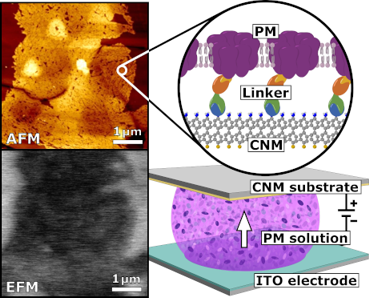
- protein bacteriorhodopsin (BR) and lipid molecules [3], can be separated from the cytoplasmic membrane of Halobacterium salinarum and have been intensively studied [4][5][6]. Due to its robustness, PM quickly became one of the best-characterized natural membranes [7]. It is a two-dimensional crystal with
- a thickness of about 5 nm [8][9][10]. PM patches are highly resistant towards photochemical and thermal degradation and withstand highly concentrated salt solutions [11][12]. BR consists of seven transmembrane α-helices containing a retinal molecule that is bound to the protein [13][14]. Induced by
- study protein behavior and also do not provide the means to construct an oriented PM monolayer for potential technical applications [33][34]. In this work, we report the successful assembly of a unidirectionally oriented PM quasi-monolayer on an ultrathin carbon nanomembrane (CNM) substrate. CNMs are


Effect of different silica coatings on the toxicity of upconversion nanoparticles on RAW 264.7 macrophage cells
Beilstein J. Nanotechnol. 2021, 12, 35–48, doi:10.3762/bjnano.12.3
- -average values of the samples after redispersion in DMEM were lower than in water, except for the samples UC@thin_NH2, UC@thick_RBITC_NH2, and SiO2@RBITC_NH2. The lower Z-average values of these samples may indicate an increased stabilization by a protein corona [52][53][54][55][56]. However, the high
- aggregation of silica nanoparticles that occurred after redispersion in buffered solution and in physiological medium [54]. They reported that various proteins in a medium containing FBS were adsorbed onto the surface of bare SiO2 and amine-functionalized SiO2 nanoparticles, forming a protein corona with a
- new surface charge, which depended on the type of proteins that built the corona. The adsorbed protein corona, consisting of the proteins present in FBS, could increase or reduce the stability of the particles and, consequently, their hydrodynamic diameter [53][54][55][56][57]. The non-functionalized


Bio-imaging with the helium-ion microscope: A review
Beilstein J. Nanotechnol. 2021, 12, 1–23, doi:10.3762/bjnano.12.1
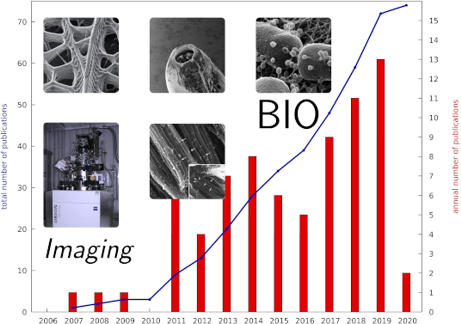
- not ready, for studying the finest details of the ultrastructure of cells or to resolve protein structures, which is state of the art in modern transmission electron microscopy. Another obstacle which had to be overcome was the absence of in situ chemical nanoscale analytical tools for the HIM, which


PEG/PEI-functionalized single-walled carbon nanotubes as delivery carriers for doxorubicin: synthesis, characterization, and in vitro evaluation
Beilstein J. Nanotechnol. 2020, 11, 1728–1741, doi:10.3762/bjnano.11.155
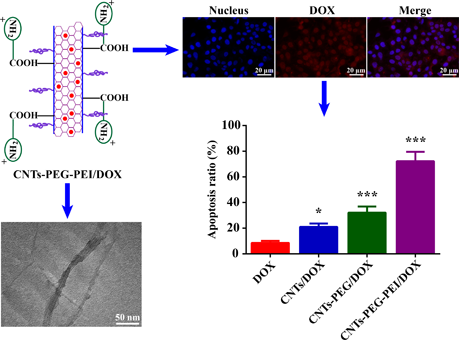
- 8B). This is attributed to the fact that PEGylation and amino functionalization could be significant in facilitating the dispersion of nanotubes and decreasing their aggregation, which protects the CNT carriers from interaction with plasma protein components. This enhanced stability will favor




Cardiomyocyte uptake mechanism of a hydroxyapatite nanoparticle mediated gene delivery system
Beilstein J. Nanotechnol. 2020, 11, 1685–1692, doi:10.3762/bjnano.11.150
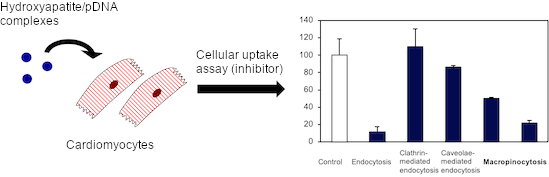
- vector in HL-1 cells, we used plasmid-enhanced green fluorescent protein (pEGFP) as a model plasmid and evaluated the transfection efficiency via fluorescence microscopy. First, we used HAp (1 µg/mL) mixed with 0.075, 0.30, and 0.75 µg pEGFP, based on our previous results with endothelial cells