Search results
Search for "quantum dots" in Full Text gives 232 result(s) in Beilstein Journal of Nanotechnology. Showing first 200.
Luminescent supramolecular hydrogels from a tripeptide and nitrogen-doped carbon nanodots
Beilstein J. Nanotechnol. 2017, 8, 1553–1562, doi:10.3762/bjnano.8.157
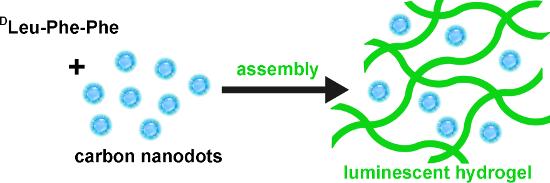
- . Their properties allow them to have an important impact in biological and environmental applications as alternatives to traditional, toxic, semiconductor-based quantum dots (QDs). They can be employed as biosensors in bioimaging, drug delivery, and in the photoreduction of metals, since they have


Calcium fluoride based multifunctional nanoparticles for multimodal imaging
Beilstein J. Nanotechnol. 2017, 8, 1484–1493, doi:10.3762/bjnano.8.148
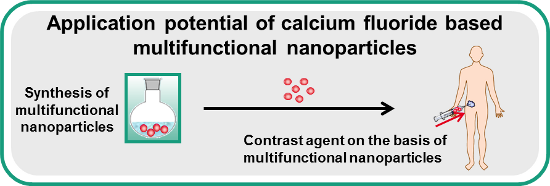
- imaging and diagnosis [2]. One possibility is the synthesis of core/shell-structured NPs. Core and shell materials can be matched individually to specific detection methods. For example, the coating of a magnetic core with silicates or polymer shells doped with organic fluorophores or quantum dots (QDs


Cationic PEGylated polycaprolactone nanoparticles carrying post-operation docetaxel for glioma treatment
Beilstein J. Nanotechnol. 2017, 8, 1446–1456, doi:10.3762/bjnano.8.144
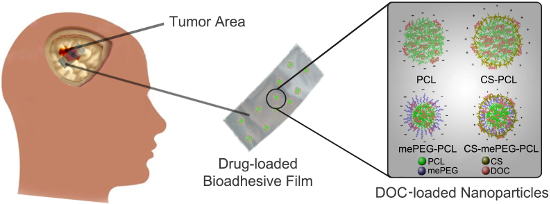
- -time and also enhanced the concentration of BCNU in the brain tumor area [27]. In addition to drug delivery, core–shell nanoparticles such as magnetic nanoparticles [28], quantum dots [29], nanodiamonds [30], nanocrystals [31] and iron oxide nanoparticles [32] are studied as imaging and detection




Bright fluorescent silica-nanoparticle probes for high-resolution STED and confocal microscopy
Beilstein J. Nanotechnol. 2017, 8, 1283–1296, doi:10.3762/bjnano.8.130
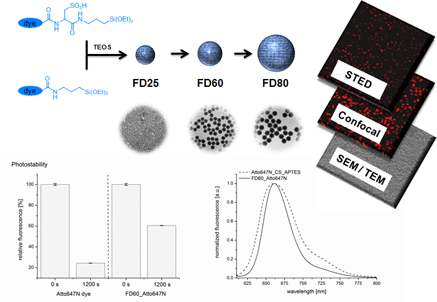
- nanoparticles [24][25], silica nanoparticles [26] or quantum dots [27][28]. These fluorescent nanoparticles fulfil some of the specific requirements and overcome disadvantages of common organic fluorescent dyes [29]. Especially silica nanoparticles have proven useful, since silicon chemistry provides a
- low tendency to agglomerate, which makes them suitable for biological nanoparticle uptake experiments. Not only allows the presented synthesis method for the embedding of different kinds of fluorophores (proteins, quantum dots or metallic nanoclusters), but the method also provide the option to gain


Evaluation of quantum dot conjugated antibodies for immunofluorescent labelling of cellular targets
Beilstein J. Nanotechnol. 2017, 8, 1238–1249, doi:10.3762/bjnano.8.125
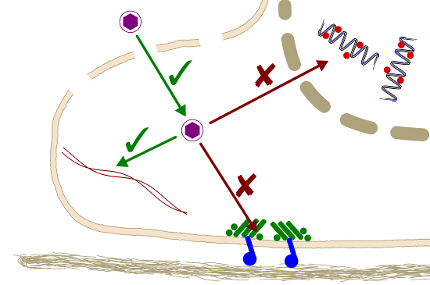
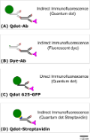
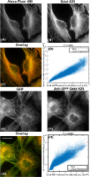
- , United Kingdom 10.3762/bjnano.8.125 Abstract Semiconductor quantum dots (Qdots) have been utilised as probes in fluorescence microscopy and provide an alternative to fluorescent dyes and fluorescent proteins due to their brightness, photostability, and the possibility to excite different Qdots with a
- targets in the cytosol and could not reach the nucleus, even after extensive cell permeabilisation. Keywords: imaging; immunofluorescence; microscopy; nanoparticles; quantum dots; Introduction Quantum dots (Qdots) are nanometre-sized semiconductor nanocrystals that typically consist of a metallic core




Nano-engineered skin mesenchymal stem cells: potential vehicles for tumour-targeted quantum-dot delivery
Beilstein J. Nanotechnol. 2017, 8, 1218–1230, doi:10.3762/bjnano.8.123
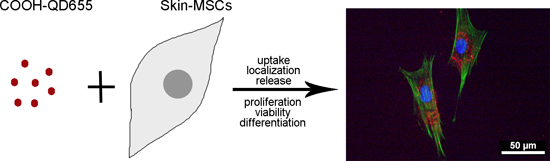
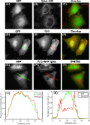
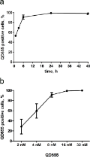
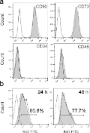
- quantum dots QD655 were studied in human skin MSCs. The effect of QD on MSCs was examined using a cell viability assay, Ki67 expression analysis, and tri-lineage differentiation assay. The optimal conditions for QD uptake in MSCs were determined using flow cytometry. The QD uptake route in MSCs was
- suggest that QD-labelled MSCs could be used for targeted drug delivery studies. Keywords: endocytosis; mesenchymal stem cells; quantum dots; stem cell differentiation; Introduction Despite remarkable advances in targeted therapies of various human malignancies, cancer is one of the leading causes of
- , quantum dots (QDs) have demonstrated extensive application capabilities. High photostability and brightness, broad excitation and narrow fluorescence-emission spectra are some of the main properties required for the generation of new fluorescent nano-agents. The unique optical and electronic properties of





AgCl-doped CdSe quantum dots with near-IR photoluminescence
Beilstein J. Nanotechnol. 2017, 8, 1156–1166, doi:10.3762/bjnano.8.117
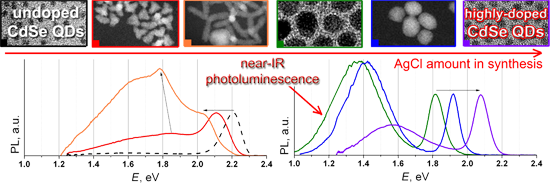
- Abstract We report the synthesis of colloidal CdSe quantum dots doped with a novel Ag precursor: AgCl. The addition of AgCl causes dramatic changes in the morphology of synthesized nanocrystals from spherical nanoparticles to tetrapods and finally to large ellipsoidal nanoparticles. Ellipsoidal
- nanoparticles possess an intensive near-IR photoluminescence ranging up to 0.9 eV (ca. 1400 nm). In this article, we explain the reasons for the formation of the ellipsoidal nanoparticles as well as the peculiarities of the process. The structure, Ag content, and optical properties of quantum dots are also
- investigated. The optimal conditions for maximizing both the reaction yield and IR photoluminescence quantum yield are found. Keywords: Ag doping; CdSe quantum dots; doped semiconductor nanocrystals; IR photoluminescence; tetrapods; Introduction Colloidal quantum dots (QDs) have attracted considerable


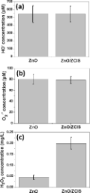
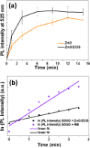
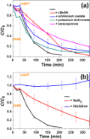
ZnO nanoparticles sensitized by CuInZnxS2+x quantum dots as highly efficient solar light driven photocatalysts
Beilstein J. Nanotechnol. 2017, 8, 1080–1093, doi:10.3762/bjnano.8.110
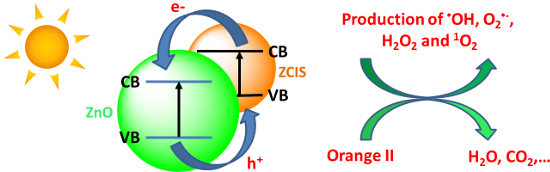
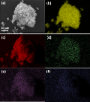
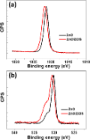
- (IJL), UMR CNRS 7198, BP 70239, 54506 Vandoeuvre-lès-Nancy Cedex, France Institut de Science des Matériaux de Mulhouse (IS2M), CNRS UMR 7361, 15 rue Jean Starcky, 68093 Mulhouse, France 10.3762/bjnano.8.110 Abstract Alloyed CuInZnxS2+x (ZCIS) quantum dots (QDs) were successfully associated to ZnO
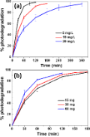
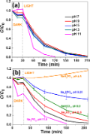
- . The activity of the ZnO/ZCIS composite is retained at over 90% of its original value after ten successive photocatalytic runs, indicating its high stability and its potential for practical photocatalytic applications. Keywords: heterojunction; photocatalysis; quantum dots; reactive oxygen species
- ; singlet oxygen; ZCIS quantum dots; ZnO; Introduction Over the last twenty years, the field of photocatalysis has attracted wide attention due to the environmental and energy crisis. Photocatalysis is considered to be a green technology, allowing the degradation of numerous contaminants both in water and




Needs and challenges for assessing the environmental impacts of engineered nanomaterials (ENMs)
Beilstein J. Nanotechnol. 2017, 8, 989–1014, doi:10.3762/bjnano.8.101
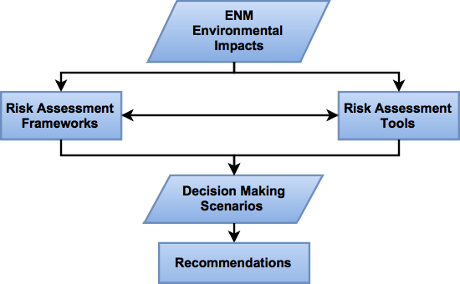
- nanoparticles in human volunteers and quantum dots ‘QDs’ in rat skin) and cause irritation (e.g., nano ZnO in zebrafish models) [10]. Oral exposure to ENMs can result in subsequent absorption in the GI tract and organ damage (e.g., nano Cu in mice via oral gavage damaged liver, spleen and kidneys, and nano ZnO
- product/system while RA provides an assessment a particular substance or component of a complex material. Hischier et al. [40] reviewed LCA case studies of several ENMs (e.g., CNTs, single walled CNTs, fullerenes, quantum dots and TiO2) and nano-enabled products (e.g., dye containing nano-TiO2 and carbon

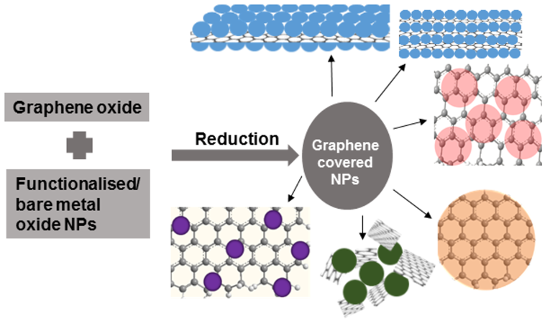
Synthesis of graphene–transition metal oxide hybrid nanoparticles and their application in various fields
Beilstein J. Nanotechnol. 2017, 8, 688–714, doi:10.3762/bjnano.8.74






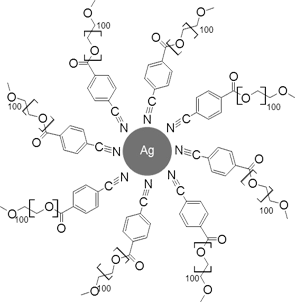
α-((4-Cyanobenzoyl)oxy)-ω-methyl poly(ethylene glycol): a new stabilizer for silver nanoparticles
Beilstein J. Nanotechnol. 2017, 8, 627–635, doi:10.3762/bjnano.8.67
- , Zhang et al. [25] demonstrated the passivating effect of a PEG/silica hybrid coating on CdSe quantum dots. Thus, there is a growing interest in PEG-based stabilizers for a large variety of applications including catalysis, diagnostics, biology or biomedicine. There are numerous examples in which the


Modeling of the growth of GaAs–AlGaAs core–shell nanowires
Beilstein J. Nanotechnol. 2017, 8, 506–513, doi:10.3762/bjnano.8.54
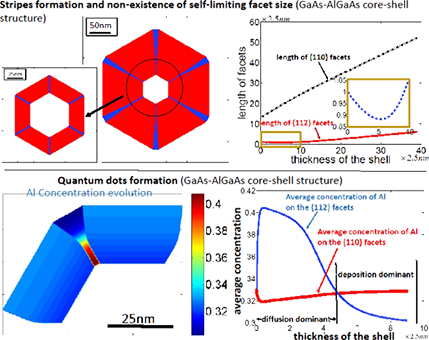
- along certain crystallographic directions and quantum dots near the apexes of the shell are observed in AlGaAs shells. Controlling the formation of these core–shell heterostructures remains challenging. A two-dimensional model valid on the wire cross section, that accounts for capillarity in the faceted
- and Al-poor quantum dots) in the nanowire shell. There are two issues that need to be understood. One is the mechanism responsible for the morphological evolution of the shells. Analysis and simulation results suggest that deposition introduces facets not present on the equilibrium Wulff shapes. A
- the attachment rate of Al atoms is smaller there. Keywords: core–shell nanowires; heterostructures; mechanisms; quantum dots; Findings Core–shell nanowires with heterostructures hold great promise in photonic and electronic applications because of their high sensitivity to electronic and magnetic


Study of the surface properties of ZnO nanocolumns used for thin-film solar cells
Beilstein J. Nanotechnol. 2017, 8, 446–451, doi:10.3762/bjnano.8.48
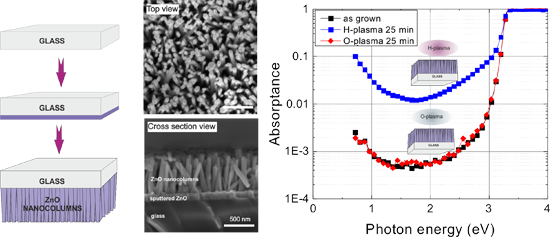
- preferred treatment for the preparation of thin-film solar cells based on ZnO NCs. The reported ZnO nanocolumns layer with a proper spacing could be used as a 3-D scaffold not only for amorphous silicon solar cells, but also for other absorbers with a short lifetime such as CuO, CuO2, FeS2, quantum dots or



Performance of colloidal CdS sensitized solar cells with ZnO nanorods/nanoparticles
Beilstein J. Nanotechnol. 2017, 8, 210–221, doi:10.3762/bjnano.8.23
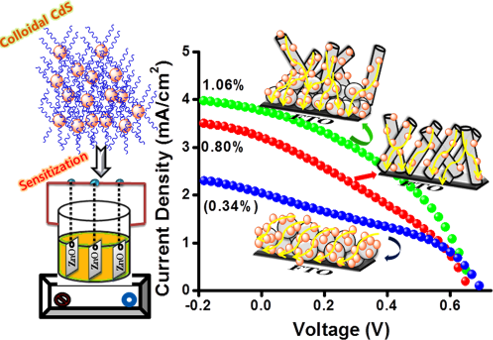
- − electrolyte with a costly Pt-based electrode. Reports on the synthesis of nanoscale CdS by using organic capping agents, polymers, surfactants, or enzymes reveal that they are not very user friendly techniques [17][18][19][20][21][22][23]. Therefore, rather taking a conventional path to synthesizing quantum
- dots (QDs) we followed a bioinspired strategy to synthesize such systems. In this work, bovine serum albumin (BSA) is selected as a biotemplating agent. BSA is a ubiquitous protein mainly present in blood and is a commonly used reagent in biological studies. Here, we have synthesized functionalized


Laser irradiation in water for the novel, scalable synthesis of black TiOx photocatalyst for environmental remediation
Beilstein J. Nanotechnol. 2017, 8, 196–202, doi:10.3762/bjnano.8.21
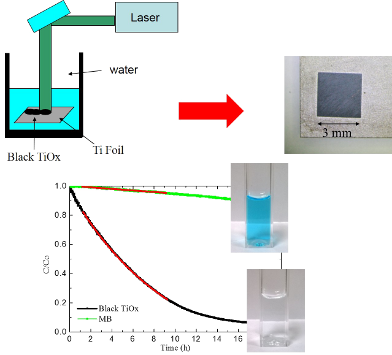
- readily employed for water decontamination. In order to enhance the photocatalytic performance of TiO2 under visible (solar) irradiation, many efforts have been made in the last years, ranging from doping with N, C and transition metals [7][8][9], to coupling with narrow band gap semiconductor quantum
- dots [10], to the use of metal grafting [11][12][13][14] or plasmonic metal nanostructures [15][16][17][18][19] and the preparation of oxygen-deficient and/or hydrogen-rich TiOx [20][21][22]. We are interested, in particular, in this last approach. Hydrogenated black TiO2 has attracted attention due to


Obtaining and doping of InAs-QD/GaAs(001) nanostructures by ion beam sputtering
Beilstein J. Nanotechnol. 2017, 8, 12–20, doi:10.3762/bjnano.8.2
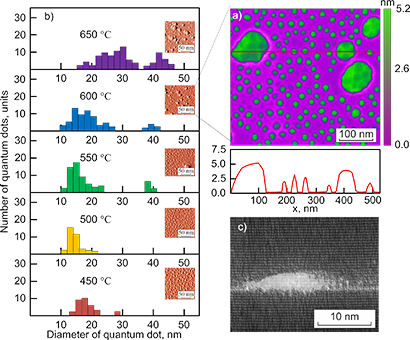
- and Solar Energy, Southern Scientific Center of Russian Academy of Sciences, 344006, 41, Chekhov Avenue, Rostov-on-Don, Russia 10.3762/bjnano.8.2 Abstract The features of InAs quantum dots obtained on GaAs(001) single-crystal substrates by ion-beam sputtering were investigated. It has been shown that
- in the range of ion energies of 150 to 200 eV at a temperature of 500 °C and a beam current of 120 µA InAs quantum dots with average dimensions below 15 nm and a surface density of 1011 cm−2 are formed. The technique of controlled doping of InAs/GaAs nanostructures using a SnTe solid-state source was
- barrier layer increases the intensity of photoluminescence peaks of the ground state and the first excited state of the InAs quantum dots. Keywords: 3D growth; doping; ion-beam sputtering; photoluminescence; quantum dots; Introduction Main interests of inorganic nanotechnology science are the study of


Zigzag phosphorene nanoribbons: one-dimensional resonant channels in two-dimensional atomic crystals
Beilstein J. Nanotechnol. 2016, 7, 1983–1990, doi:10.3762/bjnano.7.189

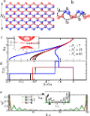
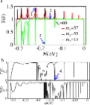
- materials; constrictions; edge states; phosphorene nanoribbons; quantum dots; Introduction Low-dimensional systems have attracted attention over the past fifty years since the development of semiconductor epitaxial growth and deposition of metallic thin films [1]. The early scenario, back in the 1960s, as
- confinement in quantum dots leads to rich physical phenomena [37]. The correlation among the energy scales involved such as energy-level spacing of the constriction, charging energy and couplings allows us to estimate when charging effects would be important [38]. In the strong-coupling regime the wave



Facile fabrication of luminescent organic dots by thermolysis of citric acid in urea melt, and their use for cell staining and polyelectrolyte microcapsule labelling
Beilstein J. Nanotechnol. 2016, 7, 1905–1917, doi:10.3762/bjnano.7.182
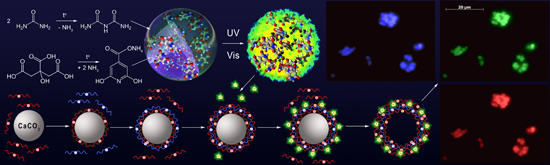
- crystals (quantum dots, Q-dots) are a good alternative to common fluorescent dyes in a variety of biomedical applications, mainly due to their high photostability and relatively large Stokes shift [1][2][3], but Q-dots typically contain heavy metals (lead, cadmium) and chalcogens (selenium, tellurium
- properties of low toxicity, being environmentally friendly, offering simple synthetic routes and low cost, as well as having comparable optical properties to traditional quantum dots and organic dyes [4][5][6][7][8][9][10][11][12][13][14][15][16][17][18]. Photoluminescent C-dots are superior in terms of
- nitric acid oxidation of carbon soot reduced the viability of HepG2 cells by 20%, at concentrations higher than 100 μg/mL [49]. The graphene quantum dots prepared with graphene oxide as starting material were markedly toxic for MCF-7 and MGC-803 (human gastric cancer) cells at concentrations higher than




Precise in situ etch depth control of multilayered III−V semiconductor samples with reflectance anisotropy spectroscopy (RAS) equipment
Beilstein J. Nanotechnol. 2016, 7, 1783–1793, doi:10.3762/bjnano.7.171
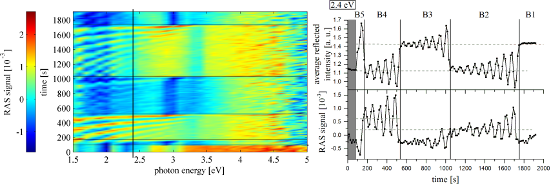
- sequence of a semiconductor laser, mainly consisting of several layers of Ga(As)Sb quantum dots (QD) (as active material) embedded in GaAs, surrounded by n- and p-doped layers of Al0.5Ga0.5As (for the diode and waveguide structure), has been grown on an n-doped GaAs substrate (called sample type B, for
- ), the active area with eight layers of Ga(As)Sb quantum dots (QD) between 50 nm thick GaAs barriers (B3), the lower n-Al0.5Ga0.5As cladding (B2) and, finally, the n-GaAs buffer and substrate (B1). The different properties of the layers during etching become particularly obvious, when taking a look at


Multiwalled carbon nanotube hybrids as MRI contrast agents
Beilstein J. Nanotechnol. 2016, 7, 1086–1103, doi:10.3762/bjnano.7.102
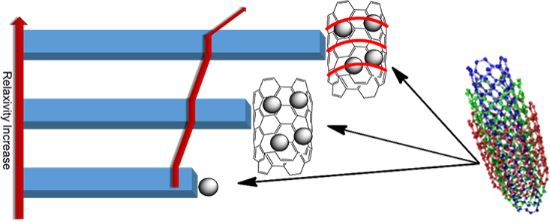
- PAH-covered oMWCNT, followed by the introduction of CdTe quantum dots leading to CdTe-SPIO-oMWCNT#Chen nanohybrids. Finally, we showed that oxidized nanotubes are attractive for hard Lewis acids, e.g., Fe3+ ions, and form stable nanomolecular complexes, namely Fe-oMWCNT#Kuźnik [41]. Further covalent
- therefore increasing the resulting relaxivity [36]. On the other hand, superparamagnetic nanoparticles, both in the most common SPIO and in others (e.g., CoFe2O4, CdTe quantum dots), anchored on the nanotube net require an extension of the SBM theory [13][14]. Moreover, the hypothesis of CNT as a conducting



Photocurrent generation in carbon nanotube/cubic-phase HfO2 nanoparticle hybrid nanocomposites
Beilstein J. Nanotechnol. 2016, 7, 1075–1085, doi:10.3762/bjnano.7.101
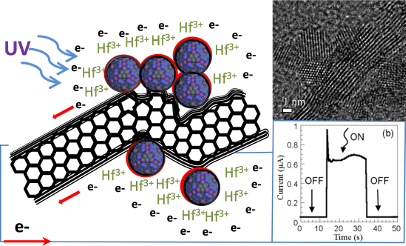
- conduction via the CNT. To date, numerous studies have been reported on the decoration of CNTs with metal oxides including TiO2 [7][8] and ZnO [9] for solar cell applications and SnO2 for gas sensors. Reports on the fabrication of an all carbon nanocomposite combining CNTs, graphene and carbon quantum dots
- range along with the plasmonic effect of the CNTs, which also serves to conduct charges from the surface states of the nanoparticles to an external load. To put the present work into perspective, we note that fabrication of all-carbon nanocomposites by replacing HfO2 by carbon quantum dots (CQDs) might


The influence of phthalocyanine aggregation in complexes with CdSe/ZnS quantum dots on the photophysical properties of the complexes
Beilstein J. Nanotechnol. 2016, 7, 1018–1027, doi:10.3762/bjnano.7.94
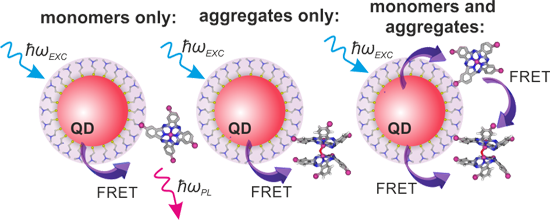
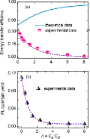
- Technology, Dublin 8, Ireland 10.3762/bjnano.7.94 Abstract The formation of nonluminescent aggregates of aluminium sulfonated phthalocyanine in complexes with CdSe/ZnS quantum dots causes a decrease of the intracomplex energy transfer efficiency with increasing phthalocyanine concentration. This was
- ; Förster resonance energy transfer; photosensitizer; semiconductor nanocrystals; tetrapyrroles; Introduction Semiconductor quantum dots (QDs) and their complexes with organic molecules have been a subject of extensive research during the last couple of decades. In particular, complexes of QDs and
- QDs results in a significant increase in efficiency of FRET between QDs and monomeric molecules. Results and Discussion QD–phthalocyanine complex formation Water soluble CdSe/ZnS quantum dots capped with 2-(dimethylamino)ethanethiol (DMAET) with a core diameter of 5 nm [35] were used in the study. UV



Highly compact refractive index sensor based on stripe waveguides for lab-on-a-chip sensing applications
Beilstein J. Nanotechnol. 2016, 7, 751–757, doi:10.3762/bjnano.7.66
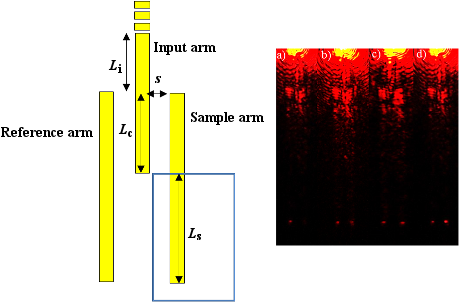
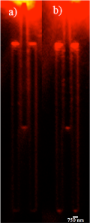
- quantum dots (QDs) with emission wavelength at 655 nm (from Invitrogen Cat. No. Q21321MP). An optimum QD spacer layer thickness of 18 nm SiO2 was selected [23]. The sensor designs with separations between two outer arms of 300 nm (Figure 4a) and 200 nm (Figure 4b) were observed under QD luminescence. We



Tight junction between endothelial cells: the interaction between nanoparticles and blood vessels
Beilstein J. Nanotechnol. 2016, 7, 675–684, doi:10.3762/bjnano.7.60
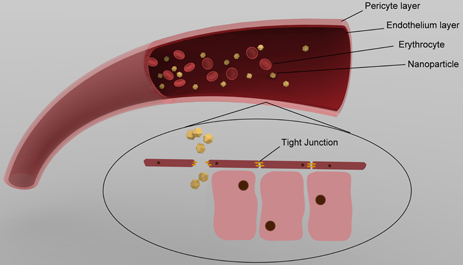
- exposure to NPs (polystyrene nanoparticles, quantum dots, single-wall carbon nanotubes) results in the disruption of the alveolar epithelial barrier, the extent of which also depends on the composition, shape and surface charge of the NPs [31]. Carbon nanotubes also show their capacity to penetrate the
- 8-oxoguanine (8-oxoG) as marker showed the attenuation of both active forms of ERK and AKT protein expression caused by Ag NPs [77]. Another research evaluating the toxicity of quantum dots, found that the production of tumor necrosis factor (TNF)-α and CXC-chemokine ligand (CXCL) 8 in human primary

Charge and heat transport in soft nanosystems in the presence of time-dependent perturbations
Beilstein J. Nanotechnol. 2016, 7, 439–464, doi:10.3762/bjnano.7.39
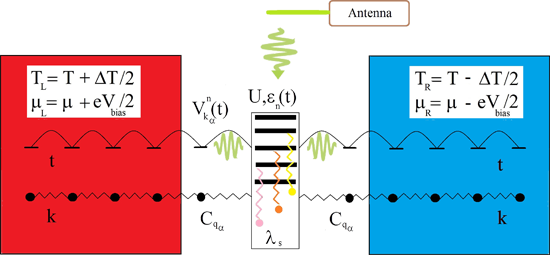
- forces are close to resonance with the vibration of the dot. We have shown that the amplification is robust against temperature, leading to the prediction that, different from expectation, slowly oscillating quantum dots could have pumping effects measurable up to high temperatures. The review is