


Search results
Search for "relaxation" in Full Text gives 388 result(s) in Beilstein Journal of Nanotechnology. Showing first 200.
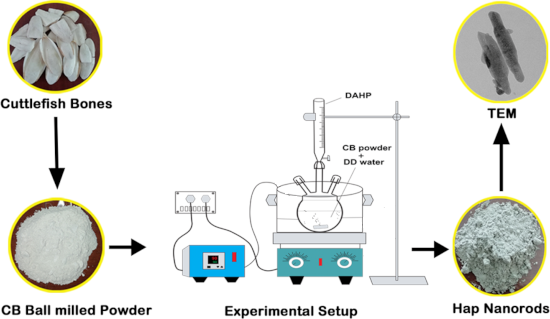
Facile biogenic fabrication of hydroxyapatite nanorods using cuttlefish bone and their bactericidal and biocompatibility study
Beilstein J. Nanotechnol. 2020, 11, 285–295, doi:10.3762/bjnano.11.21
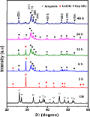
- ]. Thus, it is evident that the reaction at basic pH conditions and a temperature of 80 °C supports the relaxation of aragonite calcium carbonate bonds to form calcite structure in 3 h [24]. It can be noted from the diffraction peaks that the formation of Hap crystal growth was initiated at 6 h of


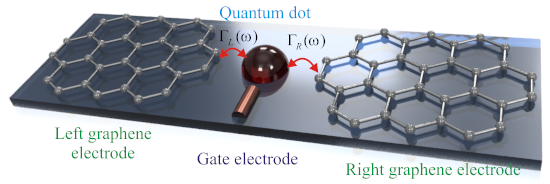
Nonequilibrium Kondo effect in a graphene-coupled quantum dot in the presence of a magnetic field
Beilstein J. Nanotechnol. 2020, 11, 225–239, doi:10.3762/bjnano.11.17
- potential. This electron transfer determines a finite relaxation time τσ, that can be calculated using second-order perturbation theory [12][13]. It can be intuitively introduced by substituting δ in the self-energies Σiσ(ω) with [31][34]. By considering a small value for e.g., = δ ≈ 10−7 [31], the


The effect of heat treatment on the morphology and mobility of Au nanoparticles
Beilstein J. Nanotechnol. 2020, 11, 61–67, doi:10.3762/bjnano.11.6
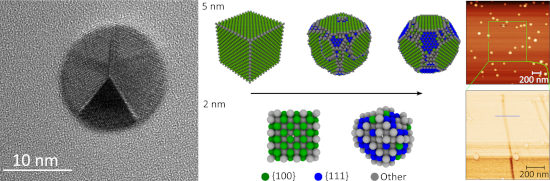
- twinned NPs and the tendency of such particles to seek mechanisms of stress relaxation [25]. The rearrangement of surface atoms into more rounded outer geometries can be a way of energy minimization while preserving the five-fold twinned inner structure of the NP, as shown in Figure 3 for a Au NP heated


Fully amino acid-based hydrogel as potential scaffold for cell culturing and drug delivery
Beilstein J. Nanotechnol. 2019, 10, 2579–2593, doi:10.3762/bjnano.10.249
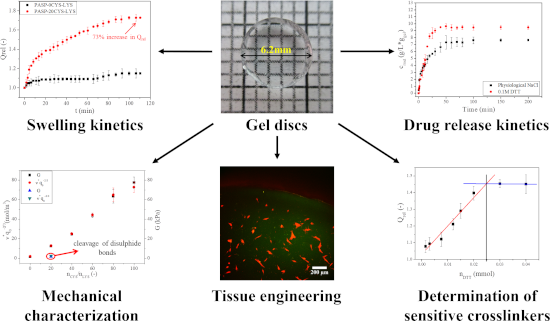
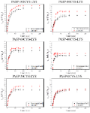
- induced by the cleavage of the disulfide bonds. The change of the ionic strength is a faster process, therefore, the relaxation time determined for the 0CYS-LYS hydrogel is smaller than that of the 20CYS-LYS hydrogel. Dependence of the swelling degree of the PASP-20CYS-LYS gels on the amount of DTT in the


Formation of metal/semiconductor Cu–Si composite nanostructures
Beilstein J. Nanotechnol. 2019, 10, 2497–2504, doi:10.3762/bjnano.10.240
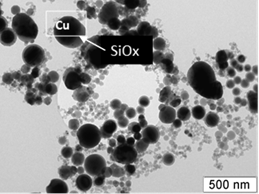
- relaxation of the initial state at a temperature T = 1800 K. The cluster was cooled to a temperature of 300 K within the framework of the canonical ensemble using the Nose thermostat. The time step was τ = 1 fs. The cooling rate is 1 K/ps (1012 K/s). For the calculation, we used the speed variant of the


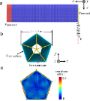
Abrupt elastic-to-plastic transition in pentagonal nanowires under bending
Beilstein J. Nanotechnol. 2019, 10, 2468–2476, doi:10.3762/bjnano.10.237
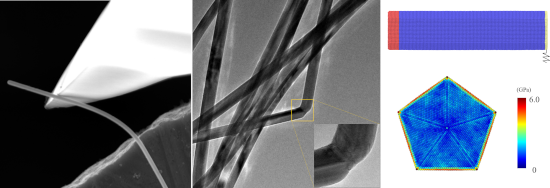
- evolution of atoms are within the framework of canonical (NVT) ensembles, and the time step is chosen as 2.0 fs. The Nosé–Hoover thermostat is used to adjust the temperature of the atomic system to around 300 K [37][38]. After construction of the NW, structural relaxation is firstly performed by using a



Coating of upconversion nanoparticles with silica nanoshells of 5–250 nm thickness
Beilstein J. Nanotechnol. 2019, 10, 2410–2421, doi:10.3762/bjnano.10.231
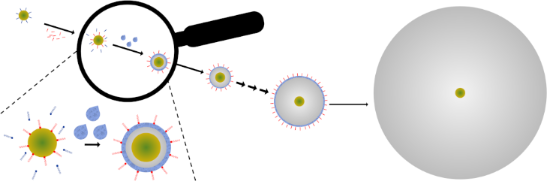
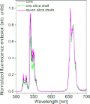
- as -OH groups from ethanol and maybe also from silanol or silanolate groups of the silica network. The increase in non-radiative relaxation processes by surface quenching effects caused for example by Igepal CO-520 after silica coating can lead to a decrease of the UCL intensity [66]. The


Design of a nanostructured mucoadhesive system containing curcumin for buccal application: from physicochemical to biological aspects
Beilstein J. Nanotechnol. 2019, 10, 2304–2328, doi:10.3762/bjnano.10.222
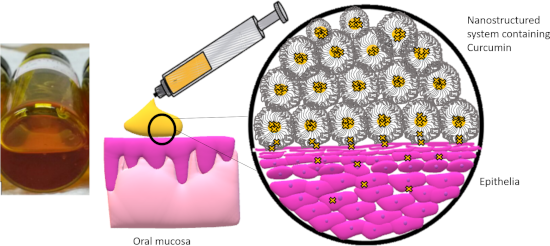
- previously for polymer blends containing P407 and other acrylic acid derivative with a similar cross-linking degree as C974P to carry hypericin [69]. In this study, the polymeric micelle relaxation due to the hydrophobic drug could explain this behavior and be related to the low yield values in the flow
- , hence, the polymeric chains were slowly reorganized, whereas CUR diffused by time-dependent anomalous effects. The solvent diffusion velocity displayed similar relaxation of the polymeric chains [77]. Ex vivo permeation of curcumin in porcine oral mucosa Permeation studies are considered fundamental to


Nitrogen-vacancy centers in diamond for nanoscale magnetic resonance imaging applications
Beilstein J. Nanotechnol. 2019, 10, 2128–2151, doi:10.3762/bjnano.10.207
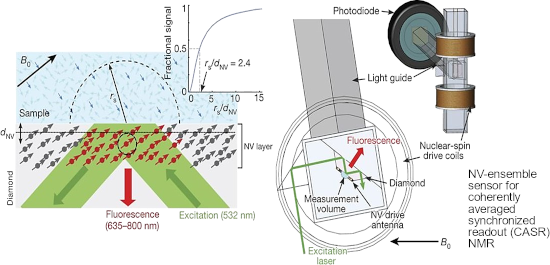
- performance. Nano-MRI employing nuclear spins is limited by the spin–lattice relaxation time. This time is longer in singlet states. It affects the chance of using weak spin–spin interactions and hyperpolarized media. The symmetry mismatch between singlet and triplet states prevents interaction so that
- singlet relaxation can only be mediated by higher-order weak processes, making use of adjacent spins which give the same difference bars as radio frequency (RF) access to singlet states. M2S and spin-lock induced crossing (SLIC) [14] are examples of pulse sequences to circumvent this limitation
- (spin–lattice relaxation) times of many hours. This is an advantage compared to other liquid-phase compounds as hyperpolarized 13C spins usually relax on timescales of T1 ≈60 s to thermal equilibrium. In [18], synthetic, inexpensive, commercial ND with a diameter ranging from a micrometer to 25 nm were


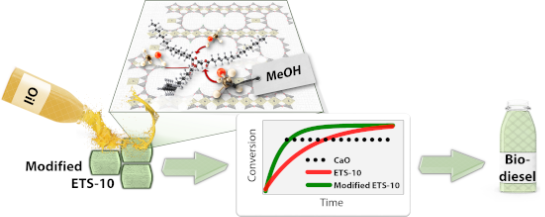
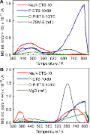
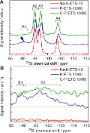
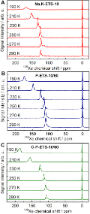
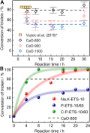
Synthesis of highly active ETS-10-based titanosilicate for heterogeneously catalyzed transesterification of triglycerides
Beilstein J. Nanotechnol. 2019, 10, 2039–2061, doi:10.3762/bjnano.10.200








Improvement of the thermoelectric properties of a MoO3 monolayer through oxygen vacancies
Beilstein J. Nanotechnol. 2019, 10, 2031–2038, doi:10.3762/bjnano.10.199
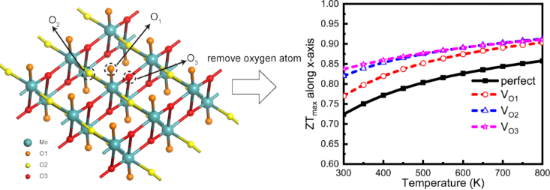
- charge and T is the absolute temperature. Σ(ε) is the so-called transport distribution function [24]: where is the group velocity of the carriers and is the relaxation time. The thermal conductivity κe is obtained by the Wiedemann–Franz law: κe = LσT, where L is the Lorenz number. For the calculation
- of the relaxation time τ, we apply the deformation potential (DP) theory [25] where τ is estimated by τ = μm*/e. The carrier mobility μ2D in 2D materials is given by Where m* is the effective mass and md is the density of states (DOS) mass determined by E1 is the DP constant and C2D is the elastic
- be explained by the proportionality of the Seebeck coefficient to the bandgap [33]. Unlike the Seebeck coefficient, the electrical and thermal conductivities exhibit a clear anisotropic behavior which is attributed to the anisotropic relaxation time [17]. Figure 2b reveals that the electrical


Gold-coated plant virus as computed tomography imaging contrast agent
Beilstein J. Nanotechnol. 2019, 10, 1983–1993, doi:10.3762/bjnano.10.195
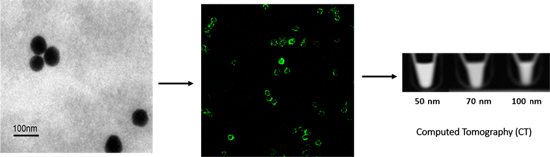
- contrast agents achieve their effect by increasing the relaxation rates (longitudinal relaxation rate (R1), transverse relaxation rate (R2), and pseudo-transverse relaxation rate (R2*)) of water protons in tissues through the catalysis of alignment of nuclear spins [1], thus manipulating the MR image
- contrast. This effect is known as paramagnetic relaxation enhancement [2] and is common among contrast agents containing gadolinium [3] and iron oxide nanoparticles [4]. CT is a non-invasive, diagnostic imaging tool that allows for 3-D visual reconstruction and tissue segmentation. It relies on the use of




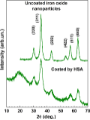
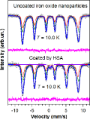
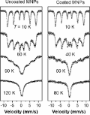
Magnetic properties of biofunctionalized iron oxide nanoparticles as magnetic resonance imaging contrast agents
Beilstein J. Nanotechnol. 2019, 10, 1964–1972, doi:10.3762/bjnano.10.193
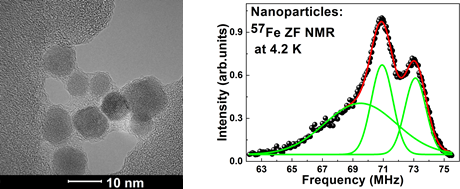
- . The contrast between the tissues in MRI images depends on their properties such as fat and water content as well as on the sequence of the procedure parameters. There are three main characteristics that determine the contrast of the image: 1) proton density; 2) the spin–lattice relaxation time T1; and
- 3) the spin–spin relaxation time T2. Generally, these natural differences in tissue properties provide the necessary contrast, but in some cases, the pathological focus cannot be visualized in the images, for instance, due to size effects or the difficulty in delineating boundaries to determine
- containing paramagnetic gadolinium, reduce the spin–lattice relaxation time (T1), which makes the pathological focus brighter. Negative contrast agents typically contain MNPs with Fe2+ and Fe3+ ions. They reduce the T2 relaxation time and therefore weaken the signal from the tissues that absorbed the agent




Pulsed laser synthesis of highly active Ag–Rh and Ag–Pt antenna–reactor-type plasmonic catalysts
Beilstein J. Nanotechnol. 2019, 10, 1958–1963, doi:10.3762/bjnano.10.192
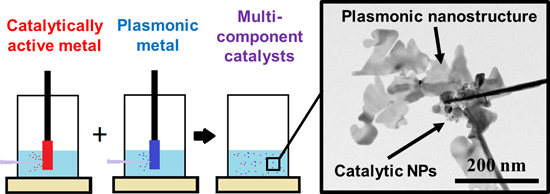
- of femtoseconds before relaxation, which is sufficient for chemical transformation or additional vibrational energy to be transferred to the adsorbate, leading to reaction [14]. There are two mechanisms that can lead to the electronic excitation in the adsorbate–metal complex. The first is the


First principles modeling of pure black phosphorus devices under pressure
Beilstein J. Nanotechnol. 2019, 10, 1943–1951, doi:10.3762/bjnano.10.190
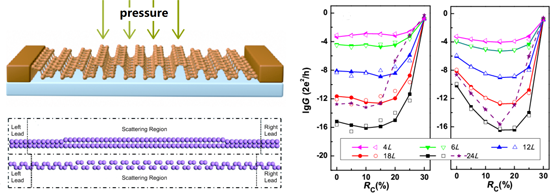
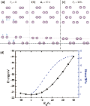
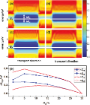
- found that the armchair BP device can be used as a pressure sensor, while the zigzag BP device cannot be used in that way when the pressure ratio is less than 15%. This is the core conclusion of this work. To examine the influence of structural relaxation, the conductance of two fully relaxed zigzag and




Charge-transfer interactions between fullerenes and a mesoporous tetrathiafulvalene-based metal–organic framework
Beilstein J. Nanotechnol. 2019, 10, 1883–1893, doi:10.3762/bjnano.10.183
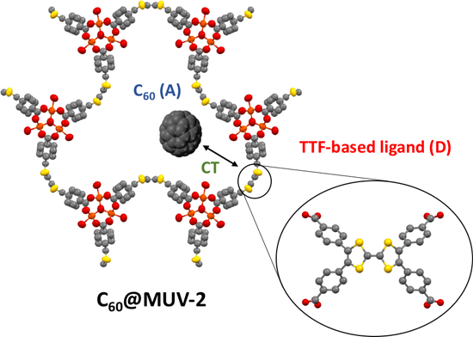
- details). We initially modelled the fullerene C60 guest in the middle of the MUV-2 mesopore. After several relaxation steps, the C60 was able to accommodate in one of the three cavities to interact favourably with the TTF-based ligand. We explored two possible conformations for the host–guest C60@MUV-2




Fabrication and characterization of Si1−xGex nanocrystals in as-grown and annealed structures: a comparative study
Beilstein J. Nanotechnol. 2019, 10, 1873–1882, doi:10.3762/bjnano.10.182
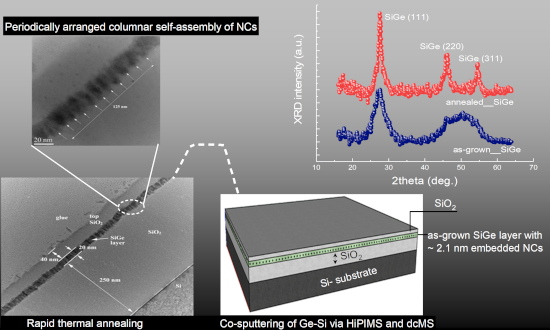
- incidence X-ray diffraction (GIXRD) and high-resolution transmission electron microscopy (HRTEM). Strain relaxation and its effect on the formation of NCs and the resulting interface integrity was studied and compared with structures having a thicker (ca. 200 nm) SiGe layer [23], deposited by radio
- facilitate nucleation. In order to demonstrate the effect of the SiGe layer thickness on the relaxation processes, Figure 6 depicts micrographs of the previously studied structures [23], where the thickness of the SiGe films was approximately 200 nm. The NCs in the thicker films show a lens-like morphology
- the specimen area, the shearing defects are superposed and more complicated, as detailed in our previous study [23]. These defects appear only in relatively thick SiGe films in MLs as the only relaxation process taking place. In the thin SiGe films explored here (ca. 20 nm, comparable with the size of


Engineered superparamagnetic iron oxide nanoparticles (SPIONs) for dual-modality imaging of intracranial glioblastoma via EGFRvIII targeting
Beilstein J. Nanotechnol. 2019, 10, 1860–1872, doi:10.3762/bjnano.10.181
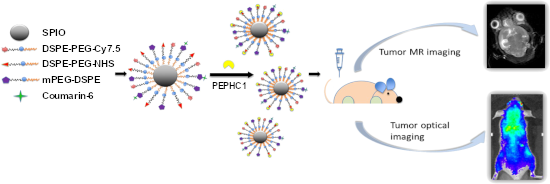
- , gadolinium (Gd)-based agents (often Gd-diethylenetriaminepentaacetic acid (DTPA)) and superparamagnetic iron oxide nanoparticles (SPIONs) are the paramagnetic materials generally used as contrast agents to impact the relaxation time T1 or T2, thus generating bright or dark images via MR imaging. Gd-DTPA, as
- signal intensities of NPs and PNPs decreased with increasing Fe concentration (Figure 2a). After linear fitting, a good linear correlation between T2 relaxation (r2) and the Fe concentration was established. The r2 of the PNP nanoprobe was 52.35 mM−1 s−1, which was slightly lower than that of the NPs




Toxicity and safety study of silver and gold nanoparticles functionalized with cysteine and glutathione
Beilstein J. Nanotechnol. 2019, 10, 1802–1817, doi:10.3762/bjnano.10.175
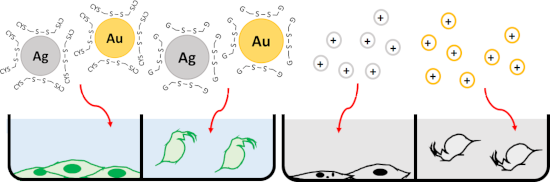
- ). The chemical shifts were expressed in parts per million (ppm) and are referenced to the residual water signal. All spectra were recorded at 25 °C. For all experiments, a recycle delay of 5 s was used, which was sufficiently greater than the relaxation time T1. To suppress the solvent signal, the WET


Growth dynamics and light scattering of gold nanoparticles in situ synthesized at high concentration in thin polymer films
Beilstein J. Nanotechnol. 2019, 10, 1768–1777, doi:10.3762/bjnano.10.172
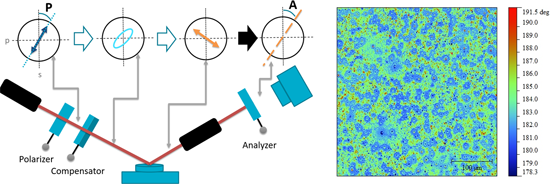
- ) refer to the evaporation of residual solvent, to the relaxation of thickness and to the changes of the refractive index, respectively. Correlation plot between the standard deviation of the ellipsometric angles Ψ and Δ during film annealing (open circles: experimental data, lines: linear fits). The


Direct observation of oxygen-vacancy formation and structural changes in Bi2WO6 nanoflakes induced by electron irradiation
Beilstein J. Nanotechnol. 2019, 10, 1434–1442, doi:10.3762/bjnano.10.141
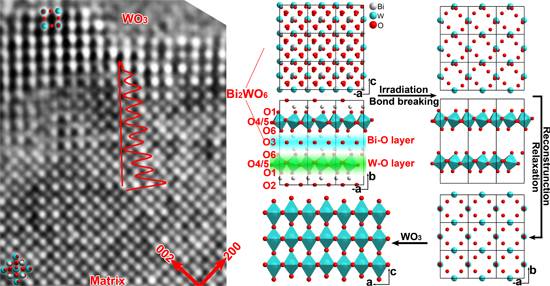
- : breaking of bonds in the Bi–O layers induced by electron-beam irradiation, relaxation of W–O layers and reconstruction of the WO3 phase. List of diffraction peaks used to perform ab initio indexing of the wide lattice fringes. Note: the characteristic diffraction spot at 3.738 Å was constrained to (110) in


On the relaxation time of interacting superparamagnetic nanoparticles and implications for magnetic fluid hyperthermia
Beilstein J. Nanotechnol. 2019, 10, 1280–1289, doi:10.3762/bjnano.10.127
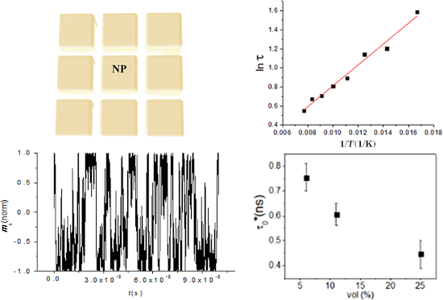
- Andrei Kuncser Nicusor Iacob Victor E. Kuncser National Institute of Materials Physics, P.O. Box MG 7, 077125, Magurele, Romania 10.3762/bjnano.10.127 Abstract A critical discussion on the presently available models for the relaxation time of magnetic nanoparticles approaching the
- performed on ferrofluids of different volume fractions. The theoretical support for the specific evolution of the relaxation time constant and the anisotropy energy barrier versus the interparticle interactions in a perturbation approach of the simple Néel expression for the relaxation time is provided via
- static and time-dependent micromagnetic simulations. Keywords: magnetic hyperthermia; magnetic nanoparticles; magnetic relaxation time; micromagnetic simulation; Introduction Magnetic relaxation phenomena in nanoparticulate systems are under intensive investigation today, especially due to their



Imaging the surface potential at the steps on the rutile TiO2(110) surface by Kelvin probe force microscopy
Beilstein J. Nanotechnol. 2019, 10, 1228–1236, doi:10.3762/bjnano.10.122
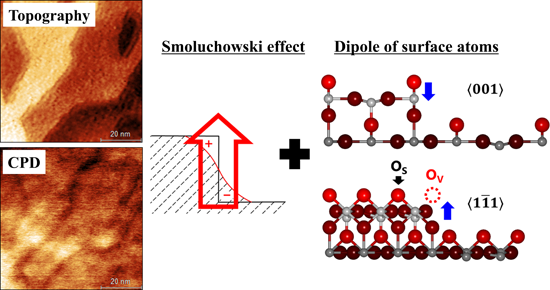
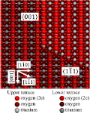
- labeled as Os in Figure 4 might be an oxygen vacancy (Osv) [24][25][35], causing another Ti atom to be exposed enhancing the upward local atomic dipole. According to Sasahara et al. [29], the dipole moments are formed in the central direction (horizontal direction) of the upper step by relaxation into the
![[Graphic 16]](/bjnano/content/inline/2190-4286-10-122-i16.svg?max-width=637&scale=1.18182) and
and ![[Graphic 17]](/bjnano/content/inline/2190-4286-10-122-i17.svg?max-width=637&scale=1.18182) .
.
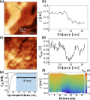

![[Graphic 38]](/bjnano/content/inline/2190-4286-10-122-i38.svg?max-width=637&scale=1.18182) and
and ![[Graphic 39]](/bjnano/content/inline/2190-4286-10-122-i39.svg?max-width=637&scale=1.18182) steps. (a) Topographic image...
steps. (a) Topographic image...


![[Graphic 72]](/bjnano/content/inline/2190-4286-10-122-i72.svg?max-width=637&scale=1.18182) , b)
, b) ![[Graphic 73]](/bjnano/content/inline/2190-4286-10-122-i73.svg?max-width=637&scale=1.18182) , c) reduced
, c) reduced ![[Graphic 74]](/bjnano/content/inline/2190-4286-10-122-i74.svg?max-width=637&scale=1.18182) , and d)
, and d) ![[Graphic 75]](/bjnano/content/inline/2190-4286-10-122-i75.svg?max-width=637&scale=1.18182) steps. B...
steps. B...
Electroluminescence and current–voltage measurements of single-(In,Ga)N/GaN-nanowire light-emitting diodes in a nanowire ensemble
Beilstein J. Nanotechnol. 2019, 10, 1177–1187, doi:10.3762/bjnano.10.117
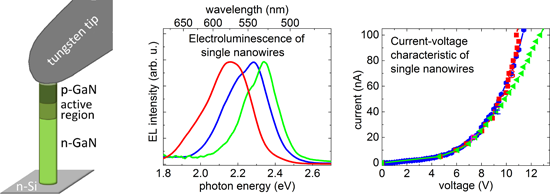
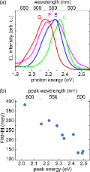
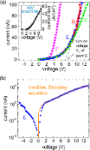
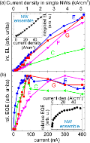
- , the intensity of which changes in a characteristic way with current. This phenomenon is caused by the N polarity of the NWs and the three-dimensional strain profile resulting from elastic relaxation at the free sidewall surfaces, as previously shown in [7]. I–V curves acquired for single-NW LEDs


Synthesis and characterization of quaternary La(Sr)S–TaS2 misfit-layered nanotubes
Beilstein J. Nanotechnol. 2019, 10, 1112–1124, doi:10.3762/bjnano.10.111
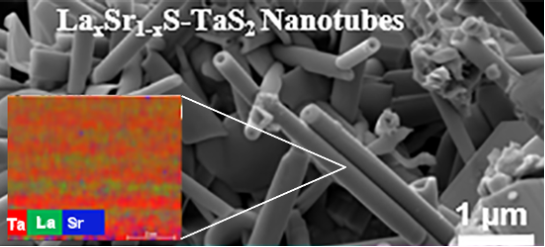
- also attributed to the relaxation of the interlayer forces. DFT calculations of the approximant (SrxLa1−xS)1.11TaS2 showed that the amount of charge transfer from the rock-salt SrxLa1−xS lattice to the hexagonal TaS2 lattice goes through a shallow minimum at 20 atom % Sr substitution. Furthermore, the





