Search results
Search for "resolution" in Full Text gives 1325 result(s) in Beilstein Journal of Nanotechnology. Showing first 200.
Dual-functionalized architecture enables stable and tumor cell-specific SiO2NPs in complex biological fluids
Beilstein J. Nanotechnol. 2024, 15, 1238–1252, doi:10.3762/bjnano.15.100
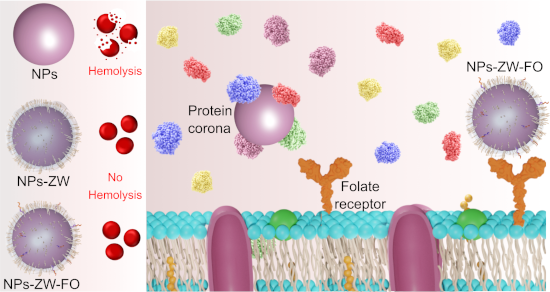
- ), SiO2NPs-ZW-NH2 (with ZW + APTES), and SiO2NPs-ZW-FO (with ZW + APTES + folate). Characterization of SiO2NPs Scanning electron microscopy (SEM) micrographs were obtained in a high-resolution FEI Inspect F50 microscope. A NP suspension (7 μL) was deposited directly onto a copper substrate, dried, and
- -rays with charge compensation. Spectra were recorded in three distinct areas per sample with 400 μm spatial resolution, using 200 eV pass energy. High-resolution spectra for C 1s, N 1s, Si 2p, and S 2p were recorded with a resolution of 0.1 eV, using a pass energy of 40 eV. All spectra were analyzed
- , 5 μM particle size, New Objective). The source temperature was set to 275 °C and the nanoelectrospray voltage to 2.2 kV. The mass spectrometer operated in data-dependent acquisition mode, where full scan MS1 spectra (m/z 300–1,600) were acquired at resolution r = 60,000 after accumulation of 1 × 10⁶


A low-kiloelectronvolt focused ion beam strategy for processing low-thermal-conductance materials with nanoampere currents
Beilstein J. Nanotechnol. 2024, 15, 1197–1207, doi:10.3762/bjnano.15.97

- current, 1 µs dwell time, 128 frames integration filter and 1024 × 882 pixel resolution with an Everhart–Thornley detector. FIB TEM-lamella preparation and TEM analysis To verify if the collagen was heat-damaged when processing the sample using nanoampere range currents and different incident ion energies



Local work function on graphene nanoribbons
Beilstein J. Nanotechnol. 2024, 15, 1125–1131, doi:10.3762/bjnano.15.91
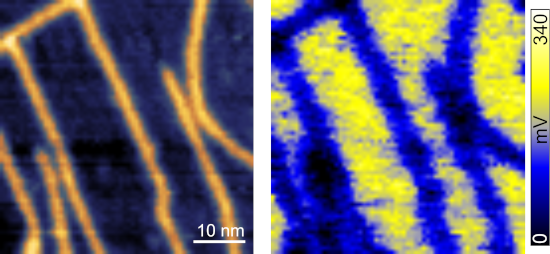
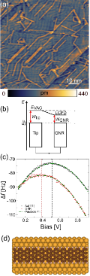
- density functional theory calculations, which verify that the maps reflect the doping of the nanoribbons. Our results help to understand the relation between atomic structure and electronic properties both in high-resolution images and in the distance dependence of the LCPD. Keywords: graphene
- surfaces, all related to charge differences; for a review, see [14]. Kelvin probe force microscopy (KPFM), a method derived from scanning force microscopy (SFM), allows one to study the local work function difference of a sample with great accuracy and with atomic resolution [15][16][17][18][19][20]. In

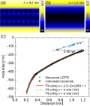
![[Graphic 1]](/bjnano/content/inline/2190-4286-15-91-i4.svg?max-width=637&scale=1.18182)
Direct electron beam writing of silver using a β-diketonate precursor: first insights
Beilstein J. Nanotechnol. 2024, 15, 1117–1124, doi:10.3762/bjnano.15.90

- deposition of an automated sequence of shapes overnight, carefully avoiding unintended electron beam impact while precursor molecules were present (cf. the section on deposit evolution in Supporting Information File 1 for more details). The high-resolution images presented in the main manuscript were taken
- second part of the first halo region (H1’), where the background forms irregularly shaped dark and bright regions of several hundreds of nanometers in size. After taking the high-resolution images, the imaged regions showed an increase in particle size and brightness (cf. Supporting Information File 1
- magnification were adapted to match the high-resolution SEM (HRSEM) image above. The deposit structure turned out to be extremely non-uniform with a continuous layer of elemental silver at the interface between deposit and silicon substrate (cf. Supporting Information File 1, Figure S4, for more details on the


Unveiling the potential of alginate-based nanomaterials in sensing technology and smart delivery applications
Beilstein J. Nanotechnol. 2024, 15, 1077–1104, doi:10.3762/bjnano.15.88

- wall [60]. Another important morphological feature of polymers is the surface of the polymers, and atomic force microscopy (AFM) can be utilized to detect surface features of polymeric nanoparticles. It is very useful tool that offers high-resolution images in three dimensions at the nanometer scale


Signal generation in dynamic interferometric displacement detection
Beilstein J. Nanotechnol. 2024, 15, 1070–1076, doi:10.3762/bjnano.15.87
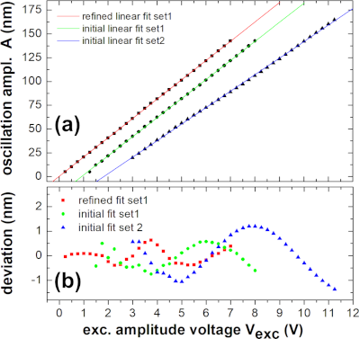
- highly stable interferometer can detect displacements with an accuracy far beyond nanometer resolution [3], where the final physical limit is set by the photon emission statistics of the light source [4]. In non-contact atomic force microscopy (NC-AFM), interferometry is used to measure the periodic
- , which is a voltage between 0 and 10 mVpp with a typical noise level of less than 150 μVRMS. Time traces with a length of 4 μs at a sampling rate of 250 MS/s are taken and quantized with a resolution of 10 bits. Each experiment comprises a set of 20 to 30 measurements with the excitation voltage
- Instruments, USA), which has been calibrated by 40 atomic lines distributed over the entire visible spectrum to yield an accurate value for the wavelength at a spectral resolution of 0.050 nm. As evident from the multimode spectrum of the laser diode light source shown in the inset of Figure 4, the spectrum


Bolometric IR photoresponse based on a 3D micro-nano integrated CNT architecture
Beilstein J. Nanotechnol. 2024, 15, 1030–1040, doi:10.3762/bjnano.15.84
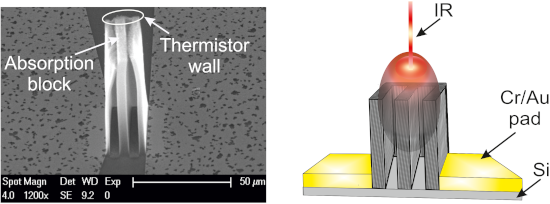
- integration techniques make it important for real-time broadband imaging systems. Keywords: 3D micro-nano architecture; blackbody absorption; CNT microbolometer; high responsivity; high spatial resolution; Introduction Non-cryogenic infrared (IR) microbolometers represent a cutting-edge technology with


Entry of nanoparticles into cells and tissues: status and challenges
Beilstein J. Nanotechnol. 2024, 15, 1017–1029, doi:10.3762/bjnano.15.83
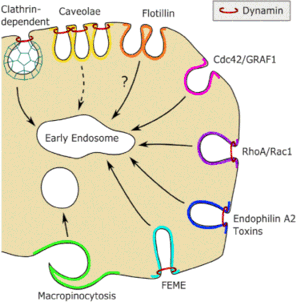
- imaging (i.e., positron emission tomography (PET), single-photon emission computed tomography (SPECT), optical/fluorescence, magnetic resonance imaging (MRI), computed tomography (CT; using X-ray) and ultrasound imaging), and the spatial resolution, depth of imaging, sensitivity, and advantages
- /disadvantages of using various methodological approaches [81]. So far, most ADME studies with small animals have been performed using fluorescence; however, labelling with radioactive isotopes for PET or SPECT imaging is growing in popularity due to enhanced imaging depth and spatial resolution for whole-body


Water-assisted purification during electron beam-induced deposition of platinum and gold
Beilstein J. Nanotechnol. 2024, 15, 884–896, doi:10.3762/bjnano.15.73
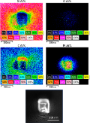
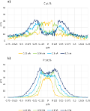
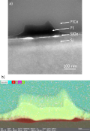
- patterned area ranges between −0.125 and 0.125 µm. The (a) carbon and (b) platinum contents are presented in atom %. The background Si signal was not excluded from the analysis. (a) High-resolution TEM image and (b) overlay of the HAADF image and the STEM-EDX map of the cross section of deposit 1g. Layers





Intermixing of MoS2 and WS2 photocatalysts toward methylene blue photodegradation
Beilstein J. Nanotechnol. 2024, 15, 817–829, doi:10.3762/bjnano.15.68
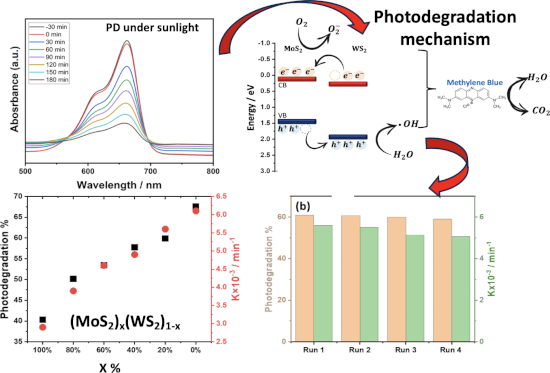
- additional peaks observed in all XRD diagrams at ≈37° and ≈69° positions are due to the silicon substrate. The X-ray photoelectron spectroscopy (XPS) survey scans and high-resolution scans for all samples are presented in Figure 3a–j. All XPS analyses were first calibrated using the C 1s peak of carbon at
- addition, the deconvoluted peaks of S 2p appear at ≈162.9 eV and ≈164.1 eV attributed to the S 2p doublet (2p3/2 and 2p1/2) as shown in Figure 3c [30]. High-resolution scans of W 4f and S 2p are shown in Figure 2e and Figure 2f, W 4f shows deconvoluted peaks at around ≈33.3 eV and ≈35.4 eV corresponding to
- process. However, the distinct features of the flakes were overall conserved. Figure 5 depicts TEM images carried out on the samples. Low- and high-resolution images captured from MoS2, WS2, and MoS2/WS2 composite samples are shown in Figure 5a–f. The low-magnification TEM image indicates that the size of


Electron-induced ligand loss from iron tetracarbonyl methyl acrylate
Beilstein J. Nanotechnol. 2024, 15, 797–807, doi:10.3762/bjnano.15.66
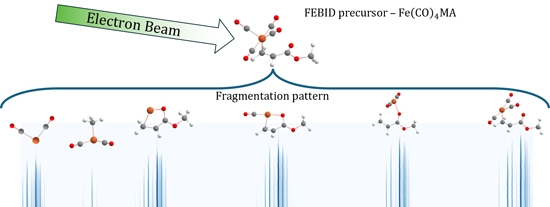
- much higher mass resolution, while the second one, the trochoidal electron monochromator quadrupole mass spectrometer (TEM-QMS), has a higher energy resolution of the incident electron beam. The CLUB setup The CLUB experimental setup has been described in detail in previous papers [22][23] and recently
- spectrometer (RTOF). The RTOF is bipolar and is, thus, able to analyze and detect either cations or anions. The mass resolution of the spectrometer is M/ΔM = 4000. The electron gun is not monochromated and has an incident electron beam resolution of around 1 eV [27]. It should be noted that the electron beam
- is difficult to control at low energies below 2 eV. The abundance of electrons below this energy is uncertain since a large fraction of them does not leave the collision region to the Faraday cup, and the energy resolution is also deteriorated. The absolute energy scale of the electron beam was



Electrospun polysuccinimide scaffolds containing different salts as potential wound dressing material
Beilstein J. Nanotechnol. 2024, 15, 781–796, doi:10.3762/bjnano.15.65
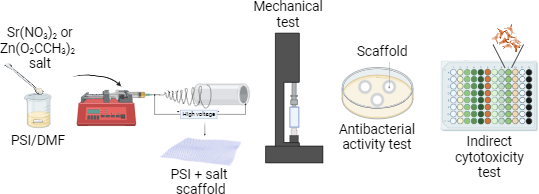
- The presence of inorganic salts in the scaffolds was investigated by using infrared spectroscopy. For this purpose, a JASCO FT/IR-4700 spectroscope with a diamond ATR head was applied. In all cases, the measurements were taken between 400 and 4000 cm−1 wave numbers with a 2 cm−1 resolution. A
- high-performance scanning electron microscope (JSM-6380LV, JEOL, Japan), with a resolution of 3.0 nm. Before the measurements, all the samples were fixed on a tape and coated with gold using a JFC-1200 Sputter Coating System (JEOL, Japan). Images of the samples were taken at 1000×, 5000×, and 10000



Exploring surface charge dynamics: implications for AFM height measurements in 2D materials
Beilstein J. Nanotechnol. 2024, 15, 767–780, doi:10.3762/bjnano.15.64
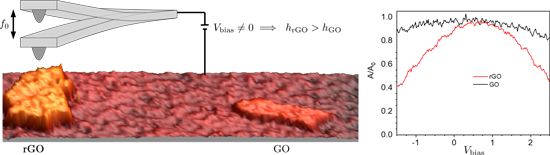
- microscopy (AFM) techniques emerge as ideal tools to investigate them [26][27]. Depending on the operation mode and under controlled environmental conditions, AFM offers the possibility to record morphology along with relevant electronic, mechanical, or magnetic properties with nanoscale resolution. In
- local degree of reduction, with a lateral size for the domains that varies from tens to hundreds of nanometers. This confirms, on the one hand, that this mechanism achieves nanoscale resolution, primarily attributable to the tip, and, on the other hand, that the voltage dissipation mechanism depends on
- achieves nanoscale resolution and is sensitive to local heterogeneities in the material’s properties. We also show that this effect is particularly relevant whenever the 2D material is supported on an insulating substrate and can be an important source of error when determining its thickness. According to


Effect of repeating hydrothermal growth processes and rapid thermal annealing on CuO thin film properties
Beilstein J. Nanotechnol. 2024, 15, 743–754, doi:10.3762/bjnano.15.62
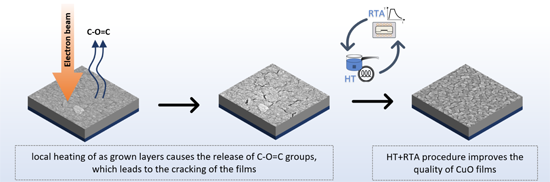
- , which allowed for the investigation of both topography and electrical properties of the films. Surface topography analysis was performed by utilizing an atomic force microscopy (AFM) operating in Peak Force Tapping mode. The surface was scanned at a resolution of 1024 × 1024 measurement points using a
- resolution of 256 × 256 pixels presented in the paper were derived from the “SCM data” channel. Contact potential difference (VCPD) measurements were carried out using Kelvin probe force microscopy (KPFM) in amplitude modulation mode, also employing SCM-PIT-V2 probes from Bruker. These measurements were
- underwent structural analysis using a high-resolution X-ray diffractometer X’Pert Pro MRD (Panalytical) equipped with a Cu anode (λ = 1.54060 Å). X-ray photoelectron spectroscopy (XPS) measurements were conducted utilizing a Scienta R4000 hemispherical analyzer with a pass energy of 200 eV and monochromatic




Level set simulation of focused ion beam sputtering of a multilayer substrate
Beilstein J. Nanotechnol. 2024, 15, 733–742, doi:10.3762/bjnano.15.61
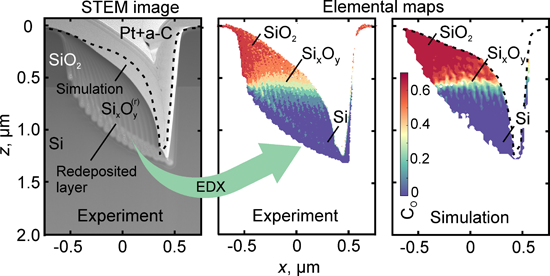
- semiconductor heterostructures [13]. Metal and dielectric layers can be used as hard masks for achieving high resolution and throughput of the FIB nanofabrication process [14]. Modification of integrated circuits [15] is an industrially relevant application of multilayer structure processing. Effective

![[Graphic 55]](/bjnano/content/inline/2190-4286-15-61-i68.svg?max-width=637&scale=1.18182)


Simultaneous electrochemical determination of uric acid and hypoxanthine at a TiO2/graphene quantum dot-modified electrode
Beilstein J. Nanotechnol. 2024, 15, 719–732, doi:10.3762/bjnano.15.60
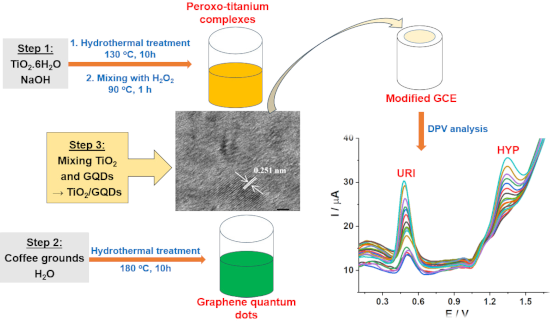
- diffraction, Raman spectroscopy, high-resolution transmission electron microscopy, and energy-dispersive X-ray mapping. The TiO2/GQDs-GCE exhibits better electrochemical activity for uric acid and hypoxanthine than GQDs/GCE or TiO2/GCE in differential pulse voltammetry (DPV) measurements. Under optimized
- GQDs were observed by using a JEM 2100 high-resolution transmission electron microscopy (HRTEM), Joel, Japan. Raman spectroscopy measurements were performed on a WiTec, Alpha 300R with a 532 nm laser. Surface analyses of the obtained materials were carried out using a S-4800 scanning electron


Elastic modulus of β-Ga2O3 nanowires measured by resonance and three-point bending techniques
Beilstein J. Nanotechnol. 2024, 15, 704–712, doi:10.3762/bjnano.15.58
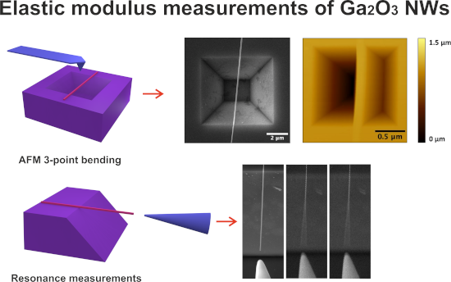
- these different methods arise from multiple factors. For instance, different NW growth mechanisms and sensitive synthesis conditions, their structural and geometrical variations, beam theory model validity, and the resolution of microscopy techniques leading to inaccurate measurements of the NW
- dimensions, particularly at the lower resolution limit [18]. The low symmetry of monoclinic crystal systems, as in the β-Ga2O3 case, might promote the growth of nanostructures with different crystalline orientations, which often leads to the formation of nanostructures with various dimensions, such as NWs


Enhancing higher-order modal response in multifrequency atomic force microscopy with a coupled cantilever system
Beilstein J. Nanotechnol. 2024, 15, 694–703, doi:10.3762/bjnano.15.57

- , Chinese Academy of Sciences, Dalian 116023, P. R. China 10.3762/bjnano.15.57 Abstract Multifrequency atomic force microscopy (AFM) utilizes the multimode operation of cantilevers to achieve rapid high-resolution imaging and extract multiple properties. However, the higher-order modal response of
- ; Introduction Multifrequency atomic force microscopy (AFM) has become an important tool for nanoscale imaging and characterization [1][2]. This technique involves the excitation and detection of multiple frequencies to improve data acquisition speed, sensitivity, and resolution, as well as to enable material
- [7][8][9]. The higher-order eigenmodes of the cantilever can effectively improve Q-factor, imaging rate, and mass sensing resolution [10][11]. For traditional rectangular cantilevers, the higher-order modal response is usually weaker than that of the fundamental mode in ambient air [12]. This


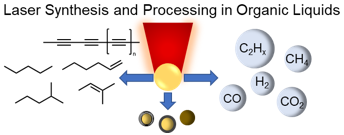
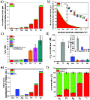
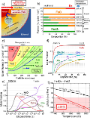
Laser synthesis of nanoparticles in organic solvents – products, reactions, and perspectives
Beilstein J. Nanotechnol. 2024, 15, 638–663, doi:10.3762/bjnano.15.54





Exfoliation of titanium nitride using a non-thermal plasma process
Beilstein J. Nanotechnol. 2024, 15, 631–637, doi:10.3762/bjnano.15.53
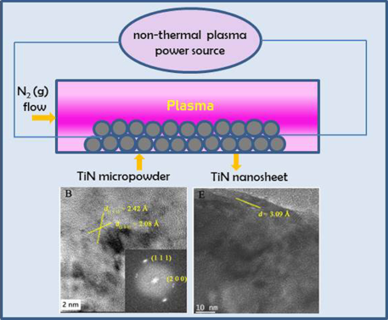
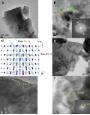
- the same exfoliation method. These combined findings highlight the structural changes during the non-thermal plasma exfoliation process, further supporting the successful transformation of bulk TiN into nanosheets. Figure 3 shows high-resolution transmission electron microscopy (HRTEM) images of TiN
- higher transparency to the microscope beam is observed, indicating fewer scattering centers. When comparing Figure 3a and Figure 3d, it is clear that the initial compact 3D TiN blocks underwent a transformation and evolved into plate-like thin layers. The high-resolution image in Figure 3f shows a



AFM-IR investigation of thin PECVD SiOx films on a polypropylene substrate in the surface-sensitive mode
Beilstein J. Nanotechnol. 2024, 15, 603–611, doi:10.3762/bjnano.15.51
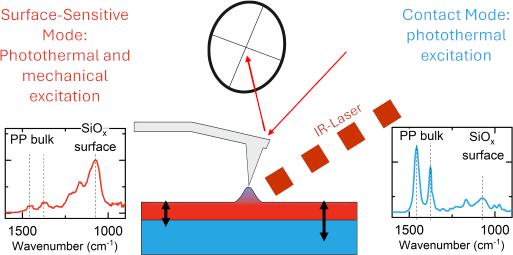
- Photothermal AFM-IR nanospectroscopy is a technique that combines the chemical information from infrared (IR) spectroscopy with the high spatial resolution of atomic force microscopy (AFM). For this, the sample is illuminated with a tunable IR laser [1]. When a suitable IR wavelength is chosen, resonant
- of spatial resolution. In ATR-IR spectroscopy, the resolution is theoretically limited by λ/2, which corresponds to several µm [3]. In contrast, the development of new and powerful tunable IR laser sources, such as optical parametric oscillator (OPO) and quantum cascade lasers (QCL), enabled a
- nanoscale resolution of AFM-IR down to 10 nm [3]. Nowadays, the limit of the spatial resolution is given by the apex of the AFM tip. One of the first AFM-IR demonstrations was reported in 2005 by Dazzi et al. [4], who presented AFM-IR spectra of single bacterial cells. Further on, this technique became more


Stiffness calibration of qPlus sensors at low temperature through thermal noise measurements
Beilstein J. Nanotechnol. 2024, 15, 580–602, doi:10.3762/bjnano.15.50
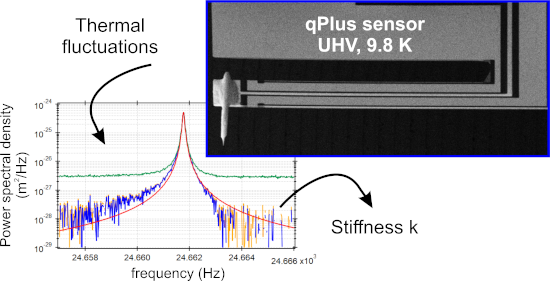
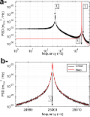
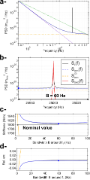
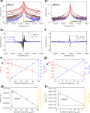
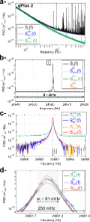
- University, CNRS, Centrale Marseille, FSCM (FR1739), CP2M, 13397 Marseille, France 10.3762/bjnano.15.50 Abstract Non-contact atomic force microscopy (nc-AFM) offers a unique experimental framework for topographical imaging of surfaces with atomic and/or sub-molecular resolution. The technique also permits
- possible to quantify the interatomic interaction forces that develop between the tip and the surface acquired in spectroscopic data cube modes [7][8] with both high sensitivity and high spatial resolution. Recently, the force sensitivity has been pushed forward, and forces as low as 100 fN have been
- -Omicron, operated at 9.8 K. We use commercial qPlus sensors purchased from Scienta-Omicron. Scanning electron microscopy (SEM) pictures of one of these probes are shown in Figure 1. SEM analysis was performed with a Zeiss GeminiSEM 500 ultrahigh-resolution FESEM at 15 kV. Secondary electron detection was

Radiofrequency enhances drug release from responsive nanoflowers for hepatocellular carcinoma therapy
Beilstein J. Nanotechnol. 2024, 15, 569–579, doi:10.3762/bjnano.15.49
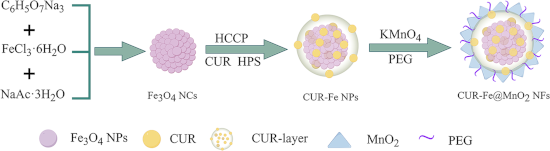
- sample was added to ethanol and ultrasonically dispersed. Then the dispersed liquid was added dropwise to the copper net. After drying, the US FEI Tecnai F20 TEM was used at an accelerated voltage of 200 kV to capture the morphology in high resolution. Zeta potentials and hydrodynamic diameters were


Directed growth of quinacridone chains on the vicinal Ag(35 1 1) surface
Beilstein J. Nanotechnol. 2024, 15, 556–568, doi:10.3762/bjnano.15.48
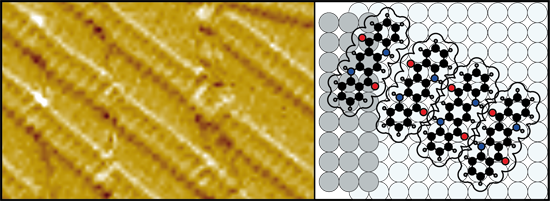
- ) can be seen (red circles in Figure 2a), while in the other 50% of all cases, it looks as if the chain grows undistorted across the Ag step (light blue circles). For a closer look, a zoom-in onto chains at Ag step edges with molecular resolution is displayed in the inset. The blue circle highlights a
- of three QA chains at a Ag step edge, which was chosen for the high molecular resolution. (b) Small-scale STM image (UBias = 1.5 V, I = 25 pA) showing two of the four azimuthal orientations A and D, as well as two chains in the new orientation E (red lines). The black dashed lines indicate the


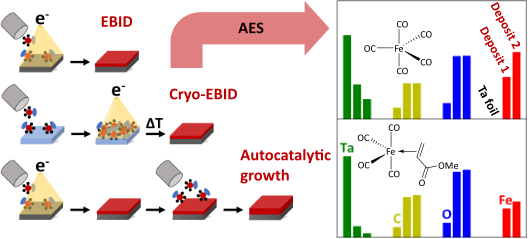
Electron-induced deposition using Fe(CO)4MA and Fe(CO)5 – effect of MA ligand and process conditions
Beilstein J. Nanotechnol. 2024, 15, 500–516, doi:10.3762/bjnano.15.45