


Search results
Search for "roughness" in Full Text gives 478 result(s) in Beilstein Journal of Nanotechnology. Showing first 200.
Structural optical and electrical properties of a transparent conductive ITO/Al–Ag/ITO multilayer contact
Beilstein J. Nanotechnol. 2020, 11, 695–702, doi:10.3762/bjnano.11.57
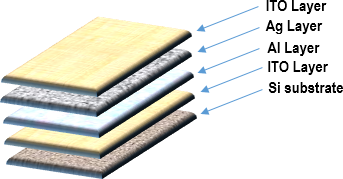
- area of 1 μm × 1 μm as shown in Figure 3. A low surface roughness with increased root mean square (Rrms) and average roughness (Ra) values for both IAAI and ITO films after annealing were observed. As determined using the Nanoscope Analysis software, the average grain size increased from 53.53 nm (as
- -deposited) to 60.03 nm (annealed) for the IAAI film and from 27.59 nm (as-deposited) to 31.18 nm (annealed) for the ITO film. Similarly, after annealing treatment, the IAAI Rrms and Ra roughness values increased from 1.569 nm and 1.257 nm to 1.663 nm and 1.339 nm, respectively. The increase in surface
- roughness is attributed to the increasing grain sizes [35]. The large grain sizes of IAAI films reduce the number of grain boundaries and thus the scattering at grain boundaries. This improves the carrier mobility leading to an increased electrical conductivity of the films. The surface morphology of the


Preparation, characterization and photocatalytic performance of heterostructured CuO–ZnO-loaded composite nanofiber membranes
Beilstein J. Nanotechnol. 2020, 11, 631–650, doi:10.3762/bjnano.11.50
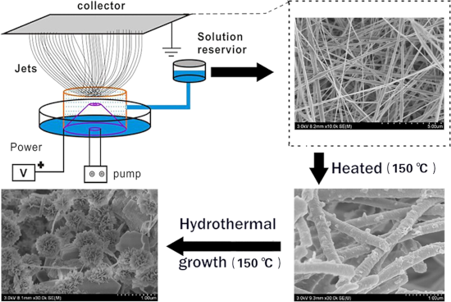
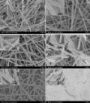
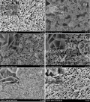
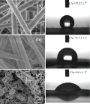
- diameter distribution, thickness and surface roughness of the CNFMs can lead to the difference in hydrophobicity. Mechanical properties: Mechanical properties of the CNFMs with different PVDF/PAN weight ratios are exhibited in Figure 5. With the decrease of the weight ratio the breaking elongation of the











Formation of nanoripples on ZnO flat substrates and nanorods by gas cluster ion bombardment
Beilstein J. Nanotechnol. 2020, 11, 383–390, doi:10.3762/bjnano.11.29
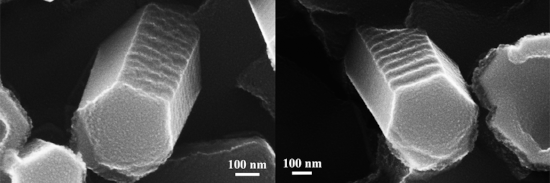
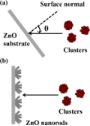
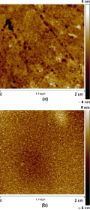
- homogeneously dispersed all over the surface formed (Figure 2b and Figure 3b). These surface features can exhibit overlapped craters formed after collisions of the accelerated clusters with the surface. The surface roughness after normal cluster irradiation slightly decreases from initial 0.8 nm to 0.6 nm



Interactions at the cell membrane and pathways of internalization of nano-sized materials for nanomedicine
Beilstein J. Nanotechnol. 2020, 11, 338–353, doi:10.3762/bjnano.11.25
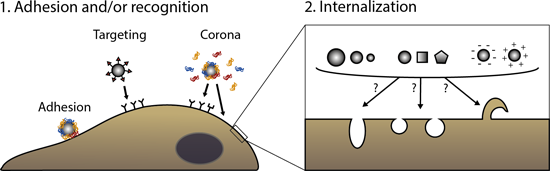
- side effects [6]. Additionally, nanomedicines can encapsulate different types of hydrophilic and hydrophobic drugs, and they can be designed to control their release profile [7]. Several other characteristics of nanomaterials such as size, material, shape, surface charge, hydrophobicity, roughness, and
- possibility of using nano-sized materials to deliver drugs to their target. Nanoparticle design can be tailored to target specific cell types or pathways. Size, charge, shape [107], hydrophobicity [108], rigidity [109][110], roughness [111] and surface functionalization [43][112] of nanomaterials are all


Influence of the epitaxial composition on N-face GaN KOH etch kinetics determined by ICP-OES
Beilstein J. Nanotechnol. 2020, 11, 41–50, doi:10.3762/bjnano.11.4
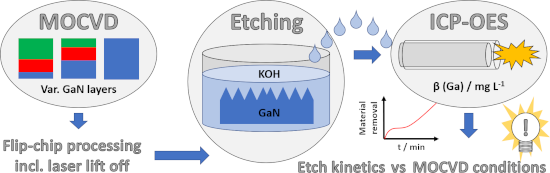
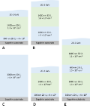
- be partially removed and roughened later in chip processing. This leads to better device performance. However, to reach the precise etch depth and roughness, process control is of utmost importance. If too much GaN material is removed, valleys in between pyramids can cause shorts in the active layer


An investigation on the drag reduction performance of bioinspired pipeline surfaces with transverse microgrooves
Beilstein J. Nanotechnol. 2020, 11, 24–40, doi:10.3762/bjnano.11.3
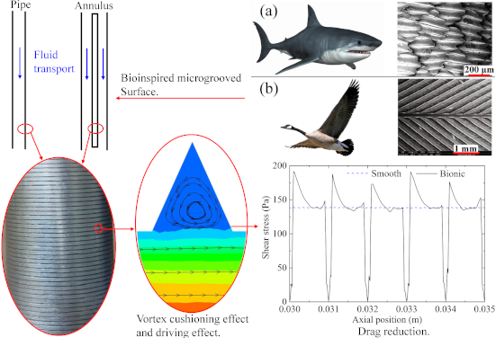
- can be seen in Figure 7c, the effect of the burrs was to increase the surface roughness of the pipeline. Besides, the greater the surface roughness was, the higher the pressure loss of fluid flow was. Therefore, in the experiment, the burrs on the pipeline surface caused pressure loss, which resulted


Antimony deposition onto Au(111) and insertion of Mg
Beilstein J. Nanotechnol. 2019, 10, 2541–2552, doi:10.3762/bjnano.10.245
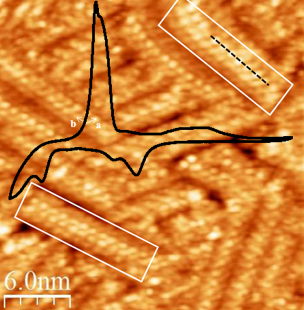
- than that observed by us. We also observed a smaller peak C1 on a polycrystalline Au electrode. Therefore, this difference is probably due to the roughness of the Au(111) surface, resulting from repeated alloying and dealloying during the cycling to obtain stable voltammetry in [12]. Upon extension of
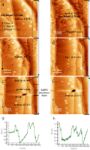
- layers. A somewhat atypical Stranski–Krastanov growth was thus observed during overpotential deposition. After stripping of Sb at −0.21 V the Au(111) substrate is not smooth again. Figure 8a shows the Au(111) surface after stripping of Sb at −0.21 demonstrating a severe roughness on the atomic scale. As
- shown in Figure 8b and c, the resulting Au(111) surface becomes more and more rough after each further deposition and dissolution process, which is an indication of the alloy formation [10][25][29]. The root mean square of the roughness (RMS roughness) of the terraces were determined to be 0.088, 0.095





Evaluation of click chemistry microarrays for immunosensing of alpha-fetoprotein (AFP)
Beilstein J. Nanotechnol. 2019, 10, 2505–2515, doi:10.3762/bjnano.10.241
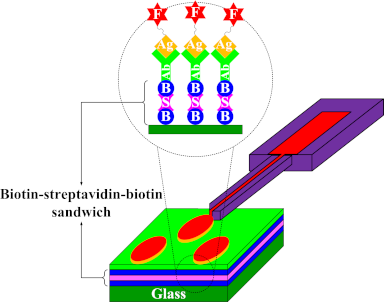
- occurring in the spectra at 400.0 eV also result from the successful reactions. To confirm the quality of the functionalized layers, after each step of the functionalization process, the roughness of the samples was monitored by atomic force microscopy (AFM). The results are shown in Supporting Information
- File 1, Figure S1. While the roughness increases slightly over the course of functionalization, overall, the samples remain relatively smooth with root-mean-square roughness values (Rq) below 1 nm, showing a homogeneous reaction built-up without introduction of a nanotexture that might lead to
- bare and functionalized glasses was characterized using surface-sensitive techniques, including atomic force microscopy (AFM) and X-ray photoelectron spectroscopy (XPS). To map the surface roughness, AFM in tapping mode was conducted with a Dimension Icon (Bruker, Germany) device with HQ:NSC15/Al BS


Self-assembly of a terbium(III) 1D coordination polymer on mica
Beilstein J. Nanotechnol. 2019, 10, 2440–2448, doi:10.3762/bjnano.10.234
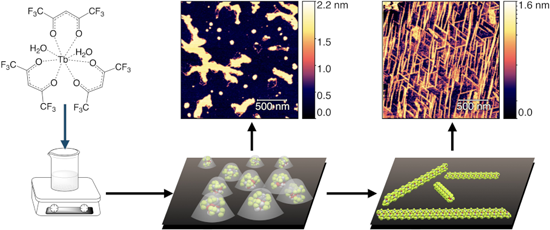
- the observed objects. Results Coordination polymer growth on mica The [Tb(hfac)3·2H2O]n molecular nanochains have been grown via drop casting of a dilute cyclohexane solution on a freshly air-cleaved mica substrate. The mica substrate was chosen because of its low roughness [23] making it particularly




Integration of sharp silicon nitride tips into high-speed SU8 cantilevers in a batch fabrication process
Beilstein J. Nanotechnol. 2019, 10, 2357–2363, doi:10.3762/bjnano.10.226
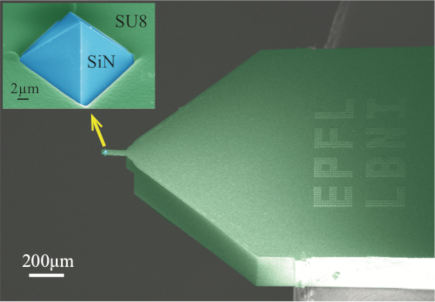
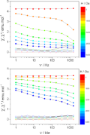
- sharpness, 20 randomly chosen LSNT-tip SU8 cantilevers have been tested with a polycrystalline titanium roughness sample. The images were taken using a NanoScope-V controller and a Multi-Mode-V AFM with a J scanner (Bruker) in tapping mode. The imaging conditions were as follows: scan size 2 µm, number of
- imaging of the polycrystalline titanium roughness sample (tapping mode, scan size 2 µm, 512 × 512 pixels and scan rate 1 Hz). Figure 2b shows the partial blind estimation of the tip shape for the first and last images after 16 mm tip travel. No obvious degradation occurred. Figure 2c shows the evolution
- tip travel during the AFM imaging of a polycrystalline titanium roughness sample. A suitable tip sharpness and a high wear resistance have been achieved along with a high tracking bandwidth of the fabricated LSNT-tip SU8 cantilevers. A comparison between a commercial silicon cantilever and the LSNT


The role of Ag+, Ca2+, Pb2+ and Al3+ adions in the SERS turn-on effect of anionic analytes
Beilstein J. Nanotechnol. 2019, 10, 2338–2345, doi:10.3762/bjnano.10.224
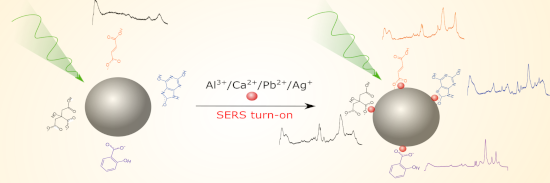
- adsorbate and the metal nanosurface, the coupling to the silver surface being mediated by adsorbed atoms (adatoms) such as Ag+, Cl−, I−, Br− [3][4][5][6]. In this context, several reports explain the SERS enhancement by the formation of stable surface complexes of atomic scale roughness. For example, a Ag


Atomic force acoustic microscopy reveals the influence of substrate stiffness and topography on cell behavior
Beilstein J. Nanotechnol. 2019, 10, 2329–2337, doi:10.3762/bjnano.10.223
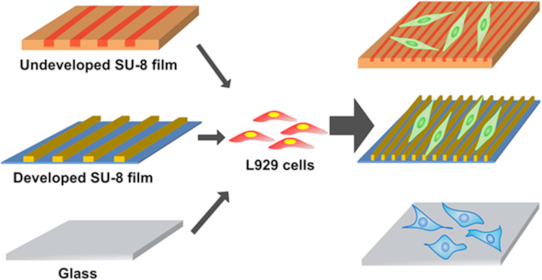
- ∙m-1. For each film, about 20 force curves were obtained around the stripe and the unexposed region of the patterns. The root-mean-square roughness of the SU-8 films was determined from the surface morphological images of AFAM. The scan was performed on a field of view of 10 μm × 10 μm at the
- frequency of 1 Hz for surface roughness measurements. Cell culture The L929 cells from the mouse fibroblast cell line were cultured at 37 °C in a minimal essential medium (MEM, Solarbio) supplemented with 10% fetal bovine serum. Before seeding, the SU-8 substrates and the reference glass substrate were
- that the nanopattern, although too small to restrict the cell growth, may enhance the elongation of the cells and affect the cellular arrangement. Moreover, the surface roughness of various samples was investigated using the morphological AFAM images (Supporting Information File 1, Figure S2). The


Nontoxic pyrite iron sulfide nanocrystals as second electron acceptor in PTB7:PC71BM-based organic photovoltaic cells
Beilstein J. Nanotechnol. 2019, 10, 2238–2250, doi:10.3762/bjnano.10.216
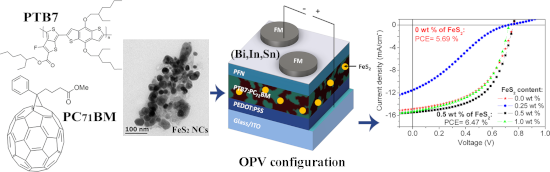
- thickness and morphology of the devices [32][35]. Spin-coating is one of the most widely used techniques for active layer deposition that provides a small active area film with a low root-mean-squared roughness of about 1–3 nm [36]. It has been proved that, with the incorporation of a third component in the
- ) AFM images of the OPVs with different concentrations of FeS2 recorded in the noncontact mode. The roughness of the OPV surface is increased gradually as the FeS2 concentration increases (Table 1 and Figure 7), such that traps for the charge carriers could occur and the leakage current could increase
- active layer thickness was measured by AFM (Easyscan2 from Nanosurf) in contact mode employing cantilever tips with the aluminum reflective coating (ContAl-G) from BudgetSensors. The AFM roughness images were acquired in dynamic force mode (using PPP-NCLAu from NanoSensors), because it shows better


Ion mobility and material transport on KBr in air as a function of the relative humidity
Beilstein J. Nanotechnol. 2019, 10, 2084–2093, doi:10.3762/bjnano.10.203
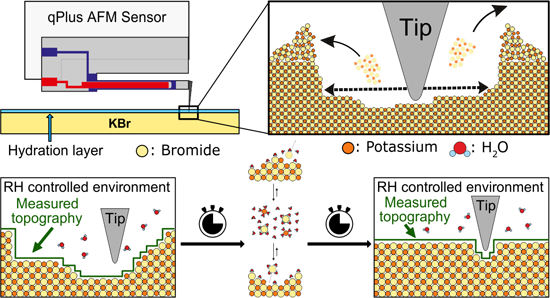
- water layers depends on many factors including the relative humidity, surface roughness, hydrophilicity or hydrophobicity, meniscus formation (as described later) and also air pressure and temperature [2]. In the case of freshly cleaved or dried surfaces the amount of adsorbed water also relates to the


Nanostructured and oriented metal–organic framework films enabling extreme surface wetting properties
Beilstein J. Nanotechnol. 2019, 10, 1994–2003, doi:10.3762/bjnano.10.196
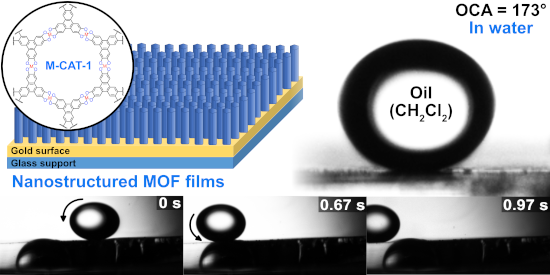
- activated MOF, roughness (RMS): 37 nm). Scanning electron microscope (SEM) micrographs reveal densely packed and randomly oriented MOF crystallites throughout the sample (see Figure S3.2, Supporting Information File 1). For the contact angle (CA) measurements at the solid/air interface we chose
- ). Superhydrophilic and underwater superoleophobic MOF-based surfaces Following Wenzels’ equation [70], an increased surface roughness results in a decreased WCA and in an enhanced OCA. To study the impact of roughness on the wetting properties of the M-CAT-1 films, we performed WCA and underwater OCA measurements
- , pressed pellet samples consisting of randomly distributed crystallites on the surface exhibit greater WCAs than oriented films, although the latter shows a slightly increased surface roughness (see Figures S5.2, S5.3, S3.4, S3.5, Supporting Information File 1). We attribute this difference to the


Porous silver-coated pNIPAM-co-AAc hydrogel nanocapsules
Beilstein J. Nanotechnol. 2019, 10, 1973–1982, doi:10.3762/bjnano.10.194
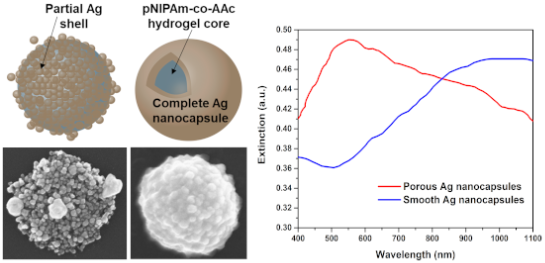
- . However, the surface morphology of the porous nanoshells is rough (see Figure 4b). Possible reasons for the roughness include destabilizing intercalation of the salt precursor into the polymer matrix and insufficient nucleation sites, leading to lengthy time periods needed for nanocapsule growth. To
- broadening of the spectra is likely the result of several contributing factors, such as polydispersity of the hydrogel core particles, capsule roughness, variable capsule thicknesses, and/or overlap of multipole surface plasmon resonances. The contribution from overlapping multipole surface plasmon


Oblique angle deposition of nickel thin films by high-power impulse magnetron sputtering
Beilstein J. Nanotechnol. 2019, 10, 1914–1921, doi:10.3762/bjnano.10.186
- 1 mm. The grazing incidence (GI)XRD scans were carried out with the incident beam at θ = 1°. Average thickness (dave), average surface roughness and mass density of the films were determined by low-angle X-ray reflectivity (XRR) measurements with an angular resolution of 0.005°, and the data was
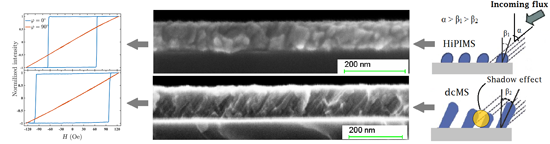
- . Vibrating sample magnetometry (VSM) was performed on 10 × 10 mm2 sized samples at 300 K. Variable magnetic fields up to ±1 T were used for magnetic measurements. Results and Discussion Thin film structure Figure 1 shows the film density, deposition rate and surface roughness of Ni films deposited by HiPIMS
- ], which might be due to rather long distance between target and substrate (25 cm) in this experiment. In terms of surface roughness, the HiPIMS-deposited film shows 0.8 nm roughness while the dcMS-deposited film shows 1.9 nm for normal deposition. The surface roughness remains unchanged for deposition at


Fabrication and characterization of Si1−xGex nanocrystals in as-grown and annealed structures: a comparative study
Beilstein J. Nanotechnol. 2019, 10, 1873–1882, doi:10.3762/bjnano.10.182
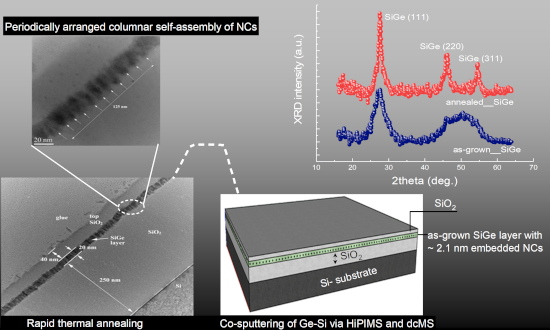
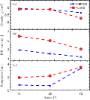
- perceived, represented by the vertical dashed lines. In addition, a decrease in the SiGe thickness (19.57 to 17.8 nm (±3% error)) and the interface roughness (3.56 to 3.28 nm) was observed with increased annealing temperature from room temperature (as-grown) to 900 °C. All parameters were determined by


Growth dynamics and light scattering of gold nanoparticles in situ synthesized at high concentration in thin polymer films
Beilstein J. Nanotechnol. 2019, 10, 1768–1777, doi:10.3762/bjnano.10.172
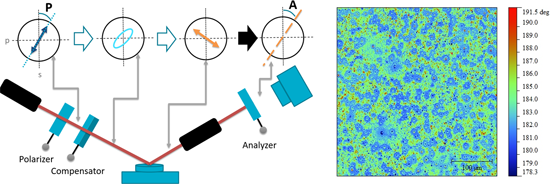
- the roughness of the films using atomic force microscopy (AFM). Results and Discussion Optical scattering measurements In preliminary experiments, Au-doped polymer films coated on glass were annealed in an oven at different temperatures (90–160 °C) over different periods of time (1–12 h). Different
- optical scattering of the laser beam strongly increased (Figure 2). This phenomenon can be related to the roughness parameter observed in AFM measurements as explained in the next subsection. The most general way to characterize optically a surface is to measure its bi-directional reflection distribution
- were imaged by AFM. A typical image of 5 μm × 5 μm size is presented in Figure 5a. It unambiguously shows the presence of the AuNPs. The topography of the samples was characterized by the average surface roughness parameter (Sa) and by the root-mean-square surface roughness parameter (Sq). For the


Stationary beam full-field transmission helium ion microscopy using sub-50 keV He+: Projected images and intensity patterns
Beilstein J. Nanotechnol. 2019, 10, 1648–1657, doi:10.3762/bjnano.10.160
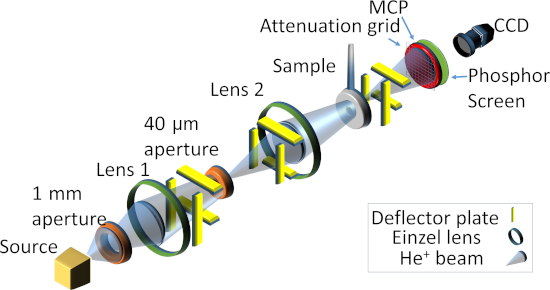
- illustrate possible artefacts, these mechanisms can offer potential applications as well. For instance, they can be useful in the characterization of micrometer-scale objects, when assessing the local surface roughness and structure. In the reports by Kiser et al. [34][35] an algorithm was used to find the


Development of a new hybrid approach combining AFM and SEM for the nanoparticle dimensional metrology
Beilstein J. Nanotechnol. 2019, 10, 1523–1536, doi:10.3762/bjnano.10.150
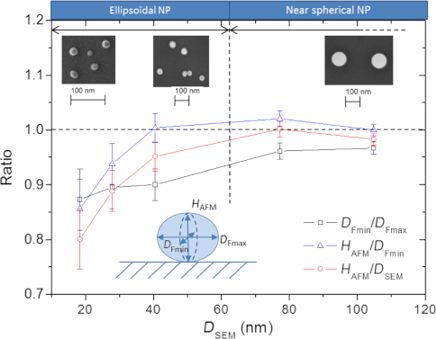
- -coordinate measured by AFM from the position of the mean roughness plane as considered in [1]. The measuring principle is schematized in Figure 1. The roughness of the substrate surface impacts the uncertainty associated with the height measurement [1]. A silicon wafer has been chosen as substrate for NP
- deposition because its roughness is relatively low (Sq = 0.3 nm), its surface physicochemical features are particularly suitable for an optimized NP dispersion and its electrical properties are compatible with SEM measurements [11]. In the Figure 1 is also shown the principle implemented for measuring the
- , binarizing the image to discriminate objects from the substrate, identifying each imaged nano-object, evaluating roughness and building the size distribution histogram by only counting isolated nanoparticles. NP agglomeration may induce errors in the measurements and should be avoided [1][11]. The program is




Kelvin probe force microscopy of the nanoscale electrical surface potential barrier of metal/semiconductor interfaces in ambient atmosphere
Beilstein J. Nanotechnol. 2019, 10, 1401–1411, doi:10.3762/bjnano.10.138
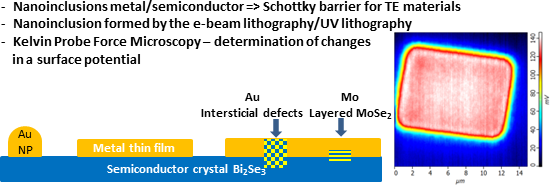
- material because of its well-defined layered structure with sub-nanometer roughness similar to mica or highly oriented pyrolytic graphite (HOPG). The electrical conductivity and mechanical stiffness of Bi2Se3 allow for the measurement with high-intensity electrical fields (10 V/30 nm) without damaging the


Nanoscale spatial mapping of mechanical properties through dynamic atomic force microscopy
Beilstein J. Nanotechnol. 2019, 10, 1332–1347, doi:10.3762/bjnano.10.132
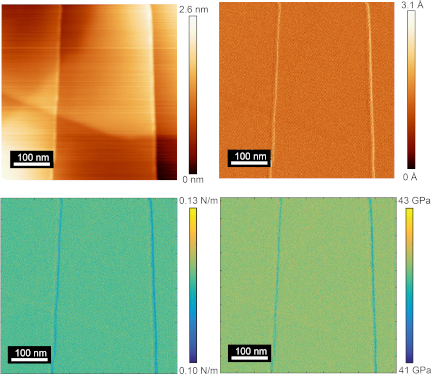
- comparable to previous studies where the contact stiffness on an atomic terrace was found to be 0.12 N/m [25]. A reduction of contact stiffness over the uncovered step edges is evident in Figure 6c. The contact stiffness depends on the surface topography or local roughness, which can in turn change the




Multicomponent bionanocomposites based on clay nanoarchitectures for electrochemical devices
Beilstein J. Nanotechnol. 2019, 10, 1303–1315, doi:10.3762/bjnano.10.129
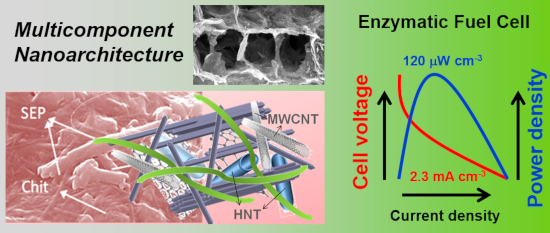
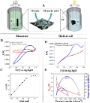
- power density was obtained as a surface power density (μW·cm−2) with the roughness factor (ECSA) calculated from the CV measurements, and as a volumetric power density (μW·mL−1) considering a specific volume (0.02 cm3), calculated from the specific density (1.9 g·mL−1 ) [29]. Schematic representation of



Playing with covalent triazine framework tiles for improved CO2 adsorption properties and catalytic performance
Beilstein J. Nanotechnol. 2019, 10, 1217–1227, doi:10.3762/bjnano.10.121

- calculated via Micro-Active (version 1.01) using the density functional theory (DFT) N2 model for slit geometry at optimal goodness of fit vs regularization (0.01) values for both RMS error of fit and roughness of distribution. The cumulative pore volume at the pore width of 2 nm was used to determine the





