Search results
Search for "selectivity" in Full Text gives 318 result(s) in Beilstein Journal of Nanotechnology. Showing first 200.
Using gold nanoparticles to detect single-nucleotide polymorphisms: toward liquid biopsy
Beilstein J. Nanotechnol. 2020, 11, 263–284, doi:10.3762/bjnano.11.20
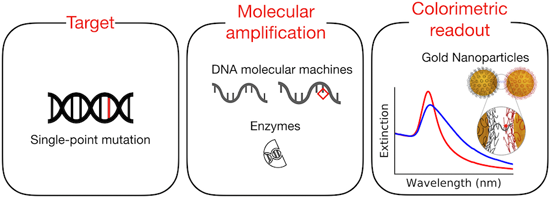
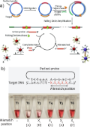
- offers an unprecedented sensitivity in native physiological media. Coupling these nanomaterial-based systems with enzymatic reactions can further increase the sensitivity and selectivity of a given sensor, leading to a scenario in which a tiny structural alteration of a biomolecule can be detected within
- nanoparticles of 13 nm. This method, however, had a rather low selectivity and could only differentiate DNA strands containing three or more mismatched bases. These examples are characterized by their simplicity requiring no expensive equipment or reagents. The detection of SNPs was achieved by mixing a DNA
- formation of DNA circuits and include hybridization chain reaction (HCR), catalytic hairpin assembly (CHA) and entropy-driven catalysis [64]. These mechanisms have shown a great potential for developing biosensors of high sensitivity and high selectivity since the target DNA itself is used as a catalyst to




Influence of the epitaxial composition on N-face GaN KOH etch kinetics determined by ICP-OES
Beilstein J. Nanotechnol. 2020, 11, 41–50, doi:10.3762/bjnano.11.4
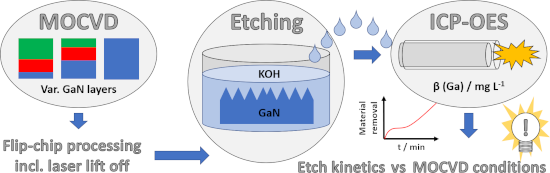
- . However, SEM of samples etched for 50 min revealed that the second 2D–3D transition also led to a temporary etch stop layer, despite the dislocation density only decreasing from 1.4 × 108 cm−2 to 1.1 × 108 cm−2. Even though selectivity was low due to the wide z-amplitude of pyramidal morphology, some


Synthesis of amorphous and graphitized porous nitrogen-doped carbon spheres as oxygen reduction reaction catalysts
Beilstein J. Nanotechnol. 2020, 11, 1–15, doi:10.3762/bjnano.11.1
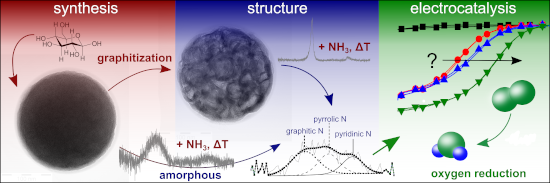
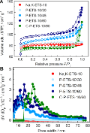
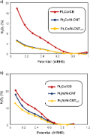
- the number of micropores, and thus of ORR active defect sites. Finally, considering the selectivity for the 4-electron reaction pathway to H2O, which is highly important for technical applications (Figure 8), we find that at potentials below 0.6 V the NCS-1000 catalyst, the best ORR catalyst in this
- , it is not only necessary to further improve the activity of nitrided carbon catalysts, but in particular also the selectivity for H2O formation. The trend of higher H2O2 yields at higher overpotentials furthermore clearly demonstrates that the slow increase of the measured current densities towards




Synthesis and acetone sensing properties of ZnFe2O4/rGO gas sensors
Beilstein J. Nanotechnol. 2019, 10, 2516–2526, doi:10.3762/bjnano.10.242
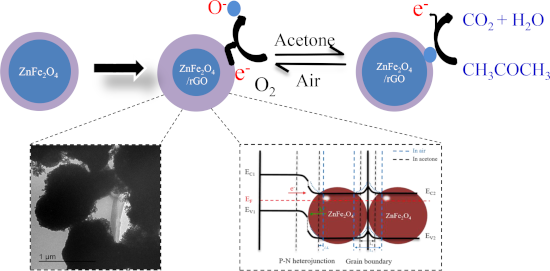
- response of the 0.5 wt % ZnFe2O4/rGO sensor to 0.8 ppm acetone was 1.50, and its response to 10 ppm acetone was 8.18, which is around 2.6 times more pronounced than the response of pure ZnFe2O4 (10 ppm, 3.20). Moreover, the sensor showed a wide linear range and good selectivity. Keywords: acetone
- field of gas sensing. It was reported that small, well-dispersed ZnFe2O4 nanoparticles showed a good selectivity to acetone at 200 °C, but the detection limit was only 5 ppm [15]. Porous ZnFe2O4 double-shell microspheres showed a response to acetone at 206 °C, which is mainly ascribed to their unique
- ZnFe2O4/rGO gas sensor with 0.5 wt % has a lower detection limit and shows an improved response. Furthermore, the 0.5 wt % ZnFe2O4/rGO gas sensor showed a better performance of acetone sensing at a lower temperature than any previously reported ZnFe2O4-based gas sensors (Table 1). The selectivity of gas




Evaluation of click chemistry microarrays for immunosensing of alpha-fetoprotein (AFP)
Beilstein J. Nanotechnol. 2019, 10, 2505–2515, doi:10.3762/bjnano.10.241
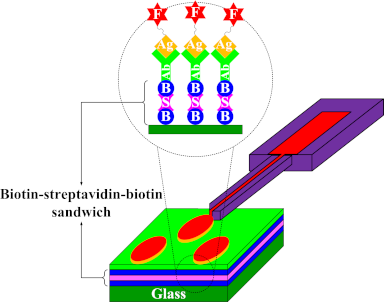
- –biotin sandwich strategy as well as the high selectivity of antigen–antibody interactions. Six different fabrication routes based on dibenzocyclooctyne- (DBCO-), thiol- and epoxy-functionalization of glasses and click chemistry attachment of biotinylated molecules (Figure 1) were used to obtain


Deterministic placement of ultra-bright near-infrared color centers in arrays of silicon carbide micropillars
Beilstein J. Nanotechnol. 2019, 10, 2383–2395, doi:10.3762/bjnano.10.229
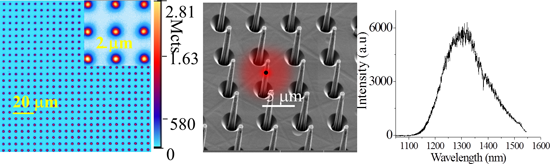
- -transform-limited linewidths, allowing for the exploitation of the spin selectivity of the optical transitions for spin–photon entanglement [33]. In addition to millisecond-long spin coherence times originating from the high-purity crystal, high-fidelity optical initialization and coherent spin control


Multiwalled carbon nanotube based aromatic volatile organic compound sensor: sensitivity enhancement through 1-hexadecanethiol functionalisation
Beilstein J. Nanotechnol. 2019, 10, 2364–2373, doi:10.3762/bjnano.10.227
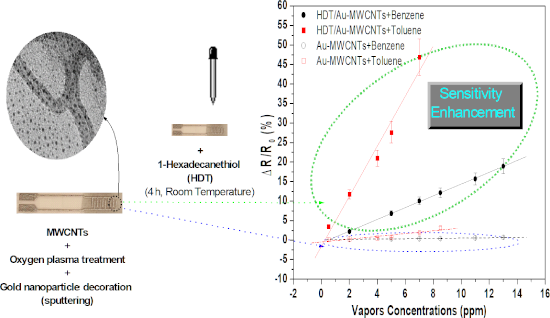
- sensitivity (up to 17 times), selectivity and improves the response dynamics of the sensors. Keywords: gold-decorated MWCNTs; multiwall carbon nanotubes (MWCNTs); self-assembled monolayers (SAMs); sensitivity; selectivity; vapour sensor; Introduction Aromatic volatile organic compounds (VOCs) such as
- therefore lead to the development of commercially affordable sensors [9][10][11]. However, they suffer from some limitations such as their poor selectivity, partial recovery and long response recovery time [12]. To overcome these issues, several strategies have been reported including, but not limited to
- , metal decoration or chemical functionalisation [13]. In the present work, we investigated the effect of gold nanoparticle decorated, multiwall carbon nanotubes functionalized with 1-hexadecanethiol on the sensor selectivity and sensitivity towards benzene and toluene vapours. Experimental Materials




The role of Ag+, Ca2+, Pb2+ and Al3+ adions in the SERS turn-on effect of anionic analytes
Beilstein J. Nanotechnol. 2019, 10, 2338–2345, doi:10.3762/bjnano.10.224
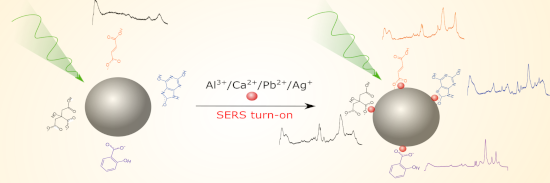
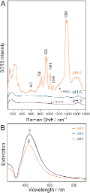
- activation strategy greatly improves the selectivity of SERS enabling the detection of target analytes even from complex biological matrixes [13][14]. In this study, we show that the SERS spectra of organic acids such as uric, salicylic or fumaric acid, but also the SERS spectrum of the citrate anion capping
- improving the reliability of SERS detection for anionic target molecules and also for improving the selectivity of SERS detection. Results and Discussion SERS studies on anionic analytes are considerably fewer in the literature than studies on cationic molecules. The competitive adsorption of anionic
- organic acids on the silver surface are shown in the insets of Figure 2. SERS selectivity – competitive adsorption to the silver surface As the chemisorption of anionic species to the silver surface occurs competitively, anionic species with a higher affinity for the silver surface than citrate such as Cl


Design of a nanostructured mucoadhesive system containing curcumin for buccal application: from physicochemical to biological aspects
Beilstein J. Nanotechnol. 2019, 10, 2304–2328, doi:10.3762/bjnano.10.222
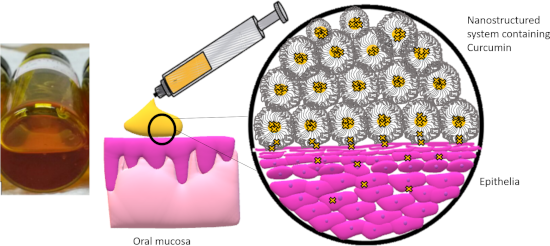
- selectivity targeting cancer cells. Keywords: curcumin; mucoadhesion; oral squamous cell carcinoma; permeation; poloxamer 407; Introduction The development of nanostructured systems containing poloxamer 407 (P407) and Carbopol 974P® (C974P) have previously been shown to have rheological and mechanical
- incorporated into the formulation but decreased cytotoxic effects in healthy cells. Therefore, the nanostructured system demonstrated promising results due to the selectivity towards cancer cells in a monolayer cell culture in addition to exhibiting excellent physicochemical properties. Hence, further activity


Use of data processing for rapid detection of the prostate-specific antigen biomarker using immunomagnetic sandwich-type sensors
Beilstein J. Nanotechnol. 2019, 10, 2171–2181, doi:10.3762/bjnano.10.210

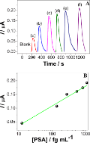
- polymer-based immunosensor [34][55]. This rather low value is expected for biosensors where the index n is characteristic of heterogeneous adsorption with polyclonal biomolecules that have many active sites with different degrees of affinity and selectivity. Application of the immunosensor in real samples


The importance of design in nanoarchitectonics: multifractality in MACE silicon nanowires
Beilstein J. Nanotechnol. 2019, 10, 2094–2102, doi:10.3762/bjnano.10.204

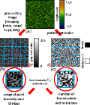
- surface tension of the fluid. Elastocapillary self-assembly of NWs is an extensively investigated versatile and scalable method to design complex and robust surface nanoarchitectures [18]. For tuning and selectivity of the design of NW assemblies other approaches should be considered [19]. In hierarchical




Synthesis of highly active ETS-10-based titanosilicate for heterogeneously catalyzed transesterification of triglycerides
Beilstein J. Nanotechnol. 2019, 10, 2039–2061, doi:10.3762/bjnano.10.200
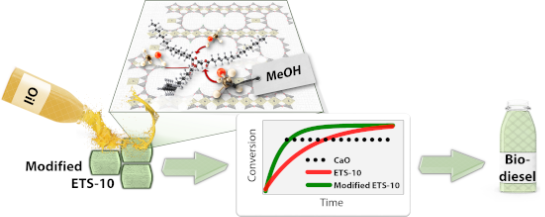
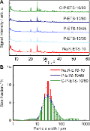
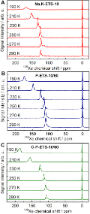
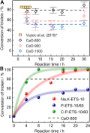
- more basic than the NaX zeolite based on acetone selectivity in the conversion of isopropanol to acetone and propene [24]. However, due to its microporous nature, to the best of our knowledge, in all reported studies on the transesterification of triglycerides (single-component or in mixtures/oils) for








Review of advanced sensor devices employing nanoarchitectonics concepts
Beilstein J. Nanotechnol. 2019, 10, 2014–2030, doi:10.3762/bjnano.10.198
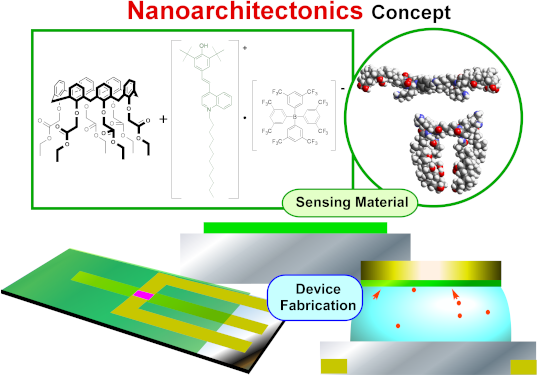
- selectivity, high efficiency, environmental friendliness, and with low cost and low emission. Various fundamental areas of science and technology, such as organic synthesis [28][29][30], supramolecular organization [31][32][33][34][35], physical fabrication [36][37][38] and biotechnology [39][40][41], are
- sensors Advancements in sensor capabilities, including sensitivity, selectivity and usability, can be accomplished by ultrafine design of device mechanisms and sensing material structures. Both the device and sensing material design can be accomplished with a combined concept, nanoarchitectonics, derived
- transistor with a poly(3,4-ethylenedioxythiophene)/poly(styrenesulfonate) (PEDOT/PSS) system modified with molecularly imprinted polymer films [106]. The selectivity factor of ʟ-tryptophan over ᴅ-tryptophan and that of ʟ-tyrosine over ᴅ-tyrosine were 11.6 and 14.5, respectively. Life activities are also





Gold-coated plant virus as computed tomography imaging contrast agent
Beilstein J. Nanotechnol. 2019, 10, 1983–1993, doi:10.3762/bjnano.10.195
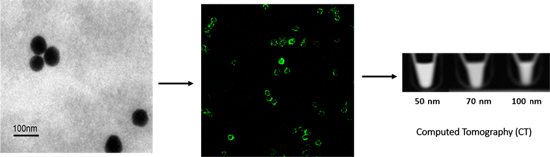
- toxicity, biocompatibility, immunogenicity, distribution and the payload being carried. Modified protein cages are robust systems that combine imaging capabilities and target selectivity on the same platform. One application is the development of magnetic resonance imaging (MRI) contrast agents. Current




The influence of porosity on nanoparticle formation in hierarchical aluminophosphates
Beilstein J. Nanotechnol. 2019, 10, 1952–1957, doi:10.3762/bjnano.10.191
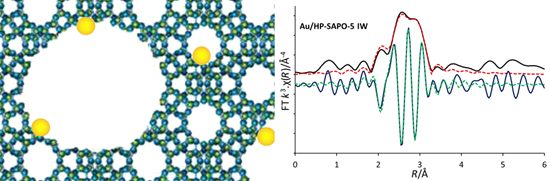
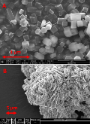
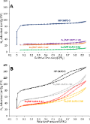
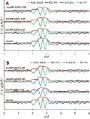
- in catalytic reactions, resulting in targeted product selectivity and hence are, in principle, excellent hosts for metal nanoparticles [11]. Similarly, zeotype materials such as zeolites and aluminophosphates (AlPOs) also possess a wide range of secondary functionalities that could synergise with the
Processing nanoporous organic polymers in liquid amines
Beilstein J. Nanotechnol. 2019, 10, 1844–1850, doi:10.3762/bjnano.10.179
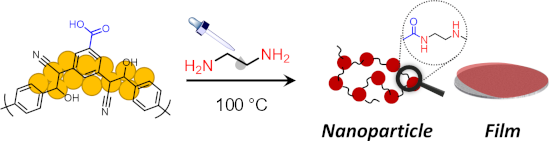
- advantage for favorable interaction toward target sorbate molecules. A control in thickness and composition of the film should also be achieved when varying the type and the concentration of nanoporous polymers, which will affect the permeability and selectivity of polymer films for adsorption applications



Synthesis of nickel/gallium nanoalloys using a dual-source approach in 1-alkyl-3-methylimidazole ionic liquids
Beilstein J. Nanotechnol. 2019, 10, 1754–1767, doi:10.3762/bjnano.10.171
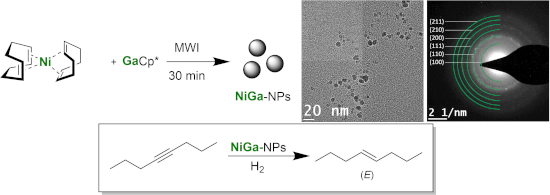
- (HAADF-STEM) and supported by energy-dispersive X-ray spectrometry (EDX), selected-area energy diffraction (SAED) and X-ray photoelectron spectroscopy (XPS). NiGa@[BMIm][NTf2] catalyze the semihydrogenation of 4-octyne to 4-octene with 100% selectivity towards (E)-4-octene over five runs, but with poor
- conversion values. IL-free, precipitated NiGa nanoparticles achieve conversion values of over 90% and selectivity of 100% towards alkene over three runs. Keywords: ionic liquids; microwave decomposition; nickel/gallium nanoparticles; semihydrogenation catalysis; soft wet-chemical synthesis; Introduction
- -group metals such as gallium to transition metals can significantly improve the catalytic selectivity towards semihydrogenation reactions, e.g., PdGa [26][27][28] and RhGa [29]. Intermetallic nanoparticles of nickel and gallium have been proven as efficient catalysts in semihydrogenation reactions




Materials nanoarchitectonics at two-dimensional liquid interfaces
Beilstein J. Nanotechnol. 2019, 10, 1559–1587, doi:10.3762/bjnano.10.153
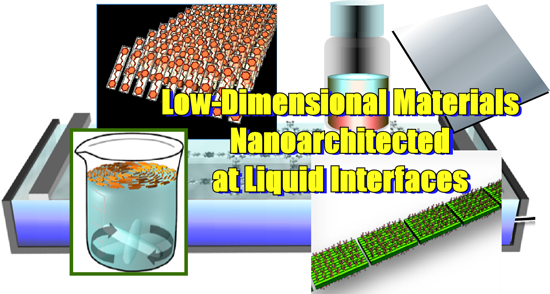
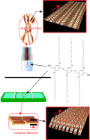
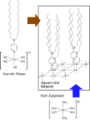
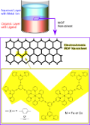
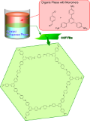
- conformational changes of molecular receptors at the air–water interface results in a change of the chiral selectivity towards aqueous amino acids [174][175], or of the optimum guest structure from thymine to uracil derivatives [176][177]. Regulation of molecular interaction at liquid interfaces yields a novel












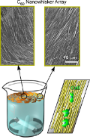

Selective gas detection using Mn3O4/WO3 composites as a sensing layer
Beilstein J. Nanotechnol. 2019, 10, 1423–1433, doi:10.3762/bjnano.10.140
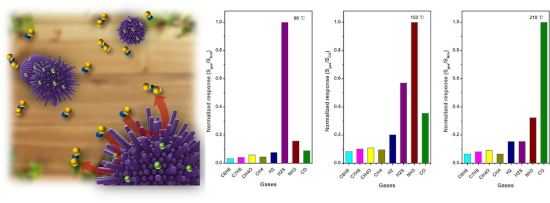
- between the two metal oxides. The sensor based on the Mn3O4/WO3 composite with 3 atom % Mn showed a high selective response to hydrogen sulfide (H2S), ammonia (NH3) and carbon monoxide (CO) at working temperatures of 90 °C, 150 °C and 210 °C, respectively. The demonstrated superior selectivity opens the
- door for potential applications in gas recognition and detection. Keywords: Mn3O4/WO3 composites; heterojunctions; working temperature; gas sensing; selectivity; Introduction Tungsten oxide (WO3) is a highly stable, classical transition metal oxide. When synthesized, WO3 usually presents a yellowish
- to enhance the selectivity of WO3-based gas sensors. Previous studies found that the gas sensing response of pure phase WO3 is usually low and improving this response for a particular gas could simultaneously enhance their selectivity [7][8][9]. Kabcum et al. developed a sensor based on PdO


Gas sensing properties of individual SnO2 nanowires and SnO2 sol–gel nanocomposites
Beilstein J. Nanotechnol. 2019, 10, 1380–1390, doi:10.3762/bjnano.10.136
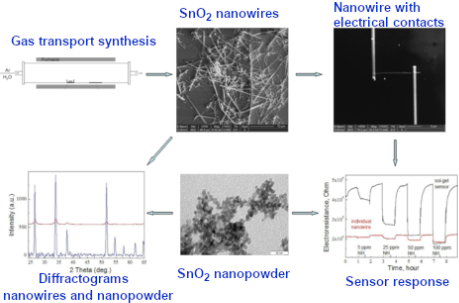
- selectivity to target gases. The aim of this work is the comparison of gas sensing properties of tin dioxide in the form of individual nanowires and nanopowders obtained by sol–gel synthesis. This comparison is necessary because the traditional synthesis procedures of small particle, metal oxide materials


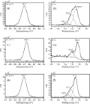


A biomimetic nanofluidic diode based on surface-modified polymeric carbon nitride nanotubes
Beilstein J. Nanotechnol. 2019, 10, 1316–1323, doi:10.3762/bjnano.10.130
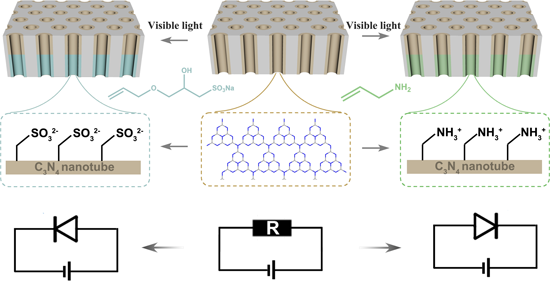
- Chemistry, Beihang University, 100191 Beijing, P.R. China 10.3762/bjnano.10.130 Abstract A controllable ion transport including ion selectivity and ion rectification across nanochannels or porous membranes is of great importance because of potential applications ranging from biosensing to energy conversion
- -transport properties, namely, ion selectivity, ion rectification and ion pumping of biological ion channels have been successfully achieved in solid-state materials [14][15][16]. All these controllable active and passive ion transport mechanisms are based on the electrical double layer (EDL) effect [17][18
- nanochannels preferentially transport anions instead of cations, while the negatively charged nanochannels selectively transport cations [19][20][21]. This is the origin of ion selectivity. To realize ion rectification, asymmetric nanochannels and/or asymmetric surface-charge distributions are needed. In this


Alloyed Pt3M (M = Co, Ni) nanoparticles supported on S- and N-doped carbon nanotubes for the oxygen reduction reaction
Beilstein J. Nanotechnol. 2019, 10, 1251–1269, doi:10.3762/bjnano.10.125
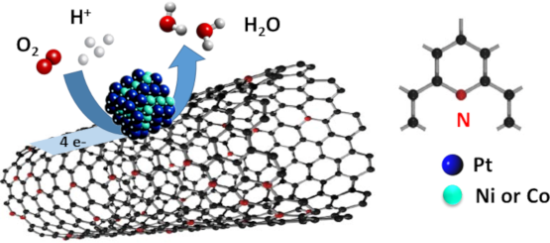
- selectivity In order to proceed to a first screening of the as-prepared catalysts, their electrochemical properties were evaluated by RRDE measurements. It is worth noting that electrocatalyst investigations are usually performed with a rotating ring-disk electrode (RRDE) in acidic or alkaline media. Previous
- ORR is electrolyte- and particle-size-dependent, as is already known, but also support-dependent, at least for small (2 nm) nanoparticles. For such smaller NPs, it is plausible that a modification of the d-band center occurs upon modification of the support [77]. The ORR selectivity is also a critical
- issue for a PEMFC catalyst. A well-known phenomenon of catalyst degradation is due to the formation of hydrogen peroxide near the electrolyte membrane [78]. Moreover, it was shown that in aqueous KNO3 solutions, nitrogen-doped carbon structures were active for ORR with lower H2O2 selectivity than Pt/C







Playing with covalent triazine framework tiles for improved CO2 adsorption properties and catalytic performance
Beilstein J. Nanotechnol. 2019, 10, 1217–1227, doi:10.3762/bjnano.10.121
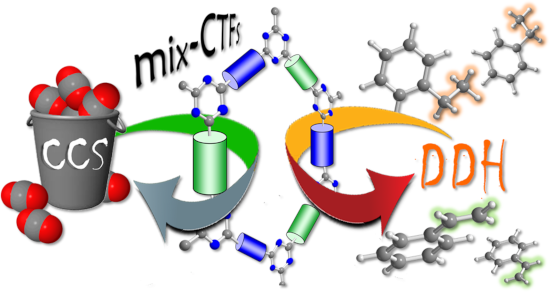
- . Keywords: covalent triazine frameworks; CO2 adsorption; CO2/N2 selectivity; dehydrogenation catalysis; ionothermal conditions; Introduction Recent years have witnessed an increasing interest in carbon-based nanomaterials as functional devices for energy-related applications [1]. Their unique properties
- specific process rate (λ) and ST selectivity, even under operative conditions close to those of industrial plants [34]. Among these, CTFs have unambiguously exhibited superior activity and selectivity in the process [30] compared to carbon-based and metal-based state-of-the-art systems [35][36][37][38][39
- selectivity) as well as stability on stream. Results and Discussion Synthesis and characterization of CTF1–5 CTF samples have been prepared under ionothermal conditions, using molten ZnCl2 as reaction medium and Lewis acid cyanotrimerization catalyst [14]. As ZnCl2 is supposed to act as a porogene, it was


Photoactive nanoarchitectures based on clays incorporating TiO2 and ZnO nanoparticles
Beilstein J. Nanotechnol. 2019, 10, 1140–1156, doi:10.3762/bjnano.10.114
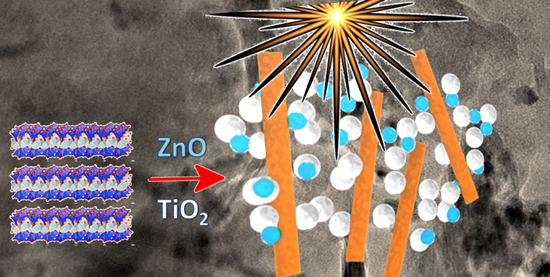
- morphologies, to immobilize these types of nanoparticles mainly plays a role in i) the control of their size and size distribution on the solid surface, ii) the mitigation or suppression of the nanoparticle aggregation, and iii) the hierarchical design for selectivity enhancements in the catalytic
- the selectivity of phenol are 72 and 96%, respectively) after visible-light irradiation for 5 h. The photocatalytic reaction efficiency on the oxidation of benzene (referred to both benzene elimination yield and the selectivity of the formation of phenol) was substantially changed when the reactions
- were conducted in the presence of phenol (starting from a benzene/phenol mixture in water). There is a demand for an alternative to the commonly used cumene process in the production of phenol. A photocatalytic reaction with high yields and selectivity of phenol can be highly suitable for mass



Enhanced inhibition of influenza virus infection by peptide–noble-metal nanoparticle conjugates
Beilstein J. Nanotechnol. 2019, 10, 1038–1047, doi:10.3762/bjnano.10.104
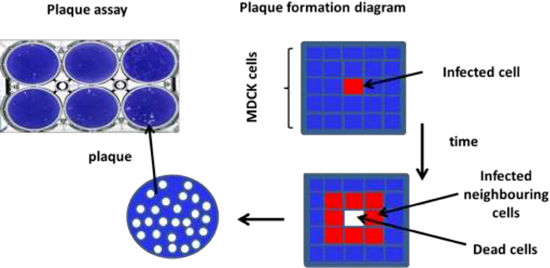
- selectivity and specificity of the grafted biological functional entity [22], which includes peptides [23][24]. Presentation of a functional peptide by means of a nanoparticle has a number of advantages. Thus, nanoparticle conjugation may enhance the solubility of the peptide, as well as enhance the