Search results
Search for "sensing" in Full Text gives 519 result(s) in Beilstein Journal of Nanotechnology. Showing first 200.
A photonic crystal material for the online detection of nonpolar hydrocarbon vapors
Beilstein J. Nanotechnol. 2022, 13, 127–136, doi:10.3762/bjnano.13.9
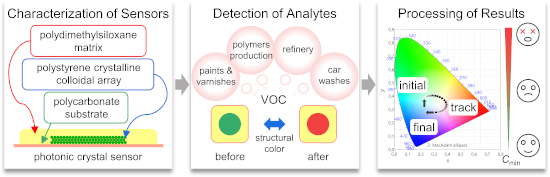
- array with a sensing matrix of polydimethylsiloxane, have been determined by using scanning electron microscopy and by the results of specular reflectance spectroscopy based on the Bragg–Snell law. A new approach has been proposed for the application of this sensor in chemical analysis for the
- crystal structures for chemical sensing of organic solvents. Funding A part of this work was performed under a state assignment on basic scientific research for the Kurnakov Institute of General and Inorganic Chemistry, Russian Academy of Sciences (Moscow, Russia) using the equipment of the Joint


Tin dioxide nanomaterial-based photocatalysts for nitrogen oxide oxidation: a review
Beilstein J. Nanotechnol. 2022, 13, 96–113, doi:10.3762/bjnano.13.7
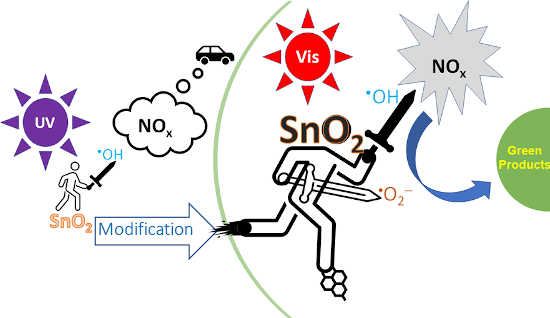
- vacancy defects (OVs) [15][16]. Therefore, SnO2 is considered a potential material in various technological fields such as catalysis, optoelectronic devices, rechargeable lithium batteries, electrocatalysis, photocatalysis, solar energy conversion, and gas sensing [17][18][19][20][21][22][23][24]. In the
- photocatalysts and a cost-effective, environmentally benign way through heat treatment in different atmospheres [39]. Combining noble metals with SnO2, such as in Au/SnO2 [78] or Pd/SnO2 [79], is an advanced approach yielding an effective performance for gas sensing. However, There is only one report by Bui et


Sputtering onto liquids: a critical review
Beilstein J. Nanotechnol. 2022, 13, 10–53, doi:10.3762/bjnano.13.2





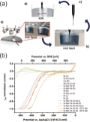


Enhancement of the piezoelectric coefficient in PVDF-TrFe/CoFe2O4 nanocomposites through DC magnetic poling
Beilstein J. Nanotechnol. 2021, 12, 1262–1270, doi:10.3762/bjnano.12.93
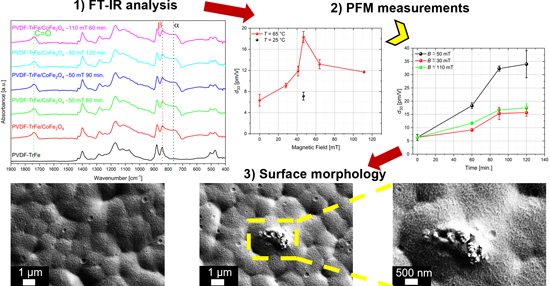
- piezoelectric and ferroelectric properties, high chemical resistance, high thermal stability, large polarization, short switching time, and mechanical flexibility. All these combined characteristics make it suitable for a wide range of advanced applications, from sensing to energy harvesting [8][9][10][11]. It


Morphology-driven gas sensing by fabricated fractals: A review
Beilstein J. Nanotechnol. 2021, 12, 1187–1208, doi:10.3762/bjnano.12.88
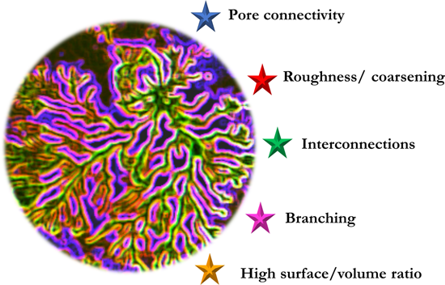
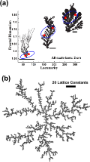
- to be possessing better gas sensing capabilities. Fab-fracs with these salient features will help in designing the commercial gas sensors with better performance. Keywords: adsorption sites; fabricated fractal; fractal dimension; gas sensor; morphology; pore network; recovery time; response time
- usage [5][6][7]. The objectives in gas sensing research are usually set to enhance the sensitivity (how the sensor responds to small changes when the gas environment around it changes), selectivity (if a sensor can still respond to a particular gas when many gases present), stability (how the sensor
- metal oxide (SMO) sensors are most popular due to their low cost, simplicity, easy fabrication, and wide range of gas detection capabilities [9]. Thin films and nanostructures exhibit better sensing characteristics. Various researchers have reported structures with morphologies such as nanowires (NWs










Self-assembly of amino acids toward functional biomaterials
Beilstein J. Nanotechnol. 2021, 12, 1140–1150, doi:10.3762/bjnano.12.85
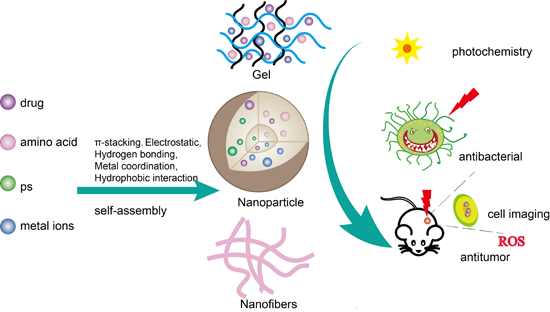
- were used for the selective sensing of Fe3+ within cancer cells and imaging of Fe3+ [54]. Amino-acid-coordinated self-assembly. Coordination-driven self-assembly is a supramolecular self-assembly method based on metal-coordination bond formation, which has the advantages of fewer steps, fast final

A Au/CuNiCoS4/p-Si photodiode: electrical and morphological characterization
Beilstein J. Nanotechnol. 2021, 12, 984–994, doi:10.3762/bjnano.12.74
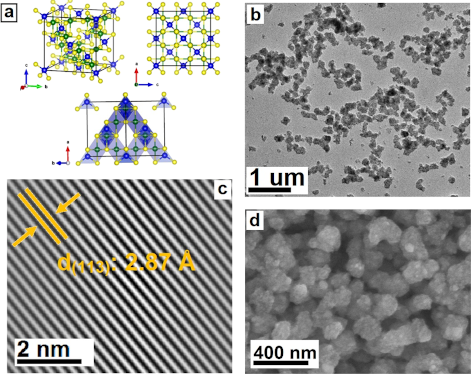
- great attention due their unique electronic, magnetic, optical, and gas sensing properties. Spinel compounds can be employed in data storage applications, lithium-ion batteries, gas sensors, and medical diagnostics [1][2]. Spinels have a cubic crystal structure with the general chemical formula AB2X4



Uniform arrays of gold nanoelectrodes with tuneable recess depth
Beilstein J. Nanotechnol. 2021, 12, 957–964, doi:10.3762/bjnano.12.72
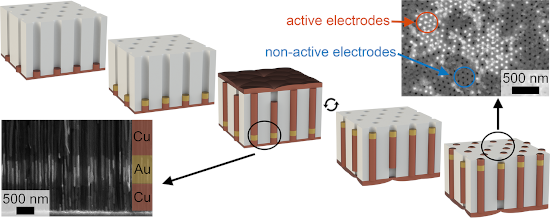
- value was chosen as an optimal Ed for further experiments. According to the scheme of the NEA fabrication (Figure 1), the first Cu segment’s length (LCu1) determines the recess of NEAs relative to the template surface. In order to enhance a response time of sensing material inside AAO, LCu1 was
- the active recessed nanoelectrodes was quantified. It was shown that 45 ± 15% of electrodes have electrical contact with the current collector. The obtained recessed NEAs are prospective for creating electrochemical sensors, in which the template sterically stabilizes the sensing material. It is


The role of deep eutectic solvents and carrageenan in synthesizing biocompatible anisotropic metal nanoparticles
Beilstein J. Nanotechnol. 2021, 12, 924–938, doi:10.3762/bjnano.12.69
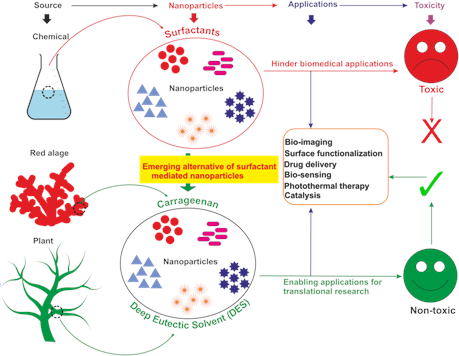
- ), Ghaziabad 201002, India 10.3762/bjnano.12.69 Abstract Plasmonic metal nanoparticles are widely used for many applications due to their unique optical and chemical properties. Over the past decade, anisotropic metal nanoparticles have been explored for imaging, sensing, and diagnostic applications. The
- and smartphone-based sensing applications [3][4][5]. Several other advanced sensing applications have emerged, such as battery-free and wireless devices, providing on-site results [6][7]. NIR absorption is exclusively exhibited by plasmonic anisotropic nanoparticles, enabling diagnostic imaging within


Reducing molecular simulation time for AFM images based on super-resolution methods
Beilstein J. Nanotechnol. 2021, 12, 775–785, doi:10.3762/bjnano.12.61
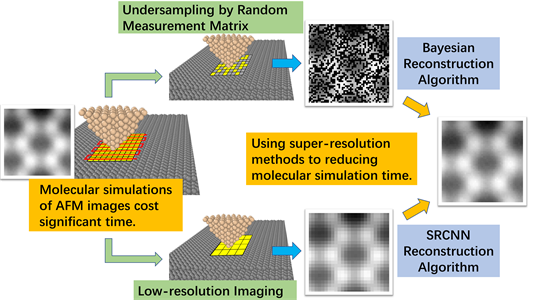
- also been used as training data. However, the simulation is incredibly time consuming. In this paper, we apply super-resolution methods, including compressed sensing and deep learning methods, to reconstruct simulated images and to reduce simulation time. Several molecular simulation energy maps under
- can be used to speed up the generation of training data and vary simulation resolution for AFM machine learning. Keywords: atomic force microscopy; Bayesian compressed sensing; convolutional neural network; molecular dynamics simulation; super resolution; Introduction Atomic force microscopy methods
- in computer vision. Super-resolution methods could be used to reconstruct a high-resolution image from a low-resolution image. There are a variety of methods in the field of super resolution. Compressed sensing (CS) and deep learning methods are two typical methods with excellent imaging performance




Recent progress in actuation technologies of micro/nanorobots
Beilstein J. Nanotechnol. 2021, 12, 756–765, doi:10.3762/bjnano.12.59
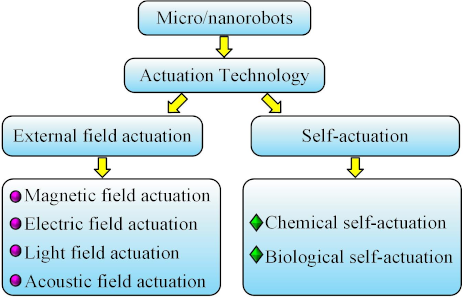
- has a better development prospect. Patino et al. [43] combined DNA nanoswitches with urease-powered micromotors to achieve the goal of swimming and sensing the pH value of the environment. In this study, the urease-powered micromotor served two functions. It detected changes in the pH value through


Recent progress in magnetic applications for micro- and nanorobots
Beilstein J. Nanotechnol. 2021, 12, 744–755, doi:10.3762/bjnano.12.58
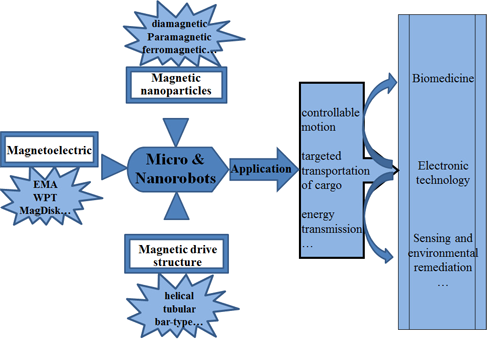
- Micro- and nanorobots (MNRs) present challenges and prospects in the field of nanotechnology. MNRs have been a major direction of technological development and will be widely used in many fields such as biomedicine, electronic technology and sensing, and environmental remediation [1][2][3][4]. Therefore
- avoid the reassembly of the chains. Doherty et al. [38] pointed out that superparamagnetic nanofibers could prevent the uncontrolled agglomeration of particles because the residual magnetization of this material is almost zero. They applied this technology to sensing and environmental remediation and
- enabled actuation, control, and observation of the FMSM. In most mobile sensing applications, microrobots are driven by chemical fuels such as hydrogen peroxide (H2O2) and surfactants. In contrast, magnetic drives have good biocompatibility and external power supply. For example, a porous microelectrode


Nanogenerator-based self-powered sensors for data collection
Beilstein J. Nanotechnol. 2021, 12, 680–693, doi:10.3762/bjnano.12.54
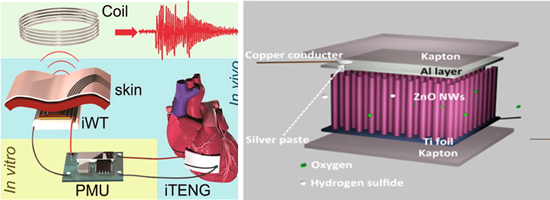
- increases with pressure. The output voltage reaches a saturation value after a certain number of sensor actuations, as shown in Figure 2e. This intelligent neuromorphic sensor that mimics synaptic enhancement and memory can be used as a human skin tactile sensing solution, providing rich data for artificial
- exercise intensity information can be obtained in real time. This is a new solution for big data sensing in sports. The mechanical energy generated by blood flow or body motion also can drive sensors for monitoring various indicators of body fluids. Pan et al. [35] proposed a self-powered blood pressure



A review of defect engineering, ion implantation, and nanofabrication using the helium ion microscope
Beilstein J. Nanotechnol. 2021, 12, 633–664, doi:10.3762/bjnano.12.52


Simulation of gas sensing with a triboelectric nanogenerator
Beilstein J. Nanotechnol. 2021, 12, 507–516, doi:10.3762/bjnano.12.41
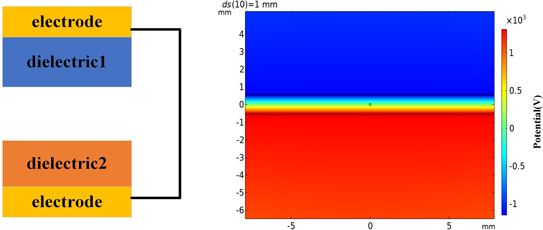
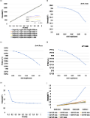
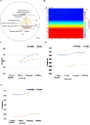
- applied for gas sensing without external power supply. In this paper, a two-dimensional model of a TENG was established, and a gas jet a rectangular cross section was added between two triboelectric materials. The TENG could generate distinguishable electrical signals according to the different types of
- gas and the different gas injection areas. This work contributes to the area of self-powered gas sensing. Keywords: gas; sensor; triboelectric nanogenerator (TENG); Introduction With economic development and social progress, there is an increasing demand for wearable [1][2][3][4], medical [5], and
- self-powered gas sensors. In this paper, in order to explore the sensing of different gases by TENGs, a gas jet of rectangular cross section was added to the two-dimensional model of a TENG. The TENG generates electrical signals depending on the type of gas and the cross section of the gas injection



A stretchable triboelectric nanogenerator made of silver-coated glass microspheres for human motion energy harvesting and self-powered sensing applications
Beilstein J. Nanotechnol. 2021, 12, 402–412, doi:10.3762/bjnano.12.32
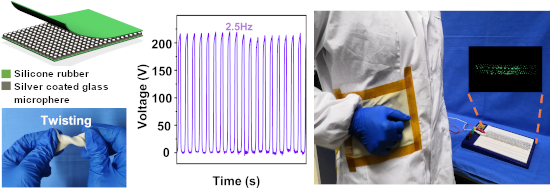
- satisfies the needs of reliability for flexible tactile sensors in realizing human–machine interfaces. This work expands the potential application of S-TENGs from wearable electronics and smart sensing systems to real-time robotics control and virtual reality/augmented reality interactions. Keywords: human
- ]. This form of energy conversion can not only provide sustainable power for electronic systems, but also provide reliable solutions for active sensing and human–computer interfaces [14]. A stretchable TENG with double-helix structure was previously designed. It consisted of silver-coated glass
- systems. The distinct advantages of the S-TENG indicate broad application prospects in wearable electronics and smart sensing systems. Results and Discussion Figure 1a is the schematic of the structural design of the S-TENG. The device is composed of three layers, that is, the top layer and the bottom




Nickel nanoparticle-decorated reduced graphene oxide/WO3 nanocomposite – a promising candidate for gas sensing
Beilstein J. Nanotechnol. 2021, 12, 343–353, doi:10.3762/bjnano.12.28
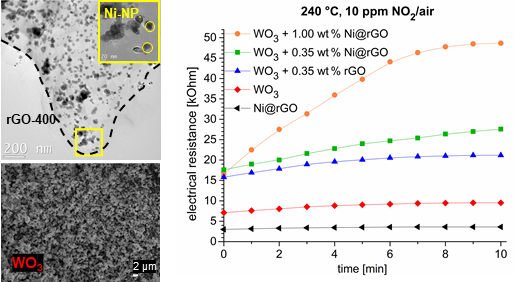
- Materials Research Center and Institute for Macromolecular Chemistry, Albert-Ludwigs-University Freiburg, 79104 Freiburg, Germany 10.3762/bjnano.12.28 Abstract We report for the first time the combination of WO3 sensing elements with a non-noble metal–carbon composite, namely a nickel metal nanoparticle
- –carbon composite (Ni@rGO). Previous work with WO3 had used either NiO (as part of the WO3 lattice), solely carbon, Pd-surface decorated WO3 (Pd@WO3), or Pd or Pt@carbon@WO3. We demonstrate the gas response for pure WO3, rGO/WO3 and Ni@rGO/WO3 sensing elements towards NO2 and acetone in air as well as
- /WO3 composite and CO gas, a response time (Tres) of 7 min and a recovery time (Trec) of 2 min was determined. Keywords: gas sensing; magnetic measurements; nickel nanoparticles; reduced graphene oxide; tungsten oxide; Introduction Toxic gases as well as volatile organic compounds (VOC) are known air


The nanomorphology of cell surfaces of adhered osteoblasts
Beilstein J. Nanotechnol. 2021, 12, 242–256, doi:10.3762/bjnano.12.20
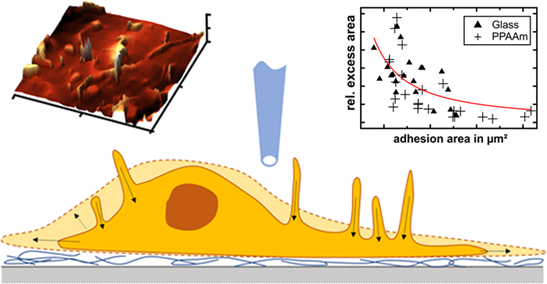
- current sensing and motion termination results in a larger error signal on hard materials than on soft materials. Thus, the comparison between ion current error images of living and fixed cells can provide insight into the protein content in the ruffle volume, because fixation leads to crosslinking of


Toward graphene textiles in wearable eye tracking systems for human–machine interaction
Beilstein J. Nanotechnol. 2021, 12, 180–189, doi:10.3762/bjnano.12.14
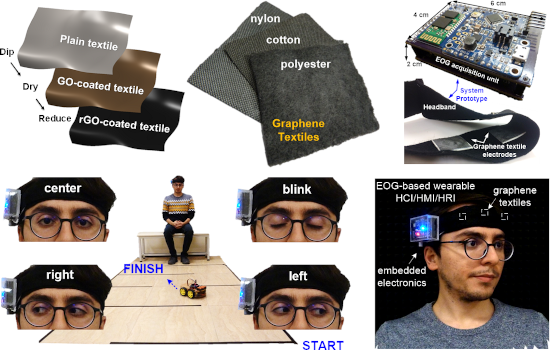
- interaction (HCI/HMI), and personal medical devices; provided that, seamless sensing of eye activity and processing thereof is achieved by a truly wearable, low-cost, and accessible technology. The present study demonstrates an alternative to the bulky and expensive camera-based eye tracking systems and
- technique that is reliable, easy to operate, and can be made cosmetically appealing, EOG-based devices still struggle to penetrate the wearables market, and their full potential has not been realized due to limitations of the sensing electrodes [20][21][22]. The combination of graphene with ordinary
- ” electrodes. Wearable system prototype One of the fundamental obstacles regarding the actual wearability of electronic systems is the lack of robust integration schemes for the interface between soft sensing electrodes and rigid electronic components. We have addressed this issue by following a system-level


Paper-based triboelectric nanogenerators and their applications: a review
Beilstein J. Nanotechnol. 2021, 12, 151–171, doi:10.3762/bjnano.12.12
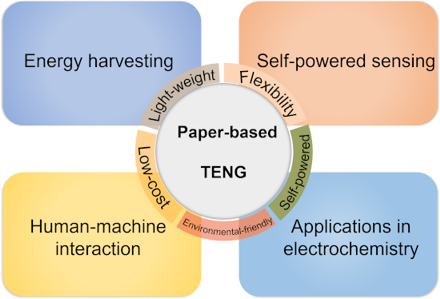
- , including self-powered sensing devices, human–machine interaction, electrochemistry, and highly efficient energy harvesting devices. This leads to a simple yet effective way for the next generation of energy devices and paper electronics. Keywords: energy harvesting; interaction; Internet of Things (IoT
- paper, we then highlight the strategies to improve the output performance of P-TENGs. In another section, we give a detailed review on the application of P-TENGs, with two-dimensional patterns and three-dimensional structures, on self-powered sensing devices, human–machine interaction, electrochemistry
- mechanical properties of the origami structures enable diversified and sophisticated compressions and expansions. Previous research works on paper-based origami mainly focused on the seamless integration of sensing and interactive actuation; however, they lacked to address the concerns regarding paper-based






Numerical analysis of vibration modes of a qPlus sensor with a long tip
Beilstein J. Nanotechnol. 2021, 12, 82–92, doi:10.3762/bjnano.12.7
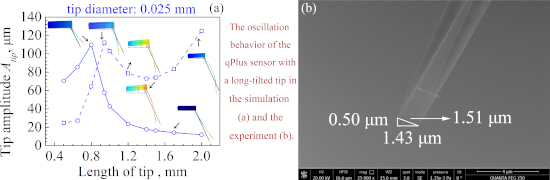
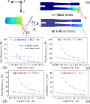
- temperature range [1]. In addition, quartz tuning forks have a high elastic constant, a high quality factor (Q factor), and are self-sensing due to the piezoelectric effect [1]. Therefore, a quartz tuning fork can be used as a force sensor. The central part of the “qPlus sensor” is a quartz tuning fork of
- which one prong is fixed onto a substrate and the other prong with an attached tip serves as a self-sensing cantilever [2]. In 1996, F. J. Giessibl et al. first used the qPlus sensor to measure the morphology of a grating and a CD at room temperature [3]. Since then, this technique has been used






Bulk chemical composition contrast from attractive forces in AFM force spectroscopy
Beilstein J. Nanotechnol. 2021, 12, 58–71, doi:10.3762/bjnano.12.5
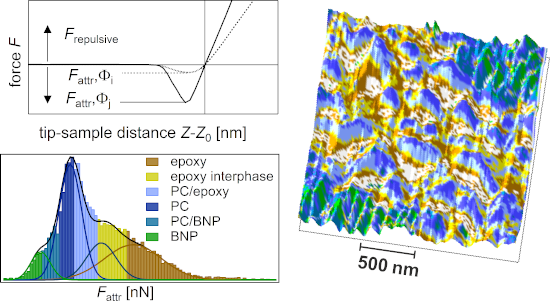
- two inorganic materials, glass and boehmite (γ-AlOOH), with up to four (epoxy) and three (boehmite) different sample–tip pairings. We also have a very strong indication that this parameter has a certain sensitivity for subsurface structures (model sample epoxy/PC). Consequently, by sensing into some


Application of contact-resonance AFM methods to polymer samples
Beilstein J. Nanotechnol. 2020, 11, 1714–1727, doi:10.3762/bjnano.11.154
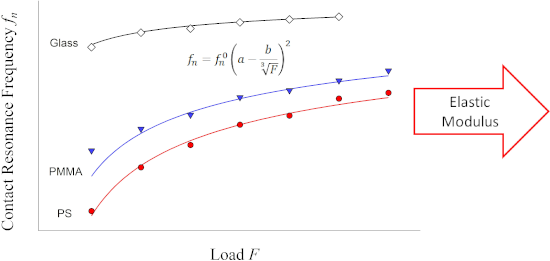
- the 100 nm film is smaller than on the 25 nm thick film. This is due to the shielding effect of the thicker polymer film, preventing the tip from “sensing” the substrate and making the sample less stiff [31]. Yet, after ca. 80 s, a larger amount of polymer surrounds the tip and the contact area


Seebeck coefficient of silicon nanowire forests doped by thermal diffusion
Beilstein J. Nanotechnol. 2020, 11, 1707–1713, doi:10.3762/bjnano.11.153
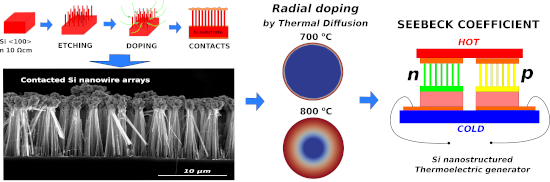
- fabricate large numbers of nanowires with high aspect ratio, perpendicular to a silicon substrate, that is, so-called silicon nanowire (SiNW) forests. The process is very suitable for the large-scale fabrication of nanostructured devices useful for several applications, such as sensing, photovoltaics


Cardiomyocyte uptake mechanism of a hydroxyapatite nanoparticle mediated gene delivery system
Beilstein J. Nanotechnol. 2020, 11, 1685–1692, doi:10.3762/bjnano.11.150
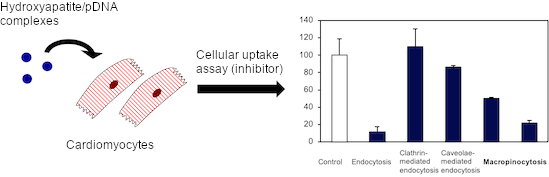
- the presence than in the absence of HAp (Figure 5). Extracellular calcium ions are proposed to act as a stimulant for triggering macropinocytosis in macrophages and neurons [25][36]. The extracellular calcium-sensing receptor (CaSR) is expressed in cardiomyocytes as well as in various other cells [37