Search results
Search for "simulation" in Full Text gives 559 result(s) in Beilstein Journal of Nanotechnology. Showing first 200.
Irradiation-driven molecular dynamics simulation of the FEBID process for Pt(PF3)4
Beilstein J. Nanotechnol. 2021, 12, 1151–1172, doi:10.3762/bjnano.12.86
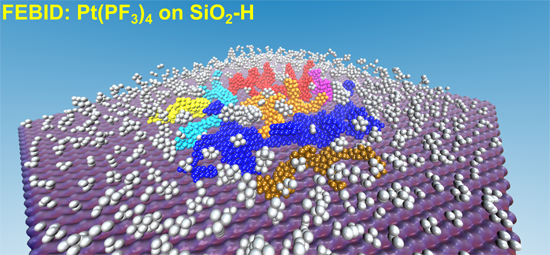
- presents a detailed computational protocol for the atomistic simulation of formation and growth of metal-containing nanostructures during focused electron beam-induced deposition (FEBID). The protocol is based upon irradiation-driven molecular dynamics (IDMD), a novel and general methodology for computer
- . The methodology can also be adjusted to simulate the nanostructure formation by other nanofabrication techniques using electron beams, such as direct electron beam lithography. In the present study, the methodology is applied to the IDMD simulation of the FEBID of Pt(PF3)4, a widely studied precursor
- nanostructures. The analysis of the simulation results provides spatially resolved relative metal content, height, and growth rate of the deposits, which represents valuable reference data for the experimental characterization of the nanostructures grown by FEBID. Keywords: focused electron beam-induced






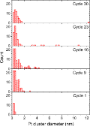


Criteria ruling particle agglomeration
Beilstein J. Nanotechnol. 2021, 12, 1093–1100, doi:10.3762/bjnano.12.81
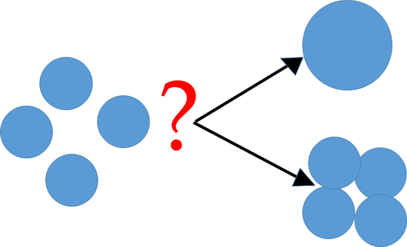
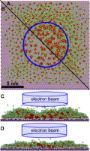
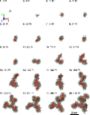
- of an agglomerated ensemble, that is, an exponential function characterized by two parameters. In this context, it is important to realize that one has to take care of fluctuations of the entropy. Keywords: agglomeration; enthalpy; entropy; simulation; surface energy; van der Waals interaction
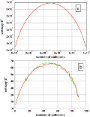
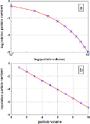
- must not be exceeded. It is necessary to distinguish between the entropy fluctuation phenomenon described by Mishin and that explained earlier by Crooks [16] for small systems. Results Results of the entropy simulation As described in the previous chapter, the maximum entropy principle gives clear
- , together with the evaluation of the simulation calculations are given in Table 1. To improve readability, in this table, instead of ncoll the parameter a = ncoll/Ntot is given. This table compares the results obtained from Equation 11 and from simulations. As fluctuation processes influence the simulation




A new method for obtaining model-free viscoelastic material properties from atomic force microscopy experiments using discrete integral transform techniques
Beilstein J. Nanotechnol. 2021, 12, 1063–1077, doi:10.3762/bjnano.12.79
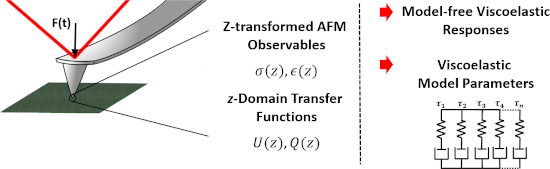
- single Voigt unit in series with a spring. Details about the simulation and the material parameters can be found in the Methods section. Linear ramp stress is applied to the material, from which the corresponding strain is calculated. This calculation gives the stress vs strain as a time-dependent array
- illustrated in Figure 5 for the data provided in Figure 4. Furthermore, although we have used a viscoelastic model to generate the material behavior for our simulation, the calculated retardance and relaxance (Figure 4 and Figure 5) are directly derived from the response of the material and are model-free
- simulation provides a fair approximation according to Figure 6. As the value of z increases along the real axis, the value of the retardance approaches the theoretical glassy compliance, which refers to the material’s infinitely short-timescale response (i.e., instantaneous response), and which is


Is the Ne operation of the helium ion microscope suitable for electron backscatter diffraction sample preparation?
Beilstein J. Nanotechnol. 2021, 12, 965–983, doi:10.3762/bjnano.12.73
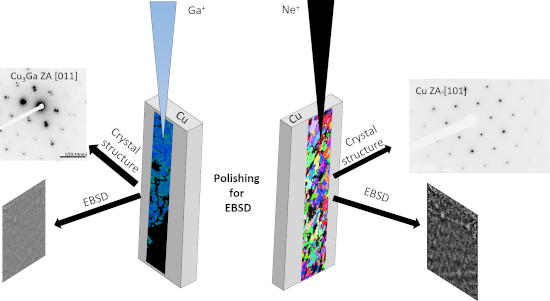
- concentration and would be sufficiently high to form a Cu3Ga phase. This value represents an average and does not take random elements of the Ga distribution into account. The simulation results suggest that phase transformations are not likely to occur homogeneously throughout the sample but rather are
- the steady-state condition is reached later, allowing for a higher Ga impurity implantation concentration. The experimental result is in good agreement with the theoretical prediction from the Monte Carlo simulation and subsequent calculations. The Cu3Ga phase-transformed regions are larger for the
- SRIM simulation suggested that each copper atom is displaced around 22 times during the polishing process. A high enough Cu atom as well as Ga ion mobility is likely to move ions as well as displaced Cu atoms into grain boundaries. Grain boundaries can facilitate transport deeper into the material and



In situ transport characterization of magnetic states in Nb/Co superconductor/ferromagnet heterostructures
Beilstein J. Nanotechnol. 2021, 12, 913–923, doi:10.3762/bjnano.12.68
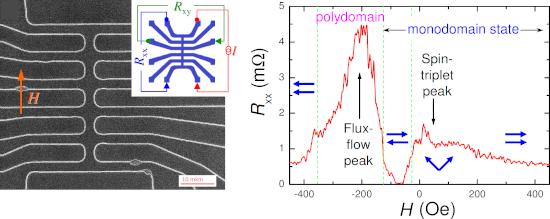
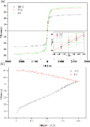
- by SQUID magnetometry in a field parallel to the film in the normal state at T > Tc. A significant hysteresis of M(H) reveals the in-plane anisotropy of Co films (albeit with a small coercive field, HC ≈ 30 Oe), consistent with earlier studies [44][45][46][47]. Figure 1c shows a numerical simulation


Effects of temperature and repeat layer spacing on mechanical properties of graphene/polycrystalline copper nanolaminated composites under shear loading
Beilstein J. Nanotechnol. 2021, 12, 863–877, doi:10.3762/bjnano.12.65
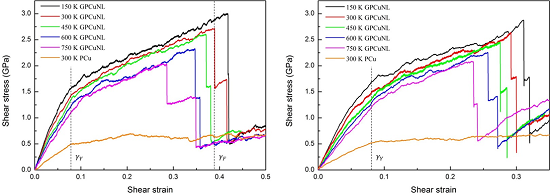
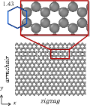
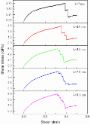
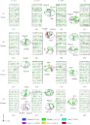
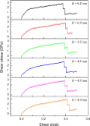
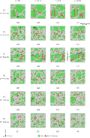
- construction of the simulation models. Different sizes of the model were tested to find the optimal size for good simulations at minimal computational time and to determine if finite-size effects arise from the model dimensions. A size of 10 nm × 10 nm × 22 nm of the model was found acceptable. The average
- interactions between C and Cu atoms are calculated by Lennard-Jones (LJ) potentials, using parameters of 0.019996 eV and 3.225 Å [35]. The simulation system uses an isothermal–isobaric (NPT) ensemble to reach equilibrium by a Nose–Hoover thermostat for 100000 time steps. The shear loading is performed by
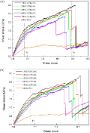
- applying a consistent velocity to the composites along the x-direction. The grain size D of the simulation model ranges from 4.24 to 9.43 nm. Deformation and dislocation evolution of the model are analyzed and visualized using the Open Visualization Tool (OVITO). Results and Discussion Effect of









Reducing molecular simulation time for AFM images based on super-resolution methods
Beilstein J. Nanotechnol. 2021, 12, 775–785, doi:10.3762/bjnano.12.61
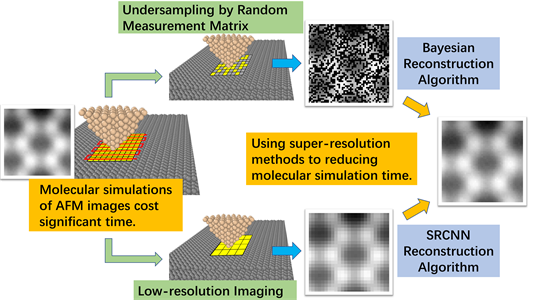
- resolution. Theoretical investigations are getting highly important for the interpretation of AFM images. Researchers have used molecular simulation to examine the AFM imaging mechanism. With a recent flurry of researches applying machine learning to AFM, AFM images obtained from molecular simulation have
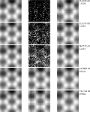
- also been used as training data. However, the simulation is incredibly time consuming. In this paper, we apply super-resolution methods, including compressed sensing and deep learning methods, to reconstruct simulated images and to reduce simulation time. Several molecular simulation energy maps under
- different conditions are presented to demonstrate the performance of reconstruction algorithms. Through the analysis of reconstructed results, we find that both presented algorithms could complete the reconstruction with good quality and greatly reduce simulation time. Moreover, the super-resolution methods




Recent progress in actuation technologies of micro/nanorobots
Beilstein J. Nanotechnol. 2021, 12, 756–765, doi:10.3762/bjnano.12.59
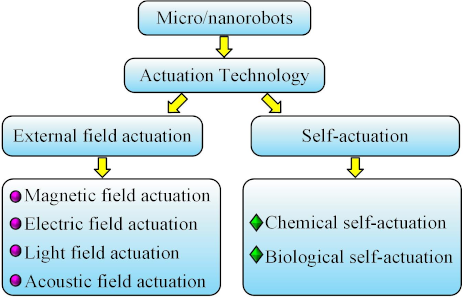
- electromagnetic fields in the application of micro/nanorobots, used finite element methods to simulate the magnetic field generated by a coil assembly in order to actuate micro/nanorobots more effectively. At the same time, a three-dimensional magnetic simulation was carried out to reveal the magnitude of the
- magnetic force on a cylindrical micro/nanorobot. Via experimental measurements, the simulation results were verified and the validity of the simulation was proved. The results of this research provide reference values for the application of electromagnetically actuated micro/nanorobots. Introducing


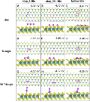
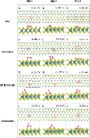
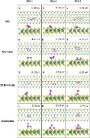
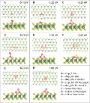
Prediction of Co and Ru nanocluster morphology on 2D MoS2 from interaction energies
Beilstein J. Nanotechnol. 2021, 12, 704–724, doi:10.3762/bjnano.12.56
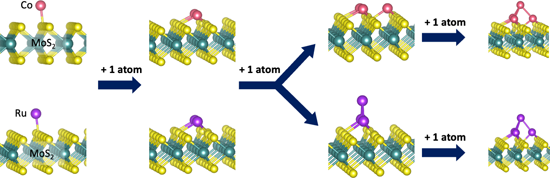
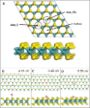
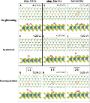
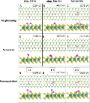
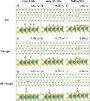
- Ab initio Simulation Package (VASP) version 5.4 [49]. Three-dimensional boundary conditions were applied and the spin-polarized general gradient approximation (GGA) along with the Perdew–Burke–Ernzerhof (PBE) approximation to the exchange–correlation functional were used to describe the system [50


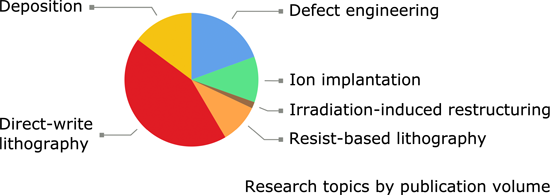
A review of defect engineering, ion implantation, and nanofabrication using the helium ion microscope
Beilstein J. Nanotechnol. 2021, 12, 633–664, doi:10.3762/bjnano.12.52


Determining amplitude and tilt of a lateral force microscopy sensor
Beilstein J. Nanotechnol. 2021, 12, 517–524, doi:10.3762/bjnano.12.42
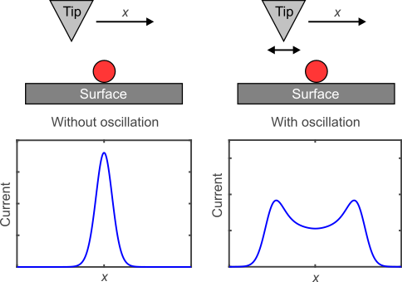
- for a given amplitude and tilt. Finally, the amplitude and tilt are determined by fitting the simulation output to the data with oscillation. Keywords: frequency-modulation atomic force microscopy; lateral force microscopy; amplitude calibration; tilt estimation; Introduction Frequency-modulation
- amplitude. In this paper we present a method to calibrate the amplitude and determine the tilt of the LFM sensor. The method is based on collecting STM data of a surface feature both without and with tip oscillation, as was proposed in [20]. The data without oscillation is used as input to a simulation that


Simulation of gas sensing with a triboelectric nanogenerator
Beilstein J. Nanotechnol. 2021, 12, 507–516, doi:10.3762/bjnano.12.41
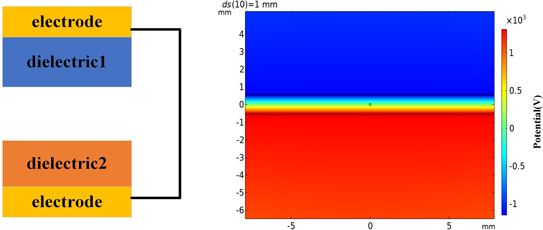
- simulation, we measured the potential difference between the outer surfaces of the two dielectric materials as ds is gradually increased from 0.1 to 1 mm, as shown in Figure 3c, which also reflects the influence of the distance between the two triboelectric materials on the potential. In practice, it is
- driven by the potential difference between the two sides. Figure 5e,f shows the electric potential in the simulation of rectangle, isosceles triangle, and right-angled triangle. The electric potentials obtained for the three models are basically the same, but it can be found that the electric potential
- materials approach or move away from each other, other substances, such as water vapor, carbon dioxide, and other gases, can pass through the gap. We present a simulation with water vapor under ideal conditions, that is, the surface charge density may be changed during the experiment. A simplified two



Surface-enhanced Raman scattering of water in aqueous dispersions of silver nanoparticles
Beilstein J. Nanotechnol. 2021, 12, 497–506, doi:10.3762/bjnano.12.40
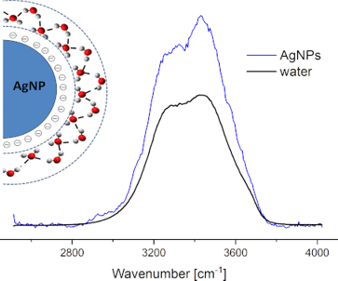
- average size of 34 ± 14 nm. The temperature experiment results showed a higher enhancement with temperature increase. Performed simulation studies revealed a slowdown of the mobility of the water molecules close to the surface of AgNPs. Keywords: Dynamic lattice liquid (DLL) simulations; liquid water
- metal surfaces, which is very different in comparison to bulk water [24]. It was explained that the ordering of water molecules near to AgNPs is due to the electrostatic interactions between water and AgNPs. Some simulation studies also reported the enhancement of hydrogen bonds in the water structure
- AgNPs. Therefore, one can simply conclude that more energy is needed to destroy the water structure in the AgNPs dispersion than in pure water. Simulation studies Dynamic lattice liquid (DLL) simulation studies based on the face-centred cubic (FCC) lattice approach were performed, in which averaged


Reconstruction of a 2D layer of KBr on Ir(111) and electromechanical alteration by graphene
Beilstein J. Nanotechnol. 2021, 12, 432–439, doi:10.3762/bjnano.12.35
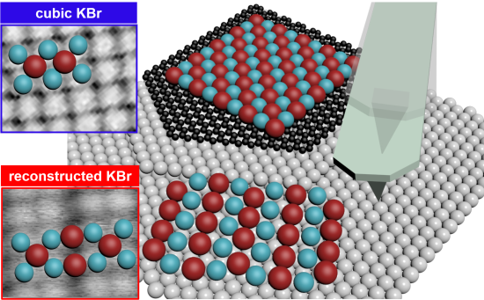
- energies of the K+ (Br−) ions on Ir, an energy difference equivalent to the one shown in Equation 1 was performed, where the total energy of the isolated K (Br) atoms was considered instead of EKBr. To calculate the partial charges on the atoms in the simulation cells, the Bader method was chosen [43][44
- a triple-atom duplication along “BBC”) indicated in (a), respectively. DFT simulation of a monolayer KBr on Ir(111). (a) Optimization of a reconstructed KBr layer on Ir(111) with a cell size of 4 × 2 superimposed on the Ir(111) model and experimental data (Br− in red and K+ in blue, the size of the


Scanning transmission helium ion microscopy on carbon nanomembranes
Beilstein J. Nanotechnol. 2021, 12, 222–231, doi:10.3762/bjnano.12.18
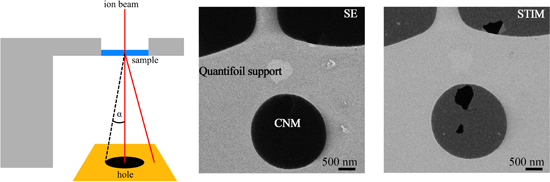
- simulation was run with 50,000 ions at energies of either 15 or 30 keV. The CNM was approximated as a carbon layer with a thickness between 0.3 and 13 nm. From the SRIM output file of all transmitted ions, an angular distribution was generated (see Figure 3a). The simulation results, obtained for different
- between 3 nm thin and 1.5 nm thin CNMs for different acceptance angles. While the difference in the signal is low at small and large angles, the simulation results show that it reaches a maximum at an acceptance angle of 10 mrad. Depending on the acceptance angle of the detector, maximum brightness or
- maximum contrast between different thicknesses are adjustable. The simulation results suggest that smaller acceptance angles are ideal for applications where brightness is important, such as end-point detection for, for example, nanopores. Especially on extremely thin membranes such as CNMs, milling


Determination of elastic moduli of elastic–plastic microspherical materials using nanoindentation simulation without mechanical polishing
Beilstein J. Nanotechnol. 2021, 12, 213–221, doi:10.3762/bjnano.12.17
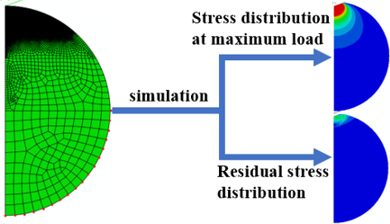
- depends on the indentation depth. It demonstrates that nanoindentation on microspherical materials exhibits a “size effect”. Keywords: elastic–plastic; microsphere; nanoindentation; Oliver–Pharr method; simulation; Introduction Instrumented nanoindentation is the most commonly used technique for the
- finite element method [14][15][16][17][18][19][20][21][22][23][24][25]. Using finite element simulation, Li et al. found that both loading curve and unloading curve at any depth can be generated from one indentation depth by scaling P ∝ h2 for the indentation tests of PMMA thin films with a Berkovich
- a vertical displacement on the rigid conical indenter. The contact between the indenter and the microsphere was frictionless. The calculation steps of nanoindentation simulation can be described as follows [1][2]: Construct an axisymmetric model of a microsphere and generate its finite element mesh


Mapping the local dielectric constant of a biological nanostructured system
Beilstein J. Nanotechnol. 2021, 12, 139–150, doi:10.3762/bjnano.12.11
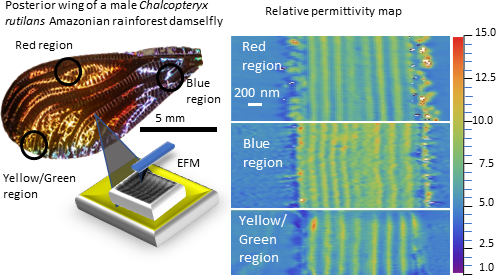
- optical reflectance measurements and simulation, we were able to describe the origin of the strongly iridescent wing colors of this Amazonian rainforest damselfly. The method we demonstrate here should be useful for the study of other biological nanostructured systems. Keywords: dielectric constant
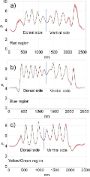
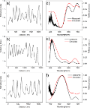
- reliable since there is a direct relation between the relative permittivity and the refractive index. Figure 8 shows the results of the simulation. On the left panels, the profile of the refraction index used to fit the optical reflectance are shown for each color region of the wing. As explained above
- correspond to the nanometric layers that constitute the wing. The dielectric constant of the peaks ranges between 8 and 9, and that of the valleys between 5 and 6. The red shadow on the black lines shows the standard deviation. Panels on the left show the refractive index profile used in the simulation and




Numerical analysis of vibration modes of a qPlus sensor with a long tip
Beilstein J. Nanotechnol. 2021, 12, 82–92, doi:10.3762/bjnano.12.7
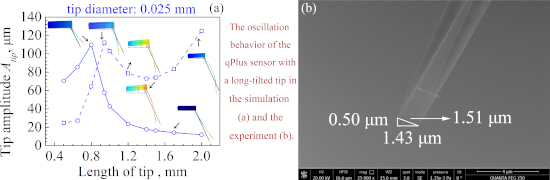
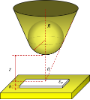
- optimal tip size can be derived from the simulation results. Methods Model and parameters The model in the simulation is based on an MS1V-T1K-type quartz tuning fork used in our experiment (details will be described later). The dimensions of the MS1V-T1K quartz tuning fork, length L = 3423 µm, width W
- . The epoxy glue is defined as a cuboid in order to facilitate mesh generation and reduce calculation time, since it is not guaranteed to have a fixed geometry after curing. The glue thickness in the simulation is set to be the average glue thickness of the qPlus sensor used in our experiment. In this
- case, the volume of the glue in the simulation is approximately equal to the volume of the glue in the experiment. Figure 2d is a false-color representation of the total displacement levels. Warmer colors represent a larger displacement. All calculations were carried out using COMSOL Multiphysics






The role of gold atom concentration in the formation of Cu–Au nanoparticles from the gas phase
Beilstein J. Nanotechnol. 2021, 12, 72–81, doi:10.3762/bjnano.12.6
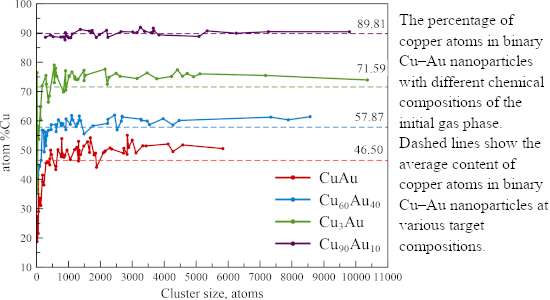
- composition; however, the size of the resulting particles varies significantly. To solve this issue, we studied the formation of Cu–Au nanoparticles with different chemical compositions from a gaseous medium using computer molecular dynamics (MD) simulation. The aim was to determine the effect of the
- MD simulation, it was concluded that an increase in the percentage of gold atoms in the initial vapor phase led to a decrease in the size of the synthesized nanoparticles. In addition, it was found that clusters with a size of more than 400–500 atoms, regardless of the chemical composition of the
- initial vapor phase, basically corresponded to a given target composition. Keywords: binary nanoparticles; computer simulation; copper; gold; molecular dynamics; Introduction The nanometer-sized Cu–Au compounds are being studied quite actively [1][2][3][4][5][6][7][8] because of their potential


Free and partially encapsulated manganese ferrite nanoparticles in multiwall carbon nanotubes
Beilstein J. Nanotechnol. 2020, 11, 1891–1904, doi:10.3762/bjnano.11.170
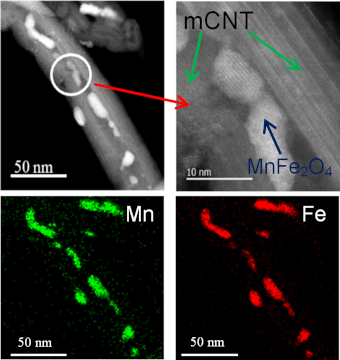
- , illustrated in the simulation of the O 1s peak in Figure 8e, can be assigned to three distinct oxygen species. The main peak at 530.1 eV corresponds to the crystal lattice oxygen O2−. The peak at 531.5 eV can be attributed to adsorbed molecular oxygen [24] and the third peak at 533.1 eV is common for C=O [44




Scanning transmission imaging in the helium ion microscope using a microchannel plate with a delay line detector
Beilstein J. Nanotechnol. 2020, 11, 1854–1864, doi:10.3762/bjnano.11.167
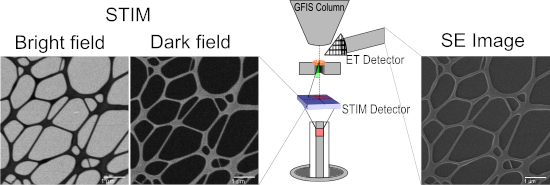
- experimental contrast match qualitatively. A quantitative analysis shows relevant differences in the intensity levels of the regions. The relative intensity level of the area with the layer of silicon dioxide on top of the silicon nitride differs considerably in experiment and simulation. The signal in the
- upper left half and gold deposited on the lower left half. (b) TRIDYN simulation of the angular distribution of the transmitted beam. Helium ion microscopy images of the nanoporous polycrystalline silicon membrane. (a) SE image. (b) BF STIM image with polar angle θ < 3° and ϕ from 0 to 360°. Post


Molecular dynamics modeling of the influence forming process parameters on the structure and morphology of a superconducting spin valve
Beilstein J. Nanotechnol. 2020, 11, 1776–1788, doi:10.3762/bjnano.11.160
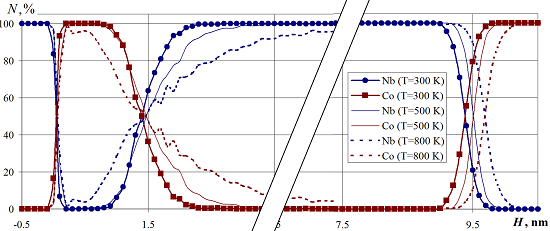
- molecular dynamics method using the many-particle potential of the modified embedded-atom method. In the calculation process the temperature was controlled using the Nose–Hoover thermostat. The simulation of the atomic nanolayer formation was performed by alternating the directional deposition of different
- properties of S/F nanosystem formation, it would be very useful to develop new integrated methods that combine theoretical modeling and experimental methods for analyzing the formation processes and properties of this class of functional nanomaterials and nanostructures. Here, computer simulation can
- reduces computational costs during simulation: where Cmin, Cmax are the parameters of the mutual influence of atoms, depending on their chemical types, and are set for each triple of atoms with numbers i, j, k. In Equation 11, rc is the distance at which the force field is cut off and fc(x) is a function


Imaging and milling resolution of light ion beams from helium ion microscopy and FIBs driven by liquid metal alloy ion sources
Beilstein J. Nanotechnol. 2020, 11, 1742–1749, doi:10.3762/bjnano.11.156
- thickness. Milling membranes removes their support from one side and dangling bonds can lead to morphological changes making milling tests difficult to interpret. In metal layers of a few nanometers thickness, sputter redeposition can take place, which is not taken into account in our static SRIM simulation
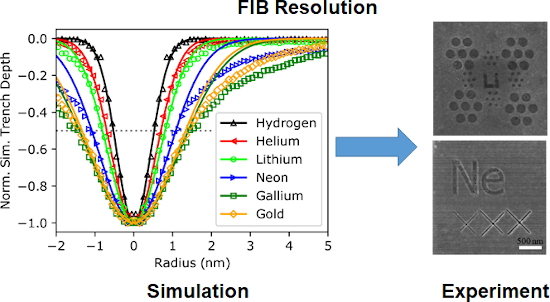
- ), experimentally achieved trench width, and simulated minimum milling width (FWHM) for FIBs working with different ion species and technologies depending on the ion mass. The line serves as a guide to the eye. SRIM simulation [39] of the sputter profile from a 30 keV point-like beam in a gold substrate as a


Seebeck coefficient of silicon nanowire forests doped by thermal diffusion
Beilstein J. Nanotechnol. 2020, 11, 1707–1713, doi:10.3762/bjnano.11.153
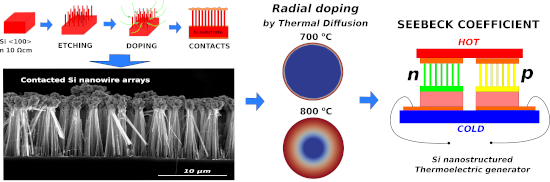
- the result of the simulation of the doping process. Hence, the Seebeck coefficient depends on the position in the nanowire. That is, S = S(n(x,y)), where (x,y) is a generic point in the cross section. Also the electrical conductivity depends on doping, that is, σ(x,y) = σ(n(x,y)) It has been estimated


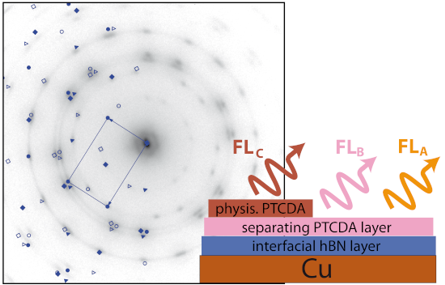
The influence of an interfacial hBN layer on the fluorescence of an organic molecule
Beilstein J. Nanotechnol. 2020, 11, 1663–1684, doi:10.3762/bjnano.11.149