Search results
Search for "strain" in Full Text gives 403 result(s) in Beilstein Journal of Nanotechnology. Showing first 200.
Bio-imaging with the helium-ion microscope: A review
Beilstein J. Nanotechnol. 2021, 12, 1–23, doi:10.3762/bjnano.12.1
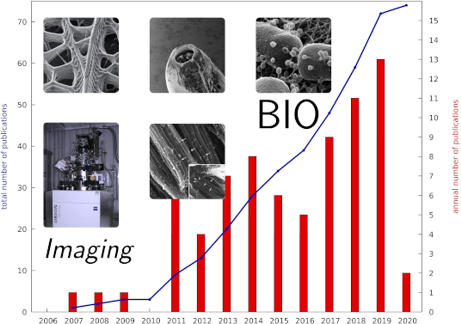
- abstract of LeTourneau et al. on rhizobacterial biofilms in the proceedings of Microscopy and Microanalytics 2015 [89]. On wheat roots, they grew a phenazine-1-carboxylic acid (PCA)-producing fluorescent pseudomonad strain and an isogenic mutant impaired in the synthesis of PCA. The formation of the


Free and partially encapsulated manganese ferrite nanoparticles in multiwall carbon nanotubes
Beilstein J. Nanotechnol. 2020, 11, 1891–1904, doi:10.3762/bjnano.11.170
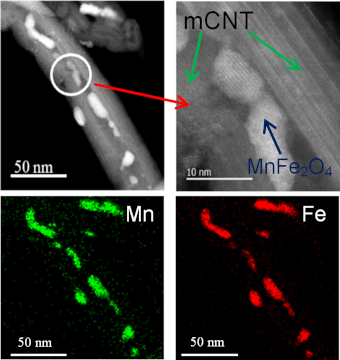
- . However, MWCNTs straining the partially encapsulated MnFe2O4 nanoparticles play an important role here. The effect of the strain in MWCNTs reflects in a 1% reduction in the lattice parameter of partially encapsulated MnFe2O4 as compared to that of free MnFe2O4. Hence, the interplanar distance values
- nanoparticles compared to free MnFe2O4 nanoparticles. Upon attachment, evidence of electron transfer from MWCNTs to MnFe2O4 was observed. An increase in the hyperfine field of MnFe2O4/MWCNTs compared to free manganese ferrite nanoparticles was also detected. This can be assigned to two factors: strain from the




Kondo effects in small-bandgap carbon nanotube quantum dots
Beilstein J. Nanotechnol. 2020, 11, 1873–1890, doi:10.3762/bjnano.11.169
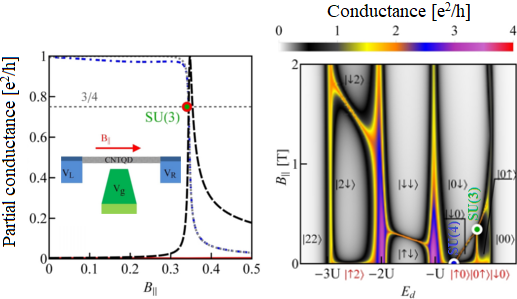
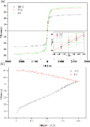
- ][46][47], other perturbations such as axial strain or twists can shift the dispersion cones in CNTs and open the bandgap [44][48][49][50]. Unlike the quantization bandgaps, which depend on the inverse of the diameter, these narrow perturbation gaps are inversely proportional to the square of the
- changes of the bandgap. In the following we show how, for a given nearly metallic nanotube, one can change the position of high-symmetry points by strain and a magnetic field. Our calculations also show that in a quantum dot formed in a small-bandgap nanotube electron and hole states can degenerate in
- occupation areas by changing the magnetic field and the value of the bandgap; the latter change can be induced by strain. The examples of SU(3) lines drawn for CNTQD(15,12) for several assumed SO parameters are presented in Figure 4. The required magnetic field for the occurrence of threefold degeneracy for

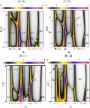
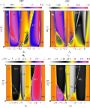


![[Graphic 37]](/bjnano/content/inline/2190-4286-11-169-i52.svg?max-width=637&scale=1.18182) as a functio...
as a functio...


Piezotronic effect in AlGaN/AlN/GaN heterojunction nanowires used as a flexible strain sensor
Beilstein J. Nanotechnol. 2020, 11, 1847–1853, doi:10.3762/bjnano.11.166
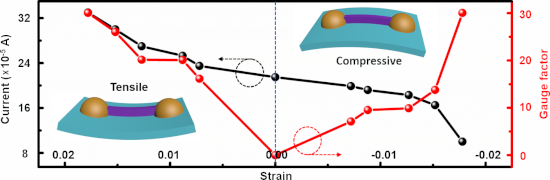
- synthesize AlGaN/AlN/GaN heterojunction NWs with controllable size. A single NW is transferred to a flexible poly(ethylene terephthalate) substrate and fixed by indium tin oxide electrodes to form an ohmic contact for the strain sensor. An external mechanical stress is introduced to study the performance of
- the fabricated piezotronic strain sensor. The gauge factor is as high as 30 under compressive or tensile stress, which indicates a high sensitivity of the strain sensor. Periodic strain tests show the high stability and repeatability of the sensor. The working mechanism of the strain sensor is
- investigated and systematically analyzed under compressive and tensile strain. Here, we describe a strain sensor that shows a great application potential in wearable integrated circuits, in health-monitoring devices, and in artificial intelligence. Keywords: AlGaN/AlN/GaN nanowires; flexible; piezotronic


Nanocasting synthesis of BiFeO3 nanoparticles with enhanced visible-light photocatalytic activity
Beilstein J. Nanotechnol. 2020, 11, 1822–1833, doi:10.3762/bjnano.11.164
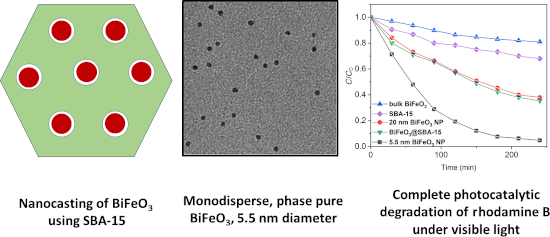
- very narrow particle size distribution. The results also suggest that the nanoparticles are characterized by a low concentration of surface defects and a low level of local strain, which is ideal for surface-based applications such as photocatalysis. This is confirmed by the reaction kinetics of the
- sized particles. This behavior can be attributed to a low concentration of surface defects and low local strain. The photocatalyst proved to be stable under visible-light irradiation as it could be reapplied successfully in five successive photocatalytic degradation experiments without loss of




Nanomechanics of few-layer materials: do individual layers slide upon folding?
Beilstein J. Nanotechnol. 2020, 11, 1801–1808, doi:10.3762/bjnano.11.162
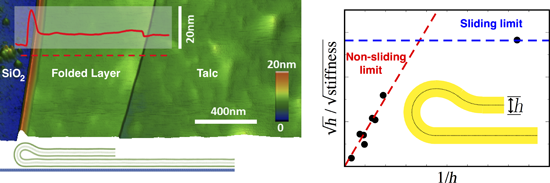
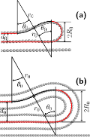
- thickness range. In contrast, tip-enhanced Raman spectroscopy measurements on edges in folded graphene flakes, 14 layers thick, show no significant strain. This indicates that layers in graphene flakes, up to 5 nm thick, can still slip to relieve stress, showing the richness of the effect in 2D systems. The
- at the inner part of the fold will have a compressive in-plane strain, and those at the outer part will have a tensile in-plane strain. The compressive and tensile strains could modify the vibrational properties of a fold compared to those of the (flat) bulk of the flake. This should be applicable to
- any 2D material and not restricted to talc. This hypothesis was investigated employing a near-field tip-enhanced Raman spectroscopy (TERS) setup [36][37] that can probe strain variations across the edge of a folded graphene flake of 5 nm thickness (see Supporting Information File 1, section “Near

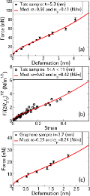
![[Graphic 5]](/bjnano/content/inline/2190-4286-11-162-i8.svg?max-width=637&scale=1.18182) =
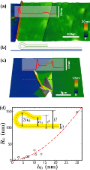
= ![[Graphic 6]](/bjnano/content/inline/2190-4286-11-162-i9.svg?max-width=637&scale=1.18182) as a function of 1/h for the nine measured talc samples. h is a directly measured ...
as a function of 1/h for the nine measured talc samples. h is a directly measured ...
Out-of-plane surface patterning by subsurface processing of polymer substrates with focused ion beams
Beilstein J. Nanotechnol. 2020, 11, 1693–1703, doi:10.3762/bjnano.11.151
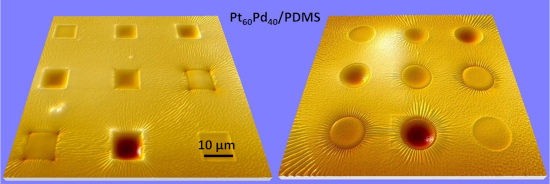
- irradiation-induced mechanical strain in the patterning process are elaborated and discussed. Keywords: direct patterning; focused helium ion beam; out-of-plane nanopatterning; polymers; thin films; Introduction Micro- and nanofabrication with focused ion beams (FIBs) is currently a subject of strong
- 1.32 to 2.97 MPa [28], provides a long-range strain relaxation when compared to a short-range strain relaxation in non-elastic polymers, such as PMMA and PC. Therefore, instead of directly projecting the initially flat surface to another depth position, the irradiation-induced strain warps the pristine
- surface. The existence of long-range strain fields, sufficient for a significant deformation in the surface of our PDMS samples, is identified by the observation of ripple patterns around the irradiated areas. Other features associated with the strain fields in highly elastic materials are the sharp


Piezoelectric sensor based on graphene-doped PVDF nanofibers for sign language translation
Beilstein J. Nanotechnol. 2020, 11, 1655–1662, doi:10.3762/bjnano.11.148
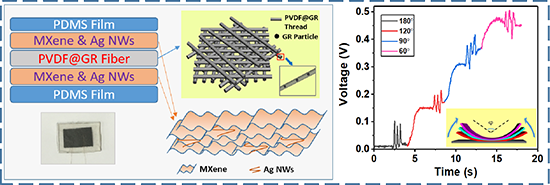
- concentrations. (c) FTIR spectra of the PVDF fibers. (d) XRD patterns of the PVDF fibers. (e) Stress–strain curves of the PVDF fibers. (a) Schematic diagram of the PES under external pressure. (b) Output voltage as a function of the applied pressure for different doping concentrations. (c) Waveforms


Antimicrobial metal-based nanoparticles: a review on their synthesis, types and antimicrobial action
Beilstein J. Nanotechnol. 2020, 11, 1450–1469, doi:10.3762/bjnano.11.129

- antibacterial activities against E. coli, P. aeruginosa, methicillin-sensitive and resistant S. aureus [117]. Suganya et al. (2018) developed a potent antifungal nanocomposite with NiO NPs against the Aspergillus niger strain. The authors attributed the excellent antifungal properties to the physical process


On the frequency dependence of viscoelastic material characterization with intermittent-contact dynamic atomic force microscopy: avoiding mischaracterization across large frequency ranges
Beilstein J. Nanotechnol. 2020, 11, 1409–1418, doi:10.3762/bjnano.11.125
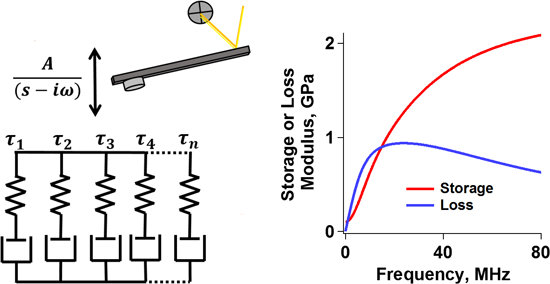
- ), is the retardance of the material, relating stress and strain, and R is the indenter radius. The indentation and load are available from the force–distance curve, and an expression for can be easily derived for the Generalized Voigt or Maxwell models (Figure 1), whereby the constants of springs and
- ][35]. Mechanical model diagrams representing the relationship between stress and strain in the complex plane for a linear viscoelastic material with multiple characteristic times [33]. (a) Generalized Voigt or Kelvin model, (b) Generalized Maxwell or Wiechert model, both describing arrheodictic
- transformed strain is generally regarded as the excitation and the transformed stress as the response; in (b) the opposite generally occurs. (a) Storage moduli and (b) and loss moduli as function of frequency for two hypothetical materials, the Generalized Maxwell model parameters of which are provided in


Atomic defect classification of the H–Si(100) surface through multi-mode scanning probe microscopy
Beilstein J. Nanotechnol. 2020, 11, 1346–1360, doi:10.3762/bjnano.11.119
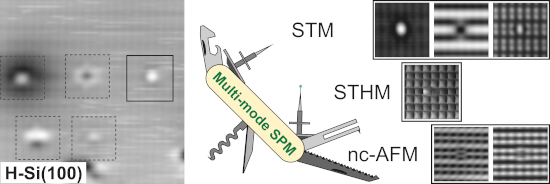
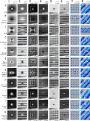
- the second layer (model in Figure 2f-7,8) leads to the dark variation (Figure 2f). The latter has been reported to cause less lattice strain [74], matching our observation of less distortions in the STHM and nc-AFM images near the missing dimer (Figure 2f-4,5,6 compared to Figure 2g-4,5,6 and shown in
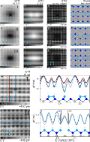
- in which the unsatisfied bonds of the back bonded Si atoms are terminated with hydrogen. As such, any lattice strain is reduced and the neighbouring dimers show minimal variation compared to the defect free profile. Conversely, the maxima of the bright missing dimer in Figure 3k,l is accompanied by
- two local minima “shoulders”. These have a less negative frequency shift, with the minima pulled spatially towards the centre of the defect. We propose that this observation is a result of the second layer Si atoms forming dimer bonds at the defect location, introducing horizontal lattice strain. This



Gram-scale synthesis of splat-shaped Ag–TiO2 nanocomposites for enhanced antimicrobial properties
Beilstein J. Nanotechnol. 2020, 11, 1119–1125, doi:10.3762/bjnano.11.96

- Gram-positive Staphylococcus aureus (S. aureus) (ATCC 6538) and Gram-negative Escherichia coli (E. coli) (ATCC 8099) were obtained from the Shanghai Amoy Strain Biotechnology Co. (Shanghai, China). The disc diffusion method was applied to check the antibacterial activity of the prepared pure TiO2 NPs


Vibration analysis and pull-in instability behavior in a multiwalled piezoelectric nanosensor with fluid flow conveyance
Beilstein J. Nanotechnol. 2020, 11, 1072–1081, doi:10.3762/bjnano.11.92
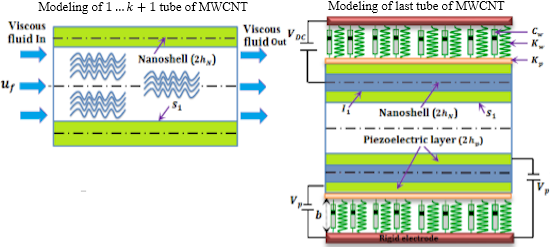
- piezoelectric doubly curved nanoshells and orthotropic piezoelectric cylindrical nanoshells [23][24]. Wang utilized surface strain gradient elasticity to study a meticulous solution to the anti-plane shear problem of a circular elastic inhomogeneity [25]. Nami et al. utilized nonlocal elasticity theory and
- trigonometric shear deformation theory to investigate the static analysis of rectangular nanoplates [26]. The Gurtin–Murdoch surface theory is presented by Sigaeva et al. to study the universal model describing plane strain bending of a multilayered sector of a cylindrical tube [27]. Karimipour et al. presented
- a modified strain gradient theory (MSGT) and Gurtin–Murdoch surface elasticity to investigate the size-dependent nonlinear pull-in instability [28]. A new size-dependent nonlinear model for the analysis of the behavior of carbon nanotube resonators was introduced by Farokhi et al. based on modified


![[Graphic 46]](/bjnano/content/inline/2190-4286-11-92-i46.svg?max-width=637&scale=1.18182) on DNF of FC-MWPENS.
on DNF of FC-MWPENS.


![[Graphic 50]](/bjnano/content/inline/2190-4286-11-92-i50.svg?max-width=637&scale=1.18182) on DNF of SS FC-MWPENS.
on DNF of SS FC-MWPENS.


![[Graphic 54]](/bjnano/content/inline/2190-4286-11-92-i54.svg?max-width=637&scale=1.18182) on DNF of SS FC-MWPENS.
on DNF of SS FC-MWPENS.


![[Graphic 59]](/bjnano/content/inline/2190-4286-11-92-i59.svg?max-width=637&scale=1.18182) for fluid velocity
for fluid velocity ![[Graphic 60]](/bjnano/content/inline/2190-4286-11-92-i60.svg?max-width=637&scale=1.18182) on DNF of SS FC-MWPENS.
on DNF of SS FC-MWPENS.

![[Graphic 61]](/bjnano/content/inline/2190-4286-11-92-i61.svg?max-width=637&scale=1.18182) for pull-in voltage on DNF of SS FC-MWPENS.
for pull-in voltage on DNF of SS FC-MWPENS.

![[Graphic 67]](/bjnano/content/inline/2190-4286-11-92-i67.svg?max-width=637&scale=1.18182) for fluid velocity
for fluid velocity ![[Graphic 68]](/bjnano/content/inline/2190-4286-11-92-i68.svg?max-width=637&scale=1.18182) on DNF of SS FC-MWPENS.
on DNF of SS FC-MWPENS.

![[Graphic 69]](/bjnano/content/inline/2190-4286-11-92-i69.svg?max-width=637&scale=1.18182) for pull-in voltage on DNF of SS FC-MWPENS.
for pull-in voltage on DNF of SS FC-MWPENS.

![[Graphic 73]](/bjnano/content/inline/2190-4286-11-92-i73.svg?max-width=637&scale=1.18182) on DNF of SS FC-MWPENS.
on DNF of SS FC-MWPENS.


![[Graphic 75]](/bjnano/content/inline/2190-4286-11-92-i75.svg?max-width=637&scale=1.18182) on DNF of SS FC-MWPENS.
on DNF of SS FC-MWPENS.

A few-layer graphene/chlorin e6 hybrid nanomaterial and its application in photodynamic therapy against Candida albicans
Beilstein J. Nanotechnol. 2020, 11, 1054–1061, doi:10.3762/bjnano.11.90
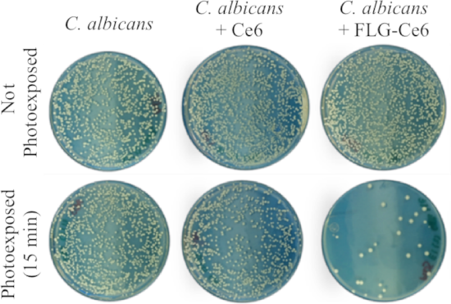
- photoactivation test, by exposing them to the LED array source. The samples were illuminated for 5, 10 and 15 min, and the fluorescence of the SOSG reporter was measured in each case. Photosensitizer effect of FLG-Ce6 and Ce6 in PDT against C. albicans We used the strain ATCC 90028 of C. albicans to evaluate the


Gas-sensing features of nanostructured tellurium thin films
Beilstein J. Nanotechnol. 2020, 11, 1010–1018, doi:10.3762/bjnano.11.85
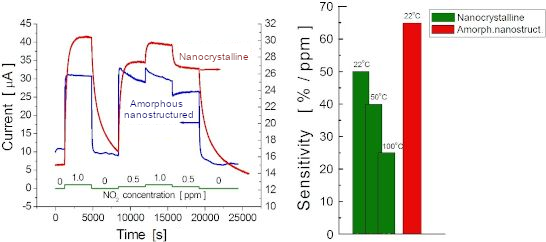
- films; Introduction Tellurium (Te) is a multifunctional chemical element used for the development of many devices, such as diodes with high (106) rectification ratios, thin-film field-effect transistors, optical recording media, infrared and UV detectors, strain-sensitive devices and others (see [1][2


Wet-spinning of magneto-responsive helical chitosan microfibers
Beilstein J. Nanotechnol. 2020, 11, 991–999, doi:10.3762/bjnano.11.83
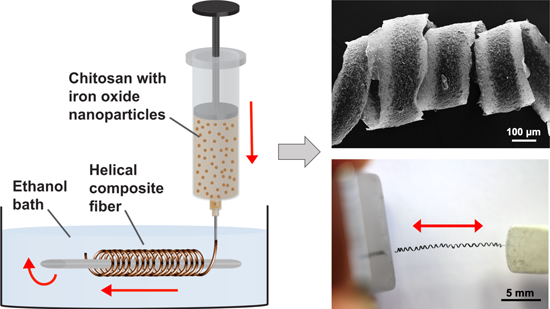
- fiber was measured in an optical microscope (SENSOFAR PLl 2300, Nikon, Tokyo, Japan). Thus, the stress–strain relation of each individual fiber could be determined by taking into account the gauge length of 25 mm. (A, B) Shear viscosity and shear stress of bare chitosan solutions (black lines) and


Extracting viscoelastic material parameters using an atomic force microscope and static force spectroscopy
Beilstein J. Nanotechnol. 2020, 11, 922–937, doi:10.3762/bjnano.11.77
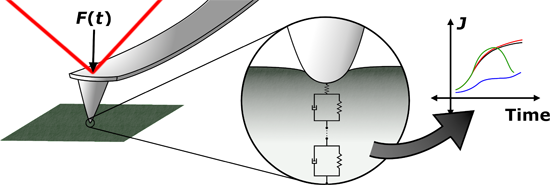
- for a given stress or strain excitation. The mechanical-equivalent approach is simple to explain, but can require more assumptions and some additional knowledge of the Laplace transform to derive analytical stress–strain relationships. Alternatively, continuum mechanics can be used to create more
- ] recently formulated a generalized solution to the physical contact problem in AFM-SFS experiments, particularly for cases where the sample is viscoelastic. The approach is also capable of being adapted to any linear viscoelastic stress–strain model. Their method utilized a theoretical basis for
- then subsequently removed. For example, one method involves hanging weights from a material for some time, then removing the weights and allowing the material to recover. A strain gage or displacement sensor captures the deformation occurring during both phases, and the data is used for fitting. The


Light–matter interactions in two-dimensional layered WSe2 for gauging evolution of phonon dynamics
Beilstein J. Nanotechnol. 2020, 11, 782–797, doi:10.3762/bjnano.11.63
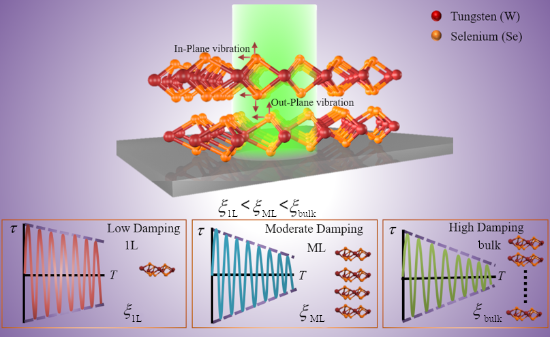
- decreased interfacial defect density and built-in strain on sapphire that reduces the electron–phonon interaction in the material [30]. The value of τ obtained in our study is also comparable to what has been reported for τ in 1L CVD grown WSe2 (≈0.76 ps) [30], bilayer CVD grown WSe2 (≈2.4 ps) [29], MoS2
Hexagonal boron nitride: a review of the emerging material platform for single-photon sources and the spin–photon interface
Beilstein J. Nanotechnol. 2020, 11, 740–769, doi:10.3762/bjnano.11.61
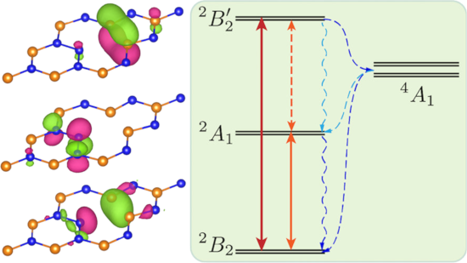
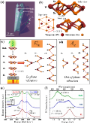
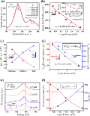
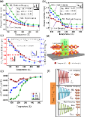
- criteria for spin–photon-phonon entanglement distribution are high electron spin coherence time T2 (approaching T2 spin-lattice relaxation time) and strain and electrical control of the spin transition and optical transition resonances. The key requirements can be restrictive depending on the applications
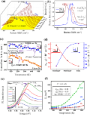
- energy in each group (±20 meV) was attributed to variations of the strain in the h-BN matrix, as well as photo-conversion to a dark state that may be responsible for the blinking. Only 5% of the emitters were photostable. The photo-dynamics indicates the presence of a metastable state (3-level system
- . However, the PL is not sufficient to univocally identify the type of defects, while the correlation with material properties and SPEs should be performed. In [114] h-BN the quantum emission was correlated with the material’s local strain using a combination of PL, nanobeam electron diffraction, scanning




Effect of substitutional defects on resonant tunneling diodes based on armchair graphene and boron nitride nanoribbons lateral heterojunctions
Beilstein J. Nanotechnol. 2020, 11, 688–694, doi:10.3762/bjnano.11.56
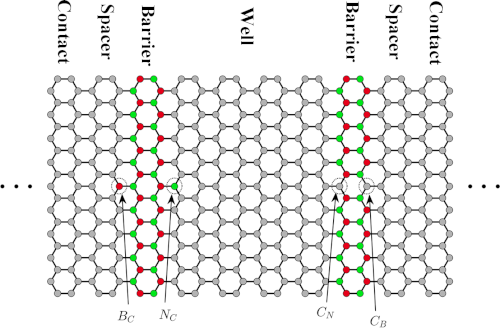
- itself is highly sensitive to the type and position of substitutional defects, the intentional introduction of such defects can be utilized to design nanoscale RTDs with desired NDR characteristic and RTD-based strain or pressure sensors with improved sensitivity. (a) Schematic representation of the



Electromigration-induced directional steps towards the formation of single atomic Ag contacts
Beilstein J. Nanotechnol. 2020, 11, 680–687, doi:10.3762/bjnano.11.55
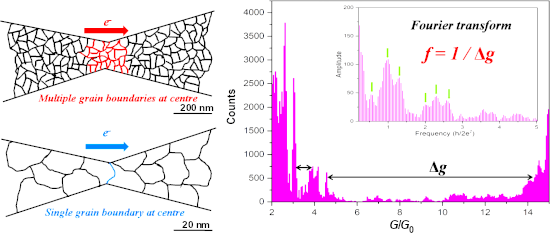
- materials like Ag, grain boundaries occur mostly because of the different orientation of nanocrystals. Since the elastic strain energy strongly increases with angular misfit, small-angle grain boundaries are the most likely ones. Thus, most contact areas are not far from (stepped) high-symmetry crystal
- section and its variation by EM is considered. Thus, deviations due to unknown step densities and local strain are ignored when considering only high-symmetry directions of the interface, as we do in the following. Figure 3 represents the FT of the conductance histogram in Figure 2 of bow-tie structures


A novel dry-blending method to reduce the coefficient of thermal expansion of polymer templates for OTFT electrodes
Beilstein J. Nanotechnol. 2020, 11, 671–677, doi:10.3762/bjnano.11.53
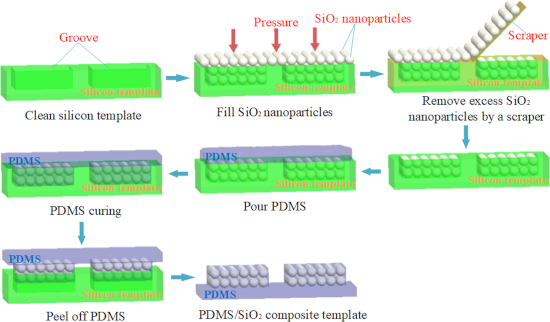
- (TMA, Q400, TA Instruments, New Castle, DE, USA). Five specimens per group with dimensions 20 × 2 × 1 mm were prepared and the average strain was calculated. During the test, the temperature was increased from 20 to 200 °C at a rate of 20 °C/min. The CTE of the PDMS/SiO2 composite template was
- ]), ρn is the density of PDMS (965 kg·m−3 [20]), and υ is the volume fraction of the SiO2 nanoparticles (65.4 vol %). The calculated weight fraction of the SiO2 nanoparticles filled via dry blending is 83.8 wt %. CTE of the PDMS/SiO2 composite template The strain–temperature curves of the PDMS/SiO2
- also shown in Figure 4. The curves for 0–20 wt % of SiO2 nanoparticles in Figure 4 are the strain–temperature curves for the PDMS/SiO2 composite template prepared via wet blending, while the curve for 83.8 wt % is the strain–temperature curve for the template prepared via dry blending. The latter curve


Observation of unexpected uniaxial magnetic anisotropy in La2/3Sr1/3MnO3 films by a BaTiO3 overlayer in an artificial multiferroic bilayer
Beilstein J. Nanotechnol. 2020, 11, 651–661, doi:10.3762/bjnano.11.51
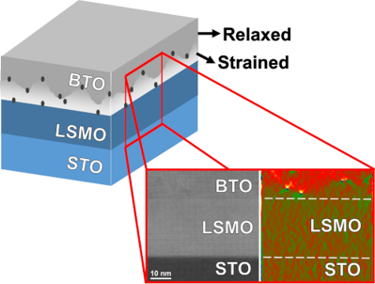
- results indicate that the BaTiO3 layer induces an additional strain in the La2/3Sr1/3MnO3 layers close to their common interface. The presence of BaTiO3 on the surface of tensile-strained La2/3Sr1/3MnO3 films transforms the in-plane biaxial magnetic anisotropy present in the single layer into an in-plane
- uniaxial magnetic anisotropy. Our experimental evidence suggests that this change in the magnetic anisotropy only occurs in tensile-strained La2/3Sr1/3MnO3 film and is favored by an additional strain on the La2/3Sr1/3MnO3 layer promoted by the BaTiO3 film. These findings reveal an additional mechanism that
- alters the magnetic behavior of the ferromagnetic layer, and consequently, deserves further in-depth research to determine how it can modify the magnetoelectric coupling of this hybrid multiferroic system. Keywords: artificial multiferroic system; BaTiO3; interface-induced strain; La2/3Sr1/3MnO3



Silver-decorated gel-shell nanobeads: physicochemical characterization and evaluation of antibacterial properties
Beilstein J. Nanotechnol. 2020, 11, 620–630, doi:10.3762/bjnano.11.49
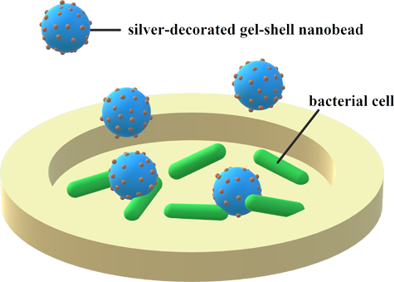
- antimicrobial activity. The MIC values for all of the tested bacterial strains are in the range from 0.76 to 1.14 µg/mL. The least susceptible bacterial strain was gram-positive S. aureus, for which the growth was inhibited at the concentration of 1.14 µg/mL. This result is consistent with previous reports on
- exposed surface and the retardation of the nanoparticle diffusion caused by aggregation [48]. Some species develop less complicated biofilm structures or even are not capable to form biofilms. The S. epidermidis strain used in our experiments probably does not form complex biofilm structures, as the three


Comparison of fresh and aged lithium iron phosphate cathodes using a tailored electrochemical strain microscopy technique
Beilstein J. Nanotechnol. 2020, 11, 583–596, doi:10.3762/bjnano.11.46
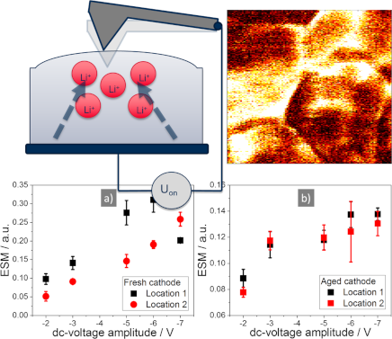
- , Institute of Building Energetics, Thermal Engineering and Energy Storage (IGTE), Pfaffenwaldring 31, 70569 Stuttgart, Germany 10.3762/bjnano.11.46 Abstract Electrochemical strain microscopy (ESM) is a powerful atomic force microscopy (AFM) mode for the investigation of ion dynamics and activities in energy
- ionic concentration in the material volume under the AFM tip. The ageing of the cathode is found to be governed by a decrease of the electrochemical activity and the loss of available lithium for cycling, which can be stored in the cathode. Keywords: activity; ageing; cathode; electrochemical strain
- the capacity degradation of the samples [23]. Electrochemical strain microscopy (ESM) is a relatively new AFM contact mode, which probes ionic charges accumulated in a small volume under the AFM tip after application of an electric field by measuring the resulting surface strain [24][25][26]. It was