Search results
Search for "transport properties" in Full Text gives 169 result(s) in Beilstein Journal of Nanotechnology.
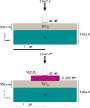
Conformal SiO2 coating of sub-100 nm diameter channels of polycarbonate etched ion-track channels by atomic layer deposition
Beilstein J. Nanotechnol. 2015, 6, 472–479, doi:10.3762/bjnano.6.48
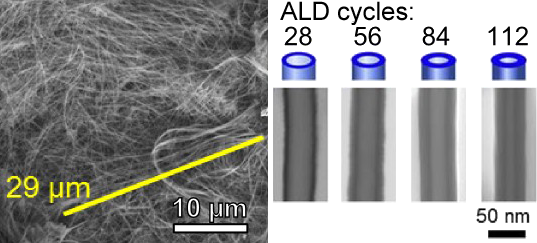
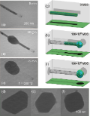
- multichannel membranes focus on the chemical modification of channel walls to investigate ionic and molecular transport properties [7][8], with the aim to develop sensors based on nanochannels with tailored surface [9]. Track-etched membranes are also most suitable for the synthesis of nanowires or nanotubes


Electrical properties of single CdTe nanowires
Beilstein J. Nanotechnol. 2015, 6, 444–450, doi:10.3762/bjnano.6.45
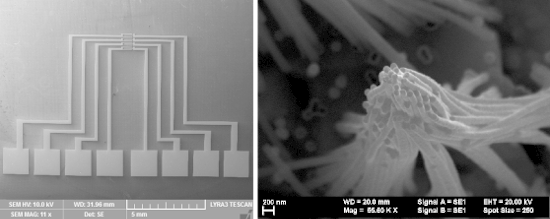
- properties. Keywords: CdTe; electrodeposition; nanowires; transport properties; Introduction Nanowires, which are quasi one-dimensional structures, are considered an extremely important class of nanostructures, regarded as highly effective building blocks for future electronic devices [1][2][3][4]. In
- the nanowire drastically improved the transport properties. This was tested in this work and to our knowledge, only one previous paper dealt with the electrical transport of individual nanowires [20]. No observation of passivation effects on CdTe nanowires was previously reported. We also observed a
- transport through the nanowire, a third electrical contact was made to the n++ Si substrate. A comparison of the transport properties of the nanowires with and without a passivated thin layer of PMMA was performed. This polymer passivation layer was deposited onto the wire by means of spin coating. SEM


Optical properties and electrical transport of thin films of terbium(III) bis(phthalocyanine) on cobalt
Beilstein J. Nanotechnol. 2014, 5, 2070–2078, doi:10.3762/bjnano.5.215
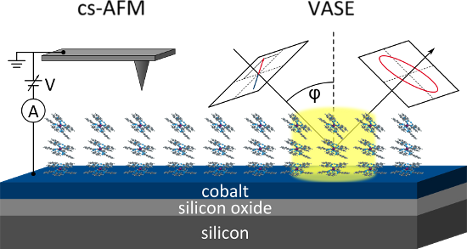
- technique allows local variations of the organic film topography to be correlated with electrical transport properties. Local current mapping as well as local I–V spectroscopy shows that despite the granular structure of the films, the electrical transport is uniform through the organic films on the
- microscale. The AFM-based electrical measurements allow the local charge carrier mobility of the TbPc2 thin films to be quantified with nanoscale resolution. Keywords: current sensing AFM; ellipsometry; spintronics; TbPc2; transport properties; Introduction Molecular spintronic devices could bring a new
- well-established methods for local electrical characterization in organic materials [20][21][22][23][24]. In this work, we employ the cs-AFM technique in order to investigate the local transport properties of TbPc2 thin films on Co substrates. Due to its high reproducibility and versatility, cs-AFM



Silicon and germanium nanocrystals: properties and characterization
Beilstein J. Nanotechnol. 2014, 5, 1787–1794, doi:10.3762/bjnano.5.189
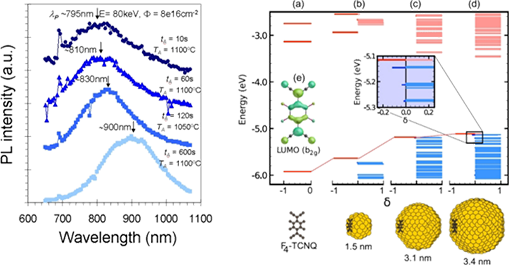
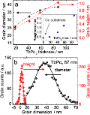
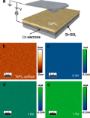
- breakthroughs in photovoltaics. It is believed that quantum dot (QD) solar cells have the potential to reach a maximum conversion efficiency of about 66% [2]. A colloidal nanocrystal solar cell, which combines all the advantages of organics (scalable and controllable synthesis) with transport properties


The influence of molecular mobility on the properties of networks of gold nanoparticles and organic ligands
Beilstein J. Nanotechnol. 2014, 5, 1664–1674, doi:10.3762/bjnano.5.177
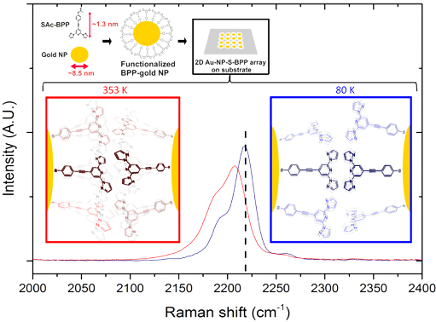
- , proposing a new approach for understanding how disorder can impact the transport properties in molecular junctions. Additional calculations will be required to extend our hypothesis of fluctuations-enhanced transport between particles, taking into account the percolation character of transport in




Probing the electronic transport on the reconstructed Au/Ge(001) surface
Beilstein J. Nanotechnol. 2014, 5, 1463–1471, doi:10.3762/bjnano.5.159
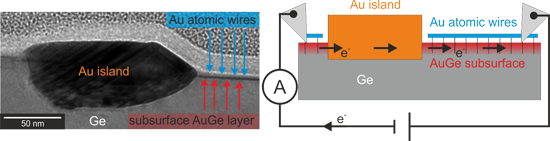
- atomic scale leads to contact, e.g., small atomic structures or molecules. The anisotropic transport properties of this surface structure have triggered controversial discussions within the scientific community [7][8][9]. However, to access the anisotropic transport properties, a significant electron
- for both cases are shown in Figure 6c. Conclusion In conclusion, we find that the electronic transport properties of the system Au/Ge(001) are not only given by the atomic wire-like surface structure exhibiting a Tomonaga–Luttinger behavior, but also by a 2D conductive layer underneath the surface
- ) atomic wire structure shall be contacted by metallic leads to access its one-dimensional transport properties. The appropriate choice of electric leads appears to be a crucial parameter for passing electric currents through the one-dimensional electronic structure of Ge/Au. This may have wider impact




Magnesium batteries: Current state of the art, issues and future perspectives
Beilstein J. Nanotechnol. 2014, 5, 1291–1311, doi:10.3762/bjnano.5.143
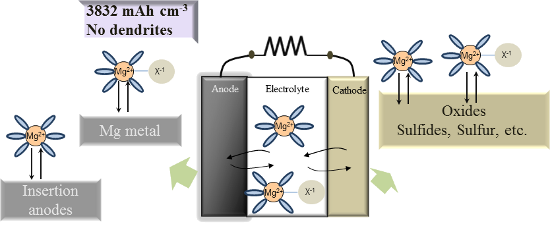
- operando soft X-ray spectroscopy. Their results, combined with the transport properties of the magnesium species, also suggested the interfacial electroactive species to be MgCl+·5THF. The dimeric Mg2Cl3+ species present in the bulk, was discounted from being electrochemically active at the interface
- concentration was attributed to lowered mobility of the dimeric magnesium ions and an increased number of counter and non-magnesium ions at high Lewis acid concentrations. This study helped to provide a better understanding of the electrochemical and transport properties in this complex system. b. Non-Grignard
- requirements on the electrolytes as they represent the bridge linking the anode with the cathode. Not only they are required to highly perform in the proximity of two electrochemical environments operating at two opposite extremes, but also provide acceptable bulk transport properties that allow them to


Sublattice asymmetry of impurity doping in graphene: A review
Beilstein J. Nanotechnol. 2014, 5, 1210–1217, doi:10.3762/bjnano.5.133
- Introduction With its excellent transport properties and low dimensionality, graphene, an atomically thin layer of Carbon atoms bonded together in a hexagonal lattice, initially seems a strong candidate for use in many future commercial applications such as ultra high-speed transistors, integrated circuits and
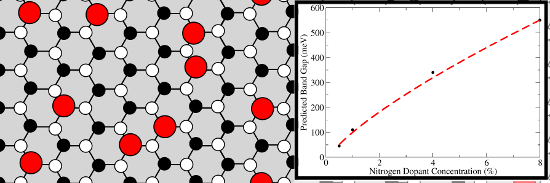
- graphene has only come about relatively recently which we detail in the following section. A brief history of nitrogen doped graphene Exploiting the effects of nitrogen dopants on the transport properties of graphene has been an interesting experimental research topic for the last 5 years [22], whereby the
- sublattice asymmetry of N-graphene The main focus of the work by Zhao et al. was the observation and characterization of nitrogen dopants via scanning tunnel spectroscopy (STS), followed by a short investigation on the transport properties of the resulting graphene. Their experimental observation of same


Optical modeling-assisted characterization of dye-sensitized solar cells using TiO2 nanotube arrays as photoanodes
Beilstein J. Nanotechnol. 2014, 5, 895–902, doi:10.3762/bjnano.5.102
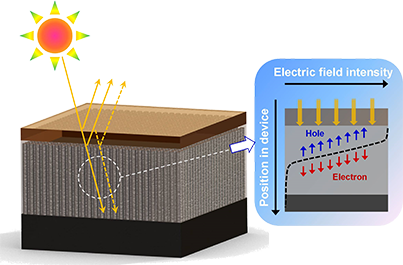
- performances and electron transport properties of the fabricated DSSCs with different thickness of the TNT photoanodes are investigated. The simplified standard structures under the experimental condition are simulated by using a generalized transfer matrix method (GTMM) [15][16]. The comparison of the
- modeling contributes to a deeper understanding of the improved light harvesting and charge transport properties observed in the solar cell devices using 1D-TNT photoanodes. Experimental Fabrication of TNT-based DSSCs Under the anodization conditions of 60 V with ethylene glycol containing 0.5 wt % NaF and


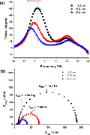
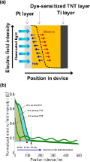
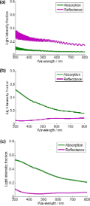
Enhancement of photocatalytic H2 evolution of eosin Y-sensitized reduced graphene oxide through a simple photoreaction
Beilstein J. Nanotechnol. 2014, 5, 801–811, doi:10.3762/bjnano.5.92
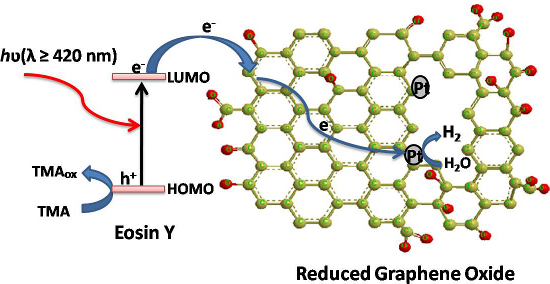
- ) sheet of sp2-hybrized carbon, has received tremendous research interests based on its extraordinary electronic, thermal, optical and excellent electron transport properties [21][22]. Graphene can be easily obtained by reducing graphene oxide (GO), which is a cheap and scalable preparation method [23][24





Biomolecule-assisted synthesis of carbon nitride and sulfur-doped carbon nitride heterojunction nanosheets: An efficient heterojunction photocatalyst for photoelectrochemical applications
Beilstein J. Nanotechnol. 2014, 5, 770–777, doi:10.3762/bjnano.5.89
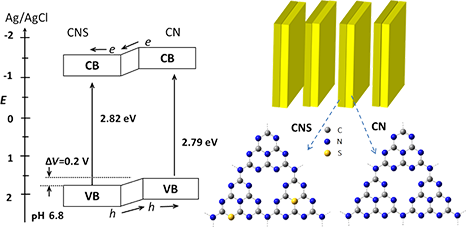
- other counterparts including CN, CNS and physically mixed CN and CNS over the entire potential profile. It is worth noting that the dark current densities of the photoelectrodes follow the order of CN/CNS heterostructure > CNS > CN, indicating the best charge transport properties of CN/CNS


Resonance of graphene nanoribbons doped with nitrogen and boron: a molecular dynamics study
Beilstein J. Nanotechnol. 2014, 5, 717–725, doi:10.3762/bjnano.5.84
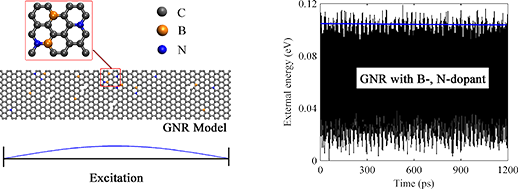
- the electronic and quantum transport properties of graphene. Such doped graphene is envisioned with exciting applications as high-performance FET devices [8], and metal-free electrocatalyst for oxygen reduction fuel cells [9]. In addition to doping, various graphene derivatives have also been


Analytical development and optimization of a graphene–solution interface capacitance model
Beilstein J. Nanotechnol. 2014, 5, 603–609, doi:10.3762/bjnano.5.71
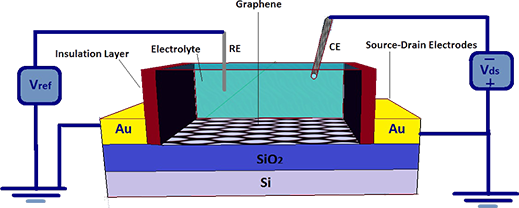
- -based EGFETs device performance. Conclusion Graphene as a 2D sheet of hexagonally arranged carbon atoms exhibits amazing carrier transport properties and a high sensitivity at the single-molecule level, which makes it a promising material for nanoscale devices. According to the graphene structure, it


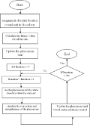


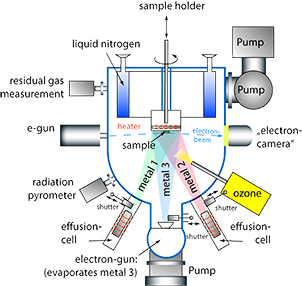
Towards precise defect control in layered oxide structures by using oxide molecular beam epitaxy
Beilstein J. Nanotechnol. 2014, 5, 596–602, doi:10.3762/bjnano.5.70
- with increasing Sr content. All the experimental data are in good agreement with those reported previously for La2−xSrxNiO4 epitaxial thin films grown by PLD [24]. Further analyses of films crystal structure, including high-resolution transmission electron microscopy (HR-TEM) and transport properties


Quantum size effects in TiO2 thin films grown by atomic layer deposition
Beilstein J. Nanotechnol. 2014, 5, 77–82, doi:10.3762/bjnano.5.7
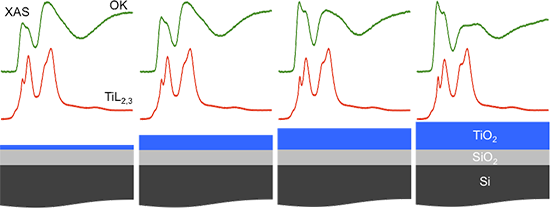
- recombination probability of photo-excited carriers is decreased. A change in the covalent contribution to the chemical bond of one material means modified transport properties, and different PEC efficiency [28]. The stronger Ti 4s/O 2p hybridization observed in TiO2 thin films causes a larger bandwidth of


Simulation of electron transport during electron-beam-induced deposition of nanostructures
Beilstein J. Nanotechnol. 2013, 4, 781–792, doi:10.3762/bjnano.4.89
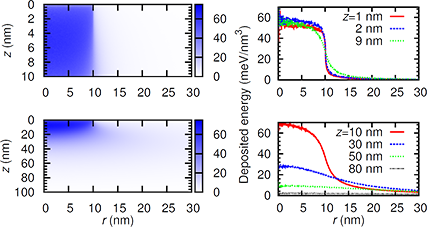
- positive charge in the material and to new particles, thus leading to a “shower” of particles. If an electron crosses a boundary into an adjacent material, its trajectory history is stopped at the other side of the interface and restarted with the new material transport properties. This can be done any



Structural and thermoelectric properties of TMGa3 (TM = Fe, Co) thin films
Beilstein J. Nanotechnol. 2013, 4, 461–466, doi:10.3762/bjnano.4.54
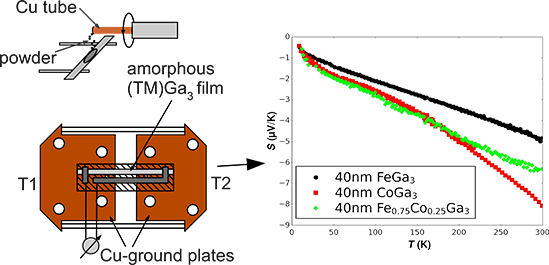
- as demonstrated by Rutherford backscattering experiments. The relatively low deposition temperature necessary for conserving the composition leads, however, to ‘X-ray amorphous’ film structures with immediate consequences on their transport properties: A practically temperature-independent electrical
- clear that all films are highly disordered with respect to their structure. This immediately poses the question as to how such strong disorder affects electrical transport properties like resistivity, ρ, and Seebeck coefficient, S. For amorphous metals, often addressed also as metallic glasses, this
- only at relatively low deposition temperatures. As a consequence, films of all the above compositions were found to be X-ray amorphous with no indications for the presence of crystallites larger than 5 nm. These new metallic glasses displayed transport properties quite distinct from their crystalline


Synthesis and thermoelectric properties of Re3As6.6In0.4 with Ir3Ge7 crystal structure
Beilstein J. Nanotechnol. 2013, 4, 446–452, doi:10.3762/bjnano.4.52
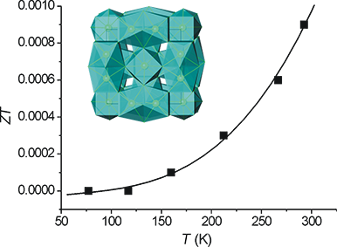
- per formula unit. As mentioned above, this electron concentration should yield the semiconducting behavior for compounds with the Ir3Ge7 structure type. Thus, the indium substitution for arsenic in Re3As7 could be used as a chemical modification to control transport properties of this system. The


Micro- and nanoscale electrical characterization of large-area graphene transferred to functional substrates
Beilstein J. Nanotechnol. 2013, 4, 234–242, doi:10.3762/bjnano.4.24
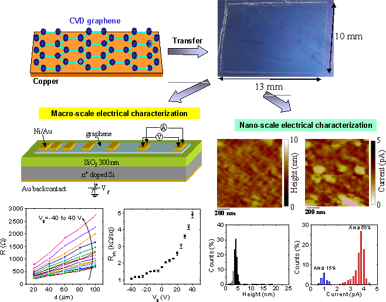
- -area membranes can be favoured on substrates with a similar hydrophobic character. Resist and, more generally, polymeric residues adsorbed onto graphene are known to severely degrade graphene transport properties [19]. However, a complete cleaning of the transferred graphene from those residues is
- graphene on SiO2 [22]. Both cracks and corrugations contribute to the degradation of the electronic transport properties in graphene [23]. Graphene transfer onto PEN In contrast to the case of virgin SiO2, which is naturally hydrophilic and requires proper treatments to be converted into a hydrophobic
- between the two materials. Results and Discussion Microscale electrical characterization The electronic transport properties of the large-area graphene transferred onto the two different substrates have been characterized on the macroscopic scale by electrical measurements on transmission line model (TLM



Functionalization of vertically aligned carbon nanotubes
Beilstein J. Nanotechnol. 2013, 4, 129–152, doi:10.3762/bjnano.4.14
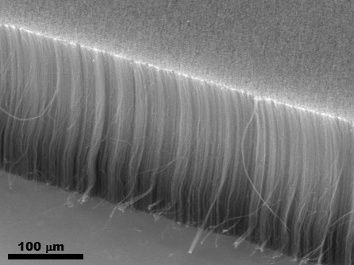
- and the transport properties. Let us focus now on the electrical properties. Kim et al. [98] carried out mild oxygen plasma treatment on SWCNTs aligned between two electrodes. They found that the structural defect density on the sample surface increased linearly with the plasma treatment time. In








Electronic and transport properties of kinked graphene
Beilstein J. Nanotechnol. 2013, 4, 103–110, doi:10.3762/bjnano.4.12
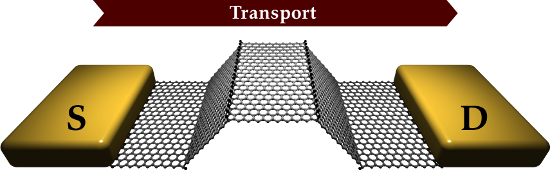
- linear bends in graphene. We find a significant barrier lowering (≈15%) for realistic radii of curvature (≈20 Å) and that adsorption along the linear bend leads to a stable linear kink. We compute the electronic transport properties of individual and multiple kink lines, and demonstrate how these act as
- nanoribbons; graphene nanostructuring; Introduction Nanostructures based on graphene have an enormous potential for applications. Especially in future electronic devices compatible with and extending silicon technology, due to the outstanding electronic transport properties of graphene [1]. However, it is
- by hydrogenation. In this paper we consider the reactivity of linear bends in a graphene sheet, and the electronic transport properties of kinks resulting from the hydrogenation of bends. Our starting point is the generic graphene structure shown in Figure 1a, which is inspired by the experimental


Characterization and properties of micro- and nanowires of controlled size, composition, and geometry fabricated by electrodeposition and ion-track technology
Beilstein J. Nanotechnol. 2012, 3, 860–883, doi:10.3762/bjnano.3.97
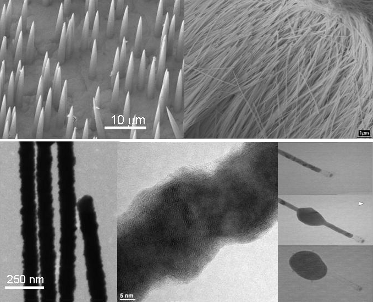
- defects such as twinning or slips are expected to influence the electrical and thermal transport properties, as well as the mechanical stability of nanowires. 2.2 Gold nanowires Numerous theoretical predictions and experiments have demonstrated that Au nanoparticles and nanowires are promising elements
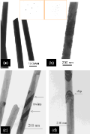
- investigations of the electrical transport properties of metal and semiconductor nanowires are necessary in order to better understand classical size effects such as electron scattering at surfaces and grain boundaries. These effects lead to an increase of the specific resistivity of the wire under study








Current–voltage characteristics of single-molecule diarylethene junctions measured with adjustable gold electrodes in solution
Beilstein J. Nanotechnol. 2012, 3, 798–808, doi:10.3762/bjnano.3.89
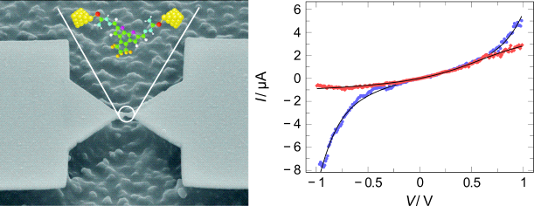
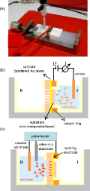
- current–voltage characteristics of these junctions are measured in a mechanically controlled break-junction system at room temperature and in liquid environment. We compare the transport properties of a series of molecules, labeled TSC, MN, and 4Py, with the same switching core but varying side-arms and
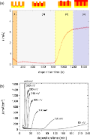
- end-groups designed for providing the mechanical and electrical contact to the gold electrodes. We perform a detailed analysis of the transport properties of TSC in its open and closed states. We find rather broad distributions of conductance values in both states. The analysis, based on the
- interest are optically addressable molecules, the transport properties of which can repeatedly and reversibly be changed by irradiation with light pulses. An example of these photochromic molecules is given by the class of diarylethenes. They consist of a core containing an aromatic ring that can be


Focused electron beam induced deposition: A perspective
Beilstein J. Nanotechnol. 2012, 3, 597–619, doi:10.3762/bjnano.3.70
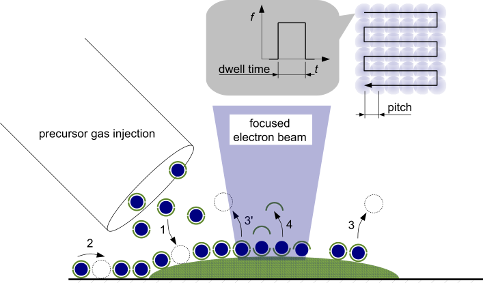
- metals are reviewed next with a focus on recent theoretical advancements in the field. As a case study the transport properties of Pt–C nanogranular FEBID structures are discussed. It is shown that by means of a post-growth electron-irradiation treatment the electronic intergrain-coupling strength can be
- continuously tuned over a wide range. This provides unique access to the transport properties of this material close to the insulator-to-metal transition. In the last part of the review, recent developments in mechanical strain-sensing and the detection of small, inhomogeneous magnetic fields by employing
- dissociation. As a matter of fact, post-growth irradiation can be advantageously used for fine-tuning the electronic transport properties of FEBID structures, and this will be discussed in the context of nanogranular structures later in this review. In any case, the energy spectrum of the electrons that can


Strong spin-filtering and spin-valve effects in a molecular V–C60–V contact
Beilstein J. Nanotechnol. 2012, 3, 589–596, doi:10.3762/bjnano.3.69
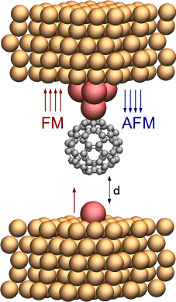
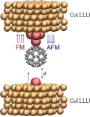
- transport properties of a C60-molecular junction in a setup relevant for STM experiments. Our results demonstrate how the FM and AFM configurations can be identified due to their markedly different conductance and shot noise. Thus, it may allow for the study of the magnetic coupling between tip and