Search results
Search for "vacancies" in Full Text gives 248 result(s) in Beilstein Journal of Nanotechnology. Showing first 200.
Thickness-dependent photoelectrochemical properties of a semitransparent Co3O4 photocathode
Beilstein J. Nanotechnol. 2018, 9, 2432–2442, doi:10.3762/bjnano.9.228
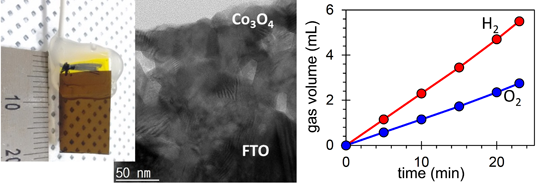
- octahedral (Co3+) and tetrahedral (Co2+) cobalt sites, where Co vacancies are the dominant sources of the p-type conductivity of Co3O4 under oxygen-rich conditions [9][13]. Despite these interesting properties of Co3O4 its application in photocathodes has been rarely studied [18][19][20][21][22][23



Lead-free hybrid perovskites for photovoltaics
Beilstein J. Nanotechnol. 2018, 9, 2209–2235, doi:10.3762/bjnano.9.207
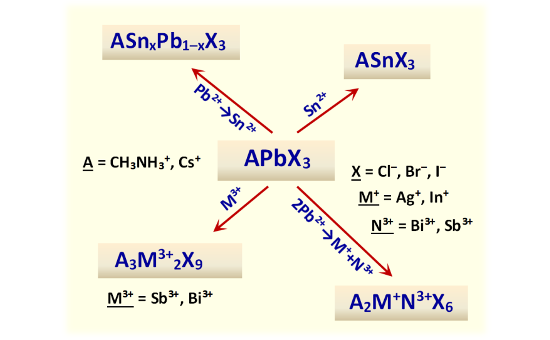
- perovskite layer under a reductive atmosphere, for example, in the presence of hydrazine vapors [119]. The conversion of Sn4+ into Sn2+, which can be described as 2SnI62– + N2H4 = 2SnI42– + N2 + 2HI, results in a reduction of the density of Sn2+ vacancies (Figure 5a) suppressing the undesirable p-type
- trap-mediated non-radiative recombination losses. The effect of elimination of Sn2+ vacancies in FASnI3 HP resulting from tin(II) oxidation can also be achieved by a partial substitution of iodide with bromide [120]. The devices with a mixed Br/I halide component displayed a reduced dark current and
- lower recombination rate, resulting in an increased Voc and FF and showed a PCE above 5%, whereby the cells retained stability over a 1000 h time trial span [120]. In a similar manner, the mixed CsSnIBr2 HP revealed a higher stability and a lower density of Sn2+ vacancies which can be further decreased


Electrospun one-dimensional nanostructures: a new horizon for gas sensing materials
Beilstein J. Nanotechnol. 2018, 9, 2128–2170, doi:10.3762/bjnano.9.202
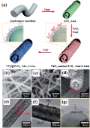
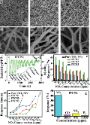
- ]. Al-doped SnO2 NTs exhibit a high response to low concentrations of formaldehyde by Sn4+ by Al3+ in a SnO2 lattice as well as increase in oxygen vacancies [184]. Pure and 8Al-Sn NTs (i.e., the Al/(Al + Sn) ratio is 8%) have nearly the same average diameter (120 nm inner diameter and 200 nm outer
- to 64.9 due to an increase in oxygen vacancies. The response and the recovery time are about 7 s and 30 s, respectively [179]. WO3 NFs/NTs functionalized by Pt [168][187], Pd [107][188], Cu [101], Ru [189], Rh2O3 [106], Au NPs [109], RuO2 NPs [189], La2O3 [104] as well as Pd-loaded ZnO nanocubes [1
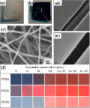
- resulting in high oxygen vacancies [215]. Similarly, Nd-doped In2O3 NTs showed enhanced formaldehyde sensing due to their porous and cracked morphology. Nd-doped In2O3 NTs have an average diameter of 200 nm as shown in Figure 10a–c. The optimum doping amount of Nd was 11 mol %. Nd-doped In2O3 porous NTs






Metal-free catalysis based on nitrogen-doped carbon nanomaterials: a photoelectron spectroscopy point of view
Beilstein J. Nanotechnol. 2018, 9, 2015–2031, doi:10.3762/bjnano.9.191
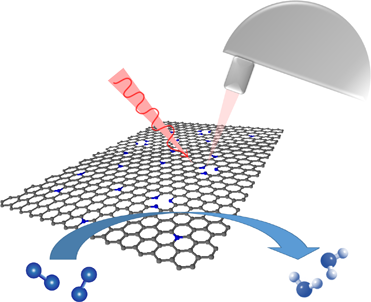
- . Indeed, the graphitic network can be easily modified by the introduction of heteroatoms, functional groups or defects, such as dislocations, vacancies or edges [25][34][35]. They act as active sites for electron localization or they are useful to anchor metal clusters or foreign molecules that will, in
- the electronic states of graphene. In general, point defects generate localized states at the Fermi level, easily identifiable as protrusion by scanning tunneling microscopy (STM) [56], while carbon vacancies are responsible for an opening of the energy gap [57]. The increase in the density of states
- the ion mass, the aforementioned probability is lower for nitrogen than for argon. The energy required to displace a C atom from the hexagonal network was reported to be about 22 eV [87]. This allows for the creation of carbon vacancies that are subsequently filled by N atoms. It was shown that at




Defect formation in multiwalled carbon nanotubes under low-energy He and Ne ion irradiation
Beilstein J. Nanotechnol. 2018, 9, 1951–1963, doi:10.3762/bjnano.9.186
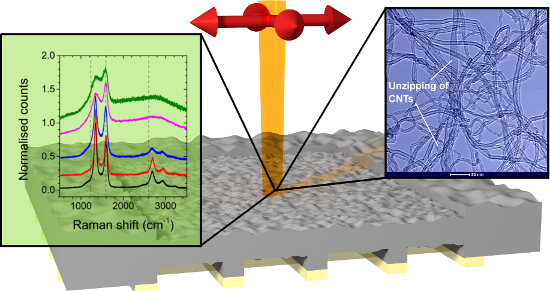
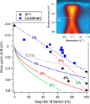
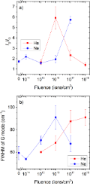
- show that ion irradiation with incidence angles closer to the surface normal favours the formation of double and multiple vacancies and in-plane disorder while more grazing incidence leads mainly to single vacancies and substitution, the latter being limited to chemical species reacting with carbon [9



Multimodal noncontact atomic force microscopy and Kelvin probe force microscopy investigations of organolead tribromide perovskite single crystals
Beilstein J. Nanotechnol. 2018, 9, 1695–1704, doi:10.3762/bjnano.9.161
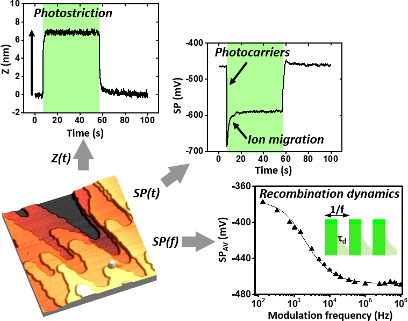
- above, there is nowadays overwhelming evidence that hybrid perovskites should be treated (at least to some extent) as mixed electronic–ionic semiconductors [29]. Ion migration occurs in these materials due to the existence of anion and cation vacancies [30] and is already known to induce changes in the


Cr(VI) remediation from aqueous environment through modified-TiO2-mediated photocatalytic reduction
Beilstein J. Nanotechnol. 2018, 9, 1448–1470, doi:10.3762/bjnano.9.137


Understanding the performance and mechanism of Mg-containing oxides as support catalysts in the thermal dry reforming of methane
Beilstein J. Nanotechnol. 2018, 9, 1162–1183, doi:10.3762/bjnano.9.108
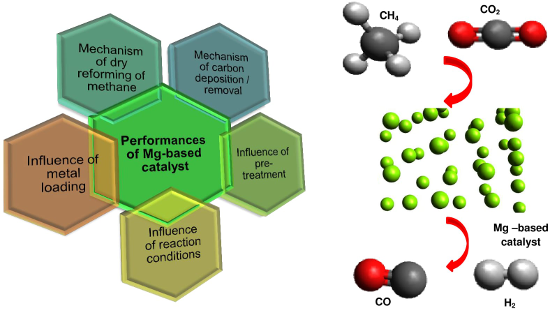
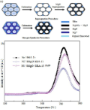
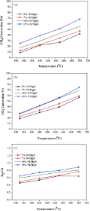
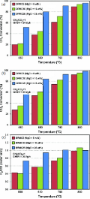
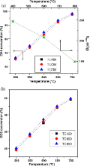
- . Therefore, the combination of Ce with Mg improves the catalyst basicity site. CeO2, commonly known for its oxygen storage capacity, contains a great concentration of highly mobile oxygen vacancies which could reduce the deposition of carbon on the catalyst surface [76]. In fact, CO2 molecules are more
- attracted to the base center (–Mg–OH group) and then dissociate on Ce2O3 via electron transfer to CO2 through oxygen vacancies to form CO2 and CeO2. Thus, the base center is most suitable for adsorbing the largest amount of CO2. The catalyst was stable for up to 50 h of reaction at 700 °C with an equal feed






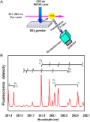
Room-temperature single-photon emitters in titanium dioxide optical defects
Beilstein J. Nanotechnol. 2018, 9, 1085–1094, doi:10.3762/bjnano.9.100
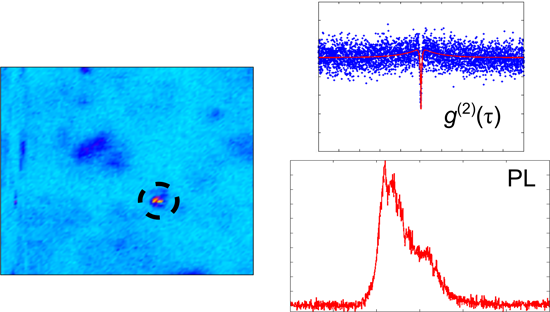
- , rutile and brookite [34]. Defects can be introduced during fabrication or are intrinsic to the crystallographic structure. Extensive work on TiO2 surface defects [35] has come from the need to progress catalytic reactions. Point defects within the TiO2 include interstitials and vacancies [36][37][38
- surface defect sites [59] and surface oxygen vacancies on anatase nanocrystal films [60]. Similar photoluminescence in the red was also observed from ZnO defects [7][8][9]. The photodynamics of D1 was also recorded and can be seen for a pump power of 82 μW in Figure 4b. The time trace shows photostability
- attributed their visible emission to surface states originating from oxygen vacancies associated with Ti3+ ions. The work of Zhang et al. [42] on anatase nanocrystals fabricated through a chemical process could not conclude definitively the origin of their broad visible emission band centred around 578 nm


Cyclodextrin inhibits zinc corrosion by destabilizing point defect formation in the oxide layer
Beilstein J. Nanotechnol. 2018, 9, 936–944, doi:10.3762/bjnano.9.86
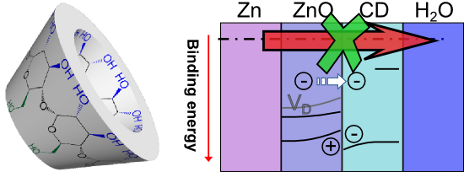
- an effect of the defect levels. The most probable defects are zinc vacancies VZn, as these have the lowest formation energy among the native point defects in ZnO [36][37]. VZn can be treated as deep acceptors, hence they should be manifested close to the top of the VB of ZnO [36][37]. A possible
- alternative explanation is a contribution from the β-CD HOMO to ZnO VBonset changes, since the β-CD HOMO onset was found 1.85 eV from the Fermi level. Intuitively, one would assume oxygen vacancies or zinc interstitials as dominating defects in the predominately n-type ZnO. The largest energy shift was


Effect of annealing treatments on CeO2 grown on TiN and Si substrates by atomic layer deposition
Beilstein J. Nanotechnol. 2018, 9, 890–899, doi:10.3762/bjnano.9.83
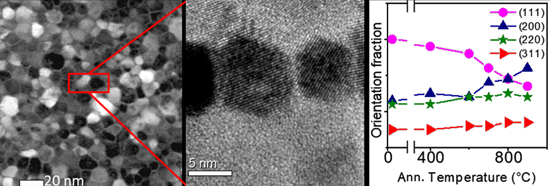
- equilibrium under standard conditions of temperature and pressure, stoichiometric CeO2 hosts Ce4+ and O2− ions in the cubic fluorite structure (space group Fm−3m in Pearson notation). However, Ce3+ ions can also be accommodated in the lattice structure in relation with oxygen vacancies, and Ce2O3 as minority
- growth and the oxygen vacancies, while preserving the cubic fluorite structure [12][13][14]. The electrical properties of CeO2 have been improved by performing post-deposition annealing at various temperatures [15]. In light of these previous studies, the interaction between substrate and annealing is
- atmosphere with the aim to passivate the film defects, namely the oxygen vacancies. A second set of samples has been annealed at high temperatures (600–900 °C) to induce full crystallization in CeO2 films and follow the corresponding structural and chemical changes induced by the annealing process


Surface-plasmon-enhanced ultraviolet emission of Au-decorated ZnO structures for gas sensing and photocatalytic devices
Beilstein J. Nanotechnol. 2018, 9, 771–779, doi:10.3762/bjnano.9.70
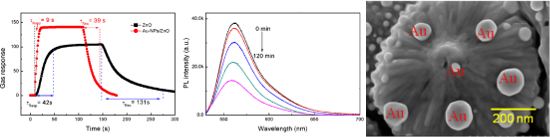
- factors, including absorbed oxygen species (O2−, O−, and O2−), charge carrier concentration, and the defects and vacancies on the ZnO surfaces. The gas response performance can be improved by a charge transfer process through surface modification [3][5][6] and doping of catalytic materials [7][8][9]. The
- emission band at 600 nm which was attributed to defects and vacancies [5][9][26][27][28]. After the Au NPs were decorated on the ZnO sub-micrometer spheres, one can see an enhanced band edge emission and a quenched visible emission. Interestingly, the UV–vis spectrum of plasmonic Au NPs overlaps with the




A review of carbon-based and non-carbon-based catalyst supports for the selective catalytic reduction of nitric oxide
Beilstein J. Nanotechnol. 2018, 9, 740–761, doi:10.3762/bjnano.9.68
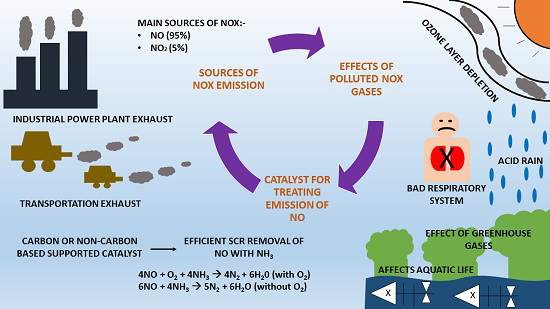
- prepared using the sol–gel method had better catalytic activity than that of the impregnation method. Besides that, a huge amount of oxygen vacancies and superoxide ions was observed when cobalt metal was introduced via the sol–gel method, thereby enhancing the SCR performance. On the other hand, the co
Synthesis and characterization of two new TiO2-containing benzothiazole-based imine composites for organic device applications
Beilstein J. Nanotechnol. 2018, 9, 721–739, doi:10.3762/bjnano.9.67
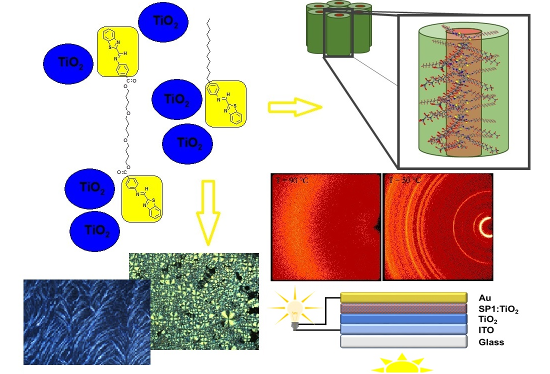
- both investigated imines. Similar interactions of oxygen vacancies existing on the TiO2 surface with SP1 and SP2 were observed. The imine:TiO2 mixtures showed good air stability and reusability, which demonstrates its potential for organic device applications. Keywords: azomethines; composites; HOMO
- hydrocarbon chains or aromatic rings are not visible. The observed changes confirmed the significant influence of titanium dioxide on the structural properties of both investigated compounds. It can be explained by the interactions of oxygen vacancies existing on the TiO2 surface with SP1 as well as SP2






Dynamics and fragmentation mechanism of (C5H4CH3)Pt(CH3)3 on SiO2 surfaces
Beilstein J. Nanotechnol. 2018, 9, 711–720, doi:10.3762/bjnano.9.66
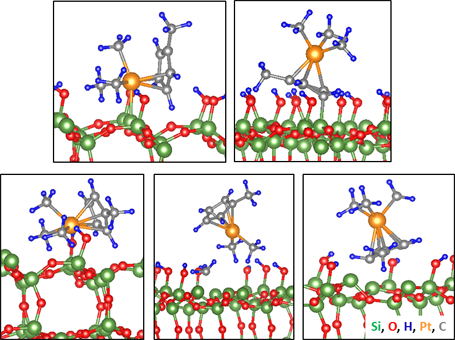
- ca. 15 Å in the original supercell) and an enhanced concentration of surface hydroxyl vacancies is provided in the reduced cell on partially dehydroxylated surfaces (i.e., 25% and 50% compared to 11% and 22%). However, the environment around these sites is similar (i.e., the sites are isolated on the



Mechanistic insights into plasmonic photocatalysts in utilizing visible light
Beilstein J. Nanotechnol. 2018, 9, 628–648, doi:10.3762/bjnano.9.59
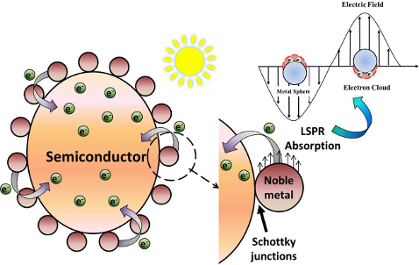
- the formation of copper vacancies in the material through exposure to oxygen or to a Ce(IV) complex [143]. Similarly, the LSPR band in stoichiometric Cu2–xS, Cu2–xSe and Cu2–xTe was improved by converting them into their nonstoichiometric counterparts via oxidation/reductive reactions [142]. Besides





Sensing behavior of flower-shaped MoS2 nanoflakes: case study with methanol and xylene
Beilstein J. Nanotechnol. 2018, 9, 608–615, doi:10.3762/bjnano.9.57

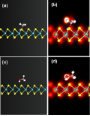
- sulfur vacancies in the samples. The previous report shows that sulfur vacancies can increase the possibility of charge transfer in MoS2 nanoflakes which may act as the main reason to alter the conductivity [35]. It has been also reported that the crystal phase and edge play a significant role in the
- electro-activity of MoS2 nanosheets. Furthermore, sulfur vacancies contribute significantly to the electronic properties of MoS2 [36][37]. Hence, such sulfur vacancy is desirable for the gas sensing properties of MoS2. To study the application of the flower-shaped MoS2 for gas sensing, the Brunauer–Emmett
- the resistance returns back to its initial value. In the hydrothermal growth of MoS2 (as proven before), the high edges, corners and vacancies provide proper sites for reaction and sensing of the gas molecules [43]. A scrutinized investigation of the results revealed that when methanol enters the


Influence of the preparation method on the photocatalytic activity of Nd-modified TiO2
Beilstein J. Nanotechnol. 2018, 9, 447–459, doi:10.3762/bjnano.9.43
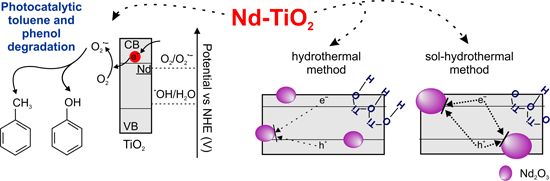
- increasing the content of surface oxygen vacancies and defects [31][40]. These electron trapping sites can enhance the separation of photogenerated electron–hole pairs [24]. Furthermore, both pristine and Nd-TiO2 NPs exhibit obvious excitonic PL signals with a similar curve shape. The observed phenomena can
- amount of oxygen vacancies and defects was found on the surface of the 0.25% Nd-TiO2(HT) sample. As previously mentioned, the presence of oxygen deficient centres on the surface and surface defects such as Ti3+ can reduce the rate of electron–hole pair recombination [45][46][47]. Further, the light




Wafer-scale bioactive substrate patterning by chemical lift-off lithography
Beilstein J. Nanotechnol. 2018, 9, 311–320, doi:10.3762/bjnano.9.31
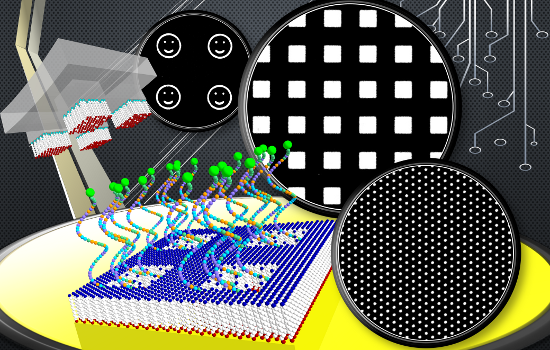
- create distinct regions carrying dissimilar surface properties for a variety of applications [21]. With conformal contact-induced reactions, the top layer Au–Au bond breakage on an alkanethiol SAM covered Au substrate leads to the exposure of fresh Au toward the exterior environment. These vacancies can


Anchoring of a dye precursor on NiO(001) studied by non-contact atomic force microscopy
Beilstein J. Nanotechnol. 2018, 9, 242–249, doi:10.3762/bjnano.9.26
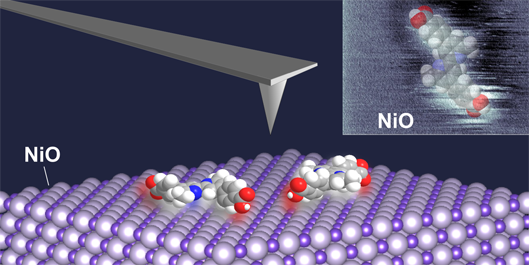
- nor any contrast inversion, as for example in measurements on TiO2 [51], and considering that Ni vacancies are supposed to occur more frequently in NiO [52], it can be assumed that the protrusions are related to oxygen atoms. This is also in agreement with earlier experimental studies on NiO where



Atomic layer deposition and properties of ZrO2/Fe2O3 thin films
Beilstein J. Nanotechnol. 2018, 9, 119–128, doi:10.3762/bjnano.9.14
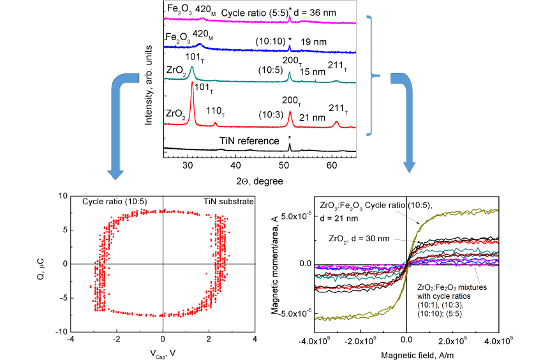
- reactive DC magnetron sputtering [7], also exhibited ferromagnetic properties. The undoped ZrO2 exhibited ferromagnetic properties mainly driven by oxygen vacancies. Monoclinic and tetragonal phases with similar amounts of oxygen vacancies were compared and ferromagnetism was only observed in the case of
- iron and zirconium oxides, the amount of defects (in particular oxygen vacancies) is increased due to the substitutive exchange between metal ions of different valence, resulting in an increase also in the leakage currents. Pure ZrO2 exhibited the lowest leakage current (Figure 7) and did not show any


Facile synthesis of silver/silver thiocyanate (Ag@AgSCN) plasmonic nanostructures with enhanced photocatalytic performance
Beilstein J. Nanotechnol. 2017, 8, 2781–2789, doi:10.3762/bjnano.8.277
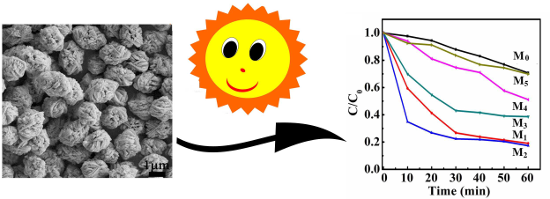
- nm. The absorption peak of silver nanoparticles becomes gradually stronger as the content of Ag increases, indicating that the sunlight utilization efficiency increases steadily. During UV irradiation, many defects are formed in AgSCN, including different interstitial sites and vacancies [29]. The
- the metal from the Fermi level directly transfer to the conduction band of AgSCN, and the vacancies remain on the surface of the Ag particles. A dipole-based resonance energy can directly excite semiconductors to produce photogenerated electron–hole pairs that can improve the visible-light catalytic
- vacancies were left on the surface of the Ag particles. The dipole-based resonance energy can directly excite semiconductors to produce photogenerated electron–hole pairs. The presence of Ag nanoparticles can not only improve the photocatalytic efficiency, but also can trap photogenerated electrons, slow


Patterning of supported gold monolayers via chemical lift-off lithography
Beilstein J. Nanotechnol. 2017, 8, 2648–2661, doi:10.3762/bjnano.8.265
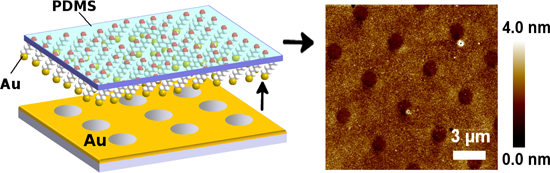
- . The values for Ha and 95% confidence intervals (95% CI) are shown below each graph. Two configurations calculated by molecular dynamics simulations of lift-off of a butanethiolate SAM on Au{111}. (A) Initially, densely packed RS–Au–SR (R = butyl) units occur on Au{111} having surface vacancies. The
- number of vacancies equals the number of RS–Au–SR units. (B) Initially, a dense packing of individual butane thiolates occurs at the face-centered cubic sites of a defect-free Au{111} surface. The dashed vertical lines define the borders of each computational unit cell, i.e., in the figure there are two


Fabrication of CeO2–MOx (M = Cu, Co, Ni) composite yolk–shell nanospheres with enhanced catalytic properties for CO oxidation
Beilstein J. Nanotechnol. 2017, 8, 2425–2437, doi:10.3762/bjnano.8.241
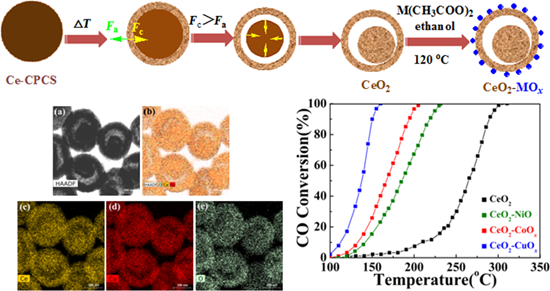
- independent forms. The formation of highly-dispersed copper species promotes the adsorption of CO molecules, while the presence of oxygen vacancies provided by CeO2 can in turn create active oxygen in the oxidation reactions [12][13]. Therefore, the creation of two-phase interfaces as numerous as possible and
- /and hierarchical architecture, which possess excellent redox properties and abundant oxygen vacancies, will be favorable for the enhancement of catalytic activity toward CO oxidation. CeO2-based hybrid oxides with hollow structure can be synthesized by a sacrificial-template method based on
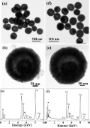
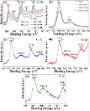
- on various parameters, including the crystal defects, oxygen vacancies, phonon confinement, and inhomogeneous strain related to the reduced ceria [31][32]. Herein, the shift can be related to the interaction between the MOx species and CeO2 surface, which leads to lengthening and weakening of the M–O





Ta2N3 nanocrystals grown in Al2O3 thin layers
Beilstein J. Nanotechnol. 2017, 8, 2162–2170, doi:10.3762/bjnano.8.215
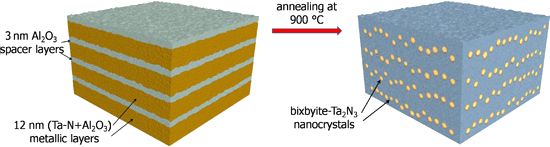
- these materials are non-stoichiometric materials (metal or N vacancies) the properties of which can be tuned by using different preparation parameters [15][16]. Along with the choice of material, the LSPR efficiency very much depends on the NP morphology [2][4][17]. For example, TiN nanoparticles can