


Search results
Search for "CVD" in Full Text gives 215 result(s) in Beilstein Journal of Nanotechnology. Showing first 200.
Possibilities and limitations of advanced transmission electron microscopy for carbon-based nanomaterials
Beilstein J. Nanotechnol. 2015, 6, 1541–1557, doi:10.3762/bjnano.6.158
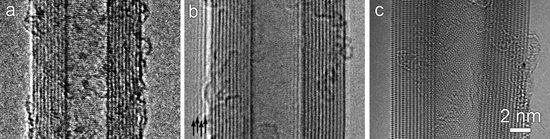
- electronic scattering and phonon scattering are very likely to be disturbed at the boundary. The fundamental studies on the atomic structure of graphene have a significant impact on the large-scale applications of graphene. Graphene synthesized through chemical vapor deposition (CVD) often exhibits a


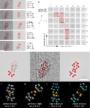
Formation of pure Cu nanocrystals upon post-growth annealing of Cu–C material obtained from focused electron beam induced deposition: comparison of different methods
Beilstein J. Nanotechnol. 2015, 6, 1508–1517, doi:10.3762/bjnano.6.156
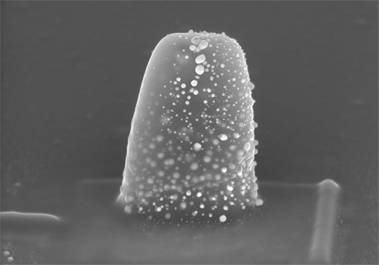
- makes the localized deposition of this metal very attractive for applications in nano-electronics. The organometallic hexafluoroacetylacetonate (hfac)-based Cu(I) and Cu(II) precursors are widely used in chemical vapor deposition (CVD) methods due to their stability and high vapor pressure. They allow
- to obtain pure metal CVD films with the same resistivity as in a bulk material at deposition temperatures below 300 °C [35][36][37]. Recently, it was shown for condensed monolayers of Cu(hfac)2 (also Pt(hfac)2 and Pd(hfac)2) that electron-beam irradiation results in about 80 atom % of carbon content




Using natural language processing techniques to inform research on nanotechnology
Beilstein J. Nanotechnol. 2015, 6, 1439–1449, doi:10.3762/bjnano.6.149
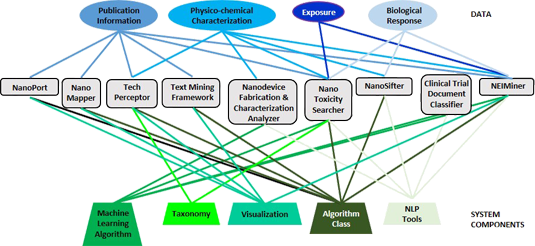
- reporting arc-discharge and laser vaporization synthesis methods [26]. Chemical vapor deposition (CVD) methods were also mentioned as being invented frequently. Top patenting companies included NEC, Samsung and Sony. Their dynamic tool revealed a possible patent vacuum of using low temperature or microwave
- -based synthesis of single-walled carbon nanotubes [27]. Analyzing hot spots revealed changes in the type of synthesis method patented over time, with synthesis methods evolving from arc discharging in 1999–2000 to metal-catalyzed heat-treatment syntheses and CVD in 2003–2004, to arc discharge with
- purification control in 2005–2006, to plasma-enhanced and thermal CVD in 2007–2010. CVD is the dominant commercial synthesis approach and catalyzed CVD with fluidized bed has been used by Bayer to synthesize Baytubes [29]. Competitor analysis revealed overlap between Sony and an individual researcher, Young
Electron and heat transport in porphyrin-based single-molecule transistors with electro-burnt graphene electrodes
Beilstein J. Nanotechnol. 2015, 6, 1413–1420, doi:10.3762/bjnano.6.146
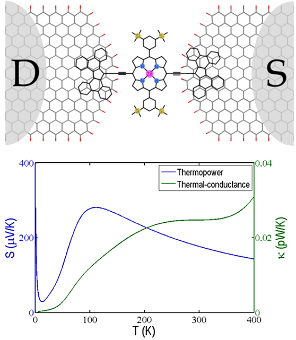
- in the porphyrin central group in the LUMO and LUMO+1 state. Electro-burnt graphene electrodes Feedback-controlled electro-burnt graphene (EBG) electrodes with nanometre separation were formed using mechanically exfoliated, few-layer graphene [9] and CVD-grown, monolayer graphene [17][18]. To form


From lithium to sodium: cell chemistry of room temperature sodium–air and sodium–sulfur batteries
Beilstein J. Nanotechnol. 2015, 6, 1016–1055, doi:10.3762/bjnano.6.105


Characterization of nanostructured ZnO thin films deposited through vacuum evaporation
Beilstein J. Nanotechnol. 2015, 6, 971–975, doi:10.3762/bjnano.6.100
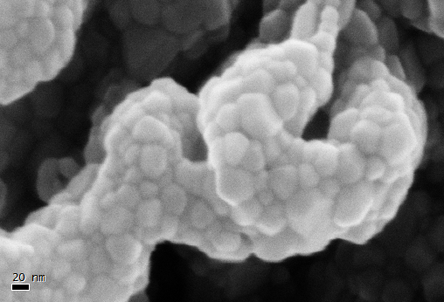
- , they can be used in many applications, such as gas sensors [4]. A wide range of techniques to deposit thin films are used, such as molecular beam epitaxy (MBE) [5], single-source chemical vapor deposition (SS CVD) [6], metalorganic chemical vapor deposition (MOCVD) [7], sol–gel [8], spray pyrolysis [9


Observing the morphology of single-layered embedded silicon nanocrystals by using temperature-stable TEM membranes
Beilstein J. Nanotechnol. 2015, 6, 964–970, doi:10.3762/bjnano.6.99

- -plane energy-filtered TEM (EFTEM) as was demonstrated for Si NCs formed by low energy Si ion implantation [10][26], plasma-enhanced chemical vapor deposition (PE-CVD) [27] or evaporation [28] followed by a high temperature annealing. The bottleneck in such measurements is the low TEM plane view specimen
- nm silicon nitride TEM support grids as a substrate (TEMwindows, SN100-A05Q33A). The layers were prepared by PE-CVD the details of which can be found elsewhere [29]. After layer deposition, the samples were postprocessed by high-temperature annealing. A list of all samples including the relevant


Pt- and Pd-decorated MWCNTs for vapour and gas detection at room temperature
Beilstein J. Nanotechnol. 2015, 6, 919–927, doi:10.3762/bjnano.6.95
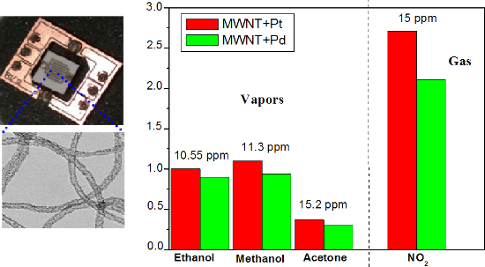
- -treated carbon nanotubes with Au or Ag using an evaporation technique for NO2 detection at room temperature [29]; however, their sensors were not fully reversible. Penza and co-workers decorated CVD grown carbon nanotubes with Au, Pt or Pd by using sputtering to enhance sensor response towards NO2 and NH3



Graphene on SiC(0001) inspected by dynamic atomic force microscopy at room temperature
Beilstein J. Nanotechnol. 2015, 6, 901–906, doi:10.3762/bjnano.6.93
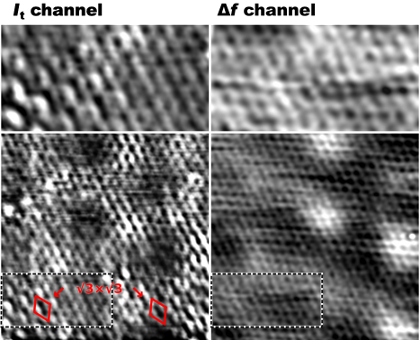
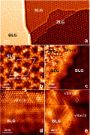
- hinders applications of epitaxial graphene in the nanoelectronics [1]. The two main methods of epitaxial graphene growth are chemical vapor deposition (CVD) on metal surfaces [2] and annealing of silicon carbide (SiC) [3]. The large conductivity of metal substrates leaves graphene on metals as model-only


![[Graphic 1]](/bjnano/content/inline/2190-4286-6-93-i1.png?max-width=637&scale=1.18182) × 6
× 6Structure and mechanism of the formation of core–shell nanoparticles obtained through a one-step gas-phase synthesis by electron beam evaporation
Beilstein J. Nanotechnol. 2015, 6, 874–880, doi:10.3762/bjnano.6.89
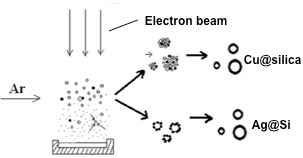
- synthesised using solution methods and usually involve two steps: synthesis of the core structure followed by coating the core structure with the shell material. Gas-phase synthesis techniques exist and usually involve chemical vapour deposition (CVD) or pulsed laser deposition (PLD) [1][2]. However these


Morphology control of zinc oxide films via polysaccharide-mediated, low temperature, chemical bath deposition
Beilstein J. Nanotechnol. 2015, 6, 799–808, doi:10.3762/bjnano.6.83
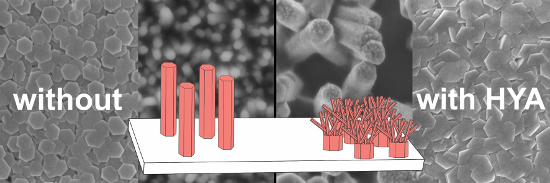
- more than 2100 publications in 2013 (Thomson Reuters, Web of Knowledge). Several methods have been used to deposit ZnO on different substrates, for example, pulsed laser deposition (PLD) [11], chemical vapor deposition (CVD) [12][13], as well as wet chemical approaches such as sol–gel synthesis [14




Applications of three-dimensional carbon nanotube networks
Beilstein J. Nanotechnol. 2015, 6, 792–798, doi:10.3762/bjnano.6.82
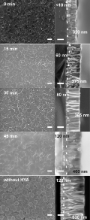
- constructing three-dimensional random meshes from their overlapping. Recently, Gui and co-workers [6] fabricated CNT-sponges through a chemical vapor deposition (CVD) process during which a catalyst precursor (ferrocene) dissolved in dichlorobenzene, which acted as carbon precursor, was injected in the reactor
- chamber. They obtained millimeter-thick CNT-assemblies in which individual nanotubes were stacked in a random manner to form the bulk material. Similarly, in this paper, we show that through carrying out a CVD synthesis with different precursors it is possible to synthesize three-dimensional carbon


Low-cost formation of bulk and localized polymer-derived carbon nanodomains from polydimethylsiloxane
Beilstein J. Nanotechnol. 2015, 6, 744–748, doi:10.3762/bjnano.6.76
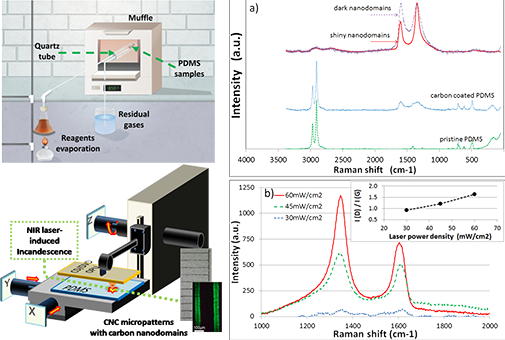
- characterization of the byproduct materials are reported. We demonstrate that CVD led to bulk production of graphitic nanocrystals and single-walled carbon nanotubes while direct laser ablation may be employed for the formation of localized fluorescent nanodots. In the latter case, graphitic nanodomains and multi
- through the chemical vapour deposition (CVD) technique by using alcohols as reagent for carbon sources. For instance, aliphatic alcohols or mixtures of ethanol and methanol with other substances such as ferrocenes may also be used, depending on the type of the desired carbon nanodomains [4][5]. Laser
- pyrolysis may also be used to produce PDC in a rapid, local and selective fashion, although it is less common than CVD due its non-continuous work regime limiting the process [1]. Recently, a high power ultraviolet laser has been employed to directly induce the localized formation of nanocrystalline silicon


Morphological and structural characterization of single-crystal ZnO nanorod arrays on flexible and non-flexible substrates
Beilstein J. Nanotechnol. 2015, 6, 720–725, doi:10.3762/bjnano.6.73
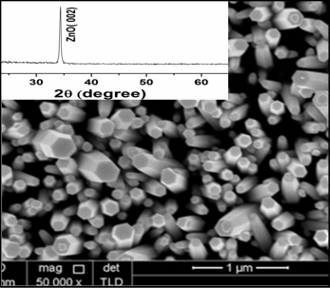
- (CVD) [7], molecular beam epitaxy (MBE) [8], pulsed laser deposition (PLD) [9], vapor phase transport (VPT) [10], and thermal evaporation [11]. However, these methods are considered to be high-cost techniques since they require complex, expensive equipment, high vacuum conditions and high operation


Electroburning of few-layer graphene flakes, epitaxial graphene, and turbostratic graphene discs in air and under vacuum
Beilstein J. Nanotechnol. 2015, 6, 711–719, doi:10.3762/bjnano.6.72
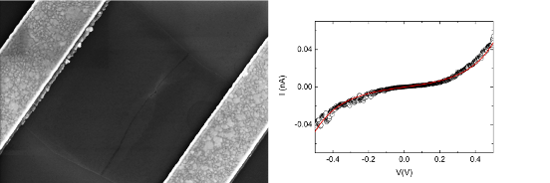
- suppression of conductance fluctuations [14]. Recent works have successfully made use of graphene for the realization of electrodes in molecular devices [10][17]. Specifically, parallel multi-junctions devices have been fabricated in chemical vapor deposition (CVD) graphene by electron beam lithography and
- fabrication of nanometer-sized gaps can be increased from about 50% [20] to more than 95% by performing the EB process under vacuum [21][22]. While this last result is certainly very promising, it has been demonstrated only for single-layer graphene grown by CVD and then transferred on SiO2. Therefore it is



Observation of a photoinduced, resonant tunneling effect in a carbon nanotube–silicon heterojunction
Beilstein J. Nanotechnol. 2015, 6, 704–710, doi:10.3762/bjnano.6.71
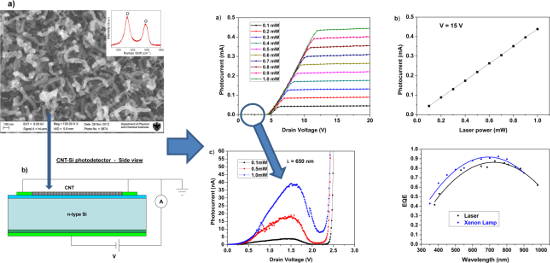
- obtained by growing a continuous layer of multiwall carbon nanotubes on an n-doped silicon substrate. The multiwall carbon nanostructures were grown by a chemical vapor deposition (CVD) technique on a 60 nm thick, silicon nitride layer, deposited on an n-type Si substrate. The heterojunction
- insulating layer in the bottom part of the Si layer. Due to these differences, the results from this work are different from those obtained in earlier work reported in [13]. The FBK substrate was then covered with a uniform layer of MWCNTs grown on the implantation area by CVD. The MWCNTs grow due to the


Simple approach for the fabrication of PEDOT-coated Si nanowires
Beilstein J. Nanotechnol. 2015, 6, 640–650, doi:10.3762/bjnano.6.65
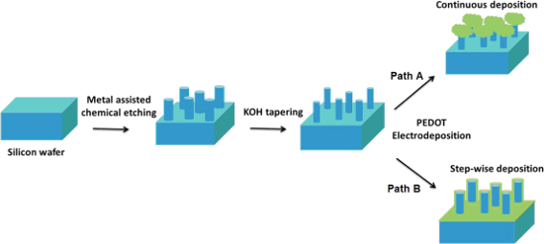
- individually coated. Various fabrication efforts have been attempted to achieve a true core–shell p–n junction. For example, chemical vapor deposition (CVD) [10][11] and atomic layer deposition (ALD) [12] are methods that can be employed to obtain this type of nanostructured junction, however, they suffer from




Filling of carbon nanotubes and nanofibres
Beilstein J. Nanotechnol. 2015, 6, 508–516, doi:10.3762/bjnano.6.53
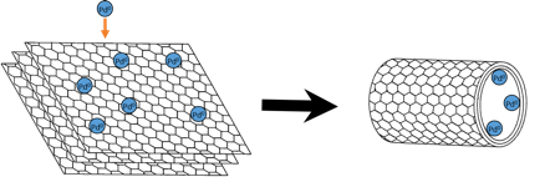
- later be released under high temperature conditions [108][109]. One method to produce nitrogen-doped MWCNTs is a modified, floating catalyst, CVD technique, which is most commonly used to produce VGCNFs. The catalyst (ferrocene) was placed into the CVD chamber under an argon/ethylene flow, and melamine
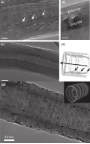
- schematic was inspired by a figure appearing in reference [106]. (a,b,c) Transmission electron micrographs of a hollow CVD-grown CNF with the graphene caps indicated by the white arrows. (d) Schematic of the structure of the CNFs with the caps as well as nucleation sites indicated by the black arrows. (e


X-ray photoelectron spectroscopy of graphitic carbon nanomaterials doped with heteroatoms
Beilstein J. Nanotechnol. 2015, 6, 177–192, doi:10.3762/bjnano.6.17
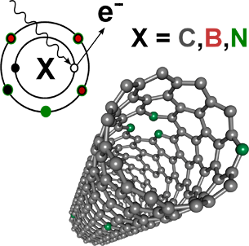
- thermochemical annealing of graphite oxide [184], microwave plasma decomposition of trimethylboron on SiO2 [185], and CVD of phenylboronic acid on a copper substrate [186]. It has been consistently reported that the incorporation of B in a nanotube structure is responsible for the formation of an additional
- small number of works. Triphenylphosphine [98][188][189], and very recently also trimethylphosphine [190], have been used as P precursors to synthesize P-SWCNTs by using CVD, while Krstič et al. used arc discharge with red phosphorus mixed into the anode rod [99]. The synthesis of P-doped graphene has


Synthesis of boron nitride nanotubes and their applications
Beilstein J. Nanotechnol. 2015, 6, 84–102, doi:10.3762/bjnano.6.9
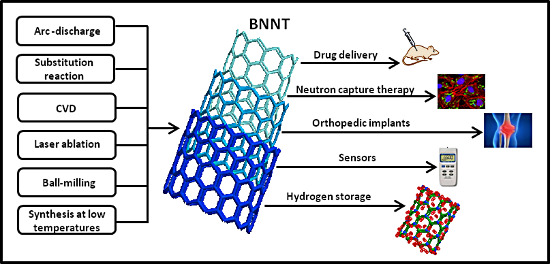
- ], and flavin mononucleotides (FMN) [19]. The synthesis of BNNTs was first reported in 1995 [20] by Chopra, based on an arc discharge method. Following the first report, several methods including arc discharge [20][21][22], chemical vapor deposition (CVD) [23][24][25][26], substitution reactions [27][28
- ][29], ball milling [30][31][32][33][34][35], laser ablation [36][37][38], and low temperature methods [39][40][41] were reported. The CVD and ball milling methods are currently the two most widely used methods for the synthesis of BNNTs. In this review, the most important BNNT synthesis methods are
- precursor) and MoO3 (as the catalyst) under N2(g) atmosphere at 1500 °C for 30 min [29]. Although this method can be used to produce BNNTs, the outcome is not always pure BNNTs but rather some B- and N-doped CNTs result in addition [48]. Chemical vapor deposition Chemical vapor deposition (CVD) is a well




Gas sensing properties of nanocrystalline diamond at room temperature
Beilstein J. Nanotechnol. 2014, 5, 2339–2345, doi:10.3762/bjnano.5.243
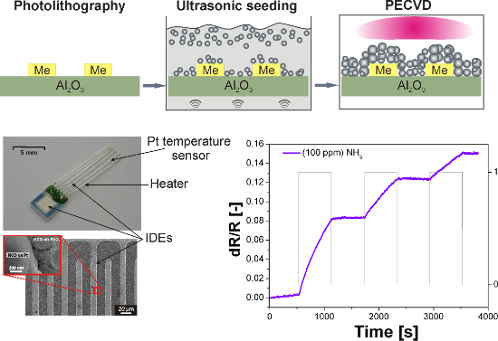
- distance of 1–2 mm), which may cause the substrate to overheat, a linear antenna, microwave plasma, CVD system (i.e., cold plasma) was used to avoid this drawback. The main advantage of a cold plasma system is the minimization of overheating of the substrate surface due to the longer distance between the


Liquid-phase exfoliated graphene: functionalization, characterization, and applications
Beilstein J. Nanotechnol. 2014, 5, 2328–2338, doi:10.3762/bjnano.5.242
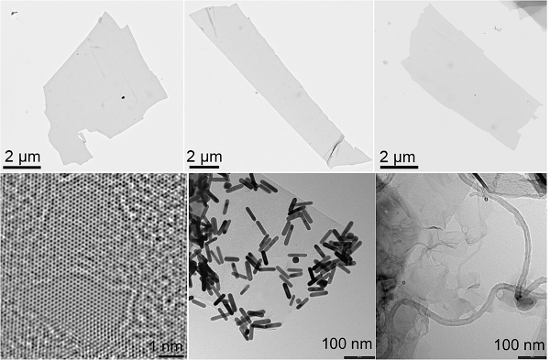
- large-scale and low-cost production of graphene for the development of applications. Recently, using chemical vapour deposition (CVD) techniques (as reported in [4]), it was possible to produce transferable, large graphene sheets that were included in transparent conductive films for mobile phones [5




UHV deposition and characterization of a mononuclear iron(III) β-diketonate complex on Au(111)
Beilstein J. Nanotechnol. 2014, 5, 2139–2148, doi:10.3762/bjnano.5.223
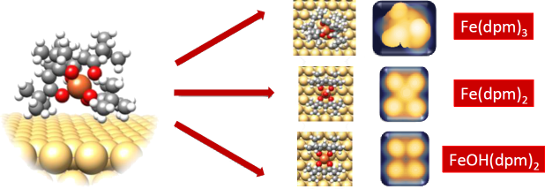
- in relation with their use as metallic precursors in coating technology, such as chemical vapour deposition (CVD) and atomic layer deposition (ALD) [21][22]. For instance, the reactivity of CuII(hfac)2, hfac− = hexafluoroacetylacetonate, was found to critically depend on the nature of the molecule



Sequence-dependent electrical response of ssDNA-decorated carbon nanotube, field-effect transistors to dopamine
Beilstein J. Nanotechnol. 2014, 5, 2113–2121, doi:10.3762/bjnano.5.220
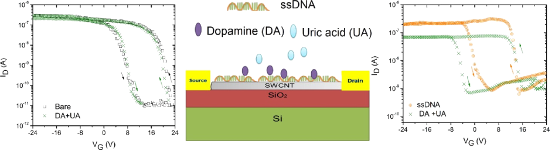
- repeated-ssDNA-decorated SWCNT FETs to DA, in the presence and absence of UA. Experimental SWCNT growth and FET fabrication Long, individual SWCNTs were grown on n+-doped Si capped by 1 µm of SiO2, thermally grown via chemical vapor deposition (CVD) using 0.01 M FeCl3 ethanol solution as the catalytic
- , respectively. ssDNA immobilization SWCNTs from a single CVD growth run were used to avoid device variability. Eight ssDNA sequences (G22, A22, C22, T22, (GT)22, (GA)22, (AC)22, and (CT)22) of the same sequence length, dopamine 3-hydroxytyramine, and uric acid were purchased from Sigma-Aldrich, Singapore
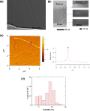
- of (a) CVD grown SWCNTs and (b) a SWCNT FET with an enlarged view of the SWCNT near the source, central and drain regions. (c) AFM image of a single SWCNT and its height profile indicating the SWCNT diameter is ≈1.51 nm. (d) Histogram plot showing the diameter distribution of the SWCNTs. The average


Effect of channel length on the electrical response of carbon nanotube field-effect transistors to deoxyribonucleic acid hybridization
Beilstein J. Nanotechnol. 2014, 5, 2081–2091, doi:10.3762/bjnano.5.217
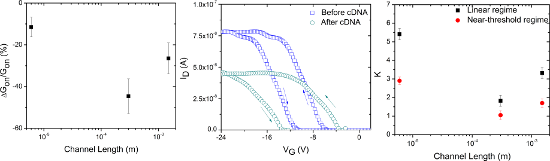
- chemical vapor deposition (CVD) process at 950 ºC was utilized to grow SWCNTs, in which 0.01 M FeCl3 ethanol solution was used as the catalytic precursor similar to our previous works [22][23]. Fabrication of SWCNT-based FETs We prepared three types of SWCNT-based FETs with different channel lengths, L
- substrates containing the CVD-grown SWCNTs. The 1 µm thick SiO2 acted as the dielectric gate. Selective photoresist capping using photolithography was applied to cover the CNT–metal junction which resulted in devices with only the channel exposed. Only devices with a single CNT as a channel were considered
- , resulting in the maximum response to hybridization. (a) SEM image of long CNTs grown by the CVD process. (b) AFM image and (c) height profile of a long individual SWCNT with a diameter of ≈1.51 nm. (d) A histogram plot of the diameter distribution of the as-grown SWCNTs. (a) The Raman spectrum of a 1 cm





