Search results
Search for "alcohol" in Full Text gives 276 result(s) in Beilstein Journal of Nanotechnology. Showing first 200.
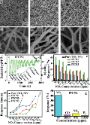
Effect of electrospinning process variables on the size of polymer fibers and bead-on-string structures established with a 23 factorial design
Beilstein J. Nanotechnol. 2018, 9, 2466–2478, doi:10.3762/bjnano.9.231
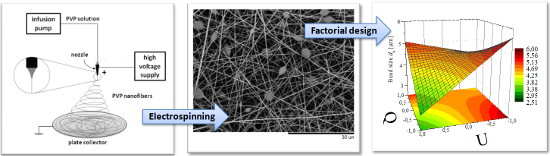
- beads). There are only a few research articles showing the application of this method. Coles et al. examined the influence of various process parameters on polylactic acid and poly(vinyl alcohol) electrospun fibers [26]. Nottelet et al. used factorial design to optimize the manufacture of small diameter


Thickness-dependent photoelectrochemical properties of a semitransparent Co3O4 photocathode
Beilstein J. Nanotechnol. 2018, 9, 2432–2442, doi:10.3762/bjnano.9.228
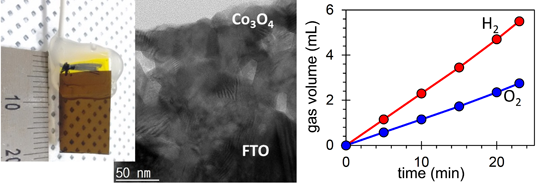
- -Aldrich, sheet resistance of 7 Ω/sq) and a glass microscope slide were used as substrates. These were cleaned using a sequence of isopropyl alcohol, acetone and distilled water using ultrasonication. Then, various thicknesses of Co films were deposited using a dc magnetron sputtering system (dc power ca



Block copolymers for designing nanostructured porous coatings
Beilstein J. Nanotechnol. 2018, 9, 2332–2344, doi:10.3762/bjnano.9.218
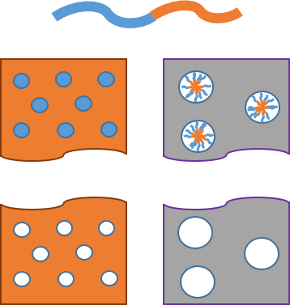
- alkoxides or metal chlorides) that evolves forming a colloidal solution (sol) and subsequently a stable network (gel) of polymerized particles. The byproducts of these polycondensation reactions are water and alcohol, depending on the precursor selected. Even if the principles behind the sol–gel reaction


Lead-free hybrid perovskites for photovoltaics
Beilstein J. Nanotechnol. 2018, 9, 2209–2235, doi:10.3762/bjnano.9.207
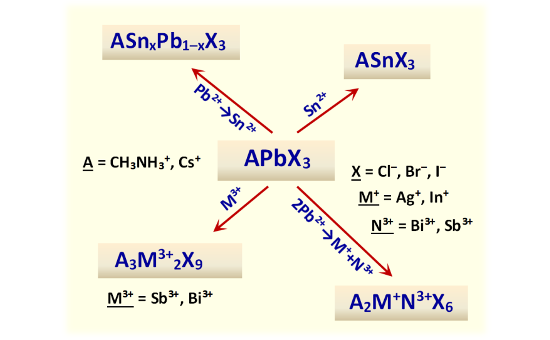
- ) in alcohol solutions of alkali metal or alkyl ammonium halides [136]. The method is perfect for the direct formation of Sn-based HPs with tailored morphology and composition avoiding the use of unstable Sn2+/Sn4+ precursors and toxic solvents. Moreover, it was argued in [136] that the method allows


Electrospun one-dimensional nanostructures: a new horizon for gas sensing materials
Beilstein J. Nanotechnol. 2018, 9, 2128–2170, doi:10.3762/bjnano.9.202






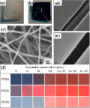
Fabrication of photothermally active poly(vinyl alcohol) films with gold nanostars for antibacterial applications
Beilstein J. Nanotechnol. 2018, 9, 2040–2048, doi:10.3762/bjnano.9.193
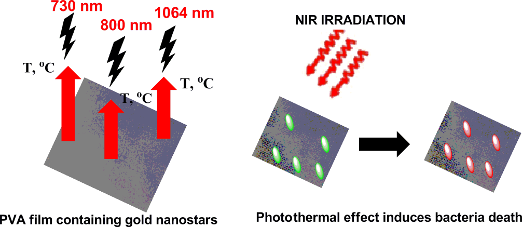
- biocompatible poly(vinyl alcohol) (PVA) films can lead to novel hybrid polymeric materials with tunable photothermal properties and a wide range of applications. In this study, thin PVA films containing highly photothermally efficient gold nanostars (GNSs) were fabricated and their properties were studied. The
- antibacterial films and coatings. Keywords: antibacterial properties; gold nanostars; photothermal effect; poly(vinyl alcohol) films; Introduction The photothermal properties of non-spherical gold nanoparticles possessing localized surface plasmon resonance (LSPR) located in NIR range has already been
- higher temperatures (ΔT > 40 °C) in the latter case [3][8][9][10]. Poly(vinyl alcohol) (PVA) polymer is also an attractive material for GNS-based film fabrication, as it displays a range of useful properties, namely, low toxicity, biocompatibility, hydrophilicity, chemical stability, and excellent film


Preparation of micro/nanopatterned gelatins crosslinked with genipin for biocompatible dental implants
Beilstein J. Nanotechnol. 2018, 9, 1735–1754, doi:10.3762/bjnano.9.165






Controllable one-pot synthesis of uniform colloidal TiO2 particles in a mixed solvent solution for photocatalysis
Beilstein J. Nanotechnol. 2018, 9, 1715–1727, doi:10.3762/bjnano.9.163
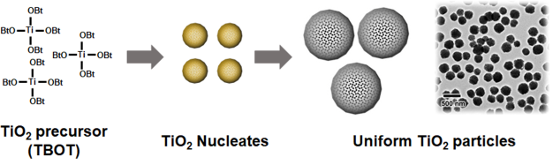
- good example for elucidating a rational design for more efficient colloidal TiO2-based photocatalysts. Experimental Materials and Chemicals: Ethyl alcohol (C2H5OH, 99.9%, anhydrous), acetonitrile (ACN, CH3CN 99.9%, special guaranteed grade) and ammonium hydroxide (NH4OH, 28%) were obtained from Daejung




Closed polymer containers based on phenylboronic esters of resorcinarenes
Beilstein J. Nanotechnol. 2018, 9, 1594–1601, doi:10.3762/bjnano.9.151
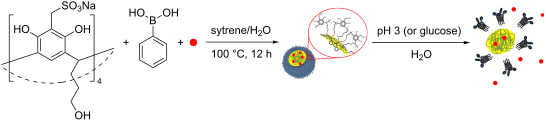
- alcohol moieties to form the glucose boronic ester [45]. DLS data show that indeed glucose destroys p(SRA-B). When glucose is added to the p(SRA-B) solution, the PDI increases from 0.23 to 0.47, and multiple peaks appear in the range of 40–1000 nm (see Supporting Information File 1, Figure S8). p(SRA-B


Cr(VI) remediation from aqueous environment through modified-TiO2-mediated photocatalytic reduction
Beilstein J. Nanotechnol. 2018, 9, 1448–1470, doi:10.3762/bjnano.9.137
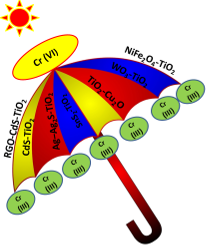
- with given organic compounds under suitable reaction conditions facilitates the selective organic transformations. For example, Hu et al. demonstrated that photocatalytic, selective oxidation of alcohol to aldehyde can be carried out by hVB+ and O2•− on the surface of CdS/TiO2 nanocomposites under


Electrostatically actuated encased cantilevers
Beilstein J. Nanotechnol. 2018, 9, 1381–1389, doi:10.3762/bjnano.9.130
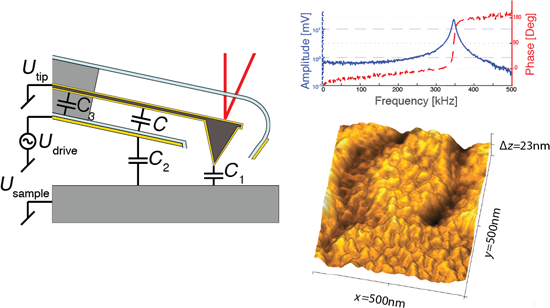
- , we evaporate a 30 nm thick gold layer (2) that is the excitation electrode. Using a femtosecond pulsed laser we ablate a ca. 1 μm wide opening (3) to access the sacrificial methacrylate layer and etch it using organic solvents (1:3, methyl isobutyl ketone/isopropyl alcohol) during the subsequent




Electrodeposition of reduced graphene oxide with chitosan based on the coordination deposition method
Beilstein J. Nanotechnol. 2018, 9, 1200–1210, doi:10.3762/bjnano.9.111
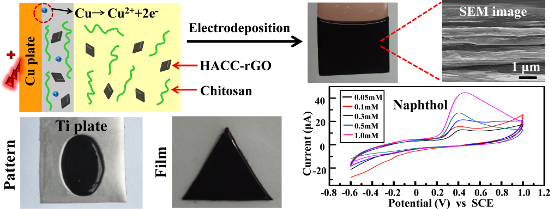
- morphology of the film shows a layered structure. Similarly, Wu et al. fabricated rGO/poly(vinyl alcohol) composite films, and they also found that the cross-section of composite films exhibit a gradient, layered structure [32]. Figure 3c shows XRD patterns of the HACC-rGO powder and the deposited HACC-rGO
- deposited HACC-rGO/CS films with different shapes. Furthermore, the deposited HACC-rGO/CS films with different shapes were fabricated on titanium plates. Briefly, a titanium plate was coated with an alcohol-soluble ink (mainly composed of polyvinyl butyral resin) at the desired region as the protective


Room-temperature single-photon emitters in titanium dioxide optical defects
Beilstein J. Nanotechnol. 2018, 9, 1085–1094, doi:10.3762/bjnano.9.100
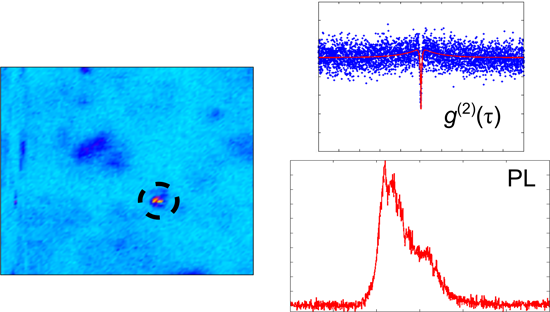
- of 99% with an average particle size of 30 nm (45 nm). Four nanopowder samples were prepared: anatase and rutile suspended in deionised (DI) water, and anatase and rutile suspended in isopropyl alcohol (IPA). For the nanopowder–DI water mixture, 21.0 (20.6) ± 0.2 mg of anatase (rutile) nanopowder was


Noble metal-modified titania with visible-light activity for the decomposition of microorganisms
Beilstein J. Nanotechnol. 2018, 9, 829–841, doi:10.3762/bjnano.9.77
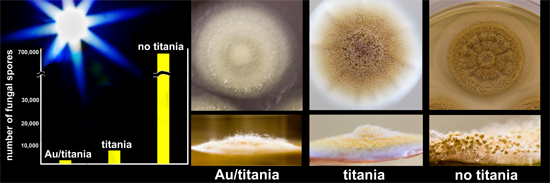
- , 90, 95 and 99.5% (v/v)) for 10 min each. Then, samples were washed with tert-butyl alcohol three times, soaked in it and dried under vacuum. Samples were sputtered with platinum for 60 s from three directions and observed by SEM (JSM-7400F, JEOL). Antifungal activity test The antifungal tests were


The effect of atmospheric doping on pressure-dependent Raman scattering in supported graphene
Beilstein J. Nanotechnol. 2018, 9, 704–710, doi:10.3762/bjnano.9.65
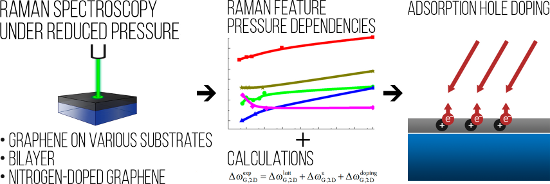
- /isopropyl alcohol mixture was used to wash graphene from etching products [31]. PMMA was removed by submerging the sample in glacial acetic acid (extra pure) [32] for 4 h. Graphene, doped with nitrogen, was prepared using a nitrogen-plasma treatment described elsewhere [33]. The Raman spectra were obtained


Optimisation of purification techniques for the preparation of large-volume aqueous solar nanoparticle inks for organic photovoltaics
Beilstein J. Nanotechnol. 2018, 9, 649–659, doi:10.3762/bjnano.9.60
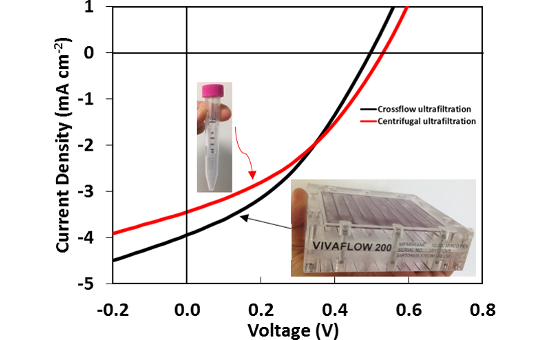
- have been developed for transferring currently utilized semiconducting macromolecules into green solvents: Method 1: The reprecipitation method, herein the semiconductive materials are dissolved in organic solvent which is added to a vigorously stirring alcohol causing the semiconductive materials to


Mechanistic insights into plasmonic photocatalysts in utilizing visible light
Beilstein J. Nanotechnol. 2018, 9, 628–648, doi:10.3762/bjnano.9.59
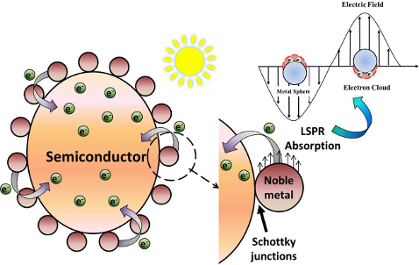
- photocatalysis reactions, including oxidation of benzyl alcohol, hydrogenation of nitrobenzene and the Suzuki coupling reaction. The strong electrical field intensity at 1500 nm (Figure 19) reveals that the LSPR is more significant when the irradiation wavelength is near to the Cu7S4 LSPR peak [111]. Likewise
- also reported the use of Ag NPs to remove phenol and drive oxidation of benzyl alcohol to benzaldehyde under UV light. This verifies the role of the LSPR effect and interband transition of Ag NPs in activating organic molecules for oxidation under UV–vis irradiation [169]. Au NPs are more suitable for


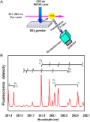

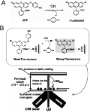


Sensing behavior of flower-shaped MoS2 nanoflakes: case study with methanol and xylene
Beilstein J. Nanotechnol. 2018, 9, 608–615, doi:10.3762/bjnano.9.57
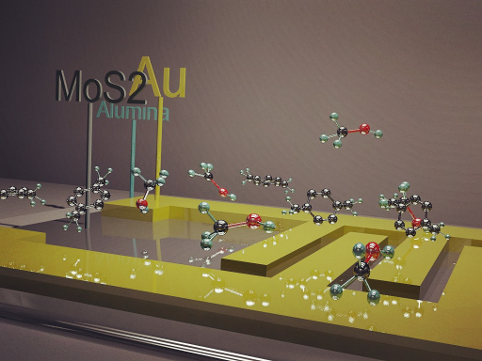
- . The substrates were immersed in acetone and isopropyl alcohol and sonicated for 15 min to remove any undesired surface ions. A 200 nm Pt film as a snake-shaped heater was sputtered on the back of the substrate using a sputter coater from Nanostructured Coatings Co. To fabricate the sensor device


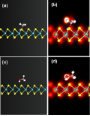
Fabrication and photoactivity of ionic liquid–TiO2 structures for efficient visible-light-induced photocatalytic decomposition of organic pollutants in aqueous phase
Beilstein J. Nanotechnol. 2018, 9, 580–590, doi:10.3762/bjnano.9.54
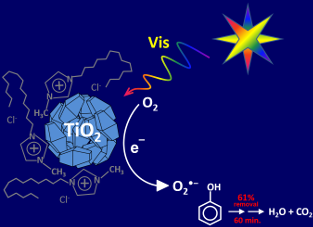
- the IL–TiO2 composites, for example, for photo-electrochemical water splitting [26][27], photo-oxidation of benzyl alcohol [12], phenol [28], degradation of chlorophenol [17][29], reduction of Cr6+ to Cr3+ [30] and the photocatalytic desulfurization of diesel oil [31]. Nevertheless, in most of these
- , indicating that h+ might play a negligible role in the phenol photo-oxidation process. Probably the positively charged hole could catch OH− to yield hydroxyl radicals [58]. In the case of the TiO2_T(1:3) sample, when tert-butyl alcohol (•OH scavenger) was added to the phenol solution, 63% of phenol was
- degraded, indicating that OH radicals play an insignificant role in the degradation process. Interestingly, for the TiO2_O(1:3) photocatalyst, the addition of AgNO3 and tert-butyl alcohol increased the effectiveness of the photocatalytic process. As explained by Liu et al., AgNO3 may be capable of




Ultralight super-hydrophobic carbon aerogels based on cellulose nanofibers/poly(vinyl alcohol)/graphene oxide (CNFs/PVA/GO) for highly effective oil–water separation
Beilstein J. Nanotechnol. 2018, 9, 508–519, doi:10.3762/bjnano.9.49
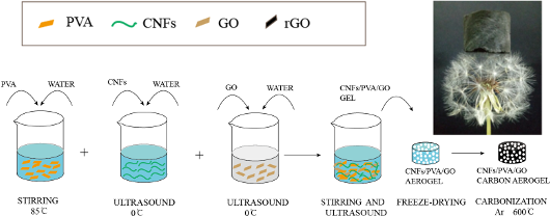
- 10.3762/bjnano.9.49 Abstract With the worsening of the oil-product pollution problem, oil–water separation has attracted increased attention in recent years. In this study, a porous three-dimensional (3D) carbon aerogel based on cellulose nanofibers (CNFs), poly(vinyl alcohol) (PVA) and graphene oxide (GO
- facile preparation process of carbon aerogels, these materials are viable candidates for use in oil–water separation and environmental protection. Keywords: 3D network structure; carbon aerogel; cellulose nanofibers; graphene oxide; oil absorption; poly(vinyl alcohol); Introduction In recent years, oil
- Zhejiang Lishui, China. Graphite powder (40 μm), used as the source for GO, was obtained from Qingdao Henglide Graphite Co., Ltd. Poly(vinyl alcohol) (PVA, Mw ≈ 95,000 g/mol), glutaraldehyde (GA, crosslinker, 25 wt % in H2O), potassium hydroxide (KOH), Sudan III, acetic acid (CH3COOH), hydrogen peroxide


Kinetics of solvent supported tubule formation of Lotus (Nelumbo nucifera) wax on highly oriented pyrolytic graphite (HOPG) investigated by atomic force microscopy
Beilstein J. Nanotechnol. 2018, 9, 468–481, doi:10.3762/bjnano.9.45
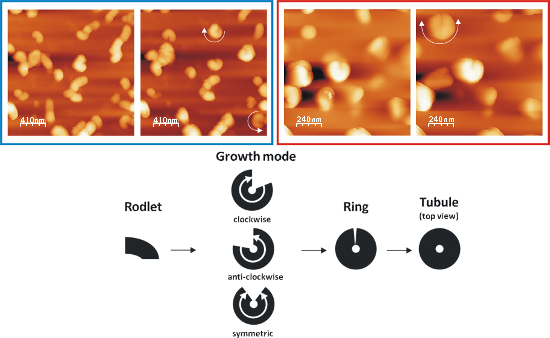
- chemical and morphological groups [20]. They are divided in to tubules containing i) high amounts of secondary alcohol, e.g., nonacosan-10-ol and its homologues; ii) high amounts of alkanediols and iii) high amounts of β-diketones. In this work, tubules of type ii containing predominantly diols [21] are


Facile synthesis of ZnFe2O4 photocatalysts for decolourization of organic dyes under solar irradiation
Beilstein J. Nanotechnol. 2018, 9, 436–446, doi:10.3762/bjnano.9.42
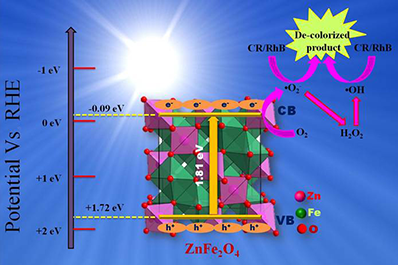
- detected by using trapping reagents such as dimethyl sulfoxide, isopropyl alcohol, ethylenediaminetetraacetic acid, p-benzoquinone for electrons, hydroxyl radicals (•OH), holes (h+), and superoxide (•O2−) radicals, respectively [35]. Figure 11b,c clearly shows that hydroxyl and superoxide radicals play a
- major role in the decolourization of Congo red solution. When isopropyl alcohol, a •OH scavenger, was added to the Congo red solution, the rate of decolourization was decreased. When p-benzoquinone was added, the same behaviour was observed. Thus, it can be concluded that •OH and •O2− are the active


Engineering of oriented carbon nanotubes in composite materials
Beilstein J. Nanotechnol. 2018, 9, 415–435, doi:10.3762/bjnano.9.41
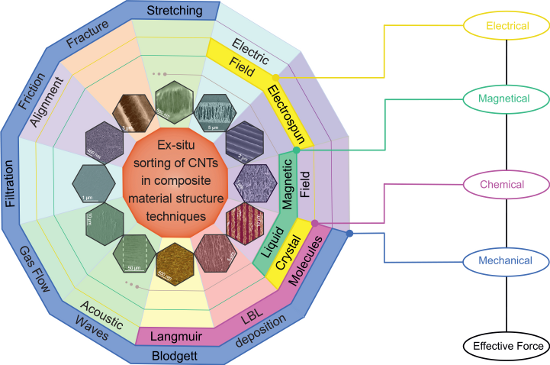
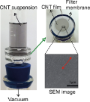
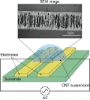
- recommended for producing concentrated and aligned composite nanomaterials. In this method SWCNTs are initially dispersed in an aqueous solution of poly(vinyl alcohol) (PVA) and are stabilized using surfactants. By applying the wet spinning method, a web of nanocomposite material fibers is produced where the
- . Winding onto a rotating mandrel. Step 3. Fixing with a matrix spray. Schematic of the layer-by-layer deposition process. Step 1. Wetting a paper tape with water/poly(vinyl alcohol) (PVA). Step 2. Introducing the assembled CNT layer in the reactor. Step 3. Winding up after drying. Reproduced with








Temperature-tunable lasing from dye-doped chiral microdroplets encapsulated in a thin polymeric film
Beilstein J. Nanotechnol. 2018, 9, 379–383, doi:10.3762/bjnano.9.37
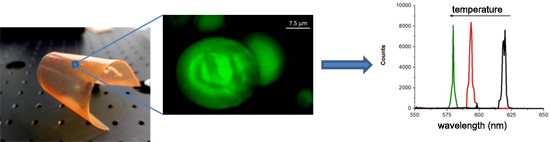
- from an emulsion having a mixture of water and polyvinyl alcohol as isotropic matrix has been reported. After the water evaporation, a polymeric film in which the microdroplets are encapsulated has been obtained. Bragg-type laser emission has been recorded from the emulsion as well as from the thin
- : 70.5 wt % ZLI-1939 + 29.5 wt % ZLI-811. The chiral dopant is chosen for its well-known temperature-dependent solubility [9]. The chiral mixture is confined inside a 36 μm cell the internal surfaces of which are covered with a rubbed thin layer of polyvinyl alcohol (PVA). The PVA (Sigma-Aldrich) is


Nanoparticle delivery to metastatic breast cancer cells by nanoengineered mesenchymal stem cells
Beilstein J. Nanotechnol. 2018, 9, 321–332, doi:10.3762/bjnano.9.32
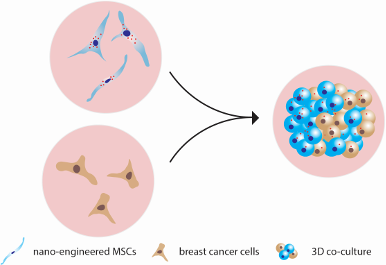
- natural compounds, such as chitosan and hyaluronic acid, or synthetic agents, such as polyHEMA and poly(vinyl alcohol) (PVA) [14][36]. PolyHEMA has been widely used to induce spheroid formation in cancer cells and cells from healthy tissue [37][38]. Notably, the cell morphology and even phenotype changes