


Search results
Search for "aluminum" in Full Text gives 253 result(s) in Beilstein Journal of Nanotechnology. Showing first 200.
Wafer-scale bioactive substrate patterning by chemical lift-off lithography
Beilstein J. Nanotechnol. 2018, 9, 311–320, doi:10.3762/bjnano.9.31
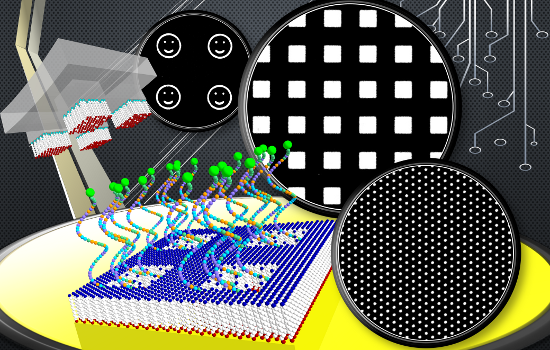
- , USA) was thoroughly mixed, degassed under vacuum, cast onto master molds, and cured on an aluminum-top hot plate at 100 °C overnight. The PDMS stamps were separated from the master molds, sequentially rinsed with acetone and isopropanol, and then blown dry with nitrogen gas. The prepared stamps were


The nanofluidic confinement apparatus: studying confinement-dependent nanoparticle behavior and diffusion
Beilstein J. Nanotechnol. 2018, 9, 301–310, doi:10.3762/bjnano.9.30
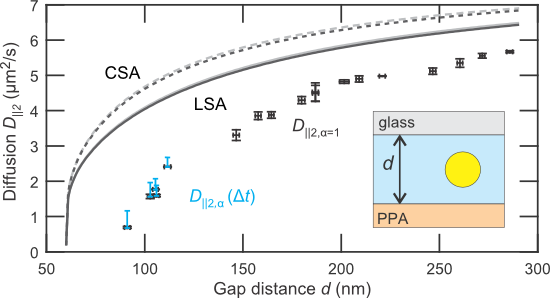
- glass and the sample are both glued to steel plates (black). Magnets (red) in the aluminum holders (green) fix the position of the steel plates. Three adjustment screws are used to align the tilt of the cover glass with respect to the focal plane of the objective. Parallelization of the substrate to the



Synthesis and characterization of electrospun molybdenum dioxide–carbon nanofibers as sulfur matrix additives for rechargeable lithium–sulfur battery applications
Beilstein J. Nanotechnol. 2018, 9, 262–270, doi:10.3762/bjnano.9.28
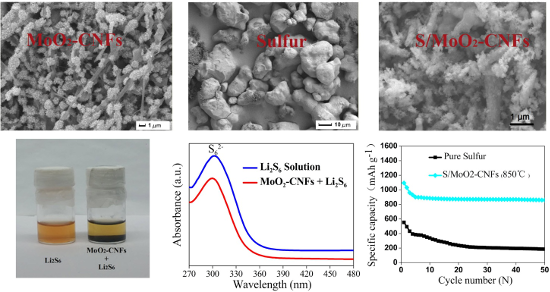
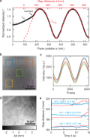
- rotating drum collector covered by aluminum foil served as the counter electrode. The distance between the needle tips and drum collector was set to 18 cm and the flow rate of the solution to 0.5 mL h−1. The as-prepared electrospun nanofibers were preoxidized at 260 °C for 2 h in air and calcined at
- with acetylene black and polyvinylidene fluoride (PVDF) in N-methyl-2-pyrrolidone (NMP) at a weight ratio of 7:2:1. The slurry was spread onto aluminum foil (thickness: 20 μm) and dried in vacuum at 60 °C for 12 h. Electrodes were made from punching circular discs with a diameter of 12 mm and sulfur


Dielectric properties of a bisimidazolium salt with dodecyl sulfate anion doped with carbon nanotubes
Beilstein J. Nanotechnol. 2018, 9, 164–174, doi:10.3762/bjnano.9.19
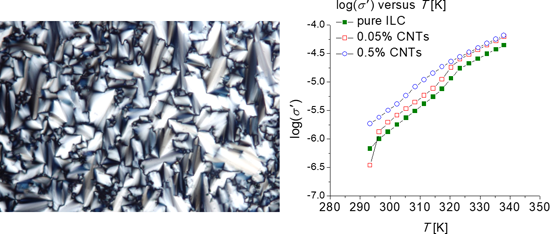
- instrument. The bisimidazolium salt was studied at a scanning rate of 10 K/min after being encapsulated in an aluminum pan. Three heating–cooling cycles were performed for this sample. Synthesis of [bisC8ImC10][C12OSO3]2 A solution of sodium dodecyl sulfate (2.18 g, 7.5 mmol) in methanol (60 mL) was added


Growth model and structure evolution of Ag layers deposited on Ge films
Beilstein J. Nanotechnol. 2018, 9, 66–76, doi:10.3762/bjnano.9.9
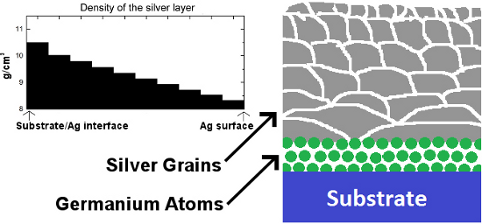
- stable Ag-based layers of thickness less than 15 nm on fused silica substrates is magnetron cosputtering of silver and aluminum. Surface root-mean-square (RMS) roughness of 15 nm Al-doped Ag films with an Al atomic concentration of 4% have been recently reported to be equal to 0.4 nm [16]. However, in






Nematic liquid crystal alignment on subwavelength metal gratings
Beilstein J. Nanotechnol. 2018, 9, 42–47, doi:10.3762/bjnano.9.6
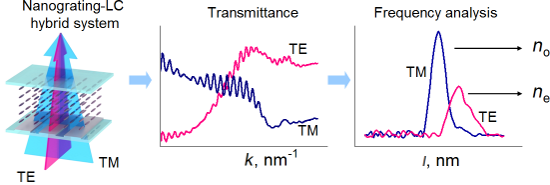
- , Russia 10.3762/bjnano.9.6 Abstract We have studied the alignment of a nematic liquid crystal (LC) material on aluminum subwavelength nanogratings as a function of the period, p, and the slit width to period ratio, w/p. A method, based on Fourier analysis of the transmittance spectra of the LC grating
- values of the LC extraordinary refractive index. This information allows us to determine the average alignment of the LC molecules on the nanograting surface. Experimental We have fabricated aluminum films of ≈100 nm thickness on a glass substrate using the vacuum sputtering technique. The subwavelength
- slits. Since every grating contains 100 slits, and its size depends on the period, the reference squares of a size corresponding to each period were also milled. These squares, which are free of Al, were used as the reference areas in the optical spectra measurements. The glass plate with the aluminum


![[Graphic 3]](/bjnano/content/inline/2190-4286-9-6-i7.svg?max-width=637&scale=1.18182) , the sample axis (rubbing direction) ...
, the sample axis (rubbing direction) ...


Localized growth of carbon nanotubes via lithographic fabrication of metallic deposits
Beilstein J. Nanotechnol. 2017, 8, 2592–2605, doi:10.3762/bjnano.8.260
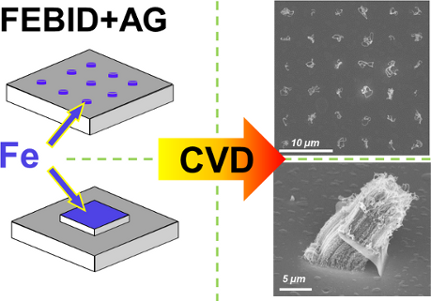
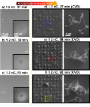
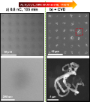
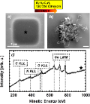
- CNTs. In addition, Si signals were detected at both position 1 and 2, probably originating from the underlying substrate. At position 3, a large Si signal was detected along with minor carbon and aluminum signals. While the carbon signal might be derived from corresponding surface contamination, the
- origin of the aluminum signal is certainly the Al2O3 layer. In addition, we were not able to detect the Fe signal at this point. This is especially remarkable at position 2 in Figure 7b, however, this can be explained considering that EDX is not a surface sensitive method. Therefore the composition of




Synthesis of metal-fluoride nanoparticles supported on thermally reduced graphite oxide
Beilstein J. Nanotechnol. 2017, 8, 2474–2483, doi:10.3762/bjnano.8.247
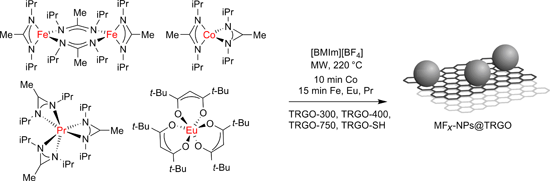
- slurry composed of 75 wt % FeF2-TRGO, 15 wt % active carbon and 10 wt % PVDF in NMP on an aluminum foil. A half-cell was assembled in Ar-filled glovebox with lithium foil as counter electrode and 1 M LiFeF6 in ethylene carbonate/ethylmethyl carbonate (50:50) as electrolyte. The galvanostatic charge


Laser-assisted fabrication of gold nanoparticle-composed structures embedded in borosilicate glass
Beilstein J. Nanotechnol. 2017, 8, 2454–2463, doi:10.3762/bjnano.8.244
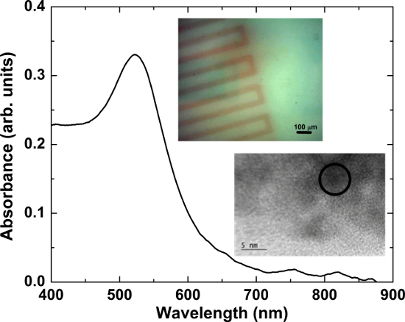
- ., silicate, phosphate and borate glasses, titanium and aluminum oxides, and polymers) are processed by laser radiation with appropriate parameters. Metal nanoparticles are formed within the irradiated area after a subsequent thermal annealing. This photoreduction process has been achieved by using CW lasers


Fabrication of gold-coated PDMS surfaces with arrayed triangular micro/nanopyramids for use as SERS substrates
Beilstein J. Nanotechnol. 2017, 8, 2271–2282, doi:10.3762/bjnano.8.227
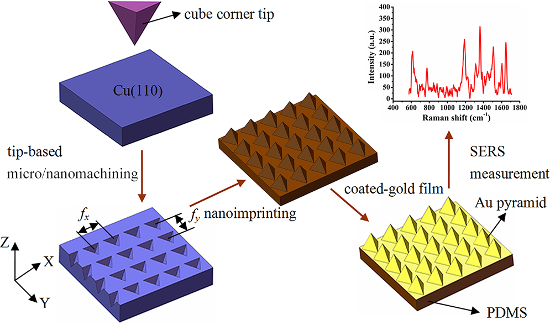
- approaches. They produced arrays of tipless pyramids using an optical UV curing method. Lee et al. [24] used anodic aluminum oxide as a template for transferring patterns onto the polydimethylsiloxane (PDMS) substrate surfaces using a dry etching method. In this work, the detection of DNA molecules showed a





A comparative study of the nanoscale and macroscale tribological attributes of alumina and stainless steel surfaces immersed in aqueous suspensions of positively or negatively charged nanodiamonds
Beilstein J. Nanotechnol. 2017, 8, 2045–2059, doi:10.3762/bjnano.8.205
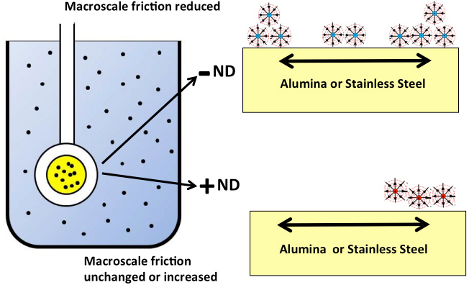
- specifically designed for operating with one surface immersed in a liquid at a fundamental transverse shear mode. The aluminum QCM samples were anodized using a literature method that grows an alumina layer at the rate of 2 μm/h [30]. For these results, the liquid side QCM electrode was connected as the anode
- aluminum, the surface-exposed aluminum metal is readily oxidized to Al2O3 under ambient air. This surface layer of alumina is protecting the rest of metal from a further corrosion. In our experiments, the electrodes were additionally anodized for 3 min. This procedure is expected to yield approximately 50
- –100 nm thick Al2O3 layer. For Al2O3 is exposed to water one expect a formation of several aluminum hydroxide phases [49]. The presence of hydroxy (OH) groups on the alumina surface is affected by the oxide surface structure as well as other parameters with pH being the most important. Overall, the


Imidazolium-based ionic liquids used as additives in the nanolubrication of silicon surfaces
Beilstein J. Nanotechnol. 2017, 8, 1961–1971, doi:10.3762/bjnano.8.197
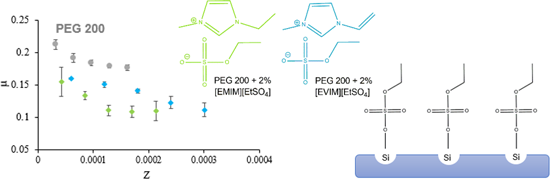
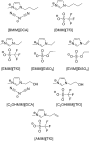
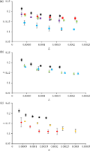
- of ceramics. Other investigators followed this idea and added imidazolium-based ILs to base oils to lubricate steel/aluminum contacts [5][6][7] and steel/steel contacts [8][9][10][11][12][13]. Jiménez and Bermúdez [7] tested two ILs with the short alkyl chain imidazolium cation [EMIM], and the anions



Synthesis and catalytic application of magnetic Co–Cu nanowires
Beilstein J. Nanotechnol. 2017, 8, 1769–1773, doi:10.3762/bjnano.8.178
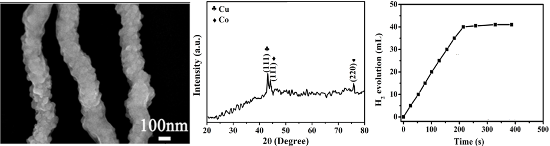
- mainly electrodeposition by different templates, as found in the previous literature. For example, many papers have reported Co–Cu nanowires electrodeposited into a porous anodic aluminum oxide template [1][2][3][4]. Additionally, L. Gravier et al. [8] prepared Co–Cu multilayered nanowires by


Laser processing of thin-film multilayer structures: comparison between a 3D thermal model and experimental results
Beilstein J. Nanotechnol. 2017, 8, 1749–1759, doi:10.3762/bjnano.8.176
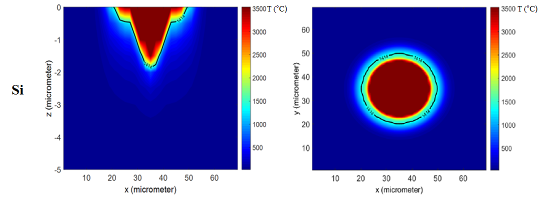
- . Laser processing of Al-Si thin-film substrate The melting and boiling points of aluminum are 660 °C and 2470 °C respectively and aluminum has a latent heat of fusion of 397 kJ/kg and a latent heat of vaporization of 10,800 kJ/kg [22]. The measured and calculated ablation depths are presented in Table 2
- . The surface profiles at different frequencies and 5 W are shown in Figure 4. By applying a thin aluminum film to the surface, the ablation depth was significantly increased at 75 kHz compared to bare silicon samples. This can be explained by the smaller latent heat of vaporization and lower boiling
- temperature of aluminum, which means more material can be ablated using the same amount of energy. This can be further verified by the deeper holes at 25 and 50 kHz. The other reason is the lower plasma absorption of aluminum compared to silicon based on the calculated plasma absorption functions. Since the





Near-infrared-responsive, superparamagnetic Au@Co nanochains
Beilstein J. Nanotechnol. 2017, 8, 1680–1687, doi:10.3762/bjnano.8.168
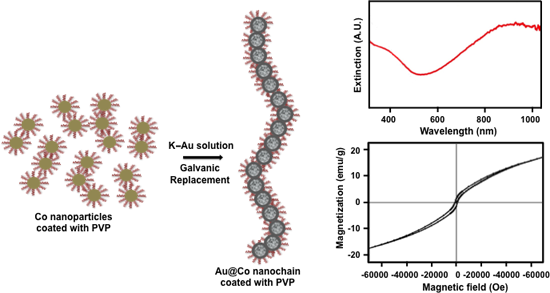
- ). The mixture changed from yellow to colorless after the reaction had proceeded for an additional 30 min. The K–gold solution was stored under refrigeration in the dark for two days (with help of aluminum foil) until use. Synthesis of the Au@Co nanochains The synthesis of the nanochains proceeded using


Miniemulsion copolymerization of (meth)acrylates in the presence of functionalized multiwalled carbon nanotubes for reinforced coating applications
Beilstein J. Nanotechnol. 2017, 8, 1328–1337, doi:10.3762/bjnano.8.134
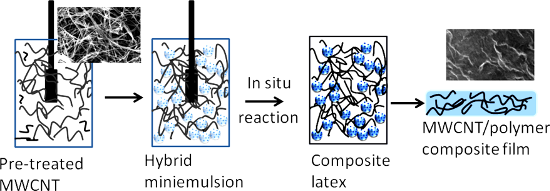
- microscopy (SEM) images were taken in a Hitachi S-4800. Differential scanning calorimetry (DSC) measurements of films cast from hybrid latexes and blends were carried out in a Q1000, TA Instruments apparatus. 5 mg of each sample were placed in standard aluminum DSC pans and analyzed in air atmosphere at a


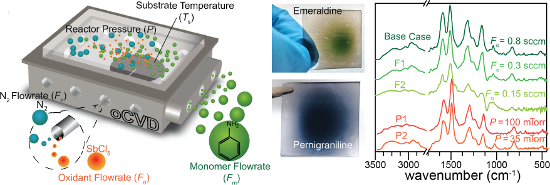
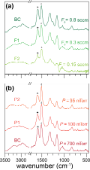
Oxidative chemical vapor deposition of polyaniline thin films
Beilstein J. Nanotechnol. 2017, 8, 1266–1276, doi:10.3762/bjnano.8.128
- aluminum oxide, mesoporous TiO2, and activated carbon; these oCVD PTh coatings resulted in enhanced charge storage due to preservation of the surface area and pore space within the nanostructures [32]. As a result, PTh-coated carbon electrodes showed a 50% increase in specific capacitance and excellent




Nanotopographical control of surfaces using chemical vapor deposition processes
Beilstein J. Nanotechnol. 2017, 8, 1250–1256, doi:10.3762/bjnano.8.126
- and Oh used anodic aluminum oxide membranes as a template for the production of nanotubes with a tunable wall thickness (Figure 1) [11]. Via chemical oxidation polymerization of vaporized pyrroles, polypyrrole was deposited on the walls of the membrane pores which had been pretreated with ferric
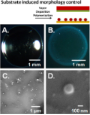
- results in the deactivation of the reactive monomer species on the surface. Patterning was realized by placing conducting aluminum metal channels on a nonconductive glass surface [24]. The selective growth of various polymers was also found for surfaces equipped with different functional groups. This
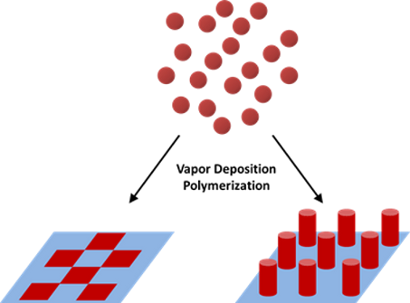
- and patterned coatings from a great variety of polymer materials can be created that can be tailored to the respective applications. Polymer structures via masked deposition: polypyrrole nanotubes by deposition using aluminum oxide membranes with a pore size of 100 nm as the template. The wall




Hierarchically structured nanoporous carbon tubes for high pressure carbon dioxide adsorption
Beilstein J. Nanotechnol. 2017, 8, 1135–1144, doi:10.3762/bjnano.8.115
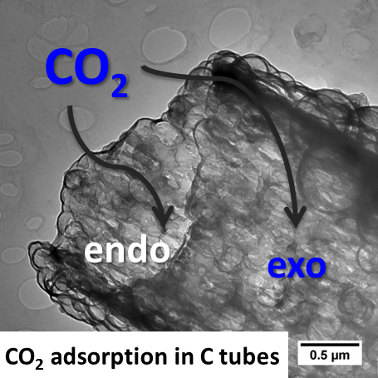
- using an aluminum sample holder. High-resolution transmission microscopy (HRTEM) analysis was performed on lacey carbon copper grids (300 mesh) at a G2F20 (Tecnai) at the ERC-Jülich in Germany. IR measurements were performed on a Nicolet 6700 spectrometer with an ATR Smart Performer unit from Thermo


The integration of graphene into microelectronic devices
Beilstein J. Nanotechnol. 2017, 8, 1056–1064, doi:10.3762/bjnano.8.107
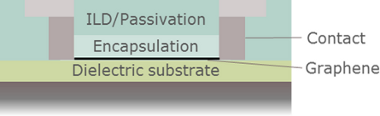
- yields excellent results [4], but this is not a production-relevant approach. A material that is available in mass-production quantities and fulfills both mentioned requirements is aluminum oxide deposited by atomic-layer deposition (ALD). It was demonstrated that graphene encapsulated in Al2O3 could be


Needs and challenges for assessing the environmental impacts of engineered nanomaterials (ENMs)
Beilstein J. Nanotechnol. 2017, 8, 989–1014, doi:10.3762/bjnano.8.101
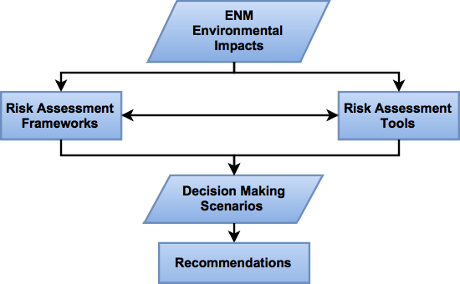

Synthesis of coaxial nanotubes of polyaniline and poly(hydroxyethyl methacrylate) by oxidative/initiated chemical vapor deposition
Beilstein J. Nanotechnol. 2017, 8, 872–882, doi:10.3762/bjnano.8.89
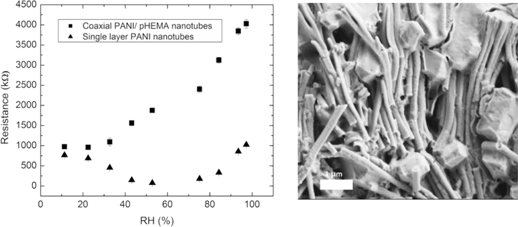
- and anodic aluminum oxide template (AAO) with pore sizes of 200 nm were used as substrates and were coated simultaneously. Glass slides were used for electrical conductivity measurements and UV–visible spectroscopy (UV–vis). Si wafers were used for Fourier-transform infrared (FTIR) spectrophotometry


Recombinant DNA technology and click chemistry: a powerful combination for generating a hybrid elastin-like-statherin hydrogel to control calcium phosphate mineralization
Beilstein J. Nanotechnol. 2017, 8, 772–783, doi:10.3762/bjnano.8.80
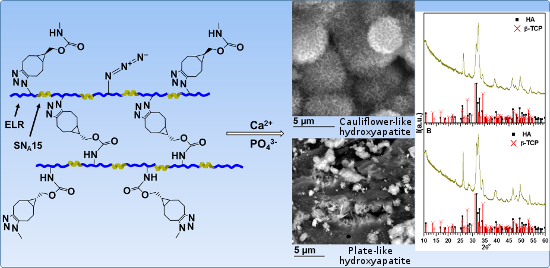
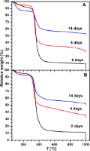
- aluminum oxide crucible and heated at 20 °C/min under N2 purge (40 mL/min) from 50 to 1000 °C followed by an isothermal step at 1000 °C for 10 min. 6.6 Scanning electron microscopy (SEM) SEM images of the dry ELR/calcium phosphate composites were obtained using an FEI Quanta Field Emission SEM. Samples



First examples of organosilica-based ionogels: synthesis and electrochemical behavior
Beilstein J. Nanotechnol. 2017, 8, 736–751, doi:10.3762/bjnano.8.77
- Netzsch DSC 204. DSC traces were recorded from −150 to 200 °C using liquid nitrogen cooling and a heating rate of 10 °C/min. Isothermal times were 5 min. Samples of ca. 5 mg were placed in aluminum pans with pierced lids. To remove traces of water the samples were heated to 120 °C before the first cooling








Vapor deposition routes to conformal polymer thin films
Beilstein J. Nanotechnol. 2017, 8, 723–735, doi:10.3762/bjnano.8.76
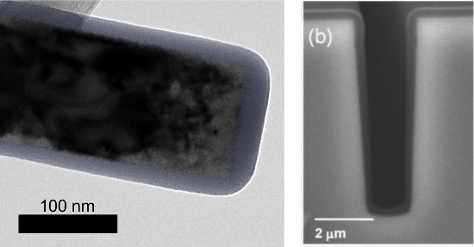
- in Figure 9c [43]. These coated nanotube forests were later shown to be beneficial to flexographic printing by Hart et al. [47]. Brown et al. showed that MLD could create 10 nm, conformal aluminum alkoxide derivative films on CNT sheets, as seen in Figure 9d, to create a composite material with 4





