


Search results
Search for "cells" in Full Text gives 1104 result(s) in Beilstein Journal of Nanotechnology. Showing first 200.
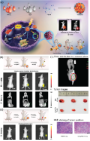
Cholesterol nanoarchaeosomes for alendronate targeted delivery as an anti-endothelial dysfunction agent
Beilstein J. Nanotechnol. 2024, 15, 517–534, doi:10.3762/bjnano.15.46
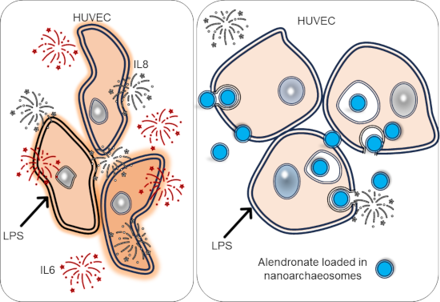
- into targeted nanovesicles, its anti-inflammatory activity may be amplified towards extra-osseous and noncalcified target cells, such as severely irritated vascular endothelium. Here cytotoxicity, mitochondrial membrane potential, ATP content, and membrane fluidity of human endothelial venous cells
- assessed on severely inflamed HUVECs. To that aim, HUVECs were grown on a porous barrier on top of a basal compartment seeded either with macrophages or human foam cells. One lighter and one more pronounced inflammatory context was modelled by adding lipopolysaccharide (LPS) to the apical or the apical and
- arterial calcification at doses comparable to those that inhibit bone resorption [10] and reported to exhibit a proangiogenic action on stressed endothelial cells, enhancing vascular endothelial growth factor (VEGF) synthesis and inducing the formation of capillary-like tubes in a VEGF-dependent manner [11





Fabrication of nanocrystal forms of ᴅ-cycloserine and their application for transdermal and enteric drug delivery systems
Beilstein J. Nanotechnol. 2024, 15, 465–474, doi:10.3762/bjnano.15.42
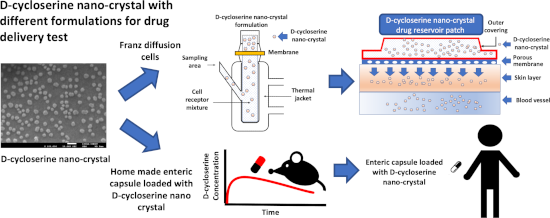
- vascular endothelial cells are at low frequency, and that the trans-endothelial pathways are the dominant mechanisms for nanoparticle extravasation in tumors (also called enhanced permeability and retention (EPR) effect) [37]. Since the skin has a denser structure than that of tumor vessels, we speculated
- dissolves and is loaded into the blood reaching systemic circulation. Notably, the first step is the key barrier for an efficient drug delivery. In this study, the application of Franz diffusion cells, a standard procedure of transdermal in vitro testing in the USP-NF<725>, helps us to test the penetration


Heat-induced morphological changes in silver nanowires deposited on a patterned silicon substrate
Beilstein J. Nanotechnol. 2024, 15, 435–446, doi:10.3762/bjnano.15.39
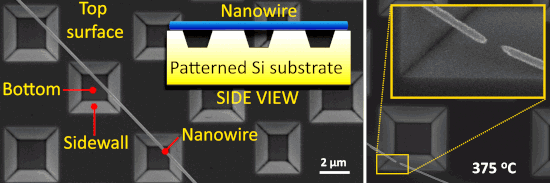
- ; silver nanowires; Introduction Metal nanowires (NWs) are promising key elements in a wide range of applications, including solar cells [1], smart windows [2], flexible sensors [3], touch screens [4], biocompatible polymer binders [5], temperature sensing [6], medical materials [7], and key elements of


Unveiling the nature of atomic defects in graphene on a metal surface
Beilstein J. Nanotechnol. 2024, 15, 416–425, doi:10.3762/bjnano.15.37
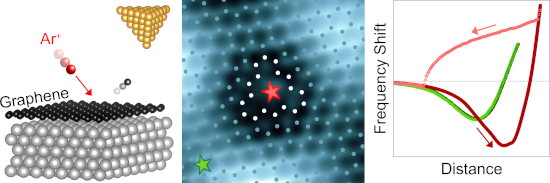
- defects is considerably lower than that of intact graphene at the chosen tip–surface distance. In the associated current map (Figure 2b), defect 1 appears as a uniform depression without interior structure. Moreover, the graphene lattice, which appears via the protruding honeycomb cells in the AFM data
- , is distorted in the vicinity of the defects. The rows of honeycomb cells are not straight and rather follow curved trajectories that are bent towards the defect sites. The Δf map for a type-2 defect (Figure 2c) was likewise acquired in the attractive regime (arrow in Figure 2f) where the graphene C


Classification and application of metal-based nanoantioxidants in medicine and healthcare
Beilstein J. Nanotechnol. 2024, 15, 396–415, doi:10.3762/bjnano.15.36
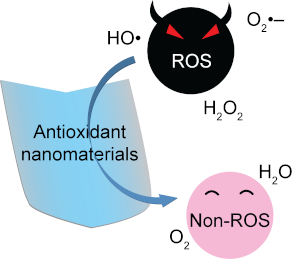
- and increased the survival rate of cells under high H2O2 concentration. In vivo results of another experiment demonstrated the ROS scavenging ability of Au@Cu2O heterostructures in a zebrafish model, which is an organism with morphological and physiological functions similar to those of humans [48
- intracellular Ca2+ in cells and tissues. One of the most important criteria of anti-inflammatory drugs is the direct delivery to the inflamed tissue [96][97][98]. To increase the targeting ability, anti-inflammatory agents can be wrapped with a cell membrane camouflage technique [99][100][101]. For example, Ma
- . Another study employed CD44–hyaluronic acid interaction to endow a diselenide-bridged hyaluronic acid nanogel (SeNG) with the ability to specifically accumulate at CD44-overexpressed inflammatory cells [103]. Both in vitro and in vivo experiments demonstrated that the designed SeNG could not only


Controllable physicochemical properties of WOx thin films grown under glancing angle
Beilstein J. Nanotechnol. 2024, 15, 350–359, doi:10.3762/bjnano.15.31
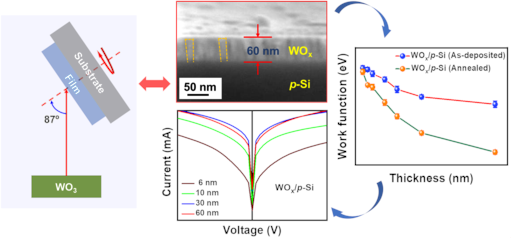
- fabricating WOx-based optoelectronic devices, including photovoltaic cells. Keywords: annealing; glancing angle sputter deposition; heterojunction; tungsten oxide; work function; Introduction Tungsten oxide (WOx; x ≤ 3) is a popular transition-metal oxide for various optoelectronic devices because of its
- , heterostructures having an n-type WOx layer on various p-type substrates such as p-Si [12][13], Cu2O [14], NiO [15], p-ZnO nanowires (NWs) [16], diamond [17], and BiVO4 [18], have a great technological importance in the field of heterojunction solar cells, LEDs, and resistance random access memory (RRAM) devices
- observations demonstrate a wide range of tunability and correlation among several physicochemical properties of glancing angle-deposited WOx films, which is due to serve as a guide for fabricating WOx-based optoelectronic devices, including carrier-selective contacts for photovoltaic cells. Experimental NS-WOx


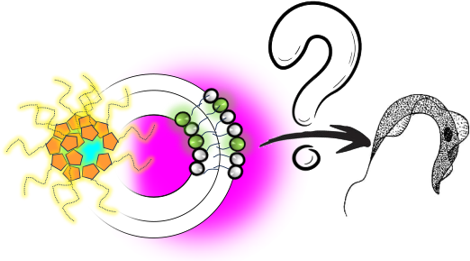
Nanomedicines against Chagas disease: a critical review
Beilstein J. Nanotechnol. 2024, 15, 333–349, doi:10.3762/bjnano.15.30
- cells, BNZ is reduced by oxygen-sensitive nitroreductases. During its anaerobic nitro reduction, primarily in the hepatic microsomal fraction, BNZ generates reactive metabolites that bind to the host’s DNA, proteins, and lipids. The nitro reduction also occurs in fecal matter, with an intensity that
- mammalian cells [33][34][35][36][37][38]. However, orally administered nanomedicines do not cross the intact gastrointestinal epithelium and would never be uptaken by target cells, except enterocytes. During gastrointestinal transit, biodegradable nanoparticles are degraded or not absorbed, leaving only
- released BNZ available for absorption [39][40]. Other studies determined the release profile of BNZ in different media [41][42][43][44] and its permeability across Caco-2 cells [43][44]. Between 2012 and 2018 the BERENICE (BEnznidazol and triazol REsearch group for Nanomedicine and Innovation on Chagas

Exploring the relationships between physiochemical properties of nanoparticles and cell damage to combat cancer growth using simple periodic table-based descriptors
Beilstein J. Nanotechnol. 2024, 15, 297–309, doi:10.3762/bjnano.15.27
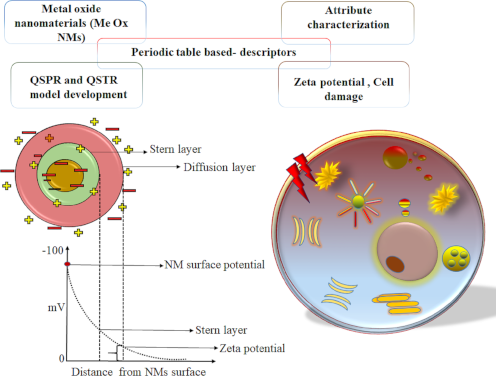
- treatment of cancer cells. To achieve this, QSPR modeling was first performed with 18 metal oxide (MeOx) NMs to measure their materials properties using periodic table-based descriptors. The features obtained were later applied for zeta potential calculation (imputation for sparse data) for MeOx NMs that
- oxidative damage through free radical accumulation, which could lead to changes in the survival rate of cancerous cells. The developed QSPR and quantitative structure–activity relationship models also give hints regarding safer design and toxicity assessment of MeOx NMs. Keywords: cancer cell treatment
- biocompatibility on NP toxicity. These properties of NPs determine their toxicity and interaction with the cell membrane damaging human health and the environment [12]. The toxic effect of NPs can be used as a medical treatment for diseases at the cellular level, that is, targeting and destroying cancerous cells


Vinorelbine-loaded multifunctional magnetic nanoparticles as anticancer drug delivery systems: synthesis, characterization, and in vitro release study
Beilstein J. Nanotechnol. 2024, 15, 256–269, doi:10.3762/bjnano.15.24
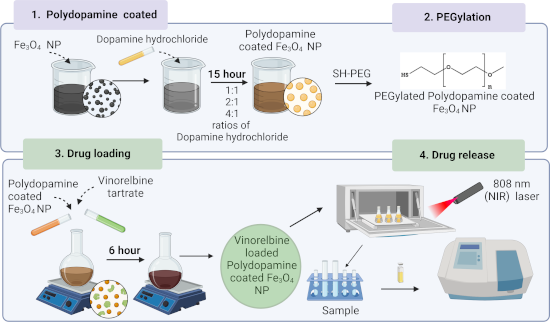
- uncontrolled proliferation of aberrant cells, which can spread to diverse body regions, encompassing over a hundred distinct forms [1][2]. Current cancer treatments lack a complete approach, as they mostly rely on radiotherapy, chemotherapy, immunotherapy, and surgery in clinical environments [3]. While these
- methodologies provide therapeutic benefits, they also contribute to cancer progression by inducing cytotoxicity in healthy cells and weakening the immune system, rendering individuals more vulnerable to other ailments [4][5]. There is a must to develop alternative multifunctional methodologies or intelligent
- , as they increase permeability and retention effect in solid tumors, enabling precise application to the targeted cells. Various structures such as silica-based conjugates, inorganic polymers, ceramic nanomaterials, gold, iron oxide, and noble metal nanoparticles have been utilized [9][10]. Among the


Nanocarrier systems loaded with IR780, iron oxide nanoparticles and chlorambucil for cancer theragnostics
Beilstein J. Nanotechnol. 2024, 15, 180–189, doi:10.3762/bjnano.15.17
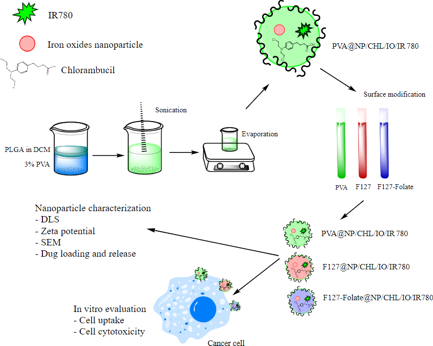
- oxide) (PEO). To improve the targeting ability of nanoparticles, ligands are typically designed to be located on the exterior of nanoparticles. Typically, ligands are cell-type-specific monoclonal antibodies, RGD peptides for the overexpression of the asialoglycoprotein receptor on cancer cells [5
- ], mannose for the mannose receptor on activated macrophages [6][7], and folic acid for the overexpression of the folate receptor on the surface of cancer cells and activated macrophages [8]. Thus, in this study, PLGA was chosen for NP formulation since it is a biocompatible and biodegradable material
- and IR783 are also promising diagnostic choices. Encapsulation of IR780 in nanoparticles can be used for imaging and photothermal, photodynamic, and combinatorial cancer therapies [20][21][22]. IR780 is also utilized in PEG-PLA nanoparticles for photodynamic therapy of human breast cancer cells [23


CdSe/ZnS quantum dots as a booster in the active layer of distributed ternary organic photovoltaics
Beilstein J. Nanotechnol. 2024, 15, 144–156, doi:10.3762/bjnano.15.14
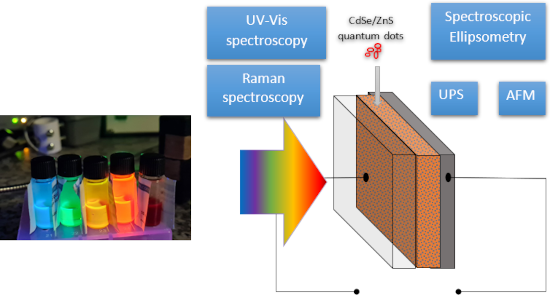
- .15.14 Abstract Organic solar cells are a promising candidate for practical use because of their low material cost and simple production procedures. The challenge is selecting materials with the right properties and how they interrelate in the context of manufacturing the device. This paper presents
- studies on CdSe/ZnS nanodots as dopants in a polymer–fullerene matrix for application in organic solar cells. An assembly of poly(3-hexylthiophene-2,5-diyl) and 6,6-phenyl-C71-butyric acid methyl ester was used as the active reference layer. Absorption and luminescence spectra as well as the dispersion
- was determined. The resistivity of the layers was determined using impedance spectroscopy. Simulations (General-Purpose Photovoltaic Device Model) showed a performance improvement in the cells with quantum dots of 0.36–1.45% compared to those without quantum dots. Keywords: efficiency; luminescence




Development and characterization of potential larvicidal nanoemulsions against Aedes aegypti
Beilstein J. Nanotechnol. 2024, 15, 104–114, doi:10.3762/bjnano.15.10
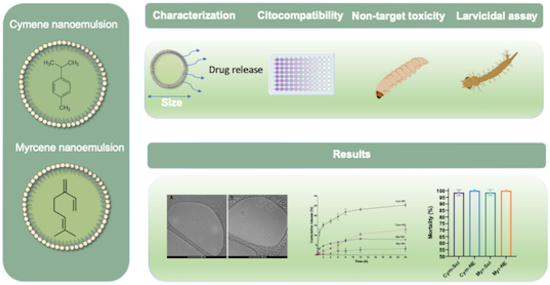
- formulations, specifically nanoemulsions, has emerged as a prospective strategy to surmount these obstacles. In this study, we developed and characterized nanoemulsions based on cymene and myrcene and assessed their toxicity both in vitro using human keratinocytes (HaCAT) cells and in an in vivo model
- low toxicity towards HaCAT cells and Galleria mellonella larvae. Moreover, the nanoemulsions exhibited significant lethality against third-instar Aedes aegypti larvae at a concentration of 50 mg/L. In conclusion, the utilization of nanoemulsions encapsulating cymene and myrcene presents a promising
- determining the effect on the immune response in vivo. In vitro cytotoxicity assays are an important tool for evaluating the safety of NEs. HaCaT cells are a widely used human keratinocyte cell line that exhibits several characteristics of normal human epidermal keratinocytes, making them an excellent model


New application of bimetallic Ag/Pt nanoplates in a colorimetric biosensor for specific detection of E. coli in water
Beilstein J. Nanotechnol. 2024, 15, 95–103, doi:10.3762/bjnano.15.9
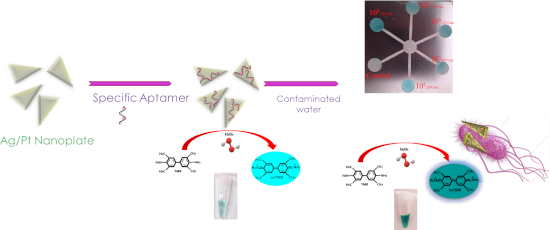
- was measured using UV–vis spectroscopy at a wavelength of 600 nm (OD600). The gold standard method of plate counting was used to estimate the number of bacterial cells. Detection of E. coli for bacterial assays Following the optimization of the experimental settings, various concentrations of E. coli


Study of the reusability and stability of nylon nanofibres as an antibody immobilisation surface
Beilstein J. Nanotechnol. 2024, 15, 83–94, doi:10.3762/bjnano.15.8
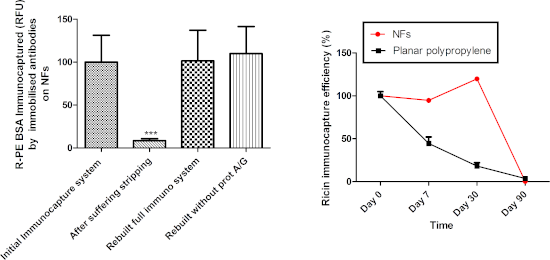
- improved by using another more accurate sensing system. (3) Because of the pore size of the nanofibres, they cannot be used for the detection of bacteria, rickettsiae, or fungi (i.e., they cannot be used for the detection of prokaryotic or eukaryotic cells). They could, therefore, be used for the


Berberine-loaded polylactic acid nanofiber scaffold as a drug delivery system: The relationship between chemical characteristics, drug-release behavior, and antibacterial efficiency
Beilstein J. Nanotechnol. 2024, 15, 71–82, doi:10.3762/bjnano.15.7
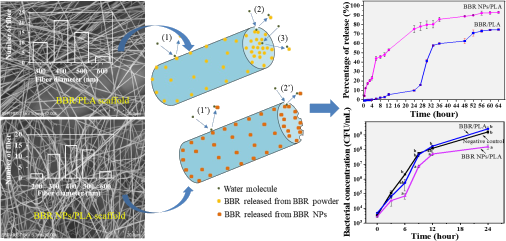
- and cells to penetrate into their structure [10]. Second, high drug loading can be achieved, and the drug-release profile (i.e., prolonged, stimulus-activated, and biphasic releases) can be modulated by using different nanofiber structures (e.g., blending, core/shell, and multilayer structures) and
- 21 days and inhibited the growth of Staphylococcus aureus and Escherichia coli bacteria. Human bone marrow mesenchymal stem cells were well attached and proliferated on the surface of the LAP/AMX functionalized PLA scaffolds, which provided a bacteria-free environment for bone differentiation in the
- phases. The exponential phase occurred in the first 12 h when the cell numbers were doubled after each generation time. After that, the stationary phase was reached when the number of growth cells was almost equal to that of dead cells. The proliferation of MRSA incubated in the nutrient broth with the


Curcumin-loaded nanostructured systems for treatment of leishmaniasis: a review
Beilstein J. Nanotechnol. 2024, 15, 37–50, doi:10.3762/bjnano.15.4
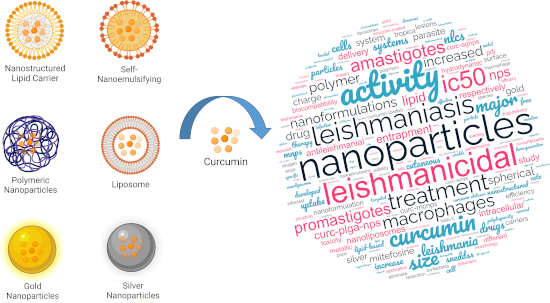
- invertebrate host; (ii) intracellular amastigote, a spherical form that is found in cells of the vertebrate host. Infected sandflies inject blood with the parasite in promastigote form into the vertebrate host, which causes macrophages or other cells of the mononuclear phagocytic system to phagocytose the
- promastigotes. The leishmania spp. cells then differentiate into amastigotes inside the phagocytic cells, multiply by binary fission until the host cell breaks down and releases the parasites to infect other cells and tissues [2][32][33]. The Food Drug Administration (FDA) recommends five drugs for the
- revealed the lowest cytotoxicity against J774 macrophages [97]. Amphotericin B-loaded NLCs were also developed for the treatment of leishmaniasis. Free amphotericin B (AmB) and AmB-NLCs (250 nm) were evaluated for their leishmanicidal performance against the amastigote form and host cells. Unlike curc-NLCs


Nanotechnological approaches in the treatment of schistosomiasis: an overview
Beilstein J. Nanotechnol. 2024, 15, 13–25, doi:10.3762/bjnano.15.2
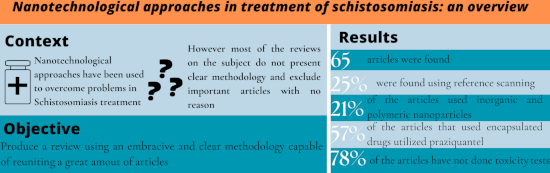
- , and topical routes, and they are biodegradable, biocompatible, and non-immunogenic [45]. Moreover, they improve the therapeutic performance of the drug by protecting it from the biological environment and restricting effects to target cells, thereby reducing the clearance of the drug [45]. Drugs for
- epiisopiloturine (300 µg/mL) has an effect in vitro, but it is not superior to PZQ. However, other nanotechnological approaches can potentialize the effect of the drug. Therefore, further studies should be made. Furthermore, the results showed that epiisopiloturine was not toxic to mice peritoneal cells, which is


unDrift: A versatile software for fast offline SPM image drift correction
Beilstein J. Nanotechnol. 2023, 14, 1225–1237, doi:10.3762/bjnano.14.101
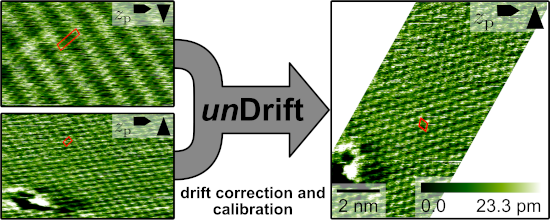
- to choose whether the algorithm operates based on Fourier transform or autocorrelation. This choice mostly depends on the size of the image relative to the size of the observed periodic structure. For images showing many unit cells, we find that the Fourier transform yields better results, while the
- autocorrelation is superior for images containing very few unit cells. In between these extremes, there is a range where both methods work well as shown in our examples in Figure 2. The dependence of the optimal transformation for peak extraction on the image size is caused by the finite resolution of the
- measured SPM images. For images containing many unit cells, each unit cell only consists of few pixels; thus, the maxima in the autocorrelation are difficult to separate, as they also consist of few pixels. The Fourier transform, in contrast, works in the inverse space, which is why the maxima are very


Fluorescent bioinspired albumin/polydopamine nanoparticles and their interactions with Escherichia coli cells
Beilstein J. Nanotechnol. 2023, 14, 1208–1224, doi:10.3762/bjnano.14.100
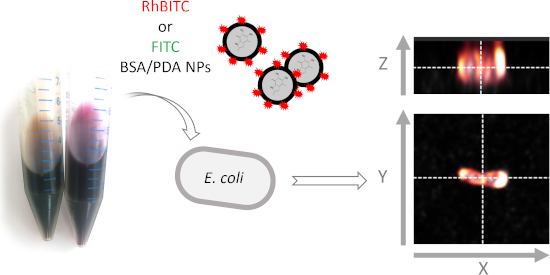
- applications, especially because of their biocompatibility. We synthesized and characterized fluorescent PDA NPs of 10–25 nm diameter based on a protein containing a lysine–glutamate diad (bovine serum albumin, BSA) and determined whether they can penetrate and accumulate in bacterial cells to serve as a
- and RhBITC-BSA/PDA NPs penetrated and accumulated in both cell wall and inner compartments of Escherichia coli (E. coli) cells. The fluorescence signals were diffuse or displayed aggregate-like patterns with both labelled NPs and free dyes. RhBITC-BSA/PDA NPs led to the most intense fluorescence in
- cells. Penetration and accumulation of NPs was not accompanied by a bactericidal or inhibitory effect of growth as demonstrated with the Gram-negative E. coli species and confirmed with a Gram-positive bacterial species (Staphylococcus aureus). Altogether, these results allow us to envisage the use of



Hierarchically patterned polyurethane microgrooves featuring nanopillars or nanoholes for neurite elongation and alignment
Beilstein J. Nanotechnol. 2023, 14, 1157–1168, doi:10.3762/bjnano.14.96
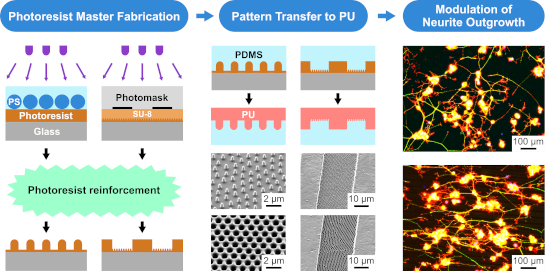
- “reinforcement” methods for overcoming the inherent drawbacks of using photoresist masters. We show that the PU nanopillars and nanoholes increase the neurite length of pheochromocytoma 12 (PC12) cells through unique growth cone interactions. Moreover, we demonstrate, for the first time, that hierarchically
- positively affect neural functions and neurite outgrowth [3]. Studies on in vitro models for peripheral neurons show promising results for such structures, to wit, poly(3,4-ethylenedioxythiophene) nanotubes and SU-8 nanoholes resulted in significantly longer neurites in pheochromocytoma 12 (PC12) cells [5][6
- ], poly(lactic-co-glycolic acid) nanodots enhanced the proliferation and neurite sprouting of Neuro-2a cells [7], and oriented elliptical Si microcones induced alignment and increased fasciculation in rat superior cervical ganglion axons [8]. With their effects complementing those of continuous structures


Elasticity, an often-overseen parameter in the development of nanoscale drug delivery systems
Beilstein J. Nanotechnol. 2023, 14, 1149–1156, doi:10.3762/bjnano.14.95
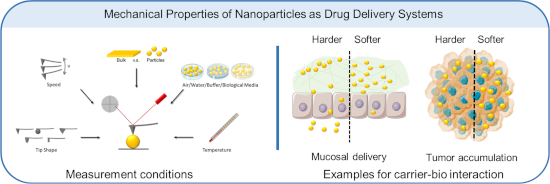
- , demonstrating the impact of these characteristics, is the life span of red blood cells. Juvenile red blood cells are able to flow through capillaries much smaller in diameter than their size due to sufficient elasticity. During their life span, they gain rigidity leading to their filtration out of the blood
- system when they reach the end of their lifetime [11][12]. Similar data were reported for nanoparticulate systems [13]. Other examples are viruses [14] and cancer cells which can adapt their mechanical properties multiple times during the process of metastasis formation [15]. Looking at these examples
- uptake for softer particles [30]. Cell uptake is often the first biological evaluation during the development phase besides toxicity and biocompatibility. However, after application, particles first need to reach the cells and overcome several other biological barriers. During uptake, other biological


Curcumin-loaded albumin submicron particles with potential as a cancer therapy: an in vitro study
Beilstein J. Nanotechnol. 2023, 14, 1127–1140, doi:10.3762/bjnano.14.93
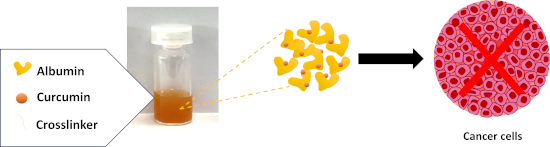
- to confirm the uptake of CUR-HSA-MPs by cancer cells. Our studies revealed that HSA-MPs are potentially promising vehicles for increasing the solubility and bioavailability of CUR. Keywords: albumin submicron particles; cancer therapy; curcumin; drug delivery; Introduction Curcumin (CUR) is a
- especially anticancer potential [1][2]. Several in vivo and in vitro studies in recent years have demonstrated that CUR can influence cancer cell proliferation, invasion, angiogenesis, and metastasis [3]. It has been reported that CUR exerts anticancer effects in human breast cancer cells (MCF-7) by
- regulating the expression through a miRNA-mediated mechanism [4]. Furthermore, recent studies have shown that CUR induces apoptosis in human hepatocellular carcinoma cells (Huh-7) by activating p38, leading to FasL-associated apoptosis [5]. However, the clinical application of CUR is restricted by




A bifunctional superconducting cell as flux qubit and neuron
Beilstein J. Nanotechnol. 2023, 14, 1116–1126, doi:10.3762/bjnano.14.92
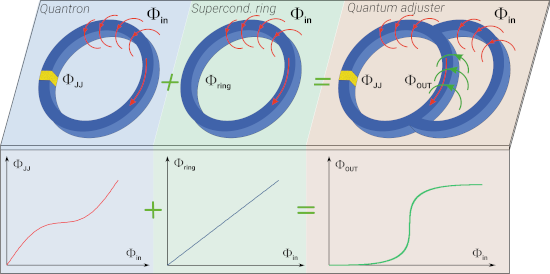
- millikelvin temperatures with zeptojoule energy efficiency [11][12][13][14][15][16][17]. In addition, the basic cells of adiabatic superconducting circuits can be used as a part of neuromorphic co-processors [18][19][20][21][22][23] working in conjunction with quantum computing systems [24][25][26][27][28][29
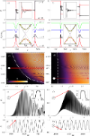
- operating temperatures. For example, the dark blue region in Figure 4b is only suitable for T ∼ 0.1 K. Note that for the parameters used and a Josephson junction quality factor of Q ∼ 105, the relaxation time is tr ∼ 1 μs. From this rough estimate it can be seen that in the future, adiabatic cells of tuning
- -type neural network to process signals received from qubits. Such a cell can be used in quantum mode also as an auxiliary qubit with relatively fast “flux” control. Future research will address the problem of using more advanced adiabatic superconducting logic cells for such purposes. In addition



Density functional theory study of Au-fcc/Ge and Au-hcp/Ge interfaces
Beilstein J. Nanotechnol. 2023, 14, 1093–1105, doi:10.3762/bjnano.14.90
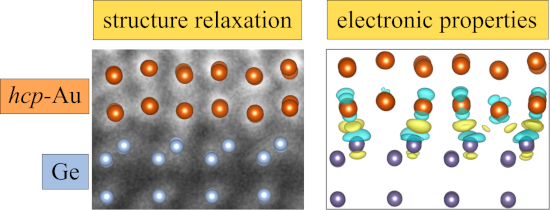
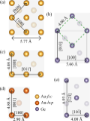
- ) grid for crystallographic cells of bulk crystal to a (4,4,4) grid for larger superlattices that model the Au-fcc(011)/Ge(001) and Au-hcp(010)/Ge(111) heterostructures. The slabs with vacuum were calculated using (8,8,2) or (4,4,2) k-points grids depending on the size of the cross section. A vacuum
- its side length matches the gold lattice constant. Again, multiple cells are needed in the perpendicular direction. There is no obvious way to build the Au-hcp/Ge interface using low-index Au-hcp and Ge surfaces. Thus, we decided to make calculations for the experimentally found Au-hcp(010)/Ge(111





Properties of tin oxide films grown by atomic layer deposition from tin tetraiodide and ozone
Beilstein J. Nanotechnol. 2023, 14, 1085–1092, doi:10.3762/bjnano.14.89
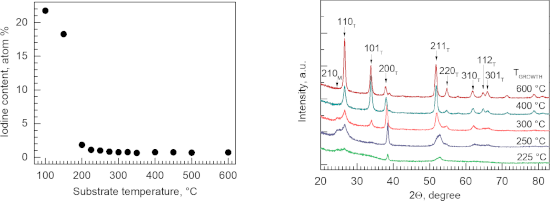
- have been studied from many perspectives. For example, one can mention anodes for Li-ion batteries [1], gas sensors [2], catalytic activities [3], and stable buffer [4] or base [5] layers in solar cells. More applications can be found, when SnO2 is considered as constituent of a nanostructure or a





