Search results
Search for "dynamic light scattering" in Full Text gives 231 result(s) in Beilstein Journal of Nanotechnology. Showing first 200.
Investigation of the photocatalytic efficiency of tantalum alkoxy carboxylate-derived Ta2O5 nanoparticles in rhodamine B removal
Beilstein J. Nanotechnol. 2017, 8, 604–613, doi:10.3762/bjnano.8.65
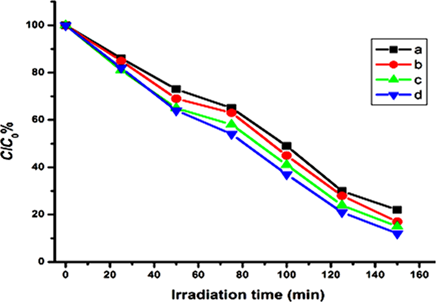
- nanoparticles efficiently removed rhodamine B under UV light irradiation. Keywords: alkoxy carboxylates; band gap; dynamic light scattering (DLS); rhodamine B; scanning electron microscopy (SEM); tantalum(V) oxide (Ta2O5) nanoparticles; TEM; X-ray diffraction (XRD); Introduction Nowadays, the purification of
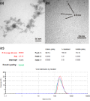
- nanoparticles samples are found to be in the range of 120–170 nm. The oxide nanoparticles are moderately evenly dispersed in all cases. DLS measurements To study the properties of nanoparticles in dispersion dynamic light scattering (DLS) experiments were carried out. Stable dispersions of Ta2O5 nanoparticles


The longstanding challenge of the nanocrystallization of 1,3,5-trinitroperhydro-1,3,5-triazine (RDX)
Beilstein J. Nanotechnol. 2017, 8, 452–466, doi:10.3762/bjnano.8.49

- microscopy (SEM) for the highest temperature (70 °C) and lowest concentration of RDX in acetone (5 mM). It is worth mentioning that dynamic light scattering (DLS) measurements were found to be not reliable when compared to SEM analysis, which can be explained by the lack of surfactant to stabilize the


Methods for preparing polymer-decorated single exchange-biased magnetic nanoparticles for application in flexible polymer-based films
Beilstein J. Nanotechnol. 2017, 8, 408–417, doi:10.3762/bjnano.8.43
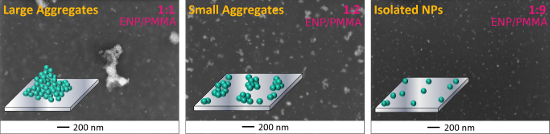
- particles as a function of the surface state (with or without oleic acid), determined by dynamic light scattering (DLS) measurements. The distribution is found to be quite polydisperse when ENPs are purified by centrifugation from the polyol and narrower when they are coated with OA. Moreover, the average


Uptake of the proteins HTRA1 and HTRA2 by cells mediated by calcium phosphate nanoparticles
Beilstein J. Nanotechnol. 2017, 8, 381–393, doi:10.3762/bjnano.8.40
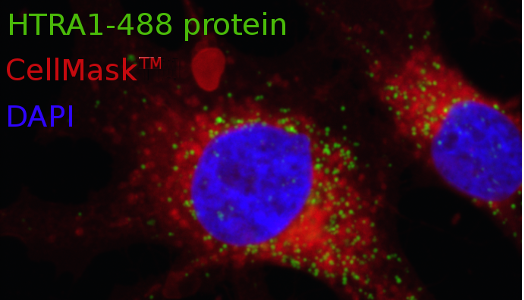
- polyethyleneimine (PEI; cationic nanoparticles) or carboxymethyl cellulose (CMC; anionic nanoparticles) and loaded with defined amounts of the fluorescently labelled proteins HTRA1, HTRA2, and BSA. The nanoparticles were purified by ultracentrifugation and characterized by dynamic light scattering and scanning
- temperature. Analytical methods Dynamic light scattering (DLS) and zeta potential determinations were performed with a Zetasizer Nano series instrument (Malvern Nano-ZS, laser: λ = 532 nm) using the Smoluchowski approximation and taking the data from the Malvern software without further correction. The
- dispersion. Both cationic (with PEI) and anionic (with CMC) nanoparticles were prepared. Note that the difference between the particle size by SEM and by dynamic light scattering (DLS) indicates a moderate degree of agglomeration of the nanoparticles in pure water. It can be safely assumed that the


Nanoscale isoindigo-carriers: self-assembly and tunable properties
Beilstein J. Nanotechnol. 2017, 8, 313–324, doi:10.3762/bjnano.8.34
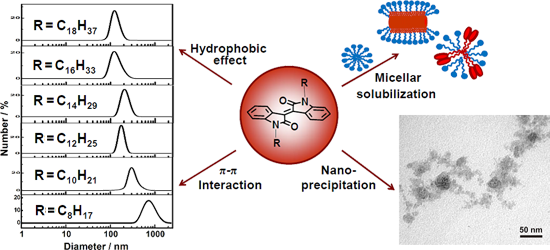
- structures with tunable morphologies for the use in drug delivery. Amphiphilic long-chain dialkylated isoindigos have the ability to form stable solid nanoparticles via a simple nanoprecipitation technique. Their self-assembly was investigated using tensiometry, dynamic light scattering, spectrophotometry
- , Germany). Quartz cuvettes with a 1 cm cell path were used. Dynamic light scattering Dynamic light scattering (DLS) measurements were performed using the Malvern Instrument Zetasizer Nano (Worcestershire, UK). The measured autocorrelation functions were analysed by Malvern DTS software, applying the second




Comparison of four functionalization methods of gold nanoparticles for enhancing the enzyme-linked immunosorbent assay (ELISA)
Beilstein J. Nanotechnol. 2017, 8, 244–253, doi:10.3762/bjnano.8.27
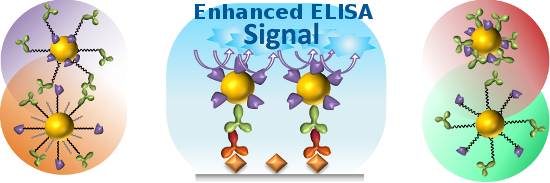
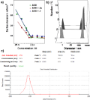
- maintained until the flask reached room temperature. AuNPs and conjugates were characterized by dynamic light scattering (DLS) using a zeta potential analysis system (Zetasizer Nano Z, Malvern Instrumentd, Worcestershire, UK), field emission scanning electron microscope (Carl Zeiss) and UV–vis


Colorimetric gas detection by the varying thickness of a thin film of ultrasmall PTSA-coated TiO2 nanoparticles on a Si substrate
Beilstein J. Nanotechnol. 2017, 8, 229–236, doi:10.3762/bjnano.8.25
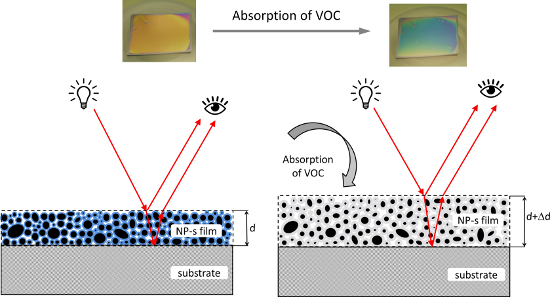
- and the measurements with every VOC were repeated twice and then the next VOC/air mixture was measured. The hydrodynamic diameter and the respective size distribution of the NPs were measured in ethanol using dynamic light scattering (DLS, Zetasizer Nano ZSP, Malvern Instruments). The microstructural


Laser irradiation in water for the novel, scalable synthesis of black TiOx photocatalyst for environmental remediation
Beilstein J. Nanotechnol. 2017, 8, 196–202, doi:10.3762/bjnano.8.21
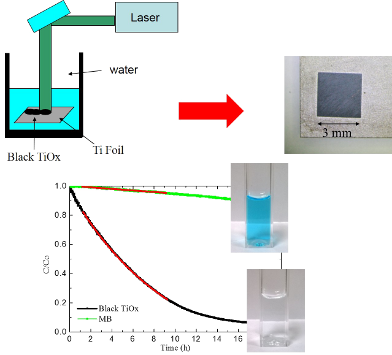
- a TiOx/Ti/PtNp monolithic chemical diode. The Pt nanoparticles were 20 nm in diameter [29][31] as measured by dynamic light scattering. They were deposited on the rear side of the sample as shown in Figure 1b and discussed in the experimental section. In Figure 6, the concentration of MB under UV


Streptavidin-coated gold nanoparticles: critical role of oligonucleotides on stability and fractal aggregation
Beilstein J. Nanotechnol. 2017, 8, 1–11, doi:10.3762/bjnano.8.1
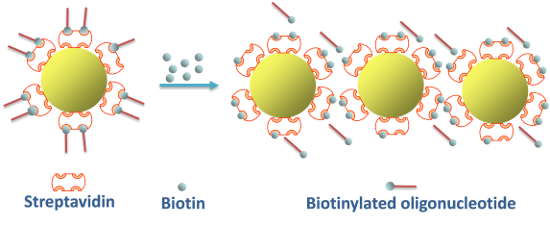
- spectroscopic, dynamic light scattering (DLS), zeta-potential (ζ), transmission electron microscopy (TEM) and SPR investigations of ODN-functionalized SA-mediated AuNPs are here presented with the aim to provide fundamental information useful to improve performances of biosensing assays using SA-mediated AuNPs




From iron coordination compounds to metal oxide nanoparticles
Beilstein J. Nanotechnol. 2016, 7, 2074–2087, doi:10.3762/bjnano.7.198
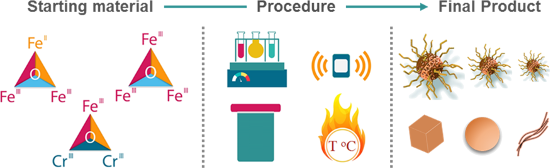
- obtain spherical small nanoparticles, NPT1a, with a narrow size distribution. The nanoparticle dispersion and diameter distribution was evaluated by dynamic light scattering (DLS) (Supporting Information File 1, Figure S4). It was confirmed that the high amount of stabilizing agent for NPT1a provided
- iron oxide nanoparticles on 300 mesh carbon coated copper grids and dried in vacuum at 50 °C. For qualitative analysis, an energy dispersive X-ray spectrometer (EDX), available in conjunction with the Quanta 200 environmental scanning electron microscope (ESEM), was used. Dynamic light scattering
- light scattering. The parameters were varied within each route to fine tune the size and shape of the formed nanoparticles. Keywords: iron coordination compounds; mixed oxide nanoparticles; morphology control; nanoparticle shape control; optimization procedure; Introduction The iron oxide-based


Solvent-mediated conductance increase of dodecanethiol-stabilized gold nanoparticle monolayers
Beilstein J. Nanotechnol. 2016, 7, 2057–2064, doi:10.3762/bjnano.7.196
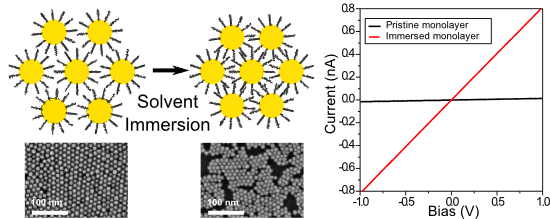
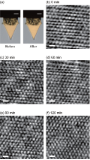
- in Figure 4 for 12.3 nm gold nanoparticles (hydrodynamic diameter measured by dynamic light scattering). We extracted the lattice constants from radial power spectral density profiles of SEM images. The lattice constant of a pristine sample coincides with the lattice constant of a monolayer immersed
- nanoparticles were synthesized in deionized water by reducing tetrachloroauric acid with trisodium citrate and tannic acid [14]. The synthesis resulted in a nanoparticle concentration of 1013 NP/mL. The nanoparticle hydrodynamic size and polydispersity was measured by dynamic light scattering with a Malvern



A novel electrochemical nanobiosensor for the ultrasensitive and specific detection of femtomolar-level gastric cancer biomarker miRNA-106a
Beilstein J. Nanotechnol. 2016, 7, 2023–2036, doi:10.3762/bjnano.7.193
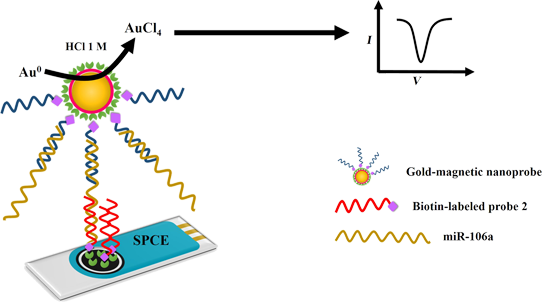
- then subjected to standard characterization analyses to evaluate whether they meet the essential criteria. For this purpose, the size and morphology of particles were estimated by means of transmission electron microscopy (TEM) (Zeiss, EM10C, 80 kV, Germany) and dynamic light scattering (DLS) analysis


Facile fabrication of luminescent organic dots by thermolysis of citric acid in urea melt, and their use for cell staining and polyelectrolyte microcapsule labelling
Beilstein J. Nanotechnol. 2016, 7, 1905–1917, doi:10.3762/bjnano.7.182
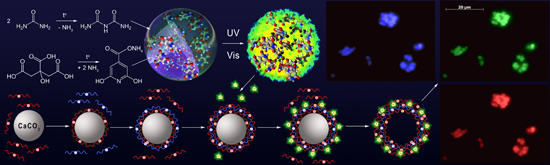
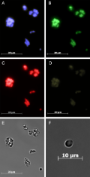
- scatter the red laser beam (left). Dynamic light scattering (DLS) measurements indicated that the O-dots tended to agglomerate in the solution, and the size of the agglomerates increased with increasing concentration (Supporting Information File 1, Figure S15). The agglomerates had a relatively high




Chitosan-based nanoparticles for improved anticancer efficacy and bioavailability of mifepristone
Beilstein J. Nanotechnol. 2016, 7, 1861–1870, doi:10.3762/bjnano.7.178
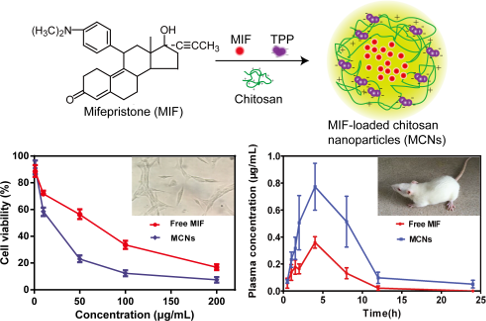
- (Miniflex II, Rigaku, Japan). The X-ray source was Cu Kα radiation (30 kV, 15 mA). AFM images were obtained on a Multimode 8 AFM series (Bruker, USA) in tapping/AC mode. The mean particle size and zeta potential of the MCNs were determined by dynamic light scattering using a Nanotrac® Wave Particle Size and


Functionalized platinum nanoparticles with surface charge trigged by pH: synthesis, characterization and stability studies
Beilstein J. Nanotechnol. 2016, 7, 1822–1828, doi:10.3762/bjnano.7.175
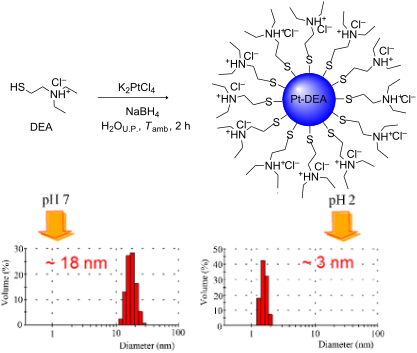
- spectroscopy was performed in H2O solutions using quartz cells with a Varian Cary 100 Scan UV–vis spectrophotometer. The diameter and the diameter distribution of MNPs in H2O solution were investigated at 25 ± 0.2 °C (pH 7 and pH 2) by means of dynamic light scattering (DLS) technique by using a Malvern Nano


Hydrophilic silver nanoparticles with tunable optical properties: application for the detection of heavy metals in water
Beilstein J. Nanotechnol. 2016, 7, 1654–1661, doi:10.3762/bjnano.7.157
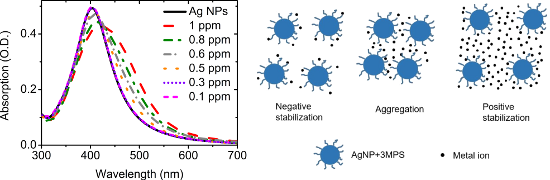
- nitrate as precursor molecules, hydrophilic thiol (3-mercapto-1-propanesulfonic acid sodium salt, 3MPS) and sodium borohydride as capping and reducing agents, respectively. The AgNPs were characterized using techniques such as surface plasmon resonance (SPR) spectroscopy, dynamic light scattering (DLS
- estimated the average diameter using about thirty nanoparticles with a resulting value of 2.5 ± 0.3 nm. Figure 4 shows the results from the dynamic light scattering (DLS) measurement on the AgNP-3MPS material (synthesis b). The distribution indicates good monodispersity of the NPs and an average diameter of


Antitumor magnetic hyperthermia induced by RGD-functionalized Fe3O4 nanoparticles, in an experimental model of colorectal liver metastases
Beilstein J. Nanotechnol. 2016, 7, 1532–1542, doi:10.3762/bjnano.7.147
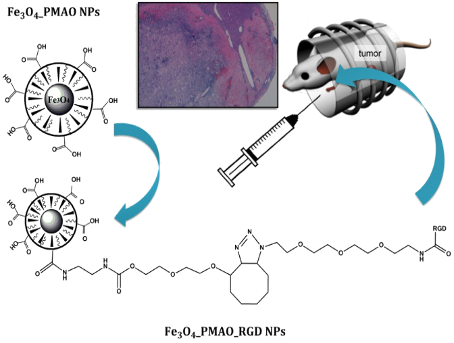
- acceleration voltage of 200 kV. Dynamic light scattering (DLS) measurements were carried out at 25 °C with a Nano ZS (Malvern Instruments) equipped with a solid-state He-Ne laser (λ = 633 nm) to determine the hydrodynamic diameter of the hydrosoluble NPs. The FTIR spectra of the nanoparticles and ligands were
- can be found in the Experimental section below. Structural, morphologic and spectroscopic characterization In order to know the characteristics and the magnetic response of the nanoparticles, X-ray diffraction (XRD), transmission electron microscopy (TEM), infrared spectroscopy (IR), dynamic light
- scattering (DLS) and thermogravimetric analysis (TGA) were performed. The XRD profiles of the synthesized Fe3O4 NPs confirmed the presence of nanocrystalline structures with quite broad diffraction peaks whose positions and relative intensities match well with the standard profile of the characteristic


On the pathway of cellular uptake: new insight into the interaction between the cell membrane and very small nanoparticles
Beilstein J. Nanotechnol. 2016, 7, 1296–1311, doi:10.3762/bjnano.7.121
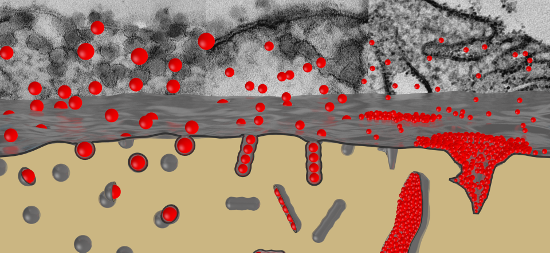
- using transmission electron microscopy (TEM) and dynamic light scattering (DLS), especially under consideration of the application conditions in physiological media. The three differently sized silica NPs investigated throughout this study, were used as purchased without further surface modification
- dispersions was determined gravimetrically. NP dispersions for cell applications were diluted with milli-Q water to achieve the desired concentration. Dynamic light scattering (DLS) experiments were performed on an ALV instrument consisting of a goniometer and an ALV-5000 multiple-tau full-digital correlator




Straightforward and robust synthesis of monodisperse surface-functionalized gold nanoclusters
Beilstein J. Nanotechnol. 2016, 7, 1278–1283, doi:10.3762/bjnano.7.118
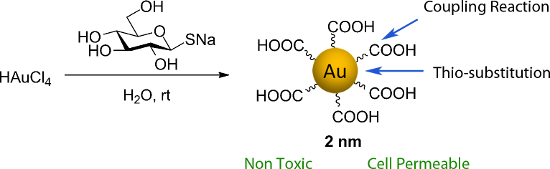
- dynamic light scattering (DLS) (Figure S4, Supporting Information File 1). The one-pot synthesis of Glc-NCs is independent on the temperature between 0 and 90 °C (Figure S5, Supporting Information File 1). The Glc-NCs are more stable than nanoclusters that were stabilized with cetyltrimethylammonium


Mesoporous hollow carbon spheres for lithium–sulfur batteries: distribution of sulfur and electrochemical performance
Beilstein J. Nanotechnol. 2016, 7, 1229–1240, doi:10.3762/bjnano.7.114
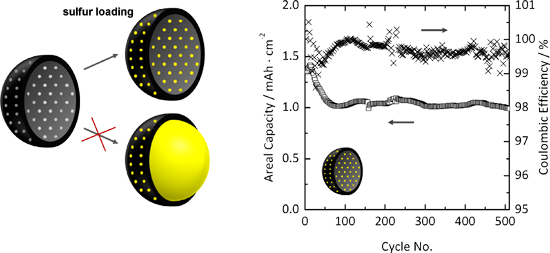
- determined to be 380 nm by dynamic light scattering, while the diameter of the core–shell particles was about 515 nm. From SEM images (Figure S1 in Supporting Information File 1) a diameter of about 490 nm was determined for the core–shell spheres. Further characterization of the SCMS silica can be found in
- % was achieved. Capacity values in the manuscript were calculated on the basis of the sulfur mass. After the formation cycle at a C/50 rate (with 1C = 1672 mA/gsulfur) was completed, the cells were charged and discharged at C/5. Characterization methods Dynamic light scattering was measured with a


Influence of synthesis conditions on microstructure and phase transformations of annealed Sr2FeMoO6−x nanopowders formed by the citrate–gel method
Beilstein J. Nanotechnol. 2016, 7, 1202–1207, doi:10.3762/bjnano.7.111
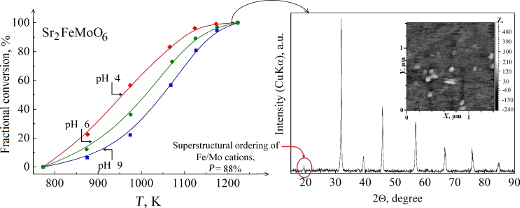
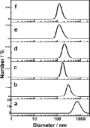
- agglomerates ranging in diameter from 0.7 to 1.2 µm. To obtain more information about the microstructural characteristics of the SFMO-4, SFMO-6, and SFMO-9 powder samples, dynamic light scattering (DLS) was also carried out. For these measurements, 10 mg of SFMO-4, SFMO-6, or SFMO-9 was dispersed in 20 mL of
- of the SFMO powders were measured by dynamic light scattering using a Zetasizer Nano (Nano ZS90, Malvern, UK) particle analyser. The phase transformation degree (α, change of the phase content during synthesis process), lattice parameters and superstructural ordering degree of the calcined powders
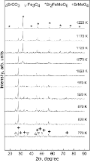
- particle size (diameter) distributions (d–f) obtained by dynamic light scattering of SFMO-4 (a,d), SFMO-6 (b,e), SFMO-9 (c,f) powder samples. The samples were annealed in the polythermal regime over a 770–1220 K temperature range, at 2 K/min, in a continuous stream of 5% H2/Ar gas mixture. XRD patterns of



Improved biocompatibility and efficient labeling of neural stem cells with poly(L-lysine)-coated maghemite nanoparticles
Beilstein J. Nanotechnol. 2016, 7, 926–936, doi:10.3762/bjnano.7.84
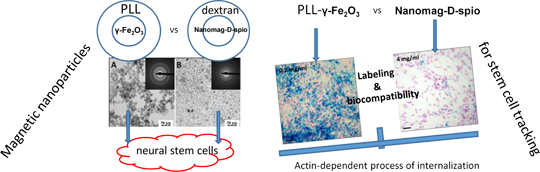
- , transmission electron microscopy (TEM) and dynamic light scattering (DLS) were used (Figure 1, Table 1). The average size of the PLL-γ-Fe2O3 nanoparticles (Figure 1A) was larger than that of nanomag®-D-spio nanoparticles (Figure 1B). The latter particles had a broader particle size distribution due to presence
- according to Equations 1–3, where ni is number of particles in class interval i with diameter Di [19]: The hydrodynamic diameter (z-average) was determined by the cumulative analysis of time correlation functions from dynamic light scattering (DLS) using an Autosizer Lo-C (Malvern Instruments Ltd., Malvern




Hierarchical coassembly of DNA–triptycene hybrid molecular building blocks and zinc protoporphyrin IX
Beilstein J. Nanotechnol. 2016, 7, 697–707, doi:10.3762/bjnano.7.62
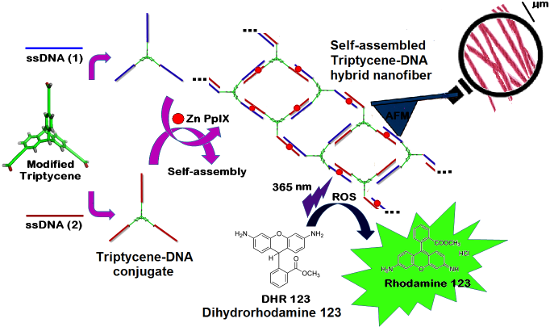
- stained with SYBR® Gold. The image was captured by an UVP-Gel documentation system. Dynamic light scattering (DLS) The size distributions of the DNA nanoconstructs in aqueous solution were obtained by CONTIN analysis of the DLS (Delsa Nano C Particle Analyser, Beckman-Coulter) data. The measurements have
- Supporting Information File 1, Figure S9). MBN treatment has no effect on the self-assembly in the presence or absence of Zn PpIX, thereby ruling out the possibility of smaller units tagged with unhybridized ssDNA tails (see Supporting Information File 1, Figure S10). Dynamic light scattering studies of DNA


Gold nanoparticles covalently assembled onto vesicle structures as possible biosensing platform
Beilstein J. Nanotechnol. 2016, 7, 655–663, doi:10.3762/bjnano.7.58
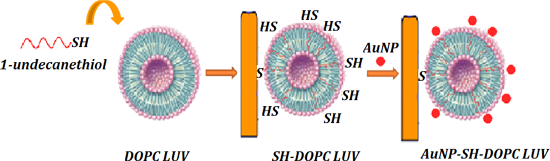
- order to covalently bind the AuNPs to the bilayer and to immobilize the vesicle on the Au electrode. This nanosystem was characterized by using UV–vis spectroscopy, transmission electron microscopy (TEM), dynamic light scattering (DLS) and cyclic voltammetry (CV). The results show that the vesicles were
- techniques discussed below. Nanomaterial characterization Dynamic light scattering (DLS) The diameters of the LUVs were determined by DLS (Malvern 4700 with goniometer and 7132 correlator) with an argon ion laser operating at 488 nm. All the measurements were performed by using a scattering angle of 90° at a


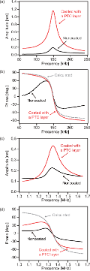
Efficiency improvement in the cantilever photothermal excitation method using a photothermal conversion layer
Beilstein J. Nanotechnol. 2016, 7, 409–417, doi:10.3762/bjnano.7.36
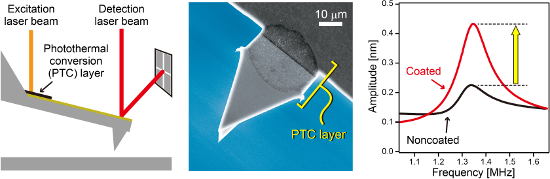
- (Figure 3c), we found plate-like particles with a diameter between 0.1 and 1 μm. The diameters observed in the SEM images agree with the average diameter of the colloidal graphite (460 nm) measured by dynamic light scattering. The results show that the plate-like particles observed in the SEM images are
- process. The colloidal graphite concentration of the dispersions used in this study are shown in the caption of Figure 5. Sonication of the coating solution was performed before the coating process. The average diameter of colloidal particles in the coating solution was measured by the dynamic light
- scattering (Zetasizer Nano-ZS, Malvern, Worcestershire, UK). Measurement of photothermal excitation efficiency A custom-built AFM equipped with a photothermal excitation setup and a commercially available oscillation controller (Nanonis OC4, SPECS, Zürich, Switzerland) were used for the photothermal