


Search results
Search for "electrical conductivity" in Full Text gives 253 result(s) in Beilstein Journal of Nanotechnology. Showing first 200.
Sheet-on-belt branched TiO2(B)/rGO powders with enhanced photocatalytic activity
Beilstein J. Nanotechnol. 2018, 9, 1550–1557, doi:10.3762/bjnano.9.146
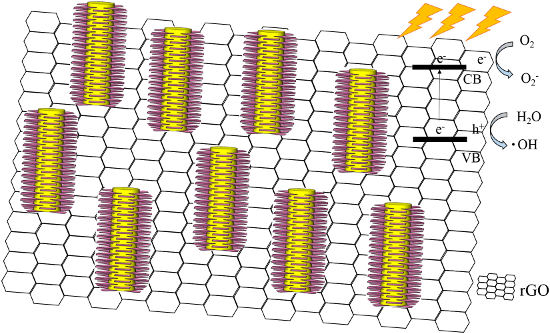
- agreement with the numerous reports on TiO2/rGO hybrids, because the superior electrical conductivity of graphene improves the separation of photogenerated carriers [26][38]. Interestingly, a simple immersion of the TiO2(B)/rGO sample in the current precursor solution to form the “sheet-on-belt” branched


The electrical conductivity of CNT/graphene composites: a new method for accelerating transmission function calculations
Beilstein J. Nanotechnol. 2018, 9, 1254–1262, doi:10.3762/bjnano.9.117
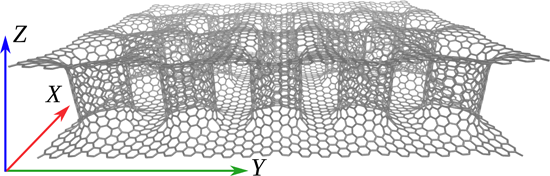
- nm are characterized by a relatively high electrical conductivity. Due to high strength and conductivity, these films, provided a developed surface and pores for filling with the necessary connections, could be successfully applied in electronic devices and as electrodes of storage batteries


Electrostatic force spectroscopy revealing the degree of reduction of individual graphene oxide sheets
Beilstein J. Nanotechnol. 2018, 9, 1146–1155, doi:10.3762/bjnano.9.106
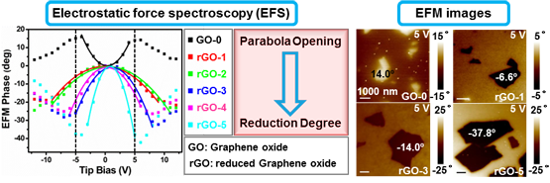
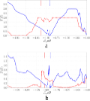
- -based devices [6]. Because the microstructure and properties of GO sheets can be greatly manipulated during the reduction process, it is important to characterize and evaluate the reducing effect of different reduction processes. Microelectrode-based electrical conductivity measurements [7] and spectral


Combined pulsed laser deposition and non-contact atomic force microscopy system for studies of insulator metal oxide thin films
Beilstein J. Nanotechnol. 2018, 9, 686–692, doi:10.3762/bjnano.9.63
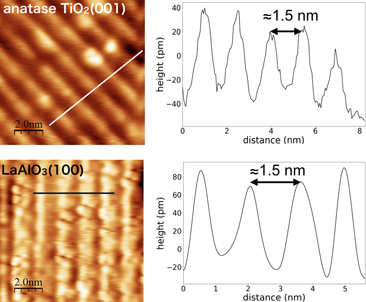
- grown on substrate materials have been studied for correlated electron heterostructures and devices. One of the most important and common uses of epitaxial LaAlO3 is its interface with SrTiO3 for studies of electrical conductivity [4], superconductivity [59], photoconductivity [60], and


Sensing behavior of flower-shaped MoS2 nanoflakes: case study with methanol and xylene
Beilstein J. Nanotechnol. 2018, 9, 608–615, doi:10.3762/bjnano.9.57
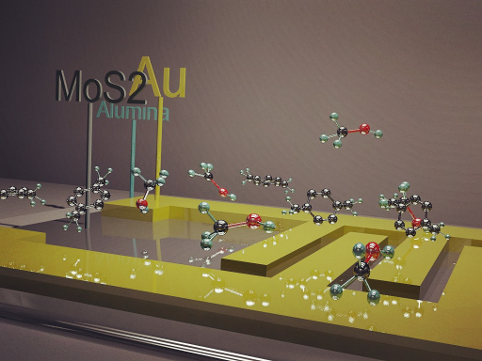
- nanoflakes. There are numbers of articles which report the successful growth of flower-like MoS2 nanoflakes using this technique [19][20][21][22][23]. Due to the high surface-to-volume ratio, activity, tunable band gap, low electrical noise and acceptable electrical conductivity, MoS2 is considered as one of


Review: Electrostatically actuated nanobeam-based nanoelectromechanical switches – materials solutions and operational conditions
Beilstein J. Nanotechnol. 2018, 9, 271–300, doi:10.3762/bjnano.9.29
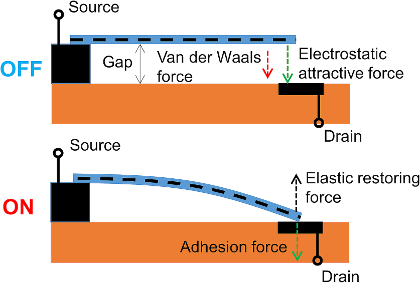
- approximately 104 switching cycles operating at 1 V drain voltage in a 3T configuration with 100 nm gap between the beam and the drain electrode [19]. Choice of material for the NEM switching element The material properties (Young’s modulus, free surface energy, electrical conductivity, melting temperature
- electrical conductivity [134], good thermal and mechanical stability and ability to withstand high (up to 50 V) operational voltages [8]. Molybdenum–sulfur–iodine (Mo6S3I6) molecular wire bundles were investigated as NEM switching elements and as a contact material employing combined in situ TEM
- materials belong to different classes, their mechanical, electrical and thermal properties vary in a relatively narrow range (Figure 13). Typically, they can withstand high temperatures of at least 800 °C and are characterized by a Young’s modulus of hundreds of GPa and have an electrical conductivity above


Synthesis and characterization of electrospun molybdenum dioxide–carbon nanofibers as sulfur matrix additives for rechargeable lithium–sulfur battery applications
Beilstein J. Nanotechnol. 2018, 9, 262–270, doi:10.3762/bjnano.9.28
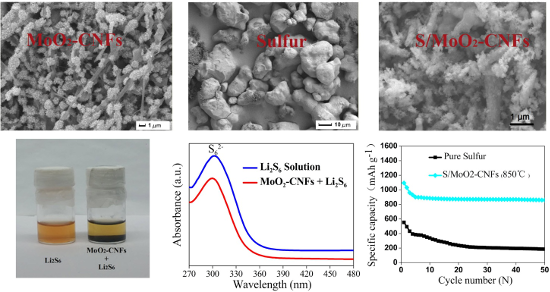
- /sulfide materials have low electrical conductivity, which makes the chemically adsorbing polysulfides difficult to be reduced directly on the matrix surface, resulting in the lower reutilization of the active sulfur material. In order to improve the kinetics of the electrode redox reaction, the electrical
- conductivity of Ti4O7 nanoparticles [16][17] and Co9S8 [18] nanosheets have been used in new concepts for sulfur matrices with both a polar nature and good conductivity. Therefore, the exploration of novel conductive composites is another direction leading to the practical application of Li–S batteries


Dielectric properties of a bisimidazolium salt with dodecyl sulfate anion doped with carbon nanotubes
Beilstein J. Nanotechnol. 2018, 9, 164–174, doi:10.3762/bjnano.9.19
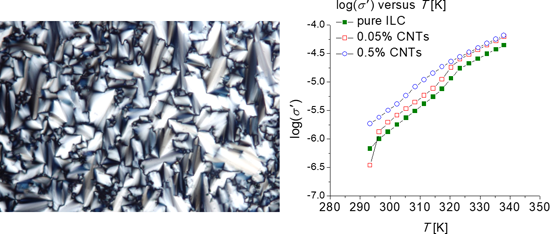
- interface. Experimental data can be presented either by means of the complex dielectric function or of electric conductivity. The AC conductivity σ*(ω) is a complex function: In agreement with Maxwell’s equations, a direct general relationship can be established between the electrical conductivity and the
- ionic conductivity spectra obey the Jonscher power law [52][53]: where 0 < N ≤ 1 and σdc is the dc conductivity (usually 0.1 ≤ N ≤ 0.4). The parameter σdc is obtained from the electrical conductivity spectra by extrapolation to the ω→0 limit. For samples with ionic carriers, obtaining the conductivity


Comparative study of post-growth annealing of Cu(hfac)2, Co2(CO)8 and Me2Au(acac) metal precursors deposited by FEBID
Beilstein J. Nanotechnol. 2018, 9, 91–101, doi:10.3762/bjnano.9.11
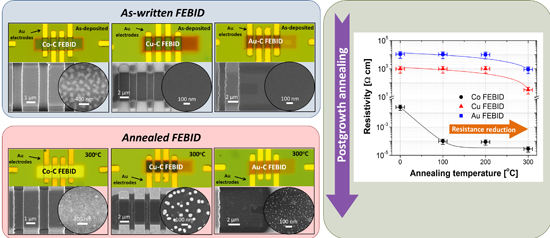
- annealing protocol at 100, 200, and 300 °C under high vacuum on deposits obtained from Co2(CO)8, Cu(II)(hfac)2, and Me2Au(acac) to study improvements on composition and electrical conductivity. Although the as-deposited material was similar for all precursors, metal grains embedded in a carbonaceous matrix
- nanocrystalline graphite with comparable crystal sizes of 12–14 nm at 300 °C annealing temperature. However, we observed a more effective formation of graphite clusters in Co- than in Cu- and Au-containing deposits. The graphitisation has a minor influence on the electrical conductivity improvements of Co–C
- deposits, which is attributed to the high as-deposited Co content and the related metal grain percolation. On the contrary, electrical conductivity improvements by factors of 30 and 12 for, respectively, Cu–C and Au–C deposits with low metal content are mainly attributed to the graphitisation. This


Electron-driven and thermal chemistry during water-assisted purification of platinum nanomaterials generated by electron beam induced deposition
Beilstein J. Nanotechnol. 2018, 9, 77–90, doi:10.3762/bjnano.9.10
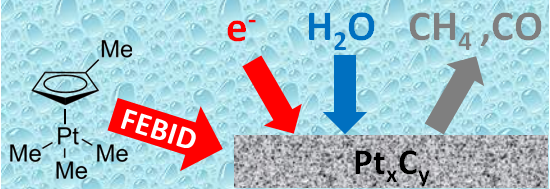
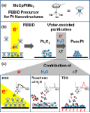
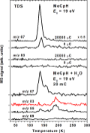
- MeCpPtMe3 have a nanogranular structure, i.e., they consist of nanoscale Pt particles embedded in a carbonaceous matrix [12]. While FEBID-based PtC metal-matrix nanocomposites can serve, for instance, as transducing elements for humidity sensing [13], other applications call for high electrical conductivity



Response under low-energy electron irradiation of a thin film of a potential copper precursor for focused electron beam induced deposition (FEBID)
Beilstein J. Nanotechnol. 2018, 9, 57–65, doi:10.3762/bjnano.9.8
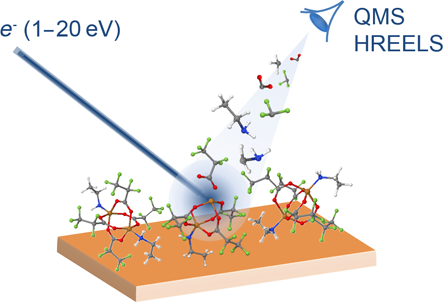
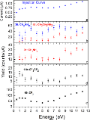
- for ligands fragmentation allow one to envisage the use of the two precursors for FEBID studies. Keywords: amines; copper(II); electron-stimulated desorption; FEBID precursors; HREELS; low-energy electrons; perfluorinated carboxylates; Introduction The high electrical conductivity of copper makes it



The rational design of a Au(I) precursor for focused electron beam induced deposition
Beilstein J. Nanotechnol. 2017, 8, 2753–2765, doi:10.3762/bjnano.8.274
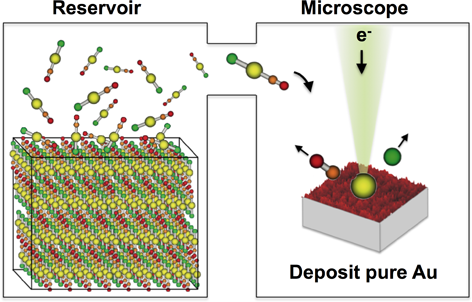
- electrical conductivity [31]. Many applications require pure metal deposition, and widespread use by non-expert users asks for a simple and fast process. While purification is possible by adding gases [32][33][34][35][36] or post-treatment [37], these methods only work for selected precursors and selected


Ab initio study of adsorption and diffusion of lithium on transition metal dichalcogenide monolayers
Beilstein J. Nanotechnol. 2017, 8, 2711–2718, doi:10.3762/bjnano.8.270
- the adsorption of Li atoms onto two-dimensional materials. Different from the situation where Li atoms are trapped by the defects in graphene, the presence of structural defects does not affect the diffusion of lithium [19]. The main drawback of MoS2 is its poor electrical conductivity. Various
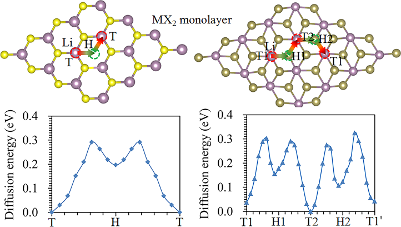
- ][33][47], MoX2 [33][40][47][50][51][52][53][54][55], HfX2 [33][47] and WX2 [33][40][47][50][55][56][57][58]. The metallic MX2 monolayers have good electrical conductivity, which may make them good anode materials. As shown in Figure 3a and Figure 3b, there are two stable adsorption sites, that is, the


One-step chemical vapor deposition synthesis and supercapacitor performance of nitrogen-doped porous carbon–carbon nanotube hybrids
Beilstein J. Nanotechnol. 2017, 8, 2669–2679, doi:10.3762/bjnano.8.267
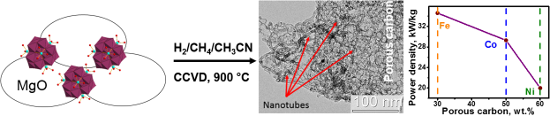
- possess a high surface area available for electrolyte ions, good wettability and electrical conductivity. Carbon is a traditional material for electrochemical applications owing to its mechanical and chemical stability, light weight, as well as the possibility to control the properties depending on the
- , and nanostructured CaCO3 as a template [16]. The electrodes from the synthesis products exhibited a good reversible capacity and long-term cycling stability. The role of CNTs in such hybrids was to enhance the electrical conductivity and to act as a physical barrier, blocking large pores in the second
- electrical conductivity of the material. Similar results have been reported in [53], where the Rct value increased as the nitrogen content in the carbon material decreased. The slope angle of the Warburg impedance is between 80° and 86° (Table 2), which indicates a high rate capability of the CNx electrodes


The role of ligands in coinage-metal nanoparticles for electronics
Beilstein J. Nanotechnol. 2017, 8, 2625–2639, doi:10.3762/bjnano.8.263
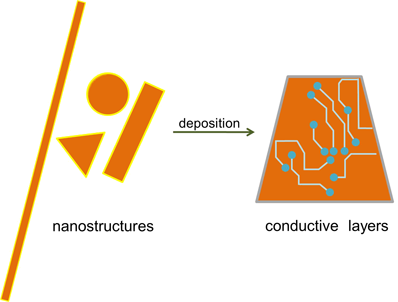
- , prevents metallic contact in the deposited layers, and leads to low electrical conductivity [30][34]. Layers prepared from concentrated nanosized coinage-metal inks usually only become electrically conductive after a post-deposition sintering that removes ligands and fuses the metal nanoparticles
- thiophene ring is shown to form a bond with the silver NPs and resulted in a uniform distribution of the nanoparticles in the composite. Films of the composite prepared by spin coating exhibited a 1.5-times higher electrical conductivity (176 S/cm) compared to films prepared only from the PEDOT:PSS mixture
- higher conductivities than films filled with spheres. Both rods and spheres were capped with PEG-SH (Figure 2), a non-conductive ligand that was chosen because ethylene glycol (EG) is miscible with aqueous PEDOT:PSS solutions and the addition of EG to pure PEDOT:PSS films increases the electrical


Au nanostructure fabrication by pulsed laser deposition in open air: Influence of the deposition geometry
Beilstein J. Nanotechnol. 2017, 8, 2438–2445, doi:10.3762/bjnano.8.242
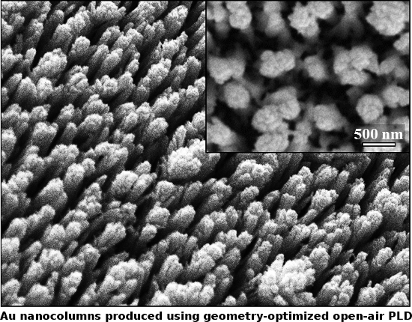
- predominantly discrete character of these structures led to a lower electrical conductivity compared to the other samples. The accumulation of ablated material on the substrate resulted in the formation of denser structures with higher conductivity and lower transparency. The use of in situ monitoring of the


Surfactant-induced enhancement of droplet adhesion in superhydrophobic soybean (Glycine max L.) leaves
Beilstein J. Nanotechnol. 2017, 8, 2345–2356, doi:10.3762/bjnano.8.234
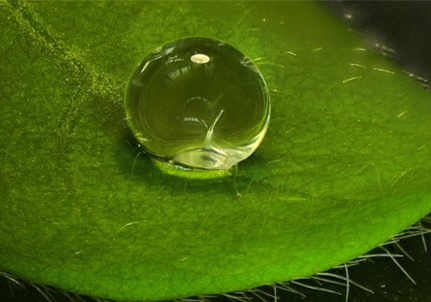
- freezing chamber, preparation chamber with integrated micromanipulator, sublimation unit and sputter coater. Cryo-preparation and glycerol substitution were used to avoid alterations in cell shape wax structure. Glycerol substitution ensures high electrical conductivity of the specimen and minimizes


Substrate and Mg doping effects in GaAs nanowires
Beilstein J. Nanotechnol. 2017, 8, 2126–2138, doi:10.3762/bjnano.8.212
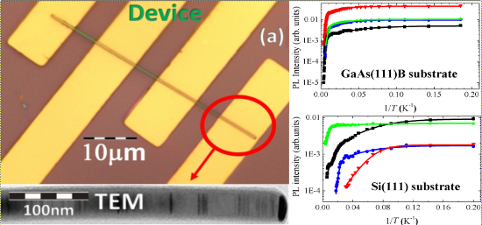
- Abstract Mg doping of GaAs nanowires has been established as a viable alternative to Be doping in order to achieve p-type electrical conductivity. Although reports on the optical properties are available, few reports exist about the physical properties of intermediate-to-high Mg doping in GaAs nanowires
- and the p-type electrical conductivity was measured with free hole concentration ranging from 2.7 × 1016 cm−3 to 1.4 × 1017 cm−3. The estimated electrical mobility was in the range ≈0.3–39 cm2/Vs and the dominant scattering mechanism is ascribed to the WZ/ZB interfaces. Electrical and optical
- a function of the source–drain voltage (Vds) from 50 to 500 mV. All transfer curves show a p-type electrical conductivity for the Mg-doped single GaAs nanowire. For low values of Vds, the electrical field along the source–drain channel does not significantly affect the transport of the free carriers


High-stress study of bioinspired multifunctional PEDOT:PSS/nanoclay nanocomposites using AFM, SEM and numerical simulation
Beilstein J. Nanotechnol. 2017, 8, 2069–2082, doi:10.3762/bjnano.8.207
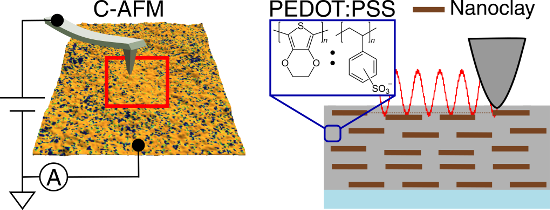
- sensing humidity [21] and for temperature-dependent switching of electrochemical behavior using nanoclay substitutes [22]. Recently, nacre-mimetic electrically conductive nanocomposites have been reported, one of which exhibited good electrical conductivity and excellent mechanical properties [23] and the
- AFM, which is expected to modify the spacing of the embedded nanoclay particles, causing a change in the electrical conductivity and local mechanical properties. Bimodal AFM, together with numerical AFM simulation and SEM, is used to infer the internal distribution of the nanoclay. Finally, a one
- -dimensional multibarrier potential is used to explain the changes in electrical conductivity across the coating under the application of pressure. The study is carried out for two different nanoclays, namely Laponite RD and Cloisite Na+. Results and Discussion Transparency and electromechanical properties


Growth and characterization of textured well-faceted ZnO on planar Si(100), planar Si(111), and textured Si(100) substrates for solar cell applications
Beilstein J. Nanotechnol. 2017, 8, 1939–1945, doi:10.3762/bjnano.8.194
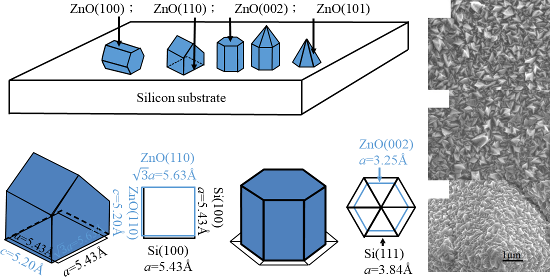
- . Keywords: atomic force microscopy; cathode luminescence; scanning electron microscopy; silicon solar cells; transparent conducting oxide; X-ray diffraction; ZnO; Introduction Transparent conductive oxides (TCOs), with both high electrical conductivity and optical transparency, could be used as a
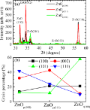

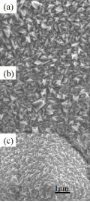


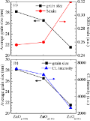
![[Graphic 2]](/bjnano/content/inline/2190-4286-8-194-i4.png?max-width=637&scale=1.18182) × lattice constant a) by 5.20 Å (l...
× lattice constant a) by 5.20 Å (l...


Freestanding graphene/MnO2 cathodes for Li-ion batteries
Beilstein J. Nanotechnol. 2017, 8, 1932–1938, doi:10.3762/bjnano.8.193
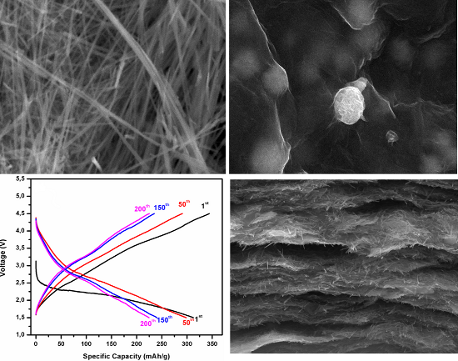
- stability, large specific surface area and high mechanical strength have made graphene one of the most promising materials for energy storage devices [16]. In recent reports, MnO2/graphene composite electrodes have been used in order to enhance the electrical conductivity and prevent volume change during
- 6c). The specific capacity of both graphene-reinforced β-MnO2 and γ-MnO2 electrodes decreased dramatically with increasing number of cycles. This could be attributed to the poor electrical conductivity and the textural modification during Li+ intercalation and de-intercalation processes. Cheng et. al


Enhancement of mechanical and electrical properties of continuous-fiber-reinforced epoxy composites with stacked graphene
Beilstein J. Nanotechnol. 2017, 8, 1909–1918, doi:10.3762/bjnano.8.191
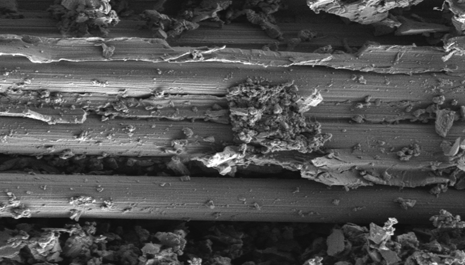
- an epoxy resin containing surface-active agents (SAAs) enhanced the intercalation of epoxy monomer between EG layers and led to further exfoliation of the graphite, resulting in stacks of few graphene layers, so-called “stacked” graphene (SG). This process enabled electrical conductivity of cured
- of graphene, along with the high electrical conductivity, promote percolation thresholds much lower than with metallic powders, carbon fibers or carbon black [13]. Epoxy resins are used as a matrix in high-performance composite materials for aerospace structures, coatings and adhesives for a variety
- impregnation in an epoxy/surfactant mixture, allowing on to downsize the nanoplatelets to "stacked" graphene (SG) or few graphene layers (FGL) platelets. The effect of such exfoliation on continuous-fiber-reinforced epoxy composites was studied in terms of electrical conductivity and thermo-mechanical


Oxidative stabilization of polyacrylonitrile nanofibers and carbon nanofibers containing graphene oxide (GO): a spectroscopic and electrochemical study
Beilstein J. Nanotechnol. 2017, 8, 1616–1628, doi:10.3762/bjnano.8.161
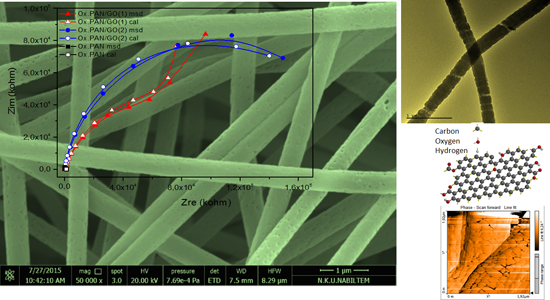
- micrometers and exhibit a high surface area and a high electrical conductivity. Also, nanofibers can be used with polymeric structures to generate composite materials to improve the electrochemical properties of polymeric structures [1][2][3]. Nanofiber-reinforced polymeric structures present improved


Two-dimensional carbon-based nanocomposites for photocatalytic energy generation and environmental remediation applications
Beilstein J. Nanotechnol. 2017, 8, 1571–1600, doi:10.3762/bjnano.8.159
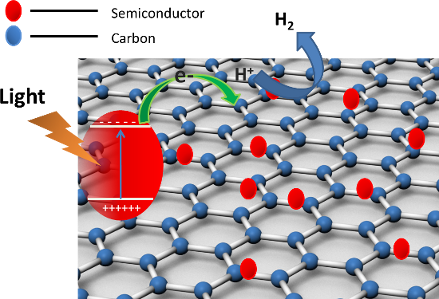
- form graphene oxide (GO) [49]. GO contains carboxyl, epoxides and hydroxyl groups covalently attached to the graphene sheet. This leads to the loss of electrical conductivity and limits the application of GO in many areas. However, the presence of polar functional groups in GO makes it hydrophilic in
- nature and it is responsible for the easy dispersal in many solvents such as water, which is helpful for the formation of various composites [50]. The reduction of GO in various reducing conditions forms reduced graphene oxide (RGO) in which electrical conductivity is partly revived. This RGO is also
- band gap of GO with increasing degree of reduction has been illustrated in Figure 6. Its electrical conductivity decreases with increasing oxidation level, meaning fully oxidized GO acts as an insulator and partially oxidized GO acts as a semiconductor [108]. The conduction band edge of GO is mainly


The effect of the electrical double layer on hydrodynamic lubrication: a non-monotonic trend with increasing zeta potential
Beilstein J. Nanotechnol. 2017, 8, 1515–1522, doi:10.3762/bjnano.8.152
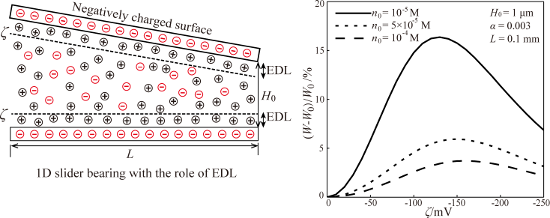
- dependent on the electrical conductivity of the lubricant [26][27], which inevitably affects the hydrodynamic lubrication. However, most of the previous theoretical works neglected the variation of electrical conductivity of the lubricant considering the effect of the EDL. To solve these problems, this
- paper presents a theoretical study on the effect of the EDL on the hydrodynamic lubrication with the additional consideration of the effect of the EDL on the electrical conductivity of the lubricant. The electrical potential and ion concentration distribution within the EDL are obtained by solving the
- nonlinear PBE without the use of the DHA. On the basis of these assumptions, the effect of the zeta potential on the apparent viscosity of the lubricant is first studied and analyzed. Then, by combining the effects of the EDL on the electrical conductivity and apparent viscosity of the lubricant, the





