Search results
Search for "friction" in Full Text gives 203 result(s) in Beilstein Journal of Nanotechnology. Showing first 200.
Equilibrium states and stability of pre-tensioned adhesive tapes
Beilstein J. Nanotechnol. 2014, 5, 1725–1731, doi:10.3762/bjnano.5.182
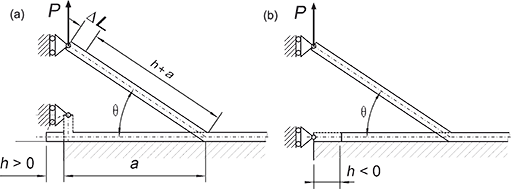
- theoretical investigations about rough contact mechanics [25][26][27][28][29], the role of roughness in this kind of systems is not yet well understood. Furthermore, viscoelasticity, which entails prominent effects in terms of friction and contact anisotropy [30][31], has not yet been included in analytical

![[Graphic 5]](/bjnano/content/inline/2190-4286-5-182-i14.png?max-width=637&scale=1.18182) as a function of the peeling angle θeq at equilibrium (a); the tot...
as a function of the peeling angle θeq at equilibrium (a); the tot...


![[Graphic 11]](/bjnano/content/inline/2190-4286-5-182-i20.png?max-width=637&scale=1.18182) as a function of the peeling angle θeq at equilibrium, for differen...
as a function of the peeling angle θeq at equilibrium, for differen...
Probing viscoelastic surfaces with bimodal tapping-mode atomic force microscopy: Underlying physics and observables for a standard linear solid model
Beilstein J. Nanotechnol. 2014, 5, 1649–1663, doi:10.3762/bjnano.5.176
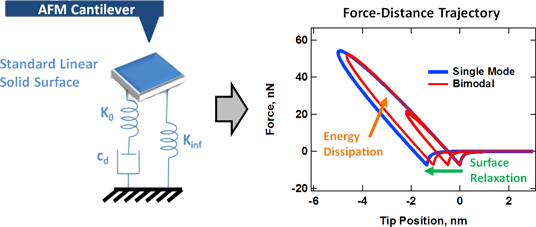
- a ‘friction’ force opposite to its motion, regardless of the direction in which it travels (upward or downward). In contrast, in the SLS model, the dissipation is a consequence of the simple fact that the work done by the cantilever against the surface during the approach is greater than the work


From sticky to slippery: Biological and biologically-inspired adhesion and friction
Beilstein J. Nanotechnol. 2014, 5, 1450–1451, doi:10.3762/bjnano.5.157

- friction are widely-spread in biological systems. They rely on a combination of various mechanisms (Figure 1). Since living creatures move on land, in air and in water, there are numerous mechanical interactions between their body surfaces and the environment. Moreover, the motion of cells and tissues
- inside their bodies is an important part of developmental processes, circulation, respiration, excretion, and any other kind of motility. All these processes rely on adhesion and friction and are continuously under evolutionary pressure, which has contributed to the appearance of highly-specialized
- restricted to selected few model systems most of which deal with materials of the human body or implants. However, a human is only one among millions of living species of organisms, and interesting adhesion- and friction-related contact problems can be found everywhere in biological systems. Different types

Synthesis, characterization, and growth simulations of Cu–Pt bimetallic nanoclusters
Beilstein J. Nanotechnol. 2014, 5, 1371–1379, doi:10.3762/bjnano.5.150
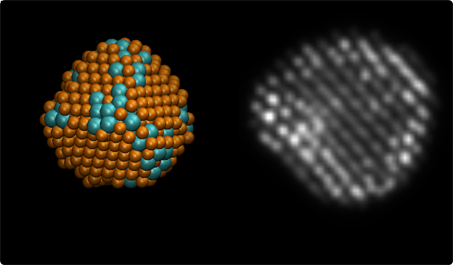
- with a probe current of 86 pA. Models and simulation method The simulation method employed is a grand-canonical Langevin dynamics (GCLD). Langevin dynamics is a method that extends molecular dynamics to represent the effect of perturbations caused by friction and eventual collisions occurring due to
- stochastic bath. Thus, the solution part contains only metal particles that can either be of the same element as the metal atoms of the nanoparticle or different from them. All solution particles move according to Langevin's equation: where γ is the friction constant, represents the random force acting on
- each particle and represents the force due to the potential interaction between the particles and the NP, as they do not interact with each other. The friction constant γ and the random force are related by the fluctuation–dissipation theorem. The Langevin dynamics was implemented by Ermak's


Surface topography and contact mechanics of dry and wet human skin
Beilstein J. Nanotechnol. 2014, 5, 1341–1348, doi:10.3762/bjnano.5.147
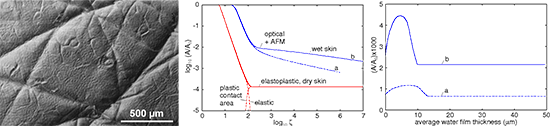
- skin. The measured friction coefficient between a glass ball and dry and wet skin can be explained assuming that a frictional shear stress σf ≈ 13 MPa and σf ≈ 5 MPa, respectively, act in the area of real contact during sliding. These frictional shear stresses are typical for sliding on surfaces of
- elastic bodies. The big increase in friction, which has been observed for glass sliding on wet skin as the skin dries up, can be explained as result of the increase in the contact area arising from the attraction of capillary bridges. Finally, we demonstrated that the real contact area can be properly
- friction of the wet human skin. However, the pattern of channels on the human skin surface, which is similar to the pattern on channels on the tree frogs toe pads [5], facilitates the fluid removal from the contact regions between skin and countersurface, increases the friction and enhances the grip


Physical principles of fluid-mediated insect attachment - Shouldn’t insects slip?
Beilstein J. Nanotechnol. 2014, 5, 1160–1166, doi:10.3762/bjnano.5.127
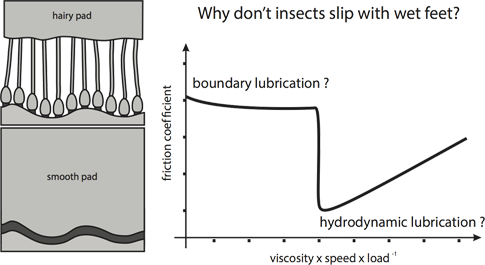
- morphologically different, they both form contact with the substrate via a thin layer of adhesive fluid. To model adhesion and friction forces generated by insect footpads often a simple “wet adhesion” model is used, in which two flat undeformable substrates are separated by a continuous layer of fluid. This
- review summarizes the key physical and tribological principles that determine the adhesion and friction in such a model. Interestingly, such a simple wet-adhesion model falls short in explaining several features of insect adhesion. For example, it cannot predict the observed high static friction forces
- : adhesion; friction; insect biomechanics; tribology; Review How do insects adhere to surfaces? More than 80% of the animal species in the world are arthropods [1], and amongst them insects can be considered probably the evolutionarily most successful group. For hundreds of millions of years they are


Dry friction of microstructured polymer surfaces inspired by snake skin
Beilstein J. Nanotechnol. 2014, 5, 1091–1103, doi:10.3762/bjnano.5.122
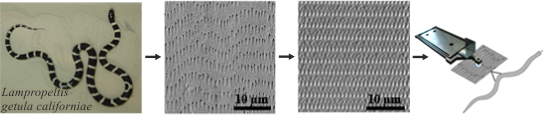
- influence friction: (1) molecular interaction depending on real contact area and (2) the mechanical interlocking of both contacting surfaces. The strongest reduction of the frictional coefficient, compared to the smooth reference surface, was observed at a medium range of surface structure dimensions
- suggesting a trade-off between these two effects. Keywords: biomimetics; dry friction; microstructure; polymer; snake skin; Introduction Owing to the lack of extremities, the ventral body side of snakes is in almost continuous contact with the substrate. In spite of this, snakes are one of the most
- successful animal groups in occupying niches on all continents, except for Antarctica [1][2][3]. From a tribology point of view, their ventral skin surface has to fulfil two opposite functions: (1) to support body propulsion during locomotion by generating high friction in contact with the substrate and (2


The study of surface wetting, nanobubbles and boundary slip with an applied voltage: A review
Beilstein J. Nanotechnol. 2014, 5, 1042–1065, doi:10.3762/bjnano.5.117
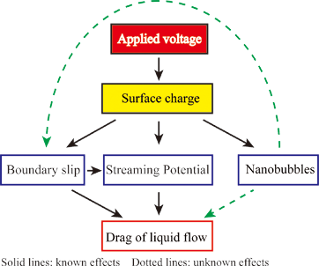
- molecules of solid and liquid beside the Lennard-Jones potential, so the boundary slip will be affected by the surface charge. Barrat and Bocquet give a Green–Kubo expression for the interfacial friction coefficient [13]: where μ is the viscosity of the liquid, A = LxLy is the area of the solid surface




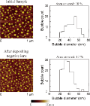


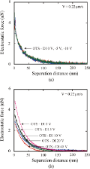
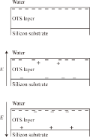
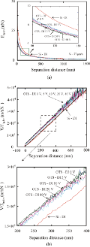


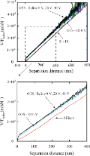


A nanometric cushion for enhancing scratch and wear resistance of hard films
Beilstein J. Nanotechnol. 2014, 5, 1005–1015, doi:10.3762/bjnano.5.114
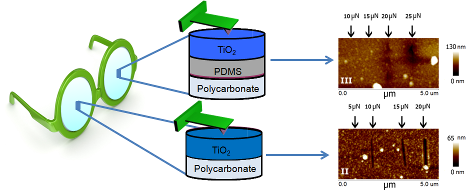
- Department of Chemical Research Support, Weizmann Institute of Science, Rehovot 76100, Israel 10.3762/bjnano.5.114 Abstract Scratch resistance and friction are core properties which define the tribological characteristics of materials. Attempts to optimize these quantities at solid surfaces are the subject
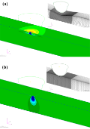
- is subsequently capped by a titania layer, resulting in enhanced scratch/wear resistance. The physical basis of this effect is explored by means of Finite Element Analysis, and we suggest a model for friction reduction based on the "cushioning effect” of a soft intermediate layer. Keywords: finite
- also give substantial improvement in the wear and friction behavior [2]. A third approach, which has the major advantage of not changing the bulk polymer properties is to use inorganic coatings [9][10]. One such attempt to reduce sensitivity to scratching involves depositing an oxide coating on the



Fibrillar adhesion with no clusterisation: Functional significance of material gradient along adhesive setae of insects
Beilstein J. Nanotechnol. 2014, 5, 837–845, doi:10.3762/bjnano.5.95
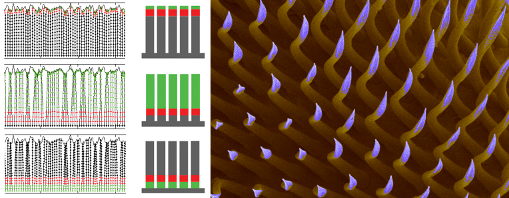
- segments are marked by black, red and green circles respectively. It is important to mention that our model is certainly limited. It does not account for plastic deformations, geometrical nonlinearity due to large deformations or friction effects. It is focused only on study of the effect of stiffness


Scale effects of nanomechanical properties and deformation behavior of Au nanoparticle and thin film using depth sensing nanoindentation
Beilstein J. Nanotechnol. 2014, 5, 822–836, doi:10.3762/bjnano.5.94
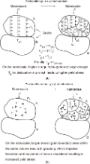
- grain boundary. The stress at the grain boundary is called the pile up stress, given as where τi is the friction stress opposing the movement of the dislocations. The number of dislocations in the pile up in grain A (n1A) is greater than in grain C (n2C) due to the larger size which leads to a greater
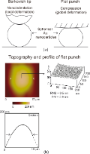
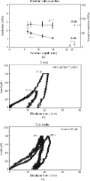
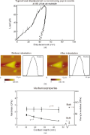
- important for reduced friction and wear. Figure 9 shows examples of load–displacement curves at intermediate and high loads (left) along with topography maps of the nanoparticles over a 10 µm × 10 µm scan area and 2-D profiles before and after indentation (right). The intermediate and high loads were 500
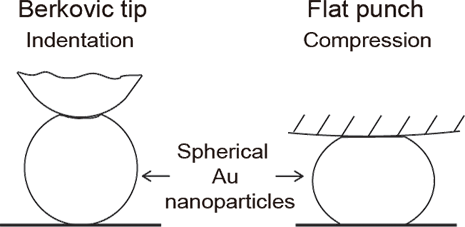
- ). Compression tests, as well as indentation tests, simulate the types of contacts nanoparticles encounter during different friction and wear conditions. For this purpose, a tip approximately 3.5 µm in radius was used to carry out compression tests. Figure 10 shows a typical load displacement curve for






The optimal shape of elastomer mushroom-like fibers for high and robust adhesion
Beilstein J. Nanotechnol. 2014, 5, 630–638, doi:10.3762/bjnano.5.74
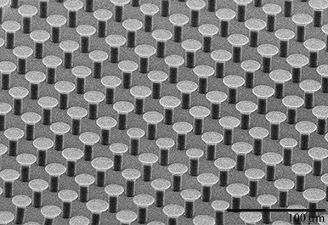
- effect of tip apex shape and friction, a model to estimate pull-off stress for mushroom-like fibers, and a comparison between cylindrical and mushroom-like fibers in terms of pull-off stress are discussed. Cohesive zone model Adhesion problems can be studied by using a cohesive zone model such as the
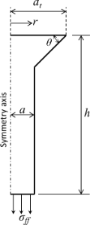
- . Numerical simulations Simulations are performed for a mushroom-like fiber illustrated in Figure 2 by using the analysis software COMSOL MultiPhysics 4.3 FE. It is assumed that the fiber is in full friction contact with a rigid smooth surface, which is in line with our observations during experiments with
- the limit χ → ∞ (i.e., δ → 0) can be explained by using the study of Bogy [43] on stress singularities at bimaterial wedge interfaces. For a soft incompressible elastomer (i.e, Poisson’s ratio ν = 0.5) in full-friction contact with a rigid substrate, stress at the edge of the fiber tip is finite for θ



Manipulation of nanoparticles of different shapes inside a scanning electron microscope
Beilstein J. Nanotechnol. 2014, 5, 133–140, doi:10.3762/bjnano.5.13
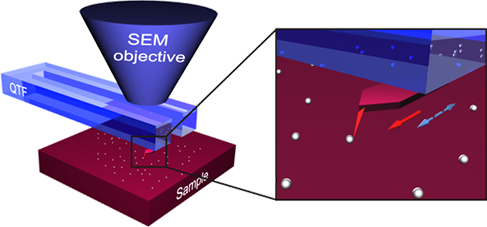
- Nanotechnology Competence Center, Riia 142, 51014, Tartu, Estonia 10.3762/bjnano.5.13 Abstract In this work polyhedron-like gold and sphere-like silver nanoparticles (NPs) were manipulated on an oxidized Si substrate to study the dependence of the static friction and the contact area on the particle geometry
- . Measurements were performed inside a scanning electron microscope (SEM) that was equipped with a high-precision XYZ-nanomanipulator. To register the occurring forces a quartz tuning fork (QTF) with a glued sharp probe was used. Contact areas and static friction forces were calculated by using different models
- and compared with the experimentally measured force. The effect of NP morphology on the nanoscale friction is discussed. Keywords: contact mechanics; nanomanipulation; nanoparticles; nanotribology; scanning electron microscopy (SEM); Introduction The manipulation of nanoparticles (NPs) is a powerful


Friction behavior of a microstructured polymer surface inspired by snake skin
Beilstein J. Nanotechnol. 2014, 5, 83–97, doi:10.3762/bjnano.5.8
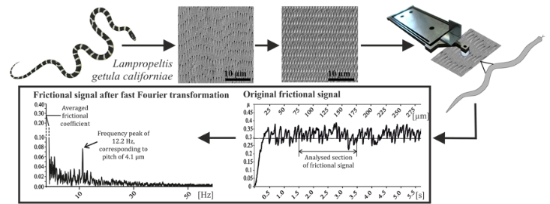
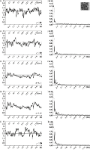
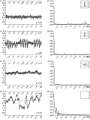
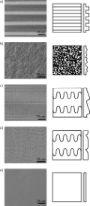
- of the biological model, Lampropeltis getula californiae, the California King Snake, on the friction behavior. For this purpose, we compared snake-inspired anisotropic microstructured surfaces to other microstructured surfaces with isotropic and anisotropic geometry. To exclude that the friction
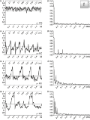
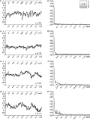
- measurements were influenced by physico-chemical variations, all friction measurements were performed on the same epoxy polymer. For frictional measurements a microtribometer was used. Original data were processed by fast Fourier transformation (FFT) with a zero frequency related to the average friction and
- adaptation to reduce wear. Based on this extensive comparative study of different microstructured polymer samples, it was experimentally demonstrated that the friction-induced stick-slip behavior does not solely depend on the frictional coefficient of the contact pair. Keywords: fast Fourier transformation




Exploring the retention properties of CaF2 nanoparticles as possible additives for dental care application with tapping-mode atomic force microscope in liquid
Beilstein J. Nanotechnol. 2014, 5, 36–43, doi:10.3762/bjnano.5.4
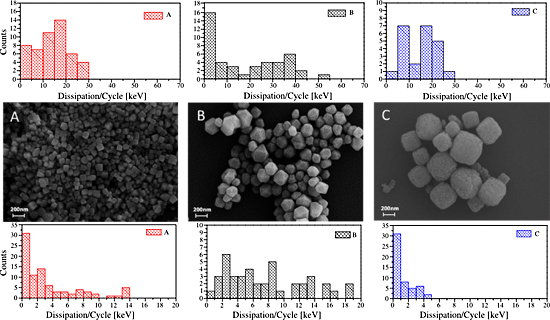
- manipulation, i.e., the collision between the probing tip and the particle, the friction between the particles and the substrate, the role of water when measuring in ambient (lubrication, capillary effects, etc.), electrostatics between them, etc. The high surface to volume ratio of nanoparticles makes them
- adhesion strength of calcium fluoride nanoparticles adsorbed on mica and on tooth enamel in liquid with AM-AFM. Theory As already described above, manipulation experiments in the tapping-mode are difficult to quantify as dynamic and friction processes are involved at the same time. To connect the power


Challenges in realizing ultraflat materials surfaces
Beilstein J. Nanotechnol. 2013, 4, 875–885, doi:10.3762/bjnano.4.99
- technique, it does require a polishing pad to heat the substrate through friction between the polishing pad and substrate. Thus, the light must be introduced through the substrate, which should therefore be thin. Furthermore, mechanical polishing causes surface damage (scratches or pits) when the polishing

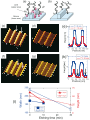
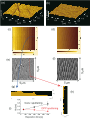
Dynamic nanoindentation by instrumented nanoindentation and force microscopy: a comparative review
Beilstein J. Nanotechnol. 2013, 4, 815–833, doi:10.3762/bjnano.4.93
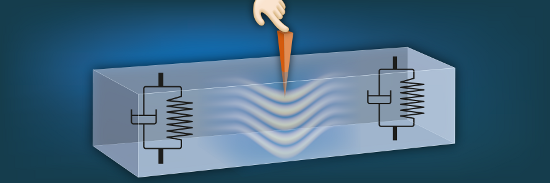
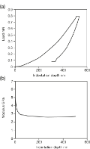
- importance of surface effects such as friction and surface energy, dropping to the sub-optical regime made optical determination of the contact geometry impossible. This led to the need to determine the contact region size from force–displacement curves. Fundamental equations and their limitations The
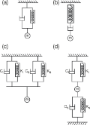
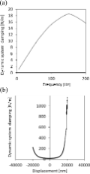
- , which is in turn used to express the dynamic elastic moduli as defined above. This shift is frequency-dependent, as the various modes of internal friction of the polymer are excited at distinct characteristic times. In order to probe the viscoelasticity at the nanoscale analogous techniques are applied
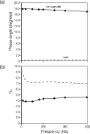
- measures the energy dissipated during an oscillation cycle. The phase lag, referred to as loss tangent (tan δ), arises from any of a number of molecular-level lossy processes such as entanglement, slip or friction between the monomer units. Although the phase lag is not amenable to a direct theoretical

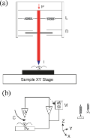



Energy-related nanomaterials
Beilstein J. Nanotechnol. 2013, 4, 678–679, doi:10.3762/bjnano.4.76
- enter both experimental and theoretical simulation routes towards materials optimization. Another materials property worth of being optimized is friction, which, when trying to walk or drive on icy streets is highly welcome, but in many cases is a source of dissipated energy. The friction of an object
- moving on or through a supporting or surrounding medium, respectively, appears to be closely related to surface or interface roughness, so that, again, the micro- and nanoscales are of major importance. For instance, a reduction of the friction of cargo vessels by only a few percent leads to considerable
- energy savings and a significant decrease of the worldwide CO2 emission [1]. It is noteworthy that the nanopatterning of surfaces and interfaces to reduce friction by tailoring their wettability and anti-fouling behavior is often guided by mimicking nature [2][3]. Contributions of advanced materials
Optimal geometry for a quartz multipurpose SPM sensor
Beilstein J. Nanotechnol. 2013, 4, 370–376, doi:10.3762/bjnano.4.43
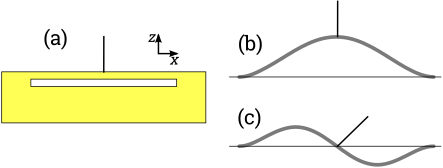
- -asperity friction [12], where the relationship between normal and lateral force is of interest. In this paper, we suggest the optimum geometry of a quartz sensor to produce a combined AFM/LFM/STM from a quartz crystal resonator with many theoretical benefits over other sensors. Combining NC-AFM and DLFM


Functionalization of vertically aligned carbon nanotubes
Beilstein J. Nanotechnol. 2013, 4, 129–152, doi:10.3762/bjnano.4.14
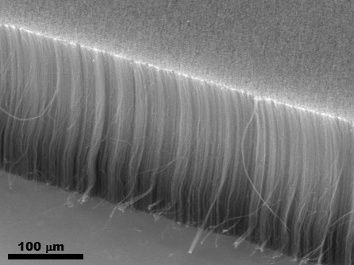
- , Dickrell et al. showed that the friction coefficient of oriented MWCNTs films depends on the temperature of the sample and the chemical groups at the surface [77]. In 2007, this problematic stirred the curiosity of Ler et al. [78]. Their work revealed the dependence of the friction coefficient on other
- as the tip moves through the film laterally is measured [79]. Under this condition, it is clear that the CNT sidewall plays a key role in determining the coefficient of friction. Moreover, the CNTs being hydrophobic [80], the water meniscus between the AFM tip and the CNT sidewall can be a hindrance
- to the tip displacement through the CNT forest and can disturb the measurement. To clarify these points, they accomplished a comparison between friction coefficient measurements for VA-CNTs modified by CF4- or O2-plasma treatment, under normal room humidity or reduced ambient humidity. The data








Low-dose patterning of platinum nanoclusters on carbon nanotubes by focused-electron-beam-induced deposition as studied by TEM
Beilstein J. Nanotechnol. 2013, 4, 77–86, doi:10.3762/bjnano.4.9
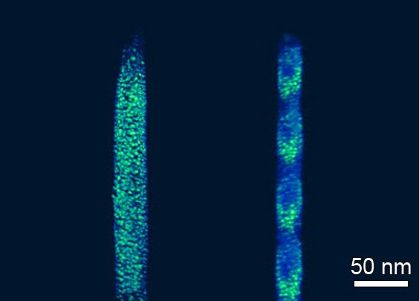
- value during deposition can lead to a varying pitch in the stripe pattering along the long axis of the nanotube. The ability to pattern the nanostructure with switchable high/low density of nanoclusters provides new potential applications in tunable wetting, adhesion, catalysis and friction properties


Effect of normal load and roughness on the nanoscale friction coefficient in the elastic and plastic contact regime
Beilstein J. Nanotechnol. 2013, 4, 66–71, doi:10.3762/bjnano.4.7
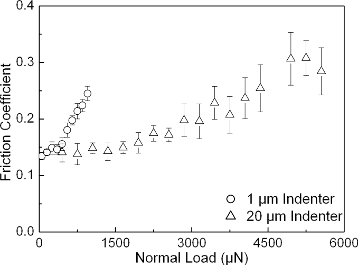
- during nanoindentation-based scratching has been experimentally investigated by using different surfaces (fused silica and diamond-like carbon) featuring various degrees of roughness. At a sufficiently low applied normal load, wherein the contact is elastic, the friction coefficient is constant. However
- , at increased normal loads the contact involves plastic deformation and the friction coefficient increases with increasing normal load. The critical load range for a transition from predominantly elastic to plastic contact, between the indenter and sample surface, increases with increasing size of
- plasticity index and contact load. Their recent work [10] showed that the static friction coefficient (ratio of friction force and normal load) depends on the external force and nominal contact area. Recently, FEM based work by Flores et al. [11] showed that the apparent friction coefficient at a low level


Growth behaviour and mechanical properties of PLL/HA multilayer films studied by AFM
Beilstein J. Nanotechnol. 2012, 3, 778–788, doi:10.3762/bjnano.3.87
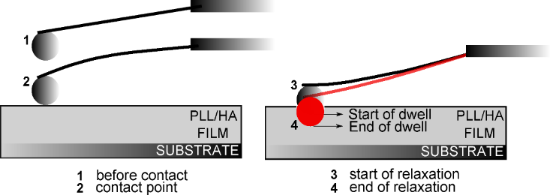
- . Both relaxation times decrease with increasing initial indentation velocity, suggesting a non-Newtonian, shear-thinning fluid character. Frequency-dependent AFM force [41] and quartz crystal microbalance measurements are planned for a better understanding of shear and friction effects on the mechanical


Effect of spherical Au nanoparticles on nanofriction and wear reduction in dry and liquid environments
Beilstein J. Nanotechnol. 2012, 3, 759–772, doi:10.3762/bjnano.3.85
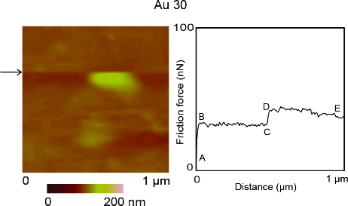
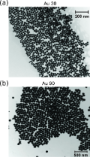
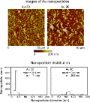
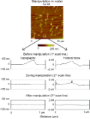
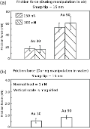
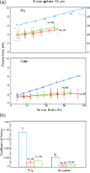
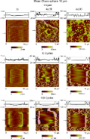
- applications in liquids requiring controlled manipulation and targeting. On the macroscale, nanoparticles in solids and liquids have been shown to reduce friction and wear. On the nanoscale, atomic force microscopy (AFM) studies have been performed in single- and multiple-nanoparticle contact, in dry
- environments, to characterize friction forces and wear. However, limited studies in submerged liquid environments have been performed and further studies are needed. In this paper, spherical Au nanoparticles were studied for their effect on friction and wear under dry conditions and submerged in water. In
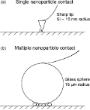
- single-nanoparticle contact, individual nanoparticles, deposited on silicon, were manipulated with a sharp tip and the friction force was determined. Multiple-nanoparticle contact sliding experiments were performed on nanoparticle-coated silicon with a glass sphere. Wear tests were performed on the



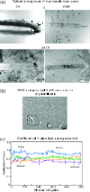
Friction and durability of virgin and damaged skin with and without skin cream treatment using atomic force microscopy
Beilstein J. Nanotechnol. 2012, 3, 731–746, doi:10.3762/bjnano.3.83
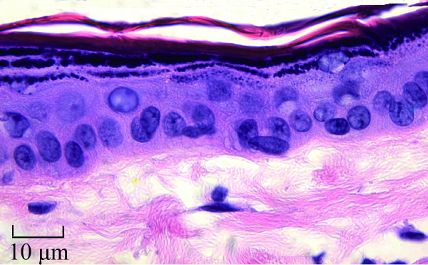
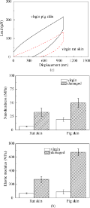
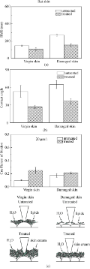
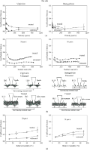
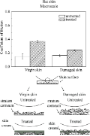
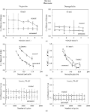
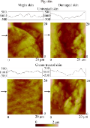
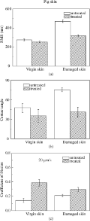
- friction and durability of damaged skin were measured and compared with those of virgin (intact/undamaged) skin. The effect of skin cream on friction and durability of damaged and virgin skin samples is discussed. The effects of velocity, normal load, relative humidity and number of cycles were studied
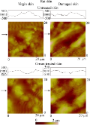
- . The nanoscale studies were performed by using atomic force microscope (AFM), and macroscale studies were performed by using a pin-on-disk (POD) reciprocating tribometer. It was found that damaged skin has different mechanical properties, surface roughness, contact angle, friction and durability
- compared to that of virgin skin. But similar changes occur after skin cream treatment. Rat and pig skin show similar trends in friction and durability. Keywords: atomic force microscopy; damaged skin; pig skin; rat skin; skin cream; Introduction Skin is the largest outer organ. The skin structure of