


Search results
Search for "hydrophobic" in Full Text gives 438 result(s) in Beilstein Journal of Nanotechnology. Showing first 200.
Molecular architectonics of DNA for functional nanoarchitectures
Beilstein J. Nanotechnol. 2020, 11, 124–140, doi:10.3762/bjnano.11.11
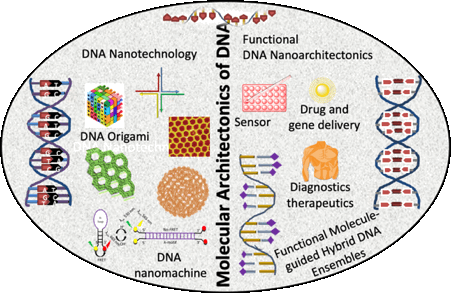
- acid (PNA) dimers (clamps) via WC and Hoogsteen base pairing interactions (Figure 6) [75]. The hydrogen bonding interactions, along with hydrophobic interactions, imparted by the nucleobases and the NDI core, facilitated the formation of versatile nano- and microarchitectures. The morphological
- hydrophobic effects and characteristic optical responses to monitor the insertion mechanism. Notably, the position of conjugation and the number of porphyrin units were crucial parameters that significantly affected the insertion process. Asanuma and co-workers incorporated six methyl red chromophores into a
- of DNA, and this concept has been exploited by Trau and co-workers to analyze the different interaction patterns of methylated and nonmethylated DNA with gold nanoparticles [22]. The consistent and high methylation level of genomes makes the DNA more hydrophobic, while the distinct methylation in


Internalization mechanisms of cell-penetrating peptides
Beilstein J. Nanotechnol. 2020, 11, 101–123, doi:10.3762/bjnano.11.10
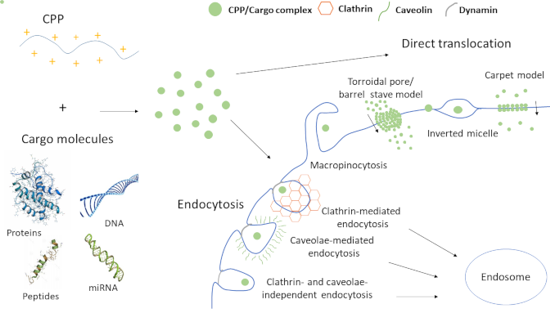
- [20]. The second class within this classification scheme is formed by CPPs which noncovalently complex their cargo. They occur mostly as amphipathic peptides, consisting of a hydrophilic and a hydrophobic domain. Pep-1 and MPG are amphipathic peptides which are reported to form stable, noncovalent
- complexes with cargo molecules through electrostatic interaction. Pep-1 has successfully been used to deliver small peptides and proteins into cells, while MPG has shown to efficiently deliver small interfering RNA (siRNA) into cultured cell lines [3][10]. The interplay between hydrophilic and hydrophobic
- sequentially hydrophilic and hydrophobic amino acids in their primary structure [5][21]. This group includes MPG, penetratin, CADY, pVec, and other peptides. Secondary amphipathic peptides commonly have less than 20 amino acids in their sequence and are able to take their α-helix or β-sheet conformation after


Recent progress in perovskite solar cells: the perovskite layer
Beilstein J. Nanotechnol. 2020, 11, 51–60, doi:10.3762/bjnano.11.5

- improves the adhesion of the perovskite ink to hydrophobic substrates, effectively inhibiting the solution flow dynamics in the drying perovskite ink layer leading to compact and uniform perovskite films. The very small amount of surfactant additive has no adverse effect on the optoelectronic properties of
- new 2D/3D perovskite materials by incorporating hydrophobic alkylammonium salts with halogen functional groups (2-chloroethylammonium chloride and 2-bromoethylammonium bromide) into formamidinium-based 3D perovskites. By adjusting the relative amount of the ammonium salts the mixing ratio of the 2D
- and 3D perovskite phases could be controlled. The hydrophobic alkylammonium cations remarkably enhanced the humidity resistance of the 2D/3D mixtures. In addition, the halogen functional groups in the alkylammonium salts could cause changes of the electron cloud distribution and also enhance the


An investigation on the drag reduction performance of bioinspired pipeline surfaces with transverse microgrooves
Beilstein J. Nanotechnol. 2020, 11, 24–40, doi:10.3762/bjnano.11.3
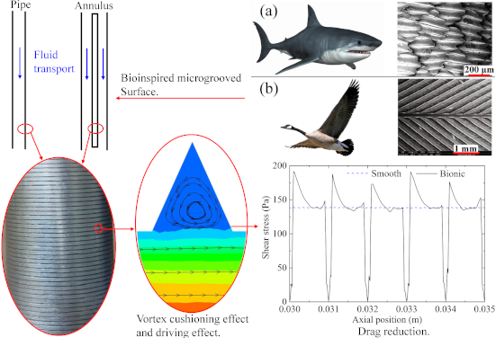
- the drag [12]. It is well known that organisms found in nature provide substantial inspiration for solving engineering problems. Bionic research has found that some natural organisms form a specific surface structure with antidrag [13], antiwear [14][15], and hydrophobic [16][17] performance through


Fully amino acid-based hydrogel as potential scaffold for cell culturing and drug delivery
Beilstein J. Nanotechnol. 2019, 10, 2579–2593, doi:10.3762/bjnano.10.249
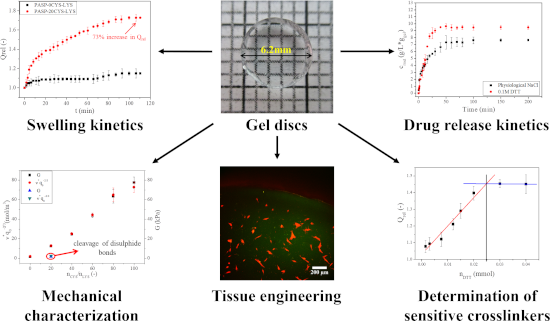
- with different swelling properties (and also different stiffness). The PSI-based gels show a low swelling degree at pH 8 due to the hydrophobic character of the PSI backbone (Figure 2a). Since PSI is insoluble in water, the Huggins interaction parameter increases in an aqueous medium, hence, the gels


Small protein sequences can induce cellular uptake of complex nanohybrids
Beilstein J. Nanotechnol. 2019, 10, 2477–2482, doi:10.3762/bjnano.10.238
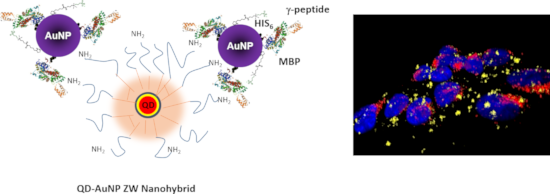
- (not to scale). The central QD (red, yellow, blue = core/shell/shell) is embedded in a crosslinked polymer micelle, consisting of a hydrophobic block (red) and an amphiphilic block (PEO). Interaction of the QDs with AuNPs (purple) is driven by the amine functional group. Gold nanoparticles are His

pH-Controlled fluorescence switching in water-dispersed polymer brushes grafted to modified boron nitride nanotubes for cellular imaging
Beilstein J. Nanotechnol. 2019, 10, 2428–2439, doi:10.3762/bjnano.10.233
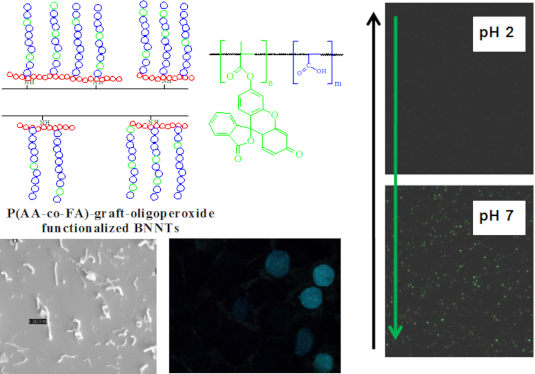
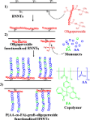
- polymer brushes via polymerization initiated from their surface [12][28]. In particular, BNNTs were covalently modified with hydrophobic polystyrene or poly(glycidyl methacrylate) polymer brushes [28]. The modified nanotubes demonstrated high dispersibility in a large number of organic solvents. In our
- aggregation of poly(acrylic acid) due to hydrophobic interactions was shown [54]. At neutral or basic pH, the hydrodynamic diameter of the poly(acrylic acid) macromolecules was significantly decreased, indicating the disruption of intermolecular aggregates [54]. Cellular imaging using P(AA-co-FA


Coating of upconversion nanoparticles with silica nanoshells of 5–250 nm thickness
Beilstein J. Nanotechnol. 2019, 10, 2410–2421, doi:10.3762/bjnano.10.231
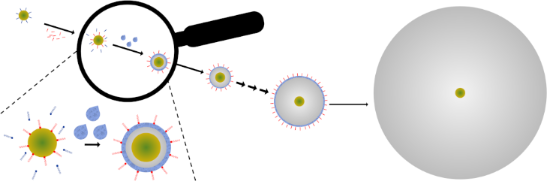
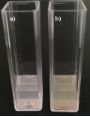
- quantum yields are typically prepared in organic solvents at high temperatures using hydrophobic capping agents such as oleic acid [16][17]. Life sciences applications of these NPs require to render them water-dispersible using either ligand exchange or encapsulation procedures [2][13][18][19]. This can
- be similarly necessary for applications in plasmonics or chemical sensing [20][21]. One of the most versatile ways to protect the surface of NP, making hydrophobic particle surfaces hydrophilic and simultaneously providing functional groups for subsequent covalent attachment of, e.g., biomolecules
- monodisperse particles with just one UCNP core in the center coated by a thick silica shell are obtained. This method should also be suitable for other NPs with hydrophobic surfaces dispersed in an apolar solvent independent of their chemical composition. Results and Discussion The core particles used in this


Multiwalled carbon nanotube based aromatic volatile organic compound sensor: sensitivity enhancement through 1-hexadecanethiol functionalisation
Beilstein J. Nanotechnol. 2019, 10, 2364–2373, doi:10.3762/bjnano.10.227
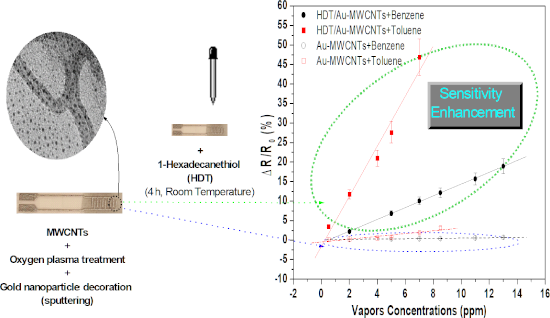
- of operation/storage. The weak interaction of the toluene molecule with the surface of both functionalised and non-functionalised sensors can be explained by the hydrophobic–hydrophobic interaction between the functional groups of the monolayer (CH3 groups) and the CH3 group of the toluene molecule
- -mercaptohexadecanoic acid (MHDA) showed no response to aromatic vapours [22]. As presented in Table 1, the vapours tested are nonpolar in nature and therefore have a high affinity with the hydrophobic CH3 group of the HDT. On the contrary, MHDA molecules are carboxylic acid terminated thiols, which are hydrophilic
- the sensor response was studied in a previous work [32]. The response to vapours remains basically unchanged for sensors employing hydrophobic thiols due to their hydrophobicity [31]. Such long-chain alkanethiol functionalised and decorated MWCNTs showed a high contact angle with water, which remains




Design of a nanostructured mucoadhesive system containing curcumin for buccal application: from physicochemical to biological aspects
Beilstein J. Nanotechnol. 2019, 10, 2304–2328, doi:10.3762/bjnano.10.222
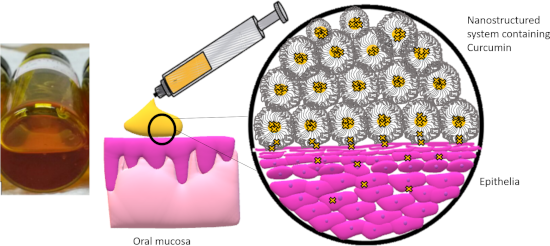
- elucidated by incorporation kinetics and location studies. They revealed that the drug was quickly incorporated and located in the hydrophobic portion of nanometer-sized polymeric micelles. Moreover, the systems displayed plastic behavior with rheopexy characteristics at 37 °C, viscoelastic properties and a
- increase of temperature can promote the self-assembly from unimers to micelles, with large endothermic heat. In this sense, PPO-groups dehydrate in a hydrophobic core with a surrounding hydrated shell. Higher concentrations of P407 are used (15% to 20%, w/w) as colloidal gelling systems in a cubic
- hexagonal core with ordered structure, which enable the solubilization of hydrophilic and hydrophobic drugs [4][5][6][7][8][9]. Moreover, C974P is an acrylic-acid derivative, highly cross-linked, hydrophilic, and displays mucoadhesive properties [1]. In this sense, an increase in temperature promotes the


Mannosylated brush copolymers based on poly(ethylene glycol) and poly(ε-caprolactone) as multivalent lectin-binding nanomaterials
Beilstein J. Nanotechnol. 2019, 10, 2192–2206, doi:10.3762/bjnano.10.212
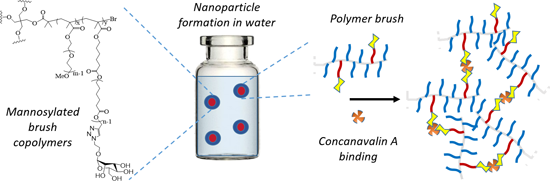
- aggregates (e.g., micelles and vesicles) above their critical aggregation concentration (CAC). The resulting self-assembled nanoparticles can act as drug carriers and delivery systems, being able to accommodate a hydrophobic drug within their hydrophobic core [22], or chemically bind bioactive agents [23][24
- tendency may be due to the presence of the mannose residues that, being connected to the hydrophobic PCL chains, could affect the self-assembly of the macromolecules and generate some aggregates. Remarkably, four-arm species had a slightly lower Dh than the corresponding linear species. Turbidity assay The



Microbubbles decorated with dendronized magnetic nanoparticles for biomedical imaging: effective stabilization via fluorous interactions
Beilstein J. Nanotechnol. 2019, 10, 2103–2115, doi:10.3762/bjnano.10.205
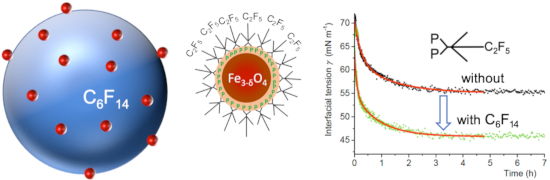
- fluorinated chains are reinforced by very effective hydrophobic repulsion caused by the proximity of the water phase. Figure 5 depicts the inverse of the characteristic adsorption time (1/τ) as a function of the Fe concentration of the dendronized IONPs. The 1/τ values increase with increasing Fe


Ion mobility and material transport on KBr in air as a function of the relative humidity
Beilstein J. Nanotechnol. 2019, 10, 2084–2093, doi:10.3762/bjnano.10.203
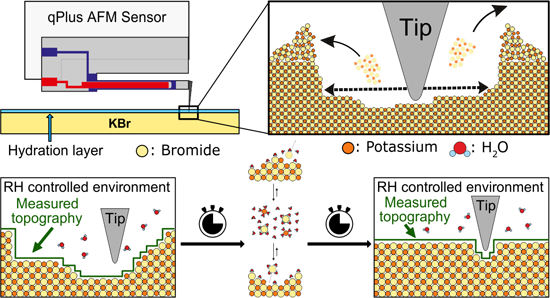
- small and sharp splinter of a smashed sapphire bulk crystal was used as a tip. Sapphire is a very hard material, it is hydrophobic with a contact angle to water above 80°[20], and it is chemically inert [21]. The high hardness allows us to create large artificial defects in our sample (as described


Porous silver-coated pNIPAM-co-AAc hydrogel nanocapsules
Beilstein J. Nanotechnol. 2019, 10, 1973–1982, doi:10.3762/bjnano.10.194
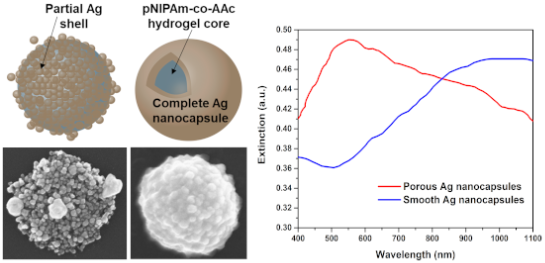
- by the lower critical solution temperature (LCST); that is, the temperature at which the hydrogel polymers become hydrophilic and soluble in aqueous solutions, or conversely, hydrophobic and insoluble in aqueous solutions [57][58][59]. Interestingly, through chemical modification, the LCST can be
- to the collapse of the hydrogel polymer due to increased hydrophobic interactions in the polymer hydrogel network [58]. Ionizable groups such as AAc and AAm are grafted into the polymer backbone to increase electrostatic interactions. The introduction of AAc, which has ionizable COOH groups, induces


High-tolerance crystalline hydrogels formed from self-assembling cyclic dipeptide
Beilstein J. Nanotechnol. 2019, 10, 1894–1901, doi:10.3762/bjnano.10.184
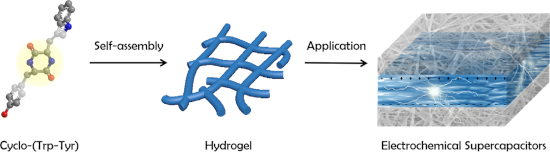
- , which provide a substantial tendency for self-assembly and the formation of gels. In addition, other weak forces, such as π–π stacking, hydrophobic effect, electrostatic interactions, and van der Waals forces, are also serviceable in driving molecular self-assembly of CDPs toward the formation of gels
- ) (Figure 2A). Thioflavin T (ThT) and nile red (NR), two specific dyes for hydrophobic domains and beta-sheet secondary structures, respectively, were used to obtain insights into the detailed interior structure of the hydrogel [49]. CLSM results confirmed that the C-WY hydrogel contains both hydrophobic
- crystal pattern. (A) CLSM images of the C-WY hydrogel in light field. NR was used to indicate the formation of hydrophobic domains (red color, B) and ThT was used to indicate the beta-sheet secondary structures (blue color, C). (D) XRD pattern of the hydrogel. (E) POM images in cross-polarized light mode


Engineered superparamagnetic iron oxide nanoparticles (SPIONs) for dual-modality imaging of intracranial glioblastoma via EGFRvIII targeting
Beilstein J. Nanotechnol. 2019, 10, 1860–1872, doi:10.3762/bjnano.10.181
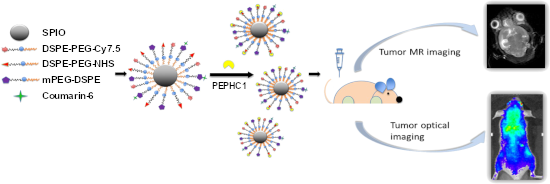
- -Cy7.5 material was then subsequently coated onto the hydrophobic SPIONs to make them hydrophilic and more stable for further fluorescent imaging experiments. Finally, PEPHC1, a small peptide that can specifically bind with the marker EGFRvIII that is overexpressed in glioblastoma, was grafted with the




Processing nanoporous organic polymers in liquid amines
Beilstein J. Nanotechnol. 2019, 10, 1844–1850, doi:10.3762/bjnano.10.179
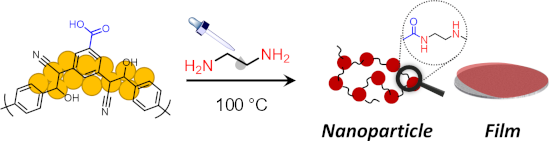
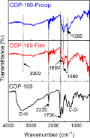
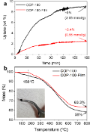
- the hydrophobic nanoporous polymer at high temperature [27]. The COP-100-Film was formed much slower when the temperature was below 80 °C, supporting that the amide formation by the condensation reaction was crucial for processing the nanoporous polymer. The quick amide formation made the COP-100



Microfluidic manufacturing of different niosomes nanoparticles for curcumin encapsulation: Physical characteristics, encapsulation efficacy, and drug release
Beilstein J. Nanotechnol. 2019, 10, 1826–1832, doi:10.3762/bjnano.10.177
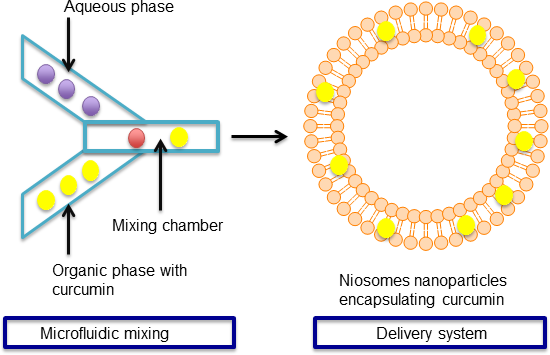
- molecules are encapsulated in the aqueous compartment, while hydrophobic molecules are embedded in the membrane [16]. The EE of hydrophobic molecules is majorly affected by the lamellarity of the niosome membranes. Because the niosomes discussed here are unilamellar, the main factor that seems to affect the
- concentration of chol and the non-ionic surfactant in the final niosome formulations. The presence of chol is a key factor that controls membrane rigidity. Higher chol concentrations results in a less permeable and more rigid bilayer membrane. Moreover, the encapsulation of hydrophobic molecules is highly
- dependent on the bilayer membrane fluidity where higher encapsulation values can be achieved with less rigid membranes [17]. In addition, higher chol concentrations might compete with the hydrophobic molecules and prevent its encapsulation during the self-assemble of the lipid components into the bilayer


Biocatalytic oligomerization-induced self-assembly of crystalline cellulose oligomers into nanoribbon networks assisted by organic solvents
Beilstein J. Nanotechnol. 2019, 10, 1778–1788, doi:10.3762/bjnano.10.173
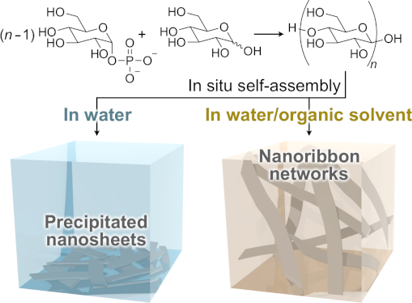
- were similar in shape to lamellar crystals of cellulose oligomers [42][52][53][54]. According to our examination, the cross-linking of the nanoribbons was apparently based on their physical contact, possibly through the hydrophobic effect and hydrogen bonding. We previously demonstrated nanoribbon





The impact of crystal size and temperature on the adsorption-induced flexibility of the Zr-based metal–organic framework DUT-98
Beilstein J. Nanotechnol. 2019, 10, 1737–1744, doi:10.3762/bjnano.10.169
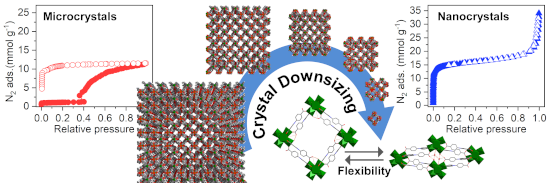
- around a relative pressure of 0.5, indicating increased adsorption ability. In contrast to other Zr-based MOFs [38], this is a rather high relative pressure for water adsorption, indicating a hydrophobic character of the pore inner surface. In DUT-98(3), a steep increase in water adsorption is observed



Chiral nanostructures self-assembled from nitrocinnamic amide amphiphiles: substituent and solvent effects
Beilstein J. Nanotechnol. 2019, 10, 1608–1617, doi:10.3762/bjnano.10.156
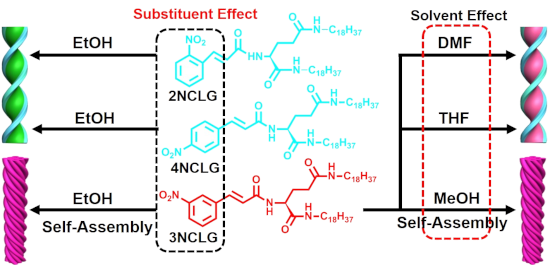
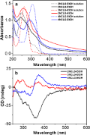
- feature of these building blocks is that chiral centers are contained. The synergy between various noncovalent interactions, including hydrogen bonding [21][22], π–π stacking [23][24], and hydrophobic interactions [25][26] provided by other moieties in self-assembly units, cause the chiral information to




Hierarchically structured 3D carbon nanotube electrodes for electrocatalytic applications
Beilstein J. Nanotechnol. 2019, 10, 1475–1487, doi:10.3762/bjnano.10.146
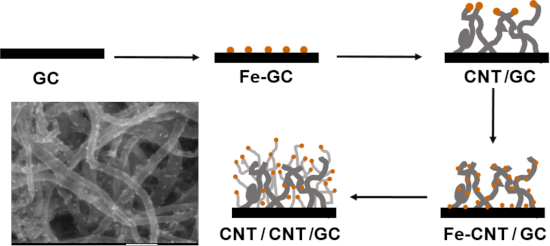
- should be mentioned that N-CNT/N-CNT/GC displays no redox peak attributed to oxygen-containing functional groups since Fe was electrochemically leached out in H2SO4 and not chemically in concentrated HNO3 for the sake of follow-up studies not presented here. Additionally, CNT/CNT/GC is hydrophobic, while
- CNT growth was investigated, where gas flow rates were adjusted by mass flow controllers (Bronkhorst High-Tech, Germany). Prior to CVD, the Fe catalysts were conditioned at 750 °C for 30 min in a H2/Ar gas mixture. After the CNT growth, the surface of CNT/GC is highly hydrophobic. To remove remaining





Multicomponent bionanocomposites based on clay nanoarchitectures for electrochemical devices
Beilstein J. Nanotechnol. 2019, 10, 1303–1315, doi:10.3762/bjnano.10.129
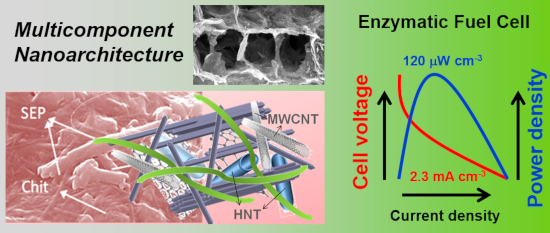
- ) develops highly stable and viscous suspensions after sonomechanical treatment in water. Dispersions of disaggregated sepiolite can efficiently suspend nanoparticles of different topologies and hydrophobic nature such as graphene nanoplatelets (GNPs) and multiwalled carbon nanotubes (MWCNTs) in water [25



Enhanced inhibition of influenza virus infection by peptide–noble-metal nanoparticle conjugates
Beilstein J. Nanotechnol. 2019, 10, 1038–1047, doi:10.3762/bjnano.10.104
- , including H1N1, H3N2 and H5N1 [15] can be successfully incorporated into the ligand shell of gold and silver nanoparticles. The FluPep-functionalised nanoparticles have a greater antiviral activity than the free peptide. The FluPep amino acid sequence is hydrophobic and its solubilisation requires dimethyl




Tailoring the stability/aggregation of one-dimensional TiO2(B)/titanate nanowires using surfactants
Beilstein J. Nanotechnol. 2019, 10, 1024–1037, doi:10.3762/bjnano.10.103
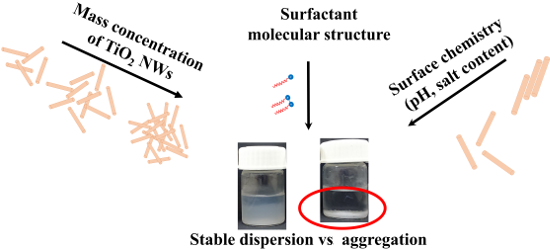
- hydrophobic interactions. As expected, the interaction of TNWs with 12-2-12 was stronger than with DTAB, due to the presence of two positively charged head groups and two hydrophobic tails. As a consequence of the higher adsorption of 12-2-12, TNWs remained stable in both media, while DTAB showed an opposite
- research and industrial applications. Gemini surfactants possess a unique molecular structure involving two hydrophobic moieties connected by a hydrophobic or hydrophilic spacer at the level of the head groups. Consequently, these surfactants display superior physicochemical properties and distinctly
- gemini surfactants enables the effect of molecular and micellar structure to be determined while keeping surfactant chemistry the same [36]. It can be expected that surfactant adsorption on TNWs influences TNW stability by affecting the balance between the electrostatic, hydrophobic and steric





