Search results
Search for "laser" in Full Text gives 905 result(s) in Beilstein Journal of Nanotechnology. Showing first 200.
A mid-infrared focusing grating coupler with a single circular arc element based on germanium on silicon
Beilstein J. Nanotechnol. 2023, 14, 478–484, doi:10.3762/bjnano.14.38
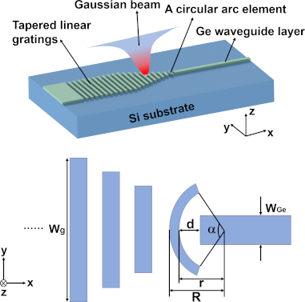
- depth. The incident angle is θ. In our work, the numerical simulations have been performed by using a commercial software of Lumerical FDTD solutions, which is based on the finite-difference time-domain method, and the light source we used for exciting the grating coupler is a Gaussian laser beam. The
- laser (the center wavelength is ca. 7 μm) as the light source to test the coupling efficiency of the experimental samples. The MIR laser is coupled into a single-mode ZrF4 optical fiber via a black diamond-2 aspheric lens [1]. The light from the single-mode ZrF4 optical fiber is coupled into the


Mixed oxides with corundum-type structure obtained from recycling can seals as paint pigments: color stability
Beilstein J. Nanotechnol. 2023, 14, 467–477, doi:10.3762/bjnano.14.37
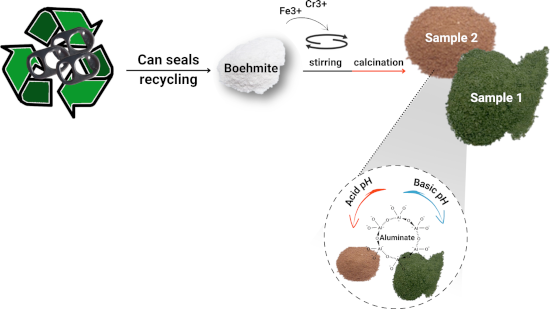
- ) was used to evaluate the relative composition of the elements. Raman spectra were recorded using a micro-Raman system (Senterra Bruker Optik GmbH, Massachusetts, USA), λ = 532 nm with a laser power of 10 mW. The visible spectra were obtained using an Ocean Optics spectrophotometer (USB 2000) (Florida




Plasmonic nanotechnology for photothermal applications – an evaluation
Beilstein J. Nanotechnol. 2023, 14, 380–419, doi:10.3762/bjnano.14.33
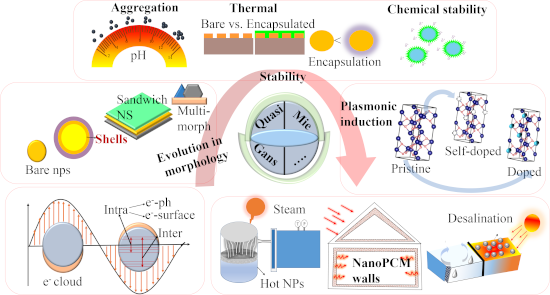
- temperature and reactivity. With broad applications in therapy [22][23], laser combined imaging, solar vapour generation [24], and biosensors [25], the global market for PT devices is expected to be a multimillion dollar enterprise by 2025 [26]. This review will focus on concepts such as the theoretical
- surrounding medium [63]: PLSPR is the power absorbed by the nanoparticle, ε0 and μ0 are, respectively, the permittivity and permeability of vacuum, nm is the refractive index of the surrounding medium, and is the amplitude of the transverse incident wave of the laser source. Equation 24 can be simplified in
- through pump–probe laser spectroscopy [83]. From the slope of this transient reflectivity curve, the coupling constant is arrived at, from which the lattice temperature is calculated through the two-temperature model by means of two coupled diffusion equations, where Te and Tl are, respectively, the




The steep road to nonviral nanomedicines: Frequent challenges and culprits in designing nanoparticles for gene therapy
Beilstein J. Nanotechnol. 2023, 14, 351–361, doi:10.3762/bjnano.14.30
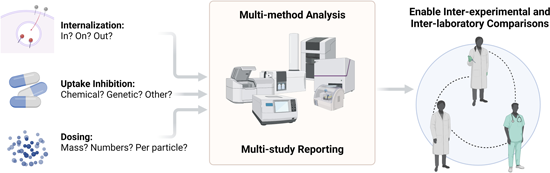
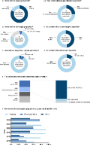
- ). Laser scanning or spinning disc confocal microscopy, typically used for qualitative determination of NP uptake, can provide valuable insights into relative distribution and aggregation of NPs, which has been widely used in the field of nonviral gene delivery (reported in 82% of the papers, Figure 1a

Recent progress in cancer cell membrane-based nanoparticles for biomedical applications
Beilstein J. Nanotechnol. 2023, 14, 262–279, doi:10.3762/bjnano.14.24
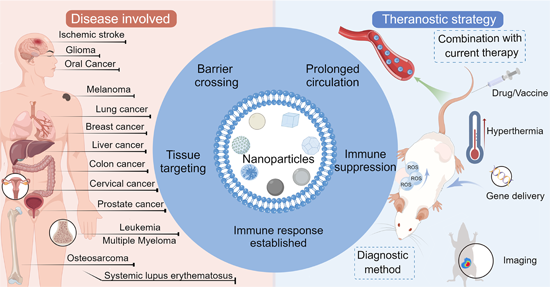
- laser irradiation and generate ROS, which synergizes with the subsequent release of CQ for anticancer effects. In the early stages of intervention with nanoagents and laser irradiation, both bare NPs and cancer cell membrane-encapsulated NPs exhibited good tumor suppressive effects. However, the tumors


Cyclodextrins as eminent constituents in nanoarchitectonics for drug delivery systems
Beilstein J. Nanotechnol. 2023, 14, 218–232, doi:10.3762/bjnano.14.21
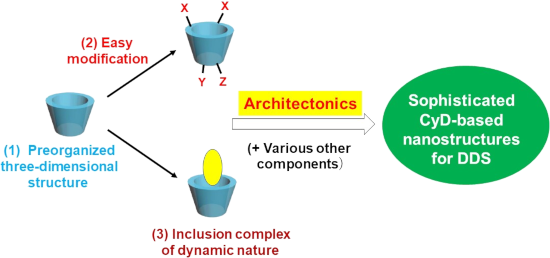
- poly(ethylene glycol) with α-CyDs, in which adjacent α-CyDs interact to provide physical crosslinkings. Cisplatin (purple circle) was loaded in the hydrogel. Under NIR-II laser irradiation, the localized photothermal effect directly ablates thermosensitive cancer cells. At the same time, the
- subject to CC BY 4.0. (a) Hydrogel production through pseudopolyrotaxane formation of poly(ethylene glycol) with α-CyDs. (b) Photothermal effect induced by the irradiation with NIR-II light (1064 nm laser). Simultaneously, a gel–sol transition occurred to release the drug (purple circles), promoting




Concentration-dependent photothermal conversion efficiency of gold nanoparticles under near-infrared laser and broadband irradiation
Beilstein J. Nanotechnol. 2023, 14, 205–217, doi:10.3762/bjnano.14.20
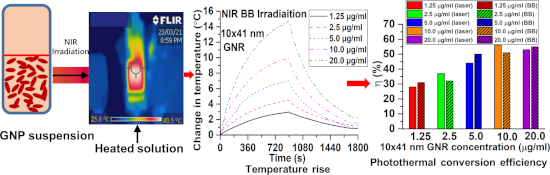
- Organisation, Sector-30C, Chandigarh-160030, India 10.3762/bjnano.14.20 Abstract The photothermal conversion efficiency of gold different nanoparticles (GNPs) in different concentrations (1.25–20 µg/mL) and at different irradiation intensities of near-infrared (NIR) broadband and NIR laser irradiation is
- evaluated. Results show that for a concentration of 20.0 µg/mL, 40 nm gold nanospheres, 25 × 47 nm gold nanorods (GNRs), and 10 × 41 nm GNRs show a 4–110% higher photothermal conversion efficiency under NIR broadband irradiation than under NIR laser irradiation. Broadband irradiation seems suitable to
- concentrations show almost equal efficiencies for NIR laser and broadband irradiation. On increasing the irradiation power from 0.3 to 0.5 W, for 10 × 41 nm GNRs in the concentration range of 2.5–20.0 µg/mL, NIR laser irradiation results in 5–32% higher efficiencies, while NIR broadband irradiation leads to a 6




A novel approach to pulsed laser deposition of platinum catalyst on carbon particles for use in polymer electrolyte membrane fuel cells
Beilstein J. Nanotechnol. 2023, 14, 190–204, doi:10.3762/bjnano.14.19
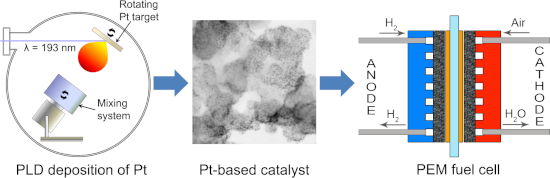
- carbon substrate and the chemical synthesis of PtNPs during catalyst fabrication. Platinum was deposited on carbon particles at room temperature using a pulsed laser deposition (PLD) system equipped with an ArF excimer laser (λ = 193 nm). The uniform deposition of PtNPs on carbon supports was achieved
- [27]. Direct deposition of PtNPs can be attained by the use of various physical vapor deposition techniques such as magnetron sputtering [28], sputtering [29], e-beam evaporation [30], dual ion-beam assisted deposition [31], and pulsed laser deposition (PLD) [27][32][33]. Previously, PLD has been used
- method allows one to control the amount of deposited platinum by changing the fluency of the laser radiation on the surface of the target or by changing the number of laser pulses. In these studies, the amount of deposited Pt was controlled only by changing the number of laser pulses. The Pt deposition



Structural, optical, and bioimaging characterization of carbon quantum dots solvothermally synthesized from o-phenylenediamine
Beilstein J. Nanotechnol. 2023, 14, 165–174, doi:10.3762/bjnano.14.17
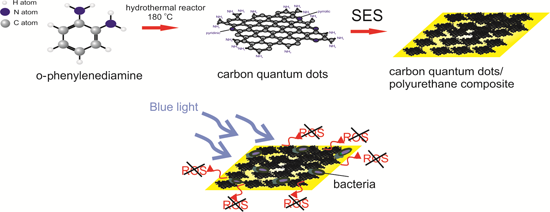
- CQDs/PU samples were dipped in a solution of TEMP in ethanol at a concentration of 30 mM and irradiated with a 3 W blue LED for 12 h. Time-resolved near-infrared luminescence of O2 (1Δg) at 1270 nm after excitation by Quantel Q-smart 450 Nd YAG laser (wavelength of 355 nm, pulse length of ca. 5 ns) was


Formation of nanoflowers: Au and Ni silicide cores surrounded by SiOx branches
Beilstein J. Nanotechnol. 2023, 14, 133–140, doi:10.3762/bjnano.14.14
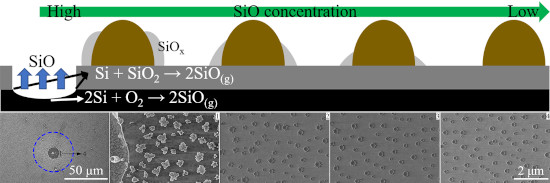
- measured by laser scanning microscopy (LSM, Olympus LEXT 4100). Morphology around decomposed areas (a–c). Distribution and composition of nanoflowers and particles outside the decomposition cavity in 10Au10Ni, respectively (d, e). Images (a–c) show 5Au15Ni, 10Au10Ni and 15Au5Ni, respectively. The dotted


Intermodal coupling spectroscopy of mechanical modes in microcantilevers
Beilstein J. Nanotechnol. 2023, 14, 123–132, doi:10.3762/bjnano.14.13
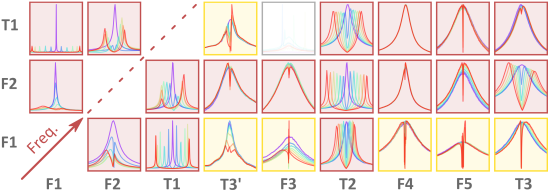
- opportunity to bring intermodal coupling techniques, derived from optomechanics, to AFM. It is easily accessible, with no hardware modifications and only requiring multifrequency excitation applied to the cantilever by either a piezoshaker or a modulated laser, found in many AFM setups. The field of
- -in measurement. An AFM microcantilever (Bruker RFESP-75) is glued to a piezoshaker and placed in a vacuum chamber (between 1.2 × 10⁻⁶ and 5 × 10⁻⁷ mbar) under a laser Doppler vibrometer (LDV) (Polytech MSA 500) to measure the cantilever’s resonance frequencies and mode shapes (Figure 1). A lock-in


Characterisation of a micrometer-scale active plasmonic element by means of complementary computational and experimental methods
Beilstein J. Nanotechnol. 2023, 14, 110–122, doi:10.3762/bjnano.14.12
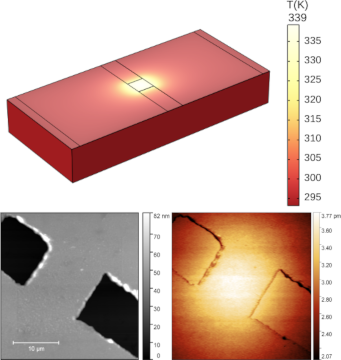
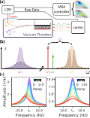
- DC component of the light results in a typical SPR curve while the modulated signal from the lock-in amplifier produces a more sensitive signal. This yields the variation in the optical constants as a function of the thermal modulation of the active element. An Oxxius single-frequency CW laser at
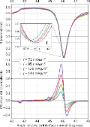
- SPR curve is slightly broader than the simulated one. This is due to experimental broadening (in particular, the divergence of the laser beam), surface roughness, and further temperature-induced degradation effects that are not taken into account in the simplified simulation setup employed. In order
- subsequent paper. At this stage, experiments with active elements of different sizes reveal that the ratio between heated and non-heated surface illuminated by the laser beam influences the intensity of this effect. The ability to observe these details demonstrates the high sensitivity of this technique to




Antimicrobial and mechanical properties of functionalized textile by nanoarchitectured photoinduced Ag@polymer coating
Beilstein J. Nanotechnol. 2023, 14, 95–109, doi:10.3762/bjnano.14.11
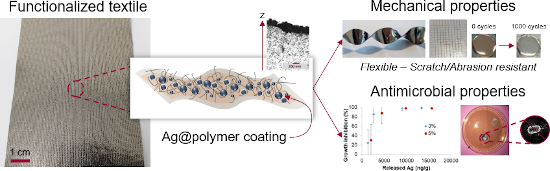
- ] synthesized AgNPs on cotton fabrics using laser ablation, while Ahmad et al. [31] deposited AgNPs by the dip and dry method based on surface reduction reactions. However, the difference in expansion coefficients of the given metal layer and substrate can lead to surface defects under strain (cracks, loss of



Combining physical vapor deposition structuration with dealloying for the creation of a highly efficient SERS platform
Beilstein J. Nanotechnol. 2023, 14, 83–94, doi:10.3762/bjnano.14.10
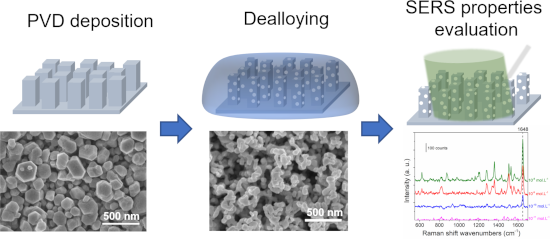
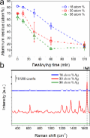
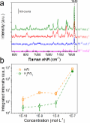
- energy of 23 eV. Surface-enhanced Raman scattering measurements Raman measurements were performed with a Senterra Bruker micro-Raman spectrometer using a 533 nm excitation laser line with an acquisition time of 10 s. The power was fixed to 0.2 mW and focused on the sample with a ×50 objective. Rhodamine




Upper critical magnetic field in NbRe and NbReN micrometric strips
Beilstein J. Nanotechnol. 2023, 14, 45–51, doi:10.3762/bjnano.14.5
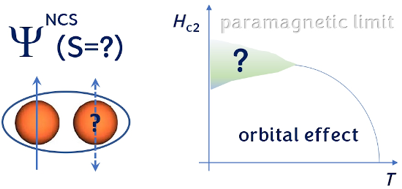
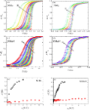
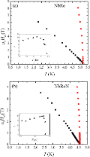
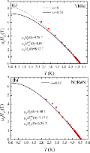
- voltage contacts of L = 90 μm. The NbReN films were structured by using direct laser writer exposure followed by argon ion etching into constriction-type bridges with w = 2 μm and L = 700 μm. Further details on the fabrication procedure of the films are reported elsewhere [4][8]. The superconducting

Electrical and optical enhancement of ITO/Mo bilayer thin films via laser annealing
Beilstein J. Nanotechnol. 2022, 13, 1589–1595, doi:10.3762/bjnano.13.133
- Abdelbaki Hacini Ahmad Hadi Ali Nurul Nadia Adnan Nafarizal Nayan Laser and Semiconductor Technology Research Group, COR PDSR, Department of Physics and Chemistry, Faculty of Applied Sciences and Technology, Pagoh Educational Hub, Universiti Tun Hussein Onn Malaysia, 84600 Pagoh, Johor, Malaysia
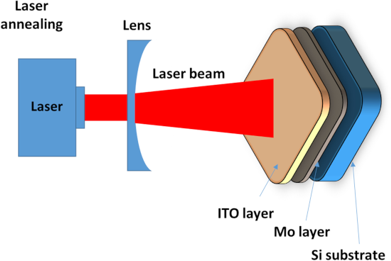
- Microelectronic and Nanotechnology Shamsuddin Research Centre (MiNT-SRC), Universiti Tun Hussein Onn Malaysia, 86400 Parit Raja, Batu Pahat, Johor, Malaysia 10.3762/bjnano.13.133 Abstract ITO/Mo bilayer thin films were sputtered on n-type silicon and glass substrates and annealed with a Nd:YAG pulsed laser. The
- AFM analysis shows that grain size and RMS roughness increased from 16.02 to 36.19 nm and 0.4 to 2.6 nm, respectively, when the laser energy was increased to 120 mJ. The as-deposited sample has an optical transmittance of nearly 80% in the 300–800 nm range. The laser annealing yielded a higher


Single-step extraction of small-diameter single-walled carbon nanotubes in the presence of riboflavin
Beilstein J. Nanotechnol. 2022, 13, 1564–1571, doi:10.3762/bjnano.13.130
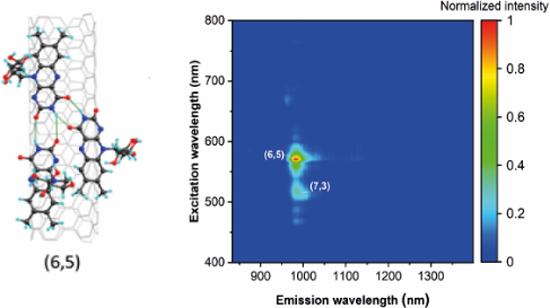
- the E22 transitions of SWCNTs. Photoluminescence measurements were performed with a Horiba Jobin Yvon NanoLog-4 spectrofluorometer with a nitrogen-cooled InGaAs detector. A Spectra-physics 3900s Ti:sapphire laser was used for excitation at 725 nm. The measurements were performed with the slit bandpass


Hydroxyapatite–bioglass nanocomposites: Structural, mechanical, and biological aspects
Beilstein J. Nanotechnol. 2022, 13, 1490–1504, doi:10.3762/bjnano.13.123
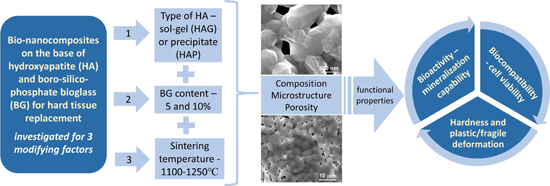
- Olga Shikimaka Mihaela Bivol Bogdan A. Sava Marius Dumitru Christu Tardei Beatrice G. Sbarcea Daria Grabco Constantin Pyrtsac Daria Topal Andrian Prisacaru Vitalie Cobzac Viorel Nacu Institute of Applied Physics, 5 Academiei str., MD-2028, Chisinau, Republic of Moldova National Institute for Laser
- , Plasma and Radiation Physics, Laser Department, 409th Atomistilor str., RO-77125, Magurele, Bucharest, Romania University Politehnica Bucharest, 313 Splaiul Independentei, Bucharest, 060042, Romania National Institute for R&D in Electrical Engineering ICPE-CA, 313 Splaiul Unirii, 031066, Bucharest
Coherent amplification of radiation from two phase-locked Josephson junction arrays
Beilstein J. Nanotechnol. 2022, 13, 1445–1457, doi:10.3762/bjnano.13.119
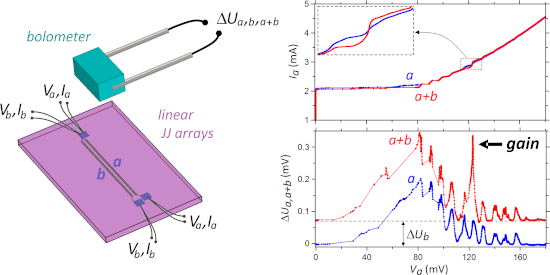
- effects become dominant for synchronization. To reach the radiation power maximum, JJs should be synchronized with the EM mode excited within the resonator. Such large JJ arrays become similar to a laser where the junctions play the role of atoms in an active medium. The advantage of large JJ arrays
- straight electrodes with niobium JJs have been directly visualized recently using low-temperature scanning laser microscopy [13]. The scans revealed that the standing waves can provide the global coupling of all junctions in the array, that is, extended parts of the array can interact with each other. This


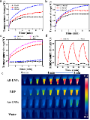
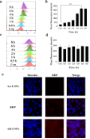
Facile preparation of Au- and BODIPY-grafted lipid nanoparticles for synergized photothermal therapy
Beilstein J. Nanotechnol. 2022, 13, 1432–1444, doi:10.3762/bjnano.13.118
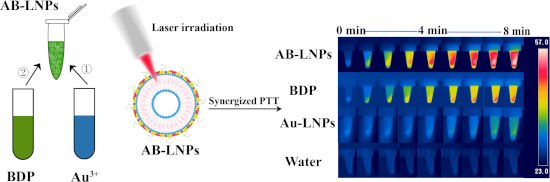
- could be associated stably to Au-LNPs, and the release of BODIPY from AB-LNPs could be accelerated by laser irradiation. AB-LNPs are scalable and showed excellent photothermal effects. AB-LNPs showed enhanced cellular uptake efficiency compared to free BODIPY in 4T1 breast cancer cells. Under laser
- release properties were evaluated in PBS with different pH values (pH 7.4 and 5.5). AB-LNPs dispersion (2 mL) in a dialysis bag was placed in 20 mL release medium. After 2 h and after 6 h, the sample was irradiated with a 680 nm laser (0.5 W/cm2, 60 s). At predetermined time points, 1 mL of solution was
- concentrations of 25, 50, and 100 μM were irradiated with laser irradiation (680 nm, 0.5 W/cm2) for different time intervals. The temperature changes of AB-LNPs with BDP concentration of 100 μM were also measured under laser irradiation with different power densities (0.25, 0.4, and 0.5 W/cm2). The temperature




Dry under water: air retaining properties of large-scale elastomer foils covered with mushroom-shaped surface microstructures
Beilstein J. Nanotechnol. 2022, 13, 1370–1379, doi:10.3762/bjnano.13.113
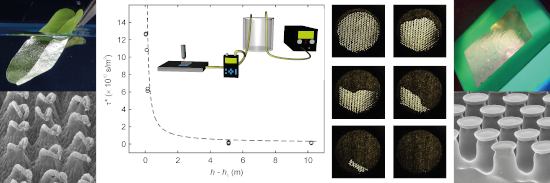
- cm2 sample was placed in a Petri dish filled with deionized water. In this first experiment, the air layer of the sample immersed at 0.5 cm depth, i.e., smaller than hmax, was visualized with a confocal laser scanning microscope (CLSM, TCS SP II, Leica Microsystems, Wetzlar) using an objective lens
- (HCX APO L 63x/0.90 W U-V-I, Leica Microsystems, Wetzlar) with 63-fold magnification directly after submergence and after two weeks. Using the total reflection of the laser light at the air–water interface this method allowed us to analyze the shape of the air–water interface at high resolution. The
- circular samples with a diameter of 1.5 mm were placed simultaneously inside the pressure chamber. Then, the chamber was flooded with deionized water. The chamber was placed under a Zeiss LSM700 confocal laser scanning microscope system (Carl Zeiss Microscopy GmbH, Jena, Germany). The air–water interface


Supramolecular assembly of pentamidine and polymeric cyclodextrin bimetallic core–shell nanoarchitectures
Beilstein J. Nanotechnol. 2022, 13, 1361–1369, doi:10.3762/bjnano.13.112
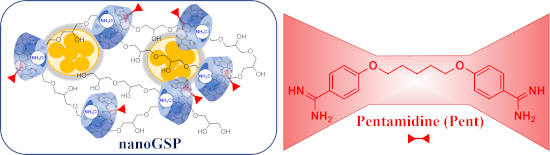
- Alexandru-Milentie Hada Nina Burduja Marco Abbate Claudio Stagno Guy Caljon Louis Maes Nicola Micale Massimiliano Cordaro Angela Scala Antonino Mazzaglia Anna Piperno Nanobiophotonics and Laser Microspectroscopy Center, Interdisciplinary Research Institute in Bio-Nano-Sciences, Babes-Bolyai
- (Nanobiophotonics and Laser Microspectroscopy Center, Cluj-Napoca, Romania) for the Raman Analysis. Funding This work was partially supported by PON03PE_00216_1 (Drug Delivery: Veicoli per un'innovazione Sostenibile). The authors thank for financial support CYCLONET ACRI (Associazione Casse di Risparmio Italiane


Growing up in a rough world: scaling of frictional adhesion and morphology of the Tokay gecko (Gekko gecko)
Beilstein J. Nanotechnol. 2022, 13, 1292–1302, doi:10.3762/bjnano.13.107
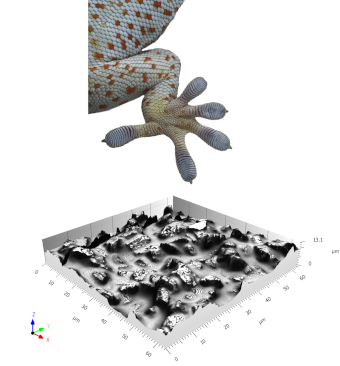
- each surface was visualized using a confocal laser scanning microscope (CLSM; LEXT OLS4000, Olympus Corporation, Japan), as in [32]. Mountains Map Premium version 7.4 (Digital Surf SARL, Besançon, France) was used to analyze the images obtained from the CLSM (Figure 1). Three-dimensional surface area
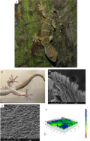
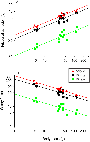
- 2000 grit sandpaper surface (D), and a 3D image of the 2000 grit sandpaper surface using confocal laser scanning microscopy (E). The relationship between morphological characters and SVL of 15 individuals. The relationship between toepad area (digit IV) and SVL (y = 2.03x − 6.46, r2 = 0.95) (A). The


Enhanced electronic transport properties of Te roll-like nanostructures
Beilstein J. Nanotechnol. 2022, 13, 1284–1291, doi:10.3762/bjnano.13.106
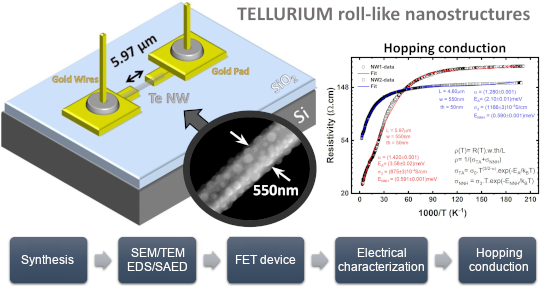
- -nanostructure back-gate FETs, as well as the electrical resistivity of the nanostructures as a function of temperature from 5 to 400 K. The transport measurements were carried out in a low-noise custom-made system for electrical characterization of FET devices [16][17][18]. FET devices were built by laser




Laser-processed antiadhesive bionic combs for handling nanofibers inspired by nanostructures on the legs of cribellate spiders
Beilstein J. Nanotechnol. 2022, 13, 1268–1283, doi:10.3762/bjnano.13.105
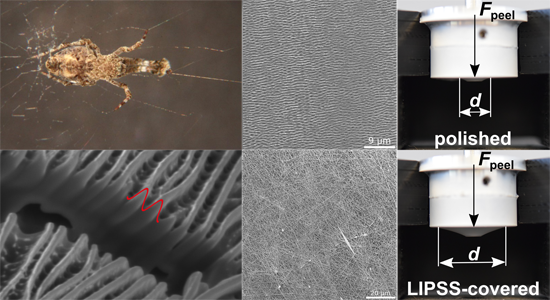
- sticking of an artificially nonwoven of nanofibers. According to the theoretical prediction, a technical analogon of the nanoripples was produced by ultrashort pulse laser processing on different technically relevant metal surfaces in the form of so-called laser-induced periodic surface structures (LIPSS
- randomly rough surfaces. The latter revealed that the adhesion of electrospun nanofiber nonwoven is significantly lowered on the nanostructured surfaces compared with the polished surfaces. Keywords: biomimetics; electrospinning; laser-induced periodic surface structures (LIPSS); nanofibers
- surface structure, in contrast to earlier published works where solids with plane surfaces were assumed [24][25][26][27][28]. This is an important difference, which has to be considered when modelling the interaction of nanofibers with, in this case, a sinusoidal surface. Laser-induced periodic surface