Search results
Search for "manipulation" in Full Text gives 230 result(s) in Beilstein Journal of Nanotechnology. Showing first 200.
Analysis of self-heating of thermally assisted spin-transfer torque magnetic random access memory
Beilstein J. Nanotechnol. 2016, 7, 1676–1683, doi:10.3762/bjnano.7.160
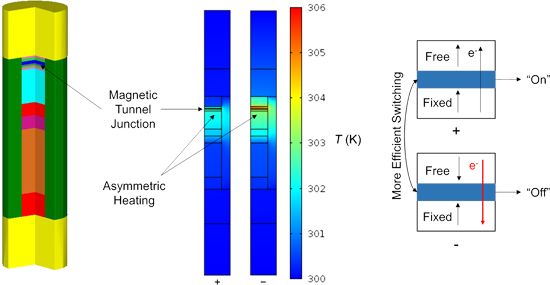
- temperatures of 360 K to 523 K, through manipulation of the material stack [3]. However, changing the material stack compromises the desired anisotropy levels and external heat sources impact device density. Thus, these methods for thermal assistance can be considered limited in their potential. In this work





Scanning probe microscopy studies on the adsorption of selected molecular dyes on titania
Beilstein J. Nanotechnol. 2016, 7, 1642–1653, doi:10.3762/bjnano.7.156
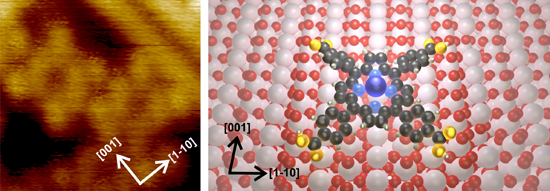
- authors related the non-planar conformation to the ability to stabilizing different geometries with rotatable side groups, i.e., ethyl and methyl side groups [59]. Low temperature measurements are suitable for experiments with controlled tip manipulation. Indeed, Lackinger, Janson and Ho [59] were able to
- move ZnEP molecules in both conformations with the STM tip in order to change their distance from neighbouring oxygen vacancies. These manipulation events were accompanied with scanning tunnelling spectroscopy measurements revealing the significant influence of oxygen vacancies on the position of the


Dynamic of cold-atom tips in anharmonic potentials
Beilstein J. Nanotechnol. 2016, 7, 1543–1555, doi:10.3762/bjnano.7.148
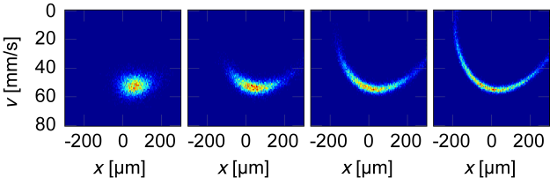
- as that used for the first cold-atom scanning probe microscope [29][52]. It uses standard cooling and trapping techniques to generate cold-atom tips of 87Rb atoms in an ultrahigh vacuum environment [53]. The trapping and manipulation of the cold-atom tip is achieved via a magnetic microchip, holding




Localized surface plasmons in structures with linear Au nanoantennas on a SiO2/Si surface
Beilstein J. Nanotechnol. 2016, 7, 1519–1526, doi:10.3762/bjnano.7.145
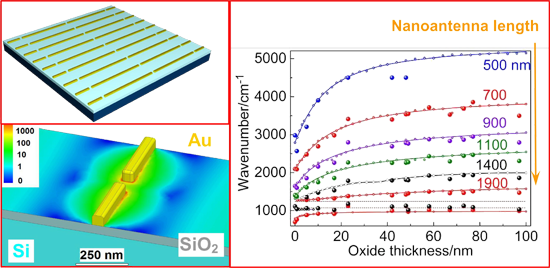
- ; plasmon–phonon interaction; phonons; SiO2; Introduction Plasmonic metamaterials remain the object of keen interest both in fundamental and applied research due to their unique optical properties including negative and zero refraction, focusing, filtering, polarization manipulation, etc. [1][2][3][4


Electric field induced structural colour tuning of a silver/titanium dioxide nanoparticle one-dimensional photonic crystal
Beilstein J. Nanotechnol. 2016, 7, 1404–1410, doi:10.3762/bjnano.7.131
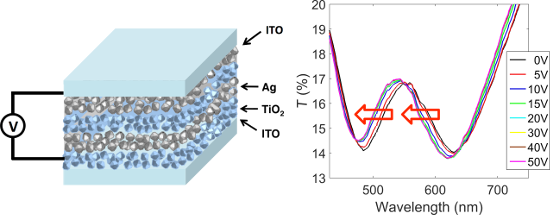
- di Fotonica e Nanotecnologie CNR, Piazza Leonardo da Vinci 32, 20133 Milano 10.3762/bjnano.7.131 Abstract An electric field is employed for the active tuning of the structural colour in photonic crystals, which acts as an effective external stimulus with an impact on light transmission manipulation




Viability and proliferation of endothelial cells upon exposure to GaN nanoparticles
Beilstein J. Nanotechnol. 2016, 7, 1330–1337, doi:10.3762/bjnano.7.124
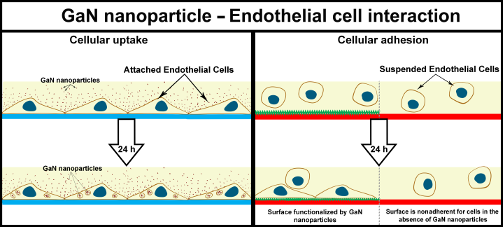
- vasculature building to supply the cells with nutrients. The manipulation of angiogenesis might also result in inhibition of blood vessel development. The ability to stimulate or inhibit the formation of blood vessels is of paramount importance for the development of new organs and it is a challenge for


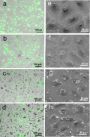
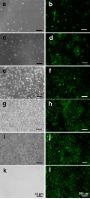

Advanced atomic force microscopy techniques III
Beilstein J. Nanotechnol. 2016, 7, 1052–1054, doi:10.3762/bjnano.7.98

- . Combined AFM and STM measurements reveal related force and electronic properties [9], energy dissipation in manipulation processes can be examined via the excitation voltage needed to keep a constant amplitude of the probe oscillation [10][11], pulling forces of atomic or molecular wires can be determined
Dielectrophoresis of gold nanoparticles conjugated to DNA origami structures
Beilstein J. Nanotechnol. 2016, 7, 948–956, doi:10.3762/bjnano.7.87
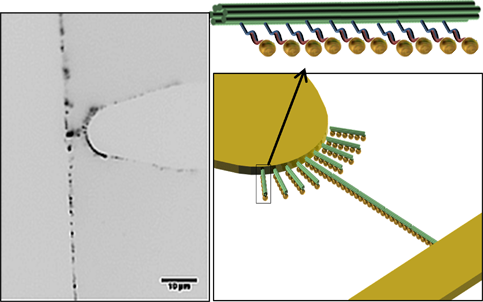
- conventional top-down fabrication methods in nanotechnology. Their positioning onto specific locations of a microstructured substrate is an important task towards this aim. Here we study manipulation and positioning of pristine and of gold nanoparticle-conjugated tubular DNA origami structures using ac
- direction of the dielectrophoretic force depends on the properties of the applied ac electrical field, e.g., frequency and amplitude, and physical parameters of the object and its surrounding media, e.g., conductivity and polarizability. DEP has been investigated for the spatial manipulation of various
- edges. The second reason for the observed self-alignment is expected to be related to the fact that an origami-supported gold nanoparticle acts as floating electrode. The use of floating electrodes for the local enhancement and manipulation of DEP has been intensively studied [40][41][42][43]. Without


The role of morphology and coupling of gold nanoparticles in optical breakdown during picosecond pulse exposures
Beilstein J. Nanotechnol. 2016, 7, 869–880, doi:10.3762/bjnano.7.79
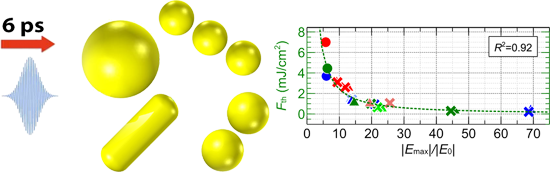
- -field enhancement than on the mass or absorption cross-section of the nanostructure. These findings can be used to advance the nanoparticle-based nanoscale manipulation of matter. Keywords: electron plasma; finite element method; optical breakdown; plasmon coupling; plasmonic nanoparticles




Determination of Young’s modulus of Sb2S3 nanowires by in situ resonance and bending methods
Beilstein J. Nanotechnol. 2016, 7, 278–283, doi:10.3762/bjnano.7.25
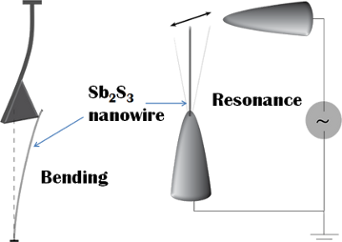
- displacement of the AFM tip, ∆x, and the angle of rotation, θb, at the loading point of the NW were measured, which allowed for the calculation of the NW bending force, F. The schematics of the bending experiment and a typical SEM image recorded during the manipulation are shown in Figure 4a and Figure 4b–c


Synthesis and applications of carbon nanomaterials for energy generation and storage
Beilstein J. Nanotechnol. 2016, 7, 149–196, doi:10.3762/bjnano.7.17
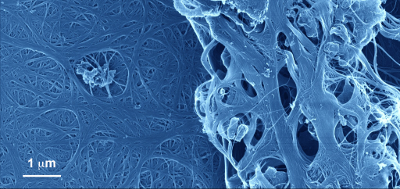
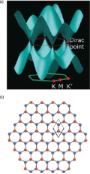
- their unique hybridization properties and sensitivity to perturbation during synthesis, allowing for fine manipulation of the material properties. In particular, carbon can be found in several different hybridization states, each having unique properties (Figure 3). In fact, the chemical, mechanical
















Linear and nonlinear optical properties of hybrid metallic–dielectric plasmonic nanoantennas
Beilstein J. Nanotechnol. 2016, 7, 111–120, doi:10.3762/bjnano.7.13
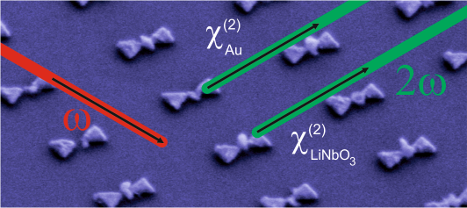
- optical properties of the plasmonic resonances. In fact, a number of experiments might actually be dominated entirely by the change in the linear optical properties rather than by the intended manipulation of, e.g., the symmetry of the system. The dream, however, would be to go beyond this restriction and


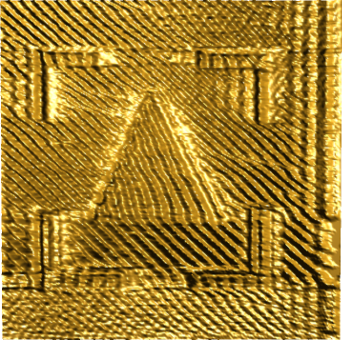
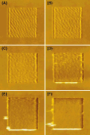
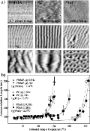
Nanoscale rippling on polymer surfaces induced by AFM manipulation
Beilstein J. Nanotechnol. 2015, 6, 2278–2289, doi:10.3762/bjnano.6.234




Electroviscous effect on fluid drag in a microchannel with large zeta potential
Beilstein J. Nanotechnol. 2015, 6, 2207–2216, doi:10.3762/bjnano.6.226
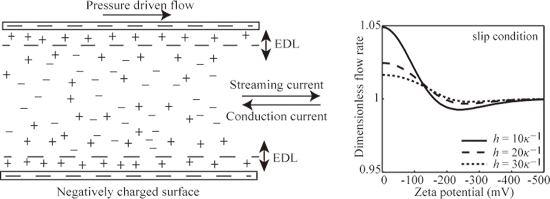
- ]. Understanding the fundamental mechanisms of the micro/nano fluid flow has inspired wide scientific interest in order to accomplish the manipulation and transportation of micro/nano fluid flow in these micro/nano fluidic devices. Theoretical and experimental studies show that some interfacial properties, such as


Virtual reality visual feedback for hand-controlled scanning probe microscopy manipulation of single molecules
Beilstein J. Nanotechnol. 2015, 6, 2148–2153, doi:10.3762/bjnano.6.220
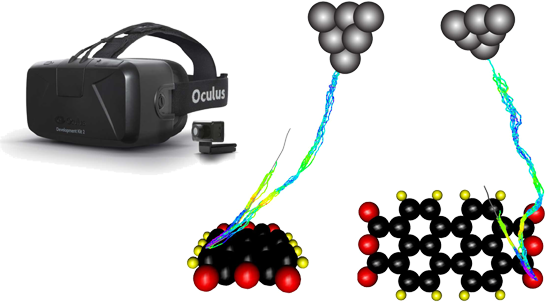
- .6.220 Abstract Controlled manipulation of single molecules is an important step towards the fabrication of single molecule devices and nanoscale molecular machines. Currently, scanning probe microscopy (SPM) is the only technique that facilitates direct imaging and manipulations of nanometer-sized
- molecular compounds on surfaces. The technique of hand-controlled manipulation (HCM) introduced recently in Beilstein J. Nanotechnol. 2014, 5, 1926–1932 simplifies the identification of successful manipulation protocols in situations when the interaction pattern of the manipulated molecule with its
- position of the SPM tip during manipulation in real time, while simultaneously plotting the experimentally measured frequency shift (Δf) of the non-contact atomic force microscope (NC-AFM) tuning fork sensor as well as the magnitude of the electric current (I) flowing between the tip and the surface. The


Controlled switching of single-molecule junctions by mechanical motion of a phenyl ring
Beilstein J. Nanotechnol. 2015, 6, 2088–2095, doi:10.3762/bjnano.6.213
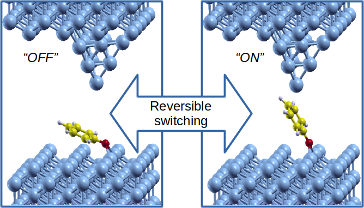
- . The switch can be actuated by dual triggers, either by a voltage pulse or by displacement of the electrode, and electronic manipulation of the ring by chemical substitution enables rational control of the on-state conductance. Owing to its simple mechanics, structural robustness, and chemical
- anchored to the surface via an oxygen atom. The reversible switching of the junction allowed us to explore the effect of molecular interaction on the molecular conductance. Here we extend this study and show that switching can be controlled by voltage pulses as well as by mechanical manipulation of the tip
- . Furthermore, the electronic levels are tunable through chemical manipulation of the phenyl ring, which in turn allows us to tailor the on-state conductance. Methods As described in the previous study [12], the experiments were carried out in an ultrahigh vacuum chamber equipped with an STM operating at 4.5 K


A simple method for the determination of qPlus sensor spring constants
Beilstein J. Nanotechnol. 2015, 6, 1733–1742, doi:10.3762/bjnano.6.177
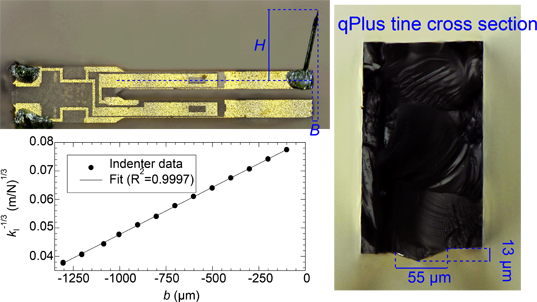
- ]. However, a direct comparison between theory and experiment requires that an absolute, quantitative framework for the measurement is established, as illustrated by a recent work in single dimer manipulation [5]. In recent years, quartz tuning fork sensors have emerged as an attractive alternative to




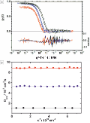
![[Graphic 9]](/bjnano/content/inline/2190-4286-6-177-i28.png?max-width=637&scale=1.18182) vs b is plotted where kI is the spring constan...
vs b is plotted where kI is the spring constan...
Atomic scale interface design and characterisation
Beilstein J. Nanotechnol. 2015, 6, 1708–1711, doi:10.3762/bjnano.6.174
- density-functional theory (DFT) approaches. In addition, using DFT-based molecular dynamics, the manipulation of nanostructures by SPM tools and the changes made to the system by the characterization tools, e.g., the production of defects under electron irradiation and their evolution over time, can be
- metal-nanostructures contacts, development of new tools for characterization and manipulation nanostructures, atomic-scale quantum chemical modelling, and integration in potential devices. All of these are reflected in the 26 reviews presented here. They appropriately demonstrate the richness and
Transformations of PTCDA structures on rutile TiO2 induced by thermal annealing and intermolecular forces
Beilstein J. Nanotechnol. 2015, 6, 1498–1507, doi:10.3762/bjnano.6.155
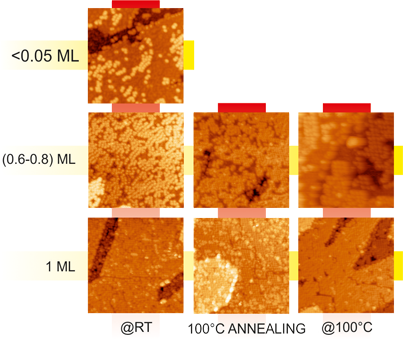
- supported by the high stability of the system against scanning with different bias voltage and tunnelling current parameters, which do not trigger any type of tip-induced manipulation process. Despite the position, i.e., on a step-edge or on a terrace, all molecules are oriented in the same way, i.e., along


Molecular materials – towards quantum properties
Beilstein J. Nanotechnol. 2015, 6, 1485–1486, doi:10.3762/bjnano.6.153
- trade-off between decoupling of the quantum object for low decoherence and connecting it for the electrical read-out could be achieved [2]. Quantum computing, the manipulation of data encoded in qubits instead of bits of information such as spin states of electrons or of an atomic nucleus, has been a
Graphene quantum interference photodetector
Beilstein J. Nanotechnol. 2015, 6, 726–735, doi:10.3762/bjnano.6.74
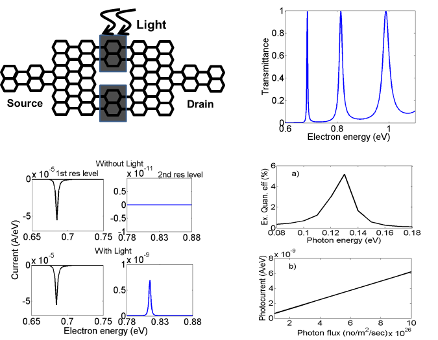
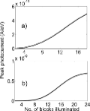
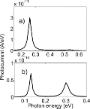
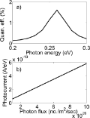
- states is reached. The electron–photon interaction has the form Helec−photon = (e/m0)A·P, where A is the vector potential and P is the momentum operator. If the vector potential, A, is expressed in the second quantized form, the electron–photon interaction in the position basis (after some manipulation




Manipulation of magnetic vortex parameters in disk-on-disk nanostructures with various geometry
Beilstein J. Nanotechnol. 2015, 6, 697–703, doi:10.3762/bjnano.6.70
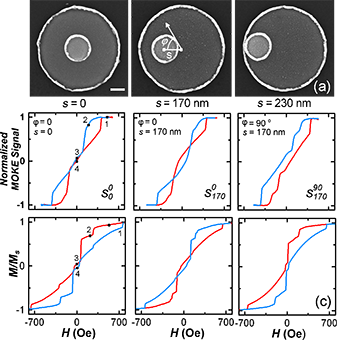
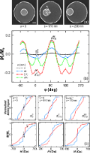
- applied during measurements. It is found that manipulation of the magnetic vortex chirality and the trajectory of the vortex core in the big disk is only possible in asymmetric nanostructures. Experimentally studied peculiarities of a motion path of the vortex core and vortex parameters by the magneto
- logic elements. However, micromagnetic stability decreases with the reduction of the size of a nanomagnet resulting in a lack of controllability the spin configurations [1]. Therefore, the development of reliable methods for the manipulation of micromagnetic structures in nanomagnets is an important
- applications due to the high value of an applied field (usually, larger than 1 kOe [3]). The in-plane component of the vortex state is characterized by the clockwise (CW) or counterclockwise (CCW) magnetization rotation or chirality. The majority of methods of chirality manipulation are based on an application


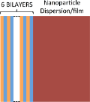
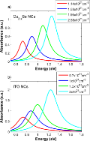
Tunable light filtering by a Bragg mirror/heavily doped semiconducting nanocrystal composite
Beilstein J. Nanotechnol. 2015, 6, 193–200, doi:10.3762/bjnano.6.18
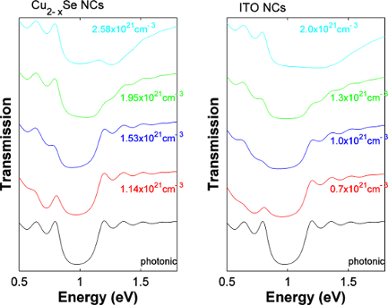
- of doped semiconductor nanostructures is the option to chemically and electrochemically modify their plasmon resonance frequencies by changing the material’s carrier density. For copper chalcogenide NCs, chemical manipulation has been demonstrated in response to oxidizing and reducing treatments [27


Inorganic Janus particles for biomedical applications
Beilstein J. Nanotechnol. 2014, 5, 2346–2362, doi:10.3762/bjnano.5.244
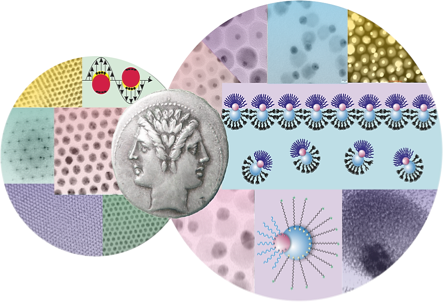
- potential applications as catalysts, in drug delivery, biomedical imaging, high-throughput immunoassays, for biological probing, and remote manipulation of devices. In addition, Janus particles may find use as surfactants, water-repellent coatings, or building blocks for supramolecular structures. We put






Hybrid spin-crossover nanostructures
Beilstein J. Nanotechnol. 2014, 5, 2230–2239, doi:10.3762/bjnano.5.232
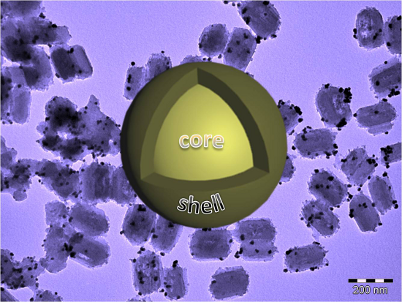
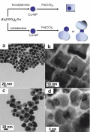
- [FeIICrIII(CN)6]@CsI[NiIICrIII(CN)6] systems [26]. These core–multishell coordination nanoparticles were fabricated using a straightforward, surfactant-free manipulation with precise size control of the sample by controlling the addition rate and the concentration of the components. It is worth noting that