


Search results
Search for "metal oxides" in Full Text gives 228 result(s) in Beilstein Journal of Nanotechnology. Showing first 200.
Phosphorus-doped silicon nanorod anodes for high power lithium-ion batteries
Beilstein J. Nanotechnol. 2017, 8, 222–228, doi:10.3762/bjnano.8.24
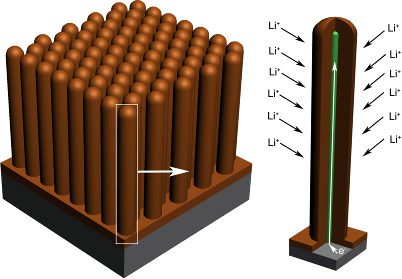
- battery performance [7][11]. In such a stratagem, nanostructured current collectors are generally prepared by carbonization of organics, electrochemical deposition with templates, and reduction of metal oxides, all of which are complicated and costly [7][11][12][13]. On the other hand, as a semiconductor


Sensitive detection of hydrocarbon gases using electrochemically Pd-modified ZnO chemiresistors
Beilstein J. Nanotechnol. 2017, 8, 82–90, doi:10.3762/bjnano.8.9
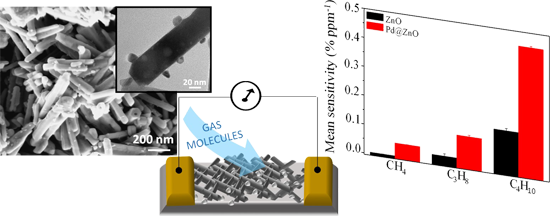
- comparably good gas-sensing performance [21][22]. However, due to their high affinity toward HCs and low thermal stability, they are sometimes unstable and exhibit poor sensitivity [23][24]. In this context, metal oxides (MOx) have been proposed as promising active sensing layers because of their


Diffusion of dilute gas in arrays of randomly distributed, vertically aligned, high-aspect-ratio cylinders
Beilstein J. Nanotechnol. 2017, 8, 64–73, doi:10.3762/bjnano.8.7
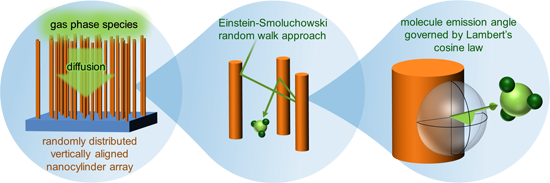
- ] are undoubtedly the most popular high-aspect-ratio cylinder array systems. Moreover, there has been growing interest in nanocylinder systems composed of metals [4], and metal oxides [5][6] have become increasingly researched for their use as large-surface one-dimensional materials in a wide range of


From iron coordination compounds to metal oxide nanoparticles
Beilstein J. Nanotechnol. 2016, 7, 2074–2087, doi:10.3762/bjnano.7.198
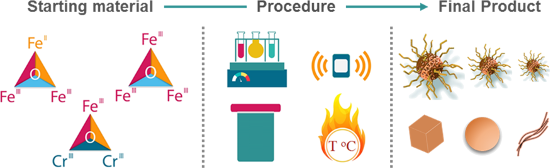
- presence of long chain stabilizing agents on the surface of the nanoparticles. The bands at 382–619 cm−1 are characteristic of the metal oxides [26]. A particular case is sample NPT3, containing iron/chromium mixed oxides, which are present in the IR spectrum. This is in addition to the bands


In situ formation of reduced graphene oxide structures in ceria by combined sol–gel and solvothermal processing
Beilstein J. Nanotechnol. 2016, 7, 1815–1821, doi:10.3762/bjnano.7.174
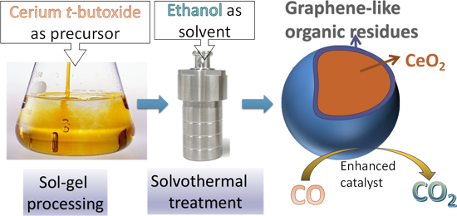
- capacity. It is mostly used together with other components, such as noble metals or transition metal oxides, such as NiO or Co3O4, because synergistic effects improve the catalytic properties. Graphene-modified CeO2 greatly enhances the performance in electrochemical devices (supercapacitors, fuel cells or





Nanostructured TiO2-based gas sensors with enhanced sensitivity to reducing gases
Beilstein J. Nanotechnol. 2016, 7, 1718–1726, doi:10.3762/bjnano.7.164
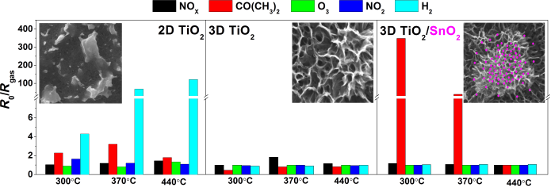
- material for application as an acetone sensor. Keywords: acetone; flower-like 3D nanostructures; gas sensors; selectivity; titanium dioxide; Introduction The market for resistive-type gas sensors is dominated by materials developed on the base of thin or thick layers composed of polycrystalline metal
- oxides. However, there is a new approach to sensor technology focusing on nanomaterials and nanostructures. It is expected that they will provide better parameters than those based on conventional materials. The nanostructures of different forms, i.e., nanowires, nanotubes, nanoflowers, have been shown


Enhanced detection of nitrogen dioxide via combined heating and pulsed UV operation of indium oxide nano-octahedra
Beilstein J. Nanotechnol. 2016, 7, 1507–1518, doi:10.3762/bjnano.7.144
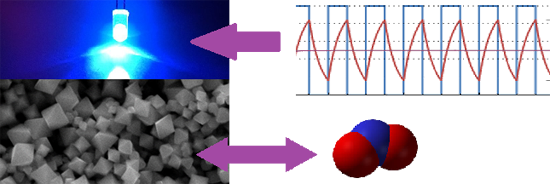
- air [9][10][11][12]. However, the facts that metal oxides are known for their lack of selectivity and this, combined with their normally high operating temperatures, have prevented their integration as gas sensitive material in the tags of RFID sensing systems. However, there have been reports of gas
- sensors using ultraviolet (UV) activated metal oxides [13][14][15][16]. These works employ UV light as an energy efficient alternative to heating for activating chemical reactions occurring at the surface of metal oxides during gas detection. This approach could significantly cut power consumption in
- metal oxides and, therefore, help re-considering the suitability of these materials for integrating wireless sensors. Integrating gas sensors with UV LEDs would certainly increase the cost of production (LED and packaging). However, these extra costs could be kept at a fraction of those incurred when


Ammonia gas sensors based on In2O3/PANI hetero-nanofibers operating at room temperature
Beilstein J. Nanotechnol. 2016, 7, 1312–1321, doi:10.3762/bjnano.7.122
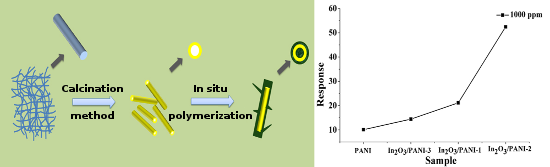
- [15], acetone [16] and formaldehyde [17]. However, for most metal oxides, there is the drawback of a required high operation temperature, about 300 °C, which will increase the energy consumption [18]. Compared with metal oxides, sensors based on conducting polymers show low power consumption and can


Improved lithium-ion battery anode capacity with a network of easily fabricated spindle-like carbon nanofibers
Beilstein J. Nanotechnol. 2016, 7, 1289–1295, doi:10.3762/bjnano.7.120
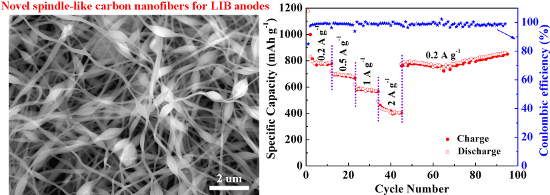
- , transition metal oxides are the focus of intensive efforts for LIB anode materials due to their remarkable specific capacity, low cost and environmental compatibility [6][7][8][9][10][11]. Manganese oxide (MnO) is a particularly good choice owing to its high theoretical specific capacity of 755 mAh g−1, low


Manufacturing and investigation of physical properties of polyacrylonitrile nanofibre composites with SiO2, TiO2 and Bi2O3 nanoparticles
Beilstein J. Nanotechnol. 2016, 7, 1141–1155, doi:10.3762/bjnano.7.106

- development of materials from the group of polymer nanocomposites (PNCs), which are a combination of a polymer matrix with inorganic or hybrid nanoparticles. For the currently used types of inorganic fillers, inter alia, the following are included: SiO2 [1], metal oxides (TiO2, Al2O3, Bi2O3, Zn0, CaCO3) [2][3



Photocurrent generation in carbon nanotube/cubic-phase HfO2 nanoparticle hybrid nanocomposites
Beilstein J. Nanotechnol. 2016, 7, 1075–1085, doi:10.3762/bjnano.7.101
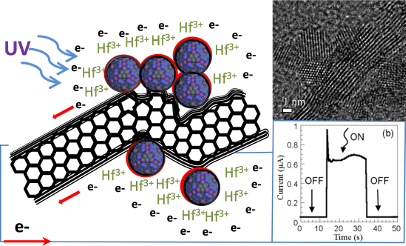
- conduction via the CNT. To date, numerous studies have been reported on the decoration of CNTs with metal oxides including TiO2 [7][8] and ZnO [9] for solar cell applications and SnO2 for gas sensors. Reports on the fabrication of an all carbon nanocomposite combining CNTs, graphene and carbon quantum dots


NO gas sensing at room temperature using single titanium oxide nanodot sensors created by atomic force microscopy nanolithography
Beilstein J. Nanotechnol. 2016, 7, 1044–1051, doi:10.3762/bjnano.7.97
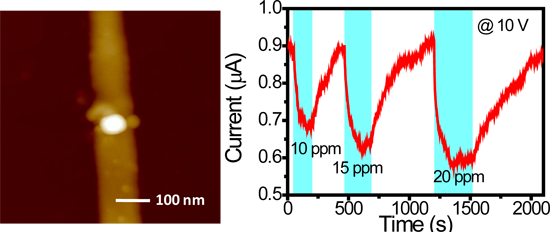
- with these reported results. Furthermore, it can be seen that the performances of metal oxides with Au are much better those of pure metal oxides, which is due to the plasmonic effect [18][20]. It is expected that the present ND sensors can be improved in a similar fashion, e.g., by creating Au


Microwave solvothermal synthesis and characterization of manganese-doped ZnO nanoparticles
Beilstein J. Nanotechnol. 2016, 7, 721–732, doi:10.3762/bjnano.7.64
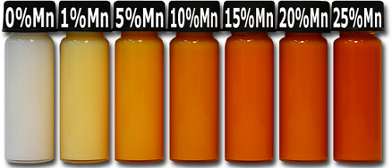
- [2]. It enables the use of nanomaterials for creating innovative products, devices and complex systems that employ the properties of materials on the nanoscale [3]. Current research of the applications of nanotechnology in optoelectronics focuses on the control of the physical properties of metal
- oxides semiconductors. Zinc oxide (ZnO) is a II–VI semiconductor characterised by a wide band gap of 3.3 eV and a high exciton binding energy of circa 60 meV [4]. ZnO is used in optoelectronic devices, solar cells, data carriers, light emitting diodes (LEDs), gas sensors, thermoelectric devices


Bacteriorhodopsin–ZnO hybrid as a potential sensing element for low-temperature detection of ethanol vapour
Beilstein J. Nanotechnol. 2016, 7, 501–510, doi:10.3762/bjnano.7.44
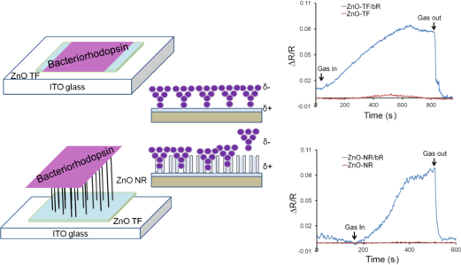
- biological activity after immobilization on solid supports and exhibits charge transport in thin films [8][14][15]. These properties have attracted researchers for the development of novel bio-hybrid devices [5][7][16][17][18][19]. Hybrids of bR protein with various metal/metal oxides (e.g., Au, Ag, TiO2


Hydration of magnesia cubes: a helium ion microscopy study
Beilstein J. Nanotechnol. 2016, 7, 302–309, doi:10.3762/bjnano.7.28
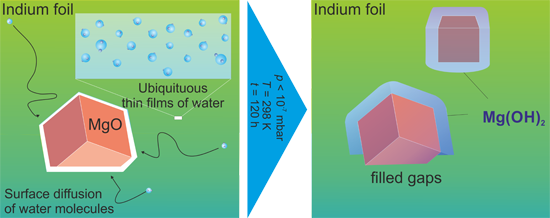
- conditions. For example, for transient electronics it has become a major challenge to understand and control the factors of materials transformation in aqueous systems [1][2]. Under ambient conditions, nanostructured and highly dispersed metal oxides are instantaneously coated with thin water films. These
- study the flood gun was not needed because a metallic substrate was used. Additionally, metal oxides can also be damaged by an electron beam [17]. Indeed, imaging metastable oxide and hydroxide nano- and mesostructures with SEM is difficult due to the effect the electron beam may have on the sample. For


Synthesis and applications of carbon nanomaterials for energy generation and storage
Beilstein J. Nanotechnol. 2016, 7, 149–196, doi:10.3762/bjnano.7.17
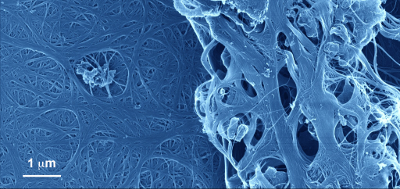


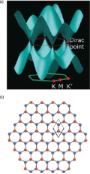


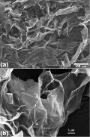







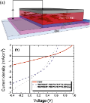






Sonochemical co-deposition of antibacterial nanoparticles and dyes on textiles
Beilstein J. Nanotechnol. 2016, 7, 1–8, doi:10.3762/bjnano.7.1
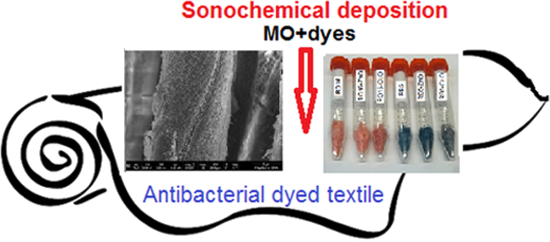
- nanoparticles on the fabric surface. It was shown that the antibacterial behavior of the metal oxides was not influenced by the presence of the dyes. Higher K/S values were achieved by sonochemical deposition of the dyes in comparison to a dip-coating (exhaustion) process. The stability of the antibacterial
- the dye structure. The crystalline structure of the metal oxides was examined by XRD (Bruker D8). Leaching experiments Possible leaching of the MO and dyes from the coated textile was tested in saline solution (0.9 % NaCl). A piece of fabric (70 mg) was placed in 10 mL saline and kept at 40 °C for 72
- after 65 washing cycles at 75 °C [9]. Herein, for the first time we report on the co-deposition of two functional materials. The morphologies of the dye alone and co-deposited dye and metal oxides were studied by HRSEM and are shown in Figure 4. The morphology of RB5 sonochemically deposited on cotton




Correction: A single-source precursor route to anisotropic halogen-doped zinc oxide particles as a promising candidate for new transparent conducting oxide materials
Beilstein J. Nanotechnol. 2015, 6, 2330–2331, doi:10.3762/bjnano.6.239

- (Barcelona), Spain Department of Physics, University of Konstanz, 78457 Konstanz, Germany Catalan Institute of Research and Advanced Studies (ICREA), Barcelona 08010, Spain 10.3762/bjnano.6.239 Keywords: chemical doping; metal oxides; semiconductor nanoparticles; single-source precursors; In the original

Green synthesis, characterization and catalytic activity of natural bentonite-supported copper nanoparticles for the solvent-free synthesis of 1-substituted 1H-1,2,3,4-tetrazoles and reduction of 4-nitrophenol
Beilstein J. Nanotechnol. 2015, 6, 2300–2309, doi:10.3762/bjnano.6.236
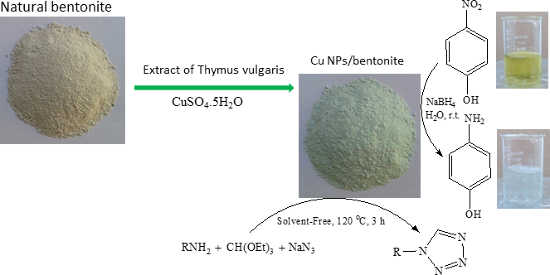
- The development of new methodologies for the preparation of heterogeneous catalysts is of great interest in organic synthesis [1]. Metal nanoparticles immobilized on supports such as carbon, zeolites, clay, metal oxides, graphene, etc., have been successfully applied as heterogeneous catalysts due to


A single-source precursor route to anisotropic halogen-doped zinc oxide particles as a promising candidate for new transparent conducting oxide materials
Beilstein J. Nanotechnol. 2015, 6, 2161–2172, doi:10.3762/bjnano.6.222
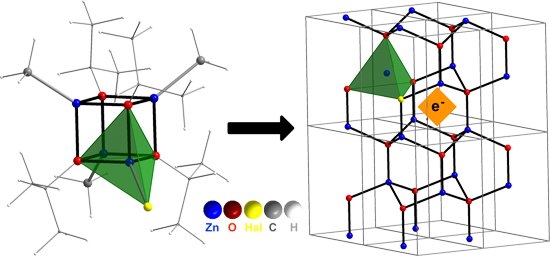
- steadily increasing price, it is highly desired to identify materials alternatives containing highly abundant chemical elements. The doping of other metal oxides (e.g., zinc oxide, ZnO) is a promising approach, but two problems can be identified. Phase separation might occur at the required high
- and THz spectroscopies. Keywords: chemical doping; metal oxides; semiconductor nanoparticles; single-source precursors; Introduction There is an ever increasing demand for electrode materials exhibiting optical transparency in the visible region of the electromagnetic spectrum, because they are
- routes in the liquid phase are commonly applied [35][36][37]. Whereas, bottom-up techniques such as the sol–gel process for metal oxides [38][39] work perfectly for the generation of an entire zoo of nanostructures, to realize at the same time intentional doping of those nanostructures is extremely



An ISA-TAB-Nano based data collection framework to support data-driven modelling of nanotoxicology
Beilstein J. Nanotechnol. 2015, 6, 1978–1999, doi:10.3762/bjnano.6.202

- nanomaterials of diverse types (e.g., dendrimers, carbon nanotubes, surface-coated metal oxides) may comprise different components (e.g., core and shell), the initial rows of the Material file are used to describe the overall nanomaterial sample with subsequent rows used to describe the individual components




Metal hydrides: an innovative and challenging conversion reaction anode for lithium-ion batteries
Beilstein J. Nanotechnol. 2015, 6, 1821–1839, doi:10.3762/bjnano.6.186
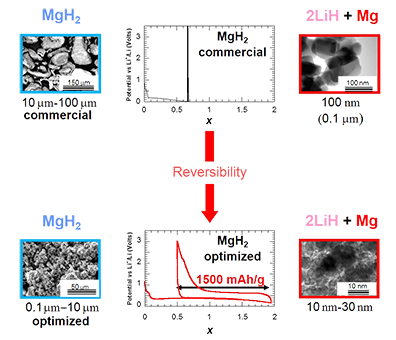
- . Previously, metal oxides, nitrides, sulfides, phosphides and fluorides were successively investigated as conversion-reaction materials for the negative electrodes of Li-ion batteries [1][2][3][4]. In 2008, metal hydrides were proposed for this purpose [5]. Compared to other conversion compounds MgH2 exhibits
- addition to the MgH2 carbon composite The improvement of the sorption kinetics of MgH2 through catalyst addition (i.e., transition metals [37][38] transition metal oxides [39][40][41] and halides [42]) has been widely studied in the literature. Nb2O5 is one of the most efficient catalysts [43] enabling










Nanotechnology in the real world: Redeveloping the nanomaterial consumer products inventory
Beilstein J. Nanotechnol. 2015, 6, 1769–1780, doi:10.3762/bjnano.6.181

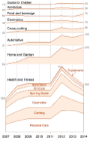
- have been grouped into five major categories in Figure 2 and Figure 4, to improve their legibility: metal, carbonaceous, silicon, not advertised, and other. Nominally, metals and metal oxides comprise the largest nanomaterial composition group advertised in the inventory, listed in 37% of products
- available for purchase by consumers, the largest group (42%) consists of metal and metal oxide nanomaterials. Metals and metal oxides were also the largest composition for surface-bound particles and those suspended in liquid products. The majority (67%) of products with nanostructured surfaces consist of
- during use are expected to cause exposure [26]. Since metals and metal oxides are the most common nanomaterial composition in the CPI, they are also the most likely materials to which consumers will be exposed during the normal use of product via dermal, ingestion, and inhalation routes. Products



The eNanoMapper database for nanomaterial safety information
Beilstein J. Nanotechnol. 2015, 6, 1609–1634, doi:10.3762/bjnano.6.165

- variety of tests and endpoints, as recommended by the OECD WPMN. NanoWiki NanoWiki was originally developed as an internal knowledge base of the toxicity of, primarily, metal oxides at the Karolinska Institutet and Maastricht University. The database is developed as a wiki using the Semantic MediaWiki
- platform, running on a virtual machine using the VirtualBox software. The wiki contains physicochemical properties and toxicological data for more than three hundred nanomaterials: more than two hundred metal oxides, 80 carbon nanotubes, and a few metal and alloy particles. All nanomaterials originate from


Transformations of PTCDA structures on rutile TiO2 induced by thermal annealing and intermolecular forces
Beilstein J. Nanotechnol. 2015, 6, 1498–1507, doi:10.3762/bjnano.6.155
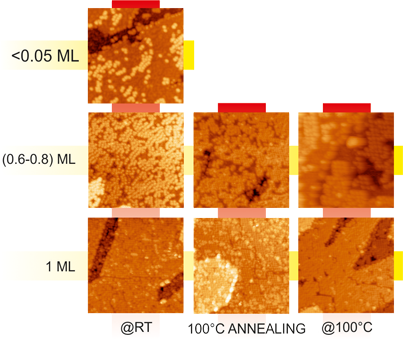
- for proposing a means of control over that spontaneous process or for suggesting further post-processing methodology in the search of desired material. Among many different substrates that are used as templates for molecular growth, metal oxides are currently regarded as very promising supports. For





