Search results
Search for "plasmon" in Full Text gives 316 result(s) in Beilstein Journal of Nanotechnology. Showing first 200.
Interaction-tailored organization of large-area colloidal assemblies
Beilstein J. Nanotechnol. 2018, 9, 1582–1593, doi:10.3762/bjnano.9.150
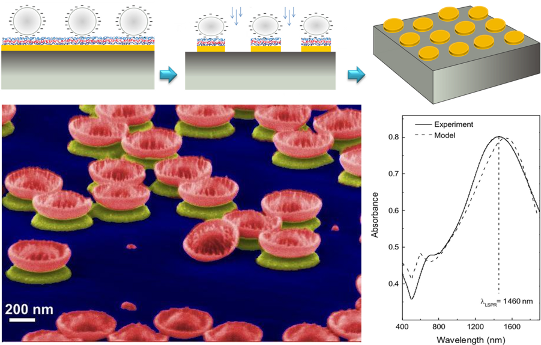
- different sizes and materials. Keywords: colloidal lithography; electrostatic interactions; large-area nanostructure patterning; localized surface plasmon resonance; spherical nanoparticles; Introduction In recent years, ordered nanostructured arrays have attracted great interest because of their
- applications in many fields such as photonics/plasmonics [1], phononics [2][3], spintronics/magnonics [4][5], biosensors and energy harvesting [6][7][8]. For example, metal nanostructured systems, stimulated by incident light of a specific wavelength, can support localized surface plasmon resonant modes. The
- -area nanostructure arrays with controlled size and shape for application in localized surface plasmon resonance (LSPR) sensing and magnonics. Experimental Materials Glass substrates (3.5 × 2.5 cm2) were obtained from Electro Optical Technologies. Polystyrene spheres with diameter of 80 ± 7 nm (sulfate


Optical near-field mapping of plasmonic nanostructures prepared by nanosphere lithography
Beilstein J. Nanotechnol. 2018, 9, 1536–1543, doi:10.3762/bjnano.9.144
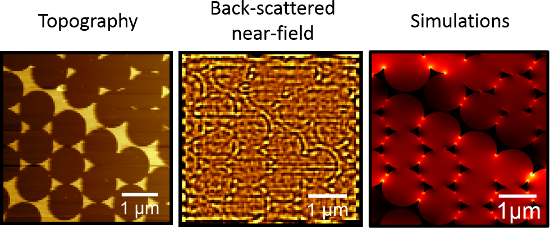
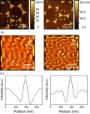
- based on plasmonics nanostructures. The highly enhanced and confined electromagnetic field created at the apex of the tip through the resonant surface plasmon excitation results in a very high spatial resolution, far below the diffraction limit. Nevertheless, aSNOM still encounters some challenges. The
- (gold or silver) nanotriangles deposited on a glass or Si substrate, are of high interest to study plasmonics, and more specifically localised surface plasmon resonance (LSPR) [23][24]. Indeed, their geometry and their metallic nature result in the spatial confinement of the electric field at their
- the area of the nanoscale triangles where the field is confined. The apexes as well as the bases of the triangles can be identified as areas where the incident electromagnetic field is confined as localized surface plasmon modes. They match the location of the original arrays of gold triangles as seen




Absence of free carriers in silicon nanocrystals grown from phosphorus- and boron-doped silicon-rich oxide and oxynitride
Beilstein J. Nanotechnol. 2018, 9, 1501–1511, doi:10.3762/bjnano.9.141
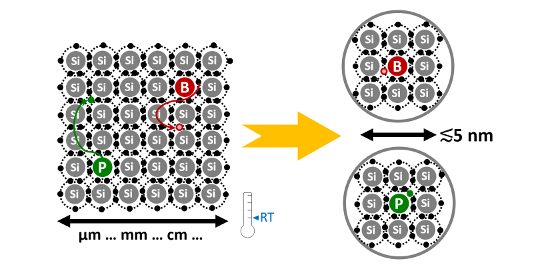
- atom %) to study the classical electronic doping of Si NCs. In contrast, dopant concentrations up to 60% (also referred to as hyperdoping) were shown to induce localized surface plasmon resonances and metal-like free carrier densities [12][13][14][15]. The standard PECVD precursor gasses for silicon


Cathodoluminescence as a probe of the optical properties of resonant apertures in a metallic film
Beilstein J. Nanotechnol. 2018, 9, 1491–1500, doi:10.3762/bjnano.9.140
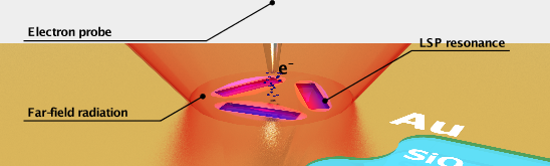
- –Pérot mode of these cavities as well as resonances associated with the excitation of surface plasmon polaritons on the air–gold boundary. We obtain evidence for the excitation of dark (also known as sub-radiant) modes of apertures and aperture ensembles. Keywords: cathodoluminescence; plasmonics
- maximum in the back-emission spectrum are consistent with only weak penetration into the cavity and the resonance being associated with a resonance of surface plasmon polaritons (SPPs) of the approximately triangular region on the surface of the film defined by the apertures. Although a mode with radially


Cr(VI) remediation from aqueous environment through modified-TiO2-mediated photocatalytic reduction
Beilstein J. Nanotechnol. 2018, 9, 1448–1470, doi:10.3762/bjnano.9.137


Colorimetric detection of Cu2+ based on the formation of peptide–copper complexes on silver nanoparticle surfaces
Beilstein J. Nanotechnol. 2018, 9, 1414–1422, doi:10.3762/bjnano.9.134
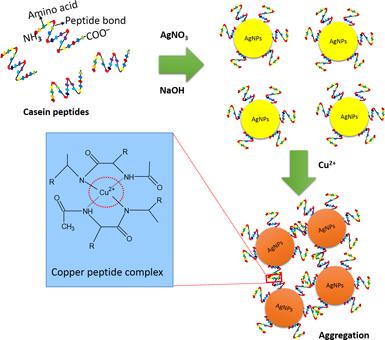
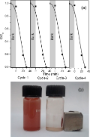
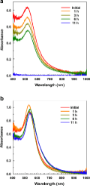
- Cu2+-binding casein peptide ligands. The solution of aggregates was incubated for 20 min to allow for the coordination to occur. Results and Discussion Synthesis and characterization of casein peptide-capped AgNPs The surface plasmon resonance (SPR) of spherical AgNPs immediately caused an absorbance
- of the casein peptide-capped AgNPs was revealed after removal of excess casein peptides from the AgNPs solution, by observing the surface plasmon resonance (λmax) and bandwidth (Δλ), before and after centrifugation of the AgNPs. Characterization of AgNPs The UV–vis spectra of the AgNPs in the


Review on nanoparticles and nanostructured materials: history, sources, toxicity and regulations
Beilstein J. Nanotechnol. 2018, 9, 1050–1074, doi:10.3762/bjnano.9.98

- Bronze Age (1200–1000 BC), red glass has been found in Frattesina di Rovigo (Italy) that is colored by surface plasmon excitation of Cu NPs [26]. Similarly, the Celtic red enamels originating from the 400–100 BC period have been reported to contain Cu NPs and cuprous oxide (cuprite Cu2O) [27


Facile chemical routes to mesoporous silver substrates for SERS analysis
Beilstein J. Nanotechnol. 2018, 9, 880–889, doi:10.3762/bjnano.9.82
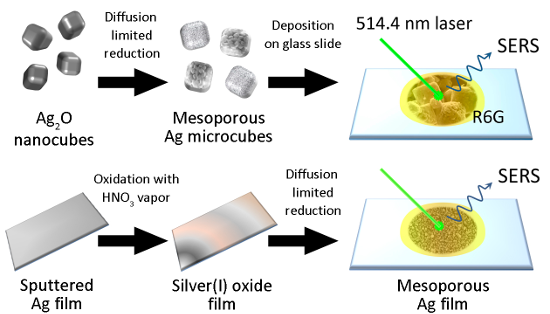
- tinted compounds in a mixture are more complex and still less efficient. Such analyses require specific SERS substrates with a high surface area, hierarchical surface structure and the presence of multiple plasmon bands (“polycolor” plasmons) in the visible range. For this, some prospective but
- visible spectral range [25]. Silver is known to exhibit more intense plasmon oscillations compared to gold. Also, most of the elaborated synthesis techniques for mesoporous gold particles include different etching reagents hazardous for biological objects [6]. Recently Lyu et al. [26] proposed an
- correspond to the metal state of silver [31]. Both characteristic energies are decreased slightly, probably, as a result of PVP adsorbates at the surface. The absence of a silver oxide phase at the surface is also beneficial for efficient surface plasmon resonance, which is strongly required for SERS. This


Noble metal-modified titania with visible-light activity for the decomposition of microorganisms
Beilstein J. Nanotechnol. 2018, 9, 829–841, doi:10.3762/bjnano.9.77
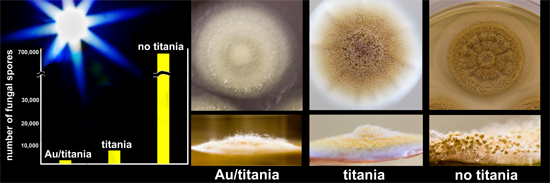
- -light irradiation suggested that the mechanism of bacteria inactivation was initiated by plasmonic excitation of titania by localized surface plasmon resonance of gold. The antifungal activity tests showed efficient suppression of mycelium growth by bare titania, and suppression of mycotoxin generation
- localized surface plasmon resonance (LSPR) at ca. 410–430 nm), they were easily oxidized under ambient conditions, and the resultant silver deposits on titania were composed of a zero valent silver core and a silver oxide shell. XRD analysis confirmed XPS data showing silver in three oxidation states (Ag(0


Surface-plasmon-enhanced ultraviolet emission of Au-decorated ZnO structures for gas sensing and photocatalytic devices
Beilstein J. Nanotechnol. 2018, 9, 771–779, doi:10.3762/bjnano.9.70
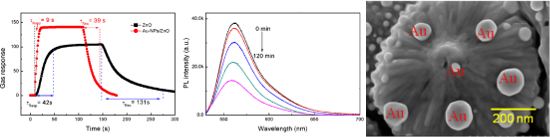
- improved response (τRes = 9 s) and recovery time (τRec = 39 s). The enhanced gas sensing performance and photocatalytic degradation processes are suggested to be attributed to not only the surface plasmon resonance effect, but also due to a Schottky barrier between plasmonic Au and ZnO structures
- response/recovery times. The various origins of these properties are commonly assigned to the following two phenomena: (i) a surface plasmon resonance (SPR) effect of plasmonic gold nanoparticles (Au NPs) could certainly take place and contribute to the electrical transport behavior for Au-decorated ZnO
- surface plasmon resonance band of Au NPs, which further confirms the formation of the hybrid Au NP/ZnO structures [24][25]. Using the Kubelka–Munk function and Tauc plots, the band gaps (Eg) were determined as 3.3 and 3.2 eV for ZnO and Au NPs/ZnO, respectively, as shown in Figure 3b. It can be seen that




Mechanistic insights into plasmonic photocatalysts in utilizing visible light
Beilstein J. Nanotechnol. 2018, 9, 628–648, doi:10.3762/bjnano.9.59
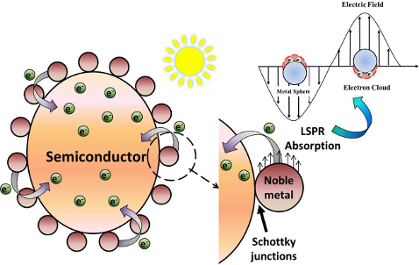
- : localized surface plasmon resonance (LSPR); noble metal; plasmonic photocatalyst; reactive radicals; Schottky junctions; visible light; Review Introduction Photocatalysts have played and will continue to play a pivotal role in environmental and energy applications in order to fulfil the needs of the
- will lead to a pathway for better utilization of the solar spectrum. The invention and progression of plasmonic photocatalysts laid a foundation for the successful utilisation of longer wavelengths, known as “visible light photocatalysis”. The localised surface plasmon resonance (LSPR) is a unique
- allow the enhanced absorption of photon energy from the visible light spectrum. Larger metallic nanoparticles (>5 nm) produce a robust surface plasmon emission in the visible spectrum [10]. The intensity of the plasmon band is highly dependent on the morphology, surrounding medium dielectric constant





Facile phase transfer of gold nanorods and nanospheres stabilized with block copolymers
Beilstein J. Nanotechnol. 2018, 9, 616–627, doi:10.3762/bjnano.9.58
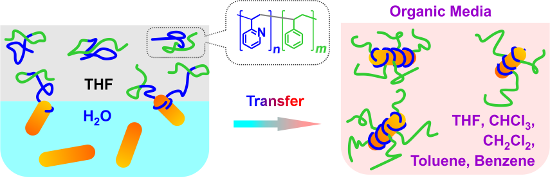
- hydro- and organosols with the data of numerical simulations of the surface plasmon resonance, we find that nanoparticles do not aggregate and confirm the transmission electron microscopy data regarding their shape and size. The proposed approach can be effective in preparing hybrid composites without
- , while PS blocks form coronas preventing nanorod aggregation. Modeling the extinction spectra of Au nanorods Two bands in the optical absorbance spectra (Figure 1b) of the Au nanorods are attributed to the transverse (TE) and longitudinal (TM) plasmon modes, respectively [40]. The position of the former
- nanorod rather than for a dimer. Thus, the simulations corroborate our estimates of the nanorod mean length and diameter by TEM and indicate that side-by-side stacking of Au nanorods and their aggregation in general are not typical for our system. It is known [45][46] that the TM and TE plasmon bands for


Colloidal solution of silver nanoparticles for label-free colorimetric sensing of ammonia in aqueous solutions
Beilstein J. Nanotechnol. 2018, 9, 499–507, doi:10.3762/bjnano.9.48
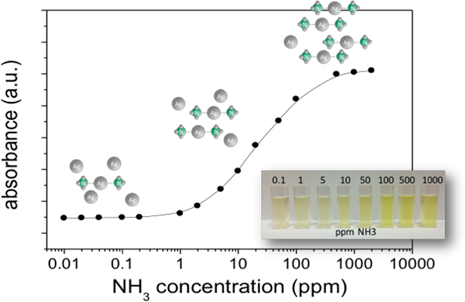
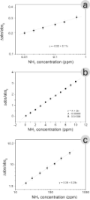
- analysis provides the basis for the production of a colorimetric label-free sensor for ammonia. Overall, surface plasmon resonance increases when ammonia concentration rises, although the functional trend is not the same over the entire investigated ammonia concentration range. Three different ranges have
- particular silver nanoparticles (AgNPs), are often considered for analytical application because of their peculiar optical and electrical properties [13]. The surface plasmon resonance (SPR) properties of metal nanoparticles are considered very useful for the use of colloidal solutions in the field of
- cations and ammonia anions are formed, the formation of Ag nanoparticles is inhibited. Recent results seem to disagree with previous reports about the role of ammonia and show an increase in the plasmon resonance intensity of silver nanoparticles synthesized in the presence of ammonia [23][24]. On the



High-contrast and reversible scattering switching via hybrid metal-dielectric metasurfaces
Beilstein J. Nanotechnol. 2018, 9, 460–467, doi:10.3762/bjnano.9.44
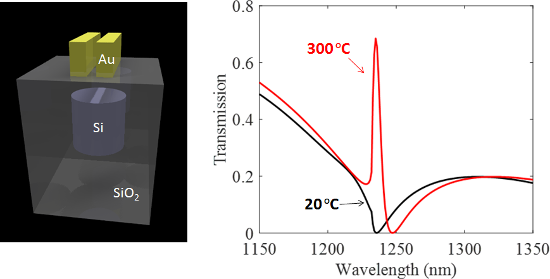
- ][12][13], which utilize the interaction between light and metallic nanoparticles to generate surface plasmon resonances, inducing a strong electromagnetic field on the metallic surface. They benefit from a large tunability and capability to significantly enhance the near-field intensity, and have


Bombyx mori silk/titania/gold hybrid materials for photocatalytic water splitting: combining renewable raw materials with clean fuels
Beilstein J. Nanotechnol. 2018, 9, 187–204, doi:10.3762/bjnano.9.21
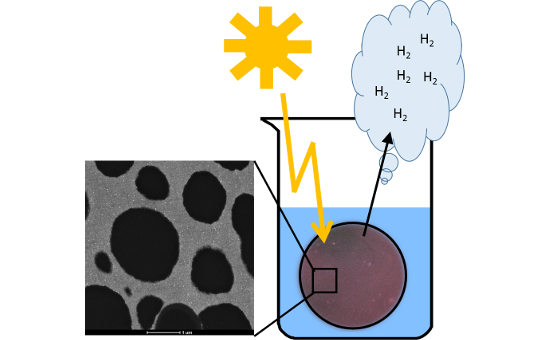
- ·3H2O could lead to smaller particles and consequently to very few reaction centers or the reduction of the Au plasmon in the materials, thereby reducing the overall effectiveness of the photocatalytic activation of the reaction. Comparison of the efficiency of the current materials with other materials




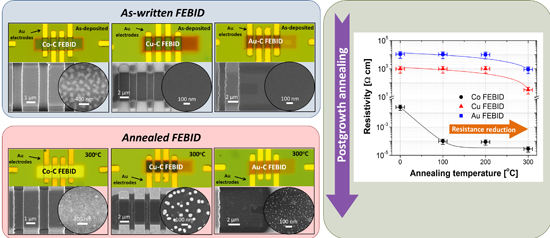
Comparative study of post-growth annealing of Cu(hfac)2, Co2(CO)8 and Me2Au(acac) metal precursors deposited by FEBID
Beilstein J. Nanotechnol. 2018, 9, 91–101, doi:10.3762/bjnano.9.11
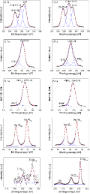
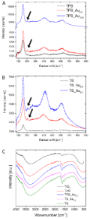
- ratios, as well as the lower G band peak shift (Figure 3c–e) indicate a minor influence of this type of metal on the graphitisation process (compared to Co and Cu) during annealing. It is worth mentioning that plasmon-assisted heating of the interface between amorphous carbon deposits and the substrate


Growth model and structure evolution of Ag layers deposited on Ge films
Beilstein J. Nanotechnol. 2018, 9, 66–76, doi:10.3762/bjnano.9.9
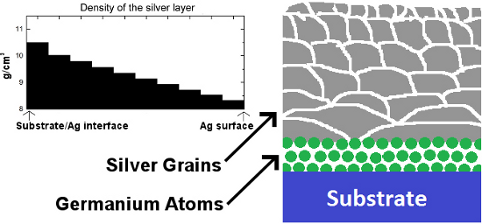
- -assembly; silver; thin films; Introduction Silver is a noble metal with lowest loss in the visible to the near-infrared wavelengths; therefore, the surface plasmon polariton (SPP) wave propagation length crucial for plasmonic devices is greatest at Ag/dielectric interfaces [1][2][3]. A pure Ag layer of 35






Nematic liquid crystal alignment on subwavelength metal gratings
Beilstein J. Nanotechnol. 2018, 9, 42–47, doi:10.3762/bjnano.9.6
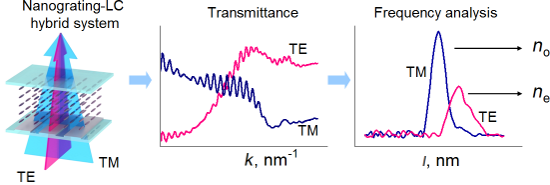
- a liquid crystal into a hybrid system is especially interesting as it can result in even more novel and interesting properties. In our recent work, we showed that liquid crystals strongly affect both the plasmon resonance and light polarization properties of subwavelength metal gratings [9
- = 1/3. For this grating both TM and TE-mode FT spectra show pronounced splitting. However, it is known [9] that for the gratings with this geometry there is a plasmon resonance for the TM mode and the transmittance resonance for the TE mode in the spectral range of 500–600 nm. Therefore, the Fabry


![[Graphic 3]](/bjnano/content/inline/2190-4286-9-6-i7.svg?max-width=637&scale=1.18182) , the sample axis (rubbing direction) ...
, the sample axis (rubbing direction) ...


Thermo- and electro-optical properties of photonic liquid crystal fibers doped with gold nanoparticles
Beilstein J. Nanotechnol. 2017, 8, 2790–2801, doi:10.3762/bjnano.8.278
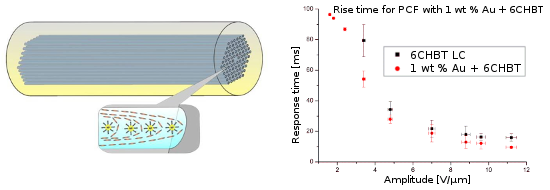
- biology [20] due to their optical properties. These properties are related to the interaction of light with electrons on the NP surface. At a specific frequency of light, the oscillation of electrons on the Au NP surface causes an effect called localized surface plasmon resonance. This phenomena can
- result in absorption or scattering of light (Figure 1b). Depending on the size, concentration or shape of the particles, the plasmon resonance can appear at different wavelengths. Moreover, NPs can also provide different properties for the host material. For example, Au NPs have a tendency to lower the
- a behavior in terms of plasmon resonance tuning, i.e., NPs absorbing at a selective wavelength can heat LC molecules, thus shifting the propagation spectrum. A similar effect can be observed in PLCFs, but the mechanism of PBG tuning was thermally induced [33]. However, we believe that the observed


Facile synthesis of silver/silver thiocyanate (Ag@AgSCN) plasmonic nanostructures with enhanced photocatalytic performance
Beilstein J. Nanotechnol. 2017, 8, 2781–2789, doi:10.3762/bjnano.8.277
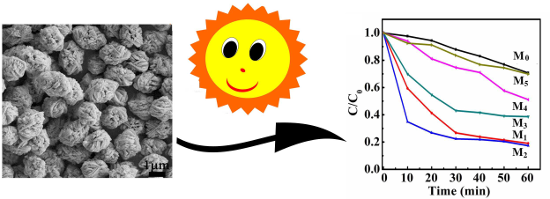
- visible-light irradiation. In addition to the microstructure and high specific surface area, the enhanced photocatalytic activity was mainly caused by the surface plasmon resonance of Ag nanoparticles, and the high stability of AgSCN resulted in the long-term stability of the photocatalyst product
- irradiated for 3 h, indicating the slow reduction of AgSCN under UV irradiation. UV–vis diffuse reflectance spectra of M0, M1, M2, M3, M4, and M5 are shown in Figure 2a. Here, the characteristic absorption of AgSCN appears at 200–350 nm and that from the surface plasmon resonance of Ag particles is above 350
- presence of silver particles not only improves the photocatalytic efficiency, but also enhances the electric field strength around AgSCN due to the surface plasmon resonance, which in turn enhances the optical transition of midgap defect states of AgSCN. All these conditions contribute to the strong


Impact of titanium dioxide nanoparticles on purification and contamination of nematic liquid crystals
Beilstein J. Nanotechnol. 2017, 8, 2766–2770, doi:10.3762/bjnano.8.275
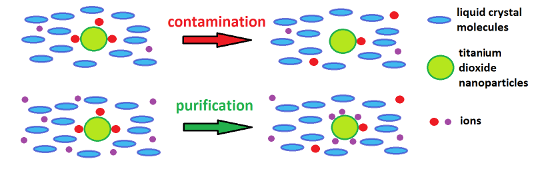
- addition, nanoparticles can induce other new functions in liquid crystals, including improved response time [14][15], surface plasmon resonance [16], and improvements in alignment [17]. The ionic contamination of LCs remains one of the challenges to LC technology. Ionic conductivity negatively affects LC
Refractive index sensing and surface-enhanced Raman spectroscopy using silver–gold layered bimetallic plasmonic crystals
Beilstein J. Nanotechnol. 2017, 8, 2492–2503, doi:10.3762/bjnano.8.249
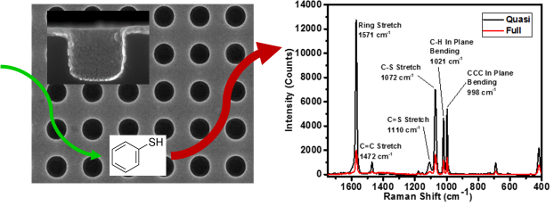
- useful new platform for chemical/spectroscopic sensing. Keywords: finite-difference time-domain; nanoimprint soft lithography; plasmonics; surface plasmon resonance; Introduction Studies of surface plasmons have attracted significant attention due to the diverse range of applications and processes in
- are excited by electromagnetic radiation incident at a metal/dielectric interface. This results in an evanescent decaying electric field that extends from the metal surface for ≈100–200 nm (surface plasmon polaritons), or it can also manifest as a localized surface plasmon resonance at the surface of
- , and nanoscale holes or voids to effect couplings and further obtain stronger electromagnetic fields and higher spatial resolution from localized surface plasmon resonance (LSPR) [18][19][20][21][22][23][24][25][26][27]. Many fabrication methods have been described that provide structures capable of


Laser-assisted fabrication of gold nanoparticle-composed structures embedded in borosilicate glass
Beilstein J. Nanotechnol. 2017, 8, 2454–2463, doi:10.3762/bjnano.8.244
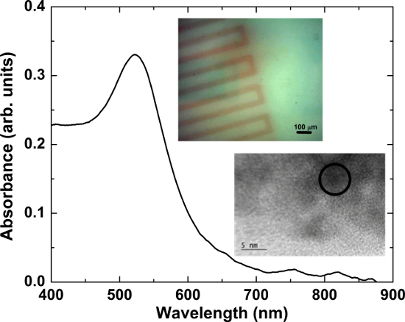
- , the color of the irradiated areas changed to pink, with a corresponding well-defined peak in the absorbance spectrum. We relate this effect to the formation of gold nanoparticles with optical properties defined by plasmon excitation. Their presence was confirmed by high-resolution TEM analysis. No
- an electromagnetic field with these objects are defined by the efficiency of the plasmon excitation (i.e., collective oscillations of the free electrons at a specific frequency defined by the properties of the metal and the surrounding medium) [1]. On resonance, when the electromagnetic field
- frequency equals that of the plasmon, the optical properties of the nanoparticles drastically change. The extinction coefficient is strongly enhanced, and its value may exceed the off-resonance extinction coefficient value by orders of magnitude [2]. While at the turn of the century research interest was


Au nanostructure fabrication by pulsed laser deposition in open air: Influence of the deposition geometry
Beilstein J. Nanotechnol. 2017, 8, 2438–2445, doi:10.3762/bjnano.8.242
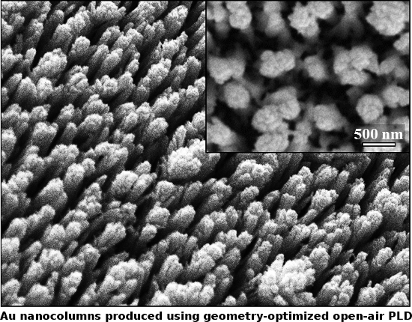
- in the transmission spectra with minimum at ≈520 nm. The presence of this feature in the transmission could be attributed to a plasmon excitation in the nanostructures. The deposition using geometry 4 resulted in an almost flat spectrum with the lowest transmission (<3%) and no clear plasmon behavior
- nanostructures considered result from the interplay of complex phenomena arising from the complex nanoparticle-ensemble morphology of the structures as no individual nanoparticles are present. The pronounced expression and definition of a plasmon resonance band is thus hindered. In such a case, the optical
- properties are defined by the collective effects (as multiple scattering and plasmon coupling) of an electromagnetic field interacting with nanoparticle ensembles. This leads to a broadening of the resonance band, where the optical properties of a single nanoparticle are not expressed. To examine the


Fabrication of gold-coated PDMS surfaces with arrayed triangular micro/nanopyramids for use as SERS substrates
Beilstein J. Nanotechnol. 2017, 8, 2271–2282, doi:10.3762/bjnano.8.227
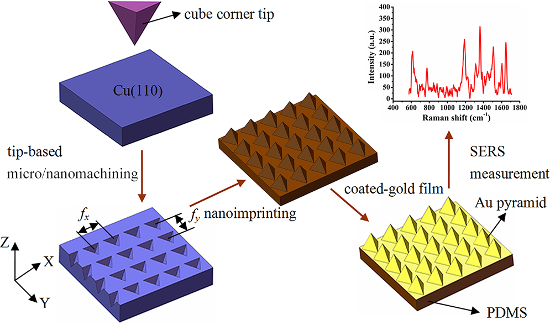
- glass. A further advantage is that laser light can pass through the polymer substrate and reach the nanoparticle layer to activate the plasmon resonance, which generates the enormous SERS enhancement. A SERS substrate with good transparency and flexibility was prepared as a self-assembly of gold