Search results
Search for "polycrystalline" in Full Text gives 259 result(s) in Beilstein Journal of Nanotechnology. Showing first 200.
Ferromagnetic behaviour of ZnO: the role of grain boundaries
Beilstein J. Nanotechnol. 2016, 7, 1936–1947, doi:10.3762/bjnano.7.185
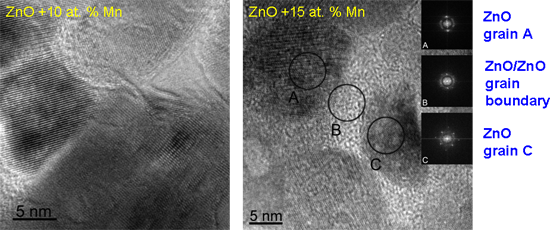
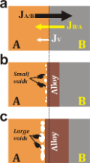
- prepared. The Zn precursor was mixed, respectively, with Mn, Co, Ni or Fe butanoates in appropriate proportions (in order to obtain doped ZnO with dopant contents from 0.1 to 50 atom %). The mixture of liquid precursors was deposited on a substrate (aluminium polycrystalline foil or sapphire single
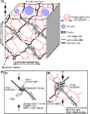
- obtained from poreless films with equiaxial grains. If the grains are elongated or flattened, the shape of the Js(c) curves is different. Most different look the Js(c) curves obtained in measurements with ZnO samples built of dense polycrystalline spheres loosely sintered [8][9][26]. Increase of dopant


A new approach to grain boundary engineering for nanocrystalline materials
Beilstein J. Nanotechnol. 2016, 7, 1829–1849, doi:10.3762/bjnano.7.176
- characterization of their unique properties in 1986 [1]. Nanocrystalline or nanostructured crystalline materials have opened a new horizon toward the generation of enhanced strength beyond the expectation from the Hall–Petch relationship for conventional polycrystalline structural materials with ordinary grain
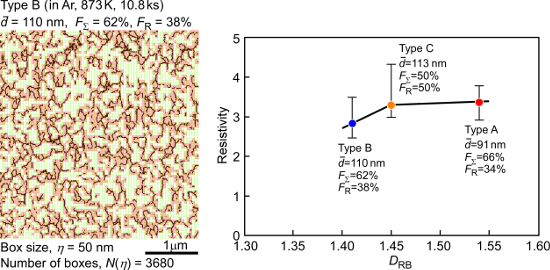
- ][24][25][26][27][28][29]. Since the concept of grain boundary design and control was first proposed by Watanabe [30], an increasing number of researchers have been involved in the development of high performance polycrystalline materials, including nanocrystalline or nanostructured materials
- boundary segregation have already been discussed for polycrystalline materials [30][36]. Watanabe et al. [25] have reviewed the recent achievements in GBE by magnetic field application for powerful control of abnormal grain growth and intergranular brittleness due to segregation of detrimental elements in








Morphology of SiO2 films as a key factor in alignment of liquid crystals with negative dielectric anisotropy
Beilstein J. Nanotechnol. 2016, 7, 1743–1748, doi:10.3762/bjnano.7.167
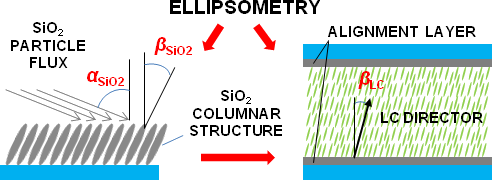
- particular LC. In the case of negative Δε, LC alignment only takes place in plane of particle incidence [3][4], defined mainly by film morphology. The most amazing morphological feature of obliquely deposited polycrystalline films is its columnar structure, which appears to be due to a self-shadowing effect


Nanostructured TiO2-based gas sensors with enhanced sensitivity to reducing gases
Beilstein J. Nanotechnol. 2016, 7, 1718–1726, doi:10.3762/bjnano.7.164
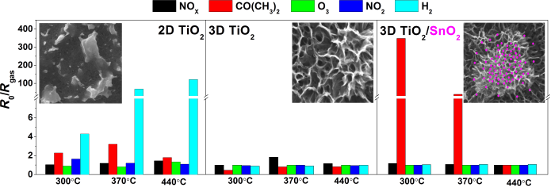
- material for application as an acetone sensor. Keywords: acetone; flower-like 3D nanostructures; gas sensors; selectivity; titanium dioxide; Introduction The market for resistive-type gas sensors is dominated by materials developed on the base of thin or thick layers composed of polycrystalline metal


Properties of Ni and Ni–Fe nanowires electrochemically deposited into a porous alumina template
Beilstein J. Nanotechnol. 2016, 7, 1709–1717, doi:10.3762/bjnano.7.163
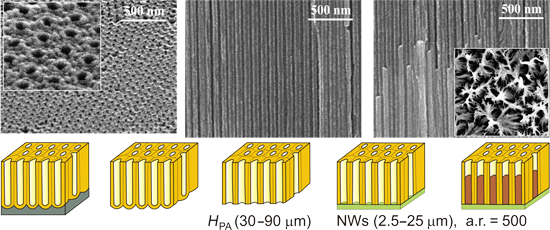
- of 50 ± 5 nm in diameter and 25 μm in length, i.e., with an aspect ratio of 500. XRD data demonstrate the polycrystalline nature of Ni and Ni–Fe in a face-centered cubic close-packed lattice. Both fabricated materials, Ni and Ni–Fe, have shown ferromagnetic properties. The specific magnetization
- mutual orientation of crystallites along the main direction of growth (the Z-axis oriented vertically along a pore). The existence of other weak peaks shows the presence of small amount of crystallites with other directions of growth and confirms the polycrystalline structure of Ni NWs. Previously it has
- been shown [39] that for a Ni film with polycrystalline fcc structure the primary direction of crystallite growth is (111) and, thus, it differs from Ni NWs in the alumina pores (220). In our case, the primary direction of Ni NWs growth is (220), too. As described in [40], this orientation is a


Role of RGO support and irradiation source on the photocatalytic activity of CdS–ZnO semiconductor nanostructures
Beilstein J. Nanotechnol. 2016, 7, 1684–1697, doi:10.3762/bjnano.7.161
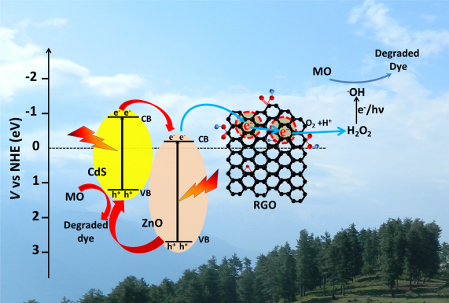
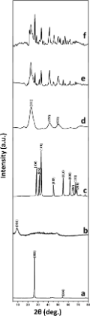
- XRD patterns of ZnO nanorods show peaks at 2θ = 31.67, 34.31, 36.14, 47.40, 56.52, 62.73, 66.28, 67.91 and 69.03°, which could be assigned to the (100), (002), (101), (102), (110), (103), (200), (112) and (201) lattice planes, respectively, indicating the prepared ZnO NR have polycrystalline wurtzite




Sb2S3 grown by ultrasonic spray pyrolysis and its application in a hybrid solar cell
Beilstein J. Nanotechnol. 2016, 7, 1662–1673, doi:10.3762/bjnano.7.158
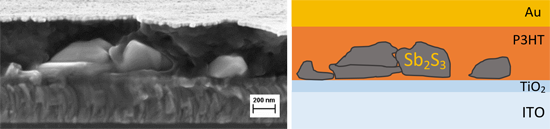
- films whereas films prepared from non-aqueous solvents have been reported as polycrystalline [22][24]. So far, we have shown that for growing Sb2S3 by pneumatic CSP the use of SbCl3 and thiourea (tu) precursors with an SbCl3/tu molar ratio of 1:3 dissolved in methanol and sprayed on substrate at a




Customized MFM probes with high lateral resolution
Beilstein J. Nanotechnol. 2016, 7, 1068–1074, doi:10.3762/bjnano.7.100
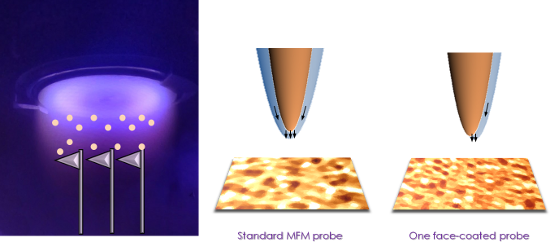
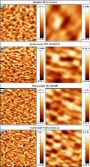
- MFM accessible to these properties in any lab is particularly useful if one wants to carry out experiments in environments such as vacuum or liquid [19]. Experimental The custom-made tips presented in this manuscript are fabricated by sputter coating commercial AFM sensors with a polycrystalline Co


Phenalenyl-based mononuclear dysprosium complexes
Beilstein J. Nanotechnol. 2016, 7, 995–1009, doi:10.3762/bjnano.7.92
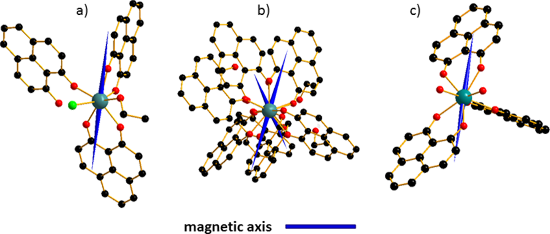
- performed on polycrystalline samples. The ground powder was restrained in Apiezon grease. The magnetic data were corrected for the sample holder. Synthesis All the purchased chemicals and solvents were used as received without any further purification unless otherwise stated. The reactions involving water


Optical absorption signature of a self-assembled dye monolayer on graphene
Beilstein J. Nanotechnol. 2016, 7, 862–868, doi:10.3762/bjnano.7.78
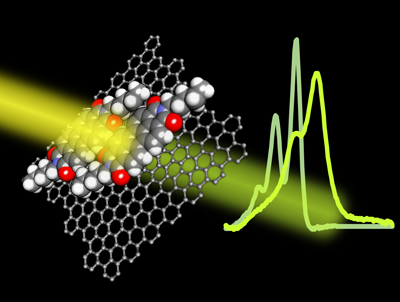
- transferred onto transparent PET and fused silica samples were purchased from Megan-Technologies (Poland) and Graphenea (Spain), respectively. Both have been transferred from their copper CVD substrate using the standard PMMA technique [42]. The CVD graphene is polycrystalline, with typically 1 µm sized 2D



Magnetic switching of nanoscale antidot lattices
Beilstein J. Nanotechnol. 2016, 7, 733–750, doi:10.3762/bjnano.7.65
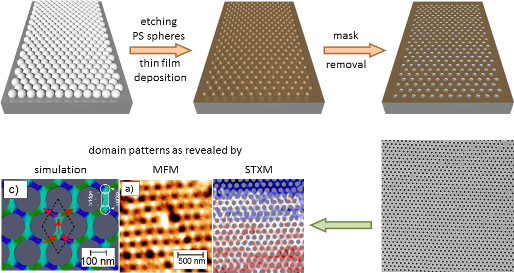
- spherical masks for the production of magnetic antidot lattices. In magnetic antidot films, the nanoscale periodic structure of holes introduces an in-plane shape anisotropy to the otherwise isotropic in-plane properties of polycrystalline or amorphous thin films. Additionally, the holes may act as
- constants (MS = 1.7 MA m−1, exchange constant 21 pJ m−1, cubic anisotropy 48 kJ m−3). We account for the polycrystalline Fe film by setting random anisotropy axes in the grains of 10 × 10 × 20 nm3. The angle of the magnetisation vectors of neighbouring cells is controlled by a reasonable small mesh size (2



Case studies on the formation of chalcogenide self-assembled monolayers on surfaces and dissociative processes
Beilstein J. Nanotechnol. 2016, 7, 263–277, doi:10.3762/bjnano.7.24
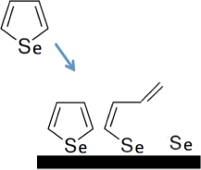
- to previous reports [46][47][88] in a low resolution study on polycrystalline Pd with components at 162.1 eV (or 162.3 eV) and 162.9 eV (or 163.2 eV). It was suggested [88] that the thiolate CLBE has the higher binding energy, whereas the lower one corresponds to the sulfide phase; although in many
- at room temperatures it was close to 161 eV. Thus there exist rather different accounts on thiophene adsorption on Au. Studies of 3,4-ethylenedioxythiophene (EDOT) and its derivatives [62] (Figure 6a) on polycrystalline Au, Au(111) and Au nanoparticle (AuNP) surfaces from vapor phase and solution has


Synthesis and applications of carbon nanomaterials for energy generation and storage
Beilstein J. Nanotechnol. 2016, 7, 149–196, doi:10.3762/bjnano.7.17
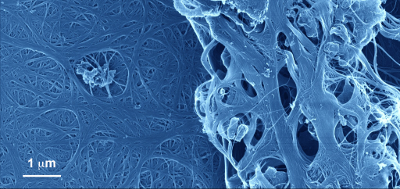
- coming from the gas source to diffuse into the metal. The process is very difficult to control, and especially so in polycrystalline metals where the grain boundaries act as nucleation sites for multilayer growth [141]. For this reason, single crystal and atomically smooth metals are usually preferred to
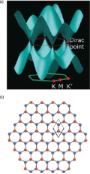
- quality. In fact, the graphene produced is mostly polycrystalline with aperiodic heptagon/pentagon pairs [143] or overlapped bilayer regions [144] at the grain boundaries (Figure 22b). It has also been demonstrated that the presence of grain boundaries can reduce the mechanical and electrical properties















Single-molecule magnet behavior in 2,2’-bipyrimidine-bridged dilanthanide complexes
Beilstein J. Nanotechnol. 2016, 7, 126–137, doi:10.3762/bjnano.7.15
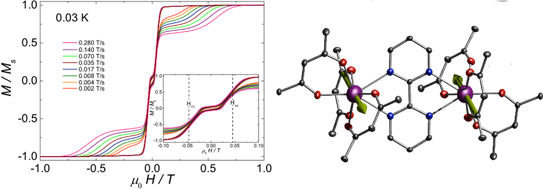
- ]. Magnetic properties Static susceptibility measurements. The static magnetic behavior for all complexes was investigated on polycrystalline samples from 2 to 300 K under an applied DC magnetic field (H) of 1 kOe, whilst magnetization as a function of applied field was investigated in the field and


Large area scanning probe microscope in ultra-high vacuum demonstrated for electrostatic force measurements on high-voltage devices
Beilstein J. Nanotechnol. 2015, 6, 2485–2497, doi:10.3762/bjnano.6.258
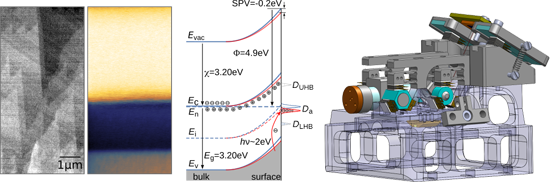
- the CPD reflects the unperturbed work function values as presented in Figure 5d. The difference in the CPD between copper and chromium is about 0.7 V, while the work function of the chromium grain is reduced to approximately ΦCr = 3.9 eV and the one for the polycrystalline copper to ΦCu = 4.6 eV. Both
- eddy current damping system to suppress vertical vibrations. In panel a, a CAD image is illustrated, whereas panel b shows a photography of the microscope. A chromium grain embedded in a polycrystalline copper alloy. a) Measured with a confocal laser microscope. b) Topography and c) KPFM image of the


Self-assembly mechanism of Ni nanowires prepared with an external magnetic field
Beilstein J. Nanotechnol. 2015, 6, 2123–2128, doi:10.3762/bjnano.6.217
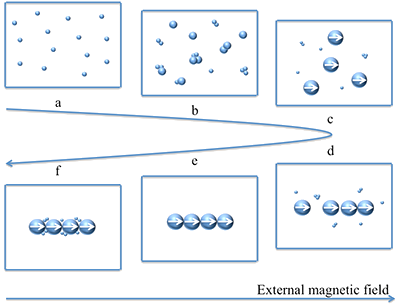
- self-assembly is of great significance in order to understand the self-assembly mechanism of Ni nanowires prepared under an external magnetic field. Conclusion Under an external magnetic field, polycrystalline nickel nanowires were synthesized by a chemical reduction method. Further studies indicated




The role of low-energy electrons in focused electron beam induced deposition: four case studies of representative precursors
Beilstein J. Nanotechnol. 2015, 6, 1904–1926, doi:10.3762/bjnano.6.194





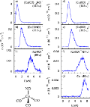
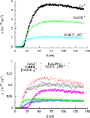

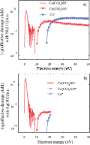


Focused particle beam-induced processing
Beilstein J. Nanotechnol. 2015, 6, 1883–1885, doi:10.3762/bjnano.6.191

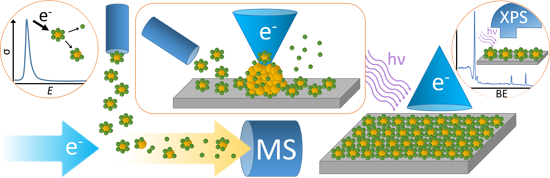
- well as the secondary and backscattered) electrons of the focused beam dissociate the precursor adsorbate, a permanent deposit is formed. Depending on the precursor and other process parameters, amorphous, nanogranular, nanocrystalline or polycrystalline nanostructures are obtained. Their position and
Atomic scale interface design and characterisation
Beilstein J. Nanotechnol. 2015, 6, 1708–1711, doi:10.3762/bjnano.6.174
- atom chains [12]. Graphene and related materials such as nanotubes, polycrystalline nanoparticles [13] and carbon onions [14] have seen significant progress in preparing samples of reasonable size and quality [15] and form a worldwide actively pursued field of research on understanding and modifying
Possibilities and limitations of advanced transmission electron microscopy for carbon-based nanomaterials
Beilstein J. Nanotechnol. 2015, 6, 1541–1557, doi:10.3762/bjnano.6.158
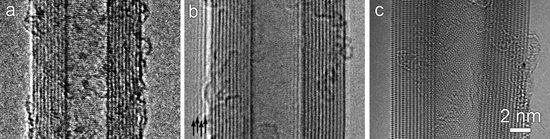
- polycrystalline morphology with defects such as grain boundaries [62][63] and therefore suffers from a degradation of its physical properties. Characterization of the intrinsic defects and their further relation to the synthesis conditions, e.g., substrate lattice mismatch and annealing temperature is therefore


Formation of pure Cu nanocrystals upon post-growth annealing of Cu–C material obtained from focused electron beam induced deposition: comparison of different methods
Beilstein J. Nanotechnol. 2015, 6, 1508–1517, doi:10.3762/bjnano.6.156
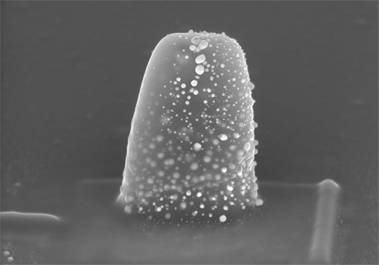
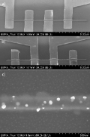
- on a line deposit from Cu(hfac)2 shown in Figure 2. a) STEM high angle annular dark field (STEM-HAADF) image of Cu nanocrystals forming from the deposit material. b) HAADF image showing distribution of Cu nanocrystals. c) High-resolution TEM (HR-TEM) image of 15 nm sized polycrystalline Cu




Current–voltage characteristics of manganite–titanite perovskite junctions
Beilstein J. Nanotechnol. 2015, 6, 1467–1484, doi:10.3762/bjnano.6.152
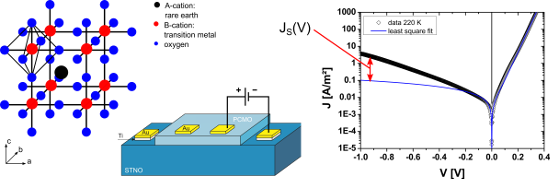
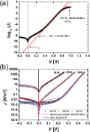
- direction, kppd approaches kppd,eq and Equation 15 reduces to the conventional Shockley equation with ideality factor n = 1. Disorder and polycrystalline structure have a strong impact on the electrical transport in organic junctions, since the polarons can be trapped at defects. Consequently, the absolute





Thermal treatment of magnetite nanoparticles
Beilstein J. Nanotechnol. 2015, 6, 1385–1396, doi:10.3762/bjnano.6.143
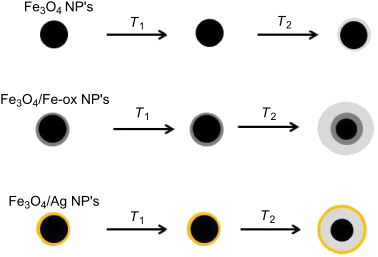
- of rather polycrystalline particles. This was especially clearly observed when larger particles were grown and can be expected from the synthesis. The existence of interfaces between separate crystallites inside each particle can be the reason for a faster oxidation process. Such a scenario is in
- good agreement with the speculation that polycrystallinity causes the presence of grain boundaries, which significantly influences the stability/susceptibility to the oxide. On the other hand, in the case of polycrystalline particles, their structure is also less dense and oxygen can penetrate more






Scalable, high performance, enzymatic cathodes based on nanoimprint lithography
Beilstein J. Nanotechnol. 2015, 6, 1377–1384, doi:10.3762/bjnano.6.142
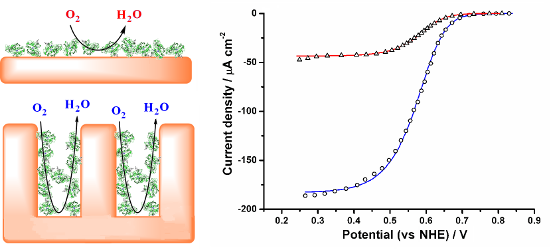
- suppressed the current, suggesting the formation of enzyme multilayers. These results are in good agreement with our recent report concerning the interfacial behaviour and activity of BOx immobilised on bare polycrystalline gold surfaces [20]. Thirdly, standard heterogeneous electron transfer rate constants


The Kirkendall effect and nanoscience: hollow nanospheres and nanotubes
Beilstein J. Nanotechnol. 2015, 6, 1348–1361, doi:10.3762/bjnano.6.139
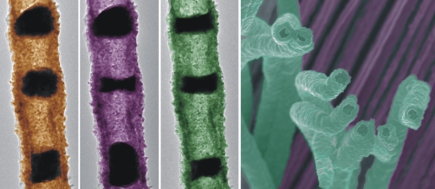
- holder, allowing heating of the specimen at high temperature under an oxygen flow. Additionally, as far as we are aware, there are no comparative studies on the Kirkendall effect in monocrystalline and polycrystalline materials. Another perspective which deserves to be pointed out is the TEM 3D