


Search results
Search for "strain" in Full Text gives 403 result(s) in Beilstein Journal of Nanotechnology. Showing first 200.
Multilayer capsules made of weak polyelectrolytes: a review on the preparation, functionalization and applications in drug delivery
Beilstein J. Nanotechnol. 2020, 11, 508–532, doi:10.3762/bjnano.11.41
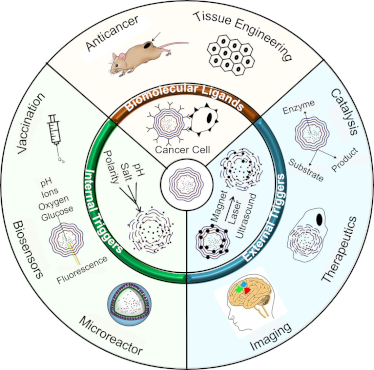
- stable triazole ring between the successive layers of the LbL assembly. Second, a strain-promoted Cu-free alkyne-azide cycloaddition (SPAAC) uses strained alkynes for reaction with azide, thereby ruling out the issues with toxic copper. A third type of click reaction, the Diels–Alder cycloaddition (DAC



Preparation and in vivo evaluation of glyco-gold nanoparticles carrying synthetic mycobacterial hexaarabinofuranoside
Beilstein J. Nanotechnol. 2020, 11, 480–493, doi:10.3762/bjnano.11.39
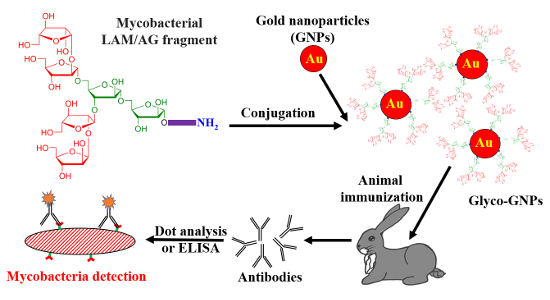
- (Figure 5). Bacterial cultures and growth conditions Bacterial cultures of M. bovis (vaccine strain BCG), M. phlei, and M. smegmatis were obtained from the collection of pathogenic and vaccine microorganisms of animals of Kovalenko Institute of Experimental Veterinary Medicine (Moscow, Russia) [118]. A
- culture of E. coli strain K-12 was obtained from the Collection of the Rhizosphere Microorganisms of the Institute of Biochemistry and Physiology of Plants and Microorganisms RAS (Saratov, Russia) [119]. The cells were grown on a solid nutrient medium for isolation of Mycobacteria (the Löwenstein–Jensen


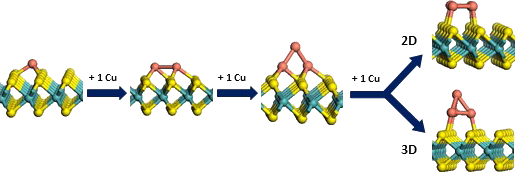
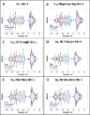
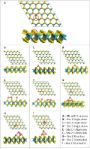
DFT calculations of the structure and stability of copper clusters on MoS2
Beilstein J. Nanotechnol. 2020, 11, 391–406, doi:10.3762/bjnano.11.30
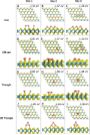
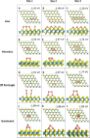
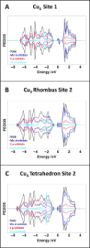
- on adsorption structures of Li at Se-doped MoS2, to study the suitability of the system for application in Li-ion batteries. Li adatoms prefer to adsorb above an Mo atom in the monolayer, and cause the system to become metallic once adsorbed. External strain was found to strongly modify the binding
- energy, with binding decreasing as tensile strain increases. While Li can diffuse through the monolayer, the activation energy required is greater than 1 eV and increases with decreasing Se content. Investigation of on-surface diffusion showed that the magnitude of the activation energies is suitable for
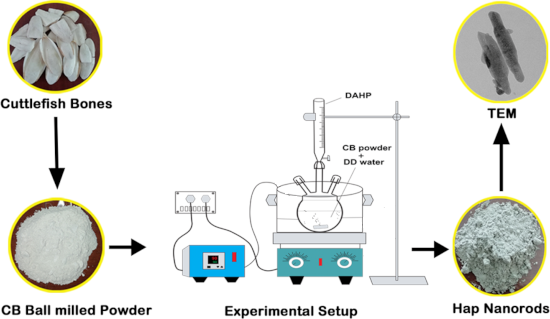
Facile biogenic fabrication of hydroxyapatite nanorods using cuttlefish bone and their bactericidal and biocompatibility study
Beilstein J. Nanotechnol. 2020, 11, 285–295, doi:10.3762/bjnano.11.21
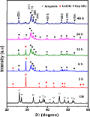
- lattice strain was 0.0055 nm. Evaluation of functional groups The FTIR spectra of CB and CB-Hap (48 h) with high crystallinity are shown in Figure 2, which is essential to analyze their functional groups. The FTIR spectral bands were recorded at 710, 860, 1486, 2522, and 2924 cm−1 for CB which indicates


Nonclassical dynamic modeling of nano/microparticles during nanomanipulation processes
Beilstein J. Nanotechnol. 2020, 11, 147–166, doi:10.3762/bjnano.11.13
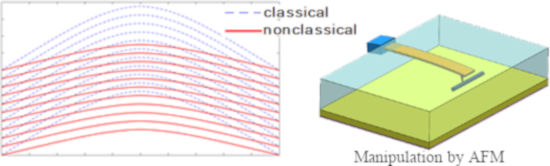
- based on a 2D model. Governing equations using nonclassical theory The considered models in this study are the Euler–Bernoulli and Timoshenko beam models based on MCST. The Strain energy according to MCST can be expressed as where σij, εij, are classical terms of stress and strain tensors, and mij and
- Timoshenko beam of Figure 3 are described as where u1, u2 and u3 are displacements along the axes x, y and z, respectively, ψ(x,t) is the angular rotation of the beam cross section and w(x,t) is the beam lateral deformation. By replacing the equations of non-zero elements, one can obtain the strain, stress
- , curvature and couple stress matrices along with the non-zero elements of the rotation vector. Additionally, the strain and kinetic energy and the work of external force applied on the beam element are, respectively, defined as [27]. where E is the Young’s modulus, L, A and I are length, cross-sectional area







Fully amino acid-based hydrogel as potential scaffold for cell culturing and drug delivery
Beilstein J. Nanotechnol. 2019, 10, 2579–2593, doi:10.3762/bjnano.10.249
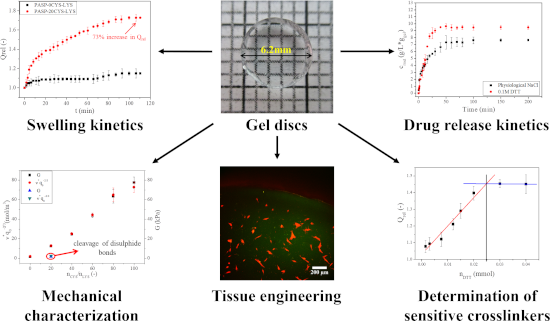
- active chains by mechanical measurements To measure the elastic modulus (G), gel cylinders of 1 cm in diameter and height were prepared with the same constitution as described above. G was assessed by vertical stress–strain measurements using an Instron 5942 (Intest kft., Hungary) mechanical tester, and
- its exact value was calculated by determining the stress–strain behavior during unidirectional compression. The temperature and the volume of the gels were constant during deformation, therefore, the Neo–Hooken law could be used to describe the deformation of the gels [21]: where σN is the nominal
- cross-linkers, this method cannot be used to determine the amount of disulfide bonds in these gels. It is a challenging task to determine the cross-linking density in a polymer matrix. Usually, stress–strain measurements are used for this purpose. However, their results are influenced not only by the


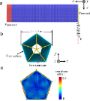
Abrupt elastic-to-plastic transition in pentagonal nanowires under bending
Beilstein J. Nanotechnol. 2019, 10, 2468–2476, doi:10.3762/bjnano.10.237
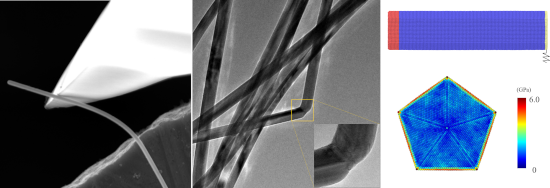
- withstand severe deformation in the elastic regime without fracture. The coating may possibly prevent formation of dislocations. Mechanical durability under high and inhomogeneous strain fields is an important aspect of exploiting Ag and Au NWs in applications like waveguiding or conductive networks in
- the five fcc equilateral triangular segments connected by twin boundaries cannot make 360°, such an exotic structure cannot exist without internal strain with corresponding mechanical stress and stored elastic energy proportional to the volume [6]. Inner stress and peculiar structure of the pentagonal
- electronics [10][11]. In the last case NWs are used as a conductive network in composition with flexible polymer materials such as polydimethylsiloxane (PDMS) [12][13]. The reliability of flexible devices in high-strain conditions will be governed by the mechanical reliability of the individual NWs inside the



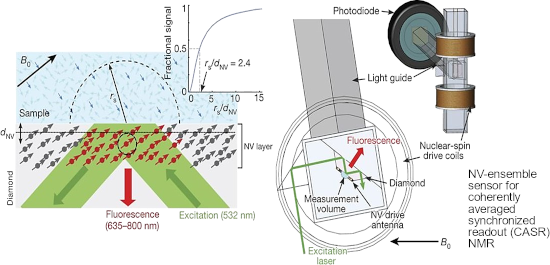
Nitrogen-vacancy centers in diamond for nanoscale magnetic resonance imaging applications
Beilstein J. Nanotechnol. 2019, 10, 2128–2151, doi:10.3762/bjnano.10.207


The importance of design in nanoarchitectonics: multifractality in MACE silicon nanowires
Beilstein J. Nanotechnol. 2019, 10, 2094–2102, doi:10.3762/bjnano.10.204
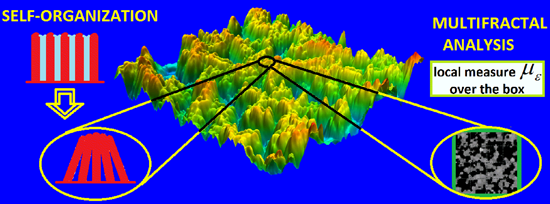
- two collapsed pillars, such that the length of the non-contact portion is L (Figure 1b), a critical value of L can be estimated from [31] where the term on the left-hand side is the decrease in strain energy if the non-contact region is increased by dL, and the term on the right-hand side is the




Green and scalable synthesis of nanocrystalline kuramite
Beilstein J. Nanotechnol. 2019, 10, 2073–2083, doi:10.3762/bjnano.10.202
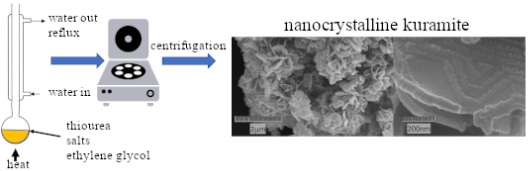
- main phase. A large increase of the crystalline size and defective strain is responsible for the significant line broadening of the diffraction peaks. Still, no prevalent amorphous phase can be observed in the diffractograms. On this basis, the XRD results support the mixed occupancy of the cations in


First principles modeling of pure black phosphorus devices under pressure
Beilstein J. Nanotechnol. 2019, 10, 1943–1951, doi:10.3762/bjnano.10.190
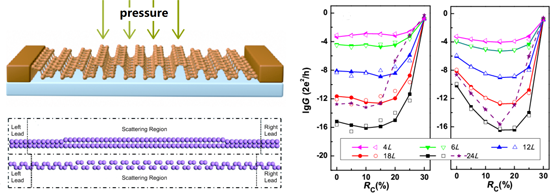
- by high carrier mobilities can be realized, which are two main focuses of nanoscale electronic devices [1][3][7][13][25][29][30][31]. Previous studies indicated that BP can withstand a tensile stress as high as 10 N/m and a strain up to 30%, and exhibit a direct–indirect–direct bandgap phase
- transition under axial strain [5][32]. The sensitivity to and the resilience against strain make BP an ideal material for strain-sensing electronics and flexible electronic devices. Xiao et al. fabricated few-layer BP nanosheets by chemical vapor transport [25], and observed a phase transition from an
- accumulated isotropically in strain-reduced regions, instead of occurring in the regions with a high tensile strain like in MoS2. Deniz et al. investigated the strain-related optical properties of monolayer BP using first principles calculations [7]. They found that the optical response of BP is sensitive to




High-tolerance crystalline hydrogels formed from self-assembling cyclic dipeptide
Beilstein J. Nanotechnol. 2019, 10, 1894–1901, doi:10.3762/bjnano.10.184
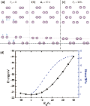
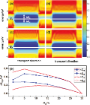
- hydrogel enhanced along with time. Strain-induced shear-thinning and self-healing abilities of the hydrogel were detected through continuous step changes of oscillatory strain between 500% and 1% (at a constant frequency of 1 rad s−1). Under a high magnitude strain (500%), the modulus of G’’ values
- exceeded G’ values, indicating the breaking of the hydrogel (Figure 3A). By decreasing the strain to 1%, the modulus of G’’ falls below that of G’, indicating the recovery of the hydrogel (Figure 3B). These results illustrated that the recovery of the hydrogel is quick at both 48 h and 240 h, even at the
- fifth test cycle. As compared to that of 48 h, the C-WY hydrogel at 240 h showed a faster recovery speed. The strain-dependent oscillatory rheology results (at 240 h) showed a great anti-shear performance at stains ranging from about 0.1% to about 20%, indicating the shear-thinning behavior of the


Fabrication and characterization of Si1−xGex nanocrystals in as-grown and annealed structures: a comparative study
Beilstein J. Nanotechnol. 2019, 10, 1873–1882, doi:10.3762/bjnano.10.182
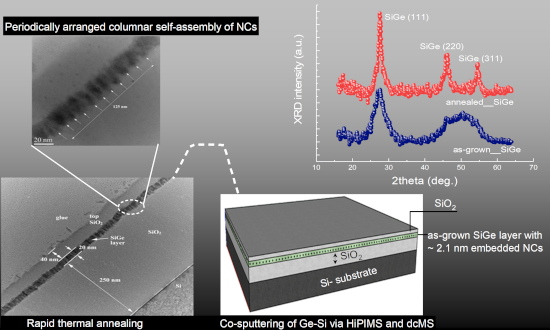
- annealing results in the periodically arranged columnar self-assembly of SiGe core–shell nanocrystals. An increase in photocurrent intensity by more than an order of magnitude was achieved by annealing. Furthermore, a detailed discussion is provided on strain development within the structures, the
- to surface polarization effects due to local fields, which play a crucial role in systems characterized by strong charge inhomogeneity. Further, the development of strain in the structure influences the size and shape of the NCs, thus resulting in a change of the bandgap energy. A common method to
- incidence X-ray diffraction (GIXRD) and high-resolution transmission electron microscopy (HRTEM). Strain relaxation and its effect on the formation of NCs and the resulting interface integrity was studied and compared with structures having a thicker (ca. 200 nm) SiGe layer [23], deposited by radio


Prestress-loading effect on the current–voltage characteristics of a piezoelectric p–n junction together with the corresponding mechanical tuning laws
Beilstein J. Nanotechnol. 2019, 10, 1833–1843, doi:10.3762/bjnano.10.178
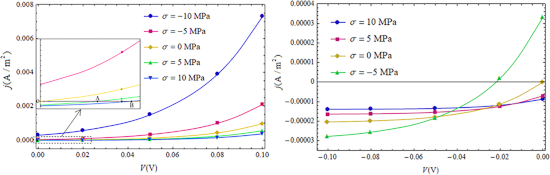
- can also be adjusted by applying strain or stress. Up to now, there is only a limited number of studies on tuning and controlling of non-equilibrium minority carriers (NEMC). Zhang et al. [14] studied the I–V characteristics of a p–n junction consisting of a p-type semiconductor without piezo-effect
- = e2/(cε). In the above, strain S and electric field E can be expressed as S = du/dx and E = −dϕ/dx, in which u and ϕ are displacement and electric potential, respectively. c, e and ε are elastic, piezoelectric and dielectric constant, respectively. The one-dimensional Gauss’s law of a piezoelectric p




Novel hollow titanium dioxide nanospheres with antimicrobial activity against resistant bacteria
Beilstein J. Nanotechnol. 2019, 10, 1716–1725, doi:10.3762/bjnano.10.167
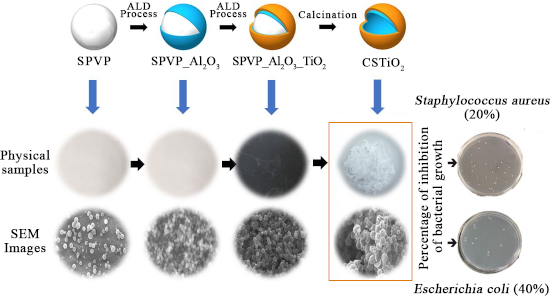
- thickness of these nanostructures was obtained by reducing the cycles of deposition during the ALD process [18][45][46]. The antibacterial activity of CSTiO2 and TiO2 NPs was evaluated by the inhibition of growth of Staphylococcus aureus (control strain ATCC®6538TM and resistant strain MRSA 97-7 and MRSA
- 622-4) and Escherichia coli (control strain ATCC®25922TM and resistant strain E. coli 33.1). When the analysis was done using control strains, the results in Table 1 indicate that CSTiO2 presented an improved antibacterial activity against S. aureus and a similar activity against E. coli in comparison
- to these antimicrobial NPs at this concentration. Thus, a series of TiO2 NPs suspensions at increasing concentrations were examined over 60 min UV-irradiation. Assays revealed that commercial TiO2 NPs presented 28% reduction of S. aureus MRSA 97-7 strain at 300 µg mL−1. Conclusion This is the first


Graphynes: an alternative lightweight solution for shock protection
Beilstein J. Nanotechnol. 2019, 10, 1588–1595, doi:10.3762/bjnano.10.154
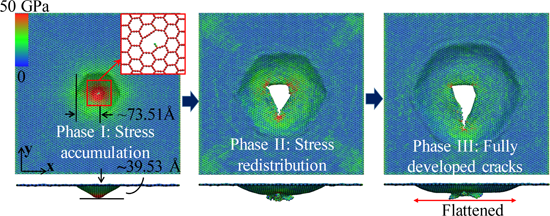
- of the absorbed light is tunable by structural modifications of GY (e.g., through increasing the length of the GY chains) [10]. GYs can also be used as Li accommodator in battery anodes, which increases service life and safety of batteries. Under biaxial tensile strain, GY accommodates more Li
- ][13][14]. Based on in silico molecular dynamics (MD) tensile tests, the recorded failure strength values for different types of GYs range between 32.48 and 63.17 GPa [2][15][16]. According to a first-principle study, the failure strain of GY reaches 20% [17]. A high Young’s modulus of 532.5 GPa is




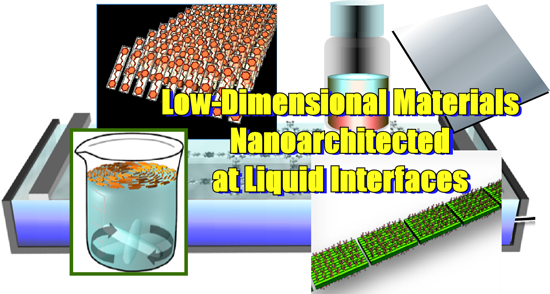
Materials nanoarchitectonics at two-dimensional liquid interfaces
Beilstein J. Nanotechnol. 2019, 10, 1559–1587, doi:10.3762/bjnano.10.153


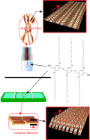

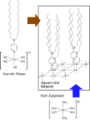

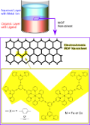

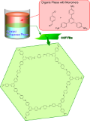


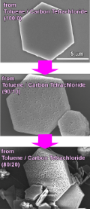

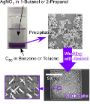
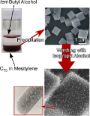


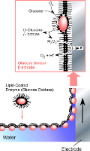



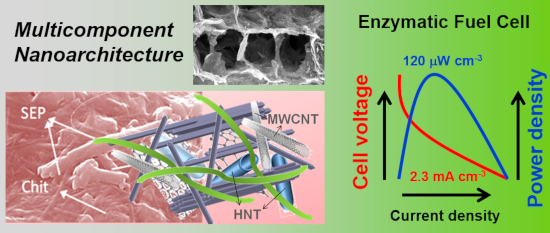
Multicomponent bionanocomposites based on clay nanoarchitectures for electrochemical devices
Beilstein J. Nanotechnol. 2019, 10, 1303–1315, doi:10.3762/bjnano.10.129
- properties of the bionanocomposite materials were evaluated in stress–strain measurements (Figure S5, Supporting Information File 1), analysing the influence of the nanofiller content on the elastic behaviour as it has been described in related biopolymer-based nanocomposites [26]. The results show that the



Angle-dependent structural colors in a nanoscale-grating photonic crystal fabricated by reverse nanoimprint technology
Beilstein J. Nanotechnol. 2019, 10, 1211–1216, doi:10.3762/bjnano.10.120
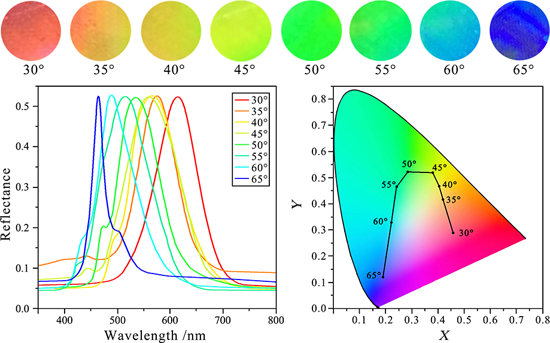
- ][17][18][19]. Duempelmann et al. fabricated asymmetric periodic nanostructures to explore the effects of the optical properties on the structural color [20]. Then, they used the photonic crystal as a strain sensor by mechanically changing the structural period to achieve the different structural


Electroluminescence and current–voltage measurements of single-(In,Ga)N/GaN-nanowire light-emitting diodes in a nanowire ensemble
Beilstein J. Nanotechnol. 2019, 10, 1177–1187, doi:10.3762/bjnano.10.117
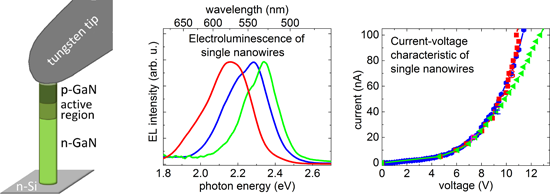
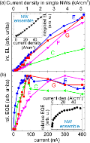
- with increasing current densities as shown for spectrum C is similar to what we recently observed analyzing single-NW spots in top-view EL maps of a comparably processed NW-ensemble LED [7]. By modeling strain, electric field, and charge carrier density inside the active region of a single-NW LED, it
- ionized donors and acceptors in the adjacent doped segments and by the non-uniform strain distribution along the active region, respectively. Also in the case of NW C in Figure 3, the comparatively strong shift of emission line 1 for currents up to 100 nA suggests the presence of strong polarization
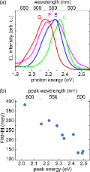
- driving current of 100 nA. The width follows a linear decrease from about 380 to 130 meV. This trend may be explained by a higher local fluctuation of the material composition and a more inhomogeneous strain distribution within the insertions due to an increase in In content [13][14]. Also for (In,Ga)N


Tailoring the magnetic properties of cobalt ferrite nanoparticles using the polyol process
Beilstein J. Nanotechnol. 2019, 10, 1166–1176, doi:10.3762/bjnano.10.116
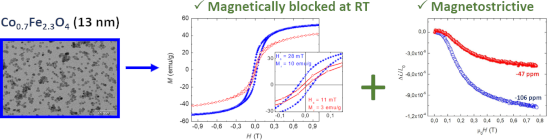
- Paris Cité, LSPM CNRS UPR-3407, 99, Av. J. B. Clément, 93430 Villetaneuse, France 10.3762/bjnano.10.116 Abstract Background: In extrinsically magnetoelectric materials made of two components, the direct magnetoelectric coupling arises from a mechanical strain transmission at the interface due to the
- magnetometry. To measure the magnetostrictive response of the particles, the particles were sintered to dense pellets on which strain gauges were bonded, measuring the size variation radially, as a function of a dc magnetic field. Findings: We found two samples, the first one being stoichiometric and
- viewpoint paper about the current limits of such nanostructures [4]. In these materials, the ME coupling arises from a mechanical transmission of strain originating from the shape change of the magnetostrictive component under an external magnetic field, or of the piezoelectric component under an external




Synthesis and characterization of quaternary La(Sr)S–TaS2 misfit-layered nanotubes
Beilstein J. Nanotechnol. 2019, 10, 1112–1124, doi:10.3762/bjnano.10.111
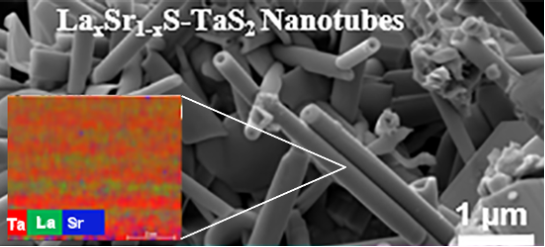
- changes in the Raman spectra with Sr content in the lattice are noticeable. Most importantly, a clear softening in the Raman modes is observed, which suggests that the predominant effect of the Sr substitution is to reduce the strain in the lattice due to the reduced charge transfer between the layers
- , and consequently, the lattice strain. It also appears that beyond an Sr content of ≈60 atom %, the MLC lattice becomes unstable and new modes >680 cm−1 appear, which is typical for metal oxides. DFT calculations of the pristine LaS–TaS2 and the SrxLa1−xS–TaS2 MLC bulk alloys were undertaken. Overall


Nanoscale optical and structural characterisation of silk
Beilstein J. Nanotechnol. 2019, 10, 922–929, doi:10.3762/bjnano.10.93
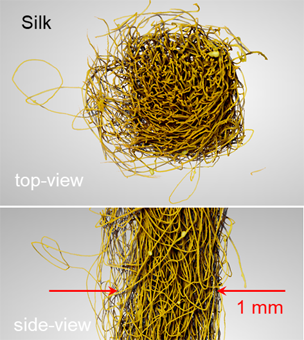
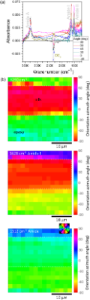
- modalities of sample preparation for nanoscale imaging include focused ion beam milling and microtome slicing. When the thickness of samples, especially soft biomaterials, is close to 100 nm the cutting tool might cause tear- and cut-induced strain below the surface. In turn, this can cause artifacts in the


Features and advantages of flexible silicon nanowires for SERS applications
Beilstein J. Nanotechnol. 2019, 10, 725–734, doi:10.3762/bjnano.10.72

- conventional solid substrates conform to the specific object and efficiently extract the target molecules [13][14][15][16][17][18]. They can withstand a tensile strain of up to 30% without losing the SERS features [13]. These flexible substrates include materials such as polydimethylsiloxane (PDMS) [13][15] or


Outstanding chain-extension effect and high UV resistance of polybutylene succinate containing amino-acid-modified layered double hydroxides
Beilstein J. Nanotechnol. 2019, 10, 684–695, doi:10.3762/bjnano.10.68
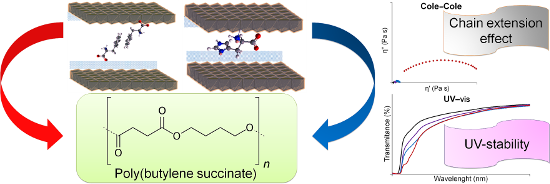
- Molder, obtaining small-sized bars (33 × 8 × 2 mm). Such samples were scanned from −150 °C to 80 °C (heating rate 3 °C min−1, frequency 3 Hz, strain 0.01%). Results and Discussion Layered double hydroxide filler characterization The organo-modified Mg2Al LDH hybrid materials containing the levorotary





