


Search results
Search for "surface charge" in Full Text gives 250 result(s) in Beilstein Journal of Nanotechnology. Showing first 200.
Electrostatic force spectroscopy revealing the degree of reduction of individual graphene oxide sheets
Beilstein J. Nanotechnol. 2018, 9, 1146–1155, doi:10.3762/bjnano.9.106
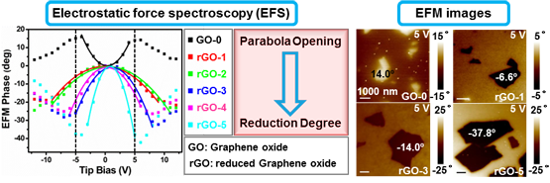
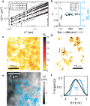
- substrate. The apparent height (polarization height) of nanomaterials in SPFM images are an indication of the local dielectric constant difference between the sample and substrate [20][37]. However, when a DC bias is applied, a local net charge (or the surface charge for nanomaterials) would affect the


Engineering of oriented carbon nanotubes in composite materials
Beilstein J. Nanotechnol. 2018, 9, 415–435, doi:10.3762/bjnano.9.41
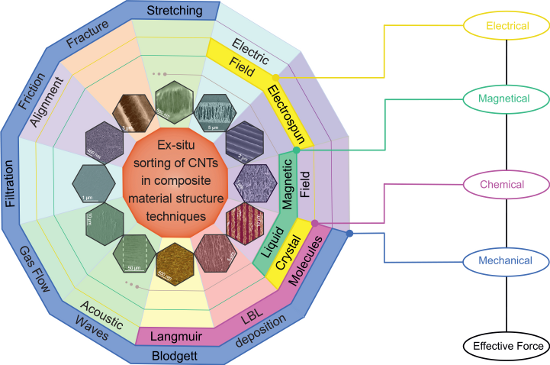
- spectroscopy: The XPS technique does not explore the whole sample volume but rather provides information about the chemical composition of the CNT surface [144][145]. XPS suffers from surface charge artifacts, so correct sample preparation is crucial to achieve a flat and uncontaminated surface. Despite the




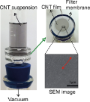


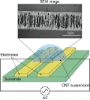


The nanofluidic confinement apparatus: studying confinement-dependent nanoparticle behavior and diffusion
Beilstein J. Nanotechnol. 2018, 9, 301–310, doi:10.3762/bjnano.9.30
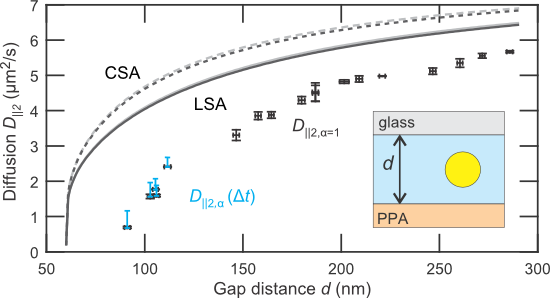
- diffusion. We note, however, that the same effect could be induced by a charge modulation of the surface potential (or correspondingly the surface charge) by ≈5%. To further investigate the origin of the obstacles we analyzed the time-averaged lateral particle distribution and its correlation to the
- , because pronounced subdiffusion is only observed for gap distances of d < 120 nm. In bulk, the electroviscous effect is attributed to the surface charge of the particles and leads to an increased effective viscosity and thus to a reduction in particle diffusion [37]. A similar mechanism should also play a



CdSe nanorod/TiO2 nanoparticle heterojunctions with enhanced solar- and visible-light photocatalytic activity
Beilstein J. Nanotechnol. 2017, 8, 2741–2752, doi:10.3762/bjnano.8.273
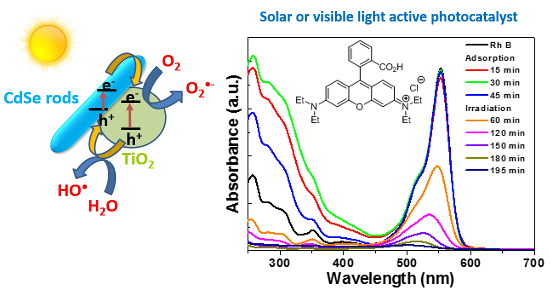
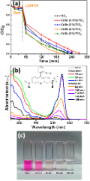
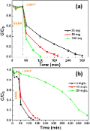
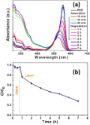
- produced. Influence of the pH of the rhodamine B solution The pH of the aqueous solution may play a crucial role on the kinetic of the photodegradation since it influences the surface charge of the catalyst and the structure of the dye in solution. Figure 8 shows that the CdSe (2 wt %)/TiO2 photocatalyst






Enhanced photoelectrochemical water splitting performance using morphology-controlled BiVO4 with W doping
Beilstein J. Nanotechnol. 2017, 8, 2640–2647, doi:10.3762/bjnano.8.264
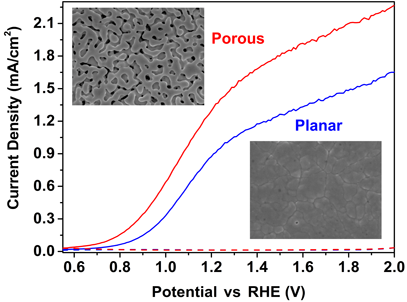
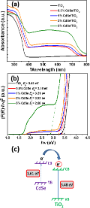
- the surface charge injection (inset in Figure 6b) [25]. In the equivalent circuit, Rs represents the sum of resistance values of the FTO film, the external electrical contacts, and the liquid electrolyte; Rct and Cbulk represent, respectively, the direct charge transfer resistance, and a capacitance
- more surface depletion layers, which leads to a higher capacitance. The surface charge transfer resistance of the sample 0-water is about 3783 Ω, while the one of sample 1-EG is smaller at around 2629 Ω. The smaller charge transfer resistance leads to a higher interfacial charge injection efficiency
- for water oxidation as shown in Figure 5c. It was reported that a porous film with a larger surface area has led to a lower interfacial charge transfer efficiency for water oxidation than its dense counterpart [12]. The current work indicates an opposite trend in that the surface charge injection was


The role of ligands in coinage-metal nanoparticles for electronics
Beilstein J. Nanotechnol. 2017, 8, 2625–2639, doi:10.3762/bjnano.8.263
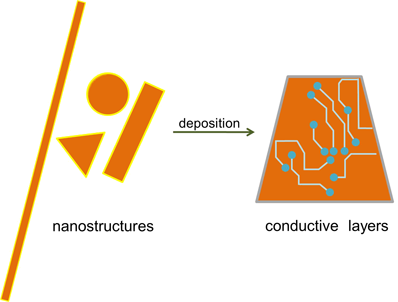
- transferred to various solid substrates [100]. In a similar study, the exchange of citrate ligands by thioglycolic acid (Figure 2) allowed the authors to reduce the surface charge density, manipulate Coulomb repulsion between the particles, and initiate agglomeration in solution. Appropriate particle charges


Refractive index sensing and surface-enhanced Raman spectroscopy using silver–gold layered bimetallic plasmonic crystals
Beilstein J. Nanotechnol. 2017, 8, 2492–2503, doi:10.3762/bjnano.8.249
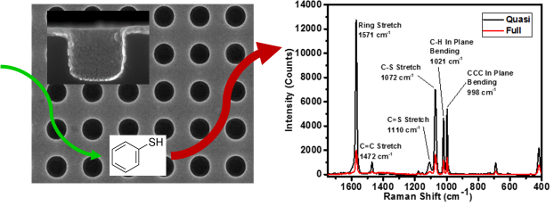
- interparticle interactions mediated via operando sensitive attributes of surface charge. This intrinsically makes plasmonic crystals more attractive for sensing applications as the need to modify the surface chemistry/charge figures heavily in design of capacities to support the recognition of specific solution


Adsorption of iron tetraphenylporphyrin on (111) surfaces of coinage metals: a density functional theory study
Beilstein J. Nanotechnol. 2017, 8, 2484–2491, doi:10.3762/bjnano.8.248
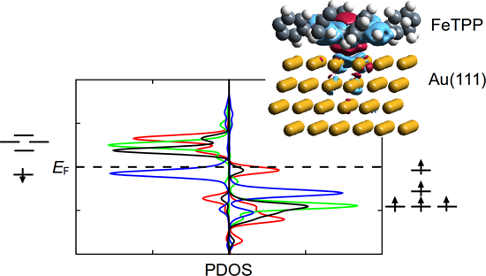
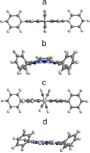
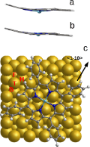
- direct coordination between the Fe and the Au atom, the transfer is slightly larger with 0.29e. The variation of partial charge on Fe (ΔqFe) is a loss of about 0.04e (0.06e for HS on top site). The sign of this variation is the same as the molecule–surface charge transfer. As shown in [16], the Fe centre




Involvement of two uptake mechanisms of gold and iron oxide nanoparticles in a co-exposure scenario using mouse macrophages
Beilstein J. Nanotechnol. 2017, 8, 2396–2409, doi:10.3762/bjnano.8.239
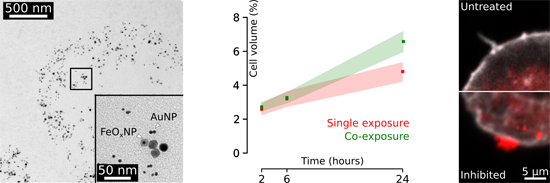
- cells such as cell type [10][11], surface charge [12][13] and NP size [14][15]. Clathrin- and caveolin-mediated endocytosis are the main uptake mechanisms for PEGylated AuNPs (15 nm) into A549 cells, whereas non PEGylated, citrate-stabilized AuNPs were mainly taken up by micropinocytosis [16



Substrate and Mg doping effects in GaAs nanowires
Beilstein J. Nanotechnol. 2017, 8, 2126–2138, doi:10.3762/bjnano.8.212
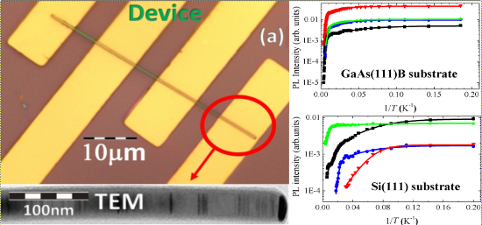
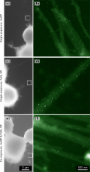
- surface charge traps that induce a pinning of the Fermi level at the surface, especially for diameters below 100 nm [68]. However, if we compare the diameter of the three studied nanowires #1, #2 and #3, which were 190, 187 and 179 nm, respectively, the effect of surface scattering should be similar


A comparative study of the nanoscale and macroscale tribological attributes of alumina and stainless steel surfaces immersed in aqueous suspensions of positively or negatively charged nanodiamonds
Beilstein J. Nanotechnol. 2017, 8, 2045–2059, doi:10.3762/bjnano.8.205
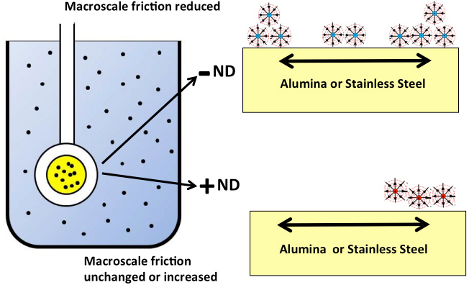
- the friction coefficient. For example, if a sample was immersed in a ND suspension with an opposite surface charge to its first exposure, µk would shift up or down depending on the sign of the ND charge in the second exposure. The observations suggest that −ND have a strong affinity for the surfaces
- , summarized in Table 1, exhibit a decrease in frequency after the exposure to the suspensions regardless of the ND surface charge sign. While some of the downward shifts in frequency may be attributable to a variation in the uptake of particulate and physisorbed species from air, the net mass increase is
- experimental shifts are attributable to the surface roughness of the electrodes. Changes in f and R for the samples exposed to ND suspensions were found to be dependent on the ND surface charge. Both the alumina and SS304 samples exhibit a slow, yet a small increase in f upon an exposure to +ND suspension


Advances and challenges in the field of plasma polymer nanoparticles
Beilstein J. Nanotechnol. 2017, 8, 2002–2014, doi:10.3762/bjnano.8.200
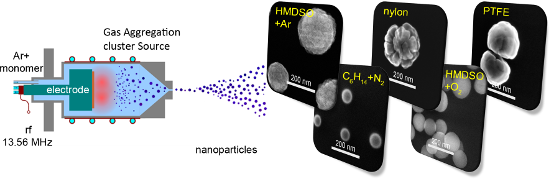
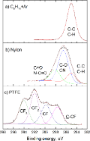
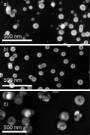
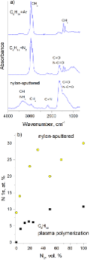
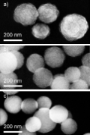
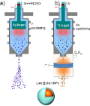
- sources in the production of plasma polymer NPs opens new horizons in precise tuning of their size, shape, chemical composition, surface charge and wettability. There are great potential benefits for the use of plasma polymer NPs in photonics, nanomedicine and other applications, but also significant






Uptake and intracellular accumulation of diamond nanoparticles – a metabolic and cytotoxic study
Beilstein J. Nanotechnol. 2017, 8, 1649–1657, doi:10.3762/bjnano.8.165
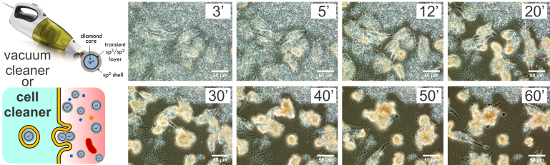
- ][27], particle size reduction [22] and surface oxidation (i.e., the surface is covered by defined starting functional groups). The cytotoxicity of NDs depends on their origin (i.e., DNDs or HPHT NDs), their size (distribution), their tendency to form aggregates (surface charge), the presence of
- their zeta potential, which influences the aggregation or the selection of adhered proteins from the culture medium. The as-received DNDs have a strongly positive zeta potential of ≈40 mV, while oxidation reverses it to approximately −40 mV [41]. The cell surface charge is influenced by the actual
- biochemical composition of the cytoplasmic membrane and the state of the cell. It is an important biophysical parameter influencing the interaction with the cell surroundings. The cell surface charge (zeta potential) of human cells was between −20 and −30 mV caused by the presence of nonionogenic groups


The effect of the electrical double layer on hydrodynamic lubrication: a non-monotonic trend with increasing zeta potential
Beilstein J. Nanotechnol. 2017, 8, 1515–1522, doi:10.3762/bjnano.8.152
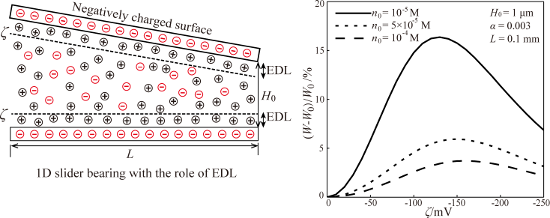
- of charged frictional pair–lubricant interface and the resulting electrical double layer (EDL) within the lubricant have been recognized and studied [5][6][7][8][9][10][11][12][13]. The generation of surface charge at the frictional pair–lubricant interface is wide, especially for the frictional
- lubrication theory have a history dating back to hundreds of years, the role of surface-charge-induced EDL on the lubrication is a relatively new field. This role was first considered for the study of thin film lubrication by Bike and Prieve [6]. Following them, Zhang and Umehara [7] introduced the effect of
- the EDL on modifying the conventional Reynolds equation, analyzing the hydrodynamic lubrication. They found that the minimum lubricant film thickness increased with the increasing absolute value of zeta potential (an important parameter of EDL to manifest the surface charge at the solid–liquid


Development of polycationic amphiphilic cyclodextrin nanoparticles for anticancer drug delivery
Beilstein J. Nanotechnol. 2017, 8, 1457–1468, doi:10.3762/bjnano.8.145
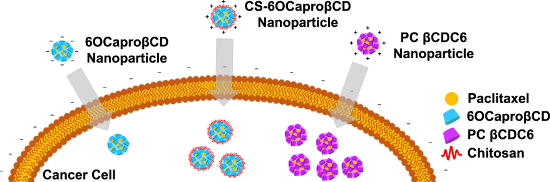
- derivatives provide suitable nanometer-sized drug delivery systems for safe and efficient intravenous paclitaxel delivery for chemotherapy. In the light of these studies, it can be said that amphiphilic cyclodextrin nanoparticles of different surface charge can be considered as a promising alternative for
- several factors that influence the particle size, particle distribution, surface charge, homogeneity and shape of nanometer-sized drug delivery systems. These factors have a subsequent influence on the biodistribution and the fate of the nanomedicine in the body [27]. In this case, the formulation
- of the polymer/polysaccharide used to prepare the nanoparticles. Therefore, in order to determine the effect of surface charge on drug loading capacity of nanoparticles, PCX was chosen as a model anticancer drug frequently used in chemotherapy for patients with breast cancer. The encapsulation


Cationic PEGylated polycaprolactone nanoparticles carrying post-operation docetaxel for glioma treatment
Beilstein J. Nanotechnol. 2017, 8, 1446–1456, doi:10.3762/bjnano.8.144
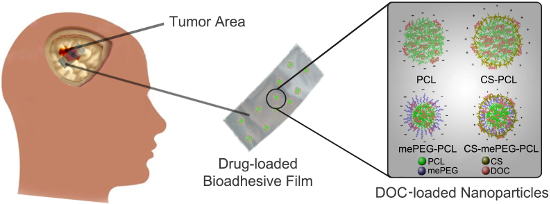
- than 100 nm and a net positive surface charge to facilitate cellular internalization of drug-loaded nanoparticles. Hydroxypropyl cellulose films were prepared to incorporate these nanoparticle dispersions to complete the implantable drug delivery system. Results: The diameter of core–shell
- nanoparticles were in the range of 70–270 nm, depending on the preparation technique, polymer type and coating. Moreover, the chitosan coating significantly altered the surface charge of the nanoparticles to net positive values of +30 to +50 mV. The model drug docetaxel was successfully loaded into all
- particles (which have neutral or near-neutral surface charge) are more prone to escape from the MPS. Cationic nanoparticles can also condense nucleic acid (DNA, RNA) or proteins to form polyplexes for intracellular gene/drug delivery. In this context, chitosan (CS) is used as a positively charged coating


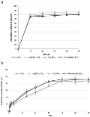


Evaluation of quantum dot conjugated antibodies for immunofluorescent labelling of cellular targets
Beilstein J. Nanotechnol. 2017, 8, 1238–1249, doi:10.3762/bjnano.8.125
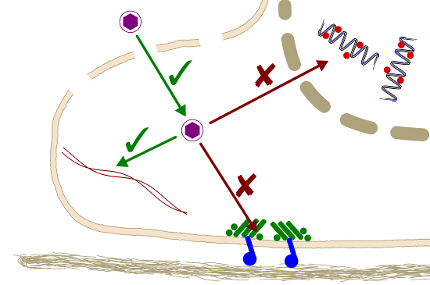
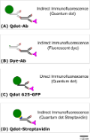
- between Qdots and functional antibodies, the overall surface charge of Qdot-Ab conjugates, and whether there is a presence of a protein corona. The labelling ratio of Qdots to antibodies present within commercially available Qdot-Ab conjugates has been previously evaluated, where the non-specific
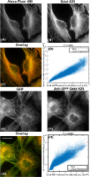
- orientation in which the IgG molecules bind to Qdots cannot be controlled [37]. The binding affinity of Qdot-Abs can also be affected by the surface charge they possess. For instance, positively charged Qdots are taken up by cells more readily than negatively charged or zwitterionic Qdots, which suppress




Needs and challenges for assessing the environmental impacts of engineered nanomaterials (ENMs)
Beilstein J. Nanotechnol. 2017, 8, 989–1014, doi:10.3762/bjnano.8.101

- composition, surface coating, molecular structure, crystal structure, physical, form/shape, particle size, size distribution and surface area, agglomeration state, particle density, ENM bulk density, porosity, dispersibility, solubility in water and biologically relevant fluids, surface charge, and surface

Scaling law to determine peak forces in tapping-mode AFM experiments on finite elastic soft matter systems
Beilstein J. Nanotechnol. 2017, 8, 968–974, doi:10.3762/bjnano.8.98
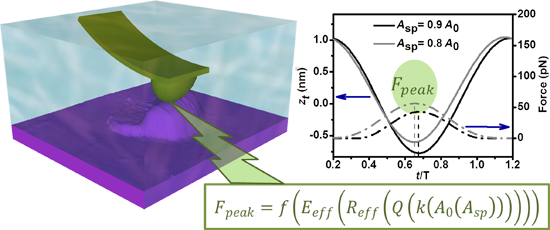
- has been deduced. Such deduction has been based in the previous works by the author [15]. The fact of reducing the electrostatic interactions of the surface charge depends strongly on the ionic strength and pH values of the liquid [32]. Thus, immersing the surface sample and the probe into a liquid


Near-field surface plasmon field enhancement induced by rippled surfaces
Beilstein J. Nanotechnol. 2017, 8, 956–967, doi:10.3762/bjnano.8.97
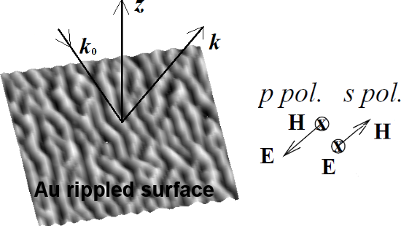
- . Our approach follows the so-called surface integral equations (SIEs) [34][35] approach. Initially, we implemented the SIEs based on the boundary element method (BEM), where ad-hoc integral equations for the surface charge and current density must be considered [36]. A second approach was based on a
- represented in Figure 4. Another critical factor that affects the localized hot spots is the polarization [13]. Since the plasmon resonance depends on the restoring force resulting from a noncompensated surface charge, this force depends ultimately on the shape of the topography profile and polarization, i.e


α-((4-Cyanobenzoyl)oxy)-ω-methyl poly(ethylene glycol): a new stabilizer for silver nanoparticles
Beilstein J. Nanotechnol. 2017, 8, 627–635, doi:10.3762/bjnano.8.67
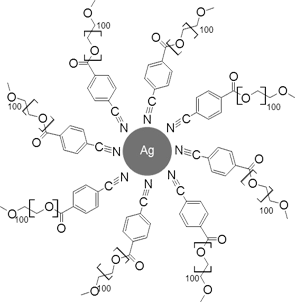
- produces a negatively charged carboxylate (from 4-cyanobenzoic acid attached to the SNP surface) and a neutral alcohol (from the free PEG chains released from the surface). The –OH group does not affect the surface charge at pH 12 but the higher number of negative charges from the cleaved benzoic acid


Gas sensing properties of MWCNT layers electrochemically decorated with Au and Pd nanoparticles
Beilstein J. Nanotechnol. 2017, 8, 592–603, doi:10.3762/bjnano.8.64
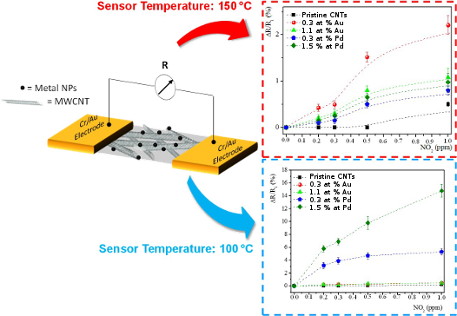
- 12 ± 2 nm and 5.0 ± 0.5 nm, respectively, as reported in the TEM images in Figure 1. The net positive surface charge of colloidal metal NPs, given by the quaternary ammonium surfactant [36][37], was used to functionalize the surface of the MWCNTs by electrophoresis. The lipophilic interactions


Template-controlled piezoactivity of ZnO thin films grown via a bioinspired approach
Beilstein J. Nanotechnol. 2017, 8, 296–303, doi:10.3762/bjnano.8.32
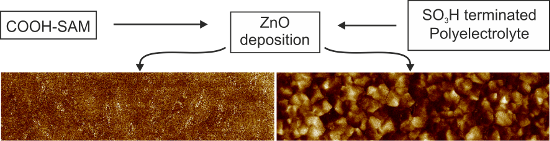
- indicates that the sulfonate functionality leads to a highly polar surface of the template, whereas the carboxylate is less negatively charged. However, it has to be taken into account that the deposition experiments take place in methanol. The solvent influences the effective surface charge of the
- ions as can be seen from the pKa values reported by Rived et al. [43]. Therefore, it is probable that the surface charge of the used templates is lower in methanol than it could be expected from zeta potential measurements in water. Nevertheless, the polarity of the two templates is high enough to
- templates. The negative surface charge of the sulfonate-functional groups of the PEL (−115 mV [40]) is high enough to homogeneously attract the dipolar ZnO particles from solution. The result is a closed film even at low numbers of deposition cycles. In contrast, the negative charge density of the


Effect of Anderson localization on light emission from gold nanoparticle aggregates
Beilstein J. Nanotechnol. 2016, 7, 2013–2022, doi:10.3762/bjnano.7.192
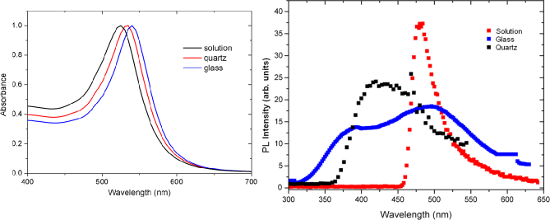
- neutralize the surface charge, having an energy of 7 eV and a filament current of 2.6 A. The C1s was charge corrected to 285.0 eV. XPS spectra for the AuNPs drop-cast on a) quartz and b) glass. SEM images (50,000× magnification) of AuNPs on different substrates of a) glass, b) quartz. PL of AuNPs drop cast


Intercalation and structural aspects of macroRAFT agents into MgAl layered double hydroxides
Beilstein J. Nanotechnol. 2016, 7, 2000–2012, doi:10.3762/bjnano.7.191
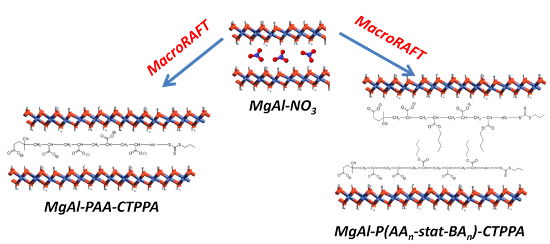
- a basal spacing of 0.85 nm, a net shift of the 00l harmonic reflections to lower values of 2θ below 20° was observed for the LDH-macroRAFT compounds, which is consistent with the replacement of nitrate ions by larger anionic species ensuring the layer surface charge neutralization. For PAA49-CTPPA





